Jeroen van den BrinkView profile
Professor
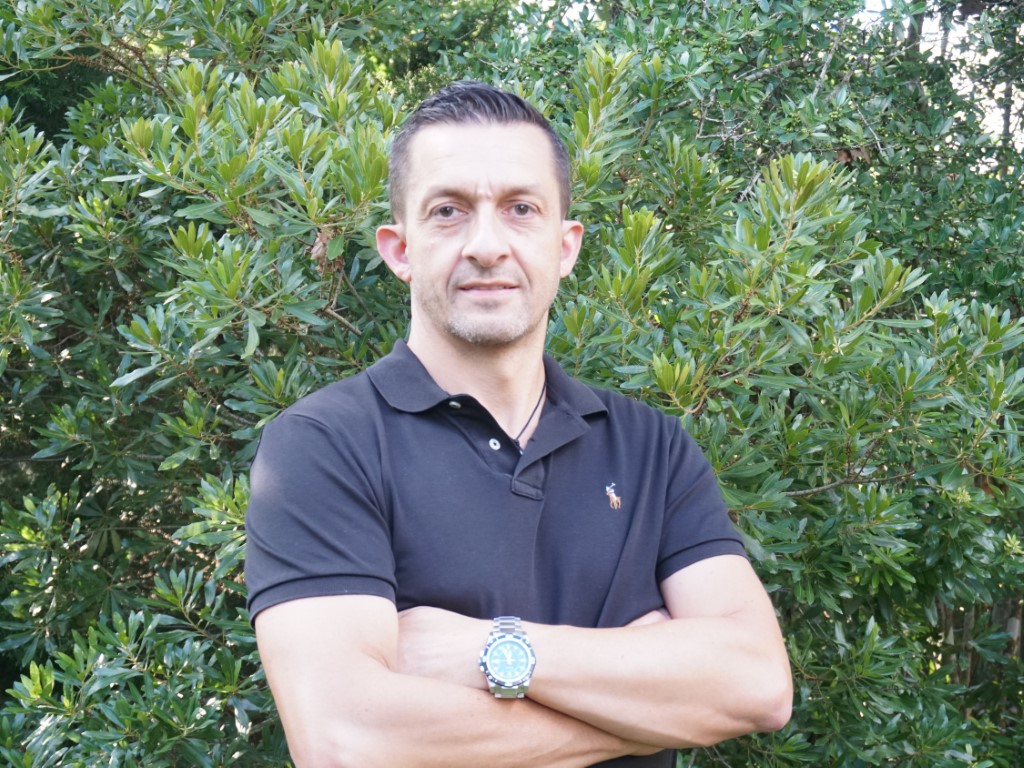
Professor Jeroen van den Brink is Director of the Institute for Theoretical Solid State Physics at IFW Dresden and Professor of Theoretical Condensed Matter Physics at Technische Universität Dresden. He has held significant academic positions including Visiting Scholar at Harvard University (2016), Visiting Professor at Stanford University (2009), and Extraordinary Professor at Radboud University (2005-2013). His research interests span a broad spectrum of theoretical condensed matter physics including Quantum Matter Theory, Correlated Electron Systems, Topological States of Matter, Quantum Magnetism, and Unconventional Superconductivity. Van den Brink's work particularly focuses on materials with strong spin-orbit coupling such as iridates and ruthenates, where he investigates exotic quantum states including quantum spin liquids and topological phases. His research methodology combines ab initio electronic structure calculations with many-body theory to understand complex quantum phenomena in correlated materials. Analysis of his recent publications reveals a strong focus on topological materials, quantum magnetism, and strongly correlated electron systems. His work frequently bridges theoretical frameworks with experimental observations, particularly through resonant inelastic X-ray scattering (RIXS) techniques. Key themes include Kitaev physics in honeycomb materials, Weyl semimetals, and the interplay between topology and strong correlations. 2020 Van der Waals Professorial Chair, University of Amsterdam 2019 Clark Way Harrison Visiting Professorship, Washington University 2019-2018 Highly Cited Researcher (Web of Science) – top 1% by citations 2018 Humboldt Research Prize 2017 Zernike Chair, Rijksuniversiteit Groningen 2002 Springplank Fellowship 1997 Humboldt Research Fellowship Professor van den Brink has been actively involved in numerous international collaborations and advisory roles, serving on Beamtime Allocation Panels at the Advanced Light Source, Review Committees for the German Science Foundation, and Management Committees for EU COST Actions. His extensive publication record (over 250 papers with more than 15,000 citations and an h-index of 59) demonstrates significant impact across condensed matter physics. He has presented his research at over 125 international conferences and delivered more than 100 invited talks at universities and research institutes worldwide. As Director of the Institute for Theoretical Solid State Physics at IFW Dresden, he leads a research group focused on quantum materials with strong electronic correlations, topological properties, and novel magnetic phenomena. His institute collaborates closely with experimental groups at IFW Dresden and international facilities including synchrotron radiation sources.