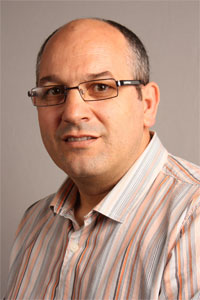
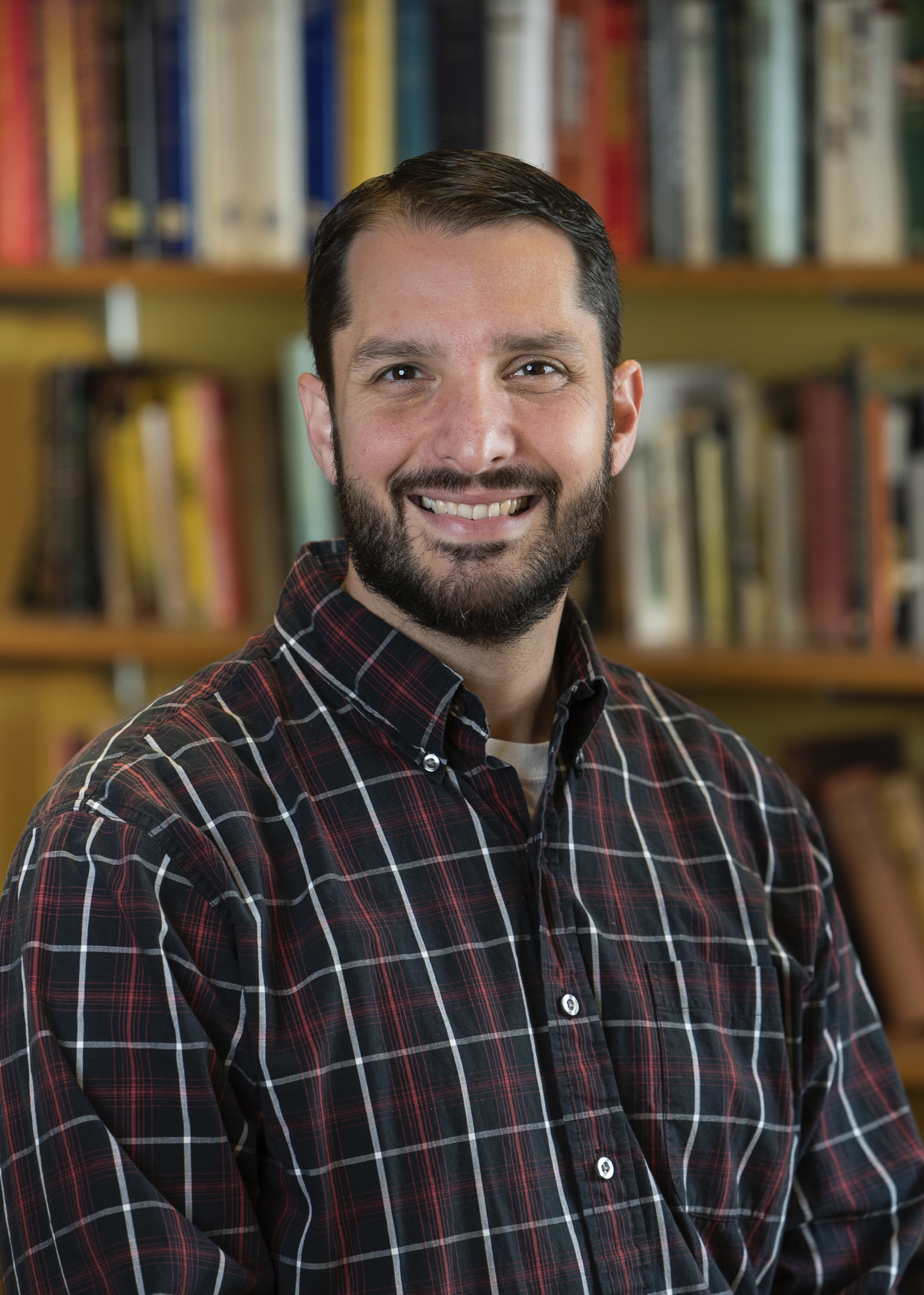
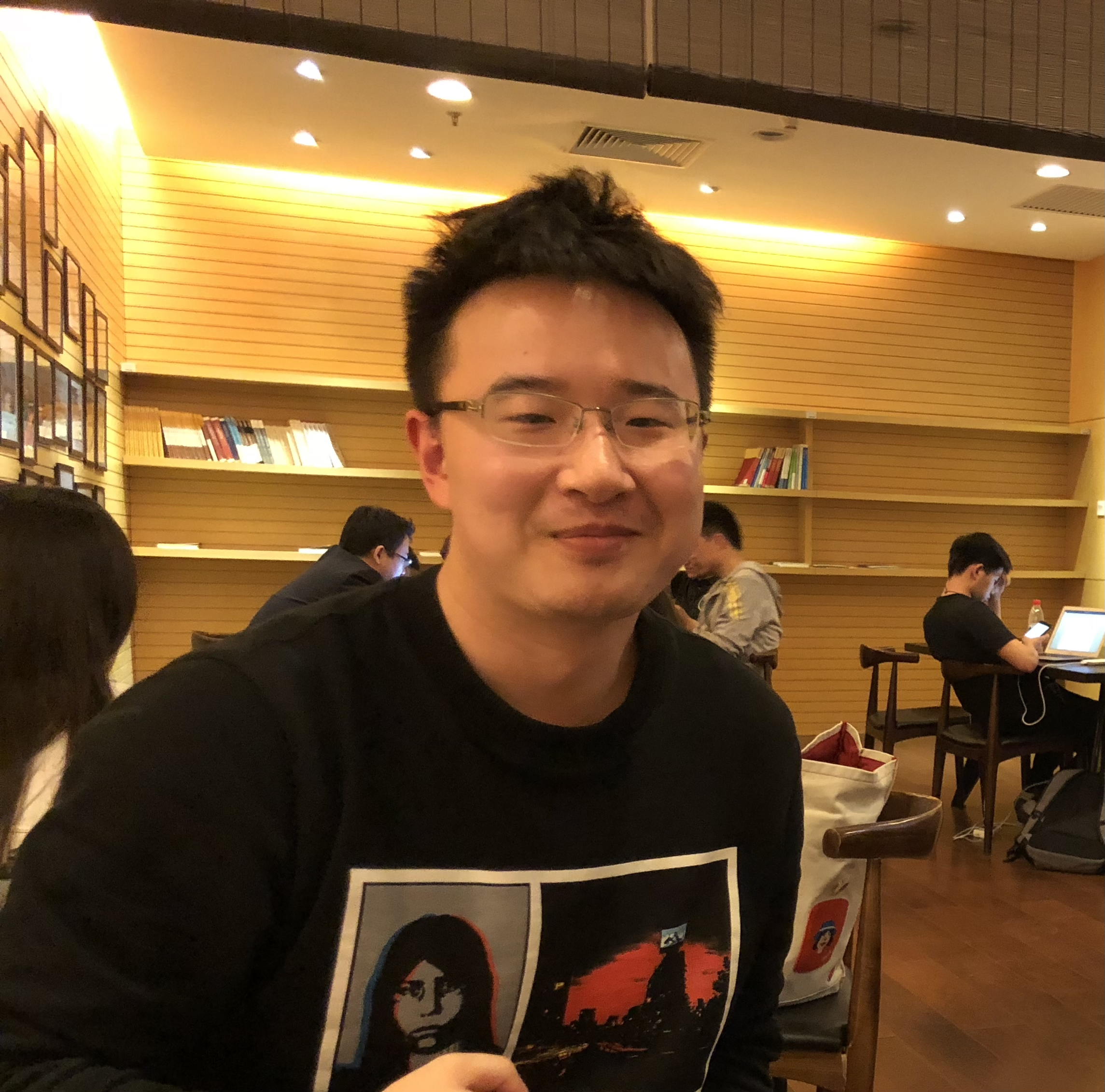
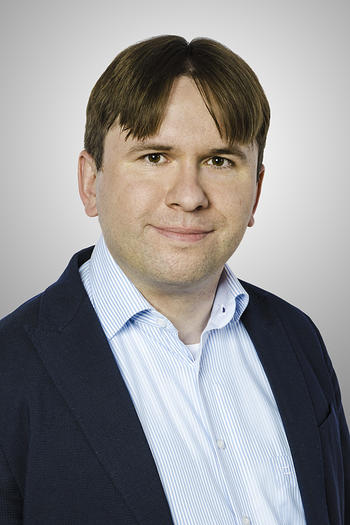
Bernhard Brehmer is a Professor of Slavic Linguistics at the University of Konstanz since 2020, holding a W3-professorship in Slavic Linguistics. He previously held academic positions at the Universities of Greifswald, Hamburg, and Tübingen, including a Juniorprofessur and W2-professorship. His research focuses on multilingualism, language attrition, heritage languages, and sociolinguistic aspects of Slavic languages. He earned his doctorate in Ostslavische Philologie from Eberhard Karls University of Tübingen in 2004 with a dissertation on politeness expressions in Russian. Brehmer has led numerous interdisciplinary research projects, including the DFG-funded 'Russian in Germany across Generations' (2021–2024) and the EU-funded 'Nachbarspracherwerb' initiative. His awards include the 2012 Junior Fellowship at FRIAS and the 2018 Sparkassen-Förderpreis for German-Polish collaboration. His scholarly contributions span monographs, edited volumes, and over 50 peer-reviewed articles. Key works include Politeness between Convention and Creativity (2009) and co-edited collections like Lost in Transmission (2020). He actively participates in academic governance, serving as director of Slavistik institutes and developing interdisciplinary programs like the Baltic Sea Region MA program. His research integrates corpus linguistics, sociolinguistics, and applied language policy, addressing contemporary issues such as minority language maintenance and digital language behavior.
Dr. Yu (Chelsea) Jin is an Assistant Professor in the Department of Industrial Engineering at the University at Buffalo, specializing in quality inspection, predictive modeling, and data analytics for advanced manufacturing systems. She holds a PhD in Industrial Engineering from the University of Arkansas, an ME from the University of Michigan, and dual BS degrees in Network Engineering and Finance from Jinan University. Her research focuses on integrating machine learning and physics-based models to optimize manufacturing processes, such as additive manufacturing, PCB assembly, and pharmaceutical distribution systems. She has developed frameworks like ReflowNet for reflow oven optimization and physics-informed neural networks for thermal profile prediction. Her work emphasizes both theoretical advancements and practical applications in smart manufacturing and healthcare logistics. Dr. Jin's recent publications highlight contributions to generative AI for knowledge retrieval, AGV system optimization, and multi-source transfer learning for pandemic modeling. She actively collaborates with industry partners to bridge academic research and real-world manufacturing challenges.
Dr hab. Agata Małyska is a Professor at the Center for Polish Language and Culture for Poles Abroad and Foreigners (CJKP) at Maria Curie-Skłodowska University (UMCS), Lublin, Poland. She has served as Deputy Director of CJKP since 2000 and heads training programs for Polish-as-a-foreign-language teachers. Her work spans Polish language instruction, political discourse analysis, and intercultural communication. Academic Affiliation: Center for Polish Language and Culture for Poles Abroad and Foreigners (CJKP), UMCS Leadership Roles: Deputy Director of CJKP, Head of "Lato Polonijnego" courses Her research focuses on political and social discourse , with emphasis on ritualization , lexical evaluation , linguistic taboos , persuasion , and intercultural communication . She applies interdisciplinary methodologies combining linguistics, psychology, and sociology to analyze parliamentary speeches, media texts, and Polish language teaching strategies. Analysis of her publications reveals trends in political linguistics , Polish-as-a-foreign-language pedagogy , and intertextuality in marketing . Recurring themes include language taboo evolution , persuasive communication , and lexical dynamics in political contexts . Scientific Achievements : Co-editor of 70 Years of Contemporary Polish Organizer of international Polish language training programs Member of State Commission for Polish Language Certification (2024) As an educator, she trains teachers for Polish-as-a-foreign-language instruction in domestic institutions and abroad. Her organizational work includes coordinating internships for trainees and directing academic conferences on language and culture.
Dr. Kamil Waldemar Lemanek is a Polish-American academic affiliated with Maria Curie-Skłodowska University as an Assistant Professor in the Department of Logic and Cognitive Science under the Faculty of Philosophy and Sociology. He also holds an adjunct position at the University of Warsaw Institute of Philosophy. His scholarly focus bridges philosophy of language , philosophy of mind , and ontology , with significant contributions to inferentialism, semantic theory, and pedagogical innovation. PhD in Philosophy (2023), University of Warsaw Research on natural language architecture, delusion frameworks, and educational technology Extensive editorial collaboration and grant acquisition His publications reveal a thematic interplay between linguistic finitism , semantic atomism , and social epistemology . Notably, he explores unconventional pedagogical tools like ancient astronaut theory for teaching informal logic. Though no specific scientific awards are listed, his national/international grants (e.g., NCN grant for research on language architecture) demonstrate institutional support. Teaching innovations include AI-assisted peer review simulations in academic writing instruction.
Professor Francisco Chiclana is a leading academic in Computational Intelligence and Decision Making at the School of Computer Science and Informatics, De Montfort University (UK). As founder of DIGITS (De Montfort University Interdisciplinary Group in Intelligent Transport Systems), he pioneered research in trust-driven decision frameworks and fuzzy systems. PhD and BSc in Mathematics from University of Granada Coordinated DMU's REF 2014 submission in Computer Science and Informatics Co-developed DMU's Doctoral Training Programme in Intelligent Systems His research focuses on fuzzy preference modelling , consensus reaching processes , and social network analysis for decision support systems. Recent work explores AI applications in trust propagation, power-asymmetric conflict resolution, and large-scale group decision frameworks. Key publications include 15+ peer-reviewed articles in journals like IEEE Transactions on Fuzzy Systems and Information Sciences , covering topics from type-2 fuzzy logic to Nash bargaining compensation mechanisms . His Greenfield-Chiclana Collapsing Defuzzifier won third prize at DMU's Creative Thinking Awards 2010. Outstanding PhD Award (University of Granada, 2000) Finalist in DMU-THE OSCAR AWARDS for Research Excellence (2012) As supervisor of 8+ current and completed PhD students, including Sarah Greenfield and Sergio Alonso Burgos, he has shaped next-generation researchers. His £145K EPSRC-funded project (2006-2009) extended fuzzy logic applications in consensus modelling.
John Oddo is an Associate Professor of English at Carnegie Mellon University, affiliated with the Department of English within the Dietrich College of Humanities and Social Sciences. His research critically examines how language and symbols are used to legitimize war, focusing on intertextual rhetoric and media's role in framing political discourse. He holds a Ph.D. and M.A. from Kent State University and a B.A. from Canisius College. Oddo's work analyzes how U.S. political leaders and media institutions reuse rhetorical techniques to manipulate public opinion during conflicts. His acclaimed books include *Intertextuality and the 24-Hour News Cycle* (2014), analyzing Colin Powell’s U.N. address, and *The Discourse of Propaganda* (2018), exploring propaganda mechanisms in the Persian Gulf War and War on Terror. Recent research extends to drone strike rhetoric and modern propaganda theory. Key research areas include rhetoric of futurity, precontextualization in media, and discourse-based analytical methodologies. His work has been published in *Journal of Language and Politics*, *Written Communication*, and *Discourse & Communication*. Oddo’s contributions bridge rhetoric, political communication, and media studies, offering critical insights into power dynamics in modern discourse.
Koushik Sen is a Professor in the Department of Electrical Engineering and Computer Sciences at the University of California, Berkeley. He holds a B.Tech from IIT Kanpur and M.S./Ph.D. from UIUC. His research focuses on Software Engineering, Programming Languages, and Formal Methods, emphasizing tools like DART, CUTE, and Jalangi for improving software reliability. He leads projects such as CORVETTE and Sky Computing Lab, and collaborates with Samsung Research America on JavaScript analysis. Sen has received prestigious awards including the Sloan Fellowship and ACM SIGSOFT Impact Award. Education: B.Tech, Indian Institute of Technology, Kanpur M.S. and Ph.D., University of Illinois at Urbana-Champaign Research Interests: Software Testing, Verification, Symbolic Execution, Security, and Quantum Computing. His work bridges automated testing (e.g., concolic testing) with machine learning for bug detection and program synthesis. Projects include Hindsight Logging for ML reproducibility and quantum circuit optimization (QFAST). Awards: NSF CAREER, IFIP Manfred Paul, ACM SIGSOFT Distinguished Paper (multiple), and Sloan Fellowship. Advising: Supervised over 30 students/postdocs, leading to faculty roles at UBC, CMU, and industry positions at Google, Facebook, and Samsung. Labs/Teams: Berkeley Center for Responsible, Decentralized Intelligence (RDI), EPIC Data Lab, and Sky Computing Lab. Active in quantum computing and hardware fuzzing (RTL-FuzzLab).
Lorna Philip is a Professor in the Department of Geography and Environment within the School of Geosciences at the University of Aberdeen, where she holds a Personal Chair and continues to be an active academic leader. She has been a faculty member since 1998, progressing through academic ranks to her current position, and serves as a key supervisor for PhD students in human geography and rural studies. Education: MA (Social Science) with First Class Honours in Geography, University of Glasgow, 1993 PhD in Human Geography, University of Glasgow, 2000 Research Interests: Professor Philip's research focuses on rural socio-economic change, with particular emphasis on rural social exclusion, population ageing in rural communities, digital divides, and the long-term impacts of environmental events such as flooding. Her work often explores how policy can better address the unique challenges faced by rural and island populations. She is currently co-investigator on the BRUCES programme grant, a five-year interdisciplinary study on rural-urban healthcare equity in Scotland. Her research is funded by major bodies including the Chief Scientist Office, ESRC, and RCUK. Publication Trends: Her recent publications (2022–2025) demonstrate a strong focus on rural policy, islandness, civic participation among older adults, and the value of qualitative longitudinal methods. She frequently publishes in leading geographical journals such as Scottish Geographical Journal and The Geographical Journal , and produces policy-oriented reports for government and advisory bodies like SEFARI. Scientific Awards: Winner of the Royal Scottish Geographical Society Newbiggin Prize (2002) Advising and Grants: Professor Philip has supervised 11 PhD students to successful completion and currently supervises four doctoral candidates working on topics including Scotland’s National Islands Plan, community land ownership, and intergenerational communication. She has led and contributed to numerous funded research projects, including those funded by CREW, ESRC, and the RCUK dot.rural hub, focusing on rural digital economy, flooding impacts, and retirement migration. Labs and Research Groups: While not directly affiliated with a specific lab, Professor Philip is closely associated with interdisciplinary research initiatives such as the Just Transition Lab and contributes to the broader research culture of the School of Geosciences. Her work often involves collaboration with clinicians, policymakers, and community stakeholders, particularly in health and rural development contexts.
Kaan YILMAZ is an Associate Professor at the Faculty of Humanities and Social Sciences at Kastamonu University , Turkey, specializing in Turkish Language and Literature . He holds a PhD (2012) and Master's (2006) in Turkish Language and Literature from Sakarya University and has been a full-time academic since 2003. BA (1999-2003), Sakarya University, Department of Turkish Language and Literature Master's (2003-2006), Sakarya University, Institute of Social Sciences PhD (2006-2012), Sakarya University, Institute of Social Sciences His research focuses on Old Turkish (Orkhon, Uyghur, Karakhanid) and New Turkish (Old Anatolian, Ottoman, Türkiye Turkish), with expertise in diachronic linguistics , lexicography , and dialectology . Recent work explores lexical change , morphological patterns , and dialectological variations . The 15 most recent publications span two domains: (1) Turkish historical linguistics , including studies on Old Turkish etymology , Ottoman dialects , and lexical evolution ; (2) Interdisciplinary collaborations in entomology and invasive species monitoring , possibly indicating citizen science outreach. Scientific Missions : 10 documented collaborations with scholars like Cevdet Şanlı and Ali Rıza Tosun. Editorial Roles : Served as editor for TÜRÜK International Journal (2016-2020). Projects : Led the 2015-2017 BAP project on Kavaid-i Türkiyye , a 19th-century Turkish grammar text. His teaching portfolio includes 35 courses (2012-2022) on Old Turkish , Modern Turkish , and Sociolinguistics . Current work at Kastamonu University emphasizes linguistic continuity and dialect preservation in Anatolian-Turkish contexts.
Xiusi Chen is a Postdoctoral Research Fellow in the Blender Lab at the University of Illinois Urbana-Champaign (UIUC), working under Prof. Heng Ji. His research focuses on improving reasoning, alignment, and decision-making capabilities of Large Language Models (LLMs). Previously, he completed his Ph.D. in Computer Science at UCLA under Prof. Wei Wang, and earned M.S. and B.S. degrees in Computer Science from Peking University under Prof. Jun Gao. His educational background includes: Ph.D. in Computer Science, University of California, Los Angeles (UCLA), advised by Prof. Wei Wang M.S. in Computer Science, Peking University, advised by Prof. Jun Gao B.S. in Computer Science, Peking University, advised by Prof. Jun Gao Dr. Chen's research program targets three interconnected areas: advancing Large Language Models (particularly in low-resource reasoning and alignment), developing NLP applications for AI in Science and recommendation systems, and modeling complex decision-making processes in sports domains. His work bridges theoretical foundations with practical implementations, resulting in numerous publications in top-tier conferences including ACL, ICML, ICLR, and KDD. Analysis of his recent publications reveals a strong focus on making LLMs more efficient, reliable, and capable of complex reasoning tasks across diverse domains. His significant academic contributions include: 2023 Best Poster Award (Honorable Mention) at SDM 2023 2023 SIAM Student Travel Award 2021 and 2022 SIGIR Student Travel Grants from ACM SIGIR Multiple academic scholarships from Peking University Co-creation of the widely adopted Amazon Reviews'23 dataset (500k+ HuggingFace downloads) Dr. Chen actively serves the research community as Workshop Organizer for KDD 2025, Program Committee member for major conferences (KDD, WSDM, ICML, NeurIPS, ICLR, AAAI), and journal reviewer. He maintains a strong commitment to mentoring, offering dedicated time for students (especially from underrepresented groups) to discuss research and career development. Starting Fall 2025, he will be seeking academic positions to continue his research on language agents and decision-making systems. Currently based in the Siebel Center for Computer Science, Dr. Chen collaborates with the Blender Lab team on advancing NLP and LLM capabilities. His work has practical impact through widely adopted resources like the Amazon Reviews'23 dataset and theoretical contributions through his publications on reasoning frameworks and alignment techniques.
Christian Mauder is Professor of Islamic Studies at Freie Universität Berlin’s Institute of Islamic Studies, Department of History and Cultural Studies. His research focuses on premodern Islamic religious, intellectual, and social history, particularly the Mamluk Sultanate (1250–1517), Islamic court cultures, historical semantics, Arabophone Christianity, Christian-Muslim relations, and Quranic discourses. He has published extensively on Mamluk military education, legal riddles, Persian and Circassian ethnic identities, and Ottoman-Mamluk transitions, emphasizing transregional interconnectedness. PhD in Arabic and Islamic Studies, University of Göttingen (2017) Postdoctoral research at Yale, Princeton, NYU Abu Dhabi, and University of Bonn Associate Professor at University of Bergen (2018–2023) Mauder’s scholarly work bridges Islamic history and cultural studies, exploring how concepts like mujaddid (renewer) shaped religious authority. His publications include monographs on Mamluk court culture and edited volumes on Quran reception, legal knowledge transmission, and Islamic eschatology. Recent articles analyze Persian identity construction, Hanafi riddles, and Mamluk-Ottoman entanglements. His awards include the 2018 Malcolm H. Kerr Dissertation Award and Christian Gottlob Heyne Award. He supervises doctoral students and participates in international seminars, including the Balzan Seminar on Muslim state formation. His office hours (Tue 4:15–6:00 PM) are open for academic consultation at Fabeckstr. 23/25, Berlin.
Christoph Schroeder is a Professor for German as a Second and Foreign Language at the Institute for Germanistics, University of Potsdam. He serves as a corresponding member of the Institute for Migration Research and Intercultural Studies (IMIS) and has held visiting professorships at the University of Cyprus (2004) and Istanbul Bilgi University (2005). His work bridges linguistics, migration studies, and multilingual education. Education: Habilitation in Linguistics (University of Osnabrück, 2004); Promotion (PhD) in Germanistics (University of Bremen, 1995). Key Affiliations: IMIS, Center of Migration Studies (Istanbul Bilgi University), Arbeitsgebiet DaZ/DaF (University of Potsdam). Research Interests focus on language contact, contrastive linguistics, and multilingualism in schools. His work examines orthographic challenges in German-Turkish language contact, secondary predication in Turkish, and strategies for supporting students with non-German native languages through multilingual education frameworks. Notable Projects include leading the Volkswagen Foundation-funded project "Schriftspracherwerb in der Organisation Schule unter den Bedingungen von Migration und Mehrsprachigkeit" (2007-2012), which explored literacy acquisition in multilingual schools across Germany, Turkey, and Cyprus. His editorial roles include co-editing Essener Linguistische Skripte and serving on the editorial board of Language Typology and Universals (STUF) . Publications span contrastive linguistics, language typology, and migration-related educational challenges. Recent work analyzes orthographic systems in language contact scenarios, adverbial modification in Turkish, and article systems across European languages. His research often integrates sociolinguistic and typological perspectives. Professional Memberships: Association of Linguistic Typology (ALT) Deutsche Gesellschaft für Sprachwissenschaft (DGfS) Deutsche Gesellschaft für Fremdsprachenforschung (DGFF)
PD Dr. phil. Evangelia Kordoni is a research assistant at Humboldt University of Berlin's Faculty of Linguistics and Literary Studies, specifically within the Institute for English and American Studies. Her office is located at Dorotheenstraße 28, Room 3.04, and she can be contacted via email for appointments. She is an active researcher in computational linguistics with a focus on grammar engineering and natural language processing. Kordoni's research primarily explores: Computational linguistics frameworks including HPSG grammar implementation Multiword expression processing and machine translation systems Treebank development for languages including English, German and Bulgarian Lexical acquisition methods for large-scale grammars Semantic parsing and disambiguation techniques Her work bridges theoretical linguistics with practical NLP applications. Kordoni's publication record shows consistent focus on deep linguistic processing, with recent emphasis on: Multiword expression analysis in machine translation systems Parallel treebank development for multilingual applications Verb subcategorization and compound noun disambiguation Dynamic annotation methodologies for Wall Street Journal texts Cross-linguistic studies of Germanic syntax
Darius Plikynas is a Senior Researcher at the Smart Technologies Research Group within the Institute of Data Science and Digital Technologies at Vilnius University . His research integrates computational intelligence methods with agent-based simulation to model cognitive and social processes. Position: Senior Researcher, Chief Researcher in the Project Address: Akademijos St. 4, room 224, Vilnius Contact: +370 5 210 9333, +370 620 95101 Email: darius.plikynas@mif.vu.lt Personal page: http://www.dariusplikynas.eu Dr. Plikynas' research spans interdisciplinary domains including neuroscience, physics methods, complexity theory, and distributed cognitive systems. He led the 2017–2019 project "Development of a metric, conceptual and simulation model of the social impact of cultural processes" under the LMT Research Group Funding Program. His recent publications (2016–2025) reflect trends in combining machine learning with social science questions (fake news analysis, propaganda detection) and agent-based modeling of cultural/social capital dynamics. Key collaborations include Leonidas Sakalauskas, Rimvydas Laužikas, and Arunas Miliauskas. Scientific supervision includes doctoral students: Andrius Budrionis (University of Tromsø, Norway) Ieva Rizgelienė (PhD topic: "Propaganda detection and classification in social media using hybrid deep learning") He also serves as an expert at Vilnius University and has contributed to projects involving: 2D financial market visualization Neural oscillation-based cognitive modeling Indoor navigation for blind individuals Cultural participation impact on social capital
Thomas Scholten is Professor of Soil Science and Geomorphology at the Department of Geoscience, Faculty of Science, Eberhard Karls University Tübingen. He has been director of the Institute of Geography at Tübingen University since 2006 and has held various leadership roles including President of the German Soil Science Society (2012-2015) and council member of the European Society for Soil Conservation since 2004. In 2016, he was elected as a member of German National Academy of Science and Engineering (acatech). Since 2017, he has been co-speaker of the Collaborative Research Center (SFB 1070) 'ResourceCultures' and since 2019, he has been a principal investigator in the Cluster of Excellence 'Machine Learning - New Perspectives for Science' at Tübingen University. Chair of Soil Science and Geomorphology (full professor) at Eberhard Karls University Tübingen (2005-present) Director of the Institute of Geography at Tübingen University (2006-present) Co-speaker of the Collaborative Research Center (SFB 1070) 'ResourceCultures' (2017-present) Principal Investigator in the Cluster of Excellence 'Machine Learning' (2019-present) Professor Scholten's research focuses on soil science, environment, geomorphology, geoecology, soil erosion, and machine learning applications in soil science. His fieldwork spans Europe, Africa, and Asia with major projects in South Africa, Swaziland, Sudan, Israel, China, Nepal, Switzerland, and Germany. He has published extensively with 9 books, 228 refereed papers, and 378 conference papers to his name. His recent publications reveal a strong integration of traditional soil science with cutting-edge machine learning techniques, particularly in digital soil mapping, soil erosion prediction, and resource management. The research spans multiple continents and addresses critical environmental challenges through interdisciplinary approaches combining soil science, remote sensing, and computational methods. Member of German National Academy of Science and Engineering (acatech) (2016-present) President of the German Soil Science Society (DBG) (2012-2015) Council member of the European Society for Soil Conservation (ESSC) (since 2004) Editorial board member of Journal of Plant Nutrition and Soil Science, Pedosphere Professor Scholten has received research grants from over 15 institutions, primarily the European Union (EU), the German Research Foundation (DFG), and the German Federal Ministry of Education and Research (BMBF). He serves as a referee for numerous international journals and has advised on scientific policy through various advisory boards and committees. His work has significant implications for sustainable land management and climate change adaptation strategies globally. He leads the Soil Science and Geomorphology work group at the University of Tübingen, with research activities spanning field studies, laboratory analyses, and computational modeling. His team collaborates with researchers across disciplines including geography, ecology, computer science, and archaeology to address complex environmental challenges through the ResourceCultures Collaborative Research Center and other international projects.