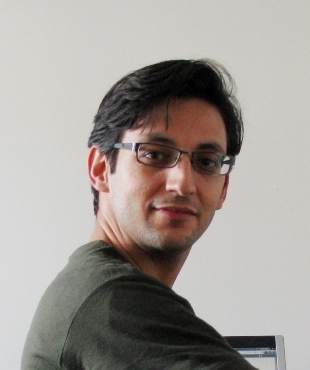
Andrew Wait is an Associate Professor at the School of Economics , University of Sydney , with a PhD from Australian National University and a Bachelor of Economics (Honours) from University of Adelaide. His research spans organizational economics, industrial organization, and game theory. Key areas: industrial organization, organizational economics, game theory, contract theory, innovation, and corporate governance. His publications focus on strategic decision-making in firms, market entry dynamics, sequential investment, and delegation models. Recent work explores diversity dynamics, deep learning applications in energy markets, and power structures in teams. Scientific contributions include co-founding the Annual Organizational Economics Workshop and collaborating with Vladimir Smirnov and Kieron Meagher on organizational structures and trust dynamics.
Matthew McGinty serves as Professor of Economics at the University of Wisconsin-Milwaukee, teaching intermediate microeconomics (ECON 301) and graduate-level microeconomic theory (ECON 701) across multiple course sections. His institutional affiliation reflects deep engagement with economic policy research within a major public research university. His academic foundation includes: PhD from University of California, Santa Cruz MA from University of California, Santa Cruz BA from Michigan State University McGinty's research program centers on Environmental Economics , employing Game Theory to model strategic interactions in International Environmental Agreements and Public Goods provision. His work in Industrial Organization examines leadership dynamics and ownership structures, with current projects specifically targeting "International Environmental Agreements" and "Conjectures in Public Goods Games". This research investigates how strategic behavior, diversity, and financing mechanisms influence cooperation among nations facing global environmental challenges. His publication record (2007-2024) reveals evolving focus from foundational work on asymmetric nations to contemporary analyses of solar geoengineering threats and global public goods financing. The consistent application of game-theoretic frameworks across 8 major publications demonstrates methodological rigor while addressing urgent climate policy questions through journals like the Journal of Environmental Economics and Management and Environmental and Resource Economics . No scientific awards are currently documented in his faculty profile. While specific student advising details remain undisclosed, McGinty's active research agenda—including recent collaborations with David McEvoy, Todd L. Cherry, and Michael Finus—suggests ongoing mentorship of graduate researchers. His current projects indicate potential grant-supported work though specific funding sources aren't enumerated in the directory.
Danielle Kane serves as an Assistant Professor in the Department of Sociology at Purdue University, with additional affiliations in Cornerstone and Asian Studies programs. Her research centers on gender dynamics and transitions to adulthood, particularly within Chinese societal contexts. Dr. Kane received her PhD from the University of Pennsylvania. Her educational background establishes foundational expertise in sociological theory and methodology. Her research program spans three interconnected domains: Gender and Adulthood Transitions in China : Examines parental influence, socioeconomic disparities, and cultural markers like homeownership during adulthood transitions. Social Network Analysis : Investigates network structures in cultural participation and gender role formation across East Asian societies. Religion and Cultural Nationalism : Analyzes religious practices in East Asia and ritual-based identity construction, as demonstrated in Japanese tea ceremony studies. Analysis of her 2021-2025 publications reveals concentrated focus on Chinese societal transformations, including two-child policy impacts on fertility, migrant women's health challenges, and evolving adulthood markers. Her comparative work addresses gender equality in rural South Africa and colonial legacies in Central Asian gender inequality. Scientific recognition: No major awards, fellowships, or medals were specified in available documentation. Professional engagement: Advising : No PhD or Master's student advisees were listed in current materials. Grants : No external research funding sources were documented. Dr. Kane does not appear to lead any named research laboratory or collaborative team based on the provided information.
Romeil Singh Sandhu serves as Assistant Professor in Biomedical Informatics at Stony Brook University with adjunct appointments in Computer Science and Applied Mathematics & Statistics, directing the Laboratory for Imaging, Networks, and Control (LINC) from the Health Sciences Center. His academic credentials include: B.S. from Georgia Institute of Technology (2006) M.S. from Georgia Institute of Technology (2009) Ph.D. from Georgia Institute of Technology (2010) Dr. Sandhu's research integrates geometry, statistics, and control theory to advance computer vision (3D reconstruction, satellite pose estimation), network science (hypergraph dynamics, Ricci curvature), and systems biology (protein interaction networks, cellular robustness). His methodological innovations span level-set methods, variational techniques, and curvature-based network analysis with applications in medical imaging and aerospace systems. Analysis of his 2019-2023 publications reveals three dominant trajectories: (1) geometric network analysis using Ricci curvature to quantify biological network fragility; (2) distributed reinforcement learning with communication-efficient multi-agent actor-critic frameworks; and (3) medical/satellite image reconstruction via radar-based variational methods and active surfaces. These threads consistently leverage differential geometry to solve inverse problems in complex systems. The Laboratory for Imaging, Networks, and Control (LINC) develops computational frameworks bridging theoretical mathematics with healthcare and aerospace applications, particularly focusing on shape analysis, network dynamics, and control systems for medical diagnostics and satellite imaging.
Yasuhiko Tanigawa is a Professor at the School of Commerce, Waseda University, specializing in finance and economics. With a Master in Economics from Osaka University, he has established himself as a prominent researcher in Japanese financial markets and corporate finance. His research interests span multiple areas including Public Economics, Labor Economics, Corporate Finance, Market Microstructure, and Financial Economics. He has made significant contributions to understanding Japanese financial markets, particularly in convertible bonds, market microstructure, dividend policy, and corporate governance. Professor Tanigawa's publications reveal a consistent focus on Japanese market characteristics, with particular attention to market microstructure, corporate payout policies, and convertible securities. His work often combines theoretical frameworks with empirical analysis of Japanese market data, providing insights into how Japanese financial markets operate differently from Western counterparts. The trend in his research shows evolution from theoretical work on financial intermediation to more applied studies on specific Japanese market phenomena. He has secured multiple research grants from the Japan Society for the Promotion of Science, including projects on debt structure, financial product innovation, risk measurement, and corporate payout policy. His teaching portfolio includes advanced courses in Finance Theory, Mathematical Finance, and Corporate Finance at both graduate and undergraduate levels. Professor Tanigawa is an active member of the Japanese Finance Association and the Japanese Economic Association, contributing to the academic community through research and professional engagement. His work bridges theoretical finance with practical applications in the Japanese context, making valuable contributions to understanding unique aspects of Japanese financial markets.
Mahdi Vasighi is currently serving as an Assistant Professor at the Department of Computer Science and Information Technology, Institute for Advanced Studies in Basic Sciences (IASBS) in Zanjan, Iran, a position he has held since February 2012. Prior to this, he was a Post-doc Researcher at the same institution from February 2011 to February 2012. He has also served as a Visiting Researcher at the Milano Chemometrics and QSAR Research Group, University of Milano - Bicocca, Milan, Italy from September to October 2009, and as a Guest Lecturer at the Pasteur Institute, Tehran, Iran since September 2016. Dr. Vasighi earned his educational qualifications from the Institute for Advanced Studies in Basic Sciences (IASBS) in Zanjan, Iran, where he completed his Ph.D. in Chemometrics in May 2010 and his M.Sc. in Analytical Chemistry between 2002 and 2005. His undergraduate education was in Pure Chemistry at Imam Khomeini International University, Qazvin, Iran, from 1998 to 2002. Dr. Vasighi's primary research interests lie at the intersection of bioinformatics, machine learning, and data analysis. His work focuses on structural bioinformatics, particularly on modeling relationships between biological sequences and their corresponding structure or function. He has made significant contributions to the field of self-organizing maps with dynamic structure, developing innovative approaches like the Directed Batch Growing Self-Organizing Map (DBGSOM) that enhance topology preservation and visualization of high-dimensional data. His research spans multiple domains including protein structural classification, cancer diagnostics using fluorescence spectroscopy, and drug discovery for diseases like COVID-19. Dr. Vasighi's publication record demonstrates a strong trajectory in applying machine learning techniques to solve complex problems in bioinformatics and medical diagnostics. His recent work shows an increasing focus on applying computational approaches to healthcare challenges, including cancer detection, protein analysis, and drug discovery for viral diseases. He has successfully bridged the gap between theoretical machine learning advancements and practical applications in biology and medicine, with a particular emphasis on developing interpretable models that can be used by domain experts. Dr. Vasighi has actively contributed to the academic community through teaching and conference organization. He has served as Local Chair for the International Conference on Contemporary Issues in Data Science 2019 (CiDaS 19) and as Scientific Committee Member and Organizing Chair for previous CICIS conferences. His teaching portfolio includes graduate courses in Artificial Neural Networks, Computational Data Mining, Bioinformatics, Statistical Pattern Recognition, and Multimedia Systems. Dr. Vasighi has supervised numerous MSc students, with over twenty graduated students and nine current students listed in his profile. His research has been supported through collaborations with institutions like the Pasteur Institute, where he worked on projects related to nuclear magnetic resonance-based screening of thalassemia and determination of coronary heart disease risk using NMR spectra of plasma lipoproteins. Through his Directed Batch Growing Self-Organizing Map (DBGSOM) package and other software contributions, Dr. Vasighi has made his research tools accessible to the broader scientific community. His work continues to push the boundaries of how machine learning can be applied to solve challenging problems in bioinformatics and medical diagnostics.
Eduard Alonso Paulí is a Senior Lecturer in the Department of Business Economics at the University of the Balearic Islands , where he has held a tenured position since 2010. He has also served as an Assistant Professor at the Autonomous University of Barcelona and a Visiting Professor at Universidad Pablo de Olavide (2008–2010). Education: Degree in Economics from Universitat Autònoma de Barcelona (2000) PhD in Economics from Autonomous University of Barcelona (2008) His research focuses on industrial economics and the application of game theory to corporate governance, organizational design, and environmental management. He has contributed to journals like Economic Theory , Resource and Energy Economics , and Managerial and Decision Economics , with recent work analyzing corporate incentive structures and information accuracy in firms. He has extensive teaching experience at both undergraduate and postgraduate levels, including courses on organizational design, management control, and master's thesis supervision at institutions like UIB, Universidad Pablo de Olavide, and TBS Barcelona. Currently, he teaches Design of Organisations across multiple degree programs and supervises final-year projects and master's theses. As a member of the Organisational Economics and Strategy Research (GREEO) group, he participates in nationally-funded competitive research projects since 2007. His work spans theoretical modeling and empirical analysis, with working papers on spatial housing markets, recycling behavior, and short-term rental markets.
Chao Peng is a Principal Research Scientist at ByteDance where he leads the Trae Research team (ByteDance Software Engineering Lab), conducting cutting-edge research on AI agents for software engineering. He also serves as a Part-time Postgraduate Student Mentor at Fudan University's School of Computer Science, bridging industry research with academic mentorship. PhD in Informatics (2021), University of Edinburgh, UK MSc in High Performance Computing and Data Science (2017), University of Edinburgh, UK BEng in Computer Science and Technology (2016), Xuzhou University of Technology, China Dr. Peng's research focuses on the intersection of software testing, program analysis, and large language models. His work explores how AI agents can revolutionize software engineering practices, with particular emphasis on automated bug detection, code generation, and testing frameworks. He has pioneered approaches for evaluating LLM performance in software engineering contexts and developing agent-based systems that enhance developer productivity while maintaining code quality and security. His recent publications demonstrate a clear trend toward integrating large language models with traditional software engineering practices. The research spans code generation evaluation, security vulnerability detection, automated bug reproduction, and issue localization. These works collectively advance the field of AI-assisted software development by addressing practical challenges in reliability, security, and efficiency of AI-generated code. Distinguished Reviewer for FSE'25 School of Informatics Scholarship (fully-funded PhD scholarship) Outstanding Graduate Scholarship at Xuzhou University of Technology Multiple China National Scholarships Honours Spot Bonus at ByteDance Certificate of Achievement for HPCAC Student Cluster Competition Dr. Peng actively mentors students through his role at Fudan University and previously at the University of Edinburgh, where he served as sub-supervisor for MSc projects and teaching assistant for software testing courses. His research has attracted significant industry attention, leading to multiple collaborations between ByteDance and academic institutions. He frequently serves on program committees for major software engineering conferences including ASE, FSE, and ICSE, demonstrating his leadership in the field. As leader of the Trae Research team at ByteDance Software Engineering Lab, Dr. Peng oversees research on AI agents for software engineering, including the application and evaluation of AI agents and training LLMs for agent-based systems. The lab's work focuses on practical systems that predict, detect, diagnose, and fix bugs across various software systems, with particular emphasis on real-world applications and measurable impact on developer productivity.
Kfir Eliaz serves as the Amnon Ben-Natan Professor of Economics and Chair of the Eitan Berglas School of Economics at Tel Aviv University, while also holding a CEPR Research Fellowship. His leadership spans academic administration and cutting-edge economic research within Israel's premier academic institution. His research synthesizes behavioral insights with traditional economic frameworks, focusing on human decision-making in digital markets, organizational hierarchies, and information ecosystems. Key investigations include data monopolies, persuasion mechanics, bureaucratic structures, health intervention spillovers, and media narrative construction. This interdisciplinary approach bridges microeconomic theory with real-world applications in technology, policy, and social dynamics. Recent publications demonstrate a methodological trend toward experimental and game-theoretic modeling of bounded rationality, particularly examining how informational asymmetries shape market outcomes and institutional design. Collaborations with scholars like Ran Spiegler and Daniel Fershtman reflect his integration within global economic research networks. Scientific Awards: CEPR Research Fellow While no student advisement details appear in the source material, his chair position implies oversight of doctoral programs. Grant activity isn't specified, though CEPR affiliation suggests participation in European research initiatives. No laboratory or dedicated research team is mentioned in the provided context.
Jens Gudmundsson is an Assistant Professor at the Department of Food and Resource Economics, University of Copenhagen, Denmark. He is affiliated with the Center for Blockchains and Electronic Markets (BCM), which is funded by the Carlsberg Foundation. His work bridges theoretical economics with practical applications in blockchain technology and environmental systems. His primary research interests include: Game Theory Fair Allocation Matching Theory Mechanism Design Theory Social Choice Theory Blockchain Applications Environmental Economics Dr. Gudmundsson earned his PhD in Economics on matching theory from Lund University in 2015. His research portfolio demonstrates sophisticated applications of economic theory to real-world problems, particularly in decentralized systems. His publications span top journals including Management Science, Games and Economic Behavior, and Journal of Environmental Economics and Management, reflecting interdisciplinary impact across economics, computer science, and environmental studies. His scientific work shows consistent development across three main streams: blockchain economics (focusing on incentive structures and smart contracts), environmental resource allocation, and fundamental game theory. Recent publications through 2025 indicate ongoing productivity and relevance in addressing contemporary challenges in decentralized systems design and fair resource distribution.
Professor John McCall is a distinguished academic and researcher at Robert Gordon University's School of Computing, Engineering & Technology, where he previously served as Head of School. He currently serves as Director of the National Subsea Centre, leading initiatives to accelerate energy transition through smart technologies applied to industrial and environmental challenges in subsea and related marine sectors. With over 25 years of research experience in nature-inspired computing and artificial intelligence, Professor McCall has established himself as a leading expert in optimization algorithms and explainable AI. Professor McCall's research interests span data science, artificial intelligence, nature-inspired computing, and optimization, with significant applications in energy transition and subsea technologies. His work bridges theoretical foundations with practical implementations, having founded two spinout companies that deliver real-world optimization solutions to industry. He leads both the Complex Optimisation Research Group and the Computational Intelligence Research Group, where his team explores cutting-edge approaches to solving complex computational problems. Analysis of Professor McCall's recent publication record (2023-2025) reveals a strong focus on explainable AI, particularly in the context of evolutionary computation and metaheuristics. His research demonstrates an increasing emphasis on practical applications in energy systems, transportation, and subsea technologies, reflecting his commitment to addressing real-world challenges related to climate change and industrial transformation. The interdisciplinary nature of his work is evident in publications spanning computer science, operations research, renewable energy, and transportation planning. Lead of the Computational Intelligence Research Group ResearcherID: G-1423-2011 Scopus Author ID: 36797474900 ORCID: https://orcid.org/0000-0003-1738-7056 Professor McCall is actively involved in mentoring the next generation of researchers, currently supervising multiple PhD students across diverse topics including explainability of non-deterministic solvers, optimization of electrical machines, and computational intelligence applications in hydrocarbon systems. His research is supported by numerous grants from industry and government sources, with projects totaling millions of pounds focused on solving challenges in energy transition and smart technologies. At the National Subsea Centre, Professor McCall leads a multidisciplinary team working on digital twin technologies, subsea AI applications, and data-driven solutions for the energy sector. His work emphasizes collaboration between academia and industry to develop transformative solutions that address both current challenges and future opportunities in the subsea domain.
Professor Matthias Hannig is a distinguished researcher and faculty member at Saarland University's Faculty of Medicine, based at the University Hospital of Saarland in the Clinic for Restorative Dentistry, Periodontology and Preventive Dentistry in Homburg, Germany. His research program focuses on the fundamental mechanisms of oral biofilm formation and strategies for its control, with particular emphasis on the initial stages of bacterial colonization in the oral cavity. Professor Hannig's research interests span oral biofilm science, dental materials, periodontology, and preventive dentistry. His work investigates protein adhesion mechanisms on dental surfaces, pellicle composition and dynamics, and the development of novel strategies to control bacterial colonization through nanoscale approaches, natural compounds, and surface modifications. His research has significant implications for developing improved preventive strategies against dental caries, periodontal disease, and peri-implantitis. Analysis of Professor Hannig's recent research output reveals a strong focus on the molecular and nanoscale mechanisms underlying initial oral biofilm formation. His work bridges fundamental science with clinical applications, exploring both natural compounds (like polyphenols and milk components) and engineered solutions (such as antifouling surfaces) for preventing bacterial adhesion. The research spans multiple disciplines including microbiology, biochemistry, materials science, and biophysics, demonstrating an interdisciplinary approach to solving complex problems in oral health. Professor Hannig has secured significant research funding from the German Research Foundation (DFG), serving as principal investigator for numerous projects examining various aspects of oral biofilm formation and prevention. His research program includes both basic science investigations into protein adsorption and biofilm dynamics, as well as applied research developing practical preventive strategies for clinical dentistry. His laboratory work focuses on characterizing interactions between biological fluids, dental materials, and oral microorganisms at the molecular level. This research provides foundational knowledge for developing improved dental materials, preventive treatments, and diagnostic approaches in restorative dentistry and periodontology.
Andrew Caplin is the Silver Professor of Economics at New York University, where he co-directs the Center for Experimental Social Science and leads multiple research initiatives. His primary affiliations include ongoing roles at NYU and as a Research Associate at the National Bureau of Economic Research (NBER). Professor Caplin's research spans behavioral economics, household finance, cognitive foundations of decision-making, and economic data engineering. Key themes include: Modeling of economic decision-making under cognitive constraints Labor market dynamics and retirement behavior Design and evaluation of economic policies Integration of machine learning with economic theory His recent publications (2019-2025) demonstrate a consistent focus on experimental economics and behavioral insights, with emerging emphasis on AI interactions and judicial decision-making. The work increasingly employs field experiments and large-scale surveys across international contexts. Honors include election as Fellow of the Econometric Society. He leads significant grants including the Sloan-Nomis Program and Vanguard Research Initiative, supporting investigations into cognitive-economic interfaces and retirement planning. At the Center for Experimental Social Science, Professor Caplin coordinates interdisciplinary research on human behavior using experimental methods, facilitating collaborations across economics, psychology, and data science.
Xingtan Zhang serves as an Associate Professor of Finance at the Cheung Kong Graduate School of Business (CKGSB), where he is affiliated with the Finance Theory Group. His academic foundation includes dual doctoral degrees from the University of Pennsylvania: a Ph.D. in Business Economics and Public Policy from the Wharton School and a Ph.D. in Applied Mathematics and Computational Science, complemented by a B.S. in Mathematics from Peking University. Dr. Zhang's research program centers on theoretical and empirical investigations in asset pricing, information economics, behavioral economics, financial institutions, and mechanism design. His work bridges mathematical rigor with economic intuition, frequently employing game-theoretic frameworks to analyze market structures and agent behavior. Publications in premier journals like Econometrica and Review of Financial Studies demonstrate methodological sophistication and relevance to real-world financial phenomena. Recent publications reveal a cohesive research trajectory examining information asymmetry across diverse contexts—from noise trading effects in asset markets to disclosure dynamics in supply chains. His scholarship consistently explores how strategic interactions and behavioral biases shape market outcomes, with emerging work extending into environmental disclosures and speculative financial innovation. This intellectual thread underscores his expertise at the intersection of quantitative finance, microeconomic theory, and institutional design.
Sandrine Ollier serves as a Lecturer at the University of Franche-Comté within the Faculty of Law, Economics, Political Science and Management. She maintains active research affiliation with CRESE (Research Center on Economic Strategies), contributing to the institution's theoretical economics profile. Her research concentrates on incentive theory and principal-agent problems, specifically examining adverse selection and moral hazard dynamics in contractual relationships. This work spans foundational contract theory, with significant contributions to understanding participation constraints, limited liability effects, and generalized principal-agent frameworks. Her publications consistently address information asymmetry challenges in economic modeling. Ollier's scholarly output demonstrates sustained theoretical rigor in economics, with publications in high-impact journals like the Journal of Economic Theory. Her research trajectory shows deep engagement with mathematical economic modeling techniques applied to institutional design problems. As an active member of CRESE, she participates in the center's research ecosystem focused on strategic economic analysis. Her work contributes to the center's reputation in theoretical microeconomics and contract theory within the French academic landscape.