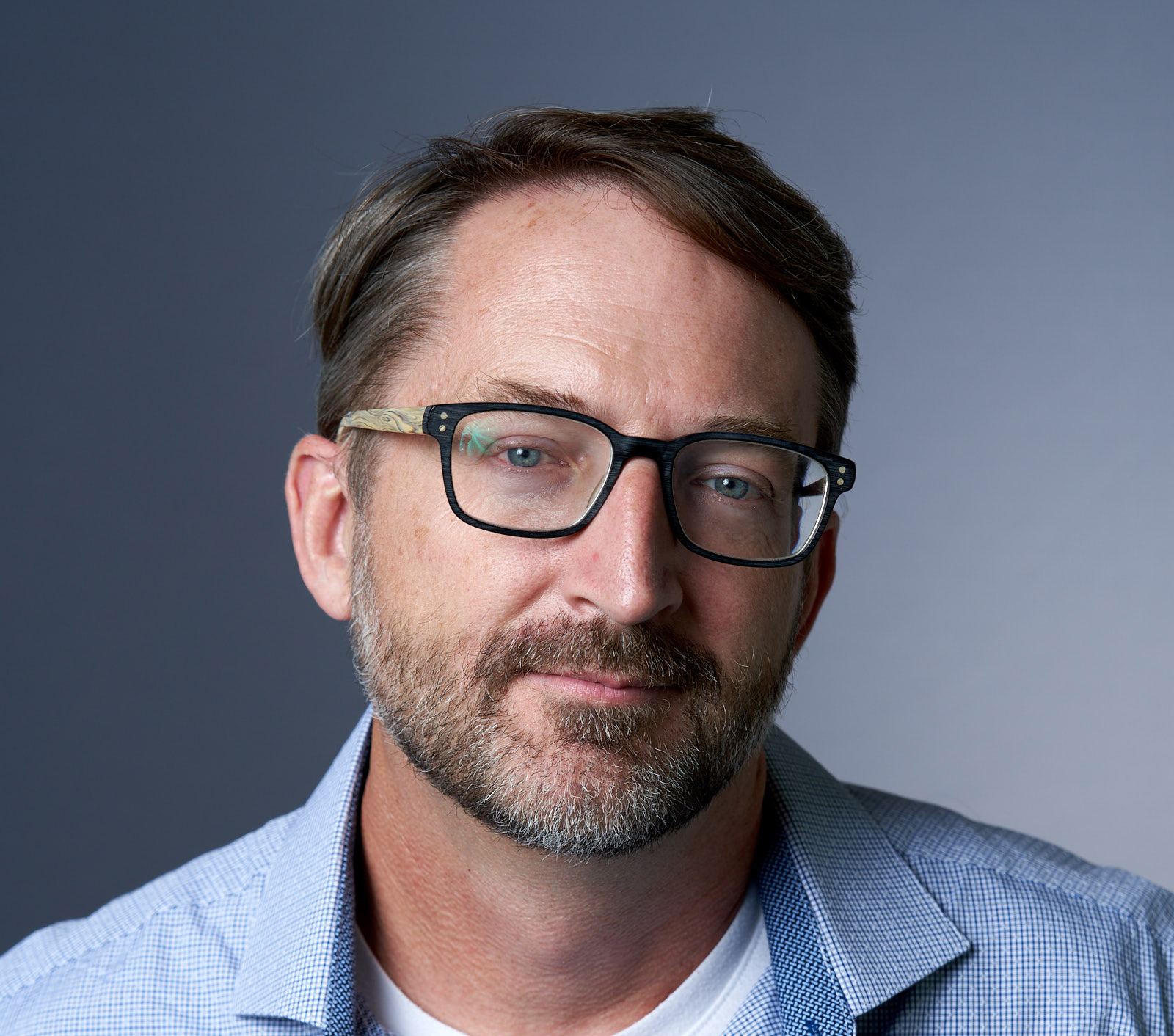
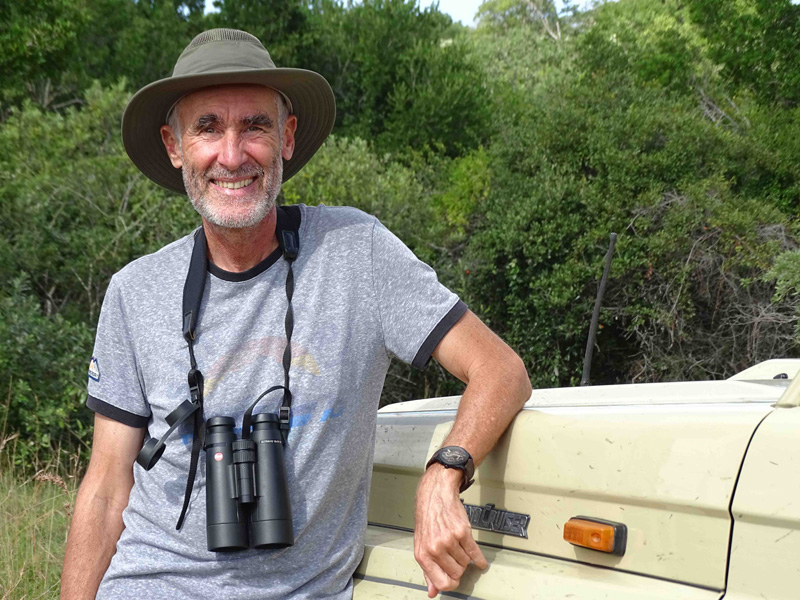
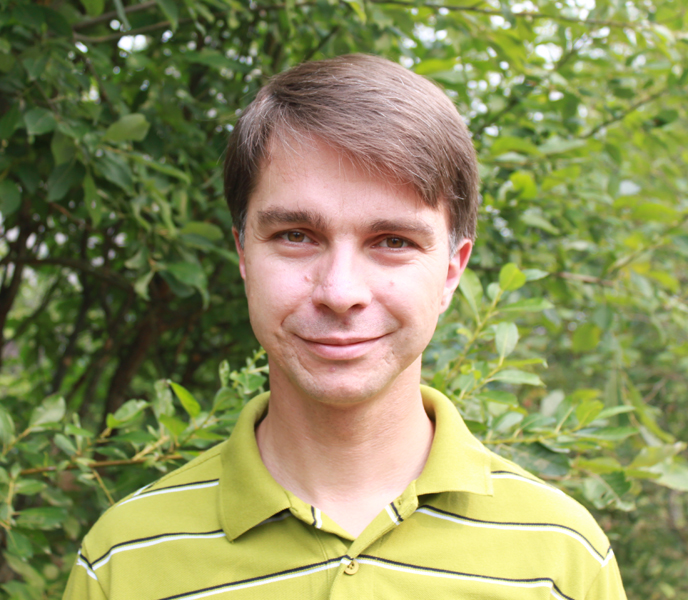
Dr. Kaya de Barbaro is an Associate Professor in the Department of Psychology at the University of Texas at Austin (College of Liberal Arts). She holds a Ph.D. from the University of California San Diego. Her research focuses on bridging computer science and developmental/clinical psychology, particularly maternal mental health and infant social-emotional development. She directs the Daily Activity Lab, which uses mobile/wearable sensors and machine learning to analyze real-world interactions, aiming to develop just-in-time interventions for new mothers. Key research areas include maternal-infant dynamics, physiological synchronization, and the impact of environmental chaos on development. She has pioneered methods for analyzing high-density data, such as Granger causality and machine learning algorithms to detect behaviors like crying and holding. Recent work emphasizes leveraging ecological momentary assessment surveys and 24-hour LENA audio recordings to understand proximal mechanisms of development. Dr. de Barbaro teaches Psychology 333D (Introduction to Developmental Psychology) and has developed curricula for both in-person and online formats. She is actively involved in training students through the Eureka program at UT Austin. Her lab collaborates on tools like chatbots for postpartum mental health and has published extensively on sensor-based methodologies in developmental science.
Olga Sorkine-Hornung is a Professor of Computer Science at ETH Zurich and head of the Institute of Visual Computing. She leads the Interactive Geometry Lab, focusing on theoretical and practical advancements in digital content creation, geometry processing, and shape modeling. Current position: ETH Zurich, Department of Computer Science Previous roles: Courant Institute (NYU), Technical University of Berlin Education: BSc and PhD from Tel Aviv University, postdoc at TU Berlin Her research spans shape representation, digital fabrication, computer animation, and fundamental geometry processing. Key contributions include Laplacian surface editing, as-rigid-as-possible deformation, and generalized winding numbers. She works on applications in VR, AR, and autonomous systems. Awards include Test of Time Awards (2024), ACM Fellow (2020), ERC Consolidator Grant (2020), and EUROGRAPHICS Young Researcher Award (2008). She has supervised numerous students and co-developed software libraries like libigl and Instant Meshes . Co-chair roles for SIGGRAPH, Eurographics, and Pacific Graphics Editorial board member for ACM Transactions on Graphics and other journals Keynote speaker at VMV, CVPR, and SIAM conferences Her work bridges mathematical rigor with practical implementation, advancing computer graphics and geometry processing through intuitive algorithms that maintain surface detail while enabling efficient computation.
Rachit Agarwal is an Associate Professor in the Department of Computer Science at Cornell University, with research focusing on systems, networking, and theoretical problems arising in practical systems. He leads a research group working on resource disaggregation, host architecture, secure cloud storage, and datacenter design. PhD in Computer Science, Cornell University Undergraduate, IIT Kanpur His research spans three major directions: Resource Disaggregation (with $3M NSF and Google awards), Host Architecture (exploring terabit interconnects), and PANCAKE (secure oblivious cloud storage with $1M NSF award). He also contributed to foundational work in Near-optimal Datacenter Design and Data Plane Monitoring . Awards include the Sloan Fellowship, NSF CAREER, IRTF Applied Networking Prize, and multiple best paper awards. His recent publications focus on host network architecture, congestion control, oblivious data access mechanisms, and secure cloud storage systems. He has advised multiple Ph.D. and postdoctoral researchers who now hold faculty positions at leading institutions. Sloan Research Fellowship NSF CAREER award Kavli Fellowship IRTF Applied Networking Research Prize SIGCOMM Best Student Paper Award Usenix Security Distinguished Paper Award Tau Beta Pi Professor of the Year 2025 Rachit has advised numerous students including current Cornell advisees like Midhul Vuppalapati, Shreyas Kharbanda, and Omar Eqbal. Former advisees include Saksham Agarwal (UIUC), Qizhe Cai (UVA), and Mina Tahmasbi Arashloo (University of Waterloo). His research is supported by large NSF grants and industry awards, with deployments in real-world systems and open-source contributions.
Steven Jackson is a Professor of Information Science and Science and Technology Studies at Cornell University's Bowers College of Computing and Information Science, with additional graduate field appointments in Communication and Public Affairs. Since July 2023, he has served as Vice-Provost for Academic Innovation at Cornell, and previously held leadership positions as Chair of Information Science and Dean of William Keeton House. His work bridges academic research with significant institutional leadership in higher education innovation. Dr. Jackson's research focuses on critical intersections of technology, society, and the environment, with three primary strands: technology ethics, law and policy; maintenance, repair and sustainability; and technology, inequality and global development. His work draws from American pragmatism, political economy, and science and technology studies, integrating methods from sociology, anthropology, philosophy, and media studies. He is particularly interested in how computing practices meet social and material worlds, with implications for infrastructure, collaboration, sustainability, and cultural practice. His recent publications reveal a strong emphasis on repair as both theoretical concept and practical methodology, exploring 'ordinary hope' as a framework for technological engagement and examining unmaking as a necessary counterpart to design. The research spans diverse geographical contexts from the global North to South, addressing caste dynamics in computing, digital authoritarianism, and infrastructure challenges in developing contexts. Dr. Jackson has received significant recognition including an NSF CAREER award and more than twenty paper awards at leading computing and information science venues. His research has been supported by major organizations including the U.S. National Science Foundation, Social Science Research Council, Ford Foundation, Sloan Foundation, World Bank, Intel Research, Atkinson Center for Sustainability, and the Canadian Social Science and Humanities Research Council. As an advisor, Dr. Jackson has mentored numerous graduate students who have gone on to prominent positions at institutions worldwide. He currently advises Jen Liu, Amy Cheatle, Daniel Mwesigwa, Johan Michalove, and Ritik Batra, while his former students include Palashi Vaghela (Assistant Professor at Simon Fraser University), Samir Passi (Responsible AI Researcher at Microsoft), Maggie Jack (Assistant Professor at NYU), and Ranjit Singh (Senior Researcher at Data and Society). Dr. Jackson convenes the Computing On Earth Lab, an experimental collaboration bringing together social scientists, humanists, artists, and engineers to rethink the material and planetary foundations of computing. The lab reflects his commitment to interdisciplinary approaches that address computing's environmental impacts and sustainability challenges.
Christopher G. Atkeson is a Professor at the Robotics Institute at Carnegie Mellon University (CMU), where he has been since 2000 after previously holding positions at MIT and Georgia Institute of Technology. His research focuses on fulfilling the science fiction vision of machines achieving human levels of competence in perception, cognition, and action, with particular emphasis on understanding how to get machines to generate and perceive human behavior. Atkeson's work spans two complementary approaches: humanoid robotics and human aware environments. His research interests include nonparametric learning, memory-based learning, reinforcement learning, learning from demonstration, and modeling human behavior. He is particularly known for his work on robot learning of challenging dynamic tasks such as juggling, trajectory-based optimization, and soft robotics (including his contributions to the Baymax character in Disney's Big Hero 6). His recent publications demonstrate a strong focus on tactile sensing (FingerVision), human-in-the-loop optimization for exoskeletons, deep learning for locomotion control, and trajectory-based optimization methods. His work consistently bridges theoretical foundations in machine learning with practical implementations on physical robots. Among his scientific recognitions are an NSF Presidential Young Investigator Award, a Sloan Research Fellowship, and a Teaching Award from the MIT Graduate Student Council. Atkeson has advised numerous students who have gone on to successful careers in academia and industry, including notable researchers like Andrew Moore and Stefan Schaal. His teaching includes courses on dynamic optimization, humanoids, kinematics, dynamics, and control.
Nicolas Mathevon is a Professor at the University of Saint-Etienne and a Senior Member of the Institut universitaire de France (IUF). His research focuses on bioacoustics and animal communication, spanning from marine mammals to birds. He has held visiting positions at Hunter College (City University of New York) and the University of California, Berkeley. Education Habilitation à diriger les Recherches (2002, University of Saint-Etienne) PhD (1996, University of Lyon 1) Master's Degree (ranked 2nd, University of Lyon 1) Agrégation in Life and Earth Sciences (ranked 8th) Mathevon's research explores how animals use sound for social interactions, mate selection, and environmental adaptation. His work bridges bioacoustics, neuroethology, and behavioral ecology, with a focus on decoding vocal signals' complexity. His publications cover diverse topics including animal soundscapes, vocal memory in seals, and neural encoding of communication calls. The articles highlight interdisciplinary approaches combining neuroscience, behavioral studies, and acoustic signal analysis. Scientific Awards Prose Award for Excellence in Biological and Life Sciences, AAP (2024) Chevalier des Palmes Académiques (2017) IUF Senior Member (2015-present) IUF Junior Member (2005-2010) Mathevon has supervised 17 PhD students, 10 postdocs, and contributed to public outreach through media, documentaries, and public lectures. He leads the International Master of Bioacoustics program and serves as President of the International BioAcoustic Society.
Anca Dragan is an Associate Professor in the Department of Electrical Engineering and Computer Sciences at the University of California, Berkeley, where she runs the InterACT Lab focused on algorithms for human-AI and human-robot interaction. Currently on leave from Berkeley, she leads AI Safety and Alignment at Google DeepMind, overseeing safety for Gemini models and preparing for future advancements. Dragan has been a co-PI of the Center for Human-Compatible AI and served on the steering committee for the Berkeley AI Research (BAIR) Lab. B.Sc. in Computer Science from Jacobs University Bremen, Germany Ph.D. from Carnegie Mellon University Dr. Dragan's research focuses on enabling AI agents to work effectively with, around, and in support of people. Her work bridges robotics, machine learning, and game theory to create systems that better understand human preferences and coordinate with users. Key areas include AI alignment (ensuring AI does what people actually want), learning reward functions from diverse human feedback forms, and developing algorithms for human-AI collaboration across domains like autonomous vehicles, brain-machine interfaces, and recommender systems. Her research emphasizes maintaining uncertainty about human preferences and accounting for the plurality of human values. Dr. Dragan's recent publications reveal a strong focus on addressing fundamental challenges in AI safety and alignment. Her work spans theoretical foundations of reward learning, practical implementations for human-AI coordination, and critical examinations of limitations in current approaches. There's a clear trajectory toward more robust, safe, and value-aligned AI systems that can handle complex human preferences while avoiding both present-day harms and potential catastrophic risks. IEEE RAS Early Academic Career Award in Robotics and Automation (2021) McEntyre Award for Excellence in Teaching (2020) PECASE (Presidential Early Career Award for Science and Engineering) (2019) Sloan Fellowship (2018) NSF CAREER Award (2017) Okawa Foundation Award (2017) MIT Tech Review 35 Innovators Under 35 (2017) Multiple best paper awards at top robotics and AI conferences Dr. Dragan has mentored numerous successful students who have gone on to faculty positions at MIT, Stanford, CMU, and Princeton, as well as industry roles at DeepMind, Waymo, and Meta. Her advising philosophy emphasizes both technical rigor and consideration of broader societal impacts. She has secured significant research funding including NSF CAREER, ONR Young Investigator, and Okawa Foundation awards, supporting work on human-AI interaction and alignment. Dragan has also consulted for Waymo for six years, helping develop roadmaps for deploying increasingly learning-based safety-critical systems. Dr. Dragan leads the InterACT Lab at UC Berkeley, which has produced influential work on Cooperative Inverse Reinforcement Learning, Inverse Reward Design, and other foundational concepts in human-AI interaction. The lab's research has significantly shaped the field of AI alignment, with applications spanning autonomous vehicles that coordinate with human drivers, brain-machine interfaces that adapt to user needs, and language models that better understand human preferences. Current work focuses on scaling safety approaches as AI capabilities advance, ensuring alignment keeps pace with technological progress.
Haijun Xia is an Assistant Professor at the University of California, San Diego (UCSD), where he directs the Foundation Interface Lab and contributes to the Cognitive Science and Design Lab. His work focuses on Human-Computer Interaction (HCI) and Human-AI Collaboration , emphasizing the development of dynamic, malleable interfaces that integrate human cognition with intelligent systems to enhance thinking and working paradigms. Education: Bachelor's, Tsinghua University Master's and PhD, University of Toronto His research spans generative AI , interface design , and creative collaboration , with applications in data visualization, programming, and scholarly work. He advocates for treating information as a malleable material that can be flexibly manipulated by users and AI agents. Recent publications highlight advancements in: 2025 CHI Conference - Generative user interfaces, malleable overview-detail designs, and compositional structures for human-AI co-creation 2024 CHI Conference - Structured design space exploration with LLMs, ASCII diagram analysis, and adaptive presentation systems 2023 CHI/UIST Conferences - Data particle visualization, contextual logging tools, and metaphor generation for science communication Scientific recognitions include: Multiple Best Paper Awards and Honorable Mentions at CHI and UIST Hellman Fellowship and grants from NSF , Microsoft , Google , Meta , Apple , and Adobe He actively recruits undergraduate and graduate interns and has an upcoming postdoc position in early 2025 for researchers interested in foundational interface development.
Mauro Bambi is an Associate Professor at Durham University Business School and an Associate Fellow at the Institute of Advanced Studies. His research focuses on Macroeconomic Theory, Endogenous Growth, Habit Formation, and Behavioral Economics. He earned his PhD from the European University Institute (2007) and held positions at ETH Zurich and the University of York. He directs the Centre for Macroeconomic Policy (CEMAP) and has been recognized with the 2008 Italian Association of Applied Mathematics award for his PhD thesis. Education: PhD in Economics (European University Institute, 2007); Postdoctoral Fellowships at Université Catholique de Louvain (Belgium) and ETH Zurich (Switzerland). Research Interests: Macroeconomic Theory and Policy Design Endogenous Growth and Fluctuations Habit Formation in Economic Models Behavioral Economic Preferences Mathematical Methods in Macroeconomics Key Contributions: His work on habit formation models, time-to-build frameworks, and policy design has influenced macroeconomic theory. Recent studies analyze post-COVID demand shifts and pandemic economic impacts. Awards: 2008 Graduate Prize for Best PhD Thesis (Italian Association of Applied Mathematics). Advising and Leadership: Supervised PhD students like Federico Bertoni and Xinyi Xu. Directed CEMAP from 2019–2022, fostering macroeconomic policy research. Active in interdisciplinary collaborations at the Institute of Advanced Studies. Labs/Teams: Leader of CEMAP, collaborating with global institutions on macroeconomic policy analysis.
Stanislav Smirnov is a Professor at the University of Geneva's Department of Mathematics since 2003 and Head of the Chebyshev Laboratory at St. Petersburg State University since 2010. He holds a Ph.D. from the California Institute of Technology (1996) and a B.Sc./M.Sc. from St. Petersburg State University (1992). His research focuses on mathematical physics, probability, complex analysis, and dynamical systems, with groundbreaking contributions to the understanding of critical phenomena in statistical physics. Key achievements include receiving the Fields Medal (2010), the highest honor in mathematics, for his work on percolation and the Ising model. He has organized major international conferences, such as the 'St. Petersburg School in Probability & Statistical Physics' (2012) and the '2D Statistical Physics Workshop' (2013). His academic career includes positions at Yale University, the Max-Planck Institute, and KTH Royal Institute of Technology. Education: Ph.D., Mathematics, California Institute of Technology (1996) B.Sc./M.Sc., Mathematics (with honors), St. Petersburg State University (1992) Awards: Fields Medal (2010) European Research Council Advanced Grants (2008, 2013) Rollo Davidson Prize (2002) Salem Prize (2001) Smirnov’s research bridges probability theory and complex analysis, with notable results on conformal invariance in two-dimensional models. His work has advanced understanding of critical exponents, percolation thresholds, and the universality of phase transitions. He advises doctoral students and collaborates internationally on projects funded by Swiss and European grants. He co-organized over 20 conferences worldwide, including plenary talks at the International Congress of Mathematicians (2006, 2010) and the World Congress in Probability and Statistics (2012). His lab fosters interdisciplinary research, linking mathematics to physics and computer science.
Ariel Pakes is the Thomas Professor of Economics at Harvard University, part of the Faculty of Arts and Sciences and the Department of Economics. He previously held the Charles and Dorothea Dilley Professorship at Yale University and tenured roles at institutions including the University of Wisconsin and the Hebrew University of Jerusalem. His research focuses on industrial organization (I.O.), the economics of technological change, and econometric theory. Pakes has advised notable students who now lead economics departments globally and has received prestigious awards including the Frisch Medal (1986) and election to the American Academy of Arts and Sciences (2002). Education: Pakes earned his Ph.D. in Economics from Harvard University in 1980. His academic journey includes roles as a lecturer at Harvard and positions at the University of Jerusalem. Research Interests: Pakes has pioneered methodologies for analyzing I.O. models, including demand and cost system estimation. Recent work examines AI’s impact on pricing strategies, antitrust policy implications of market dynamics, and healthcare cost structures. His theoretical contributions include simulation estimators and frameworks for dynamic oligopolies. Awards: Frisch Medal (Econometric Society, 1986) Fellow of the Econometric Society (1988) Fellow of the American Academy of Arts and Sciences (2002) Best Graduate Student Advisor Award (Yale University, 1996) Advisory and Grants: Pakes has served on NSF panels, including the Economics Advisory Panel and Presidential Fellow Advisory Board. His consulting work spans government agencies and large firms. He edited the RAND Journal of Economics and co-chaired the AEA Census Advisory Panel. Labs/Teams: Collaborates with NBER as a Research Associate and contributes to interdisciplinary projects like the PNAS issue on 'Science, Technology and the Economy.'
Harsha Ram is an Associate Professor in the Department of Comparative Literature at the University of California, Berkeley. His research focuses on Russian and European Enlightenment, modernist literature, and the cultural histories of the Caucasus region. He holds dual B.A. Honors degrees in Italian and Russian from the University of Sydney and University of New South Wales, and a Ph.D. in Comparative Literature from Yale University. His work bridges literary theory, post-colonial studies, and geopoetics, with a particular emphasis on Georgia's literary modernism and its intersections with Russian imperial culture. Key themes include spatial theory, peripheral modernisms, and the transnational dimensions of cultural production. Recent work examines the role of ritual feasts in Georgian national identity and the geopoetics of Eurasian avant-garde movements. Ram has published extensively on figures like Velimir Khlebnikov and Boris Pasternak, exploring their engagement with imperial legacies and revolutionary aesthetics. His book The Imperial Sublime: A Russian Poetics of Empire (2003) remains a seminal study of Russian imperial poetics. Current projects include studies on Georgian literary encounters with Russian culture and the symbolic dimensions of Caucasus representations. His scholarship frequently appears in leading journals such as Modernism/Modernity , Slavic Review , and Ab Imperio . He has held visiting positions at institutions globally and actively participates in interdisciplinary dialogues between literary studies, history, and cultural geography.
Daniel W. Bliss is a Professor in the School of Electrical, Computer and Energy Engineering at Arizona State University and Director of ASU's Center for Wireless Information Systems and Computational Architectures (WISCA). With over $50 million in research funding as principal investigator from organizations including DARPA, ONR, Google, and Airbus, his work bridges theoretical foundations with practical implementations across multiple domains of wireless systems. Dr. Bliss received his educational foundation with a B.S.E.E. from Arizona State University (1989), followed by M.S. and Ph.D. degrees in Physics from the University of California-San Diego (1995, 1997). His academic journey includes significant industry experience at General Dynamics (1989-1993) and MIT Lincoln Laboratory (1997-2012) before joining ASU. His research program focuses on advanced wireless systems spanning radar, communications, precision positioning, computational architectures, and medical monitoring applications. Bliss employs information theory, estimation theory, and signal processing to develop novel system concepts with disruptive capabilities. Current research emphasizes RF convergence, integrated sensing and communications, and anticipatory medical analytics using wireless technologies, with particular focus on extracting physiological data from radar signals. Analysis of recent publications reveals a strong trend toward integrated sensing and communications systems, particularly utilizing mmWave and radar technologies for medical monitoring applications. His work increasingly bridges traditional communications and radar domains while expanding into physiological monitoring, demonstrating a clear trajectory toward convergence of wireless technologies for healthcare applications and remote vital sign detection. Dr. Bliss has received significant recognition for his contributions: Fellow of the IEEE (2015) 2021 IEEE Warren D. White Award for Excellence in Radar Engineering 2016-2017 Top 5% Teaching Award at ASU 2017 ASU Fulton Engineering Exemplar Faculty As a dedicated mentor, Dr. Bliss has supervised numerous graduate students through successful dissertation and thesis defenses across both PhD and Master's programs. His research portfolio includes substantial funding from diverse sources with over $50 million secured as principal investigator. Current projects include the $17M DARPA DASH project focused on advanced software-reconfigurable heterogeneous SoCs for next-generation RF systems, and multiple initiatives in contactless vital sign monitoring using radar technologies. Dr. Bliss leads the BLISS Lab and serves as director of WISCA, fostering interdisciplinary research in wireless systems. His team includes researchers working on distributed coherent systems, MIMO radar, RF convergence, and medical monitoring applications, with recent successes including the Making Waves team that tied for first place in the Air Force Spark Tank challenge. He has founded two startup companies: DASH Tech Integrated Circuits Company and the Big Little Sensor Company, focusing on high-performance embedded processing and small-scale radar physiological monitoring, respectively.
Prof. Dr. Alexander Stroh-Steckelberg is Professor of Political Science with a focus on African Politics & Development Policy at the University of Bayreuth since 2022. He serves as Deputy Head of the Bayreuth International Graduate School of African Studies (BIGSAS) until 2025 and has held prior roles as Junior Professor and Senior Fellow at BIGSAS (2015–2021). His academic career includes research associate positions at the GIGA German Institute of Global and Area Studies (2006–2015) and teaching roles at the Universities of Abomey-Calavi, Heidelberg, and Lüneburg. Stroh-Steckelberg’s research spans comparative democracy studies , judicial politics , electoral systems , political party dynamics , and development policy in Africa, with regional expertise in Francophone West Africa and Rwanda . His work emphasizes institutional diffusion, informal networks in courts, and the interplay between formal and informal governance structures. Recent publications reveal a focus on judicial appointment policies , electoral manipulation , and local governance challenges across Africa. He contributes to methodological advancements in comparative area studies and network analysis , particularly in non-Western democracies. Stroh-Steckelberg is actively involved in academic communities including the American Political Science Association , German Political Science Association , and Association for African Studies in Germany .
Michael A Osborne is Professor of Machine Learning at the University of Oxford and leads the Bayesian Exploration Lab . He serves as Director of the EPSRC Centre for Doctoral Training in Autonomous Intelligent Machines and Systems and co-directs the Oxford Martin AI Governance Initiative. His research focuses on Bayesian optimization, Gaussian processes, and probabilistic numerics with applications in quantum devices, battery modeling, and AI governance. Key Positions: Professor of Machine Learning, University of Oxford Official Fellow, Exeter College Co-founder of Mind Foundry Lead Researcher, Oxford Martin Programme on Technology and Employment Research Themes: Probabilistic modeling for quantum systems Uncertainty quantification in energy storage AI safety and societal impact analysis Automated experimental design Quantum device calibration Probabilistic numerical methods Technical Contributions: Bridging reality gap in quantum devices Efficient Bayesian quadrature techniques Personalized neurostimulation algorithms Automated measurement protocols Quantum-classical hybrid ML