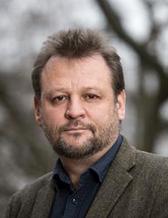
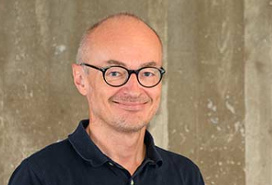
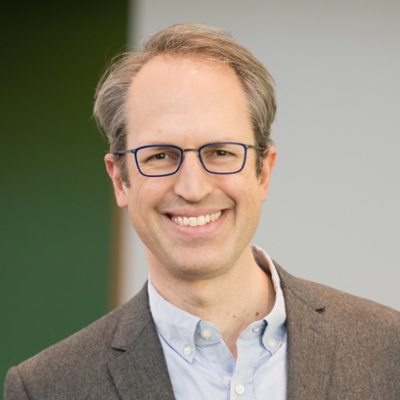
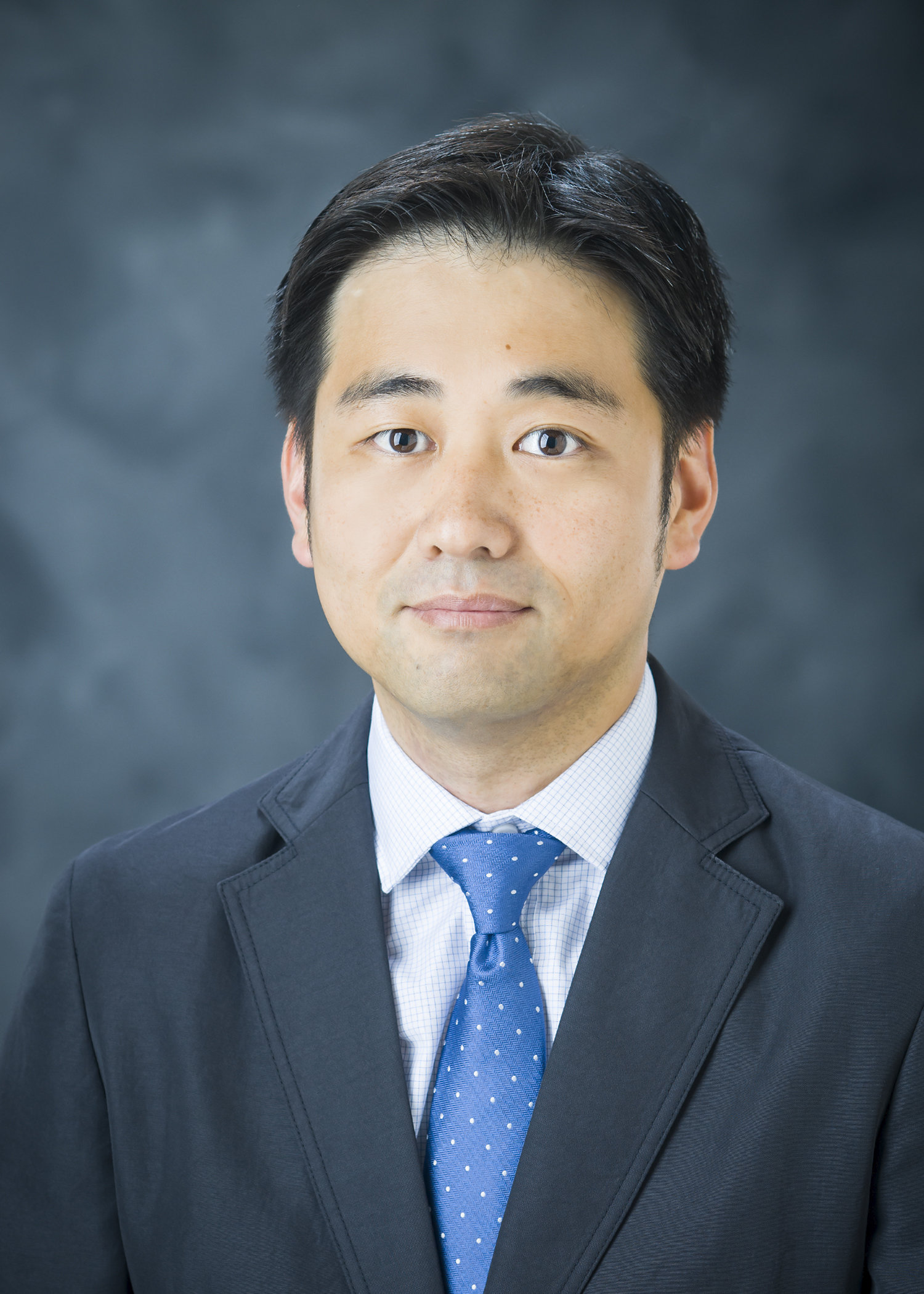
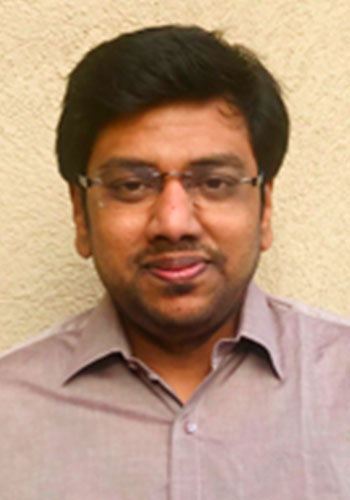
Asst. Prof. Dr. Ferhat KAYA is an academic at the Department of Energy within the Faculty of Engineering at İgdir University. His academic background includes a Bachelor's in Mechanical Engineering (1997), a Master's in Energy (2010), and a Doctorate in Energy (2014), all from Atatürk University. His research focuses on renewable energy technologies, thermal systems, and engine efficiency, particularly in solar energy applications, phase change materials, and internal combustion engines. He has authored over 15 peer-reviewed articles since 2011, addressing topics like PVT systems, exergy analysis, and diesel engine performance. Education: Bachelor's: Mechanical Engineering, Atatürk University (1990–1997) Master's: Energy (Thesis: 'Analysis of Cycle Number for Real In-Cylinder Pressure in IC Engines'), Atatürk University (2007–2010) PhD: Energy (Thesis: 'Use of FDM for Cold Start Assistance in Diesel Engines'), Atatürk University (2010–2014) Research Interests: Solar thermal systems, thermal efficiency optimization, diesel engine emissions reduction, exergy analysis, phase change material applications, and energy policy. Publications highlight his work on PVT system optimization, exergy loss reduction, and the role of shale gas in global markets. No awards or patents are listed, and no current administrative duties or grants are indicated. He has not directed any theses or held laboratory leadership roles documented here.
Glyn Johnson is a Professor of Clinical MRI Physics at Norwich Medical School, University of East Anglia, and an Adjunct Associate Professor of Radiology at New York University School of Medicine. He is also an Honorary Professorial Fellow and a member of Cancer Studies at UEA. His career spans leading institutions in the UK and the US, including the University of Aberdeen, Columbia University, and NYU, where he led the brain tumour imaging research group. BA in Natural Sciences (Physics and Theoretical Physics), University of Cambridge (1977) MSc in Medical Physics, University of Aberdeen (1978) PhD in Medical Physics, University of Aberdeen (1981) His research focuses on developing quantitative MRI techniques to improve diagnostic accuracy in cancer, particularly by distinguishing benign from malignant lesions. His work addresses challenges in lesion characterization using advanced MRI methods such as perfusion, diffusion, and sodium imaging. He has made seminal contributions to MRI physics, including co-developing spin warp imaging during his PhD. His recent publications show a strong trend in applying diffusion MRI and perfusion modeling to prostate and brain cancers, with increasing emphasis on computational and Monte Carlo modeling of tissue microstructure. He also contributes to interdisciplinary research linking nutrition, cognitive ageing, and neuroimaging. Notable scientific engagement includes membership in the ISMRM annual meeting program committee (2005–2007), ongoing service on NIH review panels, and extensive peer-review activity for academic journals since 1984. He has led multiple research projects funded by the National Institutes of Health and Abbott Nutrition, focusing on brain tumour imaging, cognitive ageing, and prostate cancer detection. His work is cited in policy and media, reflecting its translational impact. He is actively involved in collaborative research and continues to publish and secure grants, indicating ongoing academic leadership. Johnson is affiliated with research teams at UEA and NYU, and his projects often involve multi-institutional collaborations, particularly in neuroimaging and cancer studies.
Rikke Duus is an Associate Professor (Education) and Honorary Research Fellow at the UCL School of Management, with visiting faculty status at ETH Zurich. She holds a PhD in human-tech hybrid relationships, an MSc in Practice-based Research, an MSc in Strategic Marketing, and a BA in English and International Communication. She is a Senior Fellow of the Higher Education Academy. Educationally, Rikke has expertise spanning digital business transformation, executive education, and urban innovation. Her work focuses on how organizations adapt to digital opportunities, inter-industry collaboration, and the ethical implications of data-driven practices. She has contributed to media outlets like CNN, the World Economic Forum, and The Independent, and has been featured in The New York Times and CBS radio. Rikke’s research explores digital ecosystems, consumer agency in data-sharing environments, and the 'darker' aspects of surveillance. She co-developed frameworks like the DVC and TRIP models to guide digital competitiveness. Her recent work emphasizes empowering learners in hybrid educational spaces, for which she won the 2021 UCL Provost Education Award. Professional roles include serving on EFMD EOCCS Review Panels for online course quality and participation in the European Digital Education digital skills squad. She advocates for future-focused digital skills and has been recognized for innovative teaching methods, including asynchronous course design and student-centered learning. Rikke’s publications span journals like Frontiers in Psychology and Harvard Business Publishing , with a focus on digital transformation, consumer behavior, and urban tech. Her work bridges academic research and practical applications, influencing both business education and industry strategy.
Gunnar Köhlin is a Lecturer at the Department of Economics with Statistics at the University of Gothenburg. He is the Director of Environment for Development (EfD), an initiative focused on integrating environmental economics into policy in developing countries. His research spans natural resource management, environmental valuation, and sustainable development in Africa and Asia, with a focus on Ethiopia and India. He holds a Ph.D. in Economics from the University of Gothenburg and has extensive experience in capacity-building and policy engagement. Education: Ph.D. in Economics (1998), M.A. in Economics (1988), B.A. in Economics with minors in Anthropology, Development Studies, and other disciplines (1987). Additional training includes executive education at Stanford University (2015). Research Interests: Sustainable natural resource management in developing countries, climate change adaptation, non-market valuation techniques, and household production models. Key areas include forestry interventions, energy transitions, and land conservation in Ethiopia and India. Grants: Over SEK 200 million in funding from Sida and international bodies for projects like the Environment for Development Initiative and Tanzania Country Environmental Analysis. Leadership roles in global networks like FOCALI and the World Bank’s Ethiopia Country Environmental Analysis. Teaching: Environmental valuation, natural resource management, and cost-benefit analysis at both undergraduate and graduate levels. Supervised over 20 Ph.D. candidates, contributing to academic capacity-building in Ethiopia and other regions. Awards: University of Gothenburg pedagogical prize (2003), Collaboration Prize (2011), and Honorary Professor title at University of Cape Town (2018–).
Fabio Mariani is a Professor of Economics at UCLouvain, affiliated with the LIDAM (Interdisciplinary Research Center in Management) and the Economic and Social Research Institute (IRES). His research focuses on economic growth, development, family economics, and international migration, with an emphasis on how institutions, culture, and policies shape socioeconomic outcomes. He has published extensively on topics such as human capital, demographic trends, and the interplay between migration and crime. His work integrates theoretical models with empirical analysis, addressing questions like the role of education in protectionism revival, the environmental impacts of population dynamics, and the effects of diasporas on conflict. Recent studies explore unconventional angles, including left-handedness’s socioeconomic implications and the political economy of naturalization. Despite his prolific output, no scientific awards are explicitly mentioned in the text. His research consistently bridges micro and macroeconomic perspectives, often using panel data and case studies (e.g., Italy’s secularization of marriage). While no lab affiliations are noted, his work frequently engages with policy implications in areas like taxation, trade, and migration governance. His advising and grant activities remain unspecified, though his publications suggest collaborative international research networks. The full description elaborates on all these aspects in detail.
Anders Holm is a Professor and Acting Chair of the Department of Sociology at Western University, cross-appointed with the Department of Economics. He holds a PhD in Economics from the University of Copenhagen. His research focuses on social stratification, health inequality, and quantitative methods, leveraging economic methodologies to analyze sociological phenomena. Current projects include infrastructure development for collaborative research using administrative data. Education PhD in Economics, University of Copenhagen Research Interests Dr. Holm specializes in quantitative methods, socioeconomic lifecourse dynamics, intergenerational mobility, and the sociology of health. His work examines causal effects of education policies, parental benefits, and cognitive development factors. Recent projects address workplace violence's mental health impacts and peer effects in child mental health. Grants & Advising No specific grants or advisee names are listed in the provided texts, though his research involves large collaborative datasets. His work often intersects with public policy evaluation. Labs/Teams No dedicated lab is explicitly mentioned, though collaborations with administrative data networks are central to his current projects.
Brygg Ullmer is a Professor at Clemson University's School of Computing and Chair of the Human-Centered Computing Division. He leads the Tangible Visualization group, focusing on Tangible User Interfaces (TUIs) Computational Genomics Interactive Computational STEAM Rapid Physical/Electronic Prototyping Computationally-Mediated Art and Design His work bridges physical and digital domains, with applications in K-12 education, high-performance computing, and culturally-rooted design. Research trends from his 15 most recent articles show a focus on Generative AI for cyberphysical systems Shape-changing interfaces Token+Constraint interaction models Genomics data visualization Hybrid tangible-gestural interfaces Multi-display collaboration These span both theoretical and applied work in computer science, biology, and design. Ullmer has held significant roles including Postdoctoral work at Zuse Institute Berlin Associate Professor at Louisiana State University (CCT & Computer Science) Visiting Lecturer at Hong Kong Polytechnic University Contributions to IBM Systems Journal and special editions of Springer's Personal and Ubiquitous Computing He has also co-edited journal special issues and served on conference committees. His scientific contributions include co-invented U.S. patents (6164541, 6263507, 6259441) related to Invisible hyperlinking Audiovisual data browsing Digital video time-shifting These patents reflect early innovations in tangible interface technology that have influenced modern interactive systems.
Professor Anatoly Zhigljavsky serves as Chair in Statistics and Honorary Professor at Cardiff University's School of Mathematics. He holds multiple administrative positions including membership in the Senior Management Committee, School Research Committee, School Management Board, School Learning and Teaching Committee, Board of Studies, and Subject panel. University: Cardiff University School: School of Mathematics Position: Chair in Statistics, Honorary Professor Professor Zhigljavsky earned his MSc from the University of St.Petersburg, Russia in 1976, followed by his PhD in 1981 and Habilitation in 1987, all from the same institution. His academic credentials reflect a strong foundation in mathematical statistics and theoretical probability. His research spans several interconnected domains in statistics and optimization. He is particularly renowned for his contributions to Time Series Analysis, where he has advanced Singular Spectrum Analysis (SSA) into a powerful technique for time series analysis, forecasting, and change-point detection. His work in Statistical Modelling in Market Research has resulted in numerous industry collaborations, while his research in Stochastic Global Optimization has provided theoretical insights into random search algorithms, especially in high-dimensional spaces. His investigations into Probabilistic Methods in Search and Number Theory have yielded novel approaches to discrete search problems including group testing with lies. Professor Zhigljavsky has also pioneered Dynamical system approaches for studying convergence of search algorithms, bridging continuous and discrete optimization methodologies. Analysis of Professor Zhigljavsky's recent publications (2021-2025) reveals an evolving research trajectory with increasing focus on high-dimensional statistical challenges, quantization theory, and the intersection of optimization with time series analysis. His work consistently demonstrates mathematical rigor combined with practical relevance, addressing computational challenges in large-scale data analysis. His collaborations span multiple institutions with researchers including Luc Pronzato, Jack Noonan, and Anatoly Pepelyshev. Scientific recognition includes: Constantin Caratheodory Prize in France (2019) Professor Zhigljavsky has secured substantial external funding including projects with Procter and Gamble on statistical modelling in Market Research (totaling approximately £200,000), projects with AcNielsen/BASES on consumer behaviour modeling (£40,000), and projects with GlaxoSmithKline on biopharmaceutical studies (£15,000) and environmental science (£10,000). His research has consistently demonstrated practical applications across multiple industries. As an active member of Cardiff University's Statistics research group, Centre for Optimisation and Its Applications, and Statistical Modelling Unit, Professor Zhigljavsky continues to influence both theoretical developments and practical applications in statistics and optimization.
Dr. Seong Yun is an Associate Professor in the Department of Agricultural Economics at Mississippi State University. His work focuses on resource and environmental economics, particularly in coupled ecological-economics systems across agriculture, fishery, forestry, and water sectors. He specializes in bioeconomic modeling, applied econometrics, and numerical methods in economics. Purdue University: Ph.D. in Agricultural Economics University at Buffalo: M.A. in Mathematics Seoul National University: M.A. and B.A. in Economics Dr. Yun's research spans sustainability analysis, ecosystem-based management, natural capital valuation, and climate change impact assessment. His methodological focus includes spatial econometrics and numerical optimization for policy evaluation. Recent publications highlight his work on hemp production economics, climate risk adaptation, invasive species control, and air pollution effects. He employs spatial panel models and bioeconomic frameworks to address environmental challenges. Graduate Students: Jessica Browne, Shelby Brewer Extension Publications: Economic impacts of bacterial beach closures on Mississippi Gulf Coast
Dr. Paul Davidson is an Assistant Professor in the Department of Mechanical and Aerospace Engineering at The University of Texas at Arlington (UTA), part of the College of Engineering. He joined UTA in 2020 after roles at the University of Michigan, University of Washington, and industry positions at companies like General Electric and Visteon. His research focuses on advanced composite manufacturing, damage mechanics, and aerospace structural performance, with applications in robotics, non-destructive evaluation, and machine learning. Education: Ph.D. (2013), MEng (2009) in Mechanical Engineering from University of Michigan; BE in Automotive Engineering (2004) from University of Madras. Research: Intersections of computational methods, data analytics, and advanced manufacturing. Key areas include spacecraft structural optimization, robotic fiber placement, composite failure analysis, and morphing structures. His research group, LAMMA (Laboratory for Advanced Materials, Manufacturing, and Analysis), develops tools for aerospace materials and structures. Notable awards include the 2024 UTA Teaching Award and 2021 Rising STARs Award. He advises over 20 students, including PhD candidates and undergraduate researchers, and leads grants from AFRL and NSF. His work spans 150+ publications in journals like Composite Structures and International Journal of Solids and Structures. Teaching includes foundational courses like Engineering Statics and Dynamics, alongside advanced topics in composites. Active in professional societies, he chairs the Durability & Damage Tolerance division of the American Society of Composites and reviews for journals like Composites Part B.
Joseph DeSalvo is a Professor of Economics at the University of South Florida (USF), affiliated with the College of Arts and Sciences. His career spans over five decades, including roles as Department Chairman (1998–2003) and Director of the Center for Economic and Management Research (1984–89). He earned his Ph.D. from Northwestern University and has held academic positions at the University of Wisconsin-Milwaukee and the University of South Florida. His research focuses on urban economics, transportation policy, and regional development, with notable contributions to urban sprawl analysis, transportation subsidies, and housing policy. He has authored/co-authored over 50 academic articles and books, including seminal works on urban household behavior and economic impact studies of ports and airports. DeSalvo has received multiple awards, including the Professorial Excellence Award (1996–97) and recognition as an intellectual leader in regional science. His teaching spans macroeconomic and urban economics, and he has advised numerous Ph.D. students. He has conducted impactful research for institutions like the Tampa Port Authority and the Florida Department of Transportation. Key contributions include studies on urban form, transit demand, and the economic impacts of infrastructure projects. His work integrates theoretical models with empirical analysis, addressing real-world policy challenges in urban and regional planning.
Christis Hassapis is an Associate Professor in the Department of Finance at the University of Cyprus, affiliated with the School of Economics and Management. He holds a Bachelor's in Mechanical Engineering from The George Washington University and a Master's and PhD in Economics from Boston College, USA. Vice Dean, Graduate School (2014-2018) Vice Dean, School of Economics and Business Administration (2014-2017) Elected Member, University of Cyprus Council (multiple terms) Chairman, UCY-Voice Radio Station His research focuses on Macroeconomics, Banking, and International Finance, with emphasis on policy uncertainty, portfolio optimization, and financial dynamics. Recent work explores contagion effects in housing markets, robust portfolio strategies, and nonlinear interest rate dynamics. Key contributions include studies on economic policy uncertainty impacts, group decision-making in investments, and crisis analysis in Greece. He has served in leadership roles at academic and institutional bodies, including the UCY Diogenis Business Incubator and Teaching Resource Center.
Gowtham Mohan is an Assistant Professor in the Department of Engineering Technology at the University of Houston's Cullen College of Engineering. His research focuses on advancing renewable energy systems, thermal engineering, and sustainable technologies. He leads projects in solar thermal systems, particle flow dynamics, and energy storage materials. His work integrates experimental and computational methods to optimize energy efficiency and system performance. Key research areas include solar agrivoltaic systems, high-temperature particle receivers, and PVT (Photovoltaic Thermal) systems. He has conducted extensive studies on thermal energy storage materials, corrosion-resistant alloys, and non-intrusive measurement techniques for particle plumes. His contributions span interdisciplinary applications such as sustainable desalination, combined cycle power plant optimization, and environmental integration of energy systems. Dr. Mohan's publications emphasize novel methodologies for particle velocity estimation, thermal imaging analysis, and system feasibility studies. His work bridges theoretical innovation with practical applications in energy sustainability and thermal engineering. He collaborates closely with industry and academic partners to translate research into real-world solutions.
Xiaodong Gong is a Professor at the Canberra School of Politics, Economics and Society at the University of Canberra. He joined UC’s NATSEM unit in 2011 and transitioned to his current role in 2019. His expertise spans labour supply analysis, tax-transfer policy, childcare economics, and household consumption, contributing to UN Sustainable Development Goals related to economic growth and social equity. Before joining UC, he held roles at the Australian Treasury, ANU, and Germany’s IZA. He is an Adjunct Professor at ANU’s Crawford School of Public Policy and a Fellow of IZA. His research focuses on policy evaluation, econometric modeling, and social welfare dynamics. Key research interests include the economic impacts of childcare policies, labour market dynamics, and fiscal policy effects. He collaborates internationally on projects such as regional rail development and workforce shortages in the ACT. Over 40 publications and 18 research projects reflect his interdisciplinary work in economics, public policy, and social sciences. Notable awards include the IZA Fellowship. He actively advises PhD students and leads projects like the Refreshable Panel for Research and Evaluation Services (RES Panel). His work bridges academia and policy, addressing real-world challenges in taxation, education, and public health.
Paulo M.M. Rodrigues is a Full Professor at Nova School of Business and Economics, Universidade Nova de Lisboa, and a permanent Researcher at Banco de Portugal's Economics and Research Department since September 2008. His work bridges academic research with central banking policy. Educated with a PhD in Econometrics (1998) and MA in Economics and Econometrics (1995) from University of Manchester Received Agregação (2005) in Business Management from Universidade do Algarve Research spans time series econometrics, financial risk modeling, tourism economics, and decision analysis, focusing on: Nonlinear threshold effects in credit risk Structural breaks and unit root testing Banking crisis forecasting models Regional tourism development dynamics Fractional integration in economic time series Publications show consistent contributions to: Central banking and financial stability Econometric methodology Tourism demand analysis Operational research applications Policy impact assessment