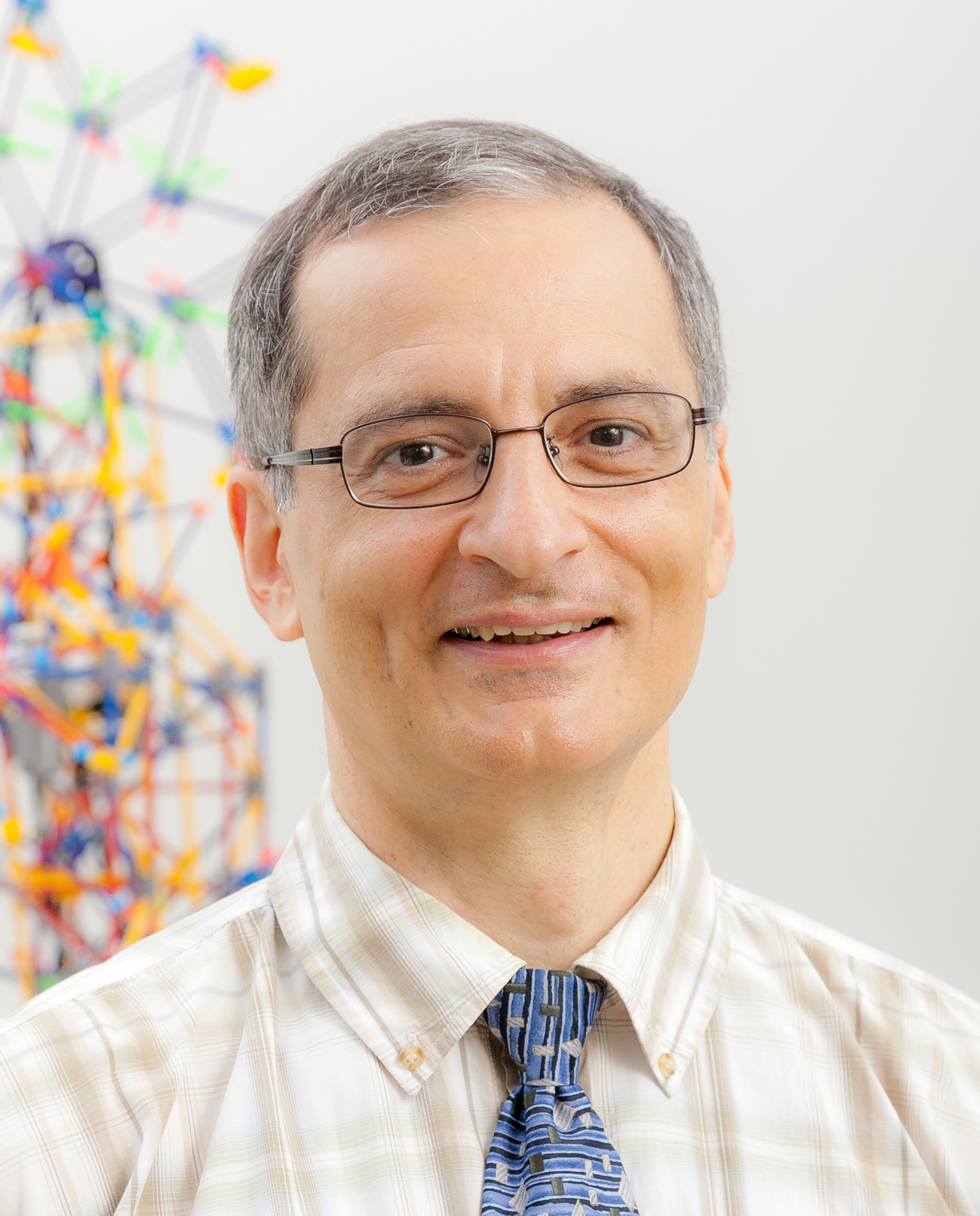
Christoph Koch is a Full Professor in the School of Computer and Communication Sciences at EPFL (Ecole Polytechnique Federale de Lausanne) , Switzerland. He has held academic positions at Cornell University (2007-2010, 2006), Saarland University (2005-2007), and TU Vienna (2001-2005). His research focuses on database systems, logic, programming languages, and data management.
Katja Hose is a Full Professor of Data Management at TU Wien's DBAI research unit, heading the Data Management and Knowledge-Driven AI Lab. She previously held a Poul Due Jensen Foundation Professorship at Aalborg University. Her research focuses on data and knowledge engineering, including graph databases, knowledge graphs, querying, analytics, and machine learning, with interdisciplinary applications in bioscience, healthcare, and environmental assessment. Education: PhD in Computer Science (Ilmenau University of Technology, 2009), Postdoc at Max Planck Institute for Informatics (2009–2012). Academic roles include Program Co-Chair for ISWC 2024 and EDBT 2023, and editorial board membership at VLDBJ and TGDK. She leads projects like TARGET (health virtual twins) and ARMADA (data management). Research Interests: Knowledge Graphs, Semantic Web, Big Data, Machine Learning, Data Integration, and Provenance Systems. Key contributions include SHACL shape extraction, conversational data analytics, and environmental knowledge graphs. Awards include the 2025 Distinguished Meta-Reviewer Award and 2024 Manfred Paul Award. Advising and Grants: Supervised students including E. Pürmayr (Diploma Thesis 2025). Active in EU projects (TARGET, ARMADA) and grant coordination. Labs/Teams: DMKI Lab at TU Wien, collaborating with interdisciplinary teams in healthcare and environmental science.
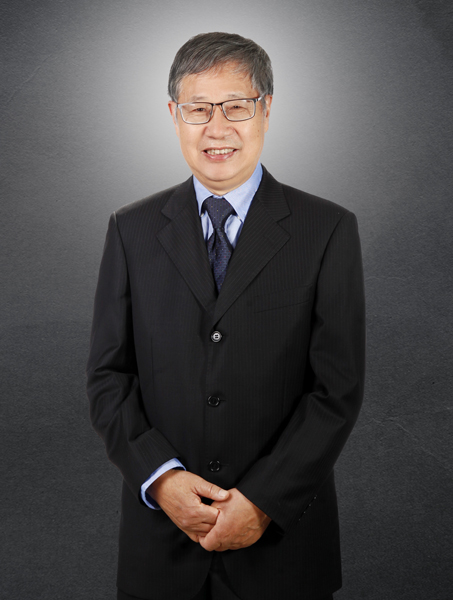
Huamin Qu is a Chair Professor in the Department of Computer Science and Engineering at the Hong Kong University of Science and Technology (HKUST). He serves as the Founding Dean of the Academy of Interdisciplinary Studies (AIS), Founding Head of the Division of Emerging Interdisciplinary Areas (EMIA), and was the Founding Acting Head of Computational Media and Arts (CMA) at HKUST(GZ). Qu directs the VisLab and coordinates the Human-Computer Interaction (HCI) group. He obtained his BS in Mathematics from Xi'an Jiaotong University and MS/PhD in Computer Science from Stony Brook University. Qu's research integrates Data Visualization , Human-Computer Interaction , and Human-Centered AI , with applications in urban informatics, social networks, and explainable AI. His work focuses on developing interactive systems for big data analytics, visual storytelling, and AI-driven decision support. Research extends to multimodal communication, fintech, and augmented reality applications. His publications emphasize visual analytics for complex datasets (mobility, social media, financial), interaction techniques for immersive environments, and AI-enhanced visualization tools. Recent works explore explainable AI interfaces and large-scale data communication frameworks. IEEE Visualization Academy (2020) IEEE VGTC Technical Achievement Award AI 2000 Most Influential Scholar (2019, 2023, 2024) 21 Best Paper/Honorable Mention awards IBM Faculty Award (2009) APICTA Merit Award (2015) Yelp Dataset Grand Prize (2018) Qu has advised 48 PhD graduates (21 now faculty at institutions like UC Davis, University of Minnesota, Texas A&M) and 30 MPhil students. He secured major grants including RGC theme-based projects (digital citizenship, air pollution), UGC AoE (slope safety), and China's 973 Program. As VisLab director, he leads 20+ researchers in visualization/HCI projects adopted by Microsoft, IBM, Huawei, and Tencent.
Lam James is a Chair Professor of Control Engineering at the University of Hong Kong (HKU), affiliated with the Faculty of Engineering. He holds a BSc (1st Hons.) in Mechanical Engineering from the University of Manchester, and MPhil/PhD degrees from the University of Cambridge. His academic journey includes roles as a Croucher Fellow, Lecturer at the University of Melbourne, and faculty member at City University of Hong Kong before joining HKU in 1993. Professor Lam serves as Editor-in-Chief for four international journals including IET Control Theory and Applications and Journal of The Franklin Institute . His research focuses on networked control systems, vibration control, control theory, and multi-agent systems. With 600+ peer-reviewed publications, he maintains an H-index of 102 (Web of Science) and 108 (Scopus), recognized as a Highly Cited Researcher in multiple fields. Education: BSc Manchester (Mechanical Engineering), MPhil/PhD Cambridge Editorial Roles: 20+ journals, including leadership roles since 2012 His awards include Foreign Membership of Academia Europaea (2024), National Academy of Artificial Intelligence membership (2025), and two State Natural Science Awards (2015, 2019). He is a Fellow of multiple institutions including IEEE, IMechE, and HKIE.
Dr. Yunjie Yang is an Associate Professor at the University of Edinburgh's School of Engineering, with affiliations at the Edinburgh Futures Institute (EFI), the Edinburgh Generative AI Laboratory (GAIL), and the Edinburgh Centre for Robotics. He previously held the Chancellor's Fellow in Data Driven Innovation (2018-2023) and Bayes Innovation Fellow (2023-2024) positions. His research focuses on AI-powered sensing and imaging, machine learning, and soft sensors & electronics for robotics. Yang received his PhD in Engineering Electronics from the University of Edinburgh, MSc in Control Science & Engineering from Tsinghua University, and BEng in Measurement & Control Engineering from Anhui University. After his PhD, he worked as a Postdoctoral Research Associate in Chemical Species Tomography before securing his lectureship. His research interests center on developing intelligent sensing systems that replicate human perception capabilities for robotics and intelligent systems. He pioneers flexible sensing and imaging technologies across various scales through innovative multi-modal sensors, soft electronics, and their modeling using machine learning approaches. His work aims to enable autonomous physical artificial intelligence by bridging the gap between robotic systems and human-like perception. Analysis of his recent publications reveals a strong focus on soft robotics perception, particularly through electrical impedance tomography (EIT) and transformer-based architectures. His research spans medical imaging applications, digital twin modeling for industrial processes, and machine learning approaches for sensor data interpretation. The trend shows increasing integration of physics-informed deep learning with traditional tomographic techniques to achieve higher accuracy and efficiency. European Research Council (ERC) Starting Grant (2024) IEEE J. Barry Oakes Advancement Award (2024) IEEE I&M Society Graduate Fellowship Award (2015) Multiple Best Paper Awards Senior Member of IEEE Fellow of the International Society for Industrial Process Tomography Fellow of the Higher Education Academy ESI highly cited papers Dr. Yang serves as Associate Editor for IEEE Transactions on Instrumentation and Measurement and holds editorial positions with Scientific Reports and IEEE Sensors Journal. His research has been licensed to overseas research institutes and industry partners and received wide media coverage including BBC, EFE, USA Today, and STV. He has secured significant grant funding including the prestigious ERC Starting Grant. He leads the Edinburgh SMART Lab (Sensing/imaging + Machine Learning + Robotics), which aims to replicate human perception capabilities for robotics and advance flexible sensing technologies through innovative multi-modal sensors and machine learning approaches. The lab focuses on enabling autonomous physical artificial intelligence with applications spanning medical diagnostics, industrial monitoring, and advanced robotics systems.
Nori Franco serves as Professor in the Department of Physics at the University of Michigan and Chief Scientist at RIKEN's Theoretical Quantum Physics Laboratory in Japan. His dual appointments reflect his significant contributions to both American and Japanese academic communities, with continuous service at Michigan since 1990 and at RIKEN since 2002. His research spans quantum information, condensed matter physics, and quantum optics, with particular focus on light-matter interactions, superconducting qubits, optomechanics, and quantum open systems. Franco's work bridges theoretical foundations with experimental implementations, especially in circuit quantum electrodynamics and quantum computing applications. Analysis of his recent publications reveals a strong emphasis on non-Hermitian quantum systems, quantum control techniques, and applications of quantum information science to fundamental physics problems. His research group consistently produces highly cited work, with publications appearing in top journals across quantum physics and condensed matter disciplines. Scientific Awards: Charles Hard Townes Medal (2024) - sole recipient for fundamental contributions to quantum optics and quantum information processing Research Doctorate Honoris Causa from University of Messina (2024) Highly Cited Researcher for eight consecutive years (2017-2024) Member of Academia Europaea (2023) Willis E. Lamb Medal (2023) for quantum electronics research Throughout his career, Franco has secured significant research funding and mentored numerous students and postdoctoral researchers. His work has received international recognition through invitations to deliver prestigious lectures including the Stanislav Ulam Lecture and Sir Nevill Mott Lecture in 2024. His research group maintains strong collaborations across multiple continents, reflecting his global impact on quantum physics. At RIKEN, Franco leads the Quantum Information Physics Theory Research Team within the Quantum Computing Center, directing cutting-edge theoretical work that complements experimental efforts in quantum computing hardware development.
Univ.-Prof. Torsten Möller, PhD is a Professor at the University of Vienna and serves as Head of the Research Group Visualization and Data Analysis and Head of the Research Network Data Science. His work spans data visualization, visual analytics, and human-computer interaction, with a focus on biomedical, environmental, and societal data applications. Academic rank: Professor Research group: Visualization and Data Analysis Network: Data Science Email: torsten.moeller@univie.ac.at Research interests include: Visual data analysis for complex systems Interdisciplinary applications in climate science and medicine Human-computer interaction in data exploration Image processing and computer graphics Recent publication trends show expertise in: Visualizing climate change and pandemic data Multi-volumetric and network analysis Algorithmic transparency and user-centered design Interdisciplinary collaborations (e.g., astrophysics, medical imaging) Statistical and uncertainty visualization Design frameworks for visualization recommendation Teaching includes courses in: Computer graphics and visualization Image processing and analysis Human-computer interaction Data analysis projects Doctoral research seminars
Dr. Rajkumar Buyya is a Redmond Barry Distinguished Professor at the University of Melbourne and Founder & CEO of Manjrasoft , a spin-off commercializing cloud innovations. He has held visiting roles at Imperial College London , University of Birmingham , and Tsinghua University . Research Interests : His work spans Cloud Computing , Edge Computing , Grid Systems , and Energy-Efficient Computing , focusing on utility-driven resource allocation, simulation tools, and scalable IoT application frameworks. He pioneered the CloudSim toolkit and Aneka Cloud technologies. Scientific Awards : IEEE Fellow (2015), Web of Science Highly Cited Researcher (2016-2021) Khwarizmi International Award (2020), Scopus Researcher of the Year (2017) Frost & Sullivan New Product Innovation Award (2010), IEEE TCSC Medal (2009) Impact : Authored over 850 publications, including the widely adopted textbook Mastering Cloud Computing . Graduated 54 PhD students now in leadership roles at institutions like Newcastle University and companies such as IBM , Google , and Amazon . His research has driven global adoption of cloud/edge technologies in 50+ countries.
Peng Shige is a Professor of 1st class at the School of Mathematics, Shandong University, China. He has held the Distinguished Professor title under the Ministry of Education (Cheung Kong Scholarship) since 1999. His academic journey includes degrees from Shandong University (Physics diploma, 1971-1974), Paris-IX (1985), and Aix-Marseille University (PhD 1986, Habilitation 1992). Research focuses on nonlinear expectations, stochastic calculus, partial differential equations, and financial mathematics. Key contributions include foundational work on backward stochastic differential equations (BSDEs), the g-expectation framework, and the G-expectation theory extending probability axioms to nonlinear settings. These innovations have advanced stochastic control, financial risk modeling, and differential games. Honors include the 2020 Future Science Award, 2011 Princeton Global Scholar, and 2005 Chinese Academy of Sciences Academician status. He delivered a plenary lecture at the 2010 International Congress of Mathematicians. Peng's work integrates theoretical breakthroughs with applied domains like financial engineering. His research has been widely cited (~8k citations) and shaped modern stochastic analysis methodologies.
Christian Bargetz is a Professor of Functional Analysis at the University of Innsbruck, Austria, affiliated with the Faculty of Mathematics, Computer Science, and Physics (MIP). His primary research focuses on nonlinear functional analysis, Banach space theory, and distribution theory. He teaches advanced courses such as Optimization, Distribution Theory, and Functional Analysis, demonstrating his expertise in both theoretical and applied aspects of his field. Education: Completed his PhD in 2012 at the University of Innsbruck under the supervision of Norbert Ortner. His diploma thesis (2008) explored differential behaviors with Ulrich Oberst. Bargetz has held continuous academic positions since 2008, including roles as a lecturer and researcher. Research Interests: Specializes in iterative projection methods, generic properties of nonexpansive mappings, Fréchet spaces, and vector-valued distributions. His work bridges functional analysis with geometric measure theory and optimization, with applications in metric geometry and topological tensor products. Publications: Over 30 peer-reviewed articles in prestigious journals such as Canadian Journal of Mathematics , Journal of Mathematical Analysis and Applications , and Proceedings of the American Mathematical Society . Recent work includes studies on extremal nonexpansive mappings and Lipschitz function spaces. Grants & Projects: Principal investigator in FWF-funded projects on nonexpansive mappings and Banach spaces. Collaborates internationally, including with institutions in Israel, Poland, and Serbia. Teaching: Leads advanced courses in functional analysis, optimization, and distribution theory. Supervises bachelor's theses and master's projects on topics like extension operators for Lipschitz functions. Affiliations: Active member of the Functional Analysis working group and regularly participates in international conferences such as the Banach Afternoon, Winter School in Abstract Analysis, and DMV-ÖMG Annual Conferences.
Olaf Steinbach is a University Professor (Univ.-Prof.) at the Institute of Applied Mathematics at Graz University of Technology. His academic career spans over three decades with continuous research activity from 1992 to the present, including publications scheduled for 2026. He serves as a project manager for several research initiatives including the Special Research Area (SFB) F90 Computational Electric Machine Laboratory, which runs from 2022 to 2026. Professor Steinbach's research interests primarily focus on Numerical Analysis and Computational Mathematics . His work centers around developing and analyzing advanced numerical methods, particularly Finite Element Methods (FEM) and Boundary Element Methods (BEM), for solving partial differential equations (PDEs) and optimal control problems. His research spans both theoretical aspects (such as error analysis, stability, and convergence) and practical applications (including electric machines, electromagnetics, and biomechanics). He has made significant contributions to space-time finite element methods, which treat time as an additional dimension in the discretization process, leading to more robust and efficient solvers for time-dependent problems. Analysis of his recent publications (2021-2026) reveals a strong focus on optimal control problems governed by partial differential equations, with particular emphasis on elliptic, parabolic, and hyperbolic PDEs. His work demonstrates a consistent pattern of developing robust numerical methods with rigorous error analysis, often incorporating regularization techniques to handle challenging constraints. The applications span computational electromagnetics (particularly electric machines), fluid dynamics, and wave propagation problems. His research increasingly incorporates advanced computational techniques including parallel computing and isogeometric analysis. Professor Steinbach has supervised numerous doctoral students and has been actively involved in organizing academic events, including summer schools on Boundary Element Methods. His collaborative network extends across multiple disciplines and institutions, reflecting the interdisciplinary nature of his work in computational mathematics. His research has been supported through multiple significant projects including DK-W1244 Doctoral Program on Partial Differential Equations, the EU CASOPT project on optimization of industrial devices, and the ongoing Special Research Area on Computational Electric Machine Laboratory. These projects demonstrate his leadership in establishing research frameworks that bridge theoretical mathematics with practical engineering applications. Professor Steinbach maintains an active research group within the Institute of Applied Mathematics, collaborating closely with researchers in computational engineering, electrical engineering, and biomechanics. His work on the Computational Electric Machine Laboratory represents a particularly strong interdisciplinary effort combining mathematical theory with electrical engineering applications.
Zhao Guoying is an Academy Professor at the Academy of Finland and holds a tenured Full Professorship at the University of Oulu, Finland. His research focuses on human behavior understanding, emotion AI, and computer vision. He has held visiting positions at institutions including Stanford University and Aalto University. He earned his PhD (2005) in Computer Science from the Chinese Academy of Sciences. His work has led to pioneering contributions in facial expression analysis, micro-expression recognition, and remote physiological signal measurement. Zhao has secured over €19.8 million in research grants as PI, including the prestigious Academy Professor Grant (2021-2026) and Profi-7 Hybrid Intelligence funding. He has supervised 22+ PhD students and 16+ postdocs, many of whom hold academic and industry leadership roles. His awards include IEEE Fellow (2022), IAPR Fellow (2020), and Finland’s Most Publishing AI Researcher (2017). His research interests span machine learning, affective computing, and feature representation. Notable contributions include the first systems for spontaneous micro-expression analysis, novel methods for face anti-spoofing, and remote health monitoring via video. He actively organizes conferences (e.g., Arctic AI Days) and chairs committees such as the Finnish AI Society board.
Miriam Wilhelm is a Full Professor of Sustainable Supply Chain Management at the Vienna University of Economics and Business (WU), where she contributes to Sustainability and Purchasing modules. She previously held a Full Professor position at the University of Groningen (2010-2022) and served as Academic Director for MSc programmes. Her research focuses on multi-tier supply chains, governance of sustainability, and human rights in global supply networks. She has published in top journals like Journal of Operations Management and Organization Science , and currently serves as Associate Editor at the Journal of Supply Chain Management . Her recent work explores forced labor mitigation via social intermediaries, plural sourcing for CSR, and mandatory due diligence legislation. She has received multiple Best Paper awards at Academy of Management Conferences (2016, 2018, 2020). Key Research Themes : Governance of supply chain sustainability Decent work and human rights Multi-tier supply chain complexity Education : Doctoral degree from Freie Universität Berlin; visiting researcher at University of Tokyo, Meiji University, and University of Melbourne. Activities : Regular speaker at Academy of Management Annual Meetings and other global conferences.
Alan Bovik is the Cockrell Family Regents Endowed Chair Professor in the Department of Electrical and Computer Engineering at The University of Texas at Austin's Cockrell School of Engineering. He also holds positions at The Institute for Neurosciences and serves as Director of the Laboratory for Image and Video Engineering (LIVE). With a career spanning over three decades at UT Austin, he has progressed from Assistant Professor (1984-1988) to Associate Professor (1988-1994) to his current position as Full Professor (1994-present). Dr. Bovik received his Ph.D. in Electrical and Computer Engineering in 1984 from the University of Illinois, Urbana-Champaign. Professor Bovik's research focuses on image and video quality assessment, visual perception, and digital media processing. He is renowned for developing groundbreaking algorithms including the Structural Similarity (SSIM) index, Visual Information Fidelity (VIF), and various blind quality assessment models like BRISQUE and NIQE. His work bridges engineering and neuroscience, creating perception-based models that optimize visual media delivery while reducing bandwidth consumption. These innovations have had profound industry impact, with his algorithms processing a significant proportion of global internet video traffic. His recent publications demonstrate continued leadership in perceptual quality assessment, with increasing focus on AI-generated content, high dynamic range (HDR) video, and novel applications in medical imaging. The research shows a clear trajectory toward more sophisticated, neural network-based quality metrics that better align with human visual perception across diverse content types. Professor Bovik has received numerous prestigious awards recognizing his contributions to the field: John Fritz Medal (2024) IEEE Edison Medal (2022) IAMB BaM Award (2022) Elected to the United States National Academy of Engineering (2022) Technology and Engineering Emmy Award (2021) IEEE Fourier Award for Signal Processing (2019) Progress Medal from The Royal Photographic Society (2019) Named Honorary Fellow of The Royal Photographic Society (2019) Primetime Emmy Award (2015) Edwin H. Land Medal from The Optical Society (2017) As Director of the Laboratory for Image and Video Engineering (LIVE), Professor Bovik has secured substantial research funding from organizations including the National Science Foundation and the National Institute for Standards and Technologies. His lab has produced numerous influential datasets including the LIVE Image and Video Quality Databases. He has mentored many successful students who have gone on to make significant contributions in academia and industry, though specific student names are not provided in the source materials. The Laboratory for Image and Video Engineering (LIVE) under Professor Bovik's direction has become a world-renowned center for research in perceptual image and video quality. The lab maintains close collaborations with major technology companies including Netflix, Amazon, and YouTube, ensuring that research has direct practical applications. LIVE has developed numerous influential tools and databases that are widely used in both academic research and industrial applications worldwide.
Dr. Borivoje Dakic is an Associate Professor at the University of Vienna , affiliated with the Faculty of Physics and the Quantum Optics, Quantum Nanophysics and Quantum Information department. His research spans foundational and applied aspects of quantum theory. Operational reconstruction of quantum formalism Quantum interference as a resource for communication Tomography of large-scale quantum systems Macroscopic quantum phenomena His work includes scalable verification techniques for quantum devices and collaborations with experimental teams like Philip Walther’s and Markus Aspelmeyer’s groups. He received the Marko Jarić Prize (2025) for his contributions. Recent projects focus on diagnostics of quantum devices (FWF BeyondC SFB), information-theoretic foundations of quantum interference (FWF P36994), and local operations in quantum field theory (Cluster of Excellence QuantA). His research on quantum coherence in networks and macroscopic entanglement challenges traditional assumptions about quantum-classical boundaries. Publications emphasize resource-efficient tomography, device-independent verification, and foundational frameworks for quantum statistics and field theory. Teaching: Quantum Information (2025W), Theory in Quantum Optics (2025S), VCQ Summerschool Labs: Dakić Group at University of Vienna