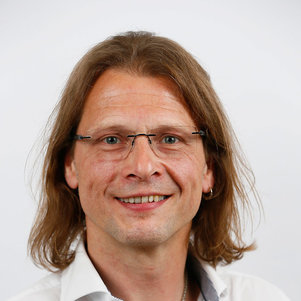
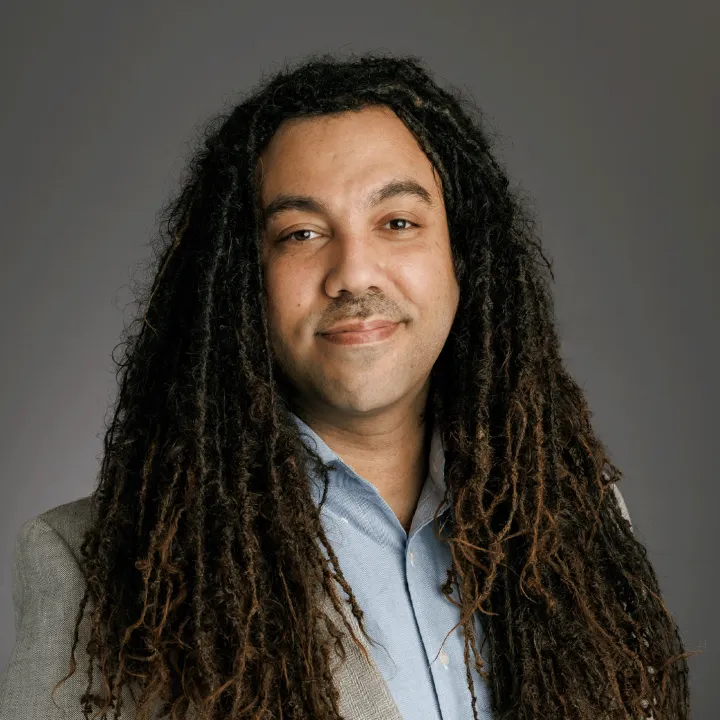
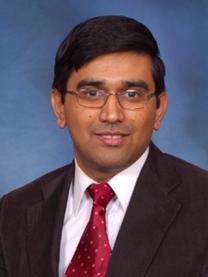
Dr. Christopher M. Wolverton is a Professor of Materials Science and Engineering at Northwestern University , where he leads the Wolverton Research Group . His work focuses on computational materials science with applications in energy sustainability , particularly in batteries , hydrogen storage , and thermoelectrics . PhD in Physics from University of California, Berkeley BS in Physics (summa cum laude) from University of Texas, Austin His research leverages first-principles quantum mechanical simulations and machine learning to enable virtual materials synthesis before laboratory testing. The group specializes in hybrid computational methods integrating Density Functional Theory (DFT) , Monte Carlo simulations , and phase-field microstructural models . The article portfolio shows leadership in energy storage materials , with recent work on data-driven nanoparticle facet control , mixed-anion semiconductors , and machine learning-accelerated discovery . Publications span top journals including Nature Energy , Nature Materials , and Science . 2006 Ford Motor Company Technical Achievement Award 2005 Ford Patent & Publication Awards 2003 Ford Environmental/Physical Sciences Recognition As advisor to PhD candidates Zhenpeng Yao , Shiqiang Hao , and Shane Patel , he fosters interdisciplinary research connecting materials informatics with experimental validation . The group maintains active collaborations with Argonne National Lab and MIT/Harvard teams.
Ivan C. Christov is an Associate Professor of Mechanical Engineering at Purdue University's School of Mechanical Engineering in West Lafayette, Indiana. His research focuses on fluid dynamics, non-Newtonian fluid mechanics, and multiphase processes, with applications in biomedical engineering, micro/nanotechnology, and advanced materials. He leads the Transport: Modeling, Numerics & Theory laboratory. Education: Ph.D., Northwestern University, 2011 M.S., Northwestern University, 2008 M.S., Texas A&M University, 2007 S.B., Massachusetts Institute of Technology, 2005 Research Interests: Soft hydraulics, computational science, scientific machine learning, nonlinear waves, and fluid-structure interactions. His work spans theoretical modeling, numerical simulation, and experimental validation in complex fluid systems. Publications: Recent work includes studies on flow-rate pressure-drop relations in deformable microchannels, physics-informed neural networks for particle dynamics, and fluid-structure interaction in cerebral aneurysms. Themes include microfluidics, elastohydrodynamics, and rheological characterization of soft materials. Awards: Fulbright U.S. Scholar (2022) Outstanding Engineering Instructor (multiple recognitions) Richard P. Feynman Distinguished Postdoctoral Fellowship (2013) Labs/Teams: Directs the Transport laboratory at Purdue, focusing on interdisciplinary research in fluid mechanics and computational methods. Collaborates on biomedical fluid dynamics and advanced materials characterization.
Professor Petri Kuosmanen is affiliated with Aalto University as a faculty member of the School of Engineering and holds a position in the Department of Energy and Mechanical Engineering and the Mechatronics unit. Doctoral Degree in Engineering and Technology, Helsinki University of Technology (2004) Licentiate Degree in Engineering and Technology, Helsinki University of Technology (1992) Master's Degree in Engineering and Technology, Helsinki University of Technology (1988) His research focuses on Industrial Internet and Rotor Dynamics , with significant contributions to elevator systems , hydraulics , and wastewater treatment plant design . Recent work includes optimizing natural frequencies in rotor systems and developing digital twins for engineering education . Key trends in his 2024 publications include: Rotor dynamics and vibration analysis Smart data validation in industrial IoT networks Cold-climate adaptations for wastewater treatment Automated fiber optics coating mechanisms Energy efficiency in aeration systems As Principal Investigator, he leads projects like DRIVE FORWARD (2024–2027) and GOOD (2021–2024), focusing on electrified mobile machinery. He actively collaborates with networks such as DAAAM International (Chair) and European CLUSTER-university network (Member).
Prof. Hans van Lint is a Professor of Traffic Simulation and Computing at Delft University of Technology (TU Delft), where he holds the Anthony van Leeuwenhoek Chair since 2013. He is affiliated with the Department of Transport & Planning within the Faculty of Civil Engineering and Geosciences. His research focuses on the intersection of traffic flow theory, data analytics, and traffic simulation, with applications in estimating and predicting traffic states in networks. He has supervised numerous PhD students and contributed to valorization projects translating research into practical solutions. Van Lint earned his MSc in Civil Engineering in 1997 and returned to TU Delft for his PhD, which he completed in 2004 on 'Freeway Travel Time Prediction.' He has held roles including Assistant Professor (until 2009), Associate Professor, and has served as Director of Education for the MSc Transport, Infrastructure and Logistics program from 2010–2016. His research interests include traffic simulation frameworks, data assimilation techniques, and the development of tools for traffic state estimation. He has authored influential papers on topics such as microscopic traffic modeling, congestion pattern analysis, and macroscopic fundamental diagrams. His work emphasizes bridging theoretical models with real-world applications, enhancing traffic management and infrastructure planning. Van Lint teaches courses like 'Transport & Planning' and 'Interdisciplinary Fundamentals,' reflecting his commitment to both research and education. He actively contributes to TU Delft's labs, including the Traffic Dynamics, Modelling and Control Lab, advancing interdisciplinary approaches to mobility challenges.
Michael Murrell is an Associate Professor of Biomedical Engineering at Yale University, with additional appointments in the Physics Department and the Molecular, Cellular and Developmental Biology Track. He holds a B.S. from Johns Hopkins University and a Ph.D. from MIT. His research focuses on understanding cellular mechanics through biomimetic systems and soft matter physics, aiming to bridge biological principles with technological innovation. Key interests include the mechanical basis of cell division, migration, and energy dynamics in cytoskeletal networks. Selected honors include the Postdoctoral Fellowship from the Institute for Complex Adaptive Matter (2010–2012), an NIH Biotechnology Training Grant (2005–2008), and the MIT Presidential Fellowship (2004). His lab, the Laboratory of Living Matter, investigates how physical properties of cells drive life processes, using tools from synthetic biology and computational modeling. Recent work explores energy localization in cytoskeletal networks and mechanical memory in actin systems. Publications highlight advancements in actomyosin contractility, cortical flows, and biophysical energy conversion. The lab actively seeks PhD students and postdocs to join interdisciplinary projects at the Yale Systems Biology Institute and the Physical Engineering and Biology Program.
Daniel M.G. Raff is an Associate Professor of Management at the Wharton School of the University of Pennsylvania, where he has been affiliated since 1994. His research bridges business history and strategy, focusing on urban history, public policy, and historical demography. PhD, Massachusetts Institute of Technology, 1987 BPhil, Oxford University, 1978 MPA, Princeton University, 1976 BA, New College, 1973 Raff’s work explores the historical evolution of business institutions, with recent publications analyzing topics such as pre-modern Chinese real estate markets , industrial routines , and strategic risk management . His research often employs archival data and interdisciplinary methodologies. His publications span business history, economic performance, and transactional engineering, reflecting trends in historical demography , corporate strategy , and market evolution . Raff has also contributed to academic leadership as a Trustee of the Business History Conference and Chair of committees at the Economic History Association. Daniel Raff actively engages in teaching courses like Value Creation & Val Cap and Deals: Econ Struc Trans , emphasizing critical historical thinking in strategic business analysis. He is affiliated with institutions such as the National Bureau of Economic Research and the Wharton Financial Institutions Center.
Dr. Manish Kumar is a Professor in the Department of Mechanical Engineering at the University of Cincinnati, leading the Cooperative Distributed Systems (CDS) Laboratory and the UAV MASTER Lab. He specializes in robotics, unmanned aerial systems (UAVs), and swarm systems, with a focus on decision-making, control in complex systems, and multi-sensor data fusion. His research has been supported by grants from the National Science Foundation, Department of Defense, and industry partners. Education: Ph.D. in Mechanical Engineering, Duke University (2004) M.S. in Mechanical Engineering, Duke University (2002) Research Interests: Dr. Kumar's work addresses challenges in autonomous systems, including UAV coordination, swarm robotics, and emergency response technologies. He integrates machine learning, control theory, and optimization to develop robust systems for applications such as wildfire management, telehealth, and industrial automation. Grants & Labs: Directed projects funded by federal agencies (NSF, DoD) and industry, totaling over $5M. Co-directs the Collaboratory for Medical Innovation and Implementation and the UAV MASTER Lab. Key Contributions: Pioneered algorithms for UAV path planning and swarm coordination. Developed PDE-based models for epidemic spread prediction and control.
Dr. Michael Wilczek is Assistant Teaching Professor in Biotechnology/Bioinformatics at Northeastern University's Roux Institute. His research bridges virology, bioinformatics, and educational innovation, with particular focus on JC polyomavirus pathogenesis and graduate education reform. Key research domains include: Molecular mechanisms of viral infections Bioinformatic analysis of host-pathogen interactions Observational health and real-world evidence Evidence-based graduate education His publication record demonstrates: Expertise in JC polyomavirus cellular pathways Innovative applications of machine learning in virology High-throughput drug screening methodologies Health disparities research in aging populations
Professor D Graham J Shipley is the Professor of Ancient History at the University of Leicester's School of Archaeology and Ancient History since 2002. His research focuses on Hellenistic and Classical antiquity, particularly on political landscapes, environmental studies, and urban planning. He holds a D.Litt. from the University of Oxford (2020) and is a Senior Fellow of the Higher Education Academy (2014). Education: Graduated in Classics from Oxford University. Academic roles include serving on the Oxford Classical Texts Committee and the UK Education Honours Committee. Previously chaired the Council of University Classical Departments and convened the Dorothy Buchan Memorial lectures. Research interests emphasize ancient geography, socio-political structures, and environmental interactions. His work spans studies of Sparta, Greek urban planning, and the cultural impact of Hellenistic expansion. Recent publications examine Pseudo-Skylax's geographical texts and post-Alexandrian political dynamics. Scientific Awards: Senior Fellow of the Higher Education Academy (2014) D.Litt. (Doctor of Letters) from University of Oxford (2020) Advising and Grants: No specific advisees listed, but supervises research in ancient history and archaeology. Active in collaborative projects such as the Laconia Survey. Grants have supported archaeological fieldwork and publication initiatives. Labs/Teams: Collaborates with the Oxford Classical Texts Committee and has led interdisciplinary teams in regional archaeological surveys.
Zach Shahn is an Assistant Professor in the Department of Epidemiology and Biostatistics at the CUNY School of Public Health. He holds a PhD in Statistics from Columbia University and a BA in Mathematics from Stanford University. His research focuses on causal inference methods applied to healthcare data, particularly time-varying treatment effects and critical care applications. He has conducted postdoctoral work at Harvard School of Public Health and previously worked at IBM Research in Healthcare and Life Sciences. Education: PhD in Statistics and Probability, Columbia University BA in Mathematics, Stanford University Research interests include developing causal inference frameworks for evaluating treatment efficacy in dynamic healthcare settings, with a focus on critical care outcomes and methodological innovations. Recent work explores applications of causal diagrams, instrumental variables, and machine learning in healthcare decision-making. His studies often involve large-scale healthcare datasets to assess interventions' real-world impacts. Key trends in his articles include advancements in causal effect estimation under complex treatment regimes, bias analysis in observational studies, and methodological contributions to difference-in-differences and N-of-1 trial designs. His work bridges statistical theory with practical healthcare challenges, emphasizing reproducibility and policy relevance. No scientific awards are listed, though his contributions to causal inference methodologies are notable in academic circles. He has advised on healthcare data projects and published extensively without explicitly listed grants. His professional network includes collaborations with institutions like Harvard and IBM. He is affiliated with CUNY's public health programs and actively engages in academic discourse via Twitter and LinkedIn. His lab or team details are not explicitly mentioned in available materials.
Stelios Timotheou is an Associate Professor at the Department of Electrical and Computer Engineering and faculty member at the KIOS Research and Innovation Center of Excellence, University of Cyprus. He holds a Dipl-Ing from National Technical University of Athens, and MSc/PhD from Imperial College London. His research focuses on developing real-time distributed methodologies using mathematical optimization, machine learning, and computational intelligence to enhance efficiency in critical infrastructure systems. Research interests center on data-driven decision making for urban mobility management, traffic control systems, and energy optimization. Key areas include: Intelligent UAV-based sensing for traffic monitoring Cooperative control algorithms for multi-agent systems Optimization of renewable energy integration Robust infrastructure protection strategies Recent publications demonstrate strong focus on traffic state estimation (76%), energy system optimization (16%), and UAV applications (8%). Awarded the Cyprus Research Award (2017) and ERC Consolidator Grant for URANUS project. Secured multiple research grants focusing on real-time control systems.
Prof. Dr. Andrea Stocco is a Professor at the Technische Universität München (TUM), affiliated with the TUM School of Computation, Information and Technology. His research focuses on the intersection of software engineering and deep learning, particularly addressing the robustness and reliability of data-intensive systems. Key areas include autonomous vehicles, web application testing, and automated functional oracles for deep learning systems. He leads initiatives such as the Lehrstuhl für Software und Systems Engineering , collaborating on projects like CrESt and SUPPRA – Algorand Center of Excellence . Research interests encompass monitoring techniques for AI-driven systems, test suite maintainability, and scenario-based testing of cyber-physical systems (CPS). His work emphasizes practical applications, such as improving testing frameworks for evolving web applications and enhancing interoperability in autonomous driving systems (ADS). Recent efforts include leveraging large language models (LLMs) for secure code assessment and benchmarking generative AI for test input generation. No scientific awards are explicitly mentioned in the provided texts. His publications reflect a strong focus on testing methodologies, with over 40 articles since 2013, covering domains like web test automation, dependency-aware testing, and safety-critical failure prediction in autonomous systems. Advising and grants details are not detailed in the current data, but his lab contributes to TUM's broader efforts in software engineering and systems reliability.
David Melcher is Professor of Psychology and Program Head in Psychology at New York University Abu Dhabi (NYUAD), where he also serves as a Global Network Professor. He is affiliated with the Division of Science and leads the Perception and Active Cognition Lab, focusing on the integration of perception, attention, memory, and action within a cognitive neuroscience framework. PhD in Psychology and Cognitive Science, Rutgers University (2001) Former researcher and professor in Italy and the UK Current leadership: Program Head, Psychology, NYUAD David Melcher's research centers on cognitive neuroscience , particularly how perception, attention, working memory, eye movements, and self-motion interact to shape cognition and behavior. His lab emphasizes active cognition —the idea that perception is not passive but dynamically shaped by action, context, and goals. He investigates how temporal dynamics in neural processing organize perceptual experiences and guide decision-making. His work spans both healthy and clinical populations, exploring individual differences in spatial and temporal processing across the lifespan. The 15 most recent publications reflect a consistent focus on temporal organization in cognition , perception-action coupling , and neural mechanisms of attention and memory . Keywords across these works include cognitive neuroscience, perception, and neuroimaging, with subfields ranging from eye movement research and neural synchrony to computational modeling and clinical neuropsychology. Collectively, they demonstrate a trajectory toward integrative models of brain function that bridge behavioral, neuroimaging, and computational approaches. Among his notable recognitions is the Distinguished Scientific Award for Early Career Contribution to Psychology from the American Psychological Association (2011), highlighting the early impact of his work in cognitive neuroscience. Distinguished Scientific Award for Early Career Contribution to Psychology, APA (2011) David Melcher has advised numerous students through capstone projects in psychology and computer science, fostering interdisciplinary research at the intersection of cognitive science and technology. His research has been generously supported by major funding agencies including the European Research Council , the US National Institutes of Health , the Italian Ministry of Research and Education , and the Chinese Ministry of Foreign Expert Affairs . He also contributes to the academic community as a member of the editorial boards of Journal of Vision , Psychonomic Bulletin & Review , Perception , and iPerception . He leads the Perception and Active Cognition Lab at NYUAD, which employs a multidisciplinary approach combining behavioral experiments, neuroimaging (fMRI, EEG, MEG), eye-tracking, computational modeling, and clinical assessments. The lab’s research aims to understand how the brain constructs stable percepts from dynamic sensory input, particularly during active engagement with the environment.
Daniel Varro is a Professor affiliated with McGill University (Faculty of Engineering, School of Computer Science), with strong ties to Budapest University of Technology and Economics and Linköping University. He is a leading researcher in model-driven engineering, cyber-physical systems, and software engineering, actively contributing to top-tier conferences such as MODELS, ICSE, and ASE. His research focuses on model-based systems engineering (MBSE) , automated model generation , model transformations , and constraint-based consistency checking . Recently, his work has expanded into integrating large language models (LLMs) and machine learning into modeling workflows, including model querying, domain modeling, and bug detection. The recent publications reveal a strong trend toward AI-augmented modeling, logic-based solvers (e.g., Refinery), and safety assurance of autonomous systems (e.g., COLREGs compliance). His work bridges formal methods with practical software engineering challenges in industrial and safety-critical domains. Scientific Awards: No specific awards mentioned in the text. Advising and Grants: While no explicit list of students or grants is provided, his mentorship in the Doctoral Symposium and repeated leadership roles suggest active supervision and likely grant funding. He has led projects on automated model generation, model quality, and AI integration in modeling. Labs and Teams: Daniel Varro is associated with research groups focused on model-driven engineering and software evolution, likely leading or co-leading teams working on the VIATRA and Refinery frameworks for model transformation and solving.
Anders Rantzer is a Professor of Automatic Control at the Department of Control Engineering, Faculty of Engineering, Lund University, Sweden. He has held visiting positions at Caltech (2004–2005) and the University of Minnesota (2015–2016) as the Taylor Family Distinguished Visiting Professor. His academic journey began with a PhD from KTH Stockholm in 1991, followed by a postdoc at the Institute for Mathematics and its Applications (IMA), University of Minnesota. His research interests center on modeling, analysis, and synthesis of control systems , with a strong focus on scalability, adaptation, and applications in energy networks . He is particularly known for foundational work in positive systems and integral quadratic constraints (IQCs) . These theoretical frameworks are critical in analyzing stability and robustness of large-scale interconnected systems. His work bridges mathematical rigor with practical engineering applications, especially in sustainable energy and networked systems. The recent publications and lecture materials reflect a consistent trajectory in scalable and robust control, optimization, and distributed systems. Themes such as large-scale convex optimization , nonlinear and stochastic control , and network dynamics dominate his scholarly output, indicating a sustained commitment to advancing control theory for complex, real-world systems. Scientific honors include: Fellow of IEEE Member of the Royal Swedish Academy of Engineering Sciences (IVA) Chairman of the Swedish Scientific Council for Natural and Engineering Sciences Chairman of the Royal Physiographic Society of Lund Rantzer has supervised numerous students and contributed extensively to academic leadership and education. He has been involved in major national and international research initiatives such as WASP (Wallenberg AI, Autonomous Systems and Software Program) and ELLIIT. His work includes developing educational tools and courses in control, optimization, and machine learning. He leads and contributes to research projects on autonomous systems, cloud control, and smart energy networks. He is affiliated with the Control Lab at LTH and participates in collaborative efforts such as the Nordic University Hub on Industrial Internet of Things (HI2OT). His work integrates theoretical advances with practical implementations in robotics, biomedical systems, and industrial automation.