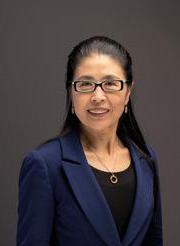
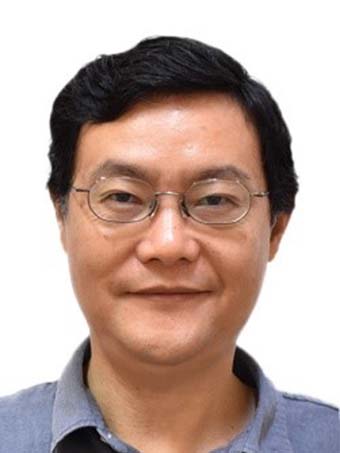
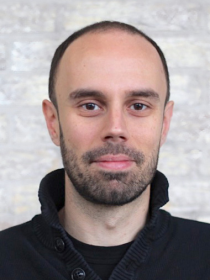
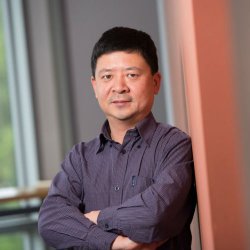
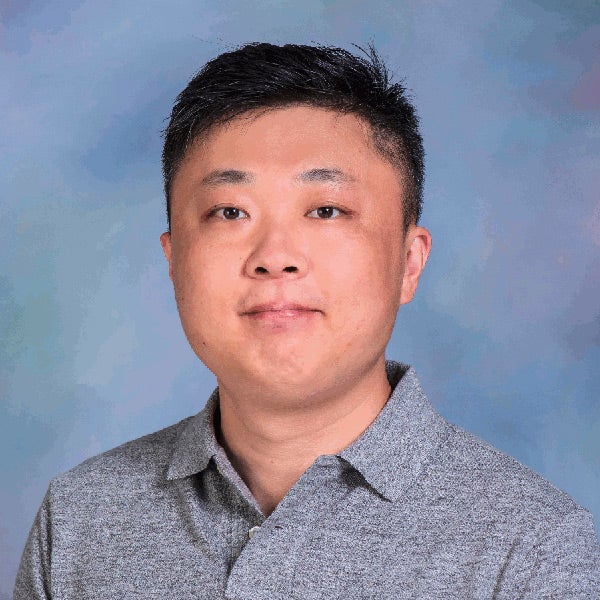
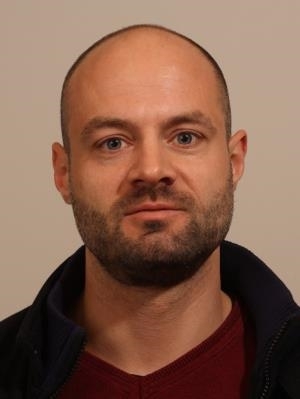
Yan Yan is an Assistant Professor in the Department of Computer Science at Illinois Institute of Technology (Illinois Tech), affiliated with the Center for Sports Innovation. His research focuses on computer vision, machine learning, multimedia, bioinformatics, and artificial intelligence. He holds a Ph.D. in Computer Science from the University of Trento, Italy. Key research interests include applying machine learning to multimedia and bioinformatics, as well as advancing computer vision techniques. His work often bridges theoretical advancements with practical applications in energy systems and wearable technologies. Yan has received notable awards, including the ACM Multimedia 2018 Best Paper Finalist, ACM Multimedia 2015 Best Paper Award, and ICPR 2014 IBM Best Student Paper Award. His contributions to interdisciplinary energy harvesting and motor design have been highlighted in academic circles. He is actively involved in the Center for Sports Innovation, exploring intersections between technology and sports. His publications span topics in motor drives, fault diagnosis, wind turbine systems, and human motion energy harvesting.
Tadanori Koga is an Assistant Professor in the Department of Chemical and Molecular Engineering at Stony Brook University, where he has served since 2006. His research focuses on green energy technologies through polymer nanofabrication, chemical recycling of plastics, and methane hydrate energy resources, utilizing advanced in situ x-ray/neutron scattering techniques at premier facilities like NSLS, APS, and NIST. Education: Ph.D. in Polymer Physics (1998) and M.S./B.S. in Solid State Physics from Kyushu/Kumamoto Universities Honors: Visiting Professor at Kyushu University (2008), Visiting Scientist at Kyoto University (2004) Current projects include: Green nanofabrication using supercritical CO2 Chemical recycling of waste plastics 3D-printing polymer dynamics studies Nanoscale control of methane hydrate formation His work has secured a $1.2M DOE grant for pathogen-preventing nanosurfaces. Recent publications emphasize polymer interface dynamics, self-assembly under stimuli, and scattering-based structural analysis. Collaborative efforts span Oak Ridge Leadership Computing Facility and Brookhaven National Laboratory.
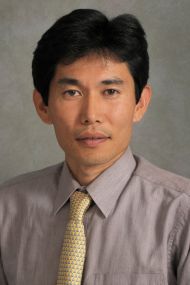
Mohammad Karim, PhD, is a Professor in the Department of Electrical & Computer Engineering at the University of Massachusetts Dartmouth (UMass Dartmouth), affiliated with the College of Engineering. He previously held leadership roles including Provost, Executive Vice Chancellor for Academic Affairs, and Chief Operating Officer at UMass Dartmouth. His career includes serving as Vice President of Research at Old Dominion University (2004–2013), Dean of Engineering at City College of New York (2000–2004), and Head of Electrical and Computer Engineering at the University of Tennessee (1998–2000). He is an elected fellow of multiple prestigious organizations, including IEEE, OSA, and SPIE. Dr. Karim holds a BS Honors in Physics from the University of Dhaka (1976) and MS in Physics (1978) and MS/PhD in Electrical Engineering (1979/1981) from the University of Alabama. His research focuses on optical computing, pattern recognition, electro-optical systems, and sensors, with funding from agencies like the Office of Naval Research and NASA. He has authored 19 books, over 365 papers, and 13 book chapters, and served as guest editor for 36 journal special issues. His awards include Fellowships from IEEE, OSA, and the Bangladesh Academy of Sciences. He mentors students in MS/PhD programs and advises on research proposals. His work spans academic leadership, technical innovation, and interdisciplinary collaboration in engineering and optics.
Janet Dong is a Professor in Mechanical and Materials Engineering at the University of Cincinnati and Director of the UC Center for Robotics Research. Her work spans robotics, autonomous systems, and advanced manufacturing with applications in healthcare, space exploration, and urban infrastructure. She holds a PhD in Mechanical Engineering from Columbia University. Her research integrates: Autonomous vehicles and mobile robots Dynamic systems control Medical device innovation Industry 4.0/5.0 technologies Robotic exoskeletons and augmentation Her recent publications focus on practical robotics applications including lunar rovers, tick collection robots, medical exoskeletons, and urban maintenance systems. Research trends emphasize autonomous navigation, human-robot collaboration, space exploration technologies, and biomechanical augmentation. She leads multiple funded projects including a $1.29M Department of Energy grant for waste sorting automation and Ohio Bureau of Workers Compensation grants for human-robot safety. Her lab develops robotic solutions for lunar infrastructure, medical devices, and industrial automation.
WANG Zhisong is an Associate Professor at the National University of Singapore, leading the Molecular Motors Lab. His research focuses on experimental development of artificial molecular motors, particularly translational motors that differ from rotational systems awarded the 2016 Nobel Prize in Chemistry, with applications in biomedical nanotechnologies and precision engineering. Research Interests: The lab specializes in DNA-based molecular motors powered by light or chemical fuels, combining biophysical/biochemical techniques with stochastic thermodynamics. Applications include nanorobotics, DNA origami platforms, nano-assembly lines, and autonomous motion systems. Publications: Recent work explores light-selective control of DNA motors (2024), advanced nanorobotics via DNA origami (2023), and theoretical limits in directional fidelity (2013). Themes span sustainable motion, color-responsive systems, and integration of molecular motors with structural DNA nanotechnology. Contact: Office S16-07-07, Tel +65 6516 2606, Email phywangz@nus.edu.sg.
Christopher Vogel is a Research Fellow at New College and a Senior Research Associate in the Department of Engineering Science at the University of Oxford. He holds a first-class BE(Hons) in Engineering Science from the University of Auckland and completed his DPhil at Oxford under the Oxford Martin School’s Programme on Globalising Tidal Power Generation. His work focuses on advancing renewable energy technologies, particularly in tidal and wind energy systems. His research interests include fluid dynamics of tidal turbines, aerodynamic performance optimization, blade design under erosion, and large-scale renewable energy array modeling. He has contributed to projects like the Tidal Energy Research Group and the FastBlade facility for full-scale tidal blade testing. Vogel’s work integrates computational fluid dynamics (CFD), experimental testing, and multi-scale analytical models to address challenges in energy extraction efficiency, structural durability, and system reliability. Recent publications highlight advancements in actuator line methods for turbine wake prediction, uncertainty quantification in blade-element momentum theory, and dynamic loading analysis of tidal arrays. His studies often bridge theory and application, emphasizing practical solutions for marine and wind energy deployments. Collaborations include the Tidal Benchmarking Project and investigations into hybrid systems combining wave energy converters with breakwaters. Vogel’s interdisciplinary approach addresses both technical and environmental dimensions of sustainable energy systems.
Andreas Milias Argeitis is an Associate Professor in the Faculty of Science and Engineering at the University of Groningen. He leads the Milias-Argeitis Lab within the Molecular Systems Biology research unit at the Groningen Biomolecular Sciences & Biotechnology Institute (GBB). His research focuses on integrating experimental and computational approaches to understand cellular processes, particularly the coordination between cell growth, division, and metabolic dynamics in budding yeast. Key research areas include systems biology, TOR signaling pathways, cell cycle regulation, and the application of machine learning and mathematical modeling. His lab develops advanced tools like optogenetic control systems and deep learning algorithms for cell segmentation and tracking. Recent work has revealed metabolic oscillations linked to the cell cycle and explored the role of proteins like Sch9 in TORC1-dependent signaling. Notable achievements include an NWO Vidi Grant (2018) and an ENW Science-M Grant (2023) for studying how growth drives the cell division cycle. He has over 40 peer-reviewed publications, including work in Nature Communications , Nature Metabolism , and Journal of Cell Science . His research bridges fundamental biology with technological innovations in single-cell analysis and synthetic biology. Lab activities include CRISPR/Cas9 genome editing protocols, fluorescent protein maturation studies, and the development of photo-switchable enzymes. Collaborations span biochemistry, mathematics, and engineering, reflecting his interdisciplinary approach to unraveling cellular mechanisms.
Professor Ning Wang is a leading academic in communication systems at the University of Surrey's Institute for Communication Systems (ICS), School of Computer Science and Electronic Engineering. He holds a PhD from the University of Surrey (2004) and has expertise in 5G/6G networks, edge computing, and space-terrestrial integration. As a coordinator for the EuroMaster Programme and Communication Networks and Software (CNS) pathway, he leads research in network management, mobile video delivery, and IoT applications. His work has been featured in IEEE ComSoc Technology News three times since 2012. Current leadership roles include 5GIC Work Area 1 leader for content and network context. Research collaborations span global institutions like UCL, ETH Zurich, and industry partners like BT and InterDigital. Notable contributions include SDN-based space-terrestrial network integration (VDPA scheme) and O-RAN automation via federated DRL. Over 130 publications and active participation in standards bodies (IETF, 3GPP) reflect his impact on future network architectures. Educations: BEng in Computing (Changchun University of Science and Technology, 1996) MEng in Electronic Engineering (Nanyang Technological University, 2000) PhD in Electronic Engineering (University of Surrey, 2004) Research Focus: Future Internet design, network intelligence, content-centric networking, and satellite integration. Key projects include EU Horizon Europe SPIRIT (immersive telepresence), ESA TINA (satellite 5G functions), and EPSRC NG-CDI (converged digital infrastructures). His research emphasizes practical solutions like edge-AI for VNF splitting and holographic frame synchronisation. Grants & Projects: Over £20M in grants from EPSRC, EU Horizon, InnovateUK, and Royal Society. Active in EU-funded SAT5G (satellite-terrestrial 5G) and C-DAX (smart grid cybersecurity).
Kaiyu Hang is an Assistant Professor of Computer Science at Rice University, directing the Robotics and Physical Interactions Lab (RobotΠ Lab). He holds a PhD and MSc from KTH Royal Institute of Technology and a B.Eng. from Xi’an Jiaotong University. His postdoctoral research was conducted at Yale University. His research focuses on robotic systems capable of physically interacting with the environment and humans, emphasizing algorithms in optimization, learning, and control. Key areas include manipulation systems (small-scale grasping to large-scale multi-robot manipulation), robust control, and energy-efficient UAV perching mechanisms inspired by nature. His work has been featured in MIT Technology Review, Science Robotics, and NPR. Hang has received notable awards such as the NSF CAREER Award (2023) and ASME Rising Star (2024). He serves on editorial boards for IEEE Robotics and Automation Letters (2019–present), ICRA (2021–present), IROS (2020–present), and Humanoids (2019). He also organizes the 10th Robotic Grasping and Manipulation Competition (RGMC) at ICRA 2024. As a faculty advisor for the Rice Robotics Club and on the CS Graduate Admission Committee, Hang actively mentors students and promotes inclusivity in robotics through initiatives like Inclusion@RSS. His lab’s projects aim to enhance manipulation robustness, develop novel UAV landing gear, and advance nonprehensile manipulation via motion planning and control.
Dr. Agathoklis Giaralis is a Senior Lecturer in Structural Engineering within the Department of Civil Engineering at the School of Engineering and Mathematical Sciences, City, University of London. He earned his PhD in Civil & Environmental Engineering from Rice University, USA, in 2008, following an MSc and a 5-year Diploma (Ptychion) in Structural Engineering from Aristotle University of Thessaloniki, Greece. He is a Fellow of the Higher Education Academy, UK. PhD, Civil & Environmental Engineering, Rice University, USA (2008) MSc, Seismic Design of Structures, Aristotle University of Thessaloniki, Greece (2004) Ptychion (5 yr Diploma), Civil/Structural Engineering, Aristotle University of Thessaloniki, Greece (2003) Dr. Giaralis's research is centered on nonlinear stochastic dynamics and time-frequency signal analysis , applied to critical areas such as earthquake engineering , seismic structural design and assessment , structural health monitoring (SHM) , and passive vibration control . His work is pioneering in the development and application of inerter-based vibration control systems, such as the Tuned Mass-Damper-Inerter (TMDI), for enhancing the resilience of structures. He also explores compressive sensing and low-power wireless sensors for sustainable SHM, as well as digital twinning and machine learning in wind engineering. His recent research has significant implications for offshore wind turbines and urban wind comfort. An analysis of his 15 most recent publications reveals a consistent and cutting-edge research trajectory focused on the optimization and application of inerter-based devices for structural control. The work spans from developing analytical tuning formulas for TMDIs to conducting experimental validation on shaking tables and exploring novel applications in offshore wind turbines and composite floors. A strong emphasis is placed on performance-based design , uncertainty quantification , and practical implementation for real-world infrastructure. His scientific contributions have been recognized by prestigious awards, including the Fulbright Exchange Student Program scholarship for his PhD studies and a Fellowship from the Higher Education Academy . He is also a member of several leading professional organizations such as the American Society of Civil Engineers (ASCE) and the Society for Earthquake and Civil Engineering Dynamics (SECED). Dr. Giaralis is actively involved in research funding and academic mentorship. He has secured significant grants from Innovate UK and the EPSRC to support his work on machine learning-based design and optimal inerter configurations. He supervises a cohort of PhD students whose theses focus on advanced topics like adaptive control of bridge joints, inerter-based energy harvesting, and seismic assessment using digital twins. He also leads the Smart Structures and Structural Health Monitoring Research Unit , driving collaborative research in smart infrastructure technologies.
Claus Brøndgaard Madsen is an Associate Professor in the Department of Architecture, Design and Media Technology at Aalborg University, under The Technical Faculty of IT and Design. He is based at Campus Aalborg and is affiliated with the Computer Graphics Group and VR Light research environment. His work bridges computer vision, virtual reality, and architectural design, with a strong focus on real-time visualization and human interaction in digital environments. Research Interests: His primary research areas include Computer Vision , Virtual Reality (VR) , Augmented Reality (AR) , 3D Reconstruction , Structure-from-Motion (SfM) , and Image-Based Lighting . These are applied in industrial VR, urban design evaluation, and sensory augmentation systems. His research fingerprint highlights strong engagement with Virtual Reality (100%), Augmented Reality (71%), Illumination Conditions (41%), and Wind Turbine Engineering (28%). The recent publications (2023–2025) reflect a consistent trend in enhancing user experience in VR/AR environments, with emphasis on spatial cognition, locomotion techniques, exposure control, and machine learning integration for lighting classification and part direction prediction in industrial contexts. These works are published in top-tier conferences such as EG, GRAPP, WACV, and CAADRIA. Scientific Awards: No specific awards or fellowships are mentioned in the provided text. Advising and Grants: Madsen has supervised PhD students and served as a supervisor in research projects like AAIVR. He is Principal Investigator (PI) in multiple funded projects, including BUMUS: Sustainable Expansion of Mussel Production (2024–2027), CityVR: Evaluating Parametric City Designs in VR (2020–2022), and V-BRT: Virtual Bus Rapid Transit (2019). These projects reflect substantial grant acquisition and leadership in applied VR research. Labs and Research Groups: He is a key member of the Computer Graphics Group and VR Light at Aalborg University, which focus on real-time visualization, lighting techniques, and immersive technologies for industrial and architectural applications.
Juergen Pfingstner is a Post-doctoral Fellow at the University of Oslo (since 2015) within the Department of Physics. His research focuses on advanced accelerator technologies, particularly at CERN's CLIC Test Facility (ATF2). Key areas include emittance preservation, ground motion mitigation, and free-electron laser (FEL) design. He holds a PhD from the Vienna University of Technology (2013) and a Master's in Electrical Engineering from Graz University of Technology (2008), specializing in control engineering and electromagnetic field computation. His academic journey includes a postdoctoral stint at CERN (2012–2014), where he investigated ground motion effects on CLIC performance. Collaborations span institutions like KEK (ATF2 facility) and the X-band FEL collaboration. Research interests bridge particle accelerator physics, control systems, and high-frequency radiation technologies. Publications emphasize CLIC final focus systems, wakefield suppression, and plasma wakefield acceleration. His work addresses both theoretical and experimental challenges in next-generation collider design, including THz radiation facilities and feedback control methodologies.
Anders Henry Nielsen is a Senior Scientist in the Department of Physics at the Technical University of Denmark (DTU), specializing in Plasma Physics and Fusion Energy. He is based at DTU’s Fysikvej campus in Kgs. Lyngby, Denmark, and maintains an active research profile with over 350 publications. His work is central to advancing understanding in magnetic confinement fusion, particularly through computational modeling and experimental collaboration with major tokamak facilities worldwide. His research interests lie at the intersection of plasma turbulence, edge physics, and fusion energy. He investigates phenomena such as zonal flows, coherent structures, and transport scaling in tokamak plasmas. His work often involves developing and applying advanced numerical models, including coupling Monte Carlo methods with 2D fluid models like HESEL, to simulate neutral particle behavior and turbulence in the plasma edge. He has contributed to major experimental campaigns on devices such as TCV, ASDEX Upgrade, and EAST, focusing on heating, fueling, and stability. His recent publications highlight trends in computational plasma physics, parametric instabilities, and cross-field transport. These works span disciplines including plasma turbulence, magnetic confinement, and fusion reactor engineering, with subfields like Monte Carlo simulations, electron cyclotron resonance heating, and synthetic diagnostics. His research consistently addresses key challenges for ITER and DEMO, such as power threshold scaling and heat flux management. Anders Henry Nielsen has supervised multiple PhD students, including R. Gerru Miguelañez, G. Avdeeva, J. M. B. Olsen, and J. Madsen, on projects related to zonal flow dynamics, neutral injection, and turbulence modeling. He has received research funding from various sources, including national and international fusion programs, and has been involved in projects funded by research councils and institutional grants. He is affiliated with the Plasma Physics and Fusion Energy section at DTU, where he collaborates closely with leading researchers such as V. Naulin, J. J. Rasmussen, and S. Kragh Nielsen. His team contributes to both theoretical and experimental aspects of fusion science, participating in international collaborations and presenting findings at major conferences. He has organized academic events, such as the Ninth Sino-Danish Autumn School on Fusion Plasma Physics and Technology.
Paul Evans is a Professor in the Department of Materials Science & Engineering at the University of Wisconsin-Madison, College of Engineering. His research focuses on nanoscale materials synthesis, ultrafast dynamics, and advanced X-ray characterization techniques. PhD, Harvard University (2000) MS, Harvard University (1996) BS, Cornell University (1994) Evans investigates solid-phase epitaxy of complex oxides, strain imaging in acoustic devices, and optically driven phase transitions. His work combines experimental and computational approaches, including deep learning for diffraction data analysis. His recent publications highlight breakthroughs in nanoscale crystallization, ultrafast magnetization dynamics, and hybrid magnon-phonon systems. Awards include the Bascom Professorship and Vilas Mid-Career Award. Surface Science and Technology Bascom Professorship (2022) Vilas Associate Award (2019) Polygon Engineering Outstanding Instructor Award (2006) Evans teaches courses in materials structure, advanced X-ray methods, and thesis research. His lab enables scalable synthesis of perovskites and defect-minimized oxide heterostructures.
Dr. Venkatraman Gopalan is a Professor in the Department of Materials Science and Engineering at Pennsylvania State University, within the College of Earth and Mineral Sciences. His research spans the interdisciplinary domains of materials science, physics, and optical engineering, with a primary focus on nonlinear optical materials. He is actively involved in pioneering work on complex oxides, semiconductor fibers, metalattices, and symmetry-driven material phenomena. His research interests include ferroelectric materials, domain wall physics, second harmonic generation, electro-optics, and van der Waals semiconductors. These areas are central to advancements in multiferroics, optical communications, infrared applications, and all-fiber optoelectronics. The recurring themes in his recent publications highlight a strong emphasis on polarization engineering, symmetry analysis, and the discovery of novel functional materials with tailored optical and magnetic properties. The trend across his recent articles (2025) shows a consistent focus on probing fundamental material behaviors—such as proximity ferroelectricity, non-equilibrium phase formation, and magnetoelectric coupling—using both experimental and theoretical approaches. These works appear in premier journals like Nature , Science Advances , Physical Review X , and Journal of the American Chemical Society , reflecting high impact and interdisciplinary collaboration. His scientific contributions are recognized through active research output and affiliations with major research initiatives, including the Integrated Energy Systems theme at Penn State. Though specific awards are not listed, the caliber of his publications suggests significant recognition within the scientific community. Dr. Gopalan is engaged in collaborative research, frequently co-authoring with leading experts in materials theory, thin film growth, and characterization. While student advising is not explicitly mentioned, his leadership in large, multi-investigator projects implies mentorship roles. His work is supported by institutional and likely federal funding, given the scale and scope of the research. He is associated with advanced materials laboratories at the Millennium Science Complex, where synthesis, characterization, and theoretical modeling converge to explore next-generation functional materials.


/prod01/production-cdn-pxl/media/umassdartmouth/profiles/engineering/Mohammad-Karim2.jpg)