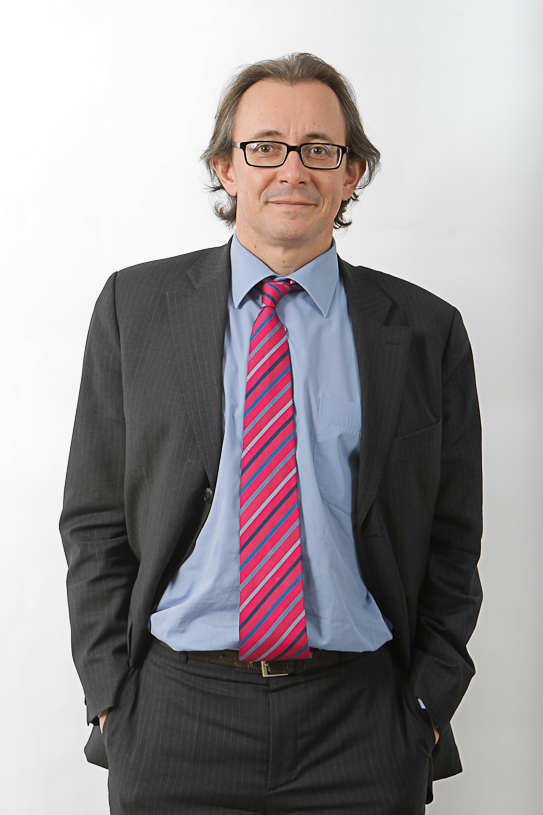
Grégoire Allaire is a Professor of Applied Mathematics at École Polytechnique, where he leads research in shape optimization , homogenization , and multi-scale modeling . His work bridges theoretical and applied domains, focusing on partial differential equations (PDEs), composite materials, and computational methods.
Prof. Dr. Ercan Yüksel is a full Professor in the Department of Civil Engineering at Istanbul Technical University (ITU), College of Engineering. He has been a faculty member at ITU since 1990, progressing from Assistant Professor to Professor in 2017. His research focuses on earthquake engineering, structural dynamics, and numerical modeling, with applications in seismic design, energy dissipation, and structural health monitoring. PhD, Civil Engineering, Istanbul Technical University MS, Structural Engineering (with thesis), Istanbul Technical University BS, Civil Engineering, Istanbul Technical University His research interests are centered on earthquake engineering , particularly seismic input energy analysis , energy dissipation systems , reinforced and precast concrete structures , and seismic isolation . He actively investigates the dynamic behavior of structures under earthquake loads and develops innovative solutions for improving structural resilience. His work integrates advanced numerical modeling with experimental validation. Recent publications (2023–2025) highlight a strong focus on energy-based seismic design, performance of mechanical couplers, damping systems for high-voltage insulators, and fatigue behavior of railway tracks. These works are closely tied to real-world seismic events like the 2023 Kahramanmaraş earthquake, demonstrating applied and impactful research. His scientific recognition includes: Notable Work Award, Turkish Academy of Sciences (TÜBA), 2012 Golden Beam Award, Turkish Prefabricated Association, 2011 Prof. Yüksel is an active Principal Investigator on multiple research projects funded by ITU’s BAP program, covering topics such as smart sleepers for railway monitoring, novel seismic input energy spectra, and earthquake isolation for racking systems. He has supervised numerous theses and is involved in professional organizations including UNESCO-IPRED and the Turkish Earthquake Foundation. He leads research on structural health monitoring of ballasted railway lines using smart sleeper technology and is developing earthquake isolation systems for industrial storage racks. His lab integrates experimental testing with numerical simulation to validate new structural components under cyclic and biaxial loading.
Suyi Li is an Associate Professor in the Department of Mechanical Engineering at Virginia Tech's College of Engineering, where he leads the Dynamic and Architected Robot and structurE (DARE) Lab. Previously, he served as an Assistant Professor at Clemson University from 2016-2022 after completing postdoctoral research at the University of Michigan. Ph.D. in Mechanical Engineering, University of Michigan, Ann Arbor (2014) M.Sc. in Mechanical Engineering, Pennsylvania State University (2008) B.S. Summa Cum Laude in Mechanical Engineering, University of Michigan, Ann Arbor (2006) Dr. Li's research focuses on pioneering new paradigms of intelligent robots and functional structures by exploiting the interplay between geometry, mechanics, actuation, and computation. His work spans origami-inspired morphing structures, physically computing materials that perform machine learning tasks without traditional electronics, and soft/reconfigurable robots that can move like animals or grow like plants. His innovative approach combines mechanical engineering principles with computational thinking to create systems with 'mechano-intelligence'. Analysis of Dr. Li's recent publications reveals a strong trajectory toward embodied intelligence and mechanical computing, where physical structures themselves perform computational tasks. His work increasingly integrates origami/kirigami principles with advanced materials to create systems that can sense, process information, and actuate without conventional electronics. The research shows progression from fundamental mechanics of adaptive structures to sophisticated applications in robotics and computing. Dean's Awards of Excellence – Faculty Fellow, Virginia Tech (2024) C.D. Mote Jr Early Career Award, ASME Design Engineering Division (2022) Gary Anderson Early Achievement Award, ASME Aerospace Division (2021) Junior Researcher of the Year Award, College of Engineering, Clemson University (2020) CECAS Dean's Faculty Fellow, Clemson University (2018) CAREER Award, National Science Foundation (2018) ASME Freudenstein Young Investigator Award Dr. Li has secured nearly two million dollars in research funding, including the prestigious NSF CAREER award and an NSF EFRI project to build mechano-bio hybrid reservoir computers. He advises multiple Ph.D. and Master's students in the DARE Lab, with recent successes including Vishrut Deshpande's Ph.D. defense. His research has generated close to 80 journal and conference papers, demonstrating significant impact in the fields of adaptive structures and materials systems. Dr. Li also serves on editorial boards for several prominent journals including Journal of Intelligent Material Systems and Structures and Philosophical Transactions of the Royal Society A. The DARE Lab at Virginia Tech comprises a multidisciplinary team of researchers working on origami-inspired meta-structures, physically computing materials, and soft robotics. Current projects include developing electronics-free crawling robots with mechanical central pattern generators, creating kirigami-based wearable medical devices, and engineering metamaterials with programmable mechanical properties. The lab actively collaborates with institutions across the country and has received recognition for its innovative approaches to combining mechanical design with computational capabilities.
Edward Andò is a Principal Scientist and Lecturer at École Polytechnique Fédérale de Lausanne (EPFL) , with affiliations to the IMAGING group and the College of Engineering (ENAC) . His work bridges software development, experimental geomechanics, and educational initiatives in image analysis. Principal Scientist, IMAGING-GE (EPFL) Lecturer, Sciences et Génie Civil (SGC-ENS) Lecturer, Enseignement à la Défense (EDEE-ENS) Research Interests Andò specializes in 3D image analysis , with a focus on X-ray tomography , digital volume correlation (DVC) , and micromechanical modeling of granular materials. His work addresses geomechanical failure mechanisms, soil dynamics, and open-source software tools like SPAM for practical material analysis. Publication Trends His recent articles (2025–2023) emphasize X-ray tomography for studying granular deformation , rock failure , medical imaging , and soft particle compaction . Topics span geomechanics, computational modeling, and software development for experimental validation. Labs and Teams Andò contributes to the IMAGING group at EPFL, where he co-develops the SPAM (Software for Practical Analysis of Materials) . His teaching includes courses like Fundamentals of Image Analysis and Quantitative Imaging for Engineers , which integrate hands-on training with theoretical frameworks.
Elena Poliakova serves as Assistant Professor of International Negotiation at IÉSEG School of Management in France since 2021, bringing dual expertise from her PhDs in Marketing/International Business (Georgia State University, 2020) and Linguistics (Lomonosov Moscow State University, 2014). Previously, she was Teaching and Research Assistant at Georgia State University (2016-2020). Her interdisciplinary academic foundation includes: Ph.D. in Marketing, International Business, Georgia State University, USA (2020) Ph.D. in Linguistics, Lomonosov Moscow State University, Russia (2014) Master in Philology (Languages and Literature), Lomonosov Moscow State University, Russia (2010) Dr. Poliakova's research uniquely bridges International Business , Marketing , and Linguistics , with concentrated focus on negotiation dynamics and sales management . Her work investigates how linguistic structures (particularly metaphors), cultural cognition, and native-language use impact negotiation efficiency and comfort across international contexts. She examines diaspora networks' role in foreign investment and crisis-driven business adaptations, employing methodologies spanning discourse analysis to cross-cultural case studies. Her publication trajectory (2018-2025) reveals deepening integration of linguistic theory with international business practice. Early work established foundations in intercultural cooperation, while recent publications analyze metaphorical communication in negotiation (2025) and cognitive-emotional dimensions of native-language negotiation (2024). Her scholarship spans premier journals including Negotiation and Conflict Management Research and Journal of International Business Policy , addressing both theoretical frameworks and applied contexts like pandemic-era business resilience. Her scholarly contributions have been formally recognized through: Best Reviewer Award, Academy of International Business (2022) Current public records indicate no active student advising roles or externally funded research grants. There is no documented affiliation with specialized research laboratories or structured academic teams beyond standard departmental collaborations at IÉSEG.
John Diffley is a Principal Group Leader and Associate Research Director at The Francis Crick Institute in London, UK, where he leads research on DNA replication mechanisms. His work focuses on understanding how cells precisely duplicate their DNA during cell division and how errors in this process contribute to cancer development. Diffley obtained his PhD from New York University in 1985 and completed postdoctoral training with Bruce Stillman at Cold Spring Harbor Laboratory until 1990. He established his research group at the Clare Hall Laboratories (originally Imperial Cancer Research Fund, then Cancer Research UK) before moving to The Francis Crick Institute in 2015. His research spans DNA replication initiation, cell cycle control, replication fork checkpoints, and epigenetic inheritance. Diffley's lab has pioneered methods to reconstitute chromatin replication using purified proteins, providing unprecedented insights into chromosome biology. His team combines genetics, cell biology, and biochemistry to study the molecular 'machines' that copy DNA in yeast and human cells. Analysis of Diffley's recent publications reveals a strong focus on structural mechanisms of DNA replication, particularly using cryo-EM to visualize replication machinery. His work examines helicase loading and activation, replication fork stability under stress, and the connection between replication errors and cancer development. The research spans model organisms to human cells, with increasing emphasis on structural approaches in recent years. FRS (Fellow of the Royal Society) FMedSci (Fellow of the Academy of Medical Sciences) Diffley actively mentors a diverse team of postdoctoral researchers and PhD students, investigating various aspects of DNA replication. His lab has received substantial funding to support their work on replication mechanisms, with projects spanning basic biochemical reconstitution to studies of replication errors in cancer contexts. The lab maintains multiple technical platforms including structural biology, biochemistry, and cell biology approaches. His research group operates within The Francis Crick Institute's collaborative environment, utilizing shared facilities for structural biology, microscopy, and genomics to advance understanding of DNA replication mechanisms and their implications for genome stability and disease.
Dr. James Ashton-Miller is a prominent faculty member in the Department of Mechanical Engineering at the University of Michigan, where he directs the Biomechanics Research Laboratory. He serves as a Center Member of the University of Michigan Injury Prevention Center and maintains affiliations with the Institute of Gerontology. His interdisciplinary work bridges engineering principles with medical applications, focusing on injury prevention across sports medicine, obstetrics, and geriatrics. Dr. Ashton-Miller's educational background includes: PhD from the University of Oslo, Oslo, Norway (1978-1983) MSME from M.I.T., Cambridge, MA, U.S.A (1972-1974) B.SC. (Hons) from the University of Newcastle-upon-Tyne, Newcastle-upon-Tyne, England (1967-1972) His research focuses on the biomechanics of injury prevention across multiple critical domains. In sports medicine, he has demonstrated that some ACL injuries are overuse injuries resulting from too many sub-maximal loading cycles that prevent healing of collagen damage. In women's health, his work on childbirth injuries addresses conditions that affect more women than breast cancer. His research on fall-related injuries in older adults reveals the dual threat of physical and cognitive factors. He also investigates sciatica, disc degeneration, and develops new medical devices for screening, diagnosis and treatment. Dr. Ashton-Miller's recent publications show a strong trend toward developing practical clinical applications from fundamental biomechanical research, with emphasis on advanced imaging methods, wearable sensors, and computational modeling for pelvic floor function assessment. His work consistently aims to translate engineering insights into clinical solutions for injury prevention. His research insights have earned him numerous national and international research awards, though specific awards aren't detailed in the available information. His work involves close collaboration with clinicians and surgeons who meet weekly to discuss progress and next steps. Dr. Ashton-Miller is deeply committed to mentoring, working with NIH K-series fellows along with 1-2 post-doctoral fellows, 3-5 PhD students, 2-4 M.S. students, 4-5 undergraduate students, and 2-4 young clinicians. His research is generously supported by the National Institutes of Health, National Science Foundation, National Basketball Association, Fortune 500 companies, and startup companies including Procter & Gamble and Hologic, Inc. He directs the Biomechanics Research Laboratory and co-leads the Pelvic Floor Research Group, where his teams develop new medical devices to improve screening, diagnosis, and treatment of various biomechanical conditions. These laboratories maintain strong clinical connections, ensuring research remains grounded in real-world medical challenges.
Professor George Buchanan is a leading researcher in human-computer interaction and digital libraries at RMIT University . His work bridges information science, digital humanities, and health informatics, focusing on usability in sensitive contexts like healthcare and misinformation. Deputy Dean, Research at RMIT University Former Director, University of Melbourne iSchool Research Interests: Digital information interaction Health and aging informatics Disinformation analysis Mobile interface design Digital library systems Key Contributions: Developed mobile web usability benchmarks, spatial hypertext tools, and thermal feedback interfaces. Currently seeking PhD students for 2025 projects on digital browsing and view change dynamics. Awards: Over twenty best paper awards and Honorary Life Fellow of the Royal Society of Arts. Advising: Accepting Masters/PhD supervision in information interaction and digital health domains.
Amin Barari is an Adjunct Professor at the School of Engineering, RMIT University, Australia. His research focuses on geotechnical and offshore engineering, particularly in foundation systems for offshore wind turbines, soil-structure interaction, and seismic liquefaction mitigation. He has extensive experience in experimental and numerical analysis of pile foundations, bucket foundations, and caisson structures. His work integrates advanced computational methods (e.g., machine learning, finite element modeling) to predict foundation behavior under extreme conditions. Research interests include: offshore wind energy foundations, soil liquefaction, cyclic stability diagrams, and probabilistic hazard assessment frameworks. He has supervised multiple PhD/Masters projects on topics like resilient foundations in calcareous deposits and pile foundation dynamics in expansive soils. His publications span over 147 research outputs, emphasizing geotechnical challenges in coastal and offshore environments. Dr. Barari collaborates with international institutions and has expertise in experimental testing (e.g., large-scale load testing, centrifuge modeling) and advanced AI-driven frameworks for geohazard prediction. His work contributes to sustainable infrastructure design and risk mitigation strategies for renewable energy systems.
Dr. Ali Amin is a Senior Lecturer and ARC Industry Fellow at the School of Civil Engineering, The University of Sydney. He holds academic roles at ETH Zurich and The University of Toronto, and has consulting experience at Pells Sullivan Meynink. He earned a Bachelor of Engineering (Honours Class I) and PhD in Civil Engineering from UNSW Sydney, with awards including the 2017 Concrete Institute of Australia National Bursary Award and the 2016 UNSW Vice-Chancellor’s Teaching Excellence Award. His research focuses on structural analysis and design of high-performance and fiber-reinforced concrete structures, including contributions to Australian standards like AS5100.5-2017 and AS3600-2018. He teaches courses such as CIVL5269 (Advanced Concrete Structures) and CIVL3235 (Structural Analysis). Key research areas include fiber-reinforced concrete (FRC/SFRC) behavior, shear strength analysis, time-dependent deformation, and fluid-structure interaction in tall buildings. Collaborations include Professor Walter Kaufmann (ETH Zurich) and Professor Fausto Minelli (University of Brescia). Grants: ARC Industry Fellowship (2024), UNSW Goldstar Award (2018). Awards: 2017 Concrete Institute of Australia National Bursary Award, 2016 Teaching Excellence Award. His publications span over 50 peer-reviewed articles in journals like Journal of Structural Engineering , ACI Structural Journal , and conferences such as BEFIB and FraMCoS. Current research includes AI-based quality control in steel fabrication and performance evaluation of specialty cement in waste systems.
Dr. Lisa Wang is a tenure-track Assistant Professor in the Department of Civil & Environmental Engineering at Old Dominion University (ODU). She holds a Ph.D. and Postdoctoral Fellowship in Structural Engineering from Colorado State University (CSU), with additional research at NIST’s Center for Risk-Based Community Resilience Planning. She is a licensed California Professional Engineer (PE) and has expertise in multidisciplinary community resilience assessment, mitigation strategies, and policy analysis. Her research focuses on integrating physical, socio-economic, and infrastructural systems to enhance disaster resilience in coastal and hazard-prone communities. Education: Ph.D. and Postdoc (CSU, 2022-2024), M.S. in Structural Engineering (University of Colorado Denver & Jilin University, 2015), B.S. in Civil Engineering (Jilin University, 2012). Professional licenses include CA PE #94251 and CO EIT #007558. Research Interests: Community resilience under multi-hazards (tornadoes, floods, climate change), resilience-based design of structural systems, data fusion across disciplines, and equitable decision-making for disaster resilience. Recent grants include $31k for AI-driven coastal resilience strategies and $10k for minimum building portfolio development. Grants & Awards: Principal Investigator (PI): Trustworthy AI in Coastal Resilience (ICAR, $31k), AI-Driven Building Portfolios (ODU PURS, $10k) Awards: O. H. Ammann Fellowship (ASCE), ICAR Travel Grant, AGU NSF Travel Grant, Jack E. Cermak Fellowship Labs & Teams: Wang Research Group and Structural Engineering Research Laboratory at ODU.
Yu Xia is a Post Doc at the Department of Chemistry, Stockholm University, Sweden. He is affiliated with the Tom Willhammar Research Group, focusing on advanced electron microscopy and diffraction techniques for structural characterization of materials. PhD (2019–2023) from a joint program between the University of Birmingham (UK) and the Southern University of Science and Technology (China). Research emphasizes fabrication of metallic nanoparticles with non-equilibrium structures and shapes using gas-phase condensation and thermal shock methods. Specializes in scanning transmission electron microscopy (STEM), in-situ heating experiments, and electron energy loss spectroscopy (EELS) for nanoparticle analysis. Current work prioritizes 4DSTEM imaging for electron beam-sensitive materials and Python-based post-processing of electron microscopy datasets. Yu Xia's research spans Materials Science , Nanotechnology , and Electrocatalysis , with applications in photocatalytic hydrogen evolution , graphene composites , and advanced electron microscopy techniques . His work often integrates computational image processing with structural characterization to optimize material properties. Publications highlight innovations in heterostructure engineering , metallic alloy catalysts , and electron beam-sensitive material imaging . No scientific awards are explicitly mentioned in the provided text. Yu Xia's technical expertise includes Python scripting for image analysis, in-situ electron microscopy , and multifunctional graphene-based materials .
Professor Inge Hoff is affiliated with the Norwegian University of Science and Technology (NTNU) in the Department of Civil and Environmental Engineering, where he has served since 2009. Prior to this, he held roles as senior researcher and research leader at SINTEF. Research Interests : Materials for road construction, frost protection, laboratory testing, pavement dimensioning, road rehabilitation, state development modeling, ground-penetrating radar surveys, and concrete/natural stone coverings. Students : Mentors active PhD fellows Lisa Hannasvik, Arman Hamidi, Clara Weber, and Shoiab Ahmad. Teaching : Coordinates courses like TBA4204/BYGT1102 Transport Infrastructure , BYGT2204 Road and Railway Construction , and BA8600 Pavement Structure Dimensioning . Recent publications highlight his expertise in granular material behavior, asphalt durability under climate stressors, and advanced structural assessment techniques. Collaborations with international researchers and presentations at major conferences (TRB, International Conference on Bituminous Mixtures) demonstrate his ongoing contributions to road engineering.
Kuanshi Zhong is an Assistant Professor in the Department of Civil and Architectural Engineering and Construction Management at the University of Cincinnati. He holds a PhD from Stanford University (2021) in Civil and Environmental Engineering, with prior degrees from Stanford (Master, 2017) and Tongji University (Bachelor, 2015). His research focuses on earthquake engineering, structural resilience, and advanced computational methods for infrastructure safety. Key research interests include seismic design of tall buildings, probabilistic modeling of structural response (e.g., using Probabilistic Learning on Manifolds), and material failure mechanisms in reinforced concrete. He also explores multi-hazard resilience, regional risk assessment, and software tools for disaster simulation (e.g., R2DTool and EE-UQ). Dr. Zhong has secured grant funding as PI/Co-PI, including a National Science Foundation grant (2023-2026) for equitable building decarbonization strategies and a Concrete Reinforcing Steel Institute grant (2024-2025) for bar performance improvements. He teaches graduate/undergraduate courses on concrete design and structural mechanics. His work spans collaborations with institutions like Stanford University and the SimCenter, contributing to open-source tools for regional loss assessments and hurricane impact modeling. Current projects address cascading hazards, steel reinforcement durability, and high-resolution seismic risk evaluation.
Prof. Dr. Hakkı Polat Gülkan is a Professor at Başkent University's Civil Engineering Department. With a PhD (1971) and Master's (1968) from the University of Illinois in Civil Engineering and a Bachelor's (1966) from METU, his career spans over five decades in earthquake engineering, structural dynamics, and disaster management. PhD: University of Illinois, Civil Engineering (1971) Master's: University of Illinois, Civil Engineering (1968) Bachelor's: Middle East Technical University, Civil Engineering (1966) His research focuses on seismic risk assessment, structural behavior under extreme loads, and disaster mitigation strategies. Key contributions include earthquake simulator development, ground motion analysis, and retrofitting techniques for masonry and reinforced concrete structures. He has published extensively on deformation limits, response spectra, and historical building preservation. Recent work includes 15+ articles from 2024-2012 analyzing Istanbul's seismic hazards, Marmara region dynamics, and post-earthquake structural integrity. Conference papers address Turkey's endemic building vulnerabilities and deformation thresholds for seismic isolation systems. Scientific Achievements: Elected to U.S. National Academy of Engineering (2023) As an active journal reviewer for 13+ publications (2023-2024), he contributes to advancing earthquake engineering discourse. His teaching portfolio includes advanced structural analysis, concrete mechanics, and seismic design courses.