Stefan Funke is a researcher at the University of Stuttgart, Germany, with a focus on algorithms and computational geometry. His work spans wireless communication, route planning, and trajectory analysis. Research Interests: Algorithms, Computational Geometry, Wireless Communication, Route Planning, Trajectory Segmentation His recent publications (2024-2025) explore topics like 3D epithelial cell dynamics, graph radius computation, and polyline simplification, emphasizing scalability and efficiency. Earlier works (2017-2019) investigate contraction hierarchies, energy-efficient routing, and trajectory storage systems. Stefan collaborates frequently with Sabine Storandt, Claudius Proissl, and Tobias Rupp. He applies geometric methods to problems in wireless networks, road systems, and data structures, with a recurring emphasis on optimization and robustness.
Jaideep Srivastava is a Professor affiliated with Qatar Foundation (Doha, Qatar), University of Minnesota (Minneapolis, USA), and holds a PhD from University of California Berkeley. His research spans data mining, social network analysis, time series modeling, and health informatics. Recent work focuses on clinical deterioration prediction, sleep research, and computational analysis of pandemic behaviors. Key contributions in clustering algorithms and graph neural networks Active in multimodal learning and misinformation detection His publications from 2024-2022 demonstrate expertise in hierarchical clustering , large language model applications , and health data analytics . Articles often integrate machine learning , social network dynamics , and clinical monitoring systems . Current projects involve Covid-19 in-hospital mortality prediction , virtual influencer analysis , and low-light imaging techniques . Collaborations span institutions in Qatar, USA, and India with applications in urban mobility and precision medicine.
Stefania Cherubini is a Full Professor in the Department of Mechanics, Mathematics & Management at Politecnico di Bari, Italy. Her academic work focuses on fluid dynamics, turbulence, and wind energy, with a particular emphasis on stability analysis, computational fluid dynamics (CFD), and data assimilation techniques. Research areas: Fluid Dynamics, Turbulence, Wind Energy, Stability Analysis, Computational Fluid Dynamics, Data Assimilation, Aeroacoustics, Nonlinear Optimization Recent publications highlight her work on wind turbine simulations using Large Eddy Simulation (LES) and Fluid-Structure Interaction (FSI) models, dynamic mode decomposition (DMD) for wake analysis, and graph neural networks (GNNs) for CFD closure modeling. She investigates superhydrophobic surfaces, boundary-layer instabilities, and nonlinear optimization in transitional and turbulent flows. Key article trends include: (1) Wind turbine aeroacoustics and wake dynamics; (2) Machine learning integration in fluid flow simulations; (3) Nonlinear stability analysis of complex flows; (4) Superhydrophobic drag reduction mechanisms; (5) Turbulent transition modeling in channel and boundary-layer flows.
Dr. Toros Arikan is an Assistant Professor in the Department of Electrical Engineering at the University of Notre Dame's College of Engineering. His research focuses on signal processing for remote sensing applications, with particular emphasis on underwater acoustics and indoor radio frequency systems. He applies deep learning techniques to solve complex problems in environmental mapping, localization, and tracking. B.S., M.S., and Ph.D. in Electrical and Electronics Engineering from University of Illinois Urbana-Champaign and Massachusetts Institute of Technology Professor Arikan's work addresses fundamental challenges in underwater acoustic localization, reverberant environment modeling, and challenging-environment communications. His recent publications highlight neural network-based solutions for Steiner minimum trees and boundary estimation problems. His research on HF communications systems spans topics including low-latency transmission, Doppler tolerance, and modem design for underwater applications. Earlier work includes biomedical ultrasound signal processing for blood velocity estimation.
Jianjun Hu is a Professor in the Department of Computer Science and Engineering at the Molinaroli College of Engineering and Computing , University of South Carolina. His research focuses on machine learning, deep learning, data mining, and evolutionary computation applied to bioinformatics, material informatics, and health informatics . Current projects include developing deep learning algorithms for intelligent audio processing , data-driven materials discovery , and medical image analysis . Education: Ph.D. in Computer Science (2004), Michigan State University Postdoc at University of Southern California (2005-2007) and Purdue University (2004-2005) Research Empowerment: Secured funding from NSF, NIH, Nvidia , and the South Carolina Department of Transportation Developed materials informatics platforms like Materialsatlas.org Created algorithms for protein-peptide binding prediction and crystal structure discovery Scientific Contributions: Editorial roles at PLOS ONE and Journal of Health & Medical Informatics Key conference reviewer for GECCO and BIBM Academic Mentorship: PhD advisors: Ananda Mondal, Jhih-Rong Lin, Emrah Atigan, Swain Mrutyunjaya MS thesis advisors: Guoyu Lu, Emrah Atilgan, Kevin Chien, Mythri Sunkara Laboratory: Machine Learning and Evolution Group (MLEG) at University of South Carolina Focus on deep learning for materials discovery , healthcare analytics , and evolutionary algorithms
Tom Britton is a Professor in Mathematical Statistics (Holder of the Cramér chair) at the Department of Mathematics, Stockholm University. He leads the SU-Infection spread modeling research group and serves as chairman of the Stockholm Mathematics Center (SMC). His work primarily focuses on developing and analyzing mathematical/statistical models for infection spread and applying statistical methods to infection spread data. His research interests span epidemic modeling, biostatistics, network analysis, and mathematical statistics with applications toward genetics and molecular biology including phylogenetics. Britton's work encompasses applications of biostochastics and biostatistics, discrete random structures, and finance and insurance. He has made significant contributions to understanding disease transmission dynamics, particularly during the COVID-19 pandemic. Britton's recent publications demonstrate a strong emphasis on practical applications of mathematical models to public health challenges. His work examines contact tracing strategies, vaccine impact analysis, immunity waning dynamics, and optimal intervention strategies. There is a clear pattern of translating theoretical mathematical models into actionable public health insights, with particular focus on the interplay between population heterogeneity, immunity levels, and intervention effectiveness. As an academic leader, Britton serves as academic editor for PLoS Comp Biol and associate editor for Journal of Mathematical Biology and JRSS A (Statistics in Society). He is also a board member of the European Society for Mathematical and Theoretical Biology (ESMTB). Britton actively mentors the next generation of researchers, currently supervising PhD student Fanny Bergström and Post Doc Martina Favero. Throughout his career, he has successfully guided 13 PhD students and multiple postdoctoral researchers. His current research is supported by significant grants from the Swedish Research Council (3.6 MSek, PI 2021-2024) and the KA Wallenberg Foundation (0.7 MSek, PI 2023-2025). The SU-Infection spread modeling research group, which Britton leads, develops and analyzes mathematical/statistical models for the spread of infection and applies statistical methods to adapt these models to infection spread data. This work has been particularly relevant during recent pandemics and continues to inform public health decision-making.
Ramin Moghaddass is an Associate Professor in the Department of Industrial Engineering at the University of Miami's College of Engineering. He serves as Director of both the Industrial Research and Assessment Center and the Building Training, Research, and Assessment Center. His work bridges machine learning with industrial engineering to solve complex system monitoring and maintenance challenges. University of Miami, College of Engineering Director, Industrial Research and Assessment Center Director, Building Training, Research, and Assessment Center His research focuses on: Deep state-space modeling for dynamic systems Graph neural networks for smart grid and network anomaly detection Thermal-RGB sensor fusion for manufacturing plant efficiency Image processing for vegetation risk analysis in power networks Bayesian filtering techniques with stochastic neural networks Recent publications highlight trends in sensor-driven system modeling (2025), thermal-RGB fusion for HVAC optimization (2025), anomaly detection in smart grids (2025), and adaptive inspection protocols for large-scale networks (2024). His work combines recurrent neural networks with dynamic Bayesian layers for predictive analytics while exploring graph topology integration. Contact: rxm991@miami.edu | (305) 284-9505
Tsichlas Kostas serves as an Associate Professor in the Department of Computer Engineering and Informatics at the University of Patras, Greece, within the Division of Applications and Foundations of Computer Science. His research spans fundamental and applied computing domains with active involvement in the ML@Cloud laboratory. His expertise centers on algorithmic innovation across multiple dimensions: Memory-optimized algorithms for primary/secondary storage systems Distributed environment data structures and computational geometry Physics-informed computing and complex network analysis Specialized domains including alphanumeric and graph algorithms Recent publication trends (2022-2025) demonstrate concentrated research in historical graph management systems, temporal network analysis, and physics-computing intersections. Key contributions include vertex-centric partitioning strategies, temporal community detection frameworks, and machine learning applications for energy data motif discovery. He maintains active laboratory affiliations with the LARGE-SCALE CLOUD DATA MACHINE LEARNING WORKSHOP (ML@Cloud lab), Combinatorial Algorithms Laboratory, and Distributed Systems and Telematics Laboratory, contributing to Greece's computational research infrastructure.
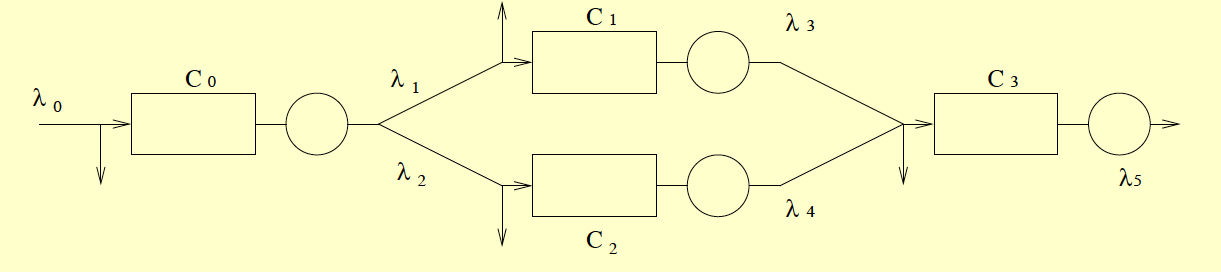
Jean-Marc Vincent is an Associate Professor at Grenoble Alpes University's UFR IMAG school, with a focus on performance evaluation and stochastic models. His research spans Markov processes, perfect simulation, and analysis of large-scale distributed systems. He has contributed extensively to trace visualization, resource modeling, and algorithm design for parallel computing environments. Key research areas: Performance evaluation, Stochastic models, Markov processes, Perfect simulation Recent work trends: IoT resilience in fog computing, stochastic automata networks, trace analysis Teaching: Algorithms, complexity analysis, distributed systems at L3 and Master's levels His 15 most recent publications highlight interdisciplinary approaches combining computer science, statistics, and education. Collaborations include Inria, LIG, and international institutions like PUCRS. Students under his supervision have worked on trace visualization, stochastic modeling, and system performance optimization.
Dima Krioukov is a Professor at Northeastern University with appointments in the Departments of Physics, Mathematics, and Electrical & Computer Engineering. He is affiliated with the Network Science Institute and leads the DK-Lab research group. His work bridges theoretical physics, mathematics, and network science with applications to the Internet, neuroscience, and cosmology. Primary Office: 177 Huntington Avenue, 2nd floor, Rm. 227, Boston, MA 02115 Additional Locations: The Roux Institute (London and Portland) Contact: +1-617-373-2934 Professor Krioukov's research spans network theory , network geometry , causal sets , and fundamentals of network dynamics . His work establishes connections between geometric properties of networks and their functional characteristics, with applications to navigation in complex systems. He has demonstrated that latent hyperbolic geometry explains heterogeneous degree distributions and strong clustering in real networks, and that the large-scale structure of the universe shares properties with complex networks like the Internet and the brain. His research has led to practical applications including optimal routing schemes for telecommunication networks based on hyperbolic geometry. His recent publications reveal a strong focus on the intersection of geometry and network science, with particular attention to causal sets, Riemann surfaces, and hyperbolic geometry. The research trends show increasing sophistication in connecting discrete network structures with continuous geometric spaces, with applications ranging from quantum gravity to efficient Internet routing. The work demonstrates how fundamental geometric principles govern the structure and function of diverse complex systems across multiple domains. Top 2% scientists worldwide (Stanford University 2024 assessment) USPTO patent on super-scalable routing in telecommunication networks Krioukov leads the DK-Lab, which focuses on theoretical aspects of network science with practical applications. His lab has developed methods to infer latent geometries of networks, created optimal routing algorithms based on hyperbolic geometry, and established connections between network structure and cosmological models. Current projects include research on network geometry, navigation in networks, random graphs and their limits, fundamentals of network dynamics, and quantum gravity applications. The lab maintains strong connections with both theoretical physics and practical network engineering communities.
Anton Proskurnikov is an Associate Professor in the Department of Electronics and Telecommunications at Politecnico di Torino, Italy. His academic appointment spans the College of Computer, Film and Mechatronics Engineering and the College of Mechanical, Aerospace and Automotive Engineering. Based in office L.240, he maintains an active research program focused on control theory with applications to complex networked systems. Dr. Proskurnikov's research centers on complex networks, multi-agent systems, nonlinear control, and social network analysis, with significant contributions to understanding opinion dynamics and consensus mechanisms. His work bridges theoretical control engineering with practical applications in social dynamics, earning recognition through prestigious awards including the O. Hugo Schuck Best Paper Award (2023). His expertise spans control theory, optimization, and network analysis with implications for sustainable infrastructure and smart cities. His publication trajectory reveals a sophisticated evolution from foundational control theory toward increasingly complex applications in social dynamics and networked systems, with recent emphasis on bounded confidence models, higher-order interactions in social dynamics, and quantum optimization for complex system design. This interdisciplinary approach connects traditional control engineering with emerging challenges in social network analysis. Dr. Proskurnikov has received multiple significant awards: O. Hugo Schuck Best Paper Award (2023) from the American Automatic Control Council EPEPS Best Paper Award (2020) from EPEPS Conference Annual Reviews in Control Paper Prize (2020) from IFAC As an academic advisor, Dr. Proskurnikov currently supervises PhD student Jinze Wu in Electrical, Electronics, and Communications Engineering. His research is supported by the National Research PRIN project "Higher-order interactions in social dynamics with application to monetary networks" (2023-2025), for which he serves as Scientific Manager. He contributes to editorial boards of leading journals including IEEE TRANSACTIONS ON AUTOMATIC CONTROL and INTERNATIONAL JOURNAL OF CONTROL, reflecting his standing in the control theory community. Dr. Proskurnikov is an active member of the Automatica research group within the Department of Electronics and Telecommunications, focusing on systems, automation, and control. His collaborative work extends internationally to institutions including TU Delft, St. Petersburg National Research University, and the University of Groningen, demonstrating his strong international research presence and interdisciplinary approach to complex networked systems.
Dovgun Andriy Yaroslavovych is an Associate Professor at the Department of Computer Science, Yuriy Fedkovych Chernivtsi National University. His academic profile includes a Candidate of Physical and Mathematical Sciences degree (specialty 01.05.01 - Theoretical Foundations of Informatics and Cybernetics) and formal certification in computer science teaching methods. Research Focus : Stochastic dynamic systems, automatic control, biomedical optics, algorithms, and information technologies. Key Publications : Authored educational manuals on data structures (2024), algorithms (2022), and contributed to cross-platform decision support systems analysis (2023). Professional Affiliation : Member of the Chernivtsi IT Cluster since 2019.
David Zbíral is Professor and Deputy Head of the Department of Religious Studies at Masaryk University's Faculty of Arts, where he leads research initiatives through the Center for Digital Research on Religion. His academic position involves both administrative leadership and advanced research in medieval religious history with computational methodologies. His research focuses on applying digital humanities approaches to medieval inquisition records, particularly through: Computational analysis of religious dissent and heresy prosecutions Network modeling of social and religious relationships Gender studies in medieval religious contexts Digital reconstruction of historical judicial processes Semantic text modeling of historical documents Zbíral's recent publications demonstrate a strong emphasis on computational methods in historical research, particularly using network analysis, natural language processing, and quantitative approaches to study medieval inquisition records across Europe. His work frequently examines social dynamics, gender patterns, and spatial relationships in religious dissent cases from the 11th to 15th centuries. He leads the DISSINET project (Networks of Dissent), which develops computational models of dissident and inquisitorial cultures in medieval Europe. This interdisciplinary initiative combines historical research with cutting-edge digital methodologies to analyze patterns of religious nonconformism.
Rohit Singh is an Assistant Professor at Duke University with appointments in the Departments of Biostatistics & Bioinformatics, Cell Biology, Computer Science, and Electrical and Computer Engineering. He is a member of the Duke Cancer Institute and the Division of Integrative Genomics. Academic Rank : Assistant Professor Departments : Biostatistics & Bioinformatics, Cell Biology, Computer Science, Electrical and Computer Engineering University Affiliations : Duke Cancer Institute, Division of Integrative Genomics His research focuses on computational biology, machine learning for drug discovery, and decoding disease mechanisms through single-cell genomics and protein language models. Current projects include SAME, Velorama, Raygun, and Allo-Allo. Recent publications span single-cell analysis, protein language models, and causal inference. He develops tools like Schema , D-SCRIPT , and Sceodesic . Grants : NIAID, Chan Zuckerberg Initiative, Foundation for Prader-Willi Research Awards : MIT Sprowls Award, Stanford Stephenson Award, RECOMB Test of Time Award He advises students in computational biology and has contributed to patents in protein interaction modeling and viral detection. The lab welcomes postdocs, rotation students, and collaborators.
Megan Morrison is an Assistant Professor of Applied Mathematics at Illinois Institute of Technology. She holds a B.S. in Behavioral Neuroscience and Applied Mathematics from Western Washington University and a Ph.D. in Applied Mathematics from the University of Washington. Her research focuses on the intersection of systems neuroscience and dynamical systems, developing data-driven methods to characterize and control emergent activity in complex biological neural networks. During her postdoctoral work at the Courant Institute under Lai-Sang Young, she modeled C. elegans neural activity and behavior. At the University of Washington, she collaborated with J. Nathan Kutz on networked dynamical systems applied to neural and social networks. Megan's recent publications explore chaotic heteroclinic networks for biological switching behavior, nonlinear control of networked systems, and sociopolitical dynamics as signed networks. Her work bridges biophysical modeling, mathematical control theory, and computational neuroscience.