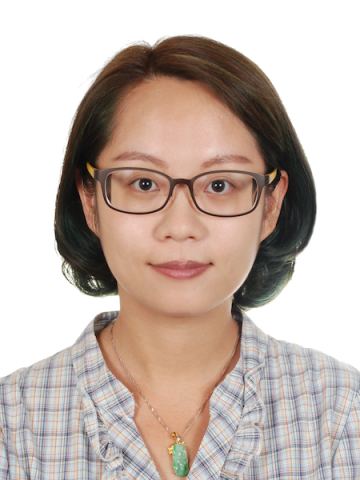
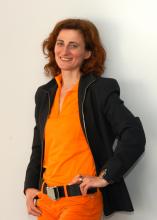
Dr. Martin Loidl is a researcher in Geoinformatics at the University of Salzburg's Department of Geoinformatics - Z_GIS, part of the Faculty of Digital and Analytical Sciences. His work focuses on GIS applications in mobility, urban planning, and cartography. Key projects include developing tools like NetAScore for assessing bikeability and walkability, and frameworks for analyzing transportation networks. He has authored over 75 publications, with recent work emphasizing spatial analysis for sustainable urban mobility. His research integrates agent-based modeling, spatial data science, and real-world transportation challenges. Education: Dr., MSc in Geoinformatics. Key Projects: GISMO Study on active commuting, Bike Sharing System Planning, Digital Twins for Urban Sustainability. Research Interests: GIS and mobility optimization, cartography, agent-based simulations, and spatial data science for urban planning. His contributions include software tools like NetAScore and frameworks for bicycle infrastructure analysis. Grants & Awards: Secured funding from various research initiatives; part of interdisciplinary teams addressing urban mobility challenges. Labs/Teams: Mobility Lab | UNIGIS, collaborating on projects like the Bicycle Observatory and spatial network analysis.
Stefan Rass is a Professor at the Institute of Networks and Security within the Faculty of Engineering & Natural Sciences at Johannes Kepler University Linz (JKU), where he leads the LIT Secure and Correct Systems Lab. As Principal Investigator for FFG-funded projects including reSilienz (digital supply chain resilience, 2023–2025) and ITPUK (AI signature verification, 2022–2024), he bridges theoretical game theory with practical cybersecurity solutions for critical infrastructures and robotics systems. His research spans game-theoretic security models (patrolling games, defense-in-depth strategies), quantum cryptography (QKD network architectures), and cyber deception frameworks like Honeyquest for measuring honeypot effectiveness. Recent work addresses robotics security benchmarking (RobotPerf), cryptographic instruction chaining for control flow protection, and risk assessment methodologies for interdependent infrastructures. His mathematical decision-making approach integrates bounded rationality and stochastic modeling to solve real-world security challenges. Professor Rass actively shapes the field through program committee roles (ARES 2023), peer reviews, and invited talks on security transparency. His current projects focus on cost-benefit-aware monitoring for cyber-physical systems and quantum key distribution standardization, reflecting Austria’s strategic priorities in digital resilience. The LIT Secure and Correct Systems Lab under his direction develops foundational theories while deploying tools for industrial applications, particularly in critical infrastructure protection and secure robotics workflows.
Hsiang-Yun Wu is a Research Fellow at the Computer Graphics department of Vienna University of Technology (TU Wien), actively contributing to information visualization and visual analytics. Her work spans biological network visualization, graph drawing, schematic network maps, and data physicalization, with a focus on interactive techniques and human-centric design. Projects: ArtVis (2022–2027) , SANE (2024–2027) , SMGV-Esprit (2024–2027) , and HumAlgo (2018–2023) . Affiliations: Member of the Visualization Group at TU Wien. Her recent publications emphasize uncertainty visualization, network physicalization, and dynamic graph representations. Notably, she received the EuroVis 2019 Honorable Mention Award for optimizing stepwise animations. Wu supervises diploma theses in areas like metabolic pathway visualization and semantic-aware character animation. Key research trends include integrating biological data with urban-style schematic maps ( Metabopolis ), physicalization workflows for anatomical education ( Slice and Dice ), and mixed labeling strategies in 3D environments.
Johannes Peter Wallner is an Associate Professor at Graz University of Technology (TU Graz), working in the Institute of Software Engineering and Artificial Intelligence within the Faculty of Computer Science and Biomedical Engineering. He leads the Knowledge Representation and Reasoning (KRR) research group and has previously been a researcher at TU Wien's DBAI group and the Constraint Reasoning and Optimization group at the University of Helsinki. Dr. Wallner's research focuses on knowledge representation and reasoning, artificial intelligence, argumentation, abduction, belief change, inconsistency handling and measurement, computational social choice, computational complexity, Boolean satisfiability, and answer set programming. His work bridges theoretical foundations with practical applications, particularly in developing computational models for argumentation systems. He has made significant contributions to structured argumentation frameworks, including assumption-based argumentation and ASPIC+. His recent publications demonstrate a strong trend toward advancing algorithmic approaches to probabilistic argumentation, abstraction techniques in argumentation systems, and applications of argumentation in domains like healthcare. He has been particularly active in exploring the computational complexity of various argumentation semantics and developing efficient algorithms for reasoning tasks. Dr. Wallner has received multiple prestigious awards including being selected for the IJCAI 2024 Early Career Track (only 12 researchers globally selected), being named a Top Scholar by ScholarGPS in 2024 (top 0.5% worldwide in AI), and receiving the AI 2000 Most Influential Scholar Honorable Mention in Knowledge Engineering in 2021 and 2022. As Principal Investigator, Dr. Wallner has secured significant research funding from the Austrian Science Fund (FWF), including two major projects: "A Novel Computational Workflow for Argumentation in AI" (grant P 35632, 358,848 €) and "Extending Belief Change to Advance Dynamics in Argumentation" (grant P30168-N31, 353,438 €). He is highly active in the academic community, serving on program committees for major AI conferences including AAAI, IJCAI, KR, and ECAI, and was a member of the Program Committee Board of IJCAI (2022-2024). He leads the Knowledge Representation and Reasoning (KRR) research group at TU Graz, which develops both theoretical foundations and practical implementations for computational argumentation systems. The group has contributed to several software systems including CEGARTIX (a SAT-based argumentation system), Vispartix (visualization of argumentation frameworks), ADFsys (an ASP-based argumentation system for abstract dialectical frameworks), and others that implement various argumentation frameworks.
Silvia Miksch is a Full University Professor of Visual Analytics at TU Wien's Faculty of Informatics, leading the CVAST Center. She holds a PhD from the University of Vienna and has held roles including Head of the Department of Information and Knowledge Engineering at Danube University Krems. Her research focuses on Visual Analytics, Information Visualization, Temporal Data Analysis, and Medical Informatics. She has supervised numerous PhD and Master’s students, with notable advisees including Ignacio Baltazar Pérez Messina and Davide Ceneda. Her work bridges theory and practice, addressing challenges in Visual Analytics for healthcare, business intelligence, and digital humanities. Awards include the IEEE VGTC Technical Achievement Award (2023) and induction into the IEEE Visualization Academy (2020). She actively contributes to conferences like IEEE VIS and EuroVis as program chair and steering committee member. Her projects, such as 'VisuExplore' and 'DisCo', have received recognition for advancing visualization in medical and cultural domains. Key research areas include guidance-enriched systems, network visualization, and temporal reasoning. She explores applications in fraud detection, cultural heritage analysis, and pandemic data visualization. Her lab's tools, like 'Hermes' and 'COVIs', exemplify task-driven design for real-world data challenges.
Krishnendu Chatterjee is a Professor at the Institute of Science and Technology Austria (IST Austria) , Department of Computer Science. His research spans formal verification, probabilistic systems, game theory, and evolutionary dynamics, with over 300 peer-reviewed publications in top venues such as DISC, AAAI, LICS, PNAS, Nature , and Journal of the ACM . His research focuses on developing theoretical foundations and practical algorithms for analyzing complex systems, including Markov decision processes, stochastic games, probabilistic programs, and evolutionary models. He has made significant contributions to topics such as reachability analysis, termination of probabilistic programs, synthesis of controllers, and evolutionary game dynamics. Chatterjee's work is highly interdisciplinary, bridging computer science, mathematics, and biology. He has collaborated extensively with leading researchers worldwide and has been involved in editorial roles and program committees for major conferences in formal methods and theoretical computer science.
Monika Henzinger is a Professor at the Institute of Science and Technology Austria (ISTA) since 2023 and Vice President for Technology Transfer at ISTA since 2024. Her research focuses on efficient algorithms and data structures , particularly in dynamic settings where input data changes continuously. She also investigates privacy-preserving algorithms and the practical implementation of theoretically optimal algorithms. Education: PhD in Computer Science (1993, Princeton University, USA) Research Interests: Her work spans dynamic graph algorithms, differential privacy, and transforming theoretical algorithms into practical solutions. Key areas include minimizing computational resources, proving limits of efficiency, and ensuring data privacy through noise addition. Article Trends: Recent publications emphasize dynamic algorithms for graph problems , differential privacy , and clustering techniques . Topics such as minimum cut, bipartite matching, and edge coloring in dynamic environments are prominent, alongside privacy-preserving data analysis. Scientific Awards: 2024 Best Paper Award (SODA) 2021 Wittgenstein Award and ERC Advanced Grant 2019 Carus Medal (Leopoldina Academy) 2016 ACM Fellow 2014 ERC Advanced Grant 2004 European Young Investigator Award Advising & Grants: She advises PhD students and leads projects funded by grants such as the ERC Advanced Grant, Wittgenstein Award, and Austrian Science Fund initiatives. Her team includes postdocs and PhD candidates working on dynamic data structures and privacy. Labs & Teams: Leads the Henzinger_Monika Group at ISTA, focusing on algorithms, data structures, and dynamic graph problems. Collaborates with institutions globally on projects related to network optimization and privacy.
Jasmin Wachter is a Researcher at the Institute for Artificial Intelligence and Cybersecurity at Alpen-Adria-Universität Klagenfurt. Her work focuses on interdisciplinary research at the intersection of cybersecurity, machine learning, and game theory. She holds a Diplom-Ingenieur (Dr.) and dual undergraduate degrees (BSc, BA), reflecting her multidisciplinary background. Her research interests span critical areas such as IT security, data science, cryptology, and risk management. She contributes to advancing methodologies for secure systems, adversarial modeling in cybersecurity, and ethical AI frameworks. Her recent publications highlight innovations in attack graph modeling, security game theory applications, and human-robot collaboration safety protocols. While currently affiliated with the Faculty of Technical Sciences, her work emphasizes both foundational research and practical solutions for modern cybersecurity challenges. She is actively involved in the institute's research initiatives, though no specific awards or student advisement roles are documented in the provided materials.
Dr. Leoni Breth is a Researcher at the University for Continuing Education Krems, affiliated with the Department of Integrated Sensor Systems and the Center for Modelling and Simulation. She holds a PhD in Technical Physics from the Vienna University of Technology, specializing in Condensed Matter Physics and micromagnetic sensor research. Her work integrates theoretical modeling, experimental validation, and AI-driven approaches to advance materials science. Education: PhD in Technical Physics, Vienna University of Technology (focus: magnetoresistive sensors and thermal fluctuations) Undergraduate Studies in Technical Physics at Vienna University of Technology Research Interests: Dr. Breth's research focuses on micromagnetic simulations, magnetoresistive sensors, and the application of machine learning to analyze First-Order-Reversal Curves (FORCs) in materials science. Her work bridges fundamental physics and industrial applications, particularly in optimizing magnetic materials for advanced technologies like permanent magnets and cemented carbides. Key areas include coercivity enhancement, domain nucleation dynamics, and AI-based predictive modeling. Projects & Grants: FFG-funded project (2020-2023): AI-driven FORC analysis in carbide production FWF-funded project (2023-2026): Combinatorial synthesis and micromagnetic graph networks for magnet design Key Contributions: Her publications span topics like FORC diagram interpretation, skyrmion modeling in bulk materials, and machine learning for mechanical property prediction. She has also contributed to international conferences, including presentations at IEEE Magnetics Society events and the Joint European Magnetics Symposia.
Daniel Weghuber is Professor and Department Chair at Paracelsus Medical University's Department of Pediatrics. His research focuses on pediatric obesity management, metabolic disorders, and pharmacotherapy. Research areas include: Anti-obesity medications for youth Neonatal laboratory diagnostics Clinical guideline development Metabolic function in inflammatory bowel disease Publications emphasize evidence-based obesity management, novel therapeutic approaches, and optimization of pediatric care protocols. Recent works address medication efficacy in adolescents and minimally invasive diagnostics. He leads projects on mitochondrial function in IBD and EURAS (epilepsy research). Current research examines climate impacts on migration through machine learning models.
Jiehua Chen is an Associate Professor in the Department of Algorithms and Complexity at TU Wien (Vienna University of Technology), part of the School of Informatics. Her research focuses on algorithmic social choice, fair division, and computational complexity with applications to multi-agent systems, stable matchings, and parameterized algorithms. She leads the project Structural and Algorithmic Aspects of Preference-based Problems in Social Choice (2019–2027), funded by the Vienna Science and Technology Fund (WWTF). Her work spans theoretical contributions to voting systems, fair allocation mechanisms, and graph-based problems, with notable publications in venues like AAAI, IJCAI, and ACM Transactions on Economics and Computation. She teaches courses such as Algorithmic Social Choice and Quantum Computing and Complexity Theory , and has supervised research like E. Ceylan's diploma thesis on optimal seat arrangement algorithms. Chen’s research emphasizes practical algorithm design for social choice challenges, including refugee resettlement, participatory budgeting, and hedonic games. She frequently presents at international conferences and collaborates on interdisciplinary projects involving computational complexity and graph theory.
Marek Kuś is a Full Professor at the Center for Theoretical Physics, Polish Academy of Sciences (PAS) in Warsaw, where he has held this position since 1995. He previously served as Full Professor at Cardinal Stefan Wyszyński University (2001-2012) and Director of the Center for Theoretical Physics, PAS (2003-2006). His international collaborations include visiting professorships in Germany, France, and the USA. Education: M.Sc. in Physics, Warsaw University (1979) Ph.D. in Physics, Warsaw University (1983) D.Sc. (Habilitation), Warsaw University (1988) Professor title conferred in 1995 His research spans quantum chaos, quantum information theory, and mathematical physics, with specialized interests in nonlinear phenomena, geometric methods, and quantum entanglement. Recent publications (2011-2015) focus on quantum correlations, entanglement detection frameworks, and symplectic geometry applications to quantum systems, reflecting sustained work in foundational quantum theory and complex systems. Scientific Awards and Leadership: Humboldt Fellowship (1987) President, Polish Society for Advancement of Arts and Sciences (2003-2005) Chairman, Scientific Council of National Center for Quantum Information (since 2008) Member, ERC Advanced Grants evaluation panel (2014) Editorial board member for International Journal of Quantum Information
Ecaterina Sava-Huss is a Full Professor in Mathematics at the University of Innsbruck, Austria, affiliated with the Department of Mathematics within the Faculty of Mathematics, Computer Science and Physics. She holds a PhD from Graz University of Technology (2010) and a Habilitation in Mathematics (2019). Previously, she served as an associate professor and tenure-track assistant professor at the University of Innsbruck, and as an assistant professor and visiting scholar at institutions including TU Graz and Cornell University. Her research focuses on stochastic processes, particularly random walks and rotor walks on graphs, fractals, and aggregation models. Key interests include the interplay between structural properties of infinite state spaces and stochastic processes. She has organized conferences such as the Austrian Stochastics Days and is the outreach coordinator for the Institute of Mathematics, engaging in public science initiatives like the MIP Day and Girls' Day. Her funding includes an FWF Grant P34129 (2021–2025) on growth models and quasi-random walks, and a prior Erwin Schrödinger Fellowship (2015–2016). She has supervised numerous PhD and Master’s students, with research topics ranging from branching processes to quantum probability. Her work has been published in journals such as Advances in Applied Probability , Bernoulli , and Journal of Fractal Geometry .
Chao Zhang is an Associate Professor at the Department of Chemistry-Ångström Laboratory, Uppsala University, specializing in computational electrochemistry and multi-scale modeling of electrolyte materials. His research bridges atomistic simulations with machine learning approaches to address challenges in energy storage and conversion systems. Education: Dr. rer. nat. from RWTH Aachen University (2013); Docent from Uppsala University (2020) Appointments: Postdoctoral researcher at the University of Cambridge (prior to joining Uppsala in 2017) His group develops finite-field methods for computational electrochemistry and investigates electrified solid-liquid interfaces. Recent research trends include neural rendering for underwater SLAM systems (2025), robust path-following control in marine robotics, and event-based localization in LiDAR-integrated environments. Scientific Awards: ERC Starting Grant (2020) Junior Research Fellowship, Wolfson College (2015) Jülich Excellence Prize for Young Scientists (2013)
Monika Henzinger is a Professor at the Institute of Science and Technology Austria (ISTA), where she has been serving since 2023, and additionally holds the position of Vice President for Technology Transfer since 2024. Her academic journey includes professorships at the University of Vienna (2009-2023) and EPFL in Switzerland (2005-2009), as well as industry experience at Google (1999-2005) and Digital Equipment Corporation (1996-1999). She earned her PhD from Princeton University in 1993 and served as an Assistant Professor at Cornell University from 1993-1996. Dr. Henzinger's research focuses on the design and analysis of efficient algorithms and data structures, with particular emphasis on dynamic settings where inputs change repeatedly, privacy-preserving algorithms, and translating theoretical algorithms into practical implementations. Her work bridges theoretical computer science with practical applications, addressing fundamental questions about computational efficiency in evolving data environments. Her recent publications (2024-2025) demonstrate a consistent focus on dynamic graph algorithms, differential privacy, and optimization problems. These works explore cutting-edge approaches to maintaining graph structures under continuous updates, developing privacy-preserving mechanisms for streaming data, and creating efficient approximation algorithms for fundamental graph problems. The research shows strong connections between theoretical guarantees and practical implementations, with many papers addressing both theoretical bounds and experimental validation. Dr. Henzinger has received numerous prestigious awards throughout her career, including: The 2024 Best Paper Award at the Symposium on Discrete Algorithms The 2021 Wittgenstein Award Two ERC Advanced Grants (2014, 2021) Fellow of the Association of Computing Machinery (2016) Member of the Austrian Academy of Sciences (2017) The Carus medal of the German Academy of Sciences Leopoldina (2019) She currently leads an active research group comprising PhD students and postdoctoral researchers, and her team is supported by multiple significant grants including an ERC Advanced Grant for 'The design and evaluation of modern fully dynamic data structures,' a Wittgenstein Award from the Austrian Science Fund, and several other projects focused on dynamic graph algorithms and data structures. Her collaborative work spans theoretical computer science, algorithm design, and practical implementations. Dr. Henzinger's research group operates within a vibrant ecosystem of algorithmic research at ISTA, focusing on transforming theoretical insights about computational efficiency into practical tools for handling dynamic data. The group maintains strong connections with both theoretical and applied research communities, bridging the gap between abstract algorithm design and real-world implementation challenges.