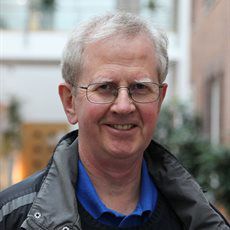
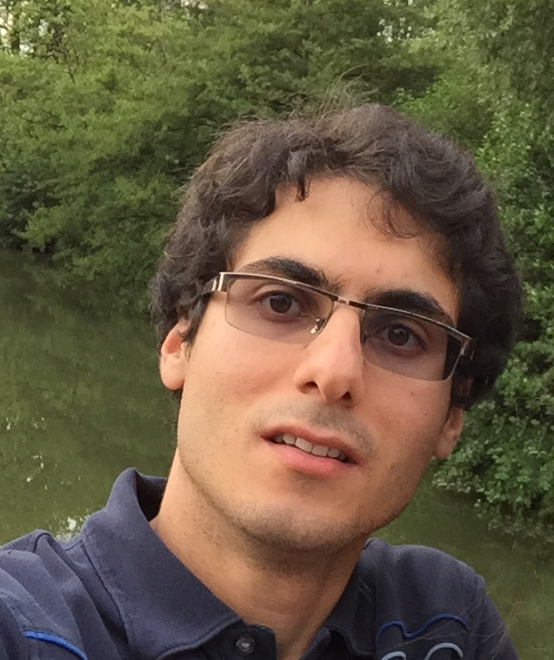
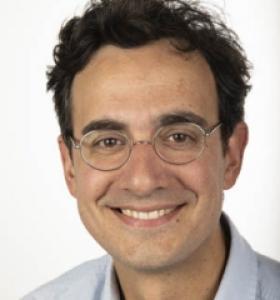
Ralph Bailey is an Associate Professor in Economics at the University of Birmingham , affiliated with the Birmingham Business School and Department of Economics . His work bridges quantitative methods and philosophy of research and enquiry , with methodological contributions to econometrics and mathematical economics. Education : BSc (Durham), MA (Lancaster), MSocSc (Birmingham) His publications focus on statistical modeling, time series analysis, and theoretical economics, including works on deunionization impacts , ARMA processes , and public good provision under ambiguity . Recent studies explore earnings dispersion, near-integration in regression, and macroeconomic sustainability frameworks. Contact : r.w.bailey@bham.ac.uk
Kurt Mitman is a Lecturer at the Institute for International Economic Studies (IIES) at Stockholm University. He holds a Professor position at CEMFI and is an Associate Professor at IIES (on leave). His research spans macroeconomics , with a focus on household economics , housing , labor market dynamics , and monetary/fiscal policy . He served as Managing Editor of the Review of Economic Studies (2019-2024) and received an ERC Consolidator Grant for his project HIPSTERMacro . Key research areas: Macroeconomics, Household Debt and Default, Housing Market Shocks Major contributions: Studying unemployment insurance effects, debt-relief policies, and heterogeneous-agent models His work has been widely covered in media outlets including The Wall Street Journal , Bloomberg , and The Economist . He co-organizes the VMACS seminar series and academic conferences like the SITE Session on Macroeconomics and Inequality .
Manxi Wu is an Assistant Professor in Cornell University's School of Operations Research and Information Engineering, specializing in societal networks and game-theoretic approaches to system design. Her research develops computational models for strategic learning and incentive mechanisms in socio-technical systems, with applications to transportation networks and digital platforms. Education: B.S. Applied Mathematics, Peking University (2015) M.S. Transportation, Massachusetts Institute of Technology (2017) Ph.D. Social and Engineering Systems, Massachusetts Institute of Technology (2021) Her research integrates game theory, optimization, and machine learning to address challenges in autonomous services, traffic management, and decentralized decision-making. Current investigations focus on adaptive incentive structures, spatial resource allocation, and equilibrium analysis in complex networked environments. Publication analysis reveals consistent emphasis on game-theoretic frameworks applied to urban mobility systems, with recent work exploring multi-agent reinforcement learning, congestion pricing equity, and electric fleet management. Methodological innovations include novel convergence proofs for decentralized algorithms and computational approaches to fairness constraints. Awards and Honors: Hammer Fellowship UTC Milton Pikarsky Memorial Award Siebel Scholarship EECS Rising Star recognition No information is currently available regarding student advising, research grants, or laboratory affiliations.
Roles & Affiliations: Professor of Applied Economics and Head of the Economics Division at Stirling Business School, University of Stirling. Member of the Stirling Behavioural Science Centre. Former member of the UK Food Standards Agency’s Social Science Research Committee (6 years). Active in interdisciplinary research on consumer behavior, decision-making, and preference elicitation. PhD in Economics (University of Manchester) MSc in Resource Economics (University of Massachusetts Amherst) Research Focus: Intersection of applied microeconomics, public health, and behavioral science. Specializes in consumer choice, decision-making processes, and methodological innovations like discrete choice experiments and best-worst scaling. Key themes include food safety perceptions, risk communication, trust in institutions, and health intervention design. Methodological contributions address preference heterogeneity, attribute non-attendance, and survey design rigor. Grants & Awards: Secured NIHR CLAHRC grants (2013-14), SIRE Early Career Engagement Grant, and Stirling Management School Seed Fund. Nominated for 2025 Teacher of the Year RATE Awards. Recognized for Best PechaKucha Presentation. Advising & Engagement: Supervises PhD students and research assistants. Serves as External Examiner for PhD theses. Collaborates with policymakers via the UK Food Standards Agency and public health initiatives. Leads projects on healthcare innovation prioritization and sustainable food systems. Labs & Networks: Core member of the Stirling Behavioural Science Centre. Engaged with interdisciplinary teams in health economics and global food security research. Active in the Scottish Institute for Research in Economics (SIRE).
David Baqaee is a Professor of Economics at the University of California, Los Angeles (UCLA), affiliated with the Department of Economics in the College of Letters and Science. His research focuses on aggregation and heterogeneity in macroeconomics, particularly examining how resource misallocation from market power, nominal rigidities, and increasing returns to scale impacts aggregate productivity. He has contributed to prestigious journals such as Econometrica and the American Economic Review. Education: Ph.D. Economics, Harvard University; B.Sc. Mathematics and Economics, University of Canterbury His research interests span applied economic theory, industrial organization, macroeconomics, and network economics. Recent work explores trade wars, sanctions' long-term effects, energy import dependencies, and the interplay between monetary policy and supply-side dynamics. He has served as an associate editor for Econometrica and the Quarterly Journal of Economics. His publications reflect a focus on policy-relevant macroeconomic questions, including the consequences of geopolitical events, trade restrictions, and pandemic impacts on global supply chains. His methodologies emphasize disaggregated models and input-output networks to capture microeconomic foundations of aggregate phenomena.
Dubravko Radic serves as Professor of Service Management at the University of Leipzig's Faculty of Business and Economics since 2009, while simultaneously holding the position of Deputy Head of the Price and Service Management group at the Fraunhofer Center for International Management and Knowledge Economics IMW since 2013. His academic career spans multiple institutions including the University of Wuppertal where he completed his habilitation, and the University of Frankfurt am Main where he earned his doctorate in statistics and econometrics. Doctorate (Dr. rer. pol. summa cum laude): Johann Wolfgang Goethe-Universität Frankfurt a.M. (2004) Habilitation: Bergische Universität Wuppertal (2009) Diplom-Volkswirt: Johann Wolfgang Goethe-Universität Frankfurt a.M. (1999) Research Stay: University of California Davis (2008) Professor Radic's research centers on the intersection of empirical methods and business management, with particular emphasis on service pricing modeling, applied microeconometrics, and social interactions in service contexts. His work bridges theoretical econometric approaches with practical business applications, especially in the healthcare sector where he has led multiple Fraunhofer IMW projects including ASARob, NurMut, and ATMoSPHÄRE. His research methodology combines quantitative modeling with real-world case studies to address strategic and operational decisions in service organizations. His recent publications demonstrate a consistent focus on discrete choice modeling, game theory applications in marketing, and service innovation frameworks. The 2025 paper "Discrete Games in Marketing Research" presented at the Global Marketing Conference in Hong Kong exemplifies his approach of applying advanced econometric techniques to practical marketing problems, particularly in digital service contexts. His work shows an evolving trajectory from foundational service management concepts toward increasingly sophisticated modeling of strategic interactions in service markets. Professor Radic has extensive experience advising major corporations including Metro AG, Lilly Deutschland, IMS Health, Berlin Chemie, and Augustinum gGmbH. His practical projects at Fraunhofer IMW focus on translating academic research into actionable business solutions, particularly in healthcare digitization and service innovation. He has led the TRAIN@MINE project developing training tools for Vietnam's mining sector and contributed to studies on Big Data applications in health insurance. At the University of Leipzig, he leads research activities through the Institute for Service and Relationship Management, supervising multiple research projects that connect academic inquiry with industry applications. His team collaborates with international partners including the University of California Davis, University of Maryland, Northwestern University, and the Technion Israel Institute of Technology, creating a robust research ecosystem focused on service management innovation.
Professor Denzil G Fiebig is a leading academic in econometrics and health economics, affiliated with the School of Economics at UNSW Business School . He has held visiting appointments at prestigious institutions including the University of Florida and Tilburg University. His research focuses on econometric modeling in healthcare decision-making and policy design. Member of the Australian Research Council College of Experts (2014-17) President of Australian Health Economics Society (2005-10) Chair of iHEA Scientific Committee (2016-19) His work has attracted over $AUD15.6 million in research funding from ARC and NHMRC. Key editorial roles include service on Economic Record and Social Science and Medicine . Recent publications analyze topics ranging from: Discrete choice experiments in healthcare Health insurance market dynamics End-of-life care economics Neonatal healthcare utilization Major awards include: 2016 Vice Chancellor’s Award for Teaching Excellence 2003 Fellow of the Academy of Social Sciences in Australia
Miguel F. Anjos is Professor and Chair of Operational Research at the School of Mathematics, University of Edinburgh , and holds the NSERC-Hydro-Québec-Schneider Electric Industrial Research Chair on Optimization for Smart Grids at Polytechnique Montréal. He received his B.Sc. (1992), M.S. (1994), and Ph.D. (2001) from McGill, Stanford, and Waterloo respectively. Research Theme Head of Data and Decisions at Edinburgh Founding Director of Trottier Institute for Energy Editor-in-Chief of Optimization and Engineering Research Interests: His work bridges mathematical optimization with smart grid applications , focusing on conic optimization, optimal power flow, demand response, and facility layout. He applies these techniques to energy storage, electric transportation, and industrial systems. Scientific Awards: Méritas Teaching Award (2012) Humboldt Research Fellowship (2009) Queen Elizabeth II Diamond Jubilee Medal (2013) Elected Fellow of EUROPT and Canadian Academy of Engineering Academic Service: Served on Mathematical Optimization Society Council, SIAM Activity Group on Optimization, INFORMS Optimization Society Vice-Chair, and Mitacs Research Review Committee. Hosts benchmark datasets: QAPLIB, FLPLIB, Jones Benchmark.
Kenichi Shimizu is an Assistant Professor in Econometrics (tenure-track) at the Department of Economics, University of Alberta. He holds a PhD in Economics from Brown University (2021) and previously worked at the Adam Smith Business School, University of Glasgow. His research focuses on Bayesian econometrics, quantitative marketing, industrial organization, and time-series analysis. He teaches courses such as Introductory Econometrics (ECON 399) and Applied Econometrics (ECON 599). Education: PhD in Economics from Brown University (2021). Professional affiliations include roles at the University of Alberta and University of Glasgow. His work emphasizes methodological advancements in econometrics with applications to marketing and industrial organization. Research trends in his publications highlight Bayesian methodologies for dynamic modeling, structural breaks, and high-dimensional data. Key topics include semiparametric estimation, sparse models, and policy evaluation frameworks. Grants: Recipient of SSHRC Insight Development Grant (2024-2026) for research on Bayesian econometric methods in industrial organization and marketing. Active presenter at major conferences including the NBER-NSF Seminar, Canadian Economic Association meetings, and the World Congress of the Econometric Society. Teaching responsibilities include undergraduate and graduate econometrics courses with emphasis on applied regression methods and model specification.
Scott Nelson is an Associate Professor of Finance at the University of Chicago Booth School of Business. His research bridges consumer credit markets, regulatory frameworks, and behavioral economics, with a focus on how information asymmetries and algorithmic decision-making shape market outcomes. He has contributed to understanding the impacts of the 2009 CARD Act, eviction protections in housing markets, and fairness in credit scoring systems. PhD in Economics, Massachusetts Institute of Technology BA (summa cum laude) in Economics and Mathematics, Yale College Nelson's work employs diverse data sources, including credit reports, court filings, and tax records, combined with structural models to analyze consumer and firm behavior. Key themes include regulatory efficiency, validity disparities in predictive models, and the welfare implications of policy interventions. His articles reveal trends in algorithmic regulation (2025), eviction dynamics (2025), credit scoring disparities (2024), and public finance impacts on Chinese real estate (2023). These publications highlight interdisciplinary methodologies integrating economics, law, and data science. Scientific awards include the AQR Top Finance Graduate Award (2018) and National Science Foundation Graduate Research Fellowship. He has held postdoctoral roles at the Consumer Financial Protection Bureau/Princeton University and visiting research positions at the Federal Reserve Bank of Boston.
Jinhu Li is a Senior Research Fellow at the Australian National University, holding positions in both the Department of Health Economics, Wellbeing and Society and the National Centre for Health Workforce Studies. She has previously held academic positions as a Senior Lecturer at Deakin University and a Senior Research Fellow at the University of Melbourne. Dr. Li completed her PhD in Economics from McMaster University in Canada, following an MA in Economics from the University of Victoria and a BA in Economics from Huazhong University of Science and Technology in China. She is also a Fellow of the UK Higher Education Academy (HEA). Her research focuses on health economics, economics of education, and development economics, with particular emphasis on social determinants of health, human capital formation, and health workforce economics. Dr. Li employs advanced methodologies including causal inference techniques and Discrete Choice Experiments to investigate critical issues in health, education, and development. Her recent publications span topics including the impacts of education on health outcomes, physician behavior and incentives, early-life health shocks, and child malnutrition. Her work appears in leading journals such as Journal of Health Economics, Journal of Development Economics, Health Economics, and Social Science and Medicine. Dr. Li has received significant recognition for her research, including an Australian Research Council (ARC) Discovery Early Career Researcher Award (DECRA) from 2017-2023. She has secured over $4.2 million in research funding, with $3.8 million from Category 1 national competitive grants. She currently leads multiple major research projects, including an ARC DECRA project, an ARC Discovery Project, and an MRFF Primary Health Care Research grant. Her current research examines the impacts of counter-COVID public policies like school closures on child development and optimal workforce mix for team-based care in managing chronic diseases.
Professor Tim Rogers is affiliated with the University of Bath as a faculty member in the Department of Mathematical Sciences . He is actively involved in research spanning complex systems, network theory, and stochastic processes. PhD in Random Matrix Theory from King's College London (2010) His research focuses on emergent behavior in random systems , including: Collective Behavior : Crowd dynamics, lane formation, and noise-enhanced synchronization Epidemics & Networks : Spread prediction, node risk assessment, and misinformation impacts Ecology & Evolution : Trait emergence, species boundaries, and demographic noise effects Random Matrix Theory : Spectral analysis and applications to complex systems Publication trends reflect interdisciplinary work bridging Physics, Biology, and Mathematics , with a focus on network structures , stochastic modeling , and emergence phenomena . Scientific awards include: 2015 : Editor's Choice for Europhys. Lett. 109, 28005 2016 : Highlight of Journal of Physics A 2017 : Editor's Suggestion for Phys. Rev. E 92, 032708 He has supervised numerous PhD students and postdocs on projects related to stochastic dynamics , network modeling , and mathematical biology , with ongoing grants from agencies like EPSRC and The Leverhulme Trust .
Pascal Da Costa is a Professor of Economics at CentraleSupélec, part of the University of Paris-Saclay. He is affiliated with the Industrial Engineering Laboratory and focuses on Environmental and Energy Economics for Sustainable Development. His research integrates planetary boundaries into economic analysis, emphasizing policy design for climate resilience and decarbonization. Key research areas include climate policy evaluation, nuclear energy economics, sustainable mobility solutions, and ecosystem valuation. He has contributed to projects such as the French Climate Roadmap and evaluates strategies for renewable energy integration alongside nuclear flexibility. Recent work addresses corporate climate ratings, CDR (Carbon Dioxide Removal) research trends, and equitable mobility solutions in urban/rural contexts. Da Costa has authored over 47 publications, including analyses of CO2 mitigation pathways, nuclear reactor investment scenarios, and ecosystem service valuation at Corsican rivers. His work bridges academic research with policy implementation through collaborative frameworks and interdisciplinary approaches. He teaches introductory economics courses at CentraleSupélec and participates in national initiatives like the 2030 Commission of the National Contributive Conference. His lab focuses on energy systems analysis, sustainable development metrics, and decision-support tools for sustainable strategy selection.
Manuel Arellano is Professor of Economics at the Center for Monetary and Financial Studies (CEMFI) in Madrid since 1991, with prior appointments at the University of Oxford (1985-89) and London School of Economics (1989-91). A leading econometrician specializing in panel data analysis, his work bridges theoretical econometrics and labor economics applications. He earned his undergraduate degree from the University of Barcelona and Ph.D. from the London School of Economics. Arellano's research focuses on econometric methodology for panel data, particularly dynamic models with heterogeneity. His seminal book Panel Data Econometrics (2003) established foundational frameworks for nonlinear and dynamic panel estimation. Current work extends to distributional analysis of random coefficients and robust inference under uncertainty, maintaining consistent emphasis on labor market applications like unemployment duration and policy evaluation. His publication history reveals a 30-year trajectory advancing panel data econometrics, evolving from specification testing (1987-1995) to sophisticated dynamic and nonlinear models (2003-2014), with persistent focus on practical implementation and labor economics applications. Major honors include: President of the Econometric Society (2014) Foreign Honorary Member of the American Academy of Arts and Sciences (2014) Rey Jaime I Prize in Economics (2012) ISI Highly Cited Researcher status (2010) Fellow of the Econometric Society (2002) No information on student advising or research grants appears in the source materials. Similarly, details about research laboratories or collaborative teams are not documented in the provided texts.
Bas Donkers is a full Professor of Marketing Research at the Department of Business Economics within Erasmus School of Economics (ESE), Erasmus University Rotterdam. Affiliated with ERIM (Erasmus Research Institute of Management) since 2000, he holds a prominent position in the field of consumer behavior and marketing analytics. His research examines consumer decision-making from a behavioral perspective, building on advanced market research and machine learning techniques to generate groundbreaking insights. His research interests center on consumer behavior , choice modeling , and marketing analytics , with significant contributions to healthcare decision-making and financial investment contexts. Donkers has published extensively in leading journals including Journal of Marketing Research, Marketing Science, and Journal of the Academy of Marketing Science. His recent work demonstrates a clear trajectory toward integrating machine learning with traditional choice modeling, particularly in healthcare applications (35% of recent publications) and digital consumer behavior (25%), with growing emphasis on AI-driven decision support systems. ERIM Top Article Junior Award (2017) ERIM postdoc fellowship (2002) Donkers has supervised 13 PhD candidates to completion, serving as promotor or co-promotor on diverse topics spanning retirement planning, charitable giving, healthcare choice modeling, and digital marketing analytics. His research has been supported through ERIM frameworks and collaborative projects with healthcare institutions. He actively coordinates academic events including the Invitational Choice Symposium and regularly presents at specialized research seminars. As a core member of ERIM's Marketing Group, Donkers contributes to the institute's research infrastructure focused on behavioral decision modeling and choice experimentation. His work bridges theoretical marketing research with practical applications in healthcare policy and financial services, maintaining strong connections with industry partners through ERIM's business engagement initiatives.