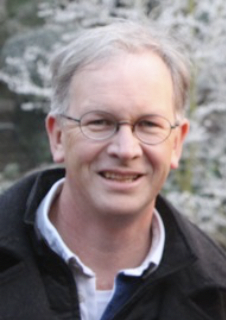
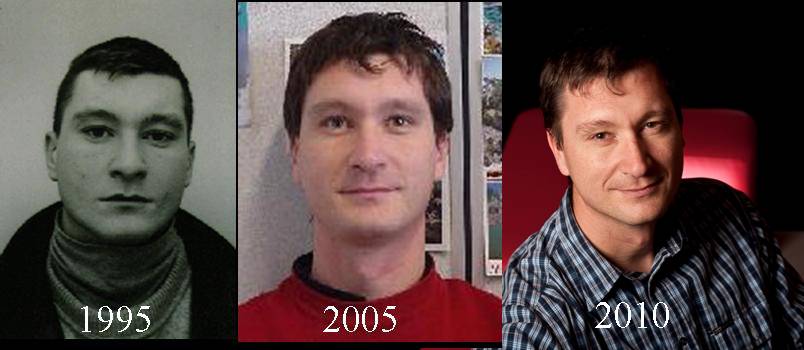
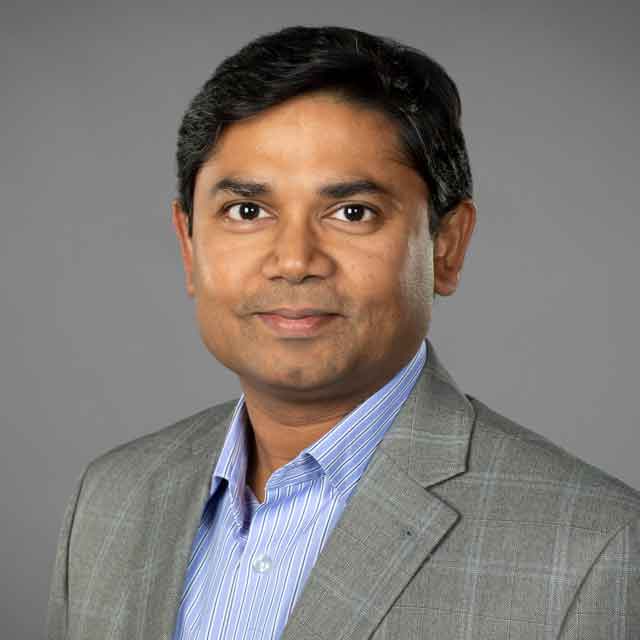
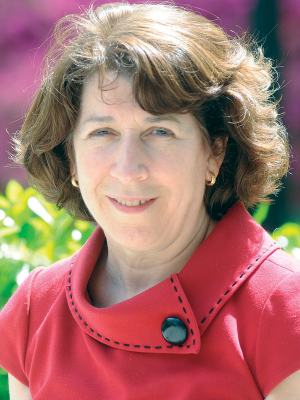
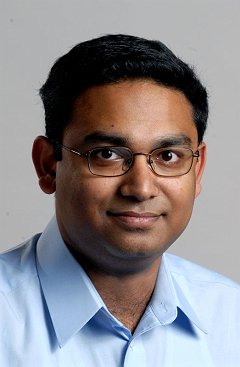
Dr. Sabin Tabirca is a Senior Lecturer at the School of Computer Science and Information Technology, University College Cork (UCC). He holds a BSc from Bucharest University and a PhD from Brunel University. His research focuses on Artificial Intelligence, Data Analytics, Algorithmics, Interactive Media, and HCI, with applications in computational cancer modeling, mobile health (mHealth), and parallel computing. He coordinates MPT Activities and is affiliated with the CRR Group and BCRI Centre. Notable awards include UCC's President Award for Innovation in Teaching (2007), IT@Cork Leader Award (2008), and UCC Staff Recognition Award (2013). His teaching includes modules like Parallel and Grid Computing, Mobile Application Design, and Graphics for Interactive Media. Dr. Tabirca has supervised over 70 MSc students and numerous PhD candidates, many of whom now hold academic and industry roles globally. His research includes developing mHealth apps for cystic fibrosis patients, 3D cancer visualization tools, and frameworks for mobile parallel computing. Publications span mHealth design pipelines, cancer prediction models, and mobile gaming for health education. He actively engages in interdisciplinary projects, blending computer science with medical and biological applications.
Milica Orlandic is an Associate Professor in the Department of Electronic Systems at NTNU. She holds an MSc from the University of Montenegro (2009) and a PhD from NTNU (2015). Her research focuses on hyperspectral imaging, remote sensing, FPGA-based systems, and embedded computing for aerospace applications. She is actively involved in the HYPSO CubeSat mission, developing onboard processing systems for Earth observation. Education: MSc in Electrical Engineering, University of Montenegro (2009) PhD in Electronics, NTNU (2015) Research Interests: Her work spans hyperspectral data processing , including compression, anomaly detection, and onboard computing for satellites. She also explores reconfigurable hardware (FPGAs) for real-time signal processing, cyber-physical systems, and spaceborne sensor systems. Publications Trends: Recent work emphasizes lightweight machine learning for anomaly detection, FPGA acceleration of hyperspectral compression (CCSDS 123), and algorithm co-design for CubeSat missions. Key contributions include robust onboard processing frameworks for HYPSO-1 and adaptive hardware-software systems. Advising & Teams: She supervises a dynamic team of over 40 PhD and MSc students working on FPGA implementations, satellite systems, and hyperspectral algorithms. Notable collaborations include the HYPSO CubeSat project, which aims to deliver high-resolution Earth observation data with low latency. Labs & Infrastructure: Her research leverages NTNU’s facilities for embedded systems prototyping, FPGA development, and CubeSat payload testing. The HYPSO mission integrates her team’s hardware-software co-design innovations for space applications.
Yubai Yuan is an Assistant Professor of Statistics at the Pennsylvania State University, affiliated with the Department of Statistics within the Eberly College of Science. He holds a PhD from the University of Illinois Urbana-Champaign (2020) and completed postdoctoral research at UC Irvine. His research focuses on network science, causal inference, and statistical machine learning, with applications to neuroscience and social systems. Notable awards include the 2022 NSF-Simons Center Fellow Award and the 2019 ASA Student Paper Award. Education: PhD in Statistics (UIUC, 2020), MS in Statistics (Sun Yat-sen University, 2016), BS in Mathematics (Shandong University, 2012). Research interests span complex network analysis, optimal transport, active learning, and mediation analysis. Current projects include de-confounding causal inference and hypergraph modeling. Teaching includes courses on probability theory and statistical modeling at Penn State. Advises PhD students Yuanchen Wu (active learning on graphs) and Siyu Huang (latent network structures). Collaborates with the Center for Social Data Analytics and organizes workshops in statistical network science. Publications emphasize methodological advancements in network analysis, causal pathways, and data integration. Recent work addresses disaster response via social media data and neuronal activity analysis using optimal transport frameworks.
Dr. Wesley J. Marrero is an Assistant Professor of Engineering at Dartmouth College's Thayer School of Engineering. He holds core affiliations with the Health Equity and Advocacy Lab at The Dartmouth Institute for Health Policy and Clinical Practice and is a faculty affiliate in the Quantitative Biomedical Sciences Graduate Program at the Geisel School of Medicine. His research integrates operations research and statistics to address healthcare challenges in substance use disorder, cardiovascular disease, and organ transplantation, collaborating with institutions like Massachusetts General Hospital and the University of Michigan. Dr. Marrero received a B.S. in Industrial and Management Engineering from the University of Turabo (2014), an M.S. in Industrial and Operations Engineering (2017), an M.A. in Statistics (2021), and a Ph.D. in Industrial and Operations Engineering (2021) from the University of Michigan. His research focuses on stochastic simulation and optimization for decision-making in healthcare. Key areas include machine learning applications in predictive modeling, inferential statistics for medical decisions, and sequential decision-making frameworks for health policy optimization. His work emphasizes practical implementations in clinical settings and health systems. Dr. Marrero's publications demonstrate a consistent focus on healthcare optimization, with recent trends in machine learning for organ transplantation and genetic testing strategies. His articles frequently appear in high-impact journals and conference proceedings, reflecting interdisciplinary collaborations. Awards: INFORMS MIF Best Paper Award (2024) INFORMS Annual Meeting Minority Issues Forum Poster Competition Best Poster Award (2020) INFORMS Judith Liebman Award (2020) National Science Foundation Graduate Research Fellowship (2017) Michigan Student Symposium Best Poster Award (2017) Rackham Merit Fellowship (2015) He actively advises graduate and undergraduate students, with current PhD candidates in engineering and biomedical sciences. His research group has secured grants from organizations including the National Science Foundation and the American Medical Association. Dr. Marrero leads a dynamic research group focusing on healthcare decision analytics. He collaborates with medical institutions and government agencies, including the U.S. Department of Veterans Affairs, to translate research into clinical practice.
Cristian Román-Palacios is an Assistant Professor in the Department of Ecology and Evolutionary Biology at the University of Arizona, where he also serves as Coordinator and Advisor for the Master of Science in Data Science (MSDS) and Master of Science in Information Systems (MSIS) programs. He is a core faculty member in Artificial Intelligence and Machine Learning, Data Management, Analysis and Visualization, and Environmental, Health and Biological Sciences. Education: PhD in Ecology and Evolutionary Biology, University of Arizona (2020) BS in Biology, Universidad del Valle, Colombia (2015) His research lies at the intersection of phylogenetics, biodiversity modeling, and machine learning, focusing on large-scale biodiversity patterns, the impacts of climate change on species survival, and the development of statistical tools for paleoclimatic reconstructions. He employs computational and data-intensive methods to explore evolutionary and ecological questions across diverse taxa. His recent publications (2024–2025) demonstrate a strong trend toward interdisciplinary research, combining computational biology, geochemistry, climate science, and open-source software development. Key themes include biodiversity informatics (e.g., Animal Culture Database), paleoclimatic modeling (e.g., clumped isotope thermometry), reproducibility in science, and tools for collaborative research (e.g., LabOps, SSARP). His work increasingly integrates data science with biological and environmental applications. Scientific Contributions: Published over 25 peer-reviewed papers, many as first author Research featured in Science News, Popular Science, CNN, USA Today Developed open-source tools: phruta , treedata.table , SSARP , LabOps Cristian advises graduate students through the infosci-msadvise@arizona.edu email and Calendly appointments. He was previously a staff researcher at UCLA’s Tripati Lab. He leads initiatives such as the Southwest Center on Resilience for Climate Change and Health and promotes inclusive, collaborative science through online toolkits and leadership ecosystems aimed at addressing climate and social inequities. His lab, the Román-Palacios Lab, and involvement with the Data Diversity Lab reflect his commitment to open, reproducible, and equitable research practices in data-intensive biology.
Scot M. Miller is an Associate Professor in the Department of Environmental Health and Engineering at the Whiting School of Engineering, Johns Hopkins University. He leads the Greenhouse Gas Research Group, focusing on quantifying emissions of greenhouse gases and air pollutants using satellite, aircraft, and tower observations. His research spans global scales, from Arctic ecosystems to urban and industrial sources in the U.S. and China. His research interests include atmospheric science, greenhouse gas emissions, inverse modeling, big data analytics, and climate policy. He integrates tools from statistics, high-performance computing, and satellite remote sensing to improve emission estimates and inform environmental regulations. Recent publications highlight trends in methane, ethane, and sulfuryl fluoride emissions, carbon cycle dynamics, and innovative methods for analyzing massive satellite datasets. His work increasingly leverages OCO-2 and OCO-3 satellite data to study carbon dioxide and methane fluxes across diverse ecosystems. Scientific awards include the NSF CAREER Award, JHU Catalyst Award, and the Carnegie Distinguished Postdoctoral Fellowship. He was also recognized with Harvard’s Certificate of Excellence in Teaching. Miller advises multiple PhD students, including Mingyang Zhang, Dylan Gaeta, and Leyang Feng, and has secured grants from NASA, NSF, NOAA, and JHU. He is a member of the NASA OCO Science Team and collaborates with institutions such as Northern Arizona University, Carnegie Institution, and NOAA. His lab is involved in urban environmental monitoring in Baltimore and interdisciplinary climate policy research.
Associate Professor Bryce Frederick John Kelly is an academic at the University of New South Wales (UNSW), affiliated with the School of Biological, Earth and Environmental Sciences. His research focuses on greenhouse gas emissions, hydrogeology, and groundwater management, with a specialization in methane and carbon dioxide isotopic analysis. He leads the Greenhouse Gas Measurement Laboratory, which analyzes gas isotopes to trace emissions from coal seam gas (CSG), agriculture, and urban environments. Education: BSc (Hons) in Environmental Geology (UNSW, 1989); PhD in Environmental Geophysics (UNSW, 1995). Research Interests: Measuring methane emissions from CSG, coal mining, and agriculture Soil carbon sequestration and groundwater sustainability Isotope geochemistry for source attribution of greenhouse gases Satellite and airborne greenhouse gas monitoring Impact of CSG development on aquifers and ecosystems Key Projects: Leading the United Nations Environment Programme Methane Science Studies team, quantifying emissions in the Surat Basin. Co-supervising 60+ students. Collaborating with ANSTO on soil carbon and groundwater modeling. Awards: 2016 Cotton Seed Distributor Researcher of the Year finalist, 2011 Eureka Prize finalist for water research, and multiple industry awards for hydrogeological innovation. Labs/Teams: Connected Water Initiative, Centre for Ecosystem Science, Earth and Sustainability Science Research Centre (ESSRC). Active in policy outreach through The Conversation and Australian Geographic.
François Brémond is a Research Director (DR1) at INRIA Sophia Antipolis, where he leads the STARS research team, which he founded on January 1, 2012. He was previously head of the PULSAR team starting September 2009. He is also a co-founder of the CoBTeK team at Nice University in collaboration with Nice Hospital, focusing on behavioral disorders in elderly patients with dementia. His research is centered on dynamic scene interpretation using video and sensor data, with applications in surveillance, healthcare, transportation, and ambient intelligence. Research Interests: Computer Vision: video processing, object detection and tracking, motion analysis, pattern recognition Cognitive Vision: video understanding, scene understanding, event recognition, behavior analysis, multi-sensor fusion, multimedia interpretation Machine Learning: deep learning architectures, self-attention, knowledge distillation, contrastive learning, self-learning, lifelong learning, knowledge-based systems, spatio-temporal reasoning Autonomous Systems: real-time systems, system evaluation, parameter tuning, system design, 3D visualization His work bridges low-level pixel data with high-level semantic behavior modeling, enabling systems to detect and interpret complex human and vehicle activities in real-world environments. Applications include crowd monitoring, fraud detection, airport operations, homecare for the elderly, and biological monitoring. He has authored or co-authored over 200 scientific papers and has (co-)supervised 18 PhD theses. He has participated in 12 European projects (e.g., FP6, FP7), 12 French national projects (ANR, DGE), and numerous industrial collaborations with companies such as Thales, SNCF, RATP, STMicroelectronics, and Alstom. He also serves as an expert reviewer for ANR and the European Commission. Scientific Leadership and Technology Transfer: Co-founder of Keeneo (acquired by Digital Barriers), Ekinnox, and Neosensys — startups in intelligent video monitoring and business intelligence Reviewer for top-tier journals (PAMI, CVIU, AIJ) and conferences (CVPR, ICCV, AVSS) Contributor to the ARDA workshops on video event ontology He has taught numerical classification at Nice University and video understanding at a Master’s level engineering school. His research program emphasizes generic, scalable systems for behavior modeling and long-term activity mining. Research Projects: Stress ID dataset (ECG and video for stress detection) Toyota Smarthome (Activities of Daily Living) SafEE2 (Homecare for elderly with autonomy loss) Praxis dataset (RGB-D upper-body gestures) GER'HOME, CARETAKER, RATP Project, ETISEO, AVITRACK, CASSIOPEE, ADVISOR, PASSWORDS
Tatyana Konkova is a Senior Lecturer in the Department of Design, Manufacturing and Engineering Management at the University of Strathclyde, Faculty of Engineering, Glasgow, UK. She is actively engaged in research, teaching, and professional leadership in the field of Materials Science and Engineering, with a focus on metallurgy and advanced manufacturing techniques. Education: Doctor of Science, Mechanisms of cryogenic plastic deformation and features of microstructure formation in technically pure copper, Institute for Metals Superplasticity Problems, Russian Academy of Sciences (awarded 2011) Master of Business Administration (MBA), Strathclyde Business School (awarded 2023) PG Certificate in Learning and Teaching in Higher Education, University of Strathclyde (awarded 2021) MSc (Hons) in Materials Science and Engineering, Ufa State Aviation Technical University (awarded 2005) BSc in Engineering, Ufa State Aviation Technical University (awarded 2004) Research Interests: Her research spans Severe Plastic Deformation (SPD), cryogenic deformation, additive manufacturing, microstructure evolution, and advanced characterization using EBSD, TEM, and SEM. She focuses on materials such as titanium alloys, copper, and nickel-based superalloys, aiming to bridge fundamental science with industrial applications. Her work emphasizes grain boundary engineering, abnormal grain growth, and deformation-induced boundaries. Publication Trends: Recent publications highlight her growing interdisciplinary work combining additive manufacturing with electric machine design, as well as continued deep microstructural investigations in aerospace and microelectronic materials. Her research integrates data-driven optimization and advanced characterization to improve material performance and manufacturing efficiency. Scientific Awards and Honors: Fellow of the Institute of Materials, Minerals and Mining (FIMMM) Chartered Engineer (CEng) by the Engineering Council Member of the Institution of Mechanical Engineers (MIMechE) Fellow of the Higher Education Academy (FHEA) PG Certificate in Learning and Teaching in Higher Education Advising and Grants: She has supervised undergraduate, postgraduate, and PhD students and serves as Principal Investigator on multiple research projects, including EPSRC-funded CDT in AI-enabled Digital High-Value Manufacturing and AFRC projects on titanium alloy forgeability. She has secured funding from national and international sources, including the Russian Foundation for Fundamental Research. Her leadership in industrial collaboration and knowledge exchange is evident through her roles in Catapult projects and industrial group supervision. Labs and Teams: She has led the Materials Characterisation Theme at AFRC and represented the center in Cross-Catapult forums on additive manufacturing. She is part of the Horizon Europe Working Group with the University of Waterloo and actively collaborates with national and international research teams.
Qiang Zhu is a Professor in the Department of Computer and Information Science at the University of Michigan-Dearborn, holding the William E. Stirton Professorship (2017–2024). He founded the Data Science/Management Research Laboratory and is affiliated with the Michigan Institute for Data Science (MIDAS). His research spans data science, data management, and machine learning. Ph.D., University of Waterloo M.S., McMaster University M.Eng., Southeast University B.S., Southeast University Research focuses on advanced data indexing, query optimization, and AI-driven data management, with applications in genomics, network systems, and education. His work integrates machine learning with database systems for scalable solutions. Recent publications include topics in federated learning fairness, digital twin middleware, project-based CS education, and genome data indexing. Scientific contributions recognized through awards like the Wilkes Award (2008), ACM Distinguished Scientist (2013), and Springer Nature Editor of Distinction (2025). 2013–2018: Department Chair NSF, IBM, and Ford grants Over 250 conference committee roles He directs the Data Science/Management Research Lab, focusing on collaborative projects in genome analytics and smart computing infrastructures.
Shamik Sengupta is the Ralph E. and Rose A. Hoeper Professor at the University of Nevada, Reno (UNR) , where he serves as Professor in the Department of Computer Science & Engineering and Executive Director of the Cybersecurity Center . He holds a PhD in Computer Science from the University of Central Florida (2007) and a BE in Computer Science from Jadavpur University (2002). IEEE Senior Member Director, UNR Cybersecurity Center NSF CAREER Award Recipient
Kathleen R. McKeown is the Henry and Gertrude Rothschild Professor of Computer Science at Columbia University and the Founding Director of Columbia's Data Science Institute (2012-2017). She has been a faculty member since 1982 and served as Department Chair (1998-2003) and Vice Dean for Research in the School of Engineering and Applied Science. Her research focuses on natural language processing , text summarization , natural language generation , and social media analysis . Current projects include neural methods for extractive/abstractive summarization, electricity usage message generation via reinforcement learning, and social media sentiment analysis in low-resource languages like Uyghur. She leads the Columbia NLP Group and developed the long-running Newsblaster system (2001-present) for automated news tracking and multi-document summarization. Key scientific awards include NSF Presidential Young Investigator (1985) NSF Faculty Award for Women (1991) AAAI Fellow (1994) ACM Fellow (2003) ACL Founding Fellow (2012) Columbia Great Teacher Award (2010) Anita Borg Woman of Vision Award (2010) She has held leadership roles in major academic organizations: President of the Association for Computational Linguistics (1992), Vice President (1991), Secretary-Treasurer (1995-1997), and board member of the Computing Research Association with secretary role.
Koushik Sen is a Professor in the Department of Electrical Engineering and Computer Sciences at the University of California, Berkeley. His research focuses on developing software tools and methodologies to enhance programmer productivity and software quality, with expertise in Software Engineering, Programming Languages, and Formal Methods. Education: B.Tech from Indian Institute of Technology, Kanpur M.S. and Ph.D. in Computer Science from University of Illinois at Urbana-Champaign Research Focus: Professor Sen pioneers automated testing techniques including concolic testing and DART (Directed Automated Random Testing). His work bridges formal methods with practical software development, emphasizing bug detection, program synthesis, and AI-driven software analysis tools. Recent innovations include machine learning approaches for code recommendation and fuzzing. Publication Trends: His recent publications (2019-2023) demonstrate strong emphasis on fuzzing techniques, program synthesis, and AI/ML applications in software engineering. Notable domains include smart contract security, automated testing, and developer tooling, with frequent collaborations in top-tier conferences. Awards and Honors: NSF CAREER Award (2008) Sloan Foundation Fellowship (2011) IFIP TC2 Manfred Paul Award (2010) Okawa Foundation Research Grant (2015) Multiple ACM SIGSOFT Distinguished Paper Awards UIUC Distinguished Alumni Educator Award (2014) Leadership: Active program committee member for premier conferences (PLDI, ICSE, ISSTA) and keynote speaker. His research is supported by NSF, Okawa Foundation, and Sloan Foundation.
Shuting Wang is an Assistant Professor in the Paul H. Chook Department of Information Systems and Statistics at Baruch College's Zicklin School of Business. With a PhD in Management Information Systems from Temple University and prior degrees in Operations Management and Logistics Management, her research focuses on social media risks, fake news detection, and digital health platforms. PhD: Temple University (Management Information Systems) MSc: Shanghai University of Finance and Economics (Operations Management) BSc: Zhongnan University of Economics and Law (Logistics Management) Her expertise spans Big Data Marketing , Social Media Analytics , Technology Strategy , and Digital Health . Current research examines: Fake news mitigation through multimedia elements Telemedicine accessibility via SMS technology Social media's impact on business reputation FinTech startup success factors Psychological impacts of digital appearance Cybersecurity effects on startup funding Key Scientific Awards : Research Cluster Interdisciplinary Incentive Grants (2025) Eugene M. Lang Fellowship (2021) Presidential Fellowship at Temple University (2014) Full Tuition Scholarship at Shanghai University of Finance and Economics (2009) Active in teaching roles including Data Mining for Business Analytics and Database Management, she has received grants from the National Science Foundation and CUNY Central Office. Her work has been featured in outlets like NPR and Campaign US.
Jian Tang is an Assistant Professor at HEC Montreal and the Montreal Institute for Learning Algorithms (MILA), as well as an Associate Professor at the Department of Computer Science and Operations Research (DIRO) at Université de Montréal. He is also affiliated with IVADO (Institut de valorisation des données) as a member. His research spans multiple institutions including collaborations with leading biology labs worldwide and access to extensive computational resources through industry partners. Ph.D. in Computer Science, Peking University (2009-2014) Visiting Ph.D. student, University of Michigan (2011.10-2013.8) B.S. in Mathematics, Beijing Normal University (2005-2009) Professor Tang's research focuses on the intersection of deep learning and graph theory, with particular emphasis on geometric deep learning, knowledge graph reasoning, and applications in drug discovery. His work bridges symbolic and neural approaches to create robust reasoning systems that can handle complex structured data. He has pioneered techniques in graph representation learning that have significantly advanced the field of molecular property prediction and protein design. His publication record shows a clear trajectory toward applying geometric deep learning to biological problems, with a growing emphasis on protein design, molecular conformation generation, and multi-omics analysis. Recent work demonstrates sophisticated integration of 3D geometry with deep learning architectures to model complex biomolecular interactions. Canada CIFAR Artificial Intelligence Chairs (CCAI Chair) Tencent AI Lab Rhino-Bird Gift Fund Amazon Faculty Research Award Microsoft-Mila collaboration grant National Research Council Canada (NRC) Collaborative Research and Development Grant Professor Tang actively mentors doctoral and master's students, with six recent graduates working on cutting-edge topics including graph neural networks for reasoning, protein design, and molecular representation learning. His research is supported by substantial funding from industry partners including Microsoft, Amazon, and Tencent, as well as government agencies like NRC. He collaborates extensively with biology labs worldwide, applying AI to solve real-world biomedical challenges. He leads a research group focused on geometric deep learning for drug discovery, with active projects in protein design using geometric-aware models and large language models for multi-omics analysis. The group has access to thousands of GPUs through industry collaborations, enabling large-scale experiments in molecular simulation and generative modeling.