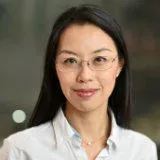
Dr. Soohyun Lee is a Senior Lecturer in Korean and East Asian Political Economy at King's College London, based in the Department of European & International Studies within the School of Politics & Economics. She holds a BSc from Ewha Womans University (South Korea), an MSc from the London School of Economics, and a DPhil from the University of Oxford. Affiliations: European Politics and Society Research Group King’s Korea Initiative Her research focuses on the comparative political economy of welfare states, particularly in East Asia and Europe, with an emphasis on labor market dualization, social policy reforms, and family policies. She has explored how countries address welfare challenges and the conditions for successful welfare state reforms. Her work has been published in leading journals such as World Politics , Comparative Political Studies , and Journal of Contemporary Asia . Dr. Lee teaches courses on the political economy of East Asian development, welfare state models, and capitalism. She supervises PhD students on topics related to welfare states, labor markets, and East Asian political economy. Grants & Projects: Learning to Reform the Welfare State and Labour Market: Korean Labour Market and Social Policy-Making in Comparative Perspective (Korea Foundation, 2020–2022) Welfare Reform and Social Progress in South Korea: Effective Social Policies for a Low-Fertility and Ageing Society (Korea Foundation, 2019–2020) Welfare States in Transition: International Policy Lessons for South Korea (Korea Foundation, 2018–2019) Recent News & Events: Her work on economic insecurity and right-wing populism was highlighted in news outlets (2024). Contributed to discussions on fertility and job security (2023). Presented at the SASE Annual Conference (2022).
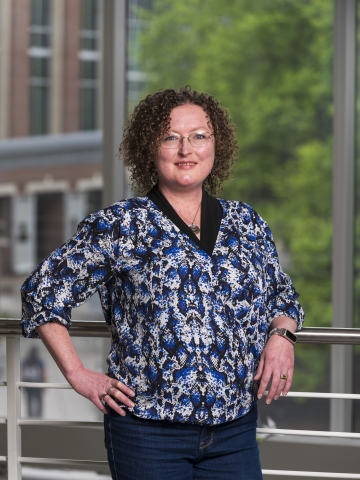
Carol Smith is an Associate Professor in the Department of Soil & Physical Sciences at Lincoln University, New Zealand, where she serves as Head of Department since 2017. She has been an elected academic staff member of the Lincoln University Council from 2018-2022. Dr. Smith holds a PhD from the University of Aberdeen, an MSc from the University of Reading, and a BSc(Hons) from the University of Portsmouth, forming the foundation of her expertise in soil science and physical geography. Her research spans both fundamental and applied aspects of pedology. On the fundamental side, she investigates Quaternary pedology and paleoenvironmental reconstruction using loess stratigraphy, geomorphology, and micromorphology, which provides critical data for verifying future climate change predictive models. Applied research focuses on sustainable use of recycled organic matter and rehabilitation of degraded soils. She collaborates internationally on multidisciplinary projects involving paleoclimate reconstruction, paleoliquefaction, Antarctic soils, and viticulture. Dr. Smith is passionate about teaching and science communication, employing experiential learning methods to develop practical field skills in soil science through 'soil judging competitions' in New Zealand and Australia. Her research addresses UN Sustainable Development Goals including Life on Land (15), Climate Action (13), and Quality Education (4). Among her notable recognitions are the Norman H Taylor Memorial award 2020 from the New Zealand Society of Soil Science for outstanding contributions to soil science in New Zealand and Fellowship in the Royal Geographical Society, London. She serves as Associate Editor of Natural Sciences Education and was previously editor of Quaternary Australasia. Dr. Smith has supervised numerous graduate students through research-based supervision, with completed projects covering diverse topics from soil patterns in Southland to Antarctic soil ecology. She teaches advanced courses in field research, soil science, and physical landscapes, and has developed innovative approaches to teaching during the pandemic, including virtual field trips.
Prof. Dr. Teresa Sansour is a full Professor of Pedagogy and Didactics in Cases of Intellectual Development Impairments with Special Consideration of Inclusive Educational Processes at the Institute for Special and Rehabilitation Education, Carl von Ossietzky University of Oldenburg. She joined the university in April 2020 and has held leadership roles including Vice Director for Teaching at the Center for Teacher Education (since October 2021) and Deputy Institute Director (since April 2025). Her academic affiliations reflect a deep commitment to inclusive and special education. Her research focuses on educational interactions in the context of intellectual disabilities, inclusive subject didactics, the participation of people with complex disabilities, and the professionalization of educators and prospective teachers. Key research areas include inclusive literacy, art education, teacher motivation, and social integration. She leads significant funded projects such as Literary Texts in Simple Language (LiES) and Lighthouses for Participation , both aimed at enhancing inclusion for people with disabilities. The recent publications of Prof. Sansour span topics such as school absenteeism in autism, self-concept in intellectual disabilities, inclusive art education, and participation models. Her work demonstrates a strong interdisciplinary and applied focus, combining qualitative methods with pedagogical innovation. She frequently publishes in peer-reviewed journals and edited volumes on special education, inclusive didactics, and disability studies. Member, German Society for Educational Research (DGFE), Section Special Education Member, Network for Complex Disabilities e.V. Chair, Advisory Board of the Georg-Leffers-Stiftung Chair, Association for the Promotion of Pedagogical Rehabilitation and Social Integration of People in Risk Situations Board Member, German Interdisciplinary Society for Research Promotion for People with Intellectual Disabilities (DIFGB) Prof. Sansour actively contributes to academic leadership and teacher training. She serves as program coordinator for the Bachelor’s in Special Education and accreditation officer for the Special Education/Social Studies cluster. Her work includes advising on inclusive curricula, fostering research collaborations, and securing external funding for inclusive initiatives. She has not received explicitly mentioned scientific awards in the provided text. She is involved in multiple collaborative research teams and projects focused on inclusion, literacy, and disability rights.
Dr. Galina Miazhevich is a Senior Lecturer at the School of Journalism, Media and Culture (JOMEC) at Cardiff University, UK. Previously, she served as a lecturer at the University of Leicester's School of Media, Communication and Sociology (2013-2017) and as the Gorbachev Media Research Fellow at the University of Oxford (2008-2012). Her academic career focuses on media representations in post-communist contexts, with particular expertise in Russian and Eastern European media landscapes. Dr. Miazhevich earned her PhD from the University of Manchester, where she subsequently worked for two years as a Research Associate on an AHRC-funded project examining representations of Islam as a security threat. Her educational background has informed her research trajectory, which bridges media studies, political communication, and cultural analysis of post-Soviet societies. Dr. Miazhevich's research spans several interconnected domains: media representations of Islam and multiculturalism in Europe; media and democracy in post-communist Europe; gender, media, and emergent forms of post-Soviet identity; feminism; Eurovision and popular culture; and diaspora, transnationalism, and media. Her work consistently examines how media shapes and is shaped by political transitions, identity formation, and social movements in post-Soviet contexts, with particular attention to marginalized voices and resistance practices. Analysis of Dr. Miazhevich's recent publications reveals a consistent focus on resistance, identity, and power dynamics in post-Soviet media environments. Her work increasingly examines gender and sexuality as political categories, particularly through the lens of feminist and LGBTQ+ resistance to authoritarian regimes. The Eurovision Song Contest serves as a recurring analytical framework for understanding cultural diplomacy and nation-branding strategies. More recently, her research has pivoted toward documenting anti-war resistance following Russia's invasion of Ukraine, examining how celebrities and media figures navigate political dissent under authoritarian conditions. Dr. Miazhevich has received several notable recognitions for her scholarly contributions: AHRC Leadership grant 'A Quiet Revolution: Discursive Representations of Non-heteronormative Sexuality in Russia' (2018-2020, £250,960) Visiting Fellowship at the Davis Centre for Russian and Eurasian Studies, Harvard University (Fall 2023) Fellow of the Higher Education Academy (FHEA) Associate Editor for the Oxford Encyclopedia of Race, Ethnicity, and Communication (2024) Dr. Miazhevich actively mentors the next generation of scholars, currently co-supervising PhD students Diyana Dobreva (with Professor Martin Innes) and John Tasker (with Professor Paul Bowman). She welcomes PhD proposals in areas including digital culture and resistance, media management and misinformation, media and democracy, representation of minority groups, post-communist identity politics, gender and feminism, Eurovision and popular culture, and geopolitics and nation-branding. Her grant portfolio demonstrates sustained success in securing competitive research funding, including leadership of an AHRC grant and participation in the Academy of Finland project FEMCORUS (2021-2025). Dr. Miazhevich is deeply engaged with academic communities, serving as co-convenor of the (Digital) Media and Culture group at the British Association for Slavic and East European Studies (BASEES) since 2016 and as a member of the Advisory Board of the European Communication Research and Education Association (ECREA) since 2021. Her work extends beyond academia through public engagement, including invited talks at prestigious institutions like Harvard University and participation in policy-relevant events at Chatham House addressing LGBTQ+ politics in Russia.
Amanda Stockton is an Associate Professor at the School of Chemistry and Biochemistry, Georgia Institute of Technology. Her research focuses on the development of analytical instruments for planetary exploration and the study of terrestrial analog environments to understand conditions suitable for life emergence. She leads the Stockton Lab, which specializes in microfluidics, biosignature detection, and astrobiological applications. Education: B.S. in Chemistry and Aerospace Engineering, Massachusetts Institute of Technology (2004) M.A. in Chemistry, Brown University (2006) Ph.D. in Chemistry, University of California Berkeley (2010) Stockton’s work bridges planetary science and analytical chemistry, targeting extraterrestrial life detection through technologies like the FELDSPAR and IMPOA projects. Her research explores sea spray aerosols, icy moon penetrators, and microfluidic systems for environmental and medical diagnostics. Research Highlights: Instrument development for Europa and Enceladus missions Microfluidic tools for origin-of-life experiments Terrestrial applications in environmental monitoring and point-of-care diagnostics Collaborative studies in Icelandic and Antarctic analog environments The Stockton Lab’s publications reveal expertise in biosignature preservation, Raman spectroscopy, and planetary habitability, with a focus on Mars and ocean worlds. Her team has pioneered low-cost microfluidic platforms like GLUE and modular CE-LIF systems.
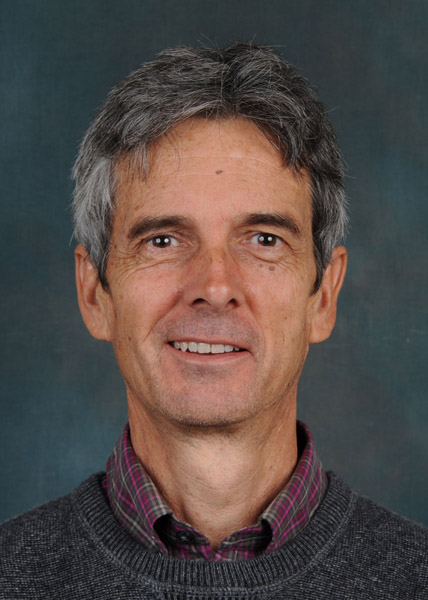
Philip Poole is a Professor of Plant Microbiology at the University of Oxford's Department of Plant Sciences and Senior Research Fellow at Somerville College. His research focuses on plant-microbe interactions, nitrogen fixation, and rhizosphere microbiology. He has led major international projects including the BBSRC-NSF Synthetic Symbioses program (2014-2019) and the India-UK Nitrogen Fixation Consortium (2016-2019). With 26 grants as PI from the UK's BBSRC, he has secured over £10.5 million in funding. His work includes pioneering bacterial Lux biosensors for metabolite analysis, transcriptomics under sterile conditions, and metatranscriptomics in soil to study microbiome-plant interactions. Current projects model nitrogen fixation biochemistry in legume nodules and investigate rhizobia lifecycle transitions from rhizosphere colonization to symbiotic bacteroid differentiation. He co-directs the Oxford Centre for Plants for the 21st Century and serves on editorial/advisory boards for Microbiology UK, The Journal of Bacteriology, and Pivot Bio. His contributions include elucidating the ammonia-alanine pathway for nitrogen secretion and demonstrating symbiotic auxotrophy dependencies in bacteroids. Key achievements include developing global mutagenesis strategies (INSeq) and advancing understanding of microbial community structures in the rhizosphere. His research integrates molecular, genetic, and systems biology approaches to address global challenges in sustainable agriculture.
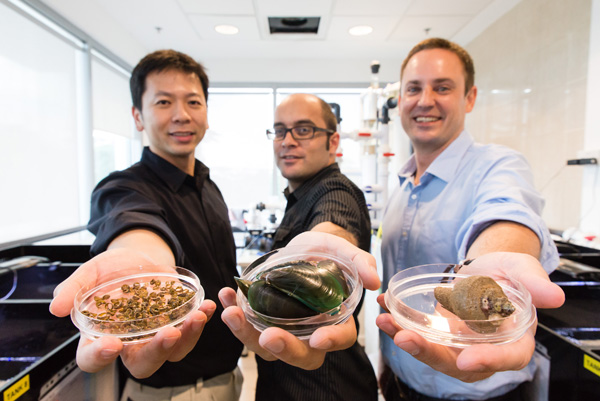
Professor Ali Gilles Tchenguise Miserez holds a joint appointment as Professor in the School of Materials Science and Engineering and the School of Biological Sciences at Nanyang Technological University (NTU) in Singapore. He is also the President's Chair in Materials Science and Engineering. His research group, the Biological and Biomimetic Materials Laboratory (BBML), is highly interdisciplinary, bringing together molecular biologists, chemists, bio-physicists, and materials scientists to study natural materials with unique properties not found in man-made materials. Prof. Miserez's research interests span multiple areas including bioelastomeric membranes & coiled-coil engineering, mechanisms of biofouling adhesion & anti-adhesive coatings, molecular biomimetics of non-mineralized hard tissues, biomineralized structures with graded properties, and liquid-liquid phase separation. His work focuses on understanding the molecular, physico-chemical, and structural principles of biological materials and translating these designs into novel biomimetic synthesis strategies. His laboratory emphasizes "green chemistry" approaches that mimic nature's energy-efficient synthesis methods under ambient conditions. Prof. Miserez's publication record demonstrates significant impact across multiple disciplines, with work appearing in top journals including Science, Nature Materials, Nature Biotechnology, Nature Chemical Biology, and Advanced Materials. His recent research has particularly focused on peptide coacervates for intracellular delivery of therapeutics, with applications in cancer treatment, mRNA delivery, and nucleic acid therapeutics. This work represents a convergence of materials science, biochemistry, and medicine with significant translational potential. Singapore National Research Foundation (NRF) Fellowship (2011) - $3 Million individual research grant for early career scientists Prof. Miserez has mentored numerous PhD students and postdoctoral researchers, many of whom have gone on to successful careers in academia and industry. His laboratory has developed strong international collaborations and has secured significant research funding. Current projects include developing peptide-based delivery systems for cancer therapeutics, understanding marine biofouling mechanisms, and creating biomimetic materials inspired by natural systems. The BBML laboratory is actively recruiting talented researchers interested in interdisciplinary work at the interface of biology and materials science.
George Musgrave is a Senior Lecturer in Cultural Sociology and Creative Industries at the Institute for Creative and Cultural Entrepreneurship (ICCE) at Goldsmiths, University of London. An interdisciplinary sociologist of culture, he specializes in researching musicians' psychosocial working lives with a focus on mental health and wellbeing in the music industry. His work has directly influenced industry practices and government policy, including the establishment of the Music Minds Matter helpline in 2017. Dr. Musgrave holds a PhD from the Centre for Competition Policy (UEA), an MA in Politics, Philosophy and Economics, and a Cambridge MA (Cantab) in Social and Political Science. His academic journey reflects his interdisciplinary approach that bridges sociology, psychology, and economics in understanding creative work. His research interests center on the psychological experiences and working conditions of creative careers, particularly examining how the music industry impacts mental health. Musgrave investigates the paradox where music-making can be therapeutic while building a music career often proves detrimental to wellbeing. His work explores the intersections of identity, class, gender, and economic precarity in creative labor, with particular attention to how social media, streaming platforms, and industry structures affect musicians' mental health. Analyzing his recent publications reveals a consistent focus on mental health in the music industry across multiple dimensions: epidemiological studies of anxiety and depression among musicians, interventions and policy solutions, the impact of digital platforms, and the cultural narratives surrounding musical work. His research spans methodological approaches from quantitative surveys to qualitative interviews and critical policy analysis, consistently highlighting the need for structural changes in the music industry to support artist wellbeing. Fellow of the Royal Society for Public Health (FRSPH) Fellow of the Royal Society of Arts (FRSA) Fellow of the Higher Education Academy (FHEA) Editorial Board member of Cultural Trends journal Royal Musical Association Music and Mental Health Group Research Coordinator Dr. Musgrave has supervised 68 MA dissertations to completion and seven doctoral projects, including Dr. Steven Sparling (2021). His current PhD supervision spans interdisciplinary topics connecting music, psychology, and sociology. He has secured significant research funding from diverse sources including UKRI (ESRC), the Mayor of London, Help Musicians UK, and the Danish Partnership for Sustainable Development in Music. His major projects include 'Can Music Make You Sick?' and 'When Music Speaks,' which represent the largest studies to date on musicians' mental health in the UK and Scandinavia respectively. Beyond academia, Musgrave maintains an active music career, having signed with EMI/Sony/ATV and performed at major festivals including Reading and Leeds.
Prof. Dr. Andreas Kappler is a Professor of Geomicrobiology at the University of Tübingen's Applied Geosciences department. He leads the Geomikrobiologie workgroup and holds an honorary professorship at Aarhus University. His research focuses on microbial interactions with iron, sulfur, and carbon cycles in environments ranging from permafrost thaw zones to ancient ocean analogs and extraterrestrial settings like Enceladus. Education: Ph.D. in Environmental Microbiology (2000, University of Konstanz) Diploma in Chemistry (1997, University of Konstanz) Postdoctoral work at Caltech (USA), EAWAG/ETH Zurich (Switzerland), and the Marine Biological Laboratory. Research Interests: His work explores microbial-driven mineral formation (e.g., pyrite, siderite), iron and sulfur biogeochemistry, permafrost thaw impacts on greenhouse gases, and ancient ocean geochemistry. He investigates how microbial processes shape Earth's element cycles and potential biosignatures for astrobiology. Key Contributions: Recent studies include iron-carbon interactions in thawing permafrost, nitrate-reducing Fe-oxidizing microbes, and microbial mineralization pathways under Enceladus-like conditions. His ERC-funded research examines Fe-oxidizing bacterial communities in modern/ancient systems. Awards & Recognition: Terry Beveridge Award (2012) ERC Starting Grant (2012) Fellow of the American Society of Microbiology Member of Akademie der Wissenschaften zu Göttingen Grants & Advising: Recipient of multiple grants including the prestigious ERC Starting Grant. Advises on microbial processes in extreme environments and collaborates internationally on astrobiology and climate change projects. Labs/Teams: Leads the Geomikrobiologie group at University of Tübingen, specializing in biogeochemical process analysis using state-of-the-art microscopy and geochemical techniques.
Jef Poortmans is a Visiting Professor at KU Leuven, Belgium, specializing in photovoltaic technologies and solar energy systems. His research spans multiple applications including conventional solar installations, agrivoltaics, vehicle-integrated photovoltaics, and tandem solar cell configurations. Affiliated with the Electa department at KU Leuven, he maintains an active research profile with numerous publications extending into 2025. His research interests focus on advancing photovoltaic technology across multiple dimensions. Poortmans investigates thermal modeling to improve energy yield predictions, develops lightweight PV modules for vehicle integration, explores agrivoltaic systems that combine agriculture with solar energy production, and works on next-generation perovskite and tandem solar cell technologies. His work often addresses practical implementation challenges including reliability under various environmental conditions, mechanical integration requirements, and performance optimization for specific applications. Analysis of his recent publications reveals a strong emphasis on practical implementation challenges of photovoltaic systems. His work spans fundamental materials science (particularly for perovskite and thin-film technologies), system integration challenges (especially for vehicle applications), and innovative approaches to land use optimization through agrivoltaics. A recurring theme is addressing reliability and performance issues under real-world operating conditions rather than ideal laboratory settings. Poortmans frequently collaborates with researchers across multiple institutions, indicating strong industry and academic connections within the photovoltaics community. His work appears in high-impact journals including Solar Energy Materials and Solar Cells, Scientific Reports, and Advanced Functional Materials, demonstrating recognition within the field. While specific grant information isn't detailed in the provided materials, his extensive publication record across diverse photovoltaic applications suggests successful funding acquisition for multiple research projects. His involvement in PhD theses supervision indicates active mentorship of next-generation researchers in the photovoltaics field. His research group appears to focus on bridging fundamental photovoltaic science with practical engineering applications, particularly addressing the reliability and integration challenges that prevent wider adoption of solar technologies in non-traditional applications like vehicles and agricultural settings.
Simo Hosio is an Academy Research Fellow (2022-2027) and Professor of Computer Science and Engineering at University of Oulu's Center for Ubiquitous Computing, where he leads the Crowd Computing Research Group. He also maintains a visiting position at University of Tokyo, Japan. Having graduated as the first Finnish scholar under Microsoft Research Cambridge's Ph.D. scholarship program, he has published over 150 peer-reviewed scientific articles spanning two decades of research. Hosio's research spans three primary domains: crowdsourcing methodologies, human-computer interaction, and digital health applications. His work pioneers novel approaches to online labor markets, investigates the suitability of crowdsourcing for diverse applications, and explores HCI aspects of digital health solutions for chronic conditions. His research group, founded in 2020, has secured nearly two million USD in funding, demonstrating significant research impact and recognition. Analysis of Hosio's recent publications reveals a strong trend toward interdisciplinary research at the intersection of crowdsourcing, healthcare technology, and emerging AI systems. His work increasingly focuses on practical applications of crowd computing in health contexts, with growing attention to mental health, women's health, and workplace well-being solutions. The integration of AI and machine learning techniques with traditional HCI approaches represents another significant trajectory in his recent scholarship. Distinguished Paper Award (2024) Best Paper Honourable Mention Award (2022) PMCJ Best Research Paper (awarded in 2024) Best Paper Award (2022) Best Full Paper Award (2015) Honorable Mention Award (2014) Best Paper Presentation award (2010) As an educator, Hosio has taught Human-Computer Interaction (2019-2025) to over 260 students in 2024, Social Computing (2018-2021) to approximately 60 students annually, and Applied Computing (2015-2018) to around 50 students each year. His research group's nearly two million USD in secured funding demonstrates significant grant acquisition success, supporting innovative work at the intersection of crowd computing, health technology, and human-centered AI systems. The Crowd Computing Research Group, founded by Hosio in 2020, represents a significant research infrastructure focused on advancing methodologies for crowd-powered systems. The group's work spans from fundamental research on crowd labor markets to applied projects in healthcare, workplace well-being, and social computing, demonstrating a strong commitment to both theoretical advancement and practical impact.
Dr. Fatemeh Azhari is a Lecturer in Structural Engineering at the Faculty of Engineering, Monash University, specializing in multi-scale computational tools for advanced materials and structures. She holds a Ph.D. from Monash University (2018), an M.Sc. and B.Sc. from Isfahan University of Technology (2012, 2010). Her research focuses on composite materials, additive manufacturing, and structural mechanics, with applications in sustainable construction and defense projects. Education: Ph.D. Structural Engineering, Monash University (2018) M.Sc. Structural Engineering, Isfahan University of Technology (2012) B.Sc. Civil Engineering, Isfahan University of Technology (2010) Research Interests: Multi-scale modeling, finite element analysis, composite materials (CFRP/GFRP), titanium alloys, fire dynamics, and structural stability. She leads projects funded by DST Group and collaborates with institutions like UNSW and the University of Melbourne. Research Trends: Her work emphasizes integrating computational models with experimental data to predict material behavior under extreme conditions, with recent studies focusing on pseudo-ductile composites, fire dynamics, and additive manufacturing. Awards: 2023 Advancing Women’s Success Grant 2023 ECA Seed Program Best Research Paper Award (2018, 2021) Supervision & Grants: Supervises multiple PhD candidates and co-leads projects on titanium alloys and dental implant mechanics. Active in teaching structural mechanics and materials courses at Monash. Teams/Labs: Collaborates on ICME projects and leads multi-institutional teams focusing on advanced materials and structural systems.
David A. Aborn is a Professor in the Department of Biology, Geology, and Environmental Science at the University of Tennessee-Chattanooga (UTC). His primary research focuses on bird migration, urban ecology, and conservation, particularly studying stopover biology, habitat selection in urban environments, and the effects of urbanization on avian populations. He holds a PhD in Biological Science from the University of Southern Mississippi (1996), an MS in Zoology from Clemson University (1989), and a BS in Zoology from Clemson University (1985). His work integrates field studies, telemetry, and citizen science to address ecological questions. Dr. Aborn’s research projects include assessing urban greenspaces as stopover sites for migratory birds, studying overwintering Sandhill Cranes, and investigating the breeding biology of Tree Swallows. He has received grants totaling over $595,000 from organizations like the National Science Foundation and the Tennessee Wildlife Resources Agency. His publications span 40+ articles in journals such as Nature Ecology and Evolution , Wilson Journal of Ornithology , and Southeastern Naturalist , with a focus on avian behavior, habitat use, and conservation challenges. Key research trends in his articles include urban birdstopover dynamics, stress physiology in migratory species, and invasive species impacts. He serves on committees for UTC’s Environmental Task Force, Reappointment, and Promotion. As a certified Master Bird Bander (USGS), he actively engages in public outreach through roles like Chattanooga Audubon Society board member and frequent guest lectures at local schools and organizations. Dr. Aborn advises the UTC Wildlife Zoology Club and coordinates graduate programs in Environmental Science. His work bridges academic research with applied conservation, emphasizing the role of urban ecosystems in avian survival and biodiversity preservation.
Alexandre Bartel is a Professor in the Department of Computing Science at Umeå University, Sweden, specializing in software security and software engineering. His research focuses on system security and analysis of permission-based software stacks, particularly Android. With numerous publications in top-tier security and software engineering conferences and journals, Bartel has established himself as a leading researcher in vulnerability analysis and software security. Bartel's research interests primarily center around software security, with a particular emphasis on Java and Android ecosystems. His work delves into vulnerability analysis, deserialization attacks, control flow integrity, and security mechanisms for complex software systems. He investigates how to verify security properties through efficient algorithms and examines existing software layers from a security perspective. His research bridges theoretical security concepts with practical implementation challenges in real-world systems. Analysis of Bartel's recent publications reveals a strong focus on Java deserialization vulnerabilities, control flow integrity mechanisms, and Android security. His work demonstrates a consistent trajectory from fundamental vulnerability analysis to developing practical security solutions and benchmarks. The research spans both theoretical frameworks and empirical evaluations, with significant contributions to understanding long-term security adoption patterns and developing tools for vulnerability detection. Scientific Awards: Most influential Paper ICSE N-10 Award for IccTA: Detecting Inter-Component Privacy Leaks in Android Apps Bartel actively contributes to the academic community through service roles, having served on program committees for major conferences including ASE, ESEC/FSE, ICSE, and FSE. His research has practical implications for software developers and security practitioners, particularly in the areas of vulnerability detection and security mechanism implementation. While specific grant information isn't detailed in the provided materials, his extensive publication record suggests successful funding for his research initiatives. Though not explicitly detailed in the provided information, Bartel's research likely involves collaboration with students and researchers on projects related to software security analysis. His work on benchmarks like Gleipner and CONFUZZION suggests involvement in developing tools and resources for the security research community.
Dr Nicholas Dacre is an Associate Professor of Project Management and Director of the Advanced Project Management Research Centre (APROM) at the University of Southampton Business School . He holds a PhD from the University of Warwick and is a Fellow of the Chartered Association for Project Management (FAPM) . His research focuses on Artificial Intelligence in Project Management, Agile Methodologies, and Innovation-Sustainability-Technology convergence in complex projects . Dr Dacre leads interdisciplinary research initiatives funded by bodies like Innovate UK and the ESRC. Education: PhD (Warwick Business School), MSc. Professional roles include Chair of the British Academy of Management’s Project Management SIG and Committee Member of the APM Wessex Branch. Research Interests: AI-driven decision-making in project environments Agile methodologies in dynamic project settings Neurodiversity in project management professions Dynamic Conditions for Project Success framework Collaborations: Partnerships with organizations like BBC, National Highways, Siemens, and DEFRA. Currently co-leads a neurodiversity research project exploring barriers/enablers in project management roles. Awards: SFHEA (Senior Fellowship of HEA), Blackboard Awards nominations (2022). Teaching: Convenor of the MSc Project Management programme, integrating industry standards from PMI/APM. Student testimonials highlight his innovative teaching methods and real-world case studies.