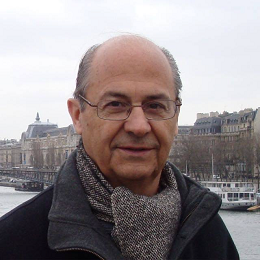
Antonio MontesView profile
Professor
Antonio Montes is a faculty member in the Departament de Matemàtica Aplicada at Universitat Politècnica de Catalunya (UPC), with affiliations to both the Facultat de Matemàtiques i Estadística and the Facultat d'Informàtica de Barcelona. He has taught a wide range of courses from 1981 to 2013, including Computer Algebra, Calculus, Symbolic Computation, and foundational mathematics for computer science and mathematics students. Research Focus: Computer Algebra, Symbolic Computation, Parametric Polynomial Systems, Gröbner Bases, Automatic Geometric Theorem Proving, Locus and Envelope Computation. Key Contribution: Development of the Gröbner Cover method and the grobcov.lib library in Singular, enabling canonical discussion of parametric polynomial systems. Major Publication: Author of the book The Gröbner Cover (Springer, 2018), which serves as a comprehensive theoretical and practical guide to the method. The recent articles highlight a strong and consistent research trajectory centered on the Gröbner Cover and its applications in symbolic computation and geometry. His work bridges theoretical algebra with practical software implementation, particularly in dynamic geometry environments like GeoGebra. The publications span algorithmic improvements, canonical representations, and applications to geometric theorem discovery, demonstrating both depth and interdisciplinary impact. The grobcov.lib library is a major software contribution, widely used in Singular for parametric system analysis. His research has enabled exact algebraic solutions in dynamic geometry, providing taxonomies to distinguish true loci from extraneous components. Collaborations with Michael Wibmer, Tomás Recio, and Montserrat Manubens have advanced the field of comprehensive Gröbner systems. Antonio Montes has made significant contributions to the theory and application of symbolic computation, particularly through the development and dissemination of the Gröbner Cover method. His work combines deep theoretical insight with practical software engineering, influencing both computer algebra and automated geometry. He has advised or collaborated with researchers in related areas, though formal advisees are not listed. His innovations continue to be applied in mathematical software and geometric reasoning systems.