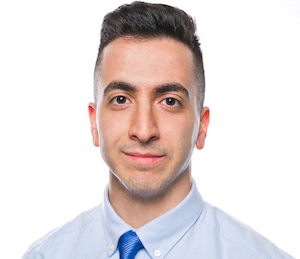
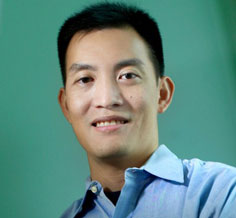
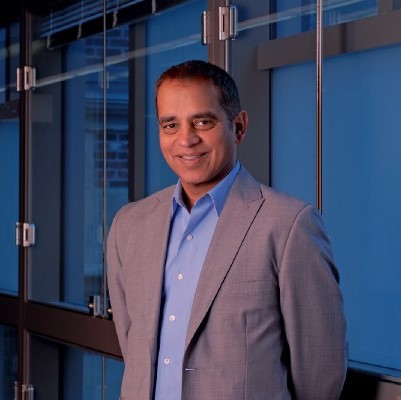
Ashkan Yousefpour is a Computer Scientist with a PhD from the University of Texas at Dallas , where he contributed to the FLOW project. He served as a Lecturer and research assistant at UT Dallas, while also working as a Visiting Researcher at UC Berkeley . His research spans Fog/Edge Computing , Federated Learning , Reinforcement Learning , and Distributed Systems . Current Role: AI Scientist at Meta Academic Affiliation: Department of Computer Science, University of Texas at Dallas Research Interests include: Minimizing IoT service delay through fog offloading Developing failure-resilient distributed neural networks (ResiliNet) Advancing privacy-preserving machine learning (Opacus, Papaya) Optimizing traffic flow with autonomous vehicles via reinforcement learning Advising : Supervised multiple graduate students including Ashish Patil , Harshavardhan Nalajala , and Brian Nguyen . Collaborated with researchers like Professor Alexandre Bayen (UC Berkeley) and Professor Cathy Wu (MIT) on traffic control frameworks such as Flow .
Chambers C. Hughes is a Research Group Leader in the Department of Microbial Bioactive Compounds at the University of Tübingen, Germany. Previously, he held positions as an Assistant Professor at the Scripps Institution of Oceanography (2012–2019) and a postdoctoral researcher with Prof. William Fenical (2005–2012). His research focuses on microbial natural product discovery, synthesis, and chemical biology, particularly employing reactivity-guided isolation and bioactivity-guided approaches to uncover novel bioactive compounds. His group has pioneered methods using chemoselective probes to target metabolites with specific functional groups, enabling the discovery of siderophores, antibiotics, and other secondary metabolites. Education: B.S. in Biochemistry, Geneseo College (1999) Ph.D. in Chemistry, University of California, Berkeley (2004) Research Interests: The Hughes Group explores microbial natural products using cutting-edge techniques like NMR spectroscopy and mass spectrometry. They focus on marine and terrestrial organisms, emphasizing the development of chemical labeling strategies to identify electrophilic compounds (e.g., epoxides, β-lactams) and conjugated alkenes. Their work bridges synthetic chemistry and biological activity, targeting antibiotic discovery, enzyme inhibition, and metabolic pathway elucidation. Notable Contributions: The group has characterized marinopyrroles (protonophoric antibiotics), kasichelins (siderophores), and vatiamides (polyketide natural products). Their methods have revealed artifacts in previously reported natural products and enabled genome-mining approaches to de-orphan biosynthetic gene clusters. Students & Collaborations: Current students include Shu-Ning Xia, Sehee Jang, Luca Salvi, and Max Knab. Collaborations span microbiology, synthetic chemistry, and bioinformatics, with key partners at the University of Tübingen and Scripps Oceanography. Labs & Facilities: The Hughes Research Group operates within the Interfaculty Institute of Microbiology and Infection Medicine, leveraging advanced analytical tools for natural product characterization and synthesis.
Terry D. Johnson is Senior Instructional Professor and Program Director for the Master of Engineering at the University of Chicago's Pritzker School of Molecular Engineering. He holds an MS in Chemical Engineering from MIT and is an emeritus Teaching Professor from UC Berkeley, where he co-founded the Masters of Translational Medicine program. Research integrates engineering and biomedicine, with patented innovations in tissue engineering and synthetic biology. Recent work develops sustainable textile dyeing technologies eliminating toxic reductants. Earlier projects include microfluidic hepatocyte cultures and EGF-functionalized biomaterials. Awards: Golden Apple Award for Outstanding Teaching (UC Berkeley 2010) Distinguished Teaching Award (UC Berkeley 2013) Co-authored the popular science book How to Defeat Your Own Clone . Teaches molecular engineering courses and directs master's programs bridging technical innovation and medical translation.
Thomas Carell is a Professor of Organic Chemistry at the Faculty of Chemistry and Pharmacy, Ludwig Maximilian University of Munich, Germany, a position he has held since 2003. He has established himself as a leading researcher in the fields of epigenetics, DNA repair mechanisms, and prebiotic chemistry. His work bridges chemistry and biology, with significant contributions to understanding epigenetic modifications and the origins of life. Dr. Carell's educational background includes chemistry studies at Münster and Heidelberg Universities, where he completed his PhD under Professor Staab. He then pursued postdoctoral research at MIT with Professor J. Rebek, focusing on chemical compound libraries and projects bridging chemistry and biomedicine. Professor Carell's research interests center on the chemical analysis of epigenetic modifications and processes, particularly focusing on DNA/RNA lesion processes using nucleotide analogues, tracers, and high-end mass spectrometry. His laboratory has made groundbreaking contributions to understanding prebiotic chemistry and the origins of life, developing innovative technologies for non-canonical nucleoside and nucleotide synthesis. A significant portion of his work explores the organic chemistry of modified nucleosides and nucleotides, with implications for understanding fundamental biological processes and potential therapeutic applications. His research has evolved from early work on nucleic acid chemistry at ETH Zurich to pioneering studies on photolyase reactions and DNA repair at Marburg, culminating in his current work on epigenetic control mechanisms and prebiotic chemistry at LMU Munich. His extensive publication record demonstrates a consistent trajectory of high-impact research, with articles appearing in top-tier journals including Nature, Science, and Cell. The research themes span from fundamental organic chemistry to biological applications, with a particular emphasis on epigenetic mechanisms and prebiotic chemistry. His most recent work suggests an early RNA-peptide world, potentially revolutionizing our understanding of life's origins, building on his earlier discoveries regarding DNA lesion-induced mutations, DNA repair mechanisms, and epigenetic control via oxidative DNA methylation. Professor Carell's scientific achievements have been recognized with numerous prestigious awards: Supervisory Board member of BASF SE (2019) Alexander Todd-Hans Krebs Lectureship, Royal Society of Chemistry (2017) Windaus Memorial Lecture, Göttingen (2017) Inhoffen-Medal for Excellence in Natural Product Research of the Helmholtz Society (2016) Gait-Lecture Award, Royal Society of Chemistry (2014) Werdelmann Lecture, University-Essen Duisburg (2013) Melvin Calvin Lecture in Organic Chemistry, University of California, Berkeley (2011) Šorm Award of the Academy of Sciences of the Czech Republic (2011) Order of Merit from the Federal Republic of Germany (2010) Van 't Hoff Lecture, Royal Dutch Academy of Sciences (2009) Ferdinand Lecture, University of Sheffield (2008) Otto Bayer Award, Bayer Schering Foundation (2008) Philip Morris Research Award (2006) Gottfried Wilhelm Leibniz Award of the DFG (2004) Lady Davis Award, Technion, Israel (2004) Pasteur Medal of the JCO, Ecole Polytechnique (2001) Professor Carell leads an active research group (the Carell Group) at LMU Munich, supervising numerous PhD and Master's students working at the intersection of chemistry and biology. His laboratory has secured significant research funding to support their innovative work on epigenetic modifications, DNA repair mechanisms, and prebiotic chemistry. The group maintains strong international collaborations, as evidenced by Professor Carell's numerous visiting professorships at institutions worldwide, including University Descartes in Paris, Australian National University, Consiglio Nazionale delle Ricerche in Bologna, and Technion Israel Institute of Technology. The Carell laboratory operates state-of-the-art facilities for organic synthesis, mass spectrometry, and molecular biology, enabling their interdisciplinary research approach. The group consists of chemists, biochemists, and molecular biologists working collaboratively to address fundamental questions in chemical biology. Professor Carell's election to the Supervisory Board of BASF SE in 2019 highlights the translational impact of his research and his standing in both academic and industrial chemistry communities.
Derek S. Tan is a tenured Professor and Chair of the Chemical Biology Program at the Sloan Kettering Institute, Memorial Sloan Kettering Cancer Center (MSK). He also holds the Eugene W. Kettering Chair and is a Tri-Institutional Professor at Weill Cornell Medicine and The Rockefeller University. He directs the Tri-Institutional PhD Program in Chemical Biology since 2012. Education: BS in Chemistry from Stanford University (1995) PhD in Chemistry from Harvard University (2000) Tan's research focuses on diversity-oriented synthesis and rational drug design to develop chemical probes for cancer and infectious disease research. His work leverages natural product insights to address challenges in small-molecule discovery, including antibiotic development for Mycobacterium tuberculosis and Yersinia pestis , and novel methodologies for synthesizing complex molecular architectures. The lab's 15 most recent publications highlight advancements in chemical biology methodologies (e.g., ubiquitin probes, adenylation enzyme inhibitors), antibiotic development (targeting Gram-negative bacteria, tuberculosis), and structural innovations in macrocycle synthesis. These works reflect interdisciplinary collaborations and translational applications in both oncology and microbiology. Scientific Awards: Louise and Allston Boyer Young Investigator Award (2010) Dean's Award for Excellence in Teaching (2013) As an advisor, Tan has mentored over 30 graduate students, postdoctoral fellows, and research assistants in his lab. His Tri-Institutional Program fosters multidisciplinary training, while his lab affiliations span the Center for Experimental Therapeutics and Gerstner Sloan Kettering Graduate School. Labs & Collaborations: Sloan Kettering Institute Chemical Biology Program Tri-Institutional PhD Program in Chemical Biology Collaborations with Luis Quadri (Cornell), Paul Hergenrother, and others
Ariful Azad serves as an Associate Professor in the Department of Computer Science & Engineering at Texas A&M University, where he leads research at the intersection of high-performance computing and graph analytics. His work focuses on developing scalable algorithms for graph machine learning with applications in bioinformatics and security informatics. Educational Background: Ph.D. in Computer Science, Purdue University (2014) B.S. in Computer Science and Engineering, Bangladesh University of Engineering and Technology (2006) Research Focus: Dr. Azad specializes in high-performance graph algorithms , particularly for distributed-memory systems. His pioneering work includes the Combinatorial BLAS library and novel approaches for graph neural networks (GNNs), with emphasis on explainability through Shapley values and optimization of sparse matrix operations. His bioinformatics research tackles large-scale metagenomics challenges through projects like Exabiome. Publication Trends: Recent publications (2023-2025) reveal three dominant themes: (1) Scalable GNN explanation frameworks using distributed Shapley values, (2) High-performance sparse linear algebra for graph embeddings and knowledge graphs, and (3) Bioinformatics applications in metagenomics and network alignment. His work consistently bridges theoretical algorithm development with practical implementations for exascale systems. Scientific Recognition: NSF CAREER Award (2024) for foundational contributions to scalable graph algorithms Indiana University Trustee's Teaching Award (2024) U.S. Department of Energy Early Career Award (2021) Research Leadership: As principal investigator for multiple federal grants, Dr. Azad directs projects advancing graph analytics at extreme scales. His work on Weapons of Mass Destruction knowledge graphs demonstrates applied security research, while Exabiome represents significant contributions to computational biology. He actively develops open-source tools like PLANETALIGN for network analysis benchmarking, fostering reproducibility in computational science.
Thorsten Koch is a Professor for Software and Algorithms for Discrete Optimization at Technische Universität Berlin , with multiple leadership roles including Head of the Applied Algorithmic Intelligence Methods (A²IM) , Digital Data and Information for Society, Science, and Culture (D²IS²C) , Kooperativer Bibliotheksverbund Berlin-Brandenburg (KOBV) , and Forschungs- und Kompetenzzentrum Digitalisierung Berlin (digiS) . Based at Zuse Institute Berlin and affiliated with TU Berlin's Institute for Mathematics, he focuses on integrating mathematical optimization with high-performance computing and artificial intelligence to solve complex real-world problems. Research Pillars : Mathematical optimization algorithms Quantum computing applications AI/ML integration in decision systems Energy systems optimization Scientific software development Leadership Roles : Head of Applied Algorithmic Intelligence Methods (A²IM) Head of Digital Data & Information for Society, Science, and Culture (D²IS²C) Head of Kooperativer Bibliotheksverbund Berlin-Brandenburg (KOBV) Head of Forschungs- und Kompetenzzentrum Digitalisierung Berlin (digiS) Key Collaborations : Working with IBM Quantum on quantum optimization Collaborating across institutions for energy system modeling Developing open-source optimization tools like SCIP Contributing to digital library infrastructure Recent Research Trends : Quantum optimization benchmarking Machine learning-aided optimization Multi-objective decision frameworks Energy infrastructure optimization Adaptive algorithm design CO2 network modeling Impact : Advancing hybrid optimization methods Developing open-source tools for scientific computing Building digital infrastructures for libraries and research Exploring quantum-classical algorithm synergies
Dennis Larsen is a Senior Researcher in the Department of Chemistry, Organic Chemistry at the Technical University of Denmark. His work focuses on cyclodextrin chemistry, combinatorial synthesis, and enzyme-mediated dynamic systems. He actively supervises PhD students and collaborates internationally. Education : Not explicitly stated Research Interests : Dennis Larsen specializes in cyclodextrin-based chemistry, including large-ring synthesis, light-controlled enzymatic methods, and stimuli-responsive dynamic combinatorial libraries. His work bridges organic chemistry and supramolecular applications. Publications : Recent research includes large-scale δ-cyclodextrin synthesis, quantitative binding analysis for large-ring cyclodextrins, and photo/pH-responsive templates for controlled synthesis. Grants/Projects : Supervises 5 active or completed PhD projects focused on enzyme-mediated combinatorial chemistry, mechanically interlocked molecules, and stimuli-responsive systems.
Sampath Kannan is the Henry Salvatori Professor in the Department of Computer and Information Science at the University of Pennsylvania's School of Engineering and Applied Science. His research spans Algorithmic Fairness Combinatorial Algorithms Program Reliability Streaming Computation Computational Biology . His work focuses on theoretical computer science and its applications, particularly in ensuring correctness through program analysis, developing algorithms for massive data sets, and addressing bioinformatics challenges like evolutionary tree reconstruction. Recent publications highlight interdisciplinary efforts in oncology (2025) , game theory (2024) , and fairness in machine learning (2023) . Notable awards include Fellow of the AAAS (2019) Test of Time Award, Runtime Verification (2019) Penn India Research and Engagement Fund (2018) Fellow of the ACM (2013) ACM SIGACT Distinguished Service Award (2012) . He has also received advising recognitions like the Outstanding Faculty Advising Award (2005) and Ford Foundation 'Best Advisor' (2004). He has advised PhD students Eshwar Ram Arunachaleswaran Yiqiao Bao Anubhav Baweja and taught courses including CIS 677 - Advanced Topics in Algorithms & Complexity and GCB 537 - Advanced Computational Biology .
Dobrik Georgiev is a Lecturer in the Department of Computer Science and Technology within the School of Technology at the University of Cambridge. His research centers on bridging algorithmic reasoning with neural architectures, focusing on how neural networks can execute and generalize algorithmic processes. His primary research interests include: Neural algorithmic reasoning and its applications to combinatorial problems Graph neural networks and hypergraph learning systems Explainable AI through concept-based interpretability Deep equilibrium models for algorithmic execution Biological data analysis using neural architectures Georgiev's publication record demonstrates consistent innovation in neural execution models, with recent work exploring bottlenecks in algorithmic reasoning (2025), multi-solution reasoning frameworks (2024), and generalization beyond synthetic graph models (2023). His research shows strong interdisciplinary connections between theoretical computer science, machine learning, and computational biology. While no formal awards are documented in available sources, his work has established significant contributions to neural algorithmic reasoning frameworks. Georgiev maintains active research collaborations through the Department of Computer Science and Technology's initiatives, particularly in the areas of machine learning and neural architectures. His technical leadership is evident in software contributions like the LENs library for logic-explained networks.
Jean-Marie Lehn is a French chemist and Nobel laureate currently serving as Professor of Chemistry at Collège de France since 1979 and Director of the Nanotechnologie Institute at Karlsruhe Research Center since 1998. He previously held faculty positions at Harvard University (1970-1979), the University of Strasbourg (1966-1970), and the French National Center for Scientific Research (1960-1966). Director, Laboratoire de Chimie Supramoléculaire ISIS, Université Louis Pasteur, Strasbourg Director, Laboratoire de Chimie des Interactions Moléculaires, Collège de France, Paris Director, Nanotechnologie Institute, Karlsruhe Research Center Research Focus: Jean-Marie Lehn pioneered supramolecular chemistry , focusing on molecular recognition, self-assembly, and dynamic combinatorial systems. His work extends to chemionics (molecular devices), semiochemistry (chemical signal processing), and applications in bioorganic chemistry and solar energy conversion. Publication Trends: His articles emphasize supramolecular chemistry , self-organization , and dynamic molecular systems , with a shift toward adaptive chemistry and complex matter in later works. Topics include energy transfer , NMR studies , and supramolecular materials . Scientific Awards: 1987 Nobel Prize in Chemistry 1997 Davy Medal (Royal Society) 1998 Messel Medal (Society of Chemical Industry) 2007 ISA Medal for Science 1989 Karl Ziegler Prize (Gesellschaft Deutscher Chemiker) 2003 Giulio Natta Gold Medal (Italian Chemical Society)
Irene Nga Wing Lee is a Professor in the Department of Chemistry at Case Western Reserve University . Her research focuses on Biochemistry , Bio-Organic Chemistry , and Medicinal Chemistry , with a particular emphasis on metabolic enzymes critical for cellular functions like protein turnover. Using molecular cloning, mutagenesis, organic synthesis, and enzyme kinetics, she investigates mechanisms of ATP-dependent proteases, notably the Lon protease. Education: B.S. in Chemistry and B.A. in Biology, University of Toledo (1988) Ph.D. in Biochemistry, Pennsylvania State University (1995) Contact: Email: ixl13@case.edu Office: Millis G24A Phone: 216.368.6001 Her work on Lon protease explores its ATPase and proteolytic sites, aiming to link molecular mechanisms to mitochondrial diseases (e.g., ocular myopathy) and antimicrobial development. Recent publications highlight studies on adenine-specific conformational changes, translesion DNA synthesis dynamics, and ATP hydrolysis timing in Lon. For further details, refer to her full description below.
Ján Drgona is an Associate Professor in the Department of Civil and Systems Engineering at Johns Hopkins University's Whiting School of Engineering and a member of the Ralph S. O'Connor Sustainable Energy Institute (ROSEI). Previously, he served as a Principal Investigator and Research Data Scientist at Pacific Northwest National Laboratory (PNNL) and held a postdoctoral position at KU Leuven in Belgium. Dr. Drgona earned his BSc, MSc, and PhD in control engineering from the Slovak University of Technology. His research centers on differentiable programming and scientific machine learning (SciML) for dynamical systems, optimization, and control, with particular applications to building energy systems and industrial process control. He is the lead developer of the Neuromancer SciML library in PyTorch for solving constrained optimization, physics-informed machine learning, and optimal control problems, which became PNNL's most popular open-source repository within two years of its release. Dr. Drgona's publication record demonstrates a strong focus on bridging machine learning with physical systems and control theory. His recent work spans differentiable predictive control, physics-informed neural networks, optimization algorithms, and applications to energy systems. A recurring theme across his publications is the integration of domain knowledge with data-driven approaches to create more efficient, reliable, and interpretable systems for real-world applications, particularly in sustainable energy and building systems. As an active member of the scientific community, Dr. Drgona regularly serves as a reviewer for prestigious journals including Applied Energy, Automatica, IEEE Control Systems Letters, IEEE Transactions on Control Systems Technology, IEEE Transactions on Industrial Informatics, Control Engineering Practice, Journal of Process Control, Energy and Buildings, Journal of Control Automation and Electrical Systems, and Electric Power Systems Research. Dr. Drgona has been involved in several high-impact projects, including developing AI models that slash HVAC energy costs while predicting them with precision. He has participated in Johns Hopkins' International Energy Summit to accelerate clean technology innovation and has presented at major conferences including ACC 2025 where he co-organized workshops on Physics-Informed Machine Learning in Control and Safe Physics-Informed Machine Learning for Dynamics and Control.
Sergei Kalinin is the Weston Fulton Professor in the Department of Materials Science and Engineering at the University of Tennessee, Knoxville. He is affiliated with the Tickle College of Engineering and the Institute for Advanced Materials, Structures, and Integration (IAMM). His research focuses on atom-by-atom fabrication via electron beams, AI-driven microscopy, and nanoscale electromechanical phenomena. Kalinin holds a PhD from the University of Pennsylvania and has been recognized with prestigious awards, including the Blavatnik National Award for Young Scientists and the RD100 Award. He leads efforts in developing self-driving labs and integrating high-performance computing with microscopy. His work bridges machine learning, materials discovery, and automation, with a focus on ferroelectric systems and novel SPM techniques. Education: PhD, University of Pennsylvania Research Interests: Kalinin’s work spans advanced microscopy techniques, AI applications in materials science, and functional material design. He explores atom-scale fabrication ( e.g., using STEM), electrochemical reactivity on ferroelectric surfaces, and high-throughput characterization of perovskites and 2D materials. His lab develops automated workflows for microscopy and materials discovery, emphasizing Bayesian optimization and reward-driven algorithms. Scientific Contributions: Kalinin’s recent work includes pioneering “Atomic Forge” for defect engineering, machine learning for automated SPM, and understanding ferroelectric nanoscale behavior. He collaborates with Oak Ridge National Lab (ORNL) and has published extensively on self-driving labs, phase diagrams, and nanoscale domain dynamics. Grants & Labs: His funding supports initiatives in AI-driven microscopy, combinatorial libraries, and semiconductor innovation. Key platforms include the Design-to-Deployment Continuum for Microscopes and the Automated Materials Discovery Platform.
Gerardo Turcatti is an Adjunct Professor at the School of Life Sciences (EPFL), leading the Biomolecular Screening Facility (BSF) and the Biomolecular Screening Core Facility. He holds roles in SSV-Teaching and directs the ACCESS program under the NCCR-Chemical Biology initiative. With a Master's in Chemical Engineering (University of Geneva) and a PhD in Chemistry and Biochemistry (EPFL, where he won the best doctoral thesis award), his expertise spans multidisciplinary R&D in drug screening, chemical biology, and bio-analytical chemistry. His research focuses on high-throughput screening technologies, including holographic imaging for cardiomyocyte dynamics and red blood cell storage studies. He has pioneered platforms for malaria drug discovery and cancer therapeutics, leveraging 3D tumoroid models and combinatorial chemistry. His work extends to antiviral research, including SARS-CoV-2 inhibitors and canine distemper virus studies, and includes innovations in nucleic acid sequencing technologies through his former role as CTO of Manteia S.A. Key Projects: ACCESS platform, BSF facility, Next-Gen sequencing tech development Teaching: Leads the 'Methods: from disease models to therapy' course, integrating hands-on platform rotations in life sciences Labs/Teams: Directs EPFL's Biomolecular Screening Facility and collaborates with industry and academic partners Publications emphasize translational applications, including drug repurposing, cardiovascular toxicity screening, and red blood cell storage optimization. His contributions bridge academic research and industrial innovation, with over 100 peer-reviewed articles and patents in chemical biology and drug discovery.