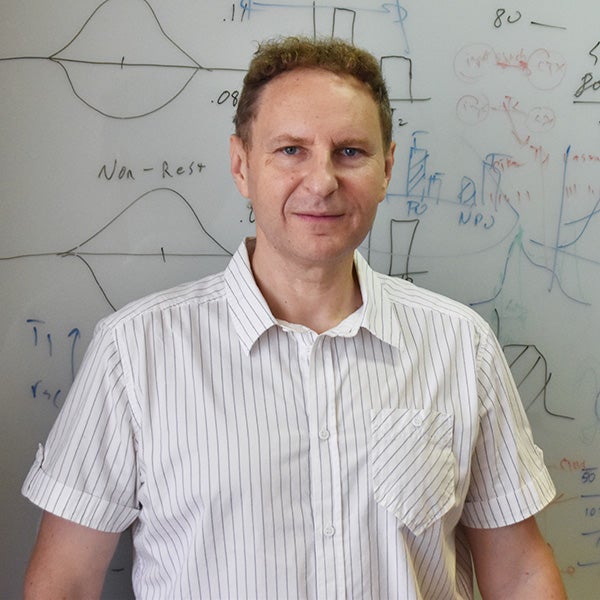
Valentin Dragoi holds dual appointments as the Rosemary and Daniel J. Harrison III Presidential Distinguished Chair in Neuroprosthetics at Houston Methodist Research Institute and Professor of Electrical and Computer Engineering at Rice University. He also serves as a Professor of Neuroscience at Weill Cornell Medical College's Brain and Mind Research Institute. Dr. Dragoi earned his B.S. in Computer Science from Technical University of Iasi (1989), Ph.D. in Experimental Psychology from Duke University (1997), and completed postdoctoral studies at MIT's Picower Center for Learning and Memory (2003). His research focuses on decoding how cortical networks encode sensory information and influence behavioral decisions, combining electrophysiological, optogenetic, and computational methods. Notable contributions include studies on cortical feedback projections' role in attentional modulation and state-dependent neural signal propagation. His lab develops wireless systems to study cortical dynamics in freely moving primates, advancing understanding of naturalistic brain function. Dr. Dragoi has received prestigious awards including NIH BRAIN Initiative funding, Pioneer Award, and EUREKA Award. His work spans neuroengineering, neuroprosthetics, and systems neuroscience, with a focus on translating basic discoveries into clinical applications.
David Brumley is a Professor of Electrical and Computer Engineering at Carnegie Mellon University with a courtesy appointment in the Computer Science Department. He previously served as Director of CyLab, CMU's Security and Privacy Institute, from 2015 to 2017. His research focuses on developing systems that automatically check software for exploitable bugs using program analysis with security-specific properties. Brumley received his Ph.D. in Computer Science from Carnegie Mellon University, an MS in Computer Science from Stanford University, and a BA in Mathematics from the University of Northern Colorado. Before his academic career, he served as a Computer Security Officer for Stanford University from 1998-2002. Brumley's research focuses on software security techniques that provide users with guarantees. His work sits at the intersection of model checking, formal methods, compilers, and logic, all applied to security problems. He develops efficient symbolic execution, reasoning about bit-level arithmetic in finite fields, sound decompilation, and decision procedures. His research also extends to network security and applied cryptography, focusing on efficient protocols, signature schemes, and privacy-preserving cryptography. A key aspect of his work involves binary code analysis, which allows reasoning about the security of code that actually executes. Brumley's publication record shows a consistent progression from theoretical foundations in program analysis to practical security systems. His work spans symbolic execution, fuzzing, exploit generation, and binary analysis. The Mayhem Cyber Reasoning System, which won the DARPA Cyber Grand Challenge, represents the culmination of his research vision for automated vulnerability detection and patching. His publications demonstrate how theoretical advances in program analysis can be translated into real-world security tools. USENIX Security Best Paper Awards (2003, 2007) International Conference on Software Engineering Distinguished Paper Award (2014) NSF CAREER Award (2010) United States Presidential Early Career Award for Scientists and Engineers (PECASE) (2010) Sloan Foundation Award (2013) DARPA Cyber Grand Challenge Winner ($2,000,000) (2016) Brumley has mentored numerous PhD students who have gone on to successful careers in academia and industry, including co-founders of ForAllSecure. He served as faculty mentor for the CMU Hacking Team Plaid Parliament of Pwning (PPP), which has been ranked #1 internationally and won DefCon 2013. His research has been supported by significant grants including DARPA programs and the NSF CAREER award. He also runs PicoCTF, an annual computer security contest for high school students that has become one of the largest cybersecurity education initiatives of its kind. Brumley leads the development of security systems through both academic research and commercialization. He is the CEO of ForAllSecure, which commercializes the Mayhem system developed through his academic research. His work bridges the gap between theoretical security research and practical security tools used by industry, creating a pipeline from academic innovation to real-world impact.
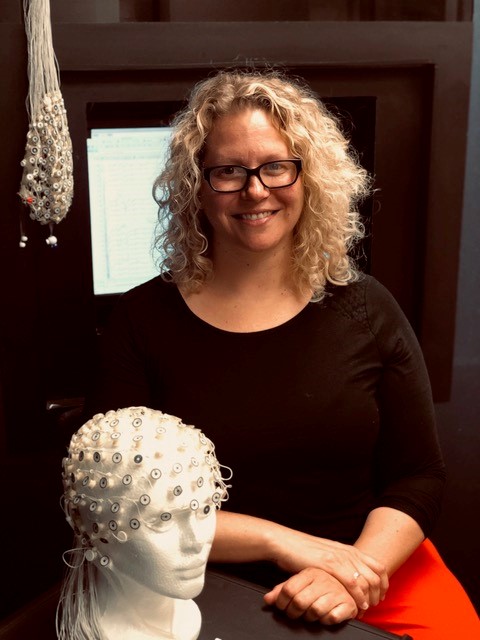
Ana Navarro Cebrian is a Lecturer and NEUR200 Course Director at the University of Maryland. Her academic journey includes a PhD in Cognitive Psychology from the University of Granada, Spain, and a B.S. from the Complutense University of Madrid. She conducted doctoral research at the University of California, Davis, and held postdoctoral and visiting scholar positions at UCSF, UC Berkeley, and Johns Hopkins University. Her research focuses on cognitive control mechanisms, particularly error monitoring and its influence on decision-making. She investigates neural correlates of cognitive impairments in schizophrenia, anxiety, and other psychological disorders using EEG and fMRI techniques. Prior roles include teaching neuroscience courses at Loyola University Maryland and research at Johns Hopkins. Her work bridges basic neuroscience and clinical applications, emphasizing brain networks like the dorsal anterior cingulate cortex and intuitive physics. Recent studies explore dopaminergic pathways in decision-making and the dissociation of neural responses to errors. Though no formal awards are listed, her contributions span cognitive neuroscience, auditory imagery, and intertemporal choice dynamics. Advising and grants are not explicitly detailed, but her teaching and research roles reflect strong academic engagement. No specific lab affiliations are mentioned, though her work aligns with interdisciplinary neuroscience initiatives.
Judith Coppinger is a Senior Lecturer at RCSI's School of Pharmacy and Biomolecular Sciences, with dual affiliation as Principal Investigator at the National Children’s Research Centre since 2017. Her academic journey includes a PhD in Pharmacology from RCSI (2004), postdoctoral training at the Scripps Research Institute (2005-2011), and faculty roles at UC San Diego (2011-2013) and University College Dublin (2013-2017). Her research focuses on omics-based approaches to uncover dysregulated protein interactions in diseases like cystic fibrosis and cancer, with a particular emphasis on exosome-mediated signaling, kinase inhibitors for CFTR restoration, and BAG3 as a cancer therapeutic target. Key research areas include cystic fibrosis pathophysiology, lung cancer signaling pathways, and translational therapeutics. Her work spans basic science to clinical translation, such as investigating exosomes as biomarkers for disease progression and targeting the PI3K/Akt/mTOR pathway in cystic fibrosis. She has secured major grants including Science Foundation Ireland funding for exosome-based therapies and the Cystic Fibrosis Foundation for EV biomarker studies in CF. Judith has received awards including the Career Development Award (2014), Isenberg Fellowship (2011), and New Investigators Travel Award (2010). Her lab at RCSI collaborates with Trinity College Dublin and the National Children’s Research Centre to advance research in respiratory medicine and cancer biology. Teaching and supervision activities are integral to her role, contributing to training future biomedical researchers.
Steve Lomber is Professor of Psychology and Neuroscience at the University of Texas at Arlington and Director of the Cerebral Systems Laboratory . His work integrates psychophysics, high-field fMRI, single-unit electrophysiology, neuroanatomy, and reversible cryogenic deactivation to study how auditory cortex is organized and how it reorganizes after deafness or cochlear implant stimulation. Education Ph.D. in Anatomy, Boston University School of Medicine, 1994 B.Sc. in Neuroscience, University of Rochester, 1988 Research Focus Dr. Lomber’s program asks how sensory experience shapes brain development and cortical plasticity. Using feline and human models, his laboratory investigates: Cortical plasticity after developmental vs. adult-onset deafness Functional and structural changes triggered by cochlear prosthetic input Cross-modal reorganization where auditory cortex mediates enhanced vision or multisensory processing Technological and methodological advances in high-field fMRI and automated neuroimaging pipelines for translational auditory neuroscience Scientific Awards & Honors 2024 Pioneer Award for Basic Science Research , Association for Research in Otolaryngology (ARO) 2024 President’s Award , Canadian Academy of Audiology Fellow , Association for Psychological Science (2017) Professional Service & Funding Leadership Board of Directors, Canadian Academy of Audiology (2018–2024) Scientific Program Chair, Annual ARO Meeting (2020–2024) Program Committee Member, 2025 International Conference on Auditory Cortex Laboratory & Collaborative Teams As head of the Cerebral Systems Laboratory , Dr. Lomber leads a multidisciplinary group of post-doctoral fellows, graduate students, and research technicians. Ongoing collaborations span institutions in North America and Europe, exploiting high-field 9.4 T fMRI, large-scale electrophysiology arrays, and reversible cryoloop deactivation to advance understanding of auditory-cortical function and to optimize outcomes for cochlear implant users.
Dr. Jiayang Sun is a Professor, Bernard Dunn Eminent Scholar, and Chair of the Department of Statistics at George Mason University’s College of Engineering and Computing. She holds a PhD in Statistics from Stanford University and previously served as Professor and Director of the Center for Statistical Research, Computing, and Collaboration (SR2c) at Case Western Reserve University. Her leadership extended to a role as the inaugural ASA/ACM/AMS/IMS/MAA/SIAM Science & Technology Policy Fellow at the USDA ARS from 2019-2020. Dr. Sun’s research focuses on statistical methodologies including simultaneous inference, multiple testing, biased sampling, and machine learning applications in healthcare, biomedicine, and interdisciplinary domains. Her work bridges theoretical statistics with practical challenges in fields like neuroimaging, wound care, and precision medicine. Key contributions include developing predictive tools for pressure injury management and advancing methods for analyzing large-scale biomedical datasets. Education: PhD in Statistics, Stanford University Professional Recognition: Elected Fellow, American Statistical Association (ASA) Elected Fellow, Institute of Mathematical Statistics (IMS) President, Caucus for Women in Statistics (CWS) Key Projects: Development of SCIPUD+, a clinical decision support system for pressure injury care Leadership in PV module degradation analytics through statistical pathway modeling Advancement of subsampling algorithms for feature selection in high-dimensional data Her interdisciplinary collaborations span oncology, environmental science, neuroscience, and energy systems, supported by grants from NSF, NIH, DOE, and others. Dr. Sun advocates for statistical rigor in translating big data into actionable insights for clinical and policy applications.
Dr. Betty Yu is a Professor in the Department of Speech, Language, and Hearing Sciences at San Francisco State University. Her work critically examines the intersections of race, language, disability, and institutional practices affecting multilingual children with autism and other neurodivergent identities. She holds certifications including the Certificate of Clinical Competence in Speech-Language Pathology and is a Hanen-certified speech-language pathologist. Yu serves on the advisory board of the Asian Pacific Islander Speech-Language-Hearing Caucus and co-edits the Journal of Critical Study of Communication and Disability . Education: Ph.D. Special Education, UC Berkeley/SFSU Joint Program (2009) M.A. Speech-Language Pathology, NYU (1999) B.A. Linguistics, UC Berkeley (1996) Her research focuses on linguistic disability justice, critiquing raciolinguistic discrimination and ableist systems in clinical practices. Key themes include bilingual child development, neurodiversity frameworks, and anti-racist pedagogy. Recent work challenges pathologization of language variation and promotes inclusive policies for multilingual autistic populations. Awards: 2013 Distinguished Achievement Award (CA Speech-Language-Hearing Association) 2008 Spencer Foundation Fellowship Recognized as SFSU's Distinguished Doctoral Student (2009) Yu's grants and collaborations emphasize community-based participatory research, particularly with Asian American and Pacific Islander communities. She has advised on media projects addressing heritage language preservation and autism advocacy, including NPR's Code Switch podcast episode Lost in Translation . Her lab integrates critical theory with clinical practice, developing culturally responsive assessment tools and decolonizing speech-language pathology education. Current projects explore neurodivergent communication through multimodal AAC systems and anti-ableist language policies in schools.
Caitlin Hudac is an Associate Professor in the Department of Psychology at the University of South Carolina, affiliated with the McCausland College of Arts and Sciences. She directs the Brain Research Across Development (B-RAD) Lab and co-leads the Carolina Autism and Neurodevelopment Research Center. Her work focuses on neurodevelopmental disorders, particularly autism spectrum disorder (ASD), using EEG/ERP, eye-tracking, and fMRI to study social brain development and genetic biomarkers. She emphasizes addressing health disparities through inclusive research methods, such as mobile EEG testing and community engagement. Dr. Hudac holds a Ph.D. in Developmental Psychology from the University of Nebraska-Lincoln (2014) and postdoctoral training at the University of Washington. Her research spans genetic etiologies of ASD (e.g., GRIN2B, SCN2A, DYRK1A mutations), social attention dynamics, and neurobehavioral interventions. She has secured grants totaling over $14 million, including NIH R01 and R15 awards. Her awards include the Theodore Tjossem Postdoctoral Award (2017) and recognition for DEI contributions. Her lab prioritizes diversity, equity, and inclusion, with trainings on autism research equity and family-centered approaches. Key projects include the HEALthy Brain and Child Development Study and Simons Foundation-funded biomarker initiatives.
Petra Kraus is an Assistant Professor of Biology at Clarkson University focusing on stem cell-based regenerative medicine for intervertebral disc degeneration. Her research deciphers communication between stem cells and their microenvironment during differentiation. Education Background: Ph.D. Molecular Genetics & Human Biology, University of Ulm, Germany She applies genomic technologies to map gene regulatory networks governing axial skeleton and intervertebral disc development. This work informs stem cell differentiation protocols for tissue engineering solutions to disc degeneration—a leading cause of chronic pain. The lab utilizes patient-derived induced pluripotent cells to develop safe regenerative therapies. Recent publications demonstrate advances in extracellular vesicle signaling, single-cell phenotyping of disc tissues, and metabolic regulation of stem cells. Her work has identified key transcription factors (Pax1/Pax9) and antisense RNAs regulating disc development. Patents: Method Of Effecting De-Differentiation Of A Cell (US20110165570A1) Research collaborations focus on harmonizing disc cell isolation protocols and developing peptide-based biomaterials for disc repair.
Dr. Dan Tonge is Senior Lecturer in Biosciences at Keele University's School of Life Sciences and serves as Director of Postgraduate Research. He is the Designated Individual for Keele's Human Tissue Authority research-sector license. With expertise in molecular sequencing and bioinformatics, his research employs next-generation sequencing technologies for understanding human health and disease mechanisms. His current projects include characterizing extracellular vesicle miRNA cargo, biomarker identification for cell transplantation therapies, de novo transcriptome assembly, and microbiome analysis using multi-platform sequencing (Illumina, PacBio, Nanopore). He leads bioinformatics for several major grants including BBSRC Engineering Biology and EPSRC awards, with international collaborations in China and South Africa supported by a Royal Society Travel Grant.
Dr. Emily Heath is an Associate Professor in the Department of Physics at Carleton University, specializing in improving radiation therapy for cancer treatment through advanced modeling and treatment planning techniques. Her research focuses on Monte Carlo simulations, anatomical changes during therapy, and robust treatment optimization. She leads the Carleton Laboratory for Radiotherapy Physics (CLRP), emphasizing clinical translation of innovations. Research Highlights: Developing pyroelectric dosimeters for thermal calibration and real-time dose monitoring. Advancing 4D Monte Carlo simulations for dose reconstruction in moving/deforming anatomies. Pioneering adaptive frameworks like ALERT-RA for respiratory motion management. Advising & Collaborations: Supervises graduate students in projects involving EPID modeling, pyroelectric calorimeters, and motion-impact analysis. Collaborates with National Research Council and Ottawa Hospital Cancer Centre. Labs & Infrastructure: The CLRP lab integrates experimental verification using deformable phantoms and advanced dosimetry systems, ensuring clinical applicability of theoretical models.
Fraser Hof is a Professor and Associate Vice-President Research in the Department of Chemistry at the University of Victoria. He holds a BSc from the University of Alberta and a PhD from The Scripps Research Institute, followed by postdoctoral fellowships at ETH Zurich. His research focuses on medicinal chemistry, molecular recognition, and supramolecular systems applied to epigenetic therapies and chemical biology. Key projects include designing host molecules to target epigenetic markers like methyllysines, developing diagnostic tools using supramolecular sensing, and exploring high-throughput methods for host synthesis. His teaching spans organic, supramolecular, and biological chemistry, with active mentorship of undergraduate researchers through Chemistry 498/499 courses and the co-op program. Hof collaborates with biochemistry and cancer research groups to translate fundamental discoveries into clinical applications. His work bridges synthetic chemistry with biological systems, emphasizing the development of innovative chemical tools for biomedical challenges. Research highlights include synthetic hosts that disrupt histone-epigenetic reader interactions, adaptive supramolecular networks for sensing, and antimicrobial peptide design using machine learning. Hof's lab integrates computational, synthetic, and analytical approaches, addressing 'undruggable' targets and societal health challenges.
Doowon Kim is an Assistant Professor in the Min H. Kao Department of Electrical Engineering and Computer Science at the University of Tennessee, Knoxville. He holds a PhD in Computer Science from the University of Maryland, College Park (2020) and has held academic positions including research internships at Symantec Research Labs and Korea Electronics Technology Institute. Education: PhD, Computer Science, University of Maryland (2020) MS, Computer Science, University of Utah (2013) B.E., Computer Science and Engineering, Hankuk University of Foreign Studies (2011) Research Interests: Computer Security: Data-driven security, usable security, phishing analysis, and PKI abuse. Network Security: Internet measurement, TLS protocols, and threat intelligence sharing. Web Security: Client-side vulnerabilities, phishing kits, and anti-Asian racism in social media. AI in Security: Adversarial attacks on code generation models and poisoned AI suggestions. Recent Trends in Publications: Focus areas include phishing detection mechanisms, AI-driven code exploitation, and PKI security. Recent work explores visual similarity-based phishing detection, backdoor attacks on code completion models, and longitudinal studies of client-side vulnerabilities. Awards: NSA Best Scientific Cybersecurity Paper (2017) Ann G. Wylie Dissertation Fellowship (2019) Best Student Paper at WISA 2022 Advising & Grants: Advises 14+ graduate/undergraduate students (e.g., Kyungchan Lim, Fujiao Ji). Secured travel grants for students at Web Conf and NDSS. Recipient of NSF proposal review panelist roles. Labs & Teams: Actively leads research in cybersecurity with a focus on phishing, PKI, and AI ethics. Collaborates with global institutions like KAIST and Samsung Research.
Dr. Marcus Edwards is a Lecturer in the School of Life Sciences at the University of Essex, where he has been employed since July 2020. His research focuses on bacterial electron transfer mechanisms using protein biochemistry, molecular biology, microbiology, and structural biology to study how microbes exchange electrons with their environment. Education: PhD from John Innes Centre (2009) MSc in Bioinformatics from University of East Anglia (2005) BSc in Biochemistry from University of East Anglia (2004) Research Interests: Dr. Edwards' primary focus is Bacterial Extracellular Electron Transfer , investigating iron-reducing bacteria (e.g., Shewanella , Geobacter ) and iron-oxidizing bacteria (e.g., Sideroxydans , Rhodopseudomonas ). His work explores implications for biogeochemical cycling and biotechnological applications including microbial fuel cells, bioelectrosynthesis, biosensors, bioremediation, and metal reclamation from waste streams. Publication Trends: His recent publications (2018-2025) consistently analyze structural and functional aspects of bacterial electron transfer proteins, particularly multiheme cytochromes. The research demonstrates strong interdisciplinary integration across microbiology, biochemistry, and structural biology, with growing emphasis on biotechnological applications in environmental engineering and bioenergy. Scientific Awards: No scientific awards were mentioned in the provided text. Advising and Grants: Dr. Edwards currently supervises Mert Uyaroglu (PhD in Biochemistry) and Hafiz Umair Hassan (MSc by Dissertation in Biochemistry). He has secured multiple competitive grants: 2023 : Tuning extracellular cytochromes for enhanced metal recovery and nanoparticle formation (BBSRC) 2023 : TRICSS - high-throughput platform for biological interactions (BBSRC) 2023 : Engineering Anaerobic Bacteria for Biotechnology (The Royal Society) 2022 : BEORHN project on hydroxylamine oxidation (BBSRC) Labs and Teams: His research group employs a multidisciplinary approach combining wet-lab techniques with computational analysis, collaborating extensively with structural biologists and microbiologists across institutions as evidenced by co-authorship patterns in recent publications.
Meghana Kshirsagar serves as Assistant Professor in the Department of Computer Science & Information Systems at the University of Limerick, with dual appointments at Lero – the Irish Research Centre for Software and the Limerick Digital Cancer Research Centre. Her interdisciplinary work bridges computer science with healthcare innovation, focusing on real-world applications of advanced computational techniques. Her research spans Machine Learning, Artificial Intelligence, Evolutionary Computation, Blockchain, Digital Health, Large Language Models, and Digital Twins. She develops novel algorithms like grammatical evolution for hyperparameter optimization and blockchain frameworks for secure healthcare data sharing, with applications in cancer risk stratification, hip fracture pathway modeling, and financial portfolio optimization. Her work consistently addresses ethical AI implementation and sustainable computing practices. Analysis of her 52+ publications (2011-2025) reveals three dominant trends: (1) Evolutionary computation techniques for symbolic regression and digital circuit design, (2) Blockchain applications in healthcare data security and scientific collaboration, and (3) Responsible AI implementations in medical diagnostics and finance. Her recent focus emphasizes mitigating algorithmic bias in cancer diagnostics and sustainable hyperparameter optimization. As an active member of Lero and the Limerick Digital Cancer Research Centre, she collaborates with clinicians, data scientists, and industry partners to translate research into clinical tools. Her work contributes to UN Sustainable Development Goals through digital health innovations that improve healthcare accessibility and efficiency.