Christos Polytarchou is an Associate Professor in Health and Disease at the School of Science & Technology of Nottingham Trent University . His research focuses on the interplay between the genome, epigenome, and non-coding RNAs in inflammatory diseases and cancer . He teaches postgraduate and undergraduate courses in molecular biology, cancer signaling, and genetic technologies.
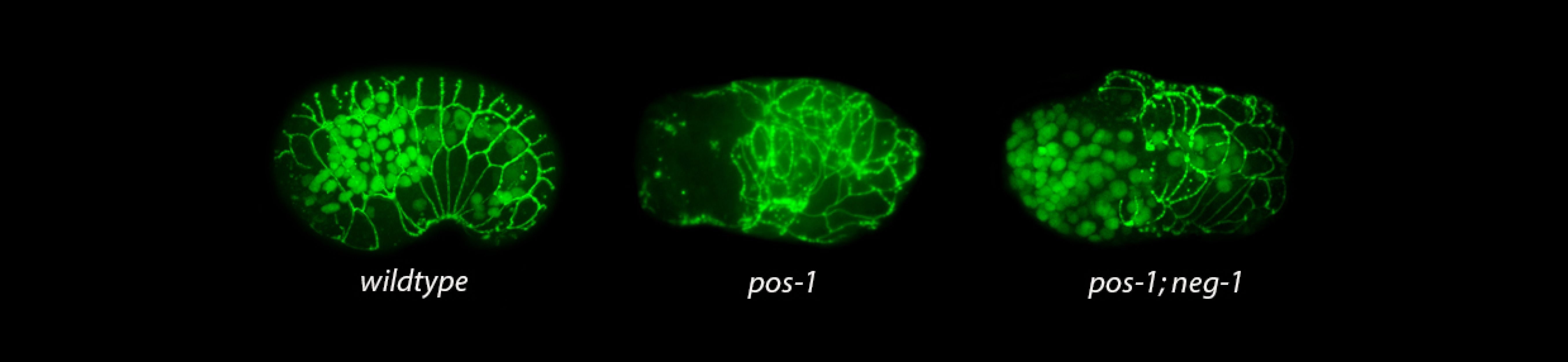
Craig Mello is a Distinguished Professor and Blais University Chair in Molecular Medicine at UMass Chan Medical School , where he leads research in the RNA Therapeutics Institute within the T.H. Chan School of Medicine . His work spans multiple programs including the Cancer Center and Molecular Medicine. B.S. in Biochemistry (Brown University, 1982) Ph.D. in Cellular/Developmental Biology (Harvard University, 1990) Research Focus Mello investigates RNA-mediated gene regulation mechanisms using Caenorhabditis elegans as a model organism. His lab pioneered RNA interference (RNAi) research, revealing conserved protein pathways that govern genetic information through small RNA-guided regulatory searches. Key projects include: Piwi Argonaute pathways in fertility and epigenetic inheritance Germline determination and cell fate specification CRISPR-based genome editing tools for C. elegans Transgenerational RNA silencing mechanisms Publications Trends Recent work emphasizes piRNA biogenesis, SUMOylation in gene regulation, and CRISPR optimization. His studies span Cell Biology , Molecular Biology , and Genetics with applications in Humans , Animals , and Cells . Awards & Recognition Nobel Prize in Physiology or Medicine (2006) for RNAi discovery Howard Hughes Medical Institute Investigator (2000-) Lab Structure The Mello lab maintains facilities at the Albert Sherman Center, focusing on nematode genetics research and small RNA cloning methodologies. Collaborations span biochemistry, developmental biology, and therapeutics development.
Pavan P Ramdya is an Associate Professor at EPFL's School of Life Sciences, affiliated with the Brain Mind Institute and Institute of Bioengineering. He leads the Ramdya Lab, focusing on reverse-engineering Drosophila neural systems to uncover principles of biological intelligence and inform AI/robotics. His interdisciplinary approach combines genetics, computational modeling, and neuroimaging. Education: PhD in Neurobiology from Harvard University (2009) Research spans neuroengineering , motor control , and collective behavior . Key contributions include creating NeuroMechFly (neuromechanical model of Drosophila ), mapping descending/ascending neuron networks , and developing DeepFly3D , LiftPose3D software for behavioral analysis. His work reveals how neural populations in the brain and ventral nerve cord coordinate locomotion and social behaviors. Recent publications focus on hierarchical sensorimotor control (Nature Methods 2024), neural substrates of sociability (bioRxiv 2024), and 3D pose estimation algorithms. The lab secures major grants including Kavli Exploration Awards , SNSF Eccellenza Grants , and HFSP Fellowships . Scientific Awards: Kavli Fellowship, SNSF Eccellenza Grant, HFSP Career Development Award, Wellcome Trust Fellowship, UNIL Young Investigator Award As a PhD program committee member for EDBB and EDNE , he mentors students in computational neuroscience and neuroengineering. His team has trained multiple PhD candidates including Victor Lobato-Rios and Pembe Gizem Ozdil.
Wilson Truccolo is the Pablo J. Salame Goldman Sachs Associate Professor of Computational Neuroscience at Brown University's Carney Institute for Brain Science. His research focuses on understanding how human brain function emerges from collective neural dynamics and how neurological disorders like epilepsy result when these dynamics become pathological. He studies neural activity at multiple scales, from single neurons to large-scale brain networks. Truccolo's research interests center on collective neural dynamics, computational neuroscience, epilepsy, neuroengineering, statistical neuroscience, and theoretical neuroscience. His work integrates advanced computational methods with experimental neuroscience to model and understand brain function and dysfunction. He particularly investigates how neural networks generate normal brain activity and how this activity becomes pathological during epileptic seizures. His recent publications demonstrate a strong focus on seizure dynamics, neural network modeling, and brain-computer interfaces. His research shows consistent emphasis on understanding the computational principles underlying neural activity, with applications to both fundamental neuroscience and clinical problems like epilepsy. His work frequently involves collaboration with clinical researchers to translate computational findings into potential therapeutic approaches. Truccolo has received significant research funding, including an NIH NINDS R01 grant as Principal Investigator. His research has been published in high-impact journals including Nature Scientific Reports, PLoS Computational Biology, The Lancet Neurology, and Nature Communications. He teaches NEUR 2110 - Statistical Neuroscience at Brown University, reflecting his expertise in quantitative approaches to understanding brain function. His research program involves developing sophisticated computational models to analyze neural data across multiple spatial and temporal scales.
Prof. Dr. Michael Sattler serves as Department Head of the Molecular Targets & Therapeutics Center and Director of the Institute of Structural Biology and Bavarian NMR Center at Helmholtz Munich. Concurrently, he holds the position of Professor of Biomolecular NMR in the Chemistry Department within the School of Natural Sciences at the Technical University of Munich (TUM). His academic background includes a Dr. phil. nat. in Chemistry from the University of Frankfurt (1995) and postdoctoral training at Abbott Labs, Chicago. He established his independent research group at the European Molecular Biology Laboratory (EMBL) in Heidelberg in 1997 before moving to Helmholtz Munich and TUM in 2007. Sattler pioneers integrative structural biology approaches combining NMR spectroscopy, small angle scattering, crystallography, and cryo-EM to elucidate molecular mechanisms in biological pathways. His research emphasizes dynamics and transient regulatory interactions in RNA-based gene regulation (including alternative splicing and miRNA processing), molecular chaperones (Hsp90), peroxisome biogenesis, and cellular signaling. This work directly enables innovative structure-based drug discovery for cancer, genetic disorders, and infectious diseases. His major honors include: 2020 Erwin-Schrödinger Prize/Stifterverband Science Award 2017 Elected Member of the Leopoldina, German National Academy of Sciences 2017 Elected Member ISMAR Council 2014 FEBS National Lecturer (SEBB, Granada) 2012 Elected EMBO Member 2011-2012 Visiting Professorship (Tianjin, China) 2005 Professor Invité (Ecole Normale Superieur, Paris) 2005 Jean-Francois Lefevre Lecturer (Strasbourg) He currently leads the ERC Synergy Consortium UNLEASH (2023-2029) on splicing code control and has coordinated major EU Horizon 2020 initiatives including ITNs AEGIS (2016-2020) and RNAct (2018-2022). His leadership extends to co-organizing the biennial EMBO Practical Course on NMR spectroscopy since 1999, the 2017 Keystone Symposium on NMR in Life Sciences, and the 2019 International Conference on New Frontiers in Structure-based Drug Discovery. Sattler directs the Bavarian NMR Center (www.bnmrz.org), which operates a 1.2 GHz NMR spectrometer and cryo-EM facilities, and leads a research group focused on translating structural insights into therapeutic development for human diseases.
Steve Maren is a Professor of Psychology and Director of the Beckman Institute for Advanced Science and Technology at the University of Illinois Urbana-Champaign. He holds additional appointments as Professor in Biomedical and Translational Sciences and Affiliate of the Carl R. Woese Institute for Genomic Biology, operating within the College of Liberal Arts & Sciences. His academic credentials include a PhD in Biological Sciences (Neurobiology) from the University of Southern California and a BS in Psychology from the University of Illinois Urbana-Champaign. Maren's research centers on the neurobiological mechanisms of emotional learning and memory , with intensive focus on fear/anxiety disorders and psychopathology. His lab employs chemogenetics, in vivo electrophysiology, and calcium imaging in awake behaving models to investigate synaptic plasticity and neural circuit dynamics underlying emotional memory formation, extinction, and relapse. Key research domains include stress-induced neural adaptations, hippocampal-prefrontal-amygdala circuitry, and translational approaches to trauma-related disorders. Analysis of his 2018-2025 publications reveals dominant themes in fear extinction circuitry (70% of recent work), memory reconsolidation dynamics (20%), and cross-species fear mechanisms (10%), with increasing emphasis on thalamic nuclei and neuromodulatory systems. His work consistently bridges molecular, circuit, and behavioral levels of analysis. Maren's scientific recognition includes: Distinguished Scientific Award for Early Career Contribution (APA, 2001) D. O. Hebb Distinguished Scientific Contributions Award (APA Division 6, 2017) Gantt Medal (Pavlovian Society, 2019) Fellowships in APA, APS, and AAAS As Director of the Beckman Institute and head of the Emotion and Memory Systems Laboratory, he oversees interdisciplinary collaborations while mentoring undergraduate, graduate, and postdoctoral researchers in cutting-edge neuroscience. His lab's strategic focus combines basic circuit neuroscience with translational applications for anxiety and trauma disorders. The Emotion and Memory Systems Laboratory operates within the Beckman Institute's collaborative ecosystem, utilizing advanced neurotechnology platforms to investigate how brain circuits encode, store, and modify emotional memories - with direct implications for PTSD and anxiety disorder treatments.
Milos Gligoric is an Associate Professor in the Department of Electrical and Computer Engineering at The University of Texas at Austin. His research focuses on software engineering and formal methods, particularly in software testing (test generation and regression testing), proof engineering, systems-supported software engineering, and software engineering for scientific computing. He holds a Ph.D. from the University of Illinois at Urbana-Champaign (2015) and M.Sc./B.Sc. degrees from the University of Belgrade. Research Interests: Improving software quality and developer productivity through automated testing techniques, compiler optimizations, and formal verification methods. Recent work explores applications of large language models in test generation and code evolution. Publication Trends: Recent articles (2023-2025) show strong emphasis on LLM applications for test generation, JIT compiler testing, Python/C++ performance optimization, parallel computing, and innovative testing tools. Work frequently appears at top venues like ICSE, FSE, ISSTA, and OOPSLA. Scientific Awards: ACM SIGSOFT Outstanding Doctoral Dissertation Award David J. Kuck Outstanding PhD Thesis Award Multiple ACM SIGSOFT Distinguished Paper Awards Best Paper Award nominations (ICST 2012, ICS 2021) New Ideas and Emerging Results Distinguished Paper Award Research Support & Advising: Funded by Army Futures Command, Cisco, DOE, Google, Huawei, NSF, Runtime Verification, and Samsung. Mentors 7 PhD students and has graduated 12 PhD/MS students. Maintains industry collaborations with DBT (part-time contractor), Katana Graph, and Samsung. Labs & Tools: Leads UT Austin's software engineering research group. Developed multiple open-source tools including Ekstazi (regression test selection), mCoq (mutation analysis for Coq), Roosterize (lemma suggestion for Coq), and JAttack (JIT compiler testing).
Luke A. Gilbert is an Assistant Professor in the Department of Cellular and Molecular Pharmacology at the University of California, San Francisco (UCSF), School of Medicine. He leads an independent research program focused on functional genomics, epigenetic engineering, and cancer biology, supported by multiple NIH grants including an R01, DP2, and R41 awards. His research centers on developing and applying CRISPR-based technologies to dissect gene regulation, chromatin dynamics, and cancer vulnerabilities. Key areas include epigenetic memory editing using CRISPRoff, combinatorial chromatin perturbations, and identifying regulatory elements in cancer. His work spans glioblastoma, prostate cancer, and acute myeloid leukemia, with a strong emphasis on therapeutic translation. The recent publications reveal a strong trend in high-throughput functional genomics, single-cell and spatial analyses, and integrative multiomics to uncover mechanisms of drug resistance, immune evasion, and oncogenic signaling. His team leverages cutting-edge tools like perturb-seq and engineered CRISPR systems to interrogate complex biological systems in vivo and in vitro. Scientific Awards: Virginia and Daniel K. Ludwig Graduate Research Fellow Leukemia and Lymphoma Society Postdoctoral Fellow NIH/NCI Pathway to Independence Award Gabrielle's Angel Foundation Medical Research Fellow NIH Director's New Innovator Award (2019–2023) Pew-Stewart Scholar for Cancer Research (2020) AAAS / Martin and Rose Wachtel Cancer Research Award (2022–2023) Prostate Cancer Foundation Challenge Award (2022–2027) CRUK/NCI Cancer Grand Challenge Award (2022–2027) NIH NHGRI UM1 HG012660 Luke Gilbert has secured significant grant funding as Principal Investigator on multiple NIH projects, including a DP2 New Innovator Award and R01 grants focused on DNA methylation editing and genetic interaction mapping in the human nucleus. These grants support his lab’s innovative work in functional genomics and cancer biology. He is actively involved in collaborative science, as seen through his participation in large consortia such as the MorPhiC Consortium, and his research is conducted within state-of-the-art facilities at UCSF, leveraging the university’s strengths in biomedical research, genomics, and translational medicine.
Dr. Nan Zhao serves as Senior Lecturer in Electrical Engineering at Lancaster University's School of Engineering, UK, since 2022. Previously, he held positions as Assistant Professor at University College Dublin (2018-2022) and Sessional Lecturer at McMaster University (2017-2018), where he earned his PhD in Electrical Engineering in 2017. His research spans electrical power engineering with core focus areas including energy storage systems , renewable integration (solar, wind, wave), electric machines , and EV powertrain systems . Current projects involve AI-driven ocean energy arrays and high-performance wave energy conversion systems. His publication record demonstrates deep engagement with power system stability challenges in renewable-dense grids, particularly through virtual synchronous generators and transportable storage solutions. Key editorial activities include contributions to Electronics Letters and IET Renewable Power Generation . His research group actively recruits PhD students and postdocs, with Renqi Guo currently listed as a PhD student. Primary research collaborations occur through the Energy TALOS group. Notable scientific contributions include: Hybrid synchronous condenser-virtual generator systems for microgrid stability (2025) Statistical deadband estimation for transportable energy storage (2025) Novel wave energy conversion grid integration techniques (2024) Dr. Zhao maintains active industry engagement through research on practical grid integration challenges, with recent work addressing frequency response services, curtailment reduction, and cyber-physical grid resilience. His lab focuses on translating theoretical power electronics advances into deployable renewable energy solutions.
Teodora Baluta serves as an Assistant Professor and the Alan and Anne Taetle Early Career Professor at the School of Cybersecurity and Privacy, Georgia Institute of Technology, where she leads research at the critical intersection of computer security and machine learning. Her work focuses on establishing rigorous security analyses for machine learning systems through algorithmically sophisticated yet practically applicable approaches. Her academic foundation was built at the National University of Singapore (NUS) through graduate studies supervised by Professors Prateek Saxena and Kuldeep S. Meel: National University of Singapore (NUS) - Graduate Studies Dr. Baluta's research program spans computer security, machine learning, and formal methods with concentrated expertise in differential privacy, security verification for neural networks, and causal reasoning applications. She investigates membership inference attacks, model unlearning mechanisms, and security challenges in large language models while maintaining strong connections to real-world security problems through publications in premier venues like CCS, NDSS, SAT, FSE, and OOPSLA. Analysis of her publication trajectory (2017-2025) reveals an evolving research focus from foundational security work on taint analysis and insider threats toward cutting-edge investigations into AI security. Recent publications demonstrate increasing specialization in large language model security, privacy-preserving techniques for graphs, and causal approaches to security verification, establishing her as a leader in securing next-generation AI systems. Her research excellence has been recognized through: Google PhD Fellowship EECS Rising Stars 2023 Dean’s Graduate Research Excellence Award President’s Graduate Fellowship Microsoft Research PhD Fellowship Finalist, Asia-Pacific While current student mentorship details are not publicly specified, her Early Career Professorship indicates an active research group development phase. Her doctoral work at NUS was conducted within the KISP lab and MeelGroup, and she now establishes her independent research direction at Georgia Tech's School of Cybersecurity and Privacy. Current research activities center on advancing security frameworks for machine learning systems, with particular emphasis on developing formal verification methods for neural networks and privacy-preserving techniques applicable to real-world deployment scenarios.
James Newman is a Research Professor and Senior University Teaching Fellow at the Bath School of Design , Bath Spa University. His work spans videogame studies , digital preservation , game history , and electronic musical instruments . He has authored numerous books and articles on these topics and collaborates with institutions like the National Videogame Museum and the Strong National Museum of Play . Education: BA (Hons) PhD James' research interests include game studies , digital preservation , and the history of electronic musical instruments . His Routledge book series on electronic musical instruments and his work on the Roland TR-808 exemplify his commitment to understanding digital and analogue technologies through cultural and technical lenses. His publications from 2018-2027 cover game preservation , speedrunning , ROM hacking , and chiptune history , reflecting his interdisciplinary approach to game studies and digital media. Scientific Awards: Sabbatical to Stanford University (2018) Fellowship at ICHEG/Strong National Museum of Play (2018) James has advised numerous international institutions and festivals, including the Digital Games Research Association (DiGRA) , GameCity festival , and National Videogame Archive . His work has been funded by organizations such as the ESRC , Wellcome Trust , and AHRC .
Marcela Iacub is a CNRS Research Director at the Centre de recherches historiques (CRH), École des hautes études en sciences sociales (EHESS), Paris. Her work bridges legal history, bioethics, and gender studies, with a focus on demography and social history through her affiliation with LaDéHiS. She explores the intersections of law, morality, and societal norms, particularly in reproductive rights, sexual violence, and LGBTQ+ issues. Research Interests : Legal history, bioethics, gender studies, demography, and social history. Teaching : Offers courses on censorship and legal theories at EHESS. Publications : Authored 10+ books, including Thinking about Birth Rights and The Empire of the Belly , with translations into Italian and English. Media Engagement : Contributed to Libération , Le Monde , and international journals on legal and social issues. Collaborations : Co-edited works with Eric Fassin, Daniel Borrillo, and Patrice Maniglier, focusing on family law and procreative choices.
Carlo A. Furia is an Associate Professor in the Software Institute at the Faculty of Informatics , Università della Svizzera italiana (USI) in Lugano, Switzerland. His research focuses on formal methods for software engineering , including automated verification, exception handling analysis, and empirical evaluation of software quality techniques. PhD in Computer Science from Politecnico di Milano Master of Science in Computer Science from University of Illinois at Chicago Laurea in Computer Science and Engineering from Politecnico di Milano Research interests span Java bytecode analysis , software reliability , and Bayesian data analysis for empirical studies. His recent work includes verification tools like AutoProof and empirical comparisons of programming languages. He actively contributes to conferences such as FM , ASE , and journals like Empirical Software Engineering (EMSE) . Teaching includes courses like Software Analysis and Software Design & Modeling . He leads the ATOM research group which develops open-source software analysis tools.
Mark J. Schnitzer is the Anne T. and Robert M. Bass Professor at Stanford University, with primary faculty appointments in the Departments of Biology, Applied Physics, and Neurosurgery within the School of Humanities and Sciences . He co-directs Stanford's Cracking the Neural Code Program and holds affiliations with the Bio-X , Wu Tsai Neurosciences Institute , and multiple graduate programs. Research focuses on neural circuit dynamics and optical imaging innovations for studying learning, memory, and motor behaviors in awake animals Develops high-resolution fluorescence microscopes and miniaturized imaging systems for clinical translation Scientific contributions include: 2019 Nature Methods Method of the Year for miniature fluorescence microscope HHMI Investigator (2008) NIH Director's Pioneer Award (2007) Allen Distinguished Investigator Award (2010) Teaching roles include: Advanced Imaging Lab in Biophysics (APPPHYS 232/BIO 132) Introduction to Biophysics (APPPHYS 205/BIO 126) Multiple independent study and graduate research courses Laboratory affiliations span biomedical engineering , neuroscience , and molecular imaging initiatives at Stanford.
Benjamin Goldberg is an Associate Professor in the Computer Science Department at New York University, where he conducts research at the intersection of compiler design, programming languages, and formal methods. His work emphasizes building reliable and efficient compiler optimizations for modern architectures through rigorous validation frameworks. Education Ph.D. in Computer Science, Yale University B.A. in Mathematical Sciences, Williams College (1982) Research Interests Goldberg's primary research spans compiler optimizations for instruction-level parallel architectures, verification of compiler transformations to guarantee correctness, and storage management techniques including advanced garbage collection. He pioneered the Trimaran Compiler Research Infrastructure for experimental compiler development and leads the Compiler Validation Project (ACSys group) focused on translation validation. His work integrates theoretical foundations with practical compiler implementation, addressing critical challenges in speculative optimization and memory management for distributed systems. Publication Trends Analysis of his 15 most recent publications reveals a dominant focus on compiler validation (7 papers, 2002-2010), particularly loop optimization and software pipelining verification. Earlier work (1988-1997) centers on garbage collection (5 papers) and functional programming (4 papers). This progression demonstrates a strategic shift from memory management foundations to formal methods for compiler trustworthiness, with consistent contributions to parallel computing infrastructure throughout his career. Research Groups Goldberg is a core member of NYU's ACSys research group , developing the TVOC framework for validating compiler optimizations. He co-created the Trimaran project , an open infrastructure for compiler research targeting instruction-level parallel architectures, which has become a standard platform for compiler experimentation in academia and industry.