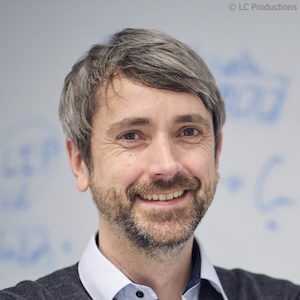
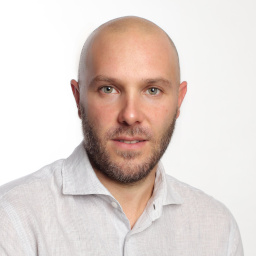
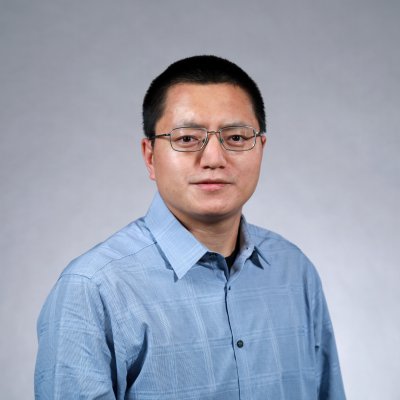
Prof. Dr. Johannes Kinder is a Professor and Chair of Programming Languages and Artificial Intelligence at the Institute of Informatics , Ludwig Maximilian University of Munich. His research focuses on software security through program analysis and machine learning, particularly targeting malware detection , vulnerability analysis , and reverse engineering . He has held faculty positions at Royal Holloway, University of London, and Bundeswehr University Munich. Research Interests include: Securing software systems via program and machine learning techniques Detection of software vulnerabilities and malware Preventing exploitation through binary analysis Applications of formal methods in systems security Recent Publications highlight advancements in binary function embedding , malware detection in npm , and speculative execution attack modeling . His work appears in top venues like USENIX Security and IEEE S&P . Education : Diplom from TU Munich (2005), Doctorate from TU Darmstadt (2010). Professional Roles : General Chair, ACM CCS 2019 Doctoral Symposium Chair, ESSoS 2016 Program Committee member for NDSS 2026, IEEE S&P 2022-2025
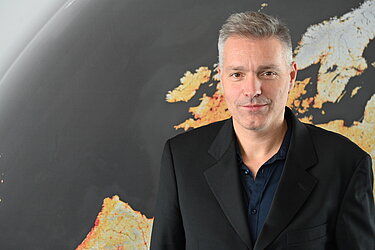
Prof. Dr. Hannes Taubenböck holds the Chair of Global Urbanization and Remote Sensing at the Julius-Maximilians University of Würzburg (Faculty of Philosophy, Institute of Geography and Geology) since 2022 and collaborates with the German Aerospace Center (DLR). His research bridges remote sensing with urban geography, focusing on: Global urbanization patterns and structural analysis Informal settlements (slums/refugee camps) Climate change and natural hazard vulnerability Migration dynamics via remote sensing and social media He obtained his PhD (2008) and habilitation (2019) at JMU Würzburg, preceded by geography studies at LMU Munich (1999-2004). His recent publications analyze: Climate impacts on African agriculture Urban permeability and walkability Border region disparities Heat exposure modeling Methodologically, he specializes in: Deep learning for earth observation Multi-modal data fusion Urban pattern classification Building stock analysis His work informs policy applications in: EU cohesion programs Disaster risk reduction Environmental justice Urban sustainability
Hannes Hick is a Professor at Graz University of Technology , affiliated with the Institute of Machine Elements and Development Methodology . His research focuses on mechanical development, tribology, and systems engineering for automotive and industrial applications. He actively contributes to engineering education and methodology standardization. Research Interests Hydrogen internal combustion engines System modeling and digital twins Tribology in electric drivetrains Sustainable engineering practices MBSE (Model-Based Systems Engineering) Friction and wear analysis Article Trends His recent work emphasizes hydrogen propulsion systems, model-based approaches for interdisciplinary engineering challenges, tribological optimization for sustainable mobility, and integrating AI with mechanical design workflows. Labs and Teams He leads research at the Institute of Machine Elements, focusing on mechanical validation and development methodologies for advanced powertrain systems.
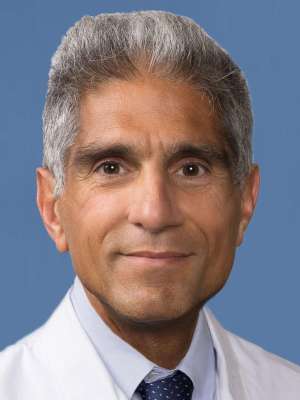
Dr. David Sarraf is a full-time Professor at the Stein Eye Institute, University of California, Los Angeles (UCLA), specializing in retinal disorders and ophthalmic genetics. He practices at the Doris Stein Eye Research Center and is affiliated with Ronald Reagan UCLA Medical Center . Education: MD from University of Toronto Faculty of Medicine (1990) Certifications: Board certified in Ophthalmology (American Board of Ophthalmology, 1998) Training: Residency at University of Chicago Hospitals (1996), Fellowships at Moorfields Eye Hospital (1997) and UCLA (1993), Internship at Toronto Hospital (1991) Research Focus: Clinical research in retinal diseases, particularly Age-related Macular Degeneration (AMD) , Diabetic Retinopathy , and Retinal Imaging . His work explores OCT applications, imaging biomarkers, and therapeutic outcomes for anti-VEGF agents. Publications: Over 60 peer-reviewed papers, reviews, and book chapters, with recent studies on Multimodal Imaging in Uveitis (MUV) guidelines, OCT biomarkers in diabetic macular edema, and novel retinal disease classifications. Scientific Recognitions: LuEsther T Mertz Lectureship (2018) Mark J Daily Keynote Lecture (2018) American Academy of Ophthalmology Secretariat Award AAO Honor Awards Leadership: Associate Editor for Retinal Cases and Brief Reports , director of community ophthalmology courses, and active member in the Retina Society , Macula Society , and American Society of Retinal Specialists .
Noa Pinter-Wollman is a Professor in the Department of Ecology and Evolutionary Biology at the University of California, Los Angeles, within the College of Life Sciences . Her work integrates field experiments, laboratory assays, computational modeling, and social network analysis to understand how individual variation among animals translates into emergent collective behavior, and how these dynamics intersect with conservation challenges. Research Focus: Mechanisms underlying collective decision-making in social insects (especially Argentine ants and harvester ants) Social network structure and its ecological consequences in endangered griffon vultures Interface between spatial ecology and social behavior, including impacts on disease transmission and conservation management Biomimetic insights from social animals to inform resilient human-designed systems Across 2023–2025, her team has produced a steady stream of high-impact articles that collectively advance four thematic pillars: (1) microbiome–behavior feedbacks in ants, (2) conservation technology for scavengers, (3) network-analytic methods for disentangling spatial versus social drivers of interaction, and (4) cooperative strategies that underlie invasion success in ants. The work is notable for integrating high-resolution tracking technologies with rigorous statistical modeling. Funding & Collaborations: Current NSF awards include the collaborative grant “ The causes and consequences of Higher Order Interactions (HOI) ” and prior support for “ Uncovering how links between social and spatial interactions affect ecological processes .” These grants foster interdisciplinary partnerships spanning ecology, computer science, and conservation practice. Laboratory & Team: The Pinter-Wollman Lab at UCLA houses graduate researchers, post-docs, and undergraduates who conduct integrative studies on ants, paper wasps, spiders, and vultures. The lab website ( https://pinter-wollmanlab.weebly.com ) provides protocols, data resources, and outreach materials that translate basic findings into actionable conservation guidance for wildlife managers.
Dikai Liu is a Distinguished Professor and Strategic Research Director at the University of Technology Sydney (UTS), Australia, within the School of Mechanical and Mechatronic Engineering . His work spans field robotics and human-robot collaboration (HRC) , focusing on autonomous systems for infrastructure maintenance, construction automation, and underwater operations. Key research areas: Robotics, Human-Robot Interaction, Bio-Inspired Design, Infrastructure Maintenance Recent publications highlight innovations in trust modeling for HRC, stiffness control in continuum robots, and sociotechnical frameworks for AI-driven robotic systems. His 15 most recent articles emphasize applications in bridge maintenance, construction automation, and ethical AI integration. Awards include the 2019 UTS Medal for Research Impact, ASME DED Leonardo da Vinci Award (USA), and multiple engineering excellence recognitions. His research has generated over $22M in external funding, including 13 ARC grants and industry partnerships.
Chiharu Tokoro is a Professor and currently serves as the Dean of the School of Creative Science and Engineering at Waseda University. She also holds positions as an External Director at Toppan Photomasks Inc. and JX Metals Corporation, and is a Specially Appointed Professor at The University of Tokyo's Graduate School of Engineering. With a Dr. Engineering degree from The University of Tokyo (2003), she has established herself as a leading researcher in resource recycling and environmental engineering, with over 184 papers and an h-index of 27 (Scopus) or 30 (Google Scholar). Dean of School of Creative Science and Engineering, Waseda University (2024.09-present) External Director, Toppan Photomasks Inc. (2023.11-present) External Director, JX Metals Corporation (2021.04-present) Specially Appointed Professor, The University of Tokyo, Institute of Industrial Science (2016.11-present) She received her Dr. Engineering degree from The University of Tokyo in March 2003 after completing her undergraduate studies at Waseda University's School of Science and Engineering (1994-1998). Professor Tokoro's research spans transport phenomena, metals production, earth resource engineering, energy sciences, and environmental materials recycling. She specializes in solid-liquid and solid-solid separation processes, powder simulation and processing, and environmental treatment technologies. Her work focuses on innovative recycling methods for lithium-ion batteries, photovoltaic panels, and other electronic waste, with particular emphasis on pulsed discharge techniques for material separation. She has pioneered novel electrical pulse methods that enable high-precision separation of battery components while minimizing environmental impact. Her recent publications demonstrate a strong focus on advanced recycling technologies, particularly for lithium-ion batteries and electronic waste. She has developed groundbreaking pulsed discharge methods for separating battery components with high precision, achieving over 95% material recovery rates. Her research also extends to water treatment technologies, heavy metal removal, and sustainable materials development. The interdisciplinary nature of her work bridges chemical engineering, materials science, and environmental engineering to address critical resource circulation challenges in the context of circular economy principles. Jubilee Global Diversity Award from The American Ceramic Society (2024) 令和4年度リサイクル技術開発本多賞 (2022) 5th APT Outstanding International Contribution Award (2022) Falling Walls Science Breakthroughs of the Year 2021 finalist in Engineering and Technology 平成31年度文部科学大臣表彰 科学技術賞 (2019) Professor Tokoro serves on numerous national and international committees related to resource recycling, environmental policy, and scientific research evaluation. She is an active editorial board member for several prestigious journals including Scientific Reports and Minerals. Her research is supported by various grants from government agencies and industry partnerships focused on sustainable resource management and circular economy development. She has been instrumental in developing policy recommendations for electronic waste recycling and resource conservation in Japan. As Dean of the School of Creative Science and Engineering at Waseda University, she leads one of Japan's premier institutions for engineering education and research. Her laboratory focuses on developing innovative recycling technologies, particularly for lithium-ion batteries and photovoltaic panels. She collaborates extensively with industry partners and government agencies to translate research findings into practical applications that address real-world resource circulation challenges.
Prof. Dr. Kei Ito is a leading neuroscientist at the University of Cologne , specializing in Drosophila melanogaster brain architecture. His research focuses on mapping " terra incognita " regions of the brain, analyzing glial cell functions across development, and establishing standardized insect brain nomenclature through international collaboration. As AXA Chairholder and former HHMI Senior Fellow , he combines molecular genetics with 3D virtual reality visualization to unravel neuronal network organization . Academic Affiliation : University of Cologne (2016–present) Prior Positions : The University of Tokyo (2002–2017), National Institute for Basic Biology (1998–2002) Research Interests span multiple domains: "Terra Incognita" Analysis : Systematic mapping of previously uncharacterized brain regions (70% of brain volume) Glial Cell Biology : Classification and functional analysis from embryo to adult Connectome Research : Integration of electron microscopy data with genetic tools Neuronal Lineage Studies : 3D reconstruction of neuroblast progeny patterns Scientific Contributions include: Creation of 4,500 NP Gal4 driver lines (Japan consortium, 1998) Pioneering Split-Gal4 systems for precise neuron labeling Establishment of 6 distinct neuron naming schemes for EM data Leadership in Insect Brain Name Working Group (2007–2014) Advising Legacy features direct mentorship of 6 doctoral students and collaborative analysis of 3,777 neuron types in EM datasets. His lab maintains 1,000+ specific Split-Gal4 lines for terra incognita research.
Allon Guez is a Professor in the Department of Electrical and Computer Engineering at Drexel University. His research focuses on control systems, robotics, artificial intelligence, medical robotics, and automated decision making. He actively bridges academia and industry through high-tech entrepreneurship. Education PhD in Electrical Engineering, University of Florida MS in Electrical Engineering, University of Florida MBA in Finance, Drexel University BS in Electrical Engineering, Technion - Israel Institute of Technology His research portfolio spans medical robotics, automated decision making systems, and advanced control algorithms. Key areas include wearable safety devices, radiation control in imaging systems, and closed-loop brain stimulation technologies. Notable contributions include founding ControlRad (radiation reduction systems) and GraceFall (fall detection technology). His work demonstrates a strong emphasis on translating academic research into commercial medical devices. Recent publications highlight innovations in: Fetal brainwave monitoring Postural disturbance detection Seizure prediction algorithms Magnetic microrobotics Dynamic CT collimation Cardiac tissue modeling
Dr. Barry Cardiff is an Assistant Professor in the School of Electrical and Electronic Engineering at University College Dublin (UCD), where he has been a member of academic staff since September 2013. His career spans both industry and academia, with significant experience at Nokia Mobile Phone (UK) Ltd and Silicon & Software Systems (S3 group) before returning to complete his PhD at UCD. Education: B.Eng (1992), M.Eng.Sc. (1995), PhD (2011) from University College Dublin Professional Experience: Design Engineer at Nokia (1993-2001), Systems Architect at S3 group (2001-2007, 2011-2013) Current Position: Assistant Professor at UCD School of Electrical and Electronic Engineering Dr. Cardiff's research focuses on Digital Signal Processing applications in communication systems, with particular emphasis on theoretical analysis and practical implementation. His work bridges traditional communication theory with emerging biomedical applications, especially in wearable IoT sensors. He has made significant contributions to power/complexity reduction techniques in circuit design, specifically DSP algorithms for digitally assisted analog circuits. His research program addresses critical challenges in biomedical signal processing, sensor fusion, and efficient data transmission for healthcare applications. His recent publications demonstrate a strong trend toward biomedical applications of signal processing techniques, with a focus on ECG analysis, atrial fibrillation detection, and respiratory rate estimation using multimodal sensor fusion. The research shows a clear progression from traditional communication systems toward healthcare applications, with an emphasis on edge computing solutions that reduce power consumption in wearable devices. IEEE BioCas best paper award (2024) IEEE senior member since 2019 Active reviewer for multiple IEEE journals including Transactions on Biomedical Circuits and Systems, Circuits and Systems, and VLSI Systems Dr. Cardiff has supervised numerous research projects and has been instrumental in developing curriculum for digital communications, signal processing, and wireless systems. His teaching philosophy emphasizes open, friendly, and hands-on approaches that encourage independent thinking. He coordinates multiple modules including Communication Theory, Digital Electronics, DSP Technology, and Wireless Systems, demonstrating his commitment to both theoretical foundations and practical applications of electrical engineering principles. His research group works at the intersection of signal processing, machine learning, and biomedical engineering, developing innovative solutions for wearable healthcare monitoring. Current projects focus on event-driven processing architectures, decentralized classification systems, and signal quality-aware fusion techniques that enable robust performance in noisy real-world environments.
Damiano Piovesan is Associate Professor in Bioinformatics (SSD BIO/10) at the Department of Biomedical Sciences , University of Padua , Italy. Since March 2022 he has held this rank, having previously served as Assistant Professor (2022) and PostDoc researcher (2019) in the same department. Education 2013 – PhD in Biotechnology, Pharmacology and Toxicology, University of Bologna 2009 – MSc in Bioinformatics, University of Bologna 2007 – BSc in Biotechnology, University of Bologna Research Focus Piovesan’s research integrates machine-learning approaches with structural bioinformatics to advance understanding of intrinsically disordered proteins (IDPs) and protein function prediction . He develops widely used resources such as MobiDB for disorder annotation, DisProt for functional curation of disordered regions, and RING for residue interaction networks. Additional interests include tandem repeat proteins , cancer-related IDP targets , and community benchmarking initiatives (CAFA, CAID, CAGI). Publication Trends His 2024–2025 output is dominated by updates to flagship databases ( InterPro , DisProt , MobiDB ), next-generation disorder predictors leveraging deep learning ( PredIDR , MobiDB-lite 4.0 ), and large-scale genomics challenges ( CAGI6 ). Across the decade, recurring themes include methodological advances in disorder prediction, creation of interoperable bioinformatics platforms, and rigorous benchmarking to ensure community-wide reliability. Scientific Awards No specific awards are listed in the provided materials. Advising & Grants No individual students or grant details are explicitly supplied; however, his leadership in multi-institutional consortia (e.g., InterPro, DisProt, CAFA) implies substantial supervisory and funding coordination roles. Labs & Teams Piovesan is affiliated with the BioComputingUP Lab ( https://biocomputingup.it/ ) at the University of Padua, a hub for computational biology and bioinformatics tool development.
Xiaobo Li is a Professor in the Department of Bio-Medical Engineering at New Jersey Institute of Technology. Holding a Ph.D. in Computer Aided Geometric Design from the University of Birmingham and a B.S. in Automation from Nanjing University of Aeronautics, their research bridges computational methods with neuroimaging and psychiatric disorder analysis. Ph.D., University of Birmingham (Computer Aided Geometric Design, 2004) B.S., Nanjing University of Aeronautics (Automation, 1999) Dr. Li’s work focuses on applying machine learning and graph theory to understand brain network abnormalities in conditions like ADHD , schizophrenia , and traumatic brain injury . Their studies analyze structural-functional connectivity , reward processing , and gut-brain axis interactions using fMRI , fNIRS , and diffusion tensor imaging . Recent publications highlight their development of tools like the GAT-FD MATLAB toolbox for brain network analysis and their exploration of multimodal MRI in schizophrenia diagnosis. They also investigate the neurobiological effects of photobiomodulation and vision therapy interventions.
Howard J. Meyerson is a Professor in the Department of Pathology at Case Western Reserve University's School of Medicine. He serves as a member of the Immune Oncology Program at the Case Comprehensive Cancer Center. His primary roles include Program Director of Hematopathology and Director of Flow Cytometry at University Hospitals Cleveland Medical Center. Research focuses on hematopoietic neoplasms classification, flow cytometric analysis, and immune cell subset evaluation in disorders and therapies. Key collaborations involve high-resolution phenotypic analysis techniques and amplification staining for neoplasm evaluation. Publications emphasize hematologic malignancies, flow cytometry advancements, and immunological mechanisms in blood disorders. Notable works include studies on FLT3-ITD detection in AML, B-ALL diagnostic markers, and clonal cytopenia characterization. Education : MD degree from Case Western Reserve University Professional activities include leadership in clinical pathology training programs and diagnostic laboratory management. Active in collaborative research on immune cell dynamics and therapeutic intervention analysis. Labs/Teams: Leads flow cytometry core facilities and participates in multi-institutional studies on hematologic malignancies.
Shiguo Jiang is a tenured Associate Professor in the Department of Geography, Planning, and Sustainability at the University at Albany's College of Arts and Sciences. Currently on sabbatical during Fall 2025, he maintains active research leadership through the Spatial Analysis Laboratory. His affiliations extend to the PhD Program in Information Science (College of Emergency Preparedness, Homeland Security and Cybersecurity) and the MS Program in Biodiversity, Conservation, and Policy (Department of Biological Sciences), reflecting his interdisciplinary approach. Dr. Jiang's educational background includes a PhD from Ohio State University (2012), an MS from Peking University (2004), and dual BS/BA degrees from Peking University (2001). His research integrates geospatial technologies with spatial statistics to investigate land use dynamics, forest ecosystems, and human-environment interactions. Key application areas include urban systems analysis, climate change modeling, and crime pattern detection, with notable fieldwork in the Maya Forest of Belize. His publication portfolio reveals an evolution from urban fractal analysis (early Beijing studies) toward integrated socio-ecological research, with recent emphasis on crime geospatial modeling and climate-ecosystem interactions. The 15 most recent articles demonstrate methodological innovation in remote sensing reconstruction and spatial statistics, applied across environmental, criminological, and public health domains. Dr. Jiang actively mentors graduate students across departments including Geography, Sociology, Information Science, and Criminal Justice. While currently unable to fund Graduate Research Assistants, he collaborates with students who secure external funding. His Spatial Analysis Laboratory requires technical proficiency in programming (Python/R/Matlab) and geospatial software, welcoming undergraduates through postdoctoral researchers with relevant skills.
Gabriella Casalino is an Assistant Professor at the University of Bari Aldo Moro, Department of Computer Science, and a key researcher at CILAB - Computational Intelligence Lab. Her work focuses on Computational Intelligence methods for interpretable data analysis, particularly in eHealth, Data Stream Mining, and eXplainable Artificial Intelligence (XAI) within medical and educational domains. She has contributed to innovative approaches in smartphone-based health monitoring, fuzzy logic applications, and remote vital sign detection via photoplethysmography. Education : Ph.D. in Computer Science, with advanced training at institutions like Universitat de Girona and Université de Mons. Research Trends : Recent publications highlight applications of evolving granular computing, neuro-fuzzy systems, and explainable AI in hypertension prediction, bipolar disorder monitoring, and educational data analysis. Key subfields include remote health monitoring, medical data streams, and hybrid AI models. Grants : Research funded by AIRC (Italian Cancer Research Foundation), focusing on computational methods for healthcare challenges. Labs & Collaborations : Active in CILAB, collaborating on projects involving mHealth solutions, cardiovascular risk assessment, and intelligent educational systems.