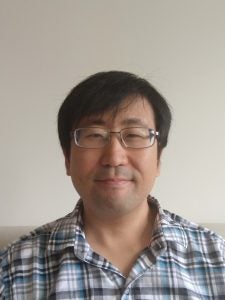
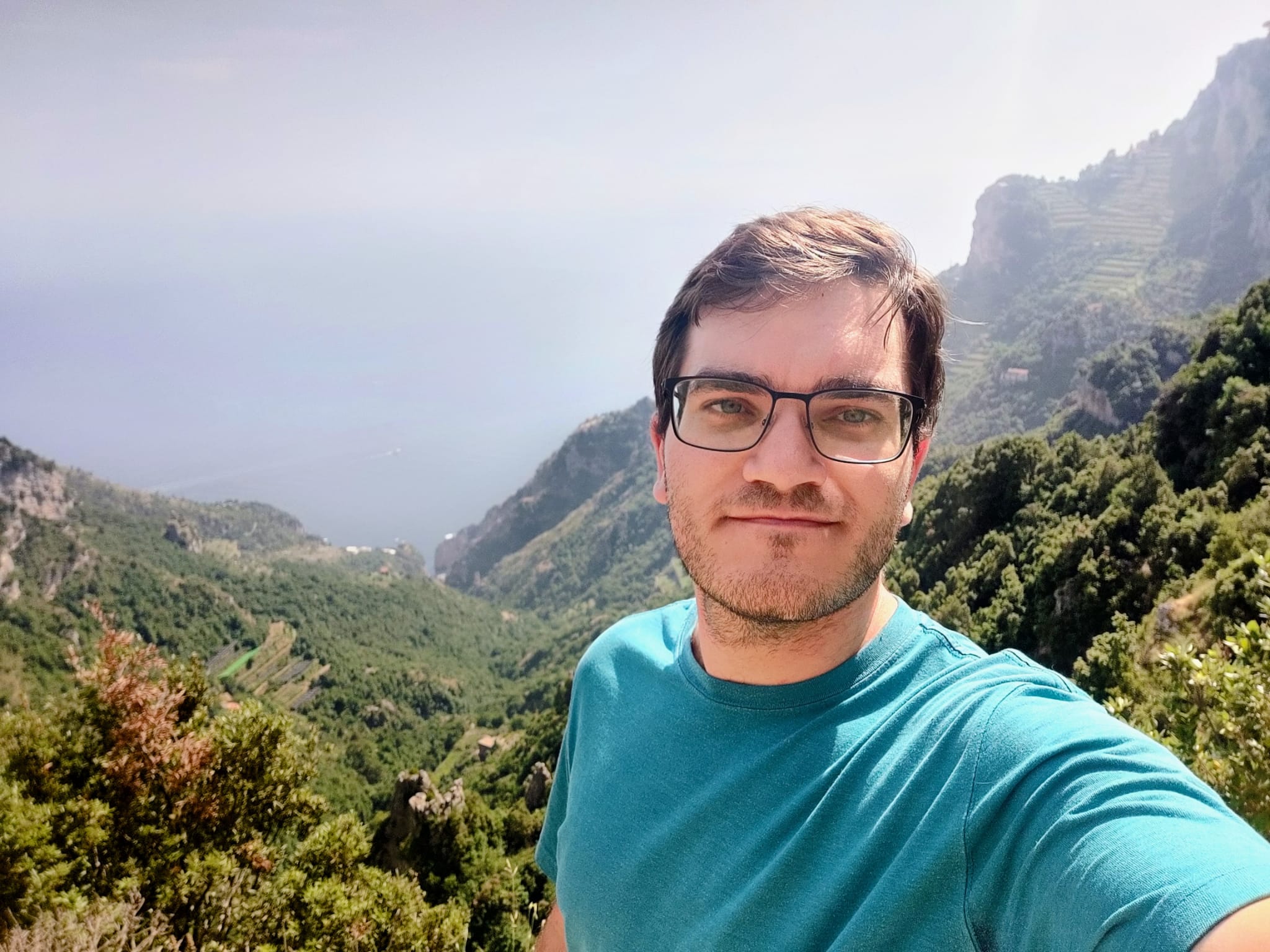
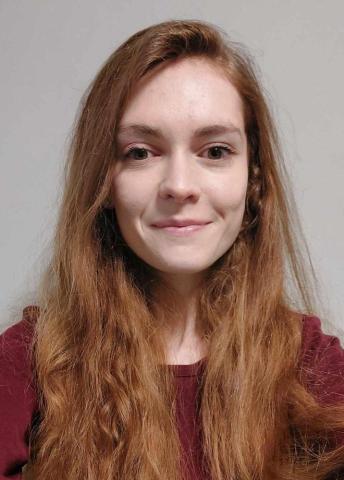
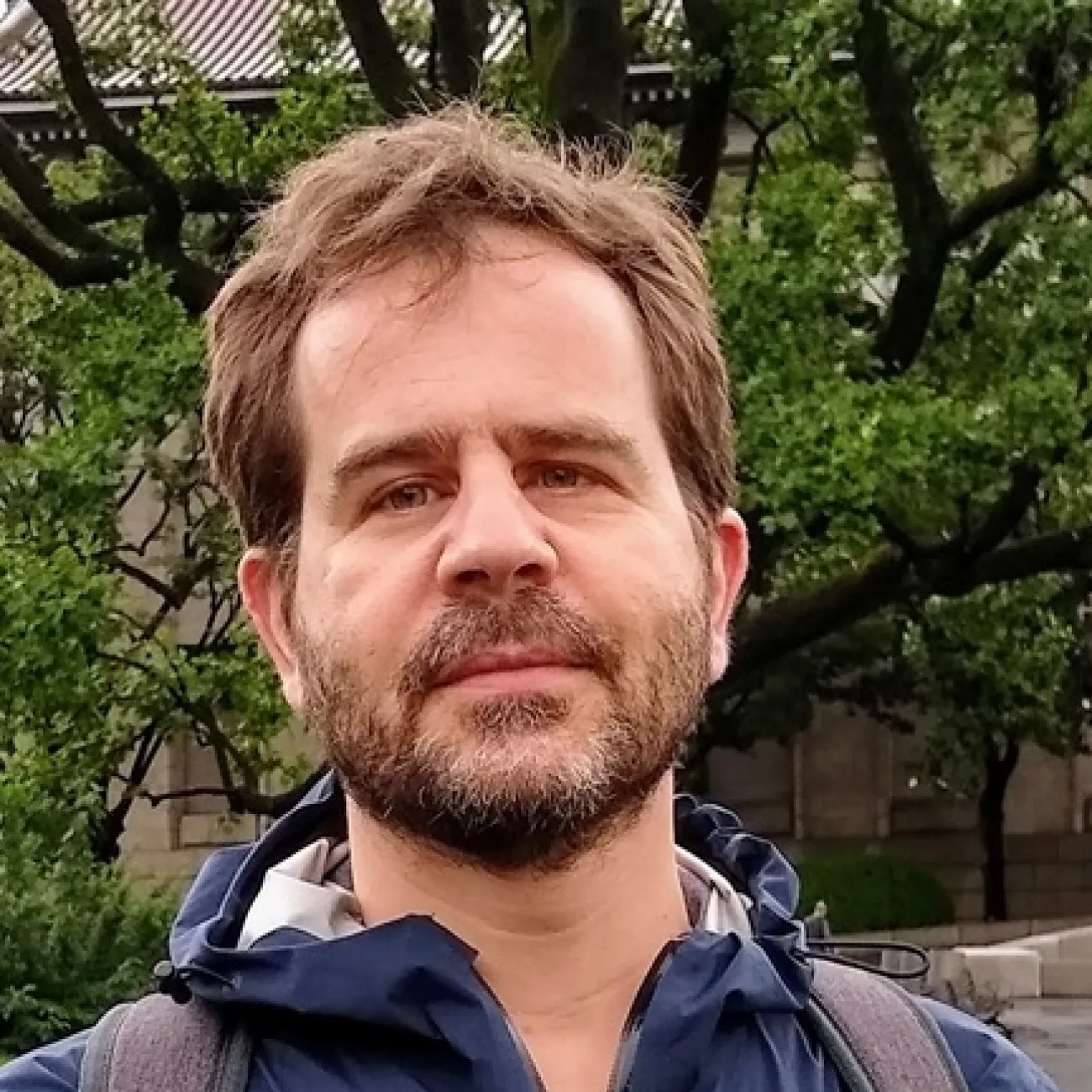
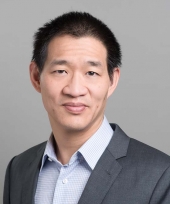
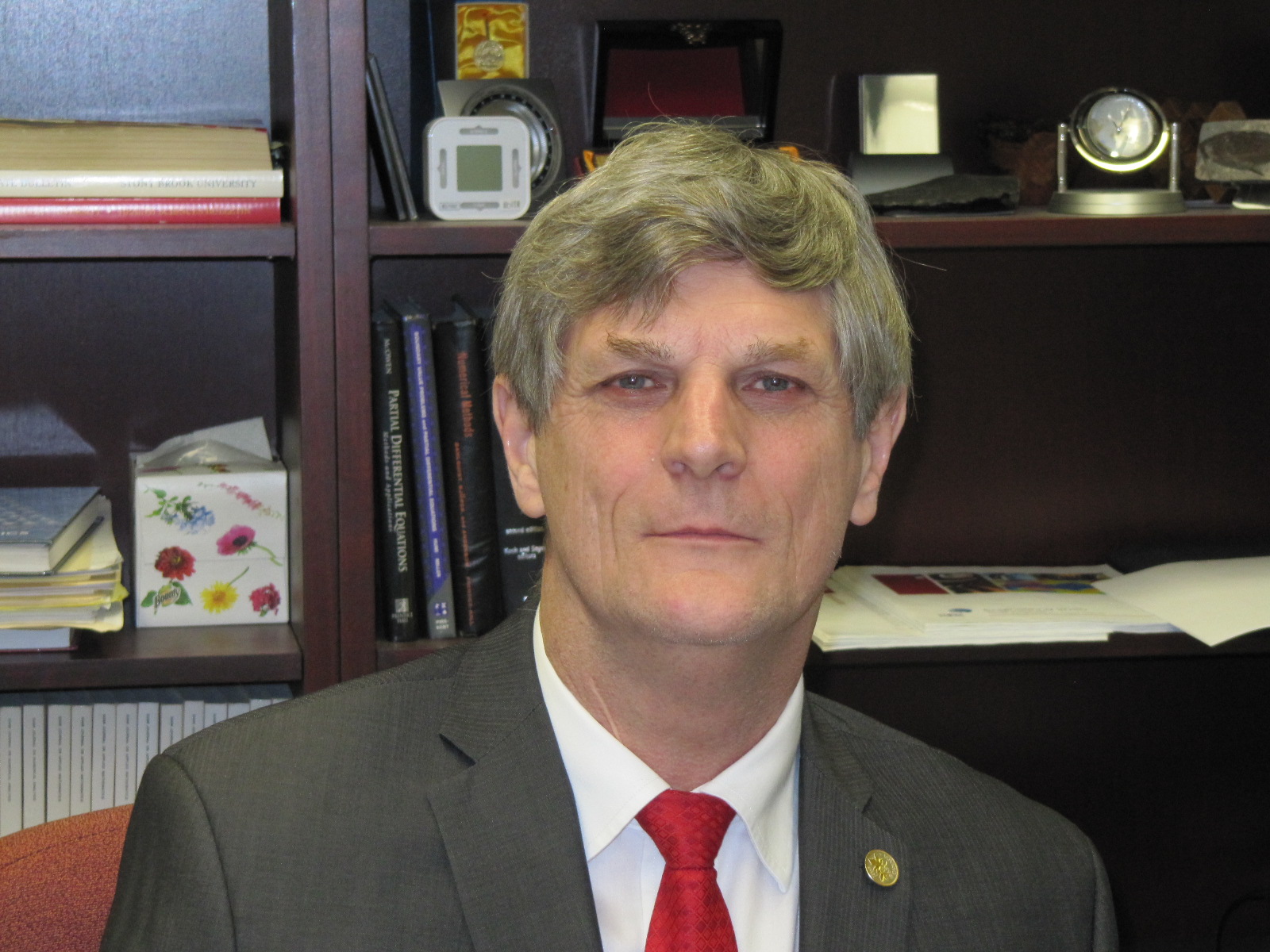
Jignesh M. Patel is a Professor in the Computer Science Department at Carnegie Mellon University , focusing on Data Management , System Efficiency (e.g., Scalable Data Platforms), and Human Efficiency (e.g., LLM-Based Query Interfaces). His work bridges Database Systems , Machine Learning , and Human-Computer Interaction . Co-founder of four startups: Paradise (1997), Locomatix (2007), Quickstep (2015), and DataChat (2017). Member of SIGMOD 2025 (AE) , CIDR 2024 (Co-Chair) , and other program committees. Research Interests include efficient data analysis algorithms , LLM-based data interaction , and systems security . His group develops platforms combining scalability and user productivity . Scientific Awards include Best Paper Awards at SIGMOD and VLDB, and Fellowships from AAAS, ACM, and IEEE. He also received Teaching Awards at CMU. Professional Activities feature co-founding startups , serving on program committees , and teaching courses like Database Systems and Advanced Database Systems at CMU.
Jee Choi is an Assistant Professor in the Department of Computer and Information Science within the College of Arts and Sciences at the University of Oregon. His research focuses on developing high-performance algorithms for big data analytics, particularly in tensor decomposition and parallel computing systems. Education: PhD in Electrical and Computer Engineering, Georgia Institute of Technology, 2015 MS in Electrical and Computer Engineering, Georgia Institute of Technology, 2004 BS in Electrical and Computer Engineering, Georgia Institute of Technology, 2000 Research Interests: Dr. Choi specializes in High Performance Computing with expertise in parallel algorithm design, performance modeling, and energy efficiency. His work targets Tensor Decomposition & Data Mining for big data, developing scalable solutions for sparse and dense tensor computations. He advocates leveraging HPC systems to transform massive datasets into societal benefits through efficient data mining techniques. Publication Trends: Choi's recent publications (2021-2025) demonstrate consistent innovation in tensor decomposition methodologies, with increasing focus on adaptive storage (Alto), streaming data factorization, and energy-aware autotuning. His work spans GPU clusters, distributed systems, and emerging architectures, maintaining strong connections to real-world big data challenges while advancing theoretical algorithm design. Professional Background: After completing his PhD under Richard Vuduc at Georgia Tech (notable for SpMV GPU autotuning and Energy Roofline Model), Choi conducted DoD-funded research on tensor decomposition at IBM Watson Research Center (2015-2018) before joining the University of Oregon faculty.
Gabriele Farina is an Assistant Professor at MIT in the Department of Electrical Engineering and Computer Science (EECS) and the Laboratory for Information and Decision Systems (LIDS), with additional affiliations at the Operations Research Center (ORC). Holding the X-Window Consortium Career Development Chair, his research focuses on theoretical and algorithmic foundations for learning and computational decision-making under imperfect information, integrating game theory, machine learning, optimization, and statistics. He previously served as a Research Scientist at Meta's Fundamental AI Research (FAIR) group, where he contributed to Cicero, a human-level AI agent combining strategic reasoning and natural language. Ph.D. in Computer Science from Carnegie Mellon University (advisor: Tuomas Sandholm) Facebook Fellowship (2019-2020) in Economics and Computation Recipient of multiple awards including ACM SIGecom dissertation award, NSF CAREER, and AI2050 Early Career Fellow His research spans four key areas: (1) No-Regret Learning Dynamics in extensive-form games; (2) Correlation and Mediated Equilibria in sequential decision-making; (3) Team Games and Team Max-Min Equilibria; and (4) Human Modeling and Equilibrium Perfection. His work addresses challenges in scalable equilibrium computation, stability of learning algorithms, and robustness to mistakes in multi-agent systems. Recent publications highlight advancements in polynomial-time equilibrium computation, cautious optimism algorithms, and connections between regret minimization and mirror descent. These contributions appear in top venues like COLT, NeurIPS, ICML, and AAAI, with keywords spanning game theory, optimization, and machine learning. NSF CAREER award AI2050 Early Career Fellow Facebook Fellowship ACM SIGecom dissertation award GameSec 2024 best paper award ICLR 2023 outstanding paper honorable mention His research group at MIT collaborates on projects involving strategic reasoning, human-level AI agents, and equilibrium refinements, with applications to games like Diplomacy and poker. Current efforts include developing faster algorithms for correlated equilibria and exploring connections between machine learning and economic theory.
Professor Omer Rana serves as Professor of Performance Engineering and International Dean for the Middle East at Cardiff University's School of Computer Science and Informatics. He also holds the prestigious position of Cross-Council Research Director for the UK National Edge AI Hub, demonstrating his leadership in national research initiatives. Previously, he led the Complex Systems research group and served as Dean of International for the Physical Sciences and Engineering College at Cardiff University. Professor Rana is a Fellow of both the Learned Society of Wales and the Higher Education Academy, and serves on the Advisory Board of the Welsh Ethnic Minority Professors Initiative (WEMPI). His research expertise centers on the intersection of intelligent systems and high performance distributed computing, with particular focus on applying intelligent techniques to resource management in distributed systems. His scholarly contributions span edge computing, cloud computing, Internet of Things (IoT), artificial intelligence, cybersecurity, federated learning, privacy-preserving systems, and sustainable computing. Professor Rana has published extensively in top-tier journals and conferences, with recent work emphasizing practical applications in industrial automation, smart buildings, and sustainable computing solutions. Professor Rana's publication record demonstrates consistent leadership in edge computing and distributed systems research, with a growing emphasis on practical implementations across diverse application domains. His work bridges theoretical computer science with real-world technological challenges, particularly in industrial automation, smart environments, and sustainable infrastructure. Fellow of the Learned Society of Wales Fellow of the Higher Education Academy Professor Rana actively supervises postgraduate students and has secured significant research funding for projects related to edge computing, IoT, and distributed systems. His international collaborations span Europe, Asia, and the Middle East, reflecting his global influence in the field. He serves as a sought-after keynote speaker, workshop chair, and panel moderator at major international conferences including IEEE/ACM Utility and Cloud Computing (UCC) and IEEE Edge Computing. He leads multiple research initiatives, most notably as Cross-Council Research Director for the UK National Edge AI Hub, where he shapes national research directions in edge computing and AI. His work has practical applications across industrial automation, smart building management, electric vehicle infrastructure, and sustainable computing solutions.
Keely Dugan serves as an Assistant Professor in the Department of Psychology at the University of Missouri, directing the Personality, Attachment, and Change (PAC) Lab in McReynolds Hall. She holds a PhD in Social/Personality Psychology from the University of Illinois at Urbana-Champaign (2023) and completed an NIMH T32 Postdoctoral Fellowship at the University of Minnesota (2024). Her research investigates dynamic changes in personality traits and attachment styles across time, life experiences, and social contexts. Using advanced statistical methodologies, she examines how individual differences manifest in everyday environments, emphasizing how cumulative "little moments" shape long-term development. This work bridges personality psychology, attachment theory, and contextual behavioral science. Recent 2024 publications reveal three interconnected research strands: quantifying life events' impact on personality trajectories, testing attachment theory's canalization hypothesis through within-subject variations, and conducting systematic reviews of queer/minority identities in relationship science. These studies demonstrate her interdisciplinary approach combining longitudinal analysis, computational modeling, and inclusive relationship research. Dr. Dugan's scientific recognition includes: NIMH T32 Postdoctoral Fellowship (2024) She actively recruits graduate students for Fall 2025 and teaches PSYCH 9330 (Graduate Research Methods), PSYCH 8620 (Graduate Seminar in Personality Psychology), and PSYCH 2320 (Introduction to Personality Psychology). Current projects include NIH-funded personality-environment interaction studies and development of AI-assisted coding methodologies for behavioral research. The PAC Lab, located in McReynolds Hall's Lower Level, currently spearheads a groundbreaking project analyzing 3D living room scans to predict personality traits through environmental cues. This initiative employs both human coders and machine learning algorithms to examine how physical spaces reflect and influence individual differences in attachment and personality expression.
Dr. Andrea Lecchini Visintini is an Associate Professor at the School of Electronics and Computer Science , University of Southampton. He specializes in systems modelling and control with applications in aerospace engineering and biomedical domains, utilizing Monte Carlo methods for stochastic optimization. Cyber-Physical Systems Research Group Institute for Life Sciences Research Focus: His work bridges computational methods with practical applications in: Neurovascular coupling and brain tissue pulsation analysis Advanced control strategies for aerospace systems Stochastic optimization in machine learning and fault detection Medical imaging and diagnostic protocol development Publication Trends: Recent work emphasizes interdisciplinary approaches combining computational neuroscience with engineering, focusing on brain hemodynamics, MIMO system control, and data augmentation techniques for imbalanced datasets. Supervision: Currently supervising PhD student Xuankun Cai in Computer Science.
Cristian Cadar is a Professor in the Department of Computing at Imperial College London, leading the Software Reliability Group . His research focuses on improving software reliability and security through practical techniques in software engineering, computer systems, and program analysis. Education: Ph.D. in Computer Science, Stanford University M.Eng. in Computer Science, MIT B.S. in Computer Science and Mathematics, MIT His research interests center on software engineering and software security , particularly symbolic execution , dynamic symbolic execution (DSE) , and multi-version execution . Current work explores techniques for scalability, constraint solving, and runtime security in software systems. Key trends in his recent articles include optimizing symbolic execution for testing, addressing path explosion in constraint-based test generation, and advancing multi-version execution for dynamic software updates. His publications also cover program analysis , automated testing , and formal methods for software reliability. Awarded prestigious honors such as the Humboldt Research Award (2024) , ERC Consolidator Grant (2018) , and IEEE New Directions Award (2022) . Other accolades include the BCS Roger Needham Award (2019) and SIGOPS Hall of Fame (2018) . Cadar supervises PhD and postdoctoral researchers in software reliability and security. His group has secured grants from the ERC and EPSRC , including a Consolidator Grant (2018) and Early-Career Fellowship (2013) . He actively contributes to conference organizing committees and editorial boards. The Software Reliability Group at Imperial College, led by Cadar, specializes in techniques like KLEE and EXE for automated testing. Their work has been adopted by industry partners such as Fujitsu, IBM, and Microsoft, particularly in runtime security tools like WIT .
Michael Mühlebach is a Research Group Leader at the Max Planck Institute for Intelligent Systems in Tübingen, Germany, leading the independent Learning and Dynamical Systems group. His academic journey began at ETH Zurich where he earned his B.Sc. (2010) and M.Sc. (2013) in mechanical engineering, specializing in robotics, systems, and control. He completed his Ph.D. at ETH Zurich in 2018 under Prof. R. D'Andrea, followed by postdoctoral research at UC Berkeley with Prof. Michael I. Jordan. Dr. Mühlebach's research spans machine learning, dynamical systems, control theory, and optimization . His work bridges theoretical foundations with practical applications in robotics, developing methods that incorporate physical constraints and system dynamics into learning frameworks. His group focuses on online learning, physics-informed machine learning, and large-scale optimization for cyber-physical systems, with applications in electromagnetic navigation, robotic table tennis, and energy-efficient flight systems like the shape-changing robot Floaty . His publication record shows a strong focus on constrained optimization, with recent work exploring decision-dependent stochastic optimization, nonlinear feedback, and the theoretical foundations of reinforcement learning. His research integrates perspectives from control theory, dynamical systems, and optimization to develop algorithms with strong theoretical guarantees and practical performance. Outstanding D-MAVT Bachelor Award Willi-Studer prize for best Master's degree ETH Medal and HILTI prize for doctoral thesis Branco Weiss Fellow (2018) Emmy Noether Fellowship (2020) Amazon Fellowship (2024) Dr. Mühlebach actively mentors doctoral researchers and is seeking talented students for PhD and Master's projects. His research group has received funding from multiple prestigious fellowships and maintains collaborations across institutions including ETH Zurich, UC Berkeley, and various Max Planck research units. The group's work spans theoretical developments to practical implementations on robotic systems, demonstrating strong connections between mathematical theory and physical realization.
David Lie is a Professor at the University of Toronto, jointly appointed in the Edward S. Rogers Department of Electrical and Computer Engineering, Department of Computer Science, and Faculty of Law. He directs the Schwartz Reisman Institute for Technology and Society, co-founded the IT3 Lab, and serves as Associate Director at the Data Sciences Institute. His research focuses on securing computer systems through operating systems, architecture, and formal verification approaches. B.A.Sc (University of Toronto, 1998) M.S. (Stanford, 2001) Ph.D. (Stanford, 2004) His research emphasizes building secure systems for mobile platforms and cloud computing, with significant contributions to trusted execution environments (XOM architecture precursor to Intel SGX/ARM TrustZone) and Android permission mapping (PScout tool). Recent work spans cryptographic side-channels, web tracking detection, and AI safety. Key honors include SOSP 2003 Best Paper, Ontario MRI Early Researcher Award (2008), Connaught Global Challenge Award (2017), and Canada Research Chairs (Tier 2 2013-2018, Tier 1 current). He has secured over $30M in research funding and served as General Chair for CCS 2018. Lie leads the IT3 Lab (Technology and Policy Integration), collaborates with industry leaders (Google, VMware, Telus), and mentors graduate students working on practical security implementations. He co-teaches ECE1724: Privacy Problems with Lisa Austin from the Faculty of Law, reflecting his technology-policy interests.
W. Brent Lindquist is a Professor in the Department of Mathematics and Statistics at Texas Tech University, affiliated with the TTU Mathematical Finance Program. His contact details include office location in the Mathematics & Statistics building (Room 104), phone (+1 806 834 2348), and email brent.lindquist@ttu.edu. His research spans computational financial mathematics, porous media flow, neuroscience applications, and quantum electrodynamics. Key contributions include dynamic asset pricing with market microstructure integration, pore-scale flow modeling using 3D micro-tomography, automated neuron morphology identification, and QED computations for electron magnetic moments. Recent work emphasizes ESG factor incorporation into financial models. Analysis of 2023–2025 publications reveals a dominant focus on sustainable finance, particularly ESG-integrated option pricing and portfolio optimization. Methodologies include random forests for market microstructure analysis, skew random walks for volatility modeling, and Lévy processes for Bitcoin dynamics. Cross-cutting themes involve hedonic real estate models with ESG factors and unified asset pricing frameworks bridging classical finance theories.
Ramina Sotoudeh is an Assistant Professor of Sociology at Yale University with a secondary appointment in Statistics & Data Science. Her research bridges sociogenomics, the sociology of culture, and social inequality, focusing on how genetic and social environments interact to shape human behavior. Education : BA in Social Research and Public Policy from NYU Abu Dhabi, PhD in Sociology from Princeton University Postdoctoral Experience : Fellow at Nuffield College, University of Oxford Ramina’s work in sociogenomics examines how institutional, relational, and genetic contexts influence health outcomes, such as smoking behavior and peer interactions. Her sociology of culture projects use relational methods to explore cultural frameworks underlying attitudes toward science, religion, politics, and marriage. She also investigates health disparities and inequality through interdisciplinary lenses. Her most recent publications analyze genomic population structure, behavioral plasticity, and computational approaches to algorithm selection. Earlier works focus on cultural attitudes, behavioral diffusion in networks, and genetic correlations with education and longevity. These studies span journals like American Sociological Review , PNAS , and Demography .
Nicolas Federico Martin is an Associate Professor in the Department of Crop Sciences at the University of Illinois at Urbana-Champaign, with additional appointments as Associate Professor in the Center for Latin American and Caribbean Studies, Center for Digital Agriculture, and the National Center for Supercomputing Applications (NCSA). His interdisciplinary work bridges traditional agricultural science with cutting-edge computational approaches. Dr. Martin's research focuses on the intersection of agriculture and data science, with particular emphasis on: Precision agriculture and on-farm experimentation methodologies Machine learning applications for crop management and yield prediction Nitrogen and nutrient management optimization Soybean and corn breeding and production systems Remote sensing and UAV applications in agriculture Sustainable agricultural practices including cover crop management His publication record demonstrates a clear trajectory toward increasingly sophisticated integration of artificial intelligence with agricultural science. Recent work shows heavy emphasis on using machine learning algorithms (particularly reinforcement learning, convolutional neural networks, and generalized additive models) to solve practical farming challenges related to crop management decisions, yield prediction, and resource optimization. This research has significant implications for both scientific understanding of crop-environment interactions and practical farm management. Dr. Martin actively collaborates across disciplines and institutions, as evidenced by his extensive co-authorship network spanning agronomy, computer science, environmental science, and economics. His work has garnered attention from numerous news outlets and social media platforms, indicating its relevance to current agricultural challenges. He is a key contributor to the Data-Intensive Farm Management project, which aims to transform agronomic research through on-farm precision experimentation. His affiliation with NCSA provides access to high-performance computing resources essential for processing large agricultural datasets. Additionally, his work in Latin American agriculture (particularly in Mexico and Argentina) reflects his commitment to addressing global food security challenges.
Prof. Dr. Dominik Schwarz is a faculty member at the Faculty of Physics , Bielefeld University. His research focuses on Cosmology and Particle Physics , particularly in the areas of Dark Energy , Dark Matter , Cosmological Inflation , and Large-Scale Structure Formation . He contributes to projects like the International LOFAR Telescope Consortium and the SFB-TRR 211 on strongly interacting matter. APART Fellow of Austrian Academy of Sciences Humboldt Fellow CERN Fellow His recent work explores the cosmic dipole anisotropy , axion density perturbations , and multi-wavelength cosmic web mapping . He also advances data science infrastructure through the PUNCH4NFDI consortium.
Mark Coeckelbergh is a Professor of Philosophy at the University of Vienna, specializing in the philosophy of technology, AI ethics, and robot ethics. He is affiliated with the Department of Philosophy and the Research Network Data Science at the University of Vienna. In addition to his academic position, Coeckelbergh has held significant roles including Former President of the Society for Philosophy and Technology (SPT) and Member of the European Commission's High-Level Expert Group on Artificial Intelligence (AI HLEG). His research focuses on the ethical, political, and philosophical implications of emerging technologies, particularly artificial intelligence and robotics. Coeckelbergh has published extensively in these areas, authoring influential books such as Robot Ethics (2022), The Political Philosophy of AI (2022), and Why AI Undermines Democracy and What To Do About It . His work explores how AI systems affect democratic processes, human agency, and social relationships. Recent publications demonstrate a strong focus on the relationship between AI, democracy, and ethical governance, examining how AI systems can both threaten and potentially enhance democratic processes through algorithmic transparency and participatory design approaches. Finalist of the World Technology Award 2017 Coeckelbergh teaches various courses including 'Introduction to Philosophy of LLMs,' 'LLMs and the Future of Writing,' 'Ethics and Robotics,' and 'Global Governance of AI.' He has supervised numerous students working on topics related to technology ethics and philosophy. He has been involved in several major research projects including H2020 PERSEO, WWTF Democracy Responsible Entrepreneurship, and FP7 DREAM (Development of Robot-Enhanced therapy for children with Autism spectrum disorders). Coeckelbergh has also announced upcoming guest professorships at the Institute of Philosophy of the Czech Academy of Sciences and Uppsala University, where he will work on environmental and technology ethics projects.
Ameet Talwalkar is an Associate Professor in the Machine Learning Department at Carnegie Mellon University and Chief Scientist at Datadog. He holds a PhD from the Courant Institute at NYU (2010) where he received the Janet Fabri Prize for Best Thesis. His professional achievements include co-founding Determined AI (acquired by HPE), creating MLlib in Apache Spark, co-authoring the textbook 'Foundations of Machine Learning,' and spearheading the MLSys conference. Talwalkar's research focuses on fundamental challenges in machine learning systems, including distributed ML, federated learning, neural architecture search, and human-AI interaction. His work bridges theoretical foundations with practical applications across domains like computational biology, PDE solving, and code generation. Current interests include AI for science, specialized model development, and agent-based systems. His publications demonstrate strong focus on ML systems optimization, foundation model evaluation, and interpretable AI. Recent works investigate specialized foundation models, PDE-solving frameworks, code generation tools, and human-AI interaction paradigms. The research consistently targets efficiency, scalability, and practical deployment challenges. Best Paper Award at EAAMO 2023 Best Student Paper at NYAS ML Symposium 2009 Runner-up for Best Real-world Application at Socal ML Symposium 2017 Janet Fabri Prize for Best PhD Thesis (2010) Talwalkar leads the CMU MLSys Lab focused on scalable ML systems and has served as Board President for the MLSys conference series. His educational contributions include developing courses like 'Machine Learning with Large Datasets' and creating the LEAF benchmark for federated learning and NAS-Bench-360 for neural architecture search.