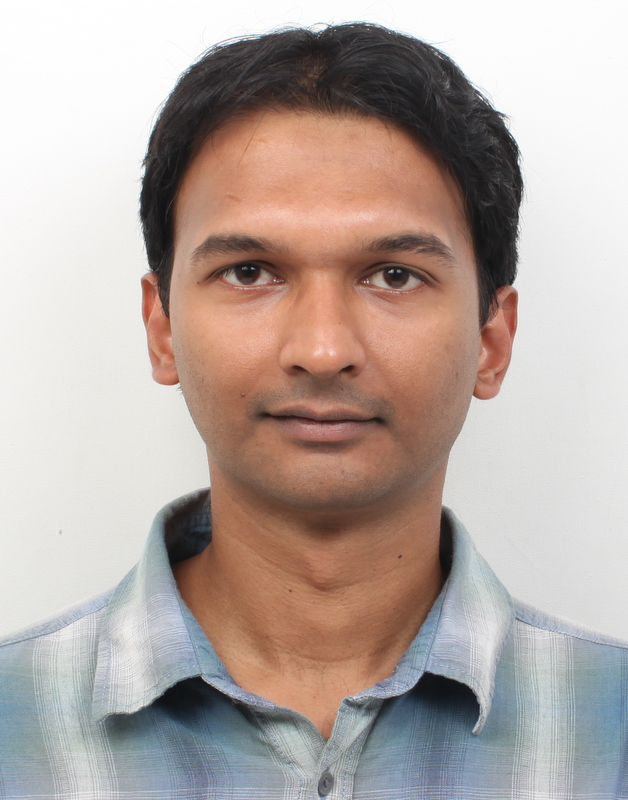
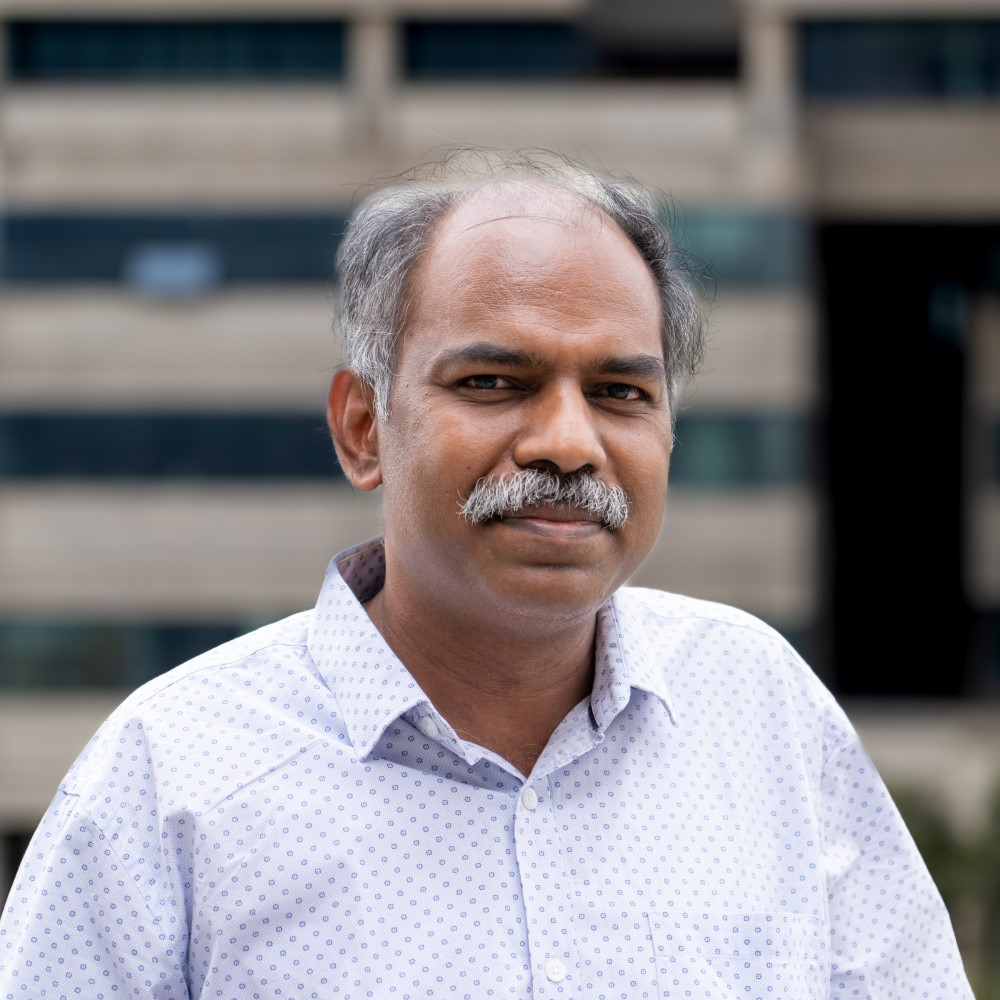
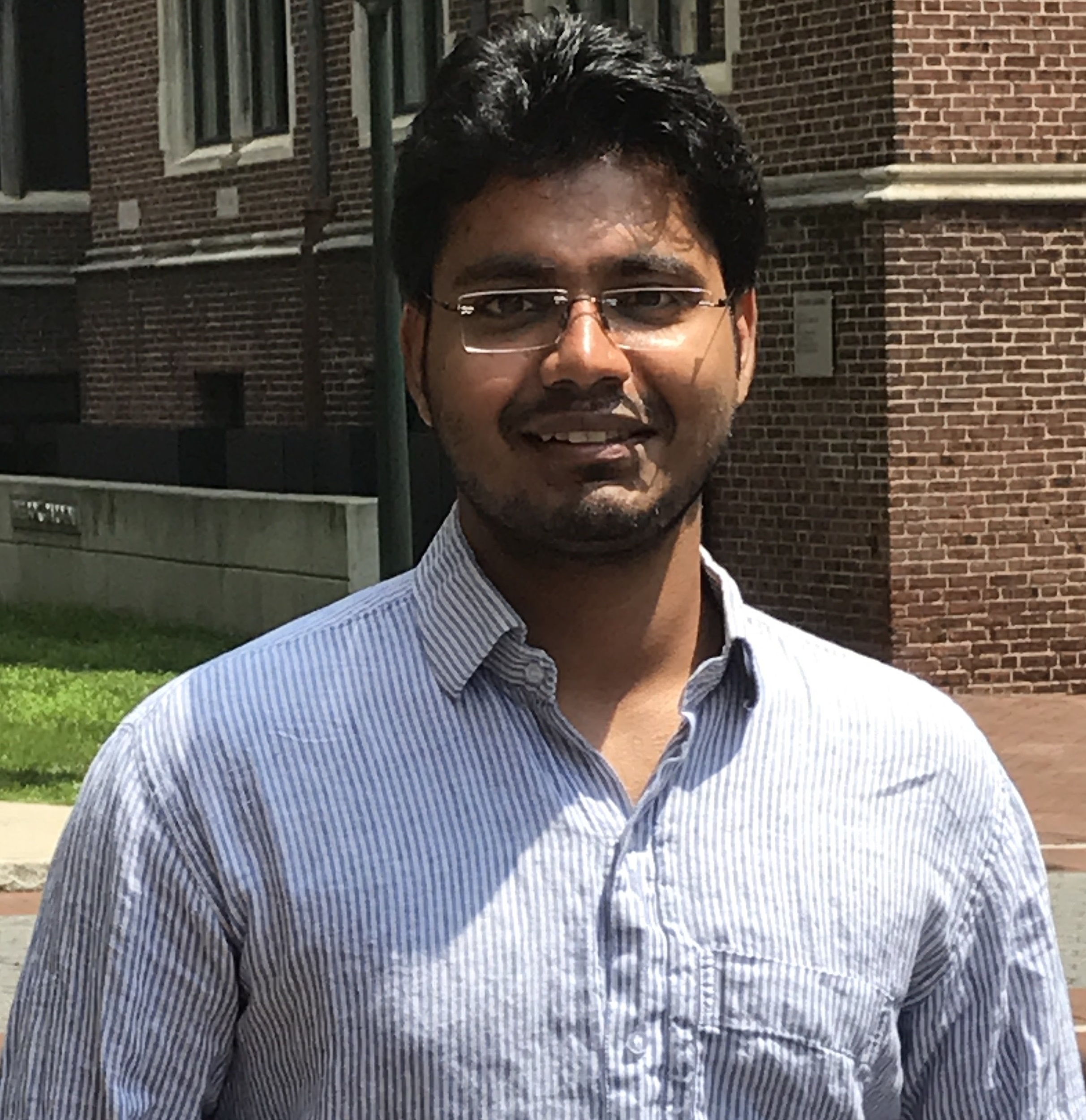
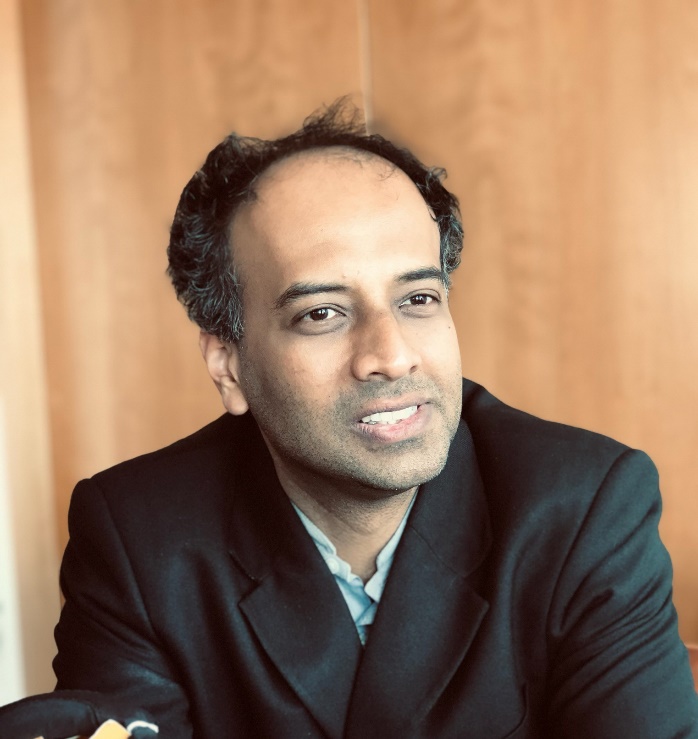
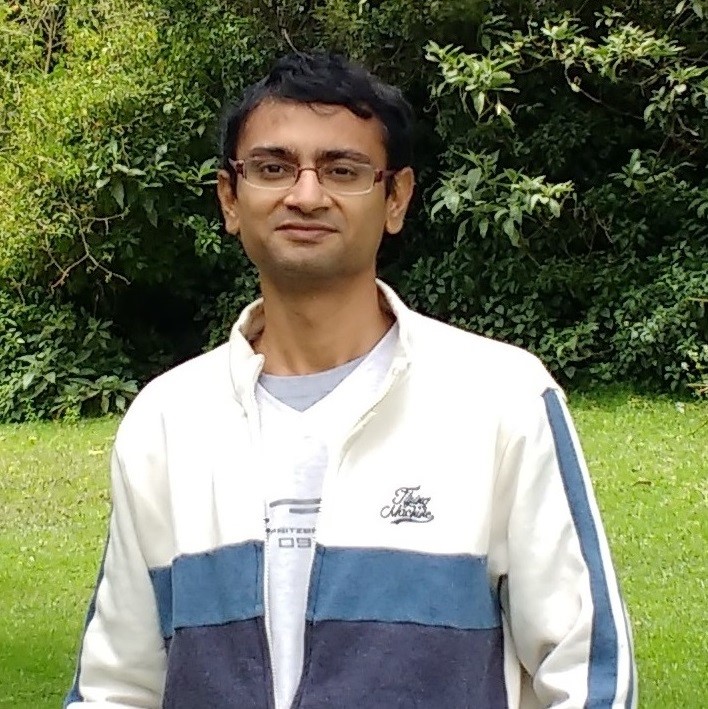
Shivaram Kalyanakrishnan is an Associate Professor at the Department of Computer Science and Engineering , Indian Institute of Technology Bombay , specialising in Artificial Intelligence and Machine Learning . His research spans sequential decision making , multiagent learning , multi-armed bandits , and humanoid robotics , with applications in robot soccer , computer games , and online advertising . He teaches advanced courses like CS 747: Foundations of Intelligent and Learning Agents and CS 748: Advances in Intelligent and Learning Agents , focusing on end-to-end system design and theoretical analysis. His scientific awards include the Best Student Paper Award at RoboCup International Symposium 2006 and nomination for Best Student Paper Award at AAMAS 2007 . His work on reinforcement learning and policy iteration has been published in leading venues such as IJCAI , ICML , and COLT , with recent contributions to railway scheduling and bandit algorithms. While no explicit list of advisees is provided, his research projects and publications suggest mentorship of students in collaborative efforts. Contact : shivaram@cse.iitb.ac.in .
Antony Franklin is an Associate Professor and Head of the Department of Computer Science and Engineering at the Indian Institute of Technology Hyderabad (IITH), India. He leads the Networked Wireless Systems (NeWS) Lab and is actively involved in 5G research, wireless networks, and cybersecurity. He earned his Ph.D. from IIT Madras in 2010. Education: Ph.D. in Computer Science and Engineering, IIT Madras, 2010 Research Interests: His research spans wireless networks , 5G systems , mobile edge computing , low-latency transport protocols , and cybersecurity . He focuses on next-generation mobile systems, especially 5G, aiming to meet the demands of ultra-low latency, high data rates, and quality of experience for services like IoT, autonomous driving, and VR. He has been involved in developing testbeds and prototypes to validate real-world performance of 5G technologies, including network slicing, LTE-WiFi integration, and edge computing. Scientific Awards: Best Academic Demo Award, IEEE COMSNETS 2018 Second Best Paper Award, IEEE ANTS 2017 Grants & Projects: Network Slice Life-cycle Management for 5G Mobile Networks – SPARC, MHRD (2019–2021) DNS/IPv6 for IoT Security – NASSCOM (2018–2019) CCRAN: Energy Efficiency in Cloud RAN – Intel India (2018–2021) End-to-End 5G Test-Bed – DoT, GoI (2018–2021) M2SMART Smart Cities – SATREPS (2018–2023) Ultra-Reliable Low Latency Protocols – STINT, Sweden (2017–2018) Low Latency 5G Protocols – SERB ECR (2016–2019) Lab & Team: He leads the NeWS Lab (Networked Wireless Systems) at IITH, which focuses on 5G, wireless networks, and IoT systems. The lab is actively involved in developing real-world testbeds and publishing in top-tier conferences and journals.
Arpit Agarwal is an Assistant Professor in the Department of Computer Science & Engineering at the Indian Institute of Technology, Bombay. He previously held postdoctoral positions at FAIR Labs (Meta) working with Max Nickel and at the Data Science Institute at Columbia University hosted by Prof. Yash Kanoria and Prof. Tim Roughgarden. He completed his PhD from the Department of Computer & Information Science at the University of Pennsylvania under the guidance of Prof. Shivani Agarwal. His research focuses on the intersection of human behavior and machine learning systems, with particular interest in learning from implicit, strategic, and heterogeneous human feedback. His work spans multiple dimensions of human-AI interaction including understanding long-term dynamics between humans and AI systems, designing responsible AI, and studying misalignment between user preferences and system objectives. His research methodology often combines theoretical machine learning with practical applications in recommendation systems and social AI. His recent publications reveal a strong focus on bandit algorithms, preference learning, and recommendation systems, with increasing attention to responsible AI design and human-centered considerations. His work demonstrates expertise in theoretical machine learning with applications to real-world problems, particularly in understanding how humans interact with and are influenced by AI systems over time. Dr. Agarwal teaches advanced courses including CS767 Theoretical Machine Learning (Autumn 2025) and CS6103 Human-Centered AI: From Learning Models to Responsible Systems (Spring 2025), which covers topics such as AI alignment, learning from pairwise comparisons, crowdsourcing, human-in-the-loop decision making, recommendation systems, interpretability, privacy, fairness, causality, and AI governance.
Dr. Arnab Bhattacharya is a Professor in the Department of Computer Science and Engineering at the Indian Institute of Technology (IIT) Kanpur since December 2020. He previously served as Associate Professor (2014–2020) and Assistant Professor (2007–2014) at IIT Kanpur. Education: PhD in Computer Science (2007), University of California, Santa Barbara MS in Computer Science (2007), University of California, Santa Barbara Bachelor of Computer Science and Engineering (2001), Jadavpur University Research Focus spans Databases , Data Mining , Information Retrieval , and Artificial Intelligence . His work emphasizes graph analytics , skyline queries , probabilistic data , and knowledge graph management . Article Trends reveal expertise in graph neural networks , trajectory-aware systems , statistical significance in databases , and legal/medical data mining . His methodologies often integrate chi-square statistics , approximate indexing , and provenance tracking . Scientific Awards: IBM Faculty Research Award Yahoo! Faculty Research and Engagement Program Award Best Paper at COMAD 2011 Best Student Paper at COMAD 2010 Top-Five Student Paper at ICDM 2005 ICDM Student Travel Award sponsored by IBM Contact: Office RM 409, Department of Computer Science and Engineering, IIT Kanpur Email: arnabb@iitk.ac.in | Phone: +91-512-259-7650
Krishna Jagannathan is a full-time Professor in the Department of Electrical Engineering at the Indian Institute of Technology Madras (IIT Madras), India. He specializes in stochastic modeling, communication networks, information theory, and queuing theory. He obtained his B.Tech from IIT Madras in 2004, followed by S.M. and Ph.D. degrees from MIT in 2006 and 2010, respectively. After post-doctoral positions at Caltech and MIT, he joined IIT Madras in 2011. Education: B.Tech in Electrical Engineering, IIT Madras (2004) S.M. in Electrical Engineering and Computer Science, MIT (2006) Ph.D. in Electrical Engineering and Computer Science, MIT (2010) Research Interests: His research focuses on stochastic modeling and analysis of communication networks , information theory , and queuing theory . He has made significant contributions to understanding network performance, resource allocation, and risk-aware decision-making in complex systems. He leads the Networks and Stochastic Systems lab at IIT Madras, mentoring a large cohort of Ph.D. and M.S. students working on cutting-edge problems in networking, optimization, and stochastic systems. Scientific Awards: Best Paper Award at WiOpt 2013, Tsukuba, Japan Young Faculty Recognition Award for Excellence in Teaching and Research, IIT Madras (2014) Teaching & Mentorship: He has taught a wide range of courses including Probability Foundations , Stochastic Modeling and Queuing Theory , Convex Optimization , and Signals & Systems , consistently receiving high teaching evaluations. He has supervised over 15 Ph.D. and M.S. students to completion and continues to guide several active researchers.
Rajesh Ranjan is an Assistant Professor in the Department of Aerospace Engineering at the Indian Institute of Technology Kanpur. His academic career spans multiple prestigious institutions including Ohio State University and Jawaharlal Nehru Centre for Advanced Scientific Research. Dr. Ranjan completed his PhD (2016) from Jawaharlal Nehru Centre for Advanced Scientific Research, Bengaluru, ME (2007) from Indian Institute of Science, Bengaluru, and BE (2005) from Bihar Institute of Technology, Sindri where he achieved First Rank with Roll of Honor. His educational background laid the foundation for his expertise in fluid dynamics and computational methods. His research focuses on fundamental and applied aspects of fluid dynamics with specialization in turbomachinery flows, applied aerodynamics, stability and flow control, transition and relaminarization phenomena, and high performance computing applications. Dr. Ranjan employs a multidisciplinary approach combining theoretical analysis, advanced computational techniques, and experimental validation to address complex fluid flow problems in aerospace engineering. His work has significant implications for improving efficiency in turbomachinery design and understanding fundamental flow physics in complex geometries. Dr. Ranjan's publication record reveals a strong trajectory in computational fluid dynamics with recent work spanning traditional aerospace applications like turbomachinery and aircraft aerodynamics while also demonstrating adaptability through interdisciplinary research such as his data-driven approach to modeling the COVID-19 pandemic. His publications consistently demonstrate rigorous methodology and innovative approaches to complex fluid flow problems. All India Rank-3, Graduate Aptitude Test in Engineering (GATE), India (2005) Roll of Honor (First Rank), B.E., BIT, Sindri, India (2001-2005) Outstanding Performance Award (thrice), TATA CRL, Pune, India (2008-10) ICAM International Travel Award, Institute for Complex Adaptive Matter (2013) International Travel Support Award, DST, Govt. of India (2014) Best Poster Award, JNCASR In-house Symposium, Bengaluru, India (2015) Dr. Ranjan has mentored multiple students through research projects at IIT Kanpur and previously at Ohio State University. His research has been supported by institutional funds and travel awards from national agencies including the Department of Science and Technology, Government of India. He maintains active collaborations with researchers in India and internationally to advance computational fluid dynamics methodologies and their application to real-world engineering problems.
Naren Naik is a Professor in the Department of Electrical Engineering at the Indian Institute of Technology (IIT) Kanpur, specializing in computational tomographic reconstructions and analysis for subsurface imaging and shape/target tracking. His educational background includes: PhD from the Indian Institute of Science (IISc) Bangalore in 2000 M.E. in Electronics and Communication Engineering from IISc Bangalore in 1992 B.Sc. from Bangalore in 1988 Professor Naik's research focuses on development and analysis of reconstruction algorithms for nonlinear tomography , with particular emphasis on shape-based and dynamic tomography, tracking and battlefield surveillance, and numerical solutions to partial differential equations in electromagnetics. His work spans multiple imaging modalities including subsurface imaging with Ground Penetrating Radar (GPR), fluorescence optics, electrical impedance tomography, and photoacoustic tomography. His research bridges theoretical mathematics with practical applications in electromagnetic imaging and target tracking systems, addressing complex inverse problems in computational imaging. His publication record shows a clear progression from electromagnetic tomography to advanced Kalman filtering techniques for target tracking applications. The most recent works focus on wireless sensor networks and maneuvering target tracking, demonstrating his ability to adapt theoretical frameworks to evolving technological contexts while maintaining mathematical rigor in solving inverse problems. His professional recognition includes: Invited presentation at the special session on advances in model based inversion at the 2011 IEEE AP-S International Symposium on Antennas and Propagation Professor Naik maintains an active research program with consistent publication output in high-impact journals and conferences. His work demonstrates strong interdisciplinary collaboration, particularly with researchers in electromagnetics, signal processing, and imaging sciences. His research has significant applications in defense technology (battlefield surveillance), medical imaging, and subsurface exploration systems, contributing to both theoretical advances and practical implementations in these fields. He is based in Office 303A ACES (Advanced Centre for Electronic Systems) at the Department of Electrical Engineering, IIT Kanpur, where he leads research activities in computational imaging and tomographic reconstruction.
Dr. Shatarupa Thakurta Roy is an Associate Professor in the Department of Humanities and Social Sciences at the Indian Institute of Technology Kanpur (IIT Kanpur). She teaches courses in Art Appreciation, Design Theory, Visual Communication, and History of Art, and collaborates with IIT Kanpur's Design Programme. She holds a Ph.D. in Design from IIT Guwahati (2014), an M.F.A. (1999), and a B.F.A. (1997) from Kala Bhavana, Visva Bharati Santiniketan. Her research explores Visual Culture , Indian Folk and Minor Art , Graphic Design , and Design Theory , with fieldwork focusing on narrative folk paintings across Eastern India. She emphasizes cultural sustainability, visual storytelling, and interdisciplinary design methodologies. Her publications (2011–2022) span art theory, data visualization, HCI, and cultural preservation, reflecting trends in cross-disciplinary innovation , social impact design , and digital heritage conservation . She frequently integrates cognitive psychology, new materialism, and postcolonial perspectives. Awards & Honors: Best Paper Award, NaCoMM 2011 National Scholarship Scheme, Government of India (1997–1998) Mentorship Award for 'Toycathon 2021' (designing educational board game 'CheMystery') Advising & Grants: She has supervised 15+ Ph.D. and 35+ M.Des. theses. Funded projects include an MHRD grant (2016) for assistive interfaces for dyslexic children and a Doordarshan collaboration (2022) on sustainable farming documentaries. Administration: She has served as Warden, DPGC Convener, and lab in-charge at IIT Kanpur. She also edits academic journals and chairs conferences on art and design.
R.K. Shyamasundar is a Professor at the Indian Institute of Technology Bombay , with a focus on Real-Time and Reactive Programming, Logic Programming, Pi-Calculus, and Parallel Programs. Research spans formal verification, concurrency, and distributed systems. Key contributions include RT-CDL semantics, Esterel language extensions, and hybrid system controller synthesis. Scientific awards include JC Bose National Fellow, Fellowships at Indian Academy of Sciences and Indian National Science Academy, and Senior Membership in IEEE. His work involves collaborations with institutions like TCS Group and researchers such as Basant Rajan, N. Raja, and Deepak Kapur.
Rameshwar Pratap is an Associate Professor in the Department of Computer Science and Engineering at the Indian Institute of Technology Hyderabad (IIT Hyderabad). Previously, he served as an Assistant Professor at the School of Computing and Electrical Engineering, IIT Mandi for three years. Education: Ph.D. in Theoretical Computer Science, Chennai Mathematical Institute Research Interests: His research lies at the intersection of theory and practice, focusing on extremely simple yet practical approximation algorithms with provable guarantees . Key themes include: Sketching and dimensionality reduction algorithms for tensors and similarity measures Improving speed, scalability, and accuracy of existing sketching methods Applications in machine learning: node embedding in large-scale networks, itemset mining, model compression He extensively employs techniques from matrix and tensor algebra, sampling, random projection, and randomized hashing . Publications Overview: Across 2021–2025 his work has appeared in top venues such as IEEE Globecom, Theoretical Computer Science, Acta Informatica, Information Processing Letters, Algorithmica, UAI, ICALP, Machine Learning, TKDE, and ACML. Recurring themes are randomized sketching, locality-sensitive hashing, compressed matrix multiplication, variance reduction, and subspace approximation , demonstrating both theoretical depth and practical impact. Awards & Honors: Early Career Research Grant (PM-ECRG) 2025, Anusandhan National Research Foundation (ANRF) Best Paper Award, COCOON 2020 Students & Funding: First Ph.D. student: Bhisham Dev Verma (co-advised with Prof. Manoj Thakur) graduated June 2025 MS by Research student: Punit Pankaj Dubey graduated October 2022 Currently hiring 1 Junior Research Fellow for the PM-ECRG project “Improving Similarity Search in Practice” Labs & Teams: Works within the Algorithms & Theory group at IIT Hyderabad, collaborating with national and international researchers. Erdös number is 3.
Anirban Chakraborti is a Professor at the School of Computational and Integrative Sciences, Jawaharlal Nehru University (JNU), New Delhi, India, where he has been a faculty member since 2014. He previously held academic positions at École Centrale Paris (France) as Chercheur Senior (Associate Professor) and Chargé de Recherche (Assistant Professor), and earlier roles at Banaras Hindu University, Brookhaven National Laboratory (USA), and Helsinki University of Technology (Finland). He is a leading figure in the interdisciplinary field of econophysics and complex systems. Education: Diplôme d’Habilitation à Diriger des Recherches (2013), Université Pierre et Marie Curie – Paris VI, France (Physics) Ph.D. in Physics (2003), Saha Institute of Nuclear Physics, Jadavpur University, India Post-M.Sc. in Physics (1999), Saha Institute of Nuclear Physics, Jadavpur University, India (Ranked First) M.Sc. in Physics (1998), University of Calcutta, India (Ranked First) B.Sc. in Physics (1996), Scottish Church College, University of Calcutta, India His research interests lie at the intersection of physics, economics, and data science. He is particularly known for pioneering work in econophysics , including the statistical mechanics of money, wealth distribution, agent-based market models, and network-based analysis of financial and social systems. He also works on complex systems , computational finance , statistical physics , and nanosciences , with applications in sensing and imaging. His work often involves modeling socio-economic phenomena using tools from statistical physics. His recent publications span topics such as financial fluctuations, wealth inequality, network analysis of conflicts, order book dynamics, and nanomaterial characterization. These works reflect a strong trend toward interdisciplinary research combining physics, economics, and data analytics, with a focus on real-world applications in finance, inequality, and social systems. Scientific Awards: Indian National Science Academy Young Scientist Medal (2009) He has advised Ph.D. students such as Kiran Sharma and leads the ETC (Experimental-Theoretical-Computational) Lab at JNU, which brings together physicists, computer scientists, and mathematicians. The lab has been involved in international collaborations, including projects funded by the Estonian Ministry of Education and Research and consultancies with TCS Innovation Labs and DONO Consulting. His research has been supported through grants and collaborative projects, reflecting strong industry and global academic engagement.
Dr. P.M. Mohite is a Professor at the Department of Aerospace Engineering , Indian Institute of Technology Kanpur , with a career spanning over two decades in composite materials research. He holds a PhD in Aerospace Engineering from IIT Kanpur (2007) and has been a Visiting Assistant Professor (2008-2009) and later Assistant , Associate , and Professor (2019-present) at IIT Kanpur. Research Interests include: Advanced composite structures analysis Micromechanics and damage modeling Finite element adaptive methods Metal plasticity and polymer composites Aerostructural optimization Key Publications focus on damage mechanics, structural optimization, and micromechanical characterization, with recent works on evolutionary algorithm-based composite design and boundary layer effects in laminates. Scientific Awards received: Best Student Award (B.E. Mechanical, 1998) AIAA Students Paper Contest Finalist (2006) Teaching Contributions include core courses like Composite Materials and Finite Element Methods , alongside advanced postgraduate topics in aerospace structural analysis. Advising has impacted 30+ M.Tech/Ph.D. students, including international collaborations with Université de Biskra (Algeria) and Ecole Centrale de Nantes (France).
Laxmidhar Behera is a Professor in the Department of Electrical Engineering at the Indian Institute of Technology Kanpur, specializing in Intelligent Systems and Control. With over two decades of academic experience at IIT Kanpur and international research experience at institutions including Fraunhofer Institute of Autonomous Intelligent Systems in Germany, ETH Zurich, and University of Ulster, he has established himself as a leading researcher in cognitive robotics and intelligent control systems. Dr. Behera's research spans multiple cutting-edge domains including Cognitive Robotics, Nano-robotics, Vision based Control, Soft Computing, Information Retrieval in music and language, Semantic Information Processing, Physics of Complex Systems, Cyber Physical Systems, Formation Control of UAVs, Brain-Computer Interface (BCI), and Sanskrit Computational Linguistics. His interdisciplinary approach bridges traditional control theory with modern computational intelligence techniques, creating innovative solutions for complex real-world problems. His extensive publication record in top-tier journals like IEEE Transactions demonstrates his leadership in areas such as brain-computer interfaces, visual servoing, multi-robot systems, and music information retrieval. Notably, his work on quantum neural networks for EEG filtering and multisatellite formation control has received significant attention in the research community. UKIERI Standard Research Award 2008 Best Paper at International Conf. on Intelligent Sensors and Information Processing (ICISIP-2004) Best Paper at WoSco,02, Int. Conf. High-Performance Computing (HiPC, 2002) AICTE career award for young teacher (1997) Senior Member IEEE Multiple IEEE top accessed articles (2009-2010) As an Associate Editor for Autosoft Journal and Technical Committee Member for Intelligent Control at IEEE Control System Society, Dr. Behera actively contributes to the academic community. His laboratory in the Western Lab - 212A of the Department of Electrical Engineering serves as a hub for research in intelligent systems, where he mentors students and collaborates with researchers worldwide on cutting-edge projects in robotics, control systems, and computational intelligence.
Mathukumalli Vidyasagar is a Distinguished Professor at the Indian Institute of Technology Hyderabad and previously held the SERB National Science Chair and Cecil & Ida Green Chair in Systems Biology Science at the University of Texas at Dallas. He earned his Ph.D. from the University of Wisconsin, Madison, and has authored 13 books and over 160 peer-reviewed papers.
Dr. N.R. Aravind is an Associate Professor in the Department of Computer Science and Engineering at the Indian Institute of Technology Hyderabad. Holding a Ph.D. in Theoretical Computer Science from The Institute of Mathematical Sciences, Chennai, he is affiliated with the College of Engineering. His research spans algorithms, graph theory, combinatorics, and determinantal complexity, with a focus on parameterized algorithms and approximation techniques for NP-hard problems. Education: Ph.D., The Institute of Mathematical Sciences, Chennai (Advisor: Prof. C.R. Subramanian) Postdoctoral research under Prof. Sundar Vishwanathan at IIT Bombay Aravind's research explores structural questions in graph theory, social network modeling, and complexity bounds. His work on parameterized algorithms addresses tractable instances via input parameters, while his studies in graph coloring and forbidden subgraphs contribute to theoretical understanding. Recent publications focus on matching cut problems, happy coloring, and determinantal complexity. His 15 most recent publications (2010-2024) span computational complexity, graph algorithms, coloring problems, and determinantal complexity. These works emphasize parameterized approaches, structural graph theory, and algorithmic bounds for intractable problems. Scientific Awards: Aravind has mentored numerous PhD and MTech students, including Roopam Saxena, Anjeneya Swami Kare, and R.B. Sandeep, now holding academic positions at prestigious institutions. He has taught courses like Algorithms, Probability in Computing, and Cryptology, often collaborating with co-instructors such as Dr. Rakesh Venkat. His office is located in Room CS-408, Indian Institute of Technology Hyderabad.