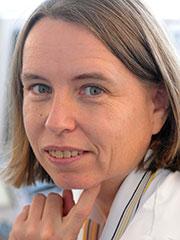
Nikolaus Hautsch is a full Professor at the Faculty of Economics, Institute of Statistics and Operations Research. His work focuses on econometrics, finance, and high-frequency data analysis. Research Interests : Market microstructure, volatility modeling, transaction costs, systemic risk, and machine learning applications in finance. Publication Trends (2025–2018): 2025: High-dimensional portfolio optimization, dynamic systemic risk 2024: Blockchain asset arbitrage, DeFi, polarization metrics, jump detection 2023–2022: Microstructural noise, volatility forecasting, neural networks Scientific Awards : Fellow of the Society for Financial Econometrics (2014) Projects : Artificial Intelligence in Rowing (2022–2025) Vienna Graduate School of Finance (2018–2022) Risk management of CCPs
Dr. Andreas Zöttl is a physicist affiliated with the University of Vienna , currently serving as an Assistant Professor in the Computational and Soft Matter Physics department. His research focuses on computational modeling of active matter, microswimmers, and polymer dynamics, with applications in biophysics and soft materials. He teaches courses such as Computational Statistical Mechanics and Biological Physics , emphasizing theoretical and computational methods. His recent work explores reinforcement learning in microswimmer locomotion, chiral particle dynamics, and polymer behavior under shear flow. Research keywords include Machine Learning , Fluid Dynamics , and Soft Matter Physics . Themes span hydrodynamic interactions , active colloids , mesoscale simulations , and non-equilibrium systems . Contact: andreas.zoettl@univie.ac.at
Univ.-Prof. Karl Crailsheim is a Professor at the University of Graz, affiliated with the Institute of Zoology within the Faculty of Natural Sciences. His research focuses on honeybee behavior, physiology, and health, particularly investigating the honeybee superorganism and threats to their colonies. He explores swarm systems, robotics, and swarm intelligence, with recent emphasis on colony losses and environmental threats. His work bridges biology and robotics, applying insights from honeybee behavior to algorithm design. Research interests include honeybee nutrition, immune responses, pathogen impacts, and the application of citizen science in ecological studies. Key projects involve tracking honeybee behavior, analyzing pollen diversity, and developing robotic systems inspired by swarm dynamics. Collaborative efforts with citizen scientists enhance ecological data collection. Publications highlight advancements in understanding bee health, pesticide effects, and swarm robotics. His interdisciplinary approach addresses both biological and technological challenges in apiculture and robotics.
Martin Holler is a Professor at the Institute of Mathematics and Scientific Computing at the University of Graz, Austria, where he leads the research group Applied Mathematics and Machine Learning . His work bridges theoretical mathematics with practical applications in imaging and machine learning. Research Focus: His primary research areas include the mathematics of data science, variational methods in imaging, dynamic and multi-modality inverse problems, and biomedical imaging. He has made significant contributions to model-based regularization techniques, particularly with Total Generalized Variation (TGV) approaches for image and video reconstruction. Publication Trends: Over the past decade, Holler's research has evolved from traditional variational methods for image reconstruction toward increasingly sophisticated machine learning approaches. His recent work (2021-2023) focuses on integrating deep learning with variational methods, particularly for motion separation in medical imaging and learning-informed parameter identification in partial differential equations. His publications demonstrate a consistent thread of applying rigorous mathematical frameworks to solve practical problems in medical imaging and computer vision. Mathematics of data science and machine learning Generative models in machine learning Variational methods in imaging Dynamic and multi-modality inverse problems Model-based regularization Biomedical imaging Image and video decompression Technical Leadership: Holler has developed several open-source software packages implementing advanced reconstruction algorithms, particularly for multi-modal imaging problems. His GitHub repositories show active maintenance and development of these tools, which have been cited in the medical imaging community.
Prof. Tina Wakolbinger is a Professor at Vienna University of Economics and Business (WU) , where she serves as Deputy Head of the Institute for Transport Economics and Logistics and Head of the Supply Chain Management Research Institute. She also chairs the Senate and has led numerous research projects in supply chain management, humanitarian logistics, and the circular economy. PhD in Business Administration, Isenberg School of Management, UMASS Amherst (2007) Mag. in International Economics, University of Innsbruck (2002) Her research focuses on Supply Chain Management , with an emphasis on Humanitarian Logistics and the Circular Economy . She investigates how operational settings and disaster characteristics affect supply chain resilience, explores sustainable urban mobility solutions like electric scooters, and develops frameworks for resource allocation in disaster relief. She has published extensively on topics including disaster preparedness, outsourcing in humanitarian logistics, and the impact of digitalization on sustainable supply chains. Recent publications highlight trends in 2025 with strategic dependencies in supply chains, 2023 contributions to circular economy models and humanitarian logistics assessments, and 2022 analyses of pandemic-era supply chain disruptions. Earlier work includes studies on sustainable freight transport, e-waste management, and risk-sharing contracts. Scientific Awards Literati Award 2020 (Journal of Humanitarian Logistics) WU Cooperation Officer of the Year 2018 Talent promotion bonus of Upper Austria 2011 Best Paper Award 2008 (Fogelman College of Business) Graduate School Fellowship 2006 (UMASS Amherst) She has been involved in external positions such as Member of the Post Control Commission (2022–2027) and advisory roles for Caritas Österreich and Finland’s Strategic Research Council. Current projects include developing circular business models for timber supply chains and optimizing e-scooter fleet management in Vienna.
Xiaotie Deng is a distinguished academic and Chair Professor at Peking University (since 2018), with prior roles at Shanghai Jiao Tong University (2013–2017), the University of Liverpool (2010–2013), and City University of Hong Kong (1997–2013). His research focuses on algorithmic game theory, internet economics, and parallel computing. He holds prestigious fellowships including ACM Fellow (2008) and IEEE Fellow (2019). Deng has led significant grants, including a RMB 5M project on algorithmic game theory at Peking University (2018–2020) and NNSFC-funded research on market competitiveness and fairness (2018–2020). Education: PhD in Computer Science from Stanford University (1989), MSc from Chinese Academy of Sciences (1984), BSc from Tsinghua University (1982). Research interests span computational game theory, equilibrium analysis, and blockchain applications. Notable contributions include foundational work on Nash equilibrium complexity and mechanism design for resource allocation. He has advised numerous PhD students and serves on editorial boards of top journals like SIAM Journal on Computing and IEEE Transactions on Cloud Computing. Key awards: ACM and IEEE Fellowships, JSPS Invitation Fellowships (2005, 1996), and NSERC International Fellowship (1991). Active in conference organizing, including PC chairs for WINE 2020 and SAGT 2018. Consultancy includes work with Cryptape, Ant Financial, and Microsoft Research Asia, reflecting his industry engagement in algorithmic solutions and blockchain technologies.
Associate Professor at the University of Klagenfurt , affiliated with the Department of Management Control and Strategic Management under the Faculty of Economics and Law . Research focuses on agent-based modeling applied to organizational dynamics , complex systems , and managerial economics . Holds a doctoral degree in Social Sciences and Economics (2012) and venia docendi in Business Economics (2018) . Core faculty member in the Self-Organizing Systems research cluster Academic editor for PLoS ONE and editorial board member for multiple journals Recipient of the 2021 Advancement Award (Humanities/Social Sciences) from Carinthian government Research integrates computational simulation with organizational theory , examining phenomena like decentralized task allocation , incentive mechanisms , and reproducibility in social sciences . Teaching portfolio includes business analytics , management control , and scientific modeling at undergraduate and graduate levels. Recent publications explore organizational resilience , team coordination dynamics , and financial modeling using agent-based simulation techniques. Active participant in international conferences like Social Simulation Conference and European Conference on Operational Research .
Bernhard Aichernig is an Associate Professor at the Institute of Software Engineering and Artificial Intelligence. His work bridges formal methods, model-based testing, and artificial intelligence, with a focus on automata learning, digital twins, and AI-assisted programming. Institution: Institute of Software Engineering and Artificial Intelligence Key Research Areas: Model-Based Testing, Automata Learning, AI-Driven Verification His research explores the integration of machine learning into formal verification, enabling scalable testing of complex systems like IoT devices and reinforcement learning agents. Recent projects include AI-Augmented DevOps frameworks (AIDOaRT) and digital twin validation (LearnTwins). Notable scientific awards include multiple best paper recognitions at SEFM (2020, 2021) and the TAYSIR Competition first place (2023). His publications emphasize hybrid approaches combining genetic programming, SMT solving, and neural networks for system modeling. 2025 : AI-assisted programming, timed automata via domain knowledge 2024 : Stochastic environment modeling, Git system learning 2023 : Reinforcement learning under partial observability, digital twins for VPN servers He actively contributes to testing frameworks like AALpy and investigates explainable AI for fault diagnosis in cyber-physical systems.
Martin Ringbauer is an Associate Professor at the Department of Experimental Physics , University of Innsbruck . His research focuses on advancing quantum computing and quantum simulation through innovative applications of trapped ion qudits and high-dimensional quantum systems . Affiliation: Department of Experimental Physics, University of Innsbruck Research Areas: Lattice gauge theories, symmetry-protected topological phases, quantum verification protocols, and fidelity estimation Key Contributions: Development of qudit-based quantum processors for simulating complex physics, experimental demonstrations of quantum error correction and joint measurements His recent publications highlight advancements in quantum simulation (lattice gauge theories, Haldane phases), quantum verification (fidelity estimation, classical validation), and qudit engineering (mixed-dimensional frameworks, entanglement optimization). These works leverage trapped ion technology as a platform for scalable and precise quantum operations.
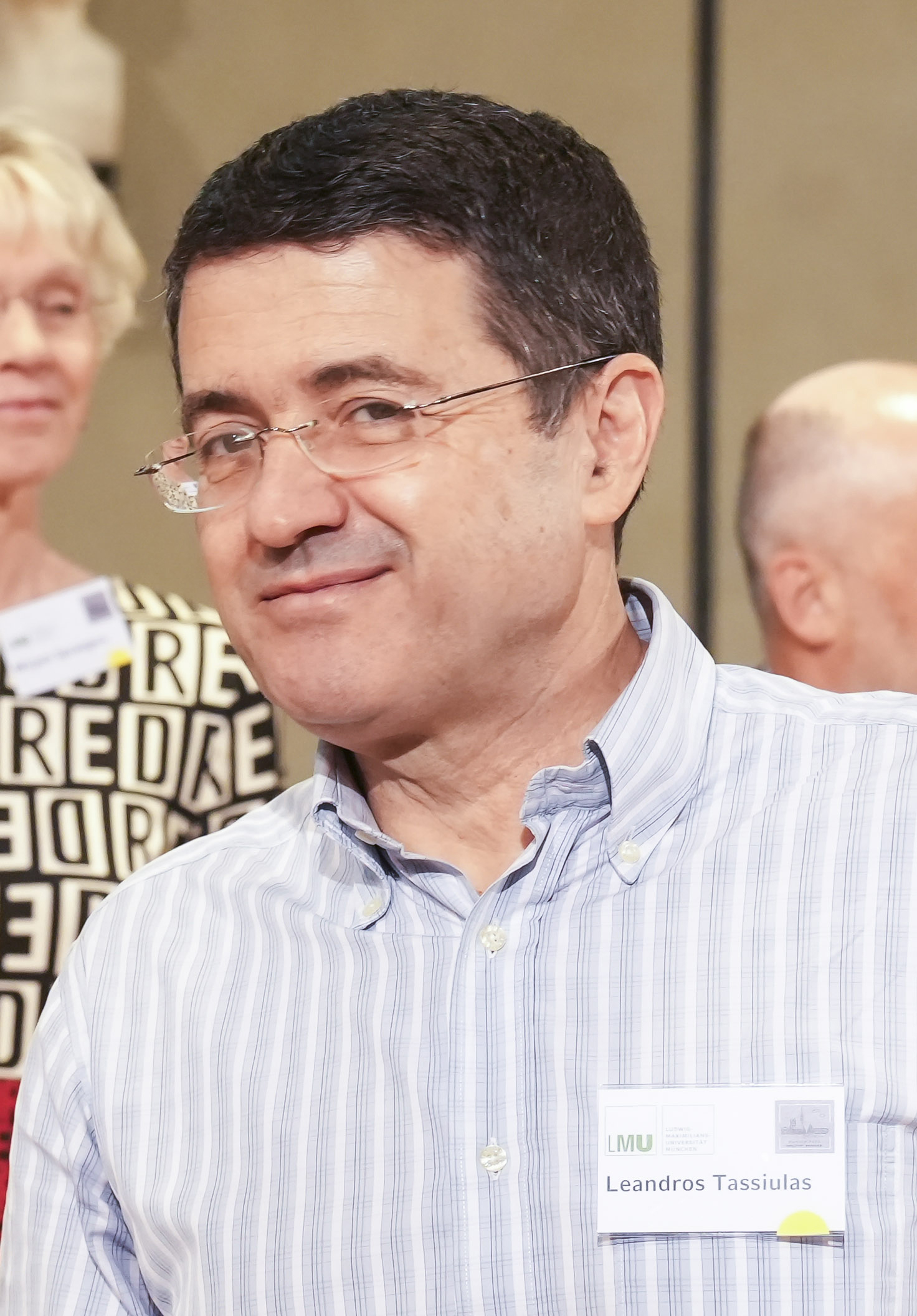
Leandros Tassiulas is the John C. Malone Professor of Electrical Engineering at Yale University, with additional appointments in Computer Science. His career spans faculty positions at the University of Thessaly, University of Maryland, University of Ioannina, and Polytechnic University. A Fellow of both IEEE (2007) and ACM (2020), he is renowned for contributions to network control theory, including the max-weight scheduling algorithm and back-pressure network policy. PhD in Electrical Engineering (1991) from the University of Maryland, College Park His research focuses on computer and communication networks , emphasizing mathematical models for complex networks , wireless system architectures , stochastic systems , and energy-efficient network design . Recent work explores quantum networking (Pant et al., 2019) and federated learning in edge environments (Jiang et al., 2022). Key publication trends include stability analysis (earlier works), mobile edge computing (2019), software-defined networking (2021), and smart grid optimization (2012-2013). The list includes monographs on network theory and patents for distributed bandwidth allocation (2011) and directional antenna protocols (2002). Scientific Awards ACM Fellow (2020) for network control contributions IEEE Koji Kobayashi Award (2016) for scheduling/stability analysis IEEE INFOCOM Achievement Award (2007) for resource allocation Bodossaki Foundation Prize (1999) for distributed systems NSF CAREER, ONR Young Investigator, and multiple best paper awards His work has been funded by the NSF, ONR, and IBM. Current projects bridge AI , quantum communication , and next-generation network architectures .
Nadine Akkerman is an Associate Professor at Leiden University's LUCAS (Leiden University Centre for the Arts in Society), specializing in Early Modern English Literature. She is Principal Investigator of the ERC Consolidator Grant project FEATHERS, which investigates collaborative authorship in early modern legal and literary texts. Her academic career spans roles at VU Amsterdam, Radboud University Nijmegen, and visiting fellowships at Queen Mary London, All Souls College Oxford, and NIAS. PhD in English Literature (cum laude) from VU Amsterdam (2008) Junior Lecturer at VU Amsterdam (0.8 FTE, 2002-2006) Junior Lecturer at Radboud University (0.3 FTE, 2006-2007) Her research focuses on epistolary culture, women's history, and intelligence studies. She pioneered the study of female spies in 17th-century Britain through her monograph Invisible Agents , and authored the authoritative biography Elizabeth Stuart, Queen of Hearts . Her work integrates manuscript studies, diplomatic history, and digital humanities, including a groundbreaking Nature Communications paper on virtual document unfolding. Recent publications include the projected The Correspondence of Elizabeth Stuart (3 vols, Oxford University Press) and co-authoring a Yale University Press trade book on early modern spycraft (2024). Her research has transformed understanding of women's roles in espionage and court politics, with methodological innovations in archival science. ERC Consolidator Grant (€2M, 2020) Ammodo Science Award (€300,000, 2019) World Cultural Council Special Recognition Award (2017) Aspasia NWO Premium (2016) Akkerman actively communicates her research to the public through TV/radio appearances and curated exhibitions. She leads the FEATHERS project (2020-2025), funded by the ERC, which examines authorship mediation in early modern texts. Her work combines rigorous archival analysis with interdisciplinary approaches, bridging history, literature, and digital methodologies.
Associate Professor Vera Hemmelmayr is affiliated with the Institute of Transport Economics and Logistics at the Vienna University of Economics and Business . Her research spans Operations Research , Logistics , Supply Chain Management , and Circular Economy , with a focus on vehicle routing , city logistics , and metaheuristics . She has led major projects like CREATE_AT (circular timber supply chains) and Sustainable Urban Deliveries . Research trends in her recent work include real-time optimization algorithms for railway disruptions, sustainable urban freight solutions , and integrated railcar fleet management . Her publications often bridge transport policy with computational methods , emphasizing green supply chains and smart city logistics . 2025: Preis für innovative Lehre 2017: Best Application Paper Honorable Mentions (IIE Transactions) 2012: Dr.-Maria-Schaumayer-Habilitationsstipendium 2012: WU Visiting Fellow 2005: Prämierung ausgezeichneter Diplomarbeiten She has supervised research projects on topics including two-echelon delivery systems , railway disruption management , and digital transformation in logistics, while contributing to policy frameworks for circular economy in transportation.
Andreas Rauber is an Associate Professor in the Department of Data Science at Technical University of Vienna. He serves as Curriculum Coordinator for Bachelor and Master programs in Business Informatics and Data Science, and chairs the Curriculum Commission for Business Informatics. His research focuses on Information Systems Engineering, Logic and Computation, and Visual Computing, addressing challenges in data management, digital preservation, and reproducibility in e-science. He leads projects like OS Trails and FAIR-AI, emphasizing FAIR principles and trustworthy research infrastructures. Rauber has contributed to over 150 publications, including works on data citation frameworks, adversarial ML defenses, and reproducibility in IR. His work bridges technical innovation with policy, exemplified through roles in the EOSC Support Office Austria and RDA Austria initiatives. Key projects include establishing FAIR data practices across universities and advancing digital preservation through repositories like DBRepo. He coordinates international collaborations, such as the EU-funded EOSC-Life and EGI Advanced Computing projects. His teaching spans courses in machine learning, information retrieval, and research methods, fostering next-generation data scientists.
Hojjat Adeli is an Academy Professor at The Ohio State University (OSU) with courtesy appointments in the Departments of Neurology, Neuroscience, and Biomedical Informatics. He has held the Abba G. Lichtenstein Professorship in Infrastructure Engineering (2003-2013) and served as Editor-in-Chief of Computer-Aided Civil and Infrastructure Engineering for 25 years. Academy Professor, OSU (2018–present) Professor of Neurology, Neuroscience, and Biomedical Informatics (by courtesy, since 2015-2002) His research interests span interdisciplinary domains at the intersection of engineering and neuroscience, focusing on: Computational neuroscience and neurocomputing Biomedical signal processing (particularly EEG-based diagnostics) Machine learning and computational intelligence applications Smart infrastructure systems and structural engineering Optimization algorithms in civil and biomedical contexts His research trends demonstrate a synergy between: Neural network development for medical diagnostics Wavelet and chaos theory in epilepsy detection Computational intelligence for structural engineering Hybrid models integrating fuzzy logic and genetic algorithms Scientific awards and honors include: Multiple IEEE Fellowships and AAAS Fellow Thomson Reuters Highly Cited Researcher in Engineering and Computer Science Hojjat Adeli Awards for Neural Systems and Innovation in Computing Elections to international academies in Poland, Lithuania, and Spain Scott Award for Engineering Education and Distinguished Member ASCE
Anja Feldmann is Director at the Max Planck Institute for Informatics in Saarbrücken and Professor of Internet Network Architectures at Technische Universität Berlin (since 2006). Previously she held a full professorship at Technische Universität München (2002–2006) and conducted research at AT&T Labs Research , Saarland University , and Carnegie Mellon University , where she earned her Ph.D. in 1995. Education Ph.D. in Computer Science, Carnegie Mellon University, 1995 M.Sc. in Computer Science, Carnegie Mellon University, 1991 Diplom in Computer Science, Universität Paderborn, 1990 Research Interests Anja Feldmann’s research centers on measurement-driven understanding of the Internet. She tackles challenges such as software-defined networking , cloud-network interactions , performance debugging , and traffic characterization . A growing focus is the privacy and security of networked systems, evidenced by recent studies on online tracking, DNS security, and disinformation ecosystems. Her group designs scalable measurement platforms that combine passive and active monitoring , programmable data planes , and machine-learning analytics to dissect phenomena ranging from terabit-scale traffic to covert tracking on illegal streaming sites. Recent Publication Themes The 2021-2025 publications reveal a methodological evolution toward large-scale, longitudinal measurement . Topics include: Impact of global events (COVID-19, CrowdStrike outage) on Internet traffic Cross-country tracking ecosystems and privacy leaks DNS root and routing plane stability and security ML-driven real-time monitoring at terabit speeds Disinformation campaigns on encrypted messaging platforms Scientific Awards Gottfried Wilhelm Leibniz Prize (2011) – Germany’s highest research honor Berliner Wissenschaftspreis (2011) Elected Member of the German National Academy of Sciences Leopoldina (2009) Advising & Grants While individual student names are not listed, Prof. Feldmann leads a vibrant team at MPI-INF’s Internet Architecture department. She has supervised numerous doctoral candidates and post-doctoral researchers whose work is reflected in the co-authored papers. Funding sources include the German Research Foundation (DFG) via the Leibniz Prize and EU Horizon projects, although explicit grant numbers are not provided in the source material. Labs & Teams She heads the Internet Architecture department at MPI-INF, located at the Saarland Informatics Campus . The department operates state-of-the-art measurement infrastructure—including programmable switches, honeynets, and global vantage points—to support empirical network science.