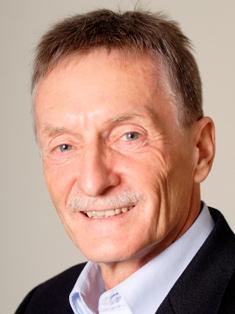
Peter WalschburgerView profile
Professor
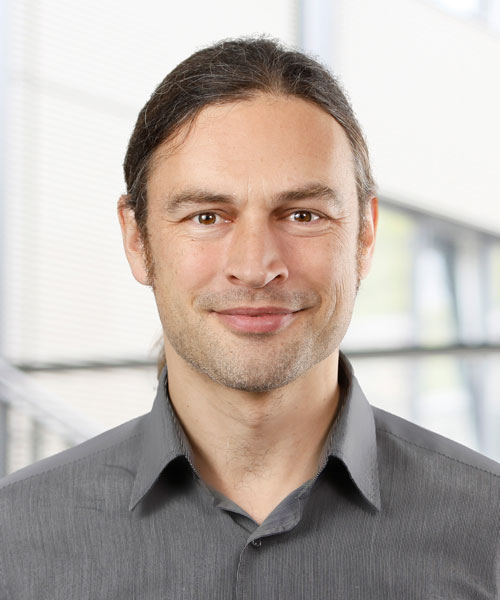
Peter Walschburger is a Professor in the Department of Biopsychology at the Free University of Berlin's Department of Education and Psychology. He has held this position since 1983, following his Habilitation in Psychology from Giessen in 1982. His academic career spans over four decades with continuous contributions to psychophysiological research. His educational background includes a Dr. phil. from Freiburg (1976) with a dissertation on 'On the description of activation processes - A methodological study on psychophysiological diagnostics' and a Dipl.-Psych. also from Freiburg (1973). His Venia Legendi covers Psychology with examination subjects in Biopsychology, Cognitive Psychology and Psychophysiology, and Health Psychology with a Biopsychological Orientation. Walschburger's research focuses on development of psychophysiological methods , analysis of reaction patterns , and experimental studies on activation, emotion, and stress theory . His work spans from basic theoretical concepts to practical applications in clinical and sports settings. He explores the biopsychology of health, examining differences between healthy and pathogenic environmental relationships, and develops diagnostic procedures for assessing the personal significance of cognitions and information. His biopsychologically oriented anthropology investigates humans as natural and cultural beings, considering cognitive, emotional, and motivational aspects of human action. An analysis of his recent publications reveals a consistent methodological approach using electrodermal activity as a primary measure to understand attentional processes across diverse contexts. His work examines how physiological responses correlate with psychological processes in areas including sleep deprivation, aesthetic judgment, social decision-making, and product evaluation. The research demonstrates sophisticated integration of physiological measurement with cognitive and emotional theory. Professor Walschburger maintains an active teaching role at the university, with consultation hours available by appointment. His office is located at Habel Schwertter Allee 45 in Berlin, and he has presented popular scientific content on topics including 'The dual nature of man: nature and culture - body and soul - mind and brain' and 'Healthy and harmful human-environment relationships'.