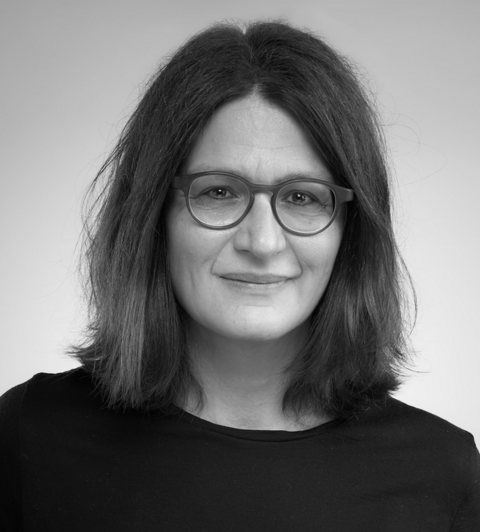
Timo Berse is a Professor of Psychology, Training of Social Competencies, and Professional Role Reflection at the University of Applied Sciences for Police and Public Administration North Rhine-Westphalia . His research focuses on the interplay between physical activity and cognitive performance , student satisfaction in dual study programs , and diversity management in police training . He is affiliated with the Studienerfolg research group and has collaborated with the BDP Sektion Aus-, Fort- und Weiterbildung in Psychologie on educator training workshops. Research Interests include: Executive function enhancement through physical exercise Psychotherapy education and anxiety intervention Diversity in police recruitment and training Student success metrics in public administration education Publications reveal a consistent focus on: Physical activity's impact on neurocognitive development in adolescents Longitudinal studies on dual-degree program outcomes Workshop-based interventions for psychology educators Personality trait interactions with exercise-based cognition improvements
Roland Neumann is Professor of General Psychology (Cognition, Emotion, Action Regulation) at the University of Trier, where he also heads the Department of General Psychology. He previously served as Professor of Social Psychology at TU Dortmund University (2004–2009) and held research assistant positions at the University of Trier (1992–1997) and the University of Würzburg (1997–2004). His research focuses on the interplay between emotion, cognition, and behavior. Key areas include emotional contagion, approach-avoidance behavior, facial feedback, stereotype threat, and dual-process models of affective processing. He has led multiple DFG-funded projects exploring the bidirectional relationship between affect and behavior, emotion regulation, and reflective-impulsive processes. Analysis of his recent publications (2011–2017) reveals a strong emphasis on the cognitive and motor mechanisms underlying emotional expression and regulation. His work integrates experimental psychology, neuroscience, and social cognition, often using paradigms such as priming, compatibility tasks, and virtual environments. Themes include facial mimicry, test anxiety modulation, and the distinction between manual and facial action control. Roland Neumann has not been mentioned as receiving specific scientific awards in the provided text. He supervises academic activities such as Bachelor's and Master's colloquia, indicating an advisory role, though no named students are listed. He has secured multiple DFG grants, including projects on motor influences on evaluation (1998–2000), bidirectional affect-behavior links (2001–2005), and subprojects within the DFG research group 'Emotion and Behavior: Reflective and Impulsive Processes' (2006–2012). He leads the research team on General Psychology: Cognition, Emotion, Action Regulation at the University of Trier, which appears to focus on experimental and cognitive-affective neuroscience approaches. The team investigates both automatic and controlled processes in emotion and behavior.
Christian Heidorn is a Researcher at the Chair of Computer Science 12 (Hardware-Software Co-Design) within the Department of Computer Science at Friedrich-Alexander University Erlangen-Nürnberg (FAU), Germany. He has held this position since 2018 and teaches "Fundamentals of Computer Engineering" regularly across multiple semesters. His educational background includes an M.Sc. in Medical Engineering (2015-2018) and a B.Sc. in Medical Engineering (2012-2016), both from FAU. Born in 1989 in Dachau, Germany, he maintains an office in Room 02.128 at Cauerstr. 11, Erlangen. Dr. Heidorn's research focuses on the Application of Deep Learning on Tightly Coupled Processor Arrays and Invasive Computing . His work bridges medical engineering with computer architecture, particularly emphasizing neural network deployment on specialized hardware. His research projects include OpTC and KISS Invasive Computing, which optimize neural networks for embedded systems and processor arrays. His recent publications demonstrate a strong trend toward efficient neural network deployment on embedded systems, with emphasis on automotive applications (AURIX microcontrollers), hardware-aware neural network pruning, and processor array optimization. His work spans both theoretical neural architecture search and practical implementations for real-world applications. His notable scientific contributions include: Development of the OpTC toolchain for neural network deployment on automotive microcontrollers Hardware-aware evolutionary filter pruning techniques for CNNs ALPACA: An accelerator chip design for nested loop programs Efficient mapping of CNNs onto tightly coupled processor arrays Dr. Heidorn has supervised numerous Master's and Bachelor's theses on topics ranging from neural network compression to robotic hand control using EMG data and processor array optimization. His advising reflects his dual expertise in medical engineering and computer architecture, with many projects focusing on practical embedded applications of deep learning. He is actively involved in research projects related to invasive computing and tightly coupled processor arrays, with a particular focus on making deep learning more accessible on resource-constrained devices for automotive and medical applications.
Dr. Alexander Skulmowski is a researcher at the Psychology of Digital Learning Media department of Technische Universität Chemnitz . His work focuses on embodied learning, virtual reality interaction design, and cognitive load theory in 3D environments. He also investigates visual aesthetics in human-computer interaction and metacognitive judgments. Doctoral researcher in DFG Research Training Group CrossWorlds (2014-present) Junior lecturer at TU Chemnitz (2014-2017, 2017-present) Master of Science in Cognitive Science (University of Osnabrück, 2013) Bachelor of Arts in Philosophy and Psychology (University of Bonn, 2011) His research combines tangible user interfaces with educational psychology to improve learning outcomes in immersive environments. Publications analyze the relationship between physical interaction and cognitive processing, including studies on haptic perception, gesture-based interfaces, and color visualization techniques.
Christian Hild is a Privatdozent (PD) in Practical Theology/Religious Education at the University of Saarland's Faculty of Protestant Theology. He holds a dual doctorate (Dr. phil. in Classical Philology from Tübingen University and Dr. phil. in Historical Theology from Saarland University) and completed his habilitation in Practical Theology/Religious Education at Saarland University in 2022. His primary academic affiliation is with the Department of Protestant Theology at the University of Saarland, where he teaches and conducts research on religious education, translation studies, and language sensitization in religious contexts. Christian Hild's educational background includes: 1999-2003: Studies in Latin and Protestant Theology at Saarland University, obtaining First State Examination in 2003 2004-2006: Teacher training (Referendariat), obtaining Second State Examination 2013: Doctorate in Classical Philology from Eberhard Karls University Tübingen 2016: Doctorate in Historical Theology from Saarland University 2022: Habilitation in Practical Theology/Religious Education from Saarland University Dr. Hild's research focuses on the intersection of religious education, translation studies, and language sensitization. His work explores how religious concepts and terminology can be effectively translated and adapted across linguistic and cultural boundaries, particularly in educational settings. He investigates the role of translation processes—both intralingual (within the same language) and intersemiotic (across different sign systems)—in facilitating religious understanding and dialogue. His research also addresses the integration of religious and ethical education, especially in interdisciplinary contexts such as engineering education, and examines humanity as a guiding principle in religious pedagogy. Analysis of Dr. Hild's recent publications reveals a strong emphasis on translation processes in religious education, with particular attention to linguistic challenges in conveying religious concepts across cultural contexts. His work spans multiple disciplines including theology, linguistics, education, and ethics, demonstrating an interdisciplinary approach to religious pedagogy. A notable trend is his increasing focus on practical applications of theoretical concepts, particularly in developing teaching methods that address multilingual and multicultural classroom environments. His research also shows growing engagement with contemporary issues such as pandemic-related religious communication and the integration of religious and ethical education in technical fields. Dr. Hild serves as a known examiner for the Theological Examination Commission of the Evangelical Church in the Rhineland since 2017. While specific grant information isn't detailed in the provided text, his participation in the "SirSyn" research project (2013-2017) indicates experience with third-party funded research. His collaborative work on multiple edited volumes suggests active engagement with academic networks and potential mentorship of junior scholars, though specific students are not named. Dr. Hild is actively involved in several academic initiatives, including the "Religion und Kommunikation in Bildung und Gesellschaft" (RKBG) book series, which he co-edits. He participates in the design and implementation of the "Industriedesign, Ergonomie und Ethik" module for engineering students, demonstrating interdisciplinary collaboration between religious studies and technical education. His work with the WiReLex (Scientific Religious Education Lexicon) shows engagement with digital academic resources in his field.
Minhong Wang is a Professor at the Faculty of Education, University of Hong Kong, with additional affiliation at the University of Edinburgh's Usher Institute. With an extensive publication record spanning over two decades from 2005 to 2025, Wang has established themselves as a leading researcher in educational technology and learning sciences. Their work bridges the gap between computer science and education, developing innovative technology-enhanced learning environments that support complex skill development and knowledge construction. Wang's research interests focus on educational technology, learning analytics, computer-supported collaborative learning, and cognitive mapping approaches. Their work examines how technology can enhance problem-solving processes, support self-regulated learning, and improve educational outcomes across various contexts. Recent research has expanded into multimodal learning analytics, teacher professional development through technology, and the application of advanced computational methods to educational challenges. Wang's approach integrates theoretical frameworks with practical implementations, creating systems that transform how educators and learners interact with digital environments. Analysis of Wang's recent publications (2023-2025) reveals a strategic expansion of research scope while maintaining core educational technology focus. The work demonstrates increasing sophistication in learning analytics methodologies, with growing integration of computer vision techniques and advanced machine learning approaches. This reflects a trend toward more comprehensive multimodal analysis of learning processes, moving beyond traditional text-based interactions to incorporate visual, spatial, and behavioral data in educational contexts. The research maintains strong practical applications while advancing theoretical understanding of how technology mediates learning. Wang has collaborated extensively with researchers across multiple institutions globally, particularly in Hong Kong, mainland China, and international partners. Their work demonstrates consistent funding support through numerous research projects, though specific grant details aren't visible in the publication record. The collaborative nature of the work suggests leadership in research teams focused on developing and evaluating innovative educational technologies.
Jouke C. Verlinden is a researcher affiliated with TU Delft, Netherlands. His work focuses on the intersection of augmented reality, design prototyping, and human-computer interaction. He has contributed to advancements in 3D printing, material science, and immersive technologies applied to cultural heritage preservation, medical device design, and industrial automation. Key research interests include: Augmented and virtual reality applications in design processes Development of fabrication technologies for shape-changing interfaces Evaluation of haptic and auditory interfaces in human-robot collaboration Digital restoration methods for cultural artifacts Notable contributions include comparative studies on face mask materials during the pandemic, heuristic evaluations of respirator comfort, and experimental work on fused filament fabrication techniques. His research has been published in venues like ISMAR, AHFE, and IEEE VR conferences, with a focus on practical applications of interactive technologies in industrial and cultural contexts.
Prof. Dr. Thomas Wick is a Professor at the Institute of Applied Mathematics within the Faculty of Mathematics and Physics at Leibniz University Hannover. He holds leadership roles, including Executive Director of the Institute and membership in the Executive Board and Faculty Council. His research focuses on numerical methods for coupled nonlinear partial differential equations, multiphysics systems (e.g., fluid-structure interaction, phase-field fracture), adaptive finite element techniques, and robust solvers. Key projects include the DFG-funded SPP 1962 and SPP 1748 initiatives, the PhoenixD Cluster of Excellence, and international collaborations like the Indo-German Higher Education Partnership. He has received grants from DFG, DAAD, and the Alexander von Humboldt Foundation. His work emphasizes algorithm design, error control, and computational efficiency in engineering and scientific applications. Research Interests: Numerical modeling of coupled PDE systems, multiphysics phenomena, phase-field fracture, adaptivity, and optimization. Projects include CoMeTeNd (IRTG 2657/1), PhoenixD Task Group S4, and Strukturerhaltende Adaptive Enriched Galerkin Methods. Scientific Awards: Feodor Lynen Fellowship, DFG Projects, DAAD grants. Collaborations span Germany, Austria, India, Peru, and France. Publications highlight advancements in phase-field fracture, fluid-structure interaction, and adaptive methods. His contributions address challenges in mesh adaptivity, error estimation, and high-performance computing.
Dr. Karin M. Bausenhart is a researcher in the Cognition and Perception research group within the Department of Psychology at the Faculty of Science, University of Tübingen. She has been working as a Postdoctoral Research Assistant since 2011 and currently serves as Project Coordinator for the DFG Research Unit "Modal and Amodal Cognition" (FOR 2718) since 2020. Dr. Bausenhart received her PhD in Psychology from the University of Tübingen in 2009, following her Masters degree (Diplom) in Psychology from the same institution in 1999. Her research focuses on several key areas in cognitive psychology and time perception. She investigates how distance affects mental representations, examining whether we think differently about events in the present versus those in the future or distant locations. She also studies mechanisms of stimulus discrimination, particularly how the order of stimuli presentation affects our ability to compare them, with a focus on the concept of a dynamically updated internal reference. Another major area of her work explores how temporal information from different sensory modalities is processed and combined to form a coherent perception of time, despite the absence of a dedicated sensory system for time processing. Additionally, she researches temporal preparation - how warning signals can improve reaction times - and dual-task processing limitations. Dr. Bausenhart's publication record reveals a consistent focus on time perception, multisensory integration, and cognitive mechanisms. Her work often employs experimental psychology methods to investigate fundamental questions about how humans process temporal information across different contexts and sensory modalities. A significant portion of her research examines order effects in stimulus discrimination, suggesting these effects may stem from an internal reference that dynamically updates during experimental tasks. Her recent work has expanded into examining how mental representation varies with psychological distance, connecting temporal cognition with broader cognitive frameworks. Third price at the dissertation contest of the German Psychological Society (DGPS), section Cognitive Psychology (2011) Dissertation Award of the Faculty of Science, University of Tübingen (2010) Dr. Bausenhart has secured multiple research grants from the German Research Foundation (DFG), demonstrating the significance of her work in the field. Her projects have investigated mechanisms of stimulus discrimination, temporal ventriloquism effects, and interferences in stimulus classification. These grants have supported her research from 2010 through 2020, indicating sustained recognition of her scientific contributions. As part of the Cognition and Perception research group, Dr. Bausenhart collaborates with colleagues studying modal and amodal cognition. Her current role as Project Coordinator for the DFG Research Unit "Modal and Amodal Cognition" places her at the center of a significant interdisciplinary effort examining how cognitive processes function both within specific sensory modalities and across modalities.
Dr. Lara Ditrich is a researcher at the Leibniz-Institut für Wissensmedien (IWM) in Tübingen, Germany, where she has been affiliated since 2013. She is currently a postdoctoral researcher in the Knowledge Construction Lab, having previously worked in the Social Processes Lab. Since December 2021, she has been a fellow in the Margarete von Wrangell-Programme, funded by the federal Ministry of Science of Baden-Württemberg. Her research focuses on emotions, group dynamics, and collective action, with applications to political and environmental issues. PhD in Psychology, Leibniz-Institut für Wissensmedien / Eberhard Karls Universität Tübingen (2017) Diploma in Psychology, Philipps-University Marburg (2013) Dr. Ditrich's research centers on social psychological processes, particularly how emotions like fear and anger influence collective action, intergroup conflict, and responses to norm violations. She investigates emotional regulation, sustainability, propaganda effects, and cognitive conflicts in media use. Her work bridges theoretical social psychology with real-world applications in political discourse, climate change, and leadership. Her recent publications reveal a strong trend in affective responses to societal challenges—especially climate change and geopolitical crises like the war in Ukraine. She explores how immersive technologies, conspiracy beliefs, and norm deviations shape public attitudes and behaviors. Her studies often employ experimental designs and are published in top journals such as Journal of Applied Social Psychology , European Review of Social Psychology , and PLOS ONE . Margarete von Wrangell-Programme Fellow Dr. Ditrich has been a consistent advisor and collaborator in research projects, though no formal students are listed. She has secured funding through competitive programs and leads research on emotion and collective action. Her teaching at Eberhard Karls Universität Tübingen includes seminars and lectures on cognitive psychology, economic psychology, and social phenomena in political contexts. She is actively involved in the Knowledge Construction Lab and has contributed to interdisciplinary projects such as digital access to museum research and cognitive analyses of historical propaganda. Her work often involves collaboration with Prof. Kai Sassenberg and other researchers at IWM and beyond.
Prof. Dr. Vera Demberg is a full Professor of Computer Science and Computational Linguistics at Saarland University, affiliated with the Faculty of Mathematics and Computer Science. She holds a chair in her field and is co-opted into the Department of Language Science and Technology. Since 2024, she has also been a Max Planck Fellow at the Max Planck Institute for Informatics, where she leads a research group on Multimodal Language Processing. She currently serves as Dean of Study Affairs for her faculty (2024–2026). Her research focuses on cognitive models of human language understanding, natural language generation, experimental psycholinguistics, and computational discourse and pragmatics. She integrates computational modeling with empirical methods such as eye-tracking and reading time experiments to study how humans process language in real time. Key themes include individual differences in comprehension, information-theoretic models, and multimodal language processing (language and vision/body language). The recent publications and talks reflect a strong trend in modeling incremental and predictive language processing, discourse coherence, and individualized interaction in dialogue. Her work bridges computational linguistics, cognitive science, and artificial intelligence, often applying rational agent models and information theory to human language processing. Elected Member of the Academy of Sciences and Literature Mainz (2024) ELLIS Fellow (2023) ERC Starting Grant 'Individualized Interaction in Discourse' (2020–2025) Cognitive Science Society Glushko Dissertation Prize (2011) Falling Walls Lab 2014, Berlin Multiple Google Anita Borg Scholarship Finalist recognitions Prof. Demberg advises several PhD students and postdoctoral researchers, including Marian Marchal, Anupama Chingacham, Iza Škrjanec, Alexandra Mayn, and Jiaxin Li. She leads multiple funded research projects, including an ERC Starting Grant and several SFB projects funded by the DFG. Her lab hosts guest researchers and organizes international workshops such as IndiREAD and IndiPRAG. She is actively involved in the academic community, serving on the Executive Committee of ACL, as Program Chair for SigDIAL 2024, and as Associate Editor for IEEE TPAMI and other journals. Her research group is involved in several major projects, including 'Individualized Interaction in Discourse' (ERC), 'Cognitive Modelling of Information Density for Discourse Relations' (SFB 1102), and the DFG Research Training Group on Neuroexplicit Models of Language, Vision, and Action. These projects explore the intersection of human cognition and machine language processing, often using eye-tracking and computational modeling.
Cristiana Mirandade Farias is a postdoctoral researcher at the Intelligent Autonomous Systems (FG-IAS) group, Department of Computer Science, Technische Universität Darmstadt. Her work focuses on data-efficient robotic grasping, manipulation, and integration of multimodal sensory data with uncertainty handling. PhD in Robotics from University of Birmingham (Extreme Robotics Lab) MSc and BSc in Control and Automation Engineering from University of Brasilia Her research combines tactile sensing, active perception, and geometric methods to enhance robotic manipulation capabilities. Publications emphasize dual quaternion algebra, spectral analysis, and functional mapping techniques. Article trends show consistent contributions to robotic grasping (data efficiency, deformable objects, partial observability), visual servoing, and geometric modeling, with a focus on cross-modal integration and mathematical formalisms like dual quaternions. Current work addresses challenges in grasping unknown/moving objects using tactile exploration and uncertainty-aware pipelines.
João Carvalho is a Postdoctoral Researcher at the Intelligent Autonomous Systems (IAS) group within the Technische Universität Darmstadt . He obtained his PhD in Computer Science from TU Darmstadt in 2025, advised by Jan Peters, following a MSc in Computer Science from Albert-Ludwigs-Universität Freiburg and a Master's in Electrical and Computer Engineering from Instituto Superior Técnico (University of Lisbon). His work focuses on developing machine learning and reinforcement learning algorithms for robot manipulation, particularly in motion planning, grasping, and contact-rich tasks like insertions. Education: PhD in Computer Science, TU Darmstadt (2025) MSc in Computer Science, Albert-Ludwigs-Universität Freiburg Master's in Electrical and Computer Engineering, Instituto Superior Técnico (University of Lisbon) His research integrates generative models for motion planning and grasping, reinforcement learning for contact-rich tasks, and policy gradient methods with variance reduction. Recent publications highlight applications of diffusion models and tensor planning in robotics, with a focus on spatial symmetry and efficient policy generation. Key contributions include work on Motion Planning Diffusion , Grasp Diffusion Networks , and Model Tensor Planning . He actively supervises thesis students in areas related to robot learning , generative models , and residual reinforcement learning .
Birgit Schlachter serves as Senior Academic Councillor at Weingarten University of Education, where she has held progressively senior positions since 2012, culminating in her 2017 appointment to Senior Academic Councillor and completion of her habilitation in 2020. Her academic foundation includes a doctorate from University of Freiburg (2004) focusing on second-generation Shoah literature and dual state examinations for German and French secondary teaching. Her research centers on literary understanding processes, particularly through her leadership in the PAuLi (Perspective and Tasks in Literature Teaching) project—a multi-year design research initiative developing perspective-understanding frameworks for literature classrooms. She has pioneered work on serial storytelling didactics, examining how book and television series function pedagogically across primary and secondary education levels. Her scholarship bridges theoretical literary analysis with practical classroom applications, especially regarding children's and youth literature reception. Dr. Schlachter's scientific recognition includes fellowships from prestigious foundations including the German Academic Scholarship Foundation and Friedrich Naumann Foundation. Her current research extends into designing literacy development modules for teacher training, particularly through the 'Starke Basis!' project focused on fostering independent reading habits. She actively contributes to academic governance as treasurer of Symposion Deutschdidaktik e.V. and serves as module representative for multiple German teacher education programs. Senior Academic Councillor since 2017 Habilitation completed 2020 (Venia legendi for German language/literature didactics) PAuLi research project co-lead since 2020s Design Research methodology specialist
Jutta Billino serves as Associate Professor in the Department of General Psychology at the Faculty of Psychology and Sports Science, Justus Liebig University Giessen, where she has held academic positions since 2008. Her research examines interindividual differences in visual perception and sensorimotor control across the adult lifespan, with particular focus on how sensory, motor, cognitive, and motivational processes interact in healthy aging and neurological conditions. Her academic background includes a Diploma in Psychology from Justus Liebig University Giessen and University of Utah (1992-1998), state certification as Psychological Psychotherapist (1999-2002), Clinical Neuropsychology certification (1999-2005), and PhD (Dr. rer. nat.) from JLU Giessen in 2009. Her doctoral work investigated motion processing pathways in humans under Prof. Karl Gegenfurtner. Professor Billino's research program explores visual perception and sensorimotor control through behavioral experiments with healthy adults and neurological patients. Her work reveals how aging affects visual confidence, tactile suppression during movement, and multisensory integration, demonstrating that cognitive control capacities mediate age-related differences. Current projects examine memory for unexpected objects in real-world scenes and cross-modal metacognition, highlighting preserved abilities in older adults through compensatory mechanisms. Recent publications (2018-2023) show consistent focus on aging and perception, with key contributions in visual confidence mechanisms, sensorimotor predictions, and multisensory integration. Her work spans experimental psychology, cognitive neuroscience, and clinical neuropsychology, frequently employing eye-tracking, behavioral paradigms, and patient studies to uncover lifespan trajectories in perceptual processing. Her scientific recognition includes: DFG Graduate College Fellowship (2004-2008) in 'Neuronal Representation and Action Control' As academic supervisor, she guides PhD candidates in perceptual aging research and secures third-party funding for her laboratory investigations. Her teaching integrates clinical neuropsychology with experimental methods, reflecting her dual expertise in research and clinical practice. She maintains active collaborations across European institutions, particularly in motion perception and aging research networks. Professor Billino leads a research group within the Department of General Psychology focused on visual perception across the lifespan. Her team employs behavioral testing, eye-tracking, and patient studies to investigate how sensory, motor, and cognitive processes interact during aging. Current projects examine confidence calibration in multisensory tasks and neural mechanisms underlying preserved perceptual abilities in older adults, with implications for healthy aging interventions.