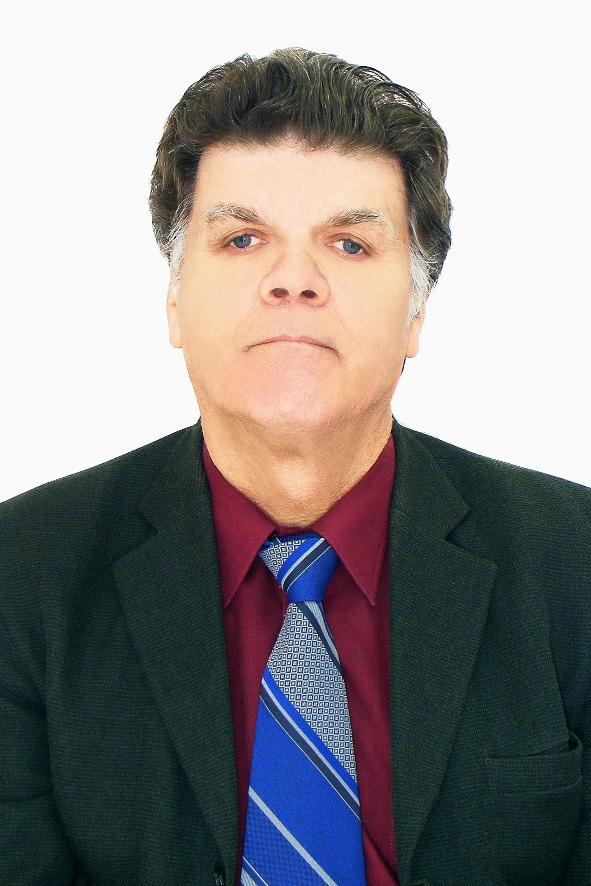
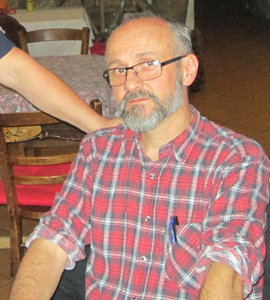
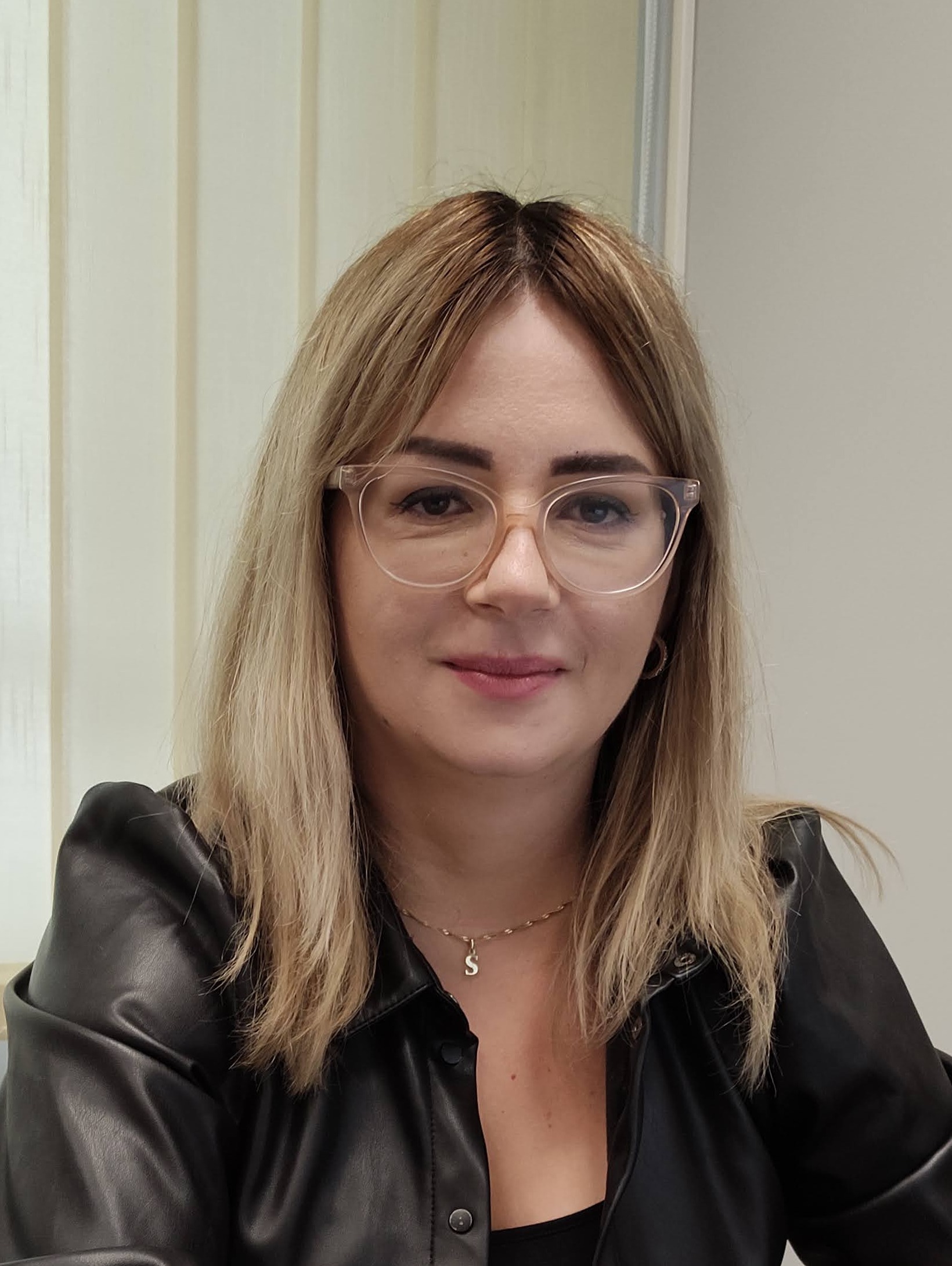
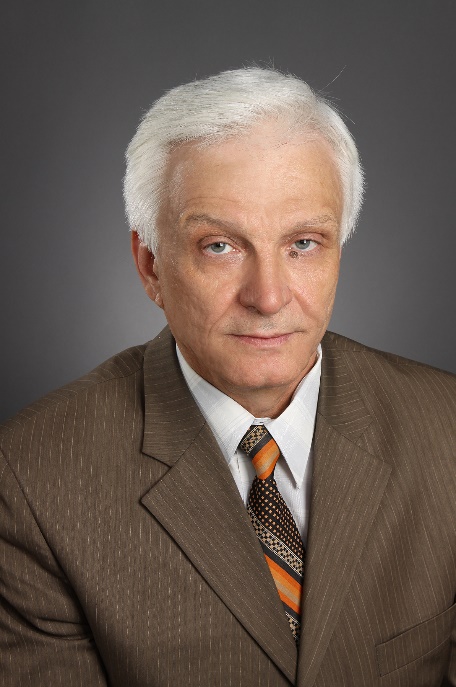
Dr. Pavlo Tsokotun is a Senior Lecturer at the Department of Automobiles, Heat Engines and Hybrid Power Plants within the Faculty of Transport at National University Zaporizhzhia Polytechnic . With over four decades of service since 1978, his expertise spans thermal engineering, internal combustion engines (ICE), and mathematical modeling of industrial systems. Education: Dnipropetrovsk State University (1978), Diploma in Hydroaerodynamics Research Focus: Heat/mass transfer in industrial products, crack propagation in anisotropic media, ICE optimization, and thermovacuum processes. Key Contributions: Developed mathematical models for transformer drying processes and ICE performance enhancement, with recent work on gas-dynamic functions and shock wave analysis. Scientific Works: 10+ publications including Scopus-indexed articles and conference proceedings on energy systems, mechanical reliability, and thermal engineering. Honors: Multiple ZNTU accolades for professional excellence and a Zaporizhia City Council Certificate of Honor.
Volodymyr Mykhailovych Maksymiv is a Professor and Vice-President of the Forestry Academy of Sciences of Ukraine, currently serving as Dean of the Faculty of Technology at the National Forestry University of Ukraine (since 2000). He has been head of the Department of Sawmilling Technologies since 2011. Born: February 9, 1956 in Vovkiv, Lviv region Education: Lviv Technical School of Mechanical Wood Processing (1975), Lviv Forestry Institute (1980) His research focuses on Woodworking Technologies , Automation Engineering , and Thermal Processes in Woodworking , with over 150 publications. Key themes include optimization of automated lines , longitudinal sawing techniques , and energy-efficient drying systems . He has received multiple certificates of honor from Ukrainian institutions for his contributions to forestry education and industry collaboration. As editor-in-chief of the international journal Forestry, Forest, Paper and Woodworking Industry , he promotes cross-border scientific exchange in English. Scientific Awards Certificate of Honor from National Forestry University of Ukraine Certificate of Honor from Ministry of Industrial Policy Certificate of Honor from Kyiv Mayor Certificate of Honor from Lviv Mayor
Prof. Grzegorz Musielak is a distinguished academic at the Institute of Chemical Technology and Engineering , Faculty of Chemical Technology , Poznań University of Technology. His career spans over three decades, including leadership roles as Vice-Dean for Education (2012–2020) and Head of the Department of Process Engineering since 2020. Education : M.Sc. in Applied Mechanics (1984), PhD in Materials Engineering (1990), DSc in Chemical Engineering (2005) Research Interests focus on drying processes , particularly mathematical modeling , thermomechanics of porous materials , and ultrasound/microwave-assisted drying . His work bridges chemical engineering, food technology, and material science. Recent Publications (2024–2018) highlight advancements in hybrid drying techniques for food (apples, carrots, mushrooms) and industrial materials (clay, concrete). Key themes include process optimization , energy efficiency , and product quality analysis . Collaborations extend to Poznań University of Life Sciences, West Pomeranian University of Technology, and industry partners like CELIKO and PROMIS-tech.
Dr. Eng. Sylwia Włodarczak is an active faculty member at Poznań University of Technology, specifically within the Faculty of Chemical Technology, Institute of Chemical Technology and Engineering, and Department of Chemical Engineering and Equipment. She maintains an office in Hall A22, room 2, and can be contacted at +48 61 665 21 57 or sylwia.wlodarczak@put.poznan.pl. Her ORCID identifier is 0000-0003-0561-0177. Dr. Włodarczak completed her academic journey at Poznań University of Technology, earning her engineering degree in 2011, Master of Science in Engineering in 2012 (specializing in Bioprocess and Biomaterials Engineering), and Doctor of Technical Sciences in Chemical Technology in 2016. Her doctoral dissertation focused on 'Analysis of hydrodynamics in swirl atomizers'. Her primary research interests span Spraying liquids, Multiphase flows, Production and testing of emulsions, and Static mixing . These research areas are deeply integrated with chemical process engineering, with applications in environmental protection, pharmaceutical technology, and energy systems. Her work demonstrates strong interdisciplinary connections between fluid dynamics, process engineering, and materials science. Analysis of her recent publications (2022-2025) reveals a consistent research trajectory focused on fluid dynamics phenomena, particularly in spray systems and multiphase flows. Her work combines experimental approaches with computational modeling, increasingly incorporating artificial intelligence techniques for process optimization. Key thematic areas include atomization processes, emulsion technology, flow regulation systems, and separation processes with applications across environmental engineering and energy sectors. Dr. Włodarczak actively supervises graduate students, having served as co-supervisor for Andżelika Krupińska's doctoral dissertation on 'Hydrodynamic analysis in two-phase swirl flow atomizers' (2020). She is also a member of the PP 2020 University Recruitment Team at Poznań University of Technology. Her research involves extensive scientific cooperation with institutions including Sumy State University (Ukraine), Warsaw University of Technology, Opole University of Technology, University of Opole, Poznań University of Life Sciences, University of Zielona Góra, Łukasiewicz Research Network, and industrial partners such as Phyto Pharm Klęka SA and ADOB SA.
Pedro José Casanova Peláez serves as a University Professor in the Department of Electronic and Automatic Engineering at the University of Jaen, Spain. His research activities are centered within the Mechanical and Energy Engineering research group, where he investigates thermal processes and renewable energy systems with emphasis on sustainable industrial applications. His academic foundation includes a PhD from the University of Jaen (2009), awarded for his thesis "Contribution to the analysis and modeling of the drying process of wet olive pomace" under the supervision of Dr. Fernando A. Cruz Peragón and Dr. José Manuel Palomar Carnicero. Dr. Casanova's research program integrates geothermal energy systems and biomass processing technologies. He has pioneered experimental methodologies for vertical ground heat exchangers, developing advanced thermal response testing protocols and uncertainty quantification frameworks. Concurrently, his work on olive oil industry byproducts focuses on drying kinetics of olive pomace and olive stone, establishing critical parameters for moisture diffusivity and energy-efficient biomass valorization. These dual research streams converge in sustainable energy recovery systems for agricultural waste. Analysis of his publication trajectory reveals a strategic shift toward geothermal engineering since 2020, with five high-impact papers on thermal response functions and heat exchanger characterization. This complements his foundational work on biomass drying (2008-2019), demonstrating consistent expertise in experimental thermal engineering across multiple renewable energy domains. His laboratory contributions include the development of specialized equipment such as experimental rotary dryers for olive stone processing, ground thermal response test devices, and FPGA-based solar tracking systems. These innovations reflect his hands-on approach to bridging theoretical modeling with practical engineering solutions for renewable energy implementation.
Igor Mykhailovych Kotsur is an Associate Professor at Zaporizhzhia Polytechnic National University, serving in the Department of Electrical Machines within the Electrotechnical Faculty. Holding the academic title of Associate Professor and the scientific degree of Candidate of Technical Sciences, he has established himself as a specialist in electrical machinery with particular expertise in asynchronous motors and computer-aided design systems. Dr. Kotsur earned his Candidate of Technical Sciences degree in 1989 with his dissertation titled 'Optimization of drying regimes of electrical insulation of the active part of power transformers in coolant vapors,' completed at the Order of the Red Banner of Labor Institute of Heat and Mass Exchange named after A.V. Lykova Academy of Sciences of the BSSR. His academic specialty is in the theoretical foundations of heat engineering (05.14.05). His primary research focuses on CAD systems for electrical machines, with particular emphasis on the thermal behavior, control systems, and mechanical properties of asynchronous motors. Dr. Kotsur has made significant contributions to understanding thermomechanical stresses in short-circuited rotors of crane asynchronous motors, modeling electromagnetic and thermal processes in motor drives, and developing simulation models for specialized motor applications under various operating conditions. An analysis of his publication record from 2010-2015 reveals a consistent research trajectory centered on the thermal and mechanical behavior of asynchronous motors, particularly under transient and repetitive short-term operating conditions. His work frequently addresses challenges related to impulse control systems for phase rotor motors, optimization of braking regimes, and thermal management during frequent motor startups. The interdisciplinary nature of his research bridges electrical engineering, thermal engineering, and mechanical engineering to enhance motor reliability, efficiency, and performance in industrial applications. Dr. Kotsur teaches several key courses including Fundamentals of computer-aided design of electrical devices, Design of special equipment for the electrical industry, and Experimental theory and methods of processing experimental data. His teaching reflects his dual expertise in both theoretical principles and practical applications of electrical machine design and analysis.
Yuriy Mykolayovych Kayukov serves as an Associate Professor at Zaporizhzhia Polytechnic University within the Transport Faculty's Department of Automobiles, Heat Engines and Hybrid Power Plants. He commenced his academic activities at the university in 2020, bringing decades of expertise in thermal engineering disciplines. Dr. Kayukov graduated from Zaporizhia Industrial Institute in 1978 with a specialization in Heat Power Engineering, earning the qualification of Industrial Heat Power Engineer. He later achieved the Candidate of Technical Sciences degree (equivalent to a Ph.D.) in specialty 05.14.06-Technical Thermophysics and Industrial Thermal Power Engineering, with his thesis focusing on "Improving the efficiency of steel heating and scale heat treatment to save fuel and metal" . His primary research focus centers on increasing the energy efficiency of heat technology processes . This encompasses thermal processes and installations, high-temperature processes and installations, boiler installations, and thermal measurements and instruments. His work bridges theoretical analysis with practical applications in industrial settings, particularly in metallurgical and manufacturing contexts. Analysis of his publication record from 2019-2022 reveals consistent contributions to thermal engineering literature, with emphasis on optimizing heat transfer processes, developing simulation models for thermal systems, and improving energy efficiency in industrial applications. His research spans theoretical modeling, experimental studies, and practical implementation of thermal process improvements. Dr. Kayukov maintains active scholarly presence through ORCID (0000-0003-4311-4801), Scopus (6602431430), and Google Scholar (VNnh6TAAAAAJ), reflecting his commitment to academic dissemination and collaboration in the thermal engineering field.
Lukas Bahlmann serves as a Research Associate at the Institute for Particle Technology (iPAT) within the Center of Pharmaceutical Engineering (PVZ) at Technical University of Braunschweig's Faculty of Mechanical Engineering. His work focuses on pharmaceutical process engineering and particle technology applications in drug manufacturing. Mr. Bahlmann completed his academic training at TU Braunschweig, earning a Bachelor's degree in Biological-, Chemical- and Pharmaceutical Engineering (2016-2020), followed by a Master's degree in Pharmaceutical Engineering (2020-2023). His thesis work examined probiotic films manufacturing approaches and the impact of fluidized bed drying and tableting on microorganism survival. His primary research interests center around pharmaceutical process chains for solid dosage forms, with specific expertise in agent-based simulation of production processes. His current work on 'Model-based analysis of process chains for the production of solid pharmaceuticals using agent-based simulation' demonstrates his focus on optimizing pharmaceutical manufacturing systems. He also provides support for the Pharmaceutical Technology laboratory at the university. Based in the PVZ facility at Franz-Liszt-Str. 35A, Room 259, Mr. Bahlmann contributes to TU Braunschweig's research profile in pharmaceutical engineering, which is part of the university's broader research focus areas in life sciences and engineering disciplines.
Carsten Schilde is a Heisenberg-Professor (W2) for Digitalisation of complex systems in process and production engineering at the Institute for Particle Technology, Faculty of Mechanical Engineering, Braunschweig University of Technology. He serves as Head of Division 'Particle Simulation & Functional Structures' and leads research in digitalization of process engineering. His research focuses on the intersection of particle technology, digitalization, and process engineering. Key areas include: Particle simulation and modeling using Discrete Element Method (DEM) Integration of artificial intelligence with traditional simulation methods Battery electrode processing and characterization Nanoparticle aggregation mechanics and structure formation Digital twin development for particle processes Professor Schilde's recent publications demonstrate a strong trend toward hybrid modeling approaches that combine physics-based simulations with data-driven AI techniques. His work spans from fundamental research on particle mechanics to applied research in battery technology and pharmaceutical manufacturing processes. As an educator, he teaches courses including 'Simulationsmethoden der Partikeltechnik,' 'Mechanische Verfahrentechnik 2,' 'Digitalisierung in der Verfahrenstechnik,' and 'Hybridmodellierung und dynamische Simulation einzelner und vernetzter Feststoffprozesse.'
Prof. Dr. Sabine Grüner-Lempart is a Research Professor in Sustainable Bioengineering at the Hochschule Weihenstephan-Triesdorf , leading the Department of Bioengineering (Sciences) . Her work focuses on bioreaction engineering, high-pressure processing, and sustainable industrial biotechnology. Research Professorship in Sustainable Bioengineering Chair of the Research Commission Subject Advisor for Biotechnology with In-Depth Practice Key Research Areas: Sustainable bioengineering using microorganisms (bacteria, fungi, algae) Supercritical fluid extraction for industrial applications Particle agglomeration/granulation processes Medicinal plant processing and active ingredient extraction Selected Publications highlight innovations in Duckweed protein extraction with ultrasound-assisted methods Mass transfer optimization in biotrickling filters for VOCs Protective agent formulations for bacterial spray drying Doctoral Supervision: Mentoring Julian Eckert on microbial process stabilization.
Professor Alton Horsfall is a faculty member at the Department of Engineering in Durham University. His research focuses on advanced semiconductor devices, quantum electronics, and power systems for extreme environments. Research interests include: Semiconductor physics and device engineering Quantum sensing and spintronics Power electronics for hostile environments Nanomaterials and quantum dots Radiation-hardened electronics High-temperature and cryogenic device modeling Recent publications highlight his work on silicon carbide-based quantum sensors, multi-level power converters, and radiation effects on semiconductor devices. He supervises multiple PhD students in engineering and materials science projects.
Dr. François Bertrand is a Full Professor and Director of Research and Innovation Directorate at Polytechnique Montréal 's Department of Chemical Engineering . With academic credentials from Université Laval and INPL France, he has held multiple leadership roles including Interim General Director (2017-2018) and Chairman of Calcul Québec (2018). Expert in multiphase fluid flows and granular flow modeling Specializes in finite element , discrete element , and lattice Boltzmann methods Active in parallel algorithms and high-performance computing Recent publications focus on rarefied gas flows (2025), granular flow optimization with adaptive contact algorithms (2024), and multiscale modeling of industrial processes. Elected as Fellow by both the Canadian Academy of Engineering (2020) and Chemical Institute of Canada (2019), he has mentored 18 PhD and 21 master's students while contributing to research centers like CREPEC and CIRANO. 2020 - Fellow, Canadian Academy of Engineering 2019 - Fellow & Excellence Award, Chemical Institute of Canada 2010 - Teaching Excellence Award, Polytechnique As director of Polytechnique's Research and Innovation Directorate, he oversees 408+ research projects while maintaining active involvement in computational fluid dynamics research and industrial partnership programs.
Ahmad Shakibaeinia is a Full Professor at the Department of Civil, Geological and Mining Engineering in Polytechnique Montréal , holding the Tier 2 Canada Research Chair in Digital Hydrosystems . He serves as a researcher in the Experimental and Digital Water Flow Engineering Group (GENIE EAU) and is affiliated with the Interuniversity Study Center for Structures under Extreme Loads (CEISCE) . Research Domains : Computational fluid mechanics, multiphase flows, granular flow dynamics, cold-region hydraulics, fluvial mechanics Methodologies : Specializing in mesh-free particle methods (SPH, MPS) for simulating complex hydro-environmental flows His work focuses on multi-physics hydro-environmental flows involving water-air-sediment-ice interactions, with applications in flood risk assessment , tailings dam breach modeling , and cold-region river dynamics . Recent publications demonstrate expertise in floating breakwater systems , microbial risk assessment , and ice-structure interaction simulations . Key scientific contributions include: Developing enhanced weakly-compressible MPS/SPH methods for free-surface and granular flows Pioneering fully Lagrangian DEM-MPS models for ice-wave dynamics Creating integrated numerical frameworks for cold-region water quality assessment He has supervised 12 graduate students (3 PhD, 9 Master's) and secured multiple NSERC Alliance Grants for projects on climate change impacts and critical infrastructure vulnerability . His 74 publications span topics from sediment transport to particle method development , with significant contributions to oil sands tailings dam failure and transboundary river pollution understanding.
Željko Jukić is a Professor at the Faculty of Agriculture , University of Zagreb , where he has served since 1996. He holds the Division for Plant Sciences affiliation within the Department of Field Crops, Forage and Grassland . His academic journey at Zagreb included Ph.D. (2000-2004), M.Sc. (1996-2000), and B.Sc. (1989-1996) degrees focused on agricultural postharvest technology. Education Ph.D., University of Zagreb, Faculty of Agriculture (2000-2004) M.Sc., University of Zagreb, Faculty of Agriculture (1996-2000) B.Sc., University of Zagreb, Faculty of Agriculture (1989-1996) His research focuses on postharvest technology , agricultural biomass utilization , and crop quality assessment for processing industries. Key projects include Sustainable production of field crops and Biomass evaluation in marginal ecological areas , demonstrating his commitment to sustainable agricultural systems. Recent publications highlight his work on maize yield optimization across planting dates and durum wheat pest resistance . Collaborative research with institutions like National Corn-to-Ethanol Research Center and Slovak University of Agricultural in Nitra reflects his international academic engagement. Professional affiliations include Vice President of Balkan Environmental Association in Croatia and membership in Croatian Biogas Association since 2016.
Dr. Quentin Meyer is a Lecturer at the School of Chemistry, University of New South Wales (UNSW), specializing in advanced electrochemical systems and fuel cell technologies. His research focuses on optimizing catalysts, membrane electrode assemblies, and electrochemical diagnostics for hydrogen fuel cells. Recent publications highlight his work on platinum-free catalysts , oxygen reduction reaction mechanisms , and electrochemical impedance spectroscopy . Collaborations span institutions in Australia and international partners in Europe and Asia. Key research areas: Hydrogen fuel cell engineering Electrochemical stability and degradation Catalyst layer optimization Operando and in situ diagnostics