Priyanka Singh is a Senior Researcher at the Novo Nordisk Foundation Center for Biosustainability (Technical University of Denmark, Denmark), focusing on nanotechnology and bacterial signal transduction. Her work bridges Nanomaterials , Pharmacology , and Biosustainability , contributing to UN Sustainable Development Goals. Expertise : Green synthesis of nanoparticles, antimicrobial applications, cancer therapy, and biofilm inhibition. Collaborations : Frequent co-authorship with researchers like Ivan Mijakovic and others in multidisciplinary teams. Her recent publications highlight oncological nanomaterials (gold, silver, iron oxide nanoparticles), eco-friendly wound dressings , and antibacterial strategies using plant/microbial extracts. Research trends emphasize green chemistry , targeted therapies , and cross-disciplinary applications in medicine and agriculture.
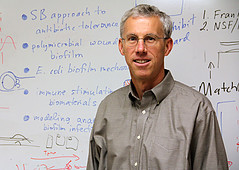
Phil Stewart is a Regents Professor in the Department of Chemical and Biological Engineering at Montana State University (MSU), affiliated with the Center for Biofilm Engineering and the Montana Nanotechnology Facility. He holds a Ph.D. in Chemical Engineering from Stanford University (1988) and has extensive experience in biofilm research, including postdoctoral work at the Institut Jacques Monod (Paris) and industry roles at Bechtel Environmental and Lonza AG. Research Focus: Stewart specializes in biofilm control strategies, transport phenomena, and antimicrobial agent development. His work addresses biofilm-related challenges in medical devices, chronic wounds, and industrial systems. Key areas include biofilm modeling, detachment mechanisms, and the interplay between biofilms and host immunity. Grants & Awards: Notable grants include leadership of the Montana Nanotechnology Facility (NSF-funded) and NASA projects on biofilm mitigation in space. Awards include MSU's highest faculty honor, Regents Professor (2019), and recognition as a NACOE Distinguished Professor (2018). Education: Ph.D. (1988), M.S. (1985) in Chemical Engineering from Stanford University; B.S. (1982) in Chemical Engineering from Rice University. Courses Taught: EBIO 216 (Elementary Principles of Biological Engineering) and EBIO 566 (Fundamentals of Biofilm Engineering). Key Contributions: Over 200 peer-reviewed publications, including seminal works on biofilm lifecycle models, antimicrobial tolerance, and neutrophil-biofilm interactions. His research impacts chronic wound treatment, infection control, and biofilm-resistant materials. Outreach: Active in global biofilm conferences, industry collaborations, and public education via the CBE's Bioglyphs Initiative.
Ioannis Patrikios is a Professor of Biochemistry and Deputy Dean at the School of Medicine, European University Cyprus. He holds a Ph.D. in Biochemistry from The City University of New York (1994) and a BSc in Biochemistry (1986). His research focuses on biochemistry, multiple sclerosis treatment (particularly Neuroaspis PLP10), anticancer agents, omega fatty acids, and clinical trials. He leads Phase III clinical trials for neurodegenerative diseases and has pioneered nutraceutical interventions for MS. Awards include the Forensic Fellows of Medical Science (2015), Scuola Superiore d'Immunologia Fellowship (2001), and Sigma Xi Honor Society membership (1994). Founder and Chairman of the School of Medicine at European University Cyprus Former CEO of PALUPA Medical Ltd., developing therapeutic nutraceuticals Editor of EC Neurology and advisor to the Academy of Forensic Medical Sciences Key research areas: Neuroprotective agents, MS treatment efficacy, clinical trial methodologies, and lipid agglutination mechanisms. His work includes over 50 peer-reviewed publications and patents on medical nutrition formulas. He organizes annual international biomedical congresses in Cyprus and has contributed to European Union-funded projects like Gender Net (2019). Exhibitions and clinical trials focus on Neuroaspis PLP10 for MS therapy, showcased at international forums since 2016. His research bridges basic biochemistry with clinical applications, emphasizing translational medicine.
Victoria Hutter is a Professor of In Vitro Toxicology at the University of Hertfordshire, affiliated with the Pharmaceutics Department within the School of Life and Medical Sciences. She holds academic and professional memberships including the General Pharmaceutical Council (GPhC), Royal Pharmaceutical Society (RPS), and International Society for Aerosols in Medicine (ISAM). Her research focuses on in vitro modeling of respiratory, skin, and gastrointestinal drug delivery systems, with particular emphasis on drug transporters and epithelial permeability. Education: MPharm and PhD from the University of Nottingham. Prior industry experience includes formulation science and clinical pharmacy roles. She has led/co-led 17 research projects since 2012, including EU-funded initiatives on in vitro test methods and inhalation safety. Research interests span drug-permeability mechanisms, ABC/SLC transporters, and toxicity testing of nanoparticles. Teaching expertise includes Pharmaceutics and Pharmacy Practice. Collaborations involve developing novel co-culture models for ocular and lung toxicity assessment, and standardizing in vitro assays like TEER measurements. Her recent work emphasizes high-content image analysis for macrophage responses, regulatory applications of microphysiological systems (MPS), and optimizing drug delivery systems using biomaterials like thermoreversible gels and eggshell membrane scaffolds.
Dr. Lisa Alcock is a Researcher at Newcastle University, specializing in gait analysis, wearable technology, and neurodegenerative disorders, particularly Parkinson’s disease. Her work focuses on developing and validating algorithms for mobility assessment, leveraging digital health technologies. She collaborates extensively with interdisciplinary teams, including the Mobilise-D consortium, to advance real-world gait monitoring and clinical outcomes. Recent projects include studies on environmental discrimination using machine learning, patient-centric visualization of mobility data, and drug efficacy analysis through wearable sensors. Her research interests span biomechanics, motor function assessment, and the integration of wearable devices into clinical practice. She has contributed to over 50 peer-reviewed publications, emphasizing methodological advancements in gait detection, turning algorithms, and sensor validation. Collaborations with institutions worldwide highlight her commitment to bridging technological innovation with clinical needs. Key contributions include the development of energy-based composite indices for Parkinson’s disease and novel imaging techniques for gait neuroanatomy. Her work often addresses challenges in real-world applicability, ensuring technologies are validated in diverse settings. Current efforts focus on enhancing patient collaboration in outcome visualization and improving accessibility through context-aware systems.
Manfred Lindau is a Professor at Cornell University, active since 1997, with a focus on biophysics, physiology, and cell biology. His research addresses the molecular mechanisms of neurotransmitter and hormone release via exocytosis, particularly the SNARE complex and fusion pore dynamics. Education: B.S. in Physics (1977, University of Hamburg), Ph.D. in Physical Chemistry (1983, Technical University of Berlin) Leadership: President of Biophysical Society Exocytosis & Endocytosis Subgroup (2010), Appointed Member of Asian Institute of NanoBioScience and Technology (2004) Research centers on exocytosis , membrane fusion , and SNARE proteins , integrating biophysical, computational, and molecular techniques. Publications reveal a 30-year trajectory spanning mast cell degranulation, eosinophil dynamics, and advanced methodologies like CMOS-based drug screening and electrochemical detector arrays . Awards: Sir Bernard Katz Award (2018), Humboldt Research Award (2003), Tau Beta Pi Teaching Award (2018) Collaborations: Biophysical Society, Society for Neuroscience, Alexander von Humboldt Foundation Lindau's work bridges experimental and computational approaches, advancing understanding of cellular secretion mechanisms and their therapeutic implications.
So Young Sohn is a distinguished Professor at Korea University's College of Business, Department of Management Engineering, with over two decades of impactful research in technology management and operations research. Her scholarly contributions have established her as a leading expert in technology credit scoring, data mining applications, and technology convergence analysis. Dr. Sohn's research interests span technology credit scoring for SMEs, operational research methodologies, data mining techniques, machine learning applications in business contexts, technology convergence patterns, patent analysis, and SME financing mechanisms. Her work bridges theoretical rigor with practical business applications, particularly focusing on Korean case studies that have broader international relevance. She has pioneered innovative approaches using knowledge graphs, multiplex networks, and deep learning techniques to solve complex business problems. Her publication portfolio reveals consistent research trends toward increasingly sophisticated analytical methods, evolving from traditional statistical models to advanced machine learning and network science approaches. Recent work demonstrates particular focus on technology convergence, digital therapeutics, and AI applications in business decision-making. The interdisciplinary nature of her research spans business analytics, engineering, healthcare, and environmental science. Dr. Sohn has received recognition through numerous high-impact publications in premier journals including Expert Systems with Applications, European Journal of Operational Research, Scientometrics, and IEEE Transactions. Her research has been consistently funded through competitive grants focusing on technology management and innovation. As an academic mentor, Dr. Sohn has advised numerous doctoral students who have gone on to productive research careers, with many continuing to collaborate with her on ongoing projects. Her research team has secured substantial funding for projects related to technology credit scoring, technology convergence analysis, and predictive analytics applications. Dr. Sohn leads a dynamic research laboratory focused on technology analytics and decision support systems, collaborating with industry partners and government agencies to translate research findings into practical business solutions. Her current work emphasizes sustainable technology development and AI-driven decision support systems for complex business environments.
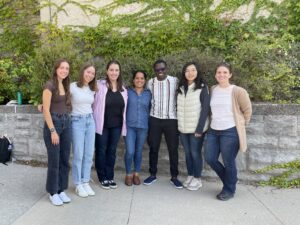
Dr. Lindsay Fitzpatrick is an Associate Professor in the Department of Chemical Engineering at Queen's University, holding a joint appointment in the Centre for Health Innovation. She leads the Fitzpatrick Lab, focusing on biomaterials and regenerative medicine, particularly host responses to implants, inflammation, and diabetes management. Her research bridges biomaterial surface interactions, immune cell signaling, and in vitro model development for biomaterial screening. Education: PhD in Biomedical Engineering (University of Toronto, 2012), Postdoctorate in Biomedical Engineering (Georgia Tech, 2014). Additional degrees include a Bachelor of Engineering in Chemical Engineering and Biosciences from McMaster University (2006). Research Interests: Biomaterial-induced inflammation, Toll-like receptor signaling in macrophages, diabetic wound healing, and implantable device design. Key projects include elucidating DAMP-mediated immune responses and developing predictive in vitro models for biomaterial testing. Lab Members: Current team includes postdoctoral fellows, PhD/Master's students, and research assistants. Notable projects involve photosynthetic microalgae-based wound care, diabetes-specific biomaterial platforms, and patient-specific foreign body reaction models. Affiliations: Senior Board Member of the Canadian Biomaterials Society, CBME Coordinator, and active member of Queen's Engineering Chemistry programs. Teaches CHEE 452 (Transport Phenomena in Physiological Systems) and CHEE 874 (Tissue Engineering). Grants & Awards: Lab members have received prestigious scholarships (e.g., Ontario Graduate Scholarship, Michele Mainland Memorial Award). Research highlighted at conferences like the Canadian Biomaterials Society Annual Meeting and Society for Biomaterials Expositions.
Hlengilizwe Nyoni is an Assistant Research Professor at the Energy and Environmental Sustainability Laboratories of Pennsylvania State University. He leads the Environmental Contaminants Analytical Laboratory, specializing in advanced analytical techniques such as high-resolution mass spectrometry (UHPLC-Orbitrap, GC-QQQ) and passive sampling technologies for assessing contaminants in aquatic environments. His work focuses on developing novel methods for monitoring pharmaceuticals, microplastics, and emerging pollutants. Research interests include environmental analytical chemistry, water sustainability, and the application of cutting-edge instrumentation for contaminant detection. He has contributed to studies on antibiotic residues in wastewater, microplastic recovery using nanomaterials, and the design of passive sampling devices for polycyclic aromatic hydrocarbons (PAHs). Nyoni’s expertise spans analytical method optimization, environmental risk assessment, and sustainable water treatment solutions. Notable contributions include a $100,000 grant-funded study on microplastic analysis and the development of molecularly imprinted membranes for environmental monitoring. His research bridges analytical chemistry with environmental engineering, addressing global challenges in pollution control and water resource management.
Alvaro Goyanes Goyanes is a Professor at the University of Santiago de Compostela, affiliated with the Faculty of Pharmacy and the Department of Pharmacology, Pharmacy and Pharmaceutical Technology. He is a member of the Materials Institute (iMATUS) and the Strategic Grouping in Materials (AEMAT), leading research in the ID-FARMA group focused on R&D in dosage forms and drug release systems. His email is alvaro.goyanes.goyanes@usc.es. He holds a doctoral degree from the University of Santiago de Compostela, completing his thesis on 'Evaluation of some technological approaches to increase the speed of drug dissolution in microcrystalline cellulose pellets' in 2012 under the supervision of Dr. Ramón Martínez Pacheco and Dr. María Consuelo Souto Pardo. His research interests center on 3D printing of pharmaceuticals , including personalized medicine, drug delivery systems, pediatric formulations, and advanced manufacturing technologies. He explores innovations such as inkjet printing for skin medications, 3D-printed suppositories, and non-destructive dose verification using spectroscopy. Recent work addresses challenges in rare disease treatments, decentralized manufacturing, and AI-driven dosage optimization. His articles emphasize translational applications of additive manufacturing in healthcare, such as clinical trials for point-of-care printing, bladder drug delivery devices, and abuse-deterrent opioid formulations. He also investigates emerging technologies like volumetric printing and supramolecular hydrogels for enhanced drug release. Alvaro has pioneered projects like the OPERA clinical trial for hospital-based 3D printing and the DoseTAIlor platform for AI-driven tacrolimus dosing. His work bridges academic research and clinical implementation, focusing on accessibility for vulnerable populations.
J. Martin Heur, MD, PhD, is a Clinical Professor and Chair of the Department of Ophthalmology at the University of Southern California (USC). He holds the Grace and Emery Beardsley Professorship and serves as Co-Director of the USC Roski Eye Institute. His academic background includes MD and PhD degrees from the University of Cincinnati College of Medicine, supported by an NIH Medical Scientist Training Program fellowship. After residency at the Cleveland Clinic’s Cole Eye Institute and a fellowship at USC Roski, he became a leading clinician-scientist in ophthalmology. Dr. Heur’s research focuses on corneal endothelial wound healing, employing zebrafish and corneal endothelial cell lines as models. His work has been funded by the National Eye Institute, Research to Prevent Blindness, and other organizations. Notable awards include the Best Doctors in America recognition (2015-2016), NIH Mentored Clinical Scientist Research Career Development Award (2011), and ARVO/Alcon Early Career Clinician-Scientist Award (2011). His clinical expertise spans anterior segment diseases, corneal transplantation, and cataract surgery. He leads multidisciplinary teams at the USC Roski Eye Institute and maintains affiliations across three locations in Los Angeles, Arcadia, and Glendale. Dr. Heur emphasizes patient-centered care and continuity of treatment.
Prof. Saskia van Ruth is a leading academic in food supply chain integrity, holding positions at University College Dublin (Emeritus Special Professor) and Wageningen University & Research (WUR) as a Guest Professor. She specializes in food authenticity, fraud prevention, and sustainable agriculture. Her expertise spans food chemistry, chemometrics, and analytical methods. She has extensive experience in research coordination, including projects on food fraud vulnerability in global supply chains, spice authentication, and olive oil integrity. Key research interests include the application of spectroscopic techniques (e.g., hyperspectral imaging, MALDI-TOF MS) for food authentication, social network analysis of food crime mechanisms, and traceability of agricultural products. She has supervised numerous PhD students and contributed to courses like FQD36306 Food Fraud and Mitigation. Her work bridges academia and industry, addressing real-world challenges in food safety and integrity. Recent publications focus on isotopic analysis of food products, fraud detection in seafood and spices, and the development of rapid authentication technologies. She has collaborated on international projects such as EU-China-SAFE, targeting enhanced EU-China food safety partnerships.
Dr. Ali Ozel is an Assistant Professor at Heriot-Watt University's School of Engineering & Physical Sciences, specializing in fluid-particle flows and multi-scale modeling. His work bridges academic institutions and industry collaborations, including INEOS, Princeton University, and Toulouse's Fluid Mechanics Institute. PhD in Fluid Mechanics (Toulouse, 2011) B.Sc. & M.Sc. in Aerospace Engineering (Istanbul Technical University) Research Master in Environmental & Applied Fluid Dynamics (von Karman Institute) His research focuses on: Multi-scale modeling of fluid-particle flows (micro/meso/macro) Solvent-based carbon capture technologies (Volume of Fluid simulations) Rheology of dense granular suspensions (shear thickening/thinning) Development of xFlow - Complex Flow Technologies for decarbonization Hybrid digital twins combining physics and machine learning Using data-driven approaches and advanced computational tools, Dr. Ozel formulates constitutive models for industrial applications in energy, pharmaceuticals, and manufacturing. His recent publications emphasize neural networks for fluid dynamics, particle stress modeling, and decarbonization strategies. Scientific Awards: Marie Curie Fellows Association Grant Dr. Ozel actively supervises PhD students and collaborates with international institutions on computational modeling projects. His xFlow initiative investigates clean energy integration and device optimization through rigorous multi-scale methodologies.
Roman Szewczyk is a Professor at the Institute of Metrology and Biomedical Engineering within the Faculty of Mechatronics at Warsaw University of Technology (Politechnika Warszawska). He also maintains an affiliation with the Łukasiewicz Research Network – Industrial Research Institute for Automation and Measurements PIAP. His academic career spans over two decades since earning his doctorate in 2003. Professor Szewczyk's research interests are highly interdisciplinary, focusing on the intersection of mechanical engineering, materials science, and biomedical applications. His primary expertise lies in magnetic sensors, metrology, and the development of measurement systems. He has made significant contributions to understanding magnetostrictive effects, magnetic permeability in electrical steels, and the application of finite element methods for sensor development. His work bridges theoretical physics with practical engineering applications, particularly in the fields of automation and biomedical instrumentation. An analysis of his recent publications reveals a strong focus on precision measurement systems, magnetic sensor development, and materials characterization. His work spans from fundamental physics of magnetoelastic effects to practical applications in robotics, biomedical devices, and environmental sustainability. The consistent publication output across multiple domains demonstrates his ability to integrate knowledge from diverse fields to solve complex engineering problems. With an impressive record of 342 publications and an h-index of 18 (Scopus) and 17 (Web of Science), Professor Szewczyk has established himself as a significant contributor to his fields of expertise. His work has practical applications across various industries including medical technology, power systems, and precision manufacturing. Professor Szewczyk has supervised 120 promoted theses, indicating his substantial contribution to academic mentoring and the development of future engineers. His involvement in 4 research projects demonstrates his ability to secure funding and lead research initiatives. While specific grant details aren't provided in the available information, his publication record suggests successful acquisition of research funding to support his extensive work. His laboratory work appears to focus on precision measurement systems, particularly those involving magnetic phenomena. The research group likely maintains facilities for materials testing, sensor development, and computational modeling, given the nature of his publications. The connection to the Institute of Metrology and Biomedical Engineering suggests strong capabilities in precision instrumentation and biomedical applications of engineering principles.
Prof. Gianluca Testa is an Associate Professor at the University of Molise, affiliated with the School of Medicine and Health Sciences and the Department of Cardiovascular and Respiratory Medicine. His research focuses on cardiovascular diseases, geriatric cardiology, and the interplay between aging, frailty, and cardiac health. He has published extensively on topics including heart failure pathophysiology, nanomedicine applications, and clinical case studies in cardiology. Research Interests: Cardiovascular pathophysiology and interventions Frailty and sarcopenia in elderly populations Nanotechnology for cardiac therapy Orthostatic hypotension and geriatric care Case studies in valvular heart disease and cardiac tumors Recent publications highlight his work on biomarkers predicting complications in transcatheter valve procedures, novel tools for frailty assessment in hospitalized patients, and advanced therapies targeting fibrosis in heart failure. His contributions bridge clinical cardiology with gerontology and translational nanomedicine. Contact: gianluca.testa@unimol.it