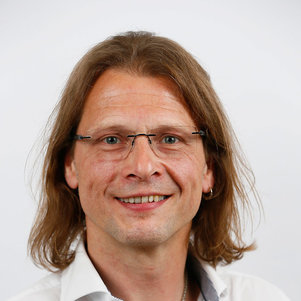
Dr. phil. Andrej Holm is a Researcher at the Institute of Social Sciences , Humboldt University of Berlin, specializing in Urban and Regional Sociology . As a Women's Representative and active academic, he focuses on gentrification, housing policy in international comparison, and European urban policy. His work bridges academia and activism, contributing to housing referendums and social movement analysis. Research Themes : Gentrification dynamics, financialization of housing, socio-ecological housing transformation, and post-socialist urban development. Key Projects : Expert analysis for Berlin housing socialization referendum (2022), comparative studies on Amsterdam/Barcelona/Berlin/Vienna (2022), and social infrastructure reconceptualization (2021). Holm's publications span urban policy critiques and housing justice , with recent 2025 works examining financial investors' impact on Berlin housing and pandemic-era housing conditions. His research integrates political economy with spatial inequality frameworks.
Prof. Hans van Lint is a Professor of Traffic Simulation and Computing at Delft University of Technology (TU Delft), where he holds the Anthony van Leeuwenhoek Chair since 2013. He is affiliated with the Department of Transport & Planning within the Faculty of Civil Engineering and Geosciences. His research focuses on the intersection of traffic flow theory, data analytics, and traffic simulation, with applications in estimating and predicting traffic states in networks. He has supervised numerous PhD students and contributed to valorization projects translating research into practical solutions. Van Lint earned his MSc in Civil Engineering in 1997 and returned to TU Delft for his PhD, which he completed in 2004 on 'Freeway Travel Time Prediction.' He has held roles including Assistant Professor (until 2009), Associate Professor, and has served as Director of Education for the MSc Transport, Infrastructure and Logistics program from 2010–2016. His research interests include traffic simulation frameworks, data assimilation techniques, and the development of tools for traffic state estimation. He has authored influential papers on topics such as microscopic traffic modeling, congestion pattern analysis, and macroscopic fundamental diagrams. His work emphasizes bridging theoretical models with real-world applications, enhancing traffic management and infrastructure planning. Van Lint teaches courses like 'Transport & Planning' and 'Interdisciplinary Fundamentals,' reflecting his commitment to both research and education. He actively contributes to TU Delft's labs, including the Traffic Dynamics, Modelling and Control Lab, advancing interdisciplinary approaches to mobility challenges.
Jordan Siegel is a Professor of Strategy at the Ross School of Business, University of Michigan, and a Michael R. and Mary Kay Hallman Faculty Fellow. He also serves as a Visiting Faculty member at The American College of Greece (ACG). His academic background includes a Ph.D. from MIT, and B.A. and M.A. degrees from Yale University. Professor Siegel’s research focuses on global strategy, particularly how companies leverage institutional differences across borders to gain competitive advantages through governance and human resource management strategies. His work examines institutional arbitrage—how firms exploit formal and informal rules (e.g., laws, cultural norms) to enhance performance, even in single-country operations. Notably, he investigates how foreign multinationals in Japan and South Korea exploit social biases by promoting female managers, leading to long-term performance improvements. His findings highlight the strategic use of labor market discrimination as a competitive tool. Professor Siegel’s research has been published in top-tier journals such as Management Science , Administrative Science Quarterly , and Strategic Management Journal . He is affiliated with the William Davidson Institute and Harvard Korea Institute, contributing to interdisciplinary studies on global business strategy and institutional dynamics.
Masato Kato serves as Professor in the Department of Biochemistry at the University of Texas Southwestern Medical Center since 2020 and concurrently as Team Leader at Japan's National Institutes for Quantum and Radiological Science and Technology. His academic trajectory includes progressive appointments from Assistant Professor (2004-2014) to Associate Professor (2014-2020) at UT Southwestern, with prior postdoctoral training at Harvard Medical School and Nara Institute of Science and Technology. 2020-present: Professor, Department of Biochemistry, UT Southwestern 2020-present: Team Leader, National Institutes for Quantum and Radiological Science and Technology, Japan 2014-2020: Associate Professor, Department of Biochemistry, UT Southwestern 2010-2014: Assistant Professor, Department of Biochemistry and Internal Medicine, UT Southwestern 2004-2010: Assistant Professor, Department of Internal Medicine, UT Southwestern 1999-2004: Postdoctoral Fellow, Ellenberger Lab, Harvard Medical School 1998-1999: Postdoctoral Fellow, Hakoshima Lab, Nara Institute of Science and Technology Dr. Kato's research pioneers the biophysical characterization of protein phase separation, particularly focusing on low-complexity domains (LCDs) in neurodegenerative disease contexts. His work establishes fundamental mechanisms of biomolecular condensate formation, including hydrogel polymerization, liquid-solid transitions, and mutation-induced dysregulation in ALS/FTD. Key contributions demonstrate how C9orf72-encoded poly-dipeptides disrupt nucleocytoplasmic transport and how redox states regulate Ataxin-2 phase behavior, bridging structural biochemistry with pathological mechanisms. Analysis of his 22 publications reveals a cohesive research program centered on LCD-driven phase transitions. The most recent 15 articles (2012-2019) systematically investigate pathological aggregation in neurodegeneration, structural basis of condensate formation, and regulatory mechanisms like phosphorylation and oxidation. This body of work establishes LCDs as central players in both physiological RNA granule assembly and disease-associated solidification, with strong emphasis on C9orf72-related ALS/FTD mechanisms. Dr. Kato maintains active leadership within the McKnight Laboratory at UT Southwestern, where his team employs integrated approaches spanning structural biology, cell biology, and biophysics to dissect phase separation mechanisms. His collaborative network includes prominent neuroscience and biochemistry groups, with co-authorship on key studies in Cell, Science, and PNAS.
Christopher Robert Way is an Associate Professor of Government at Cornell University, affiliated with the College of Arts and Sciences. He is a core faculty member of the Institute for European Studies and part of the Reppy Institute for Peace and Conflict Studies, where he contributes to the Peace Studies Minor. His research focuses on comparative political economy, international relations, and nuclear proliferation, with a particular emphasis on the effectiveness of non-proliferation regimes and the political drivers of weapons development. Way's academic interests span international/comparative political economy, the political economy of OECD democracies, and the impact of electoral cycles on policy-making. His work integrates quantitative and qualitative methods to analyze topics such as the relationship between conventional arms transfers and nuclear proliferation, the role of political insecurity in financial market liberalization, and the effects of economic interdependence on military conflict. His recent research on paid sick leave policies and democracy’s role in capitalism reflects his broader engagement with public policy and institutional adaptation. Way has also contributed to debates on nuclear energy as an 'ambiguous technology' and the dynamics of the Nuclear Non-Proliferation Treaty.
Dominik Schörkhuber is a PreDoc Researcher at the Vienna University of Technology (TU Wien) in the Computer Vision department. With a background in Informatics (BSc, Dipl.-Ing.), he focuses on computer vision applications for autonomous driving, robotics, and human-machine interaction. His work spans driver action recognition, pedestrian prediction, and adaptive lighting systems. Current projects: Empathic Vehicle (2024–2026), SyntheticCabin (2021–2025), SmartProtect (2020–2025) Research themes: Video transformers, synthetic data transfer learning, multi-task learning, and sensor-lighting integration Specializes in 3D sensing, nighttime driving analysis, and mobile video creation tools
Valeria Caiati is an Assistant Professor at the Urban Planning Group within the Built Environment School at Eindhoven University of Technology. Her research focuses on sustainable urban mobility, smart cities, and the role of ICTs in fostering sustainable development. She leads the SCRIPTS project exploring demand-driven mobility services and platform technologies. She holds a PhD from TU/e, preceded by professional experience in international consultancy and research institutes in Italy. Valeria teaches courses like 'Built Environment and Smart Mobility' and contributes to 8 active/funded projects, including LEVERAGE and NEDAM initiatives. Her research interests revolve around Mobility as a Service (MaaS), sustainable transportation policies, and behavioral modeling of transport adoption. She employs mixed-methods approaches, including stated choice experiments and portfolio analysis to assess user preferences and system impacts. Recent work examines parking guidance systems, electric vehicle adoption drivers, and corporate sustainability interventions. Valeria has supervised 9 academic works and actively participates in peer-review for journals like Transportation and European Transport Research Review . She engages in professional activities such as invited talks on MaaS bundling strategies and workshop participations on transformative urban mobility. Her teaching portfolio includes courses integrating theory with practical studio projects in urban development.
Xugui Zhou is an Assistant Professor jointly appointed in the Department of Electrical and Computer Engineering and the Department of Computer Science at Louisiana State University (LSU). He holds a Ph.D. in Electrical and Computer Engineering from the University of Virginia (2024), where he worked under Prof. Homa Alemzadeh. Prior to his Ph.D., he earned an M.Eng in Control Science and Engineering and a B.Eng in Automation from Shandong University. Before joining UVA, he was a Senior Engineer at NR Research Institute, State Grid of China. His research focuses on the intersection of system dependability, security, and control theory, with applications in autonomous systems and healthcare. Key interests include engineering resilient autonomous vehicles, mitigating adversarial attacks on cyber-physical systems (CPS), and enhancing safety through formal methods and machine learning. He leads a research lab with openings for Ph.D. students and interns. Zhou is actively involved in academic service, serving on program committees for DSN'26, AsiaCCS'26, and ICCPS'25, among others. He also chairs workshops like DSML'25 and organizes conferences such as ICCPS'24. His recent awards include the UVA Engineering Endowed Graduate Fellowship (2023) and selection as a Rising Star in Cyber-Physical Systems (2023). His teaching includes courses like AI-Driven Autonomous Driving Systems and ML for CPS Security at LSU. He has extensive experience in teaching and research supervision, emphasizing hands-on projects and interdisciplinary collaboration.
Anna Grigolon is an Assistant Professor at the University of Twente , Netherlands, affiliated with the Transport Engineering and Management Research Group . Her research focuses on sustainable urban mobility , user-centric transport solutions , and travel behavior analysis using tools like discrete choice modeling , spatial analysis , and social psychology theories . Research Interests : Sustainable Urban Mobility Accessibility Modeling Travel Behavior Discrete Choice and Latent Class Modeling Spatial Analysis and GIS Shared Micromobility and Mobility Hubs Equity in Transport Planning Article Trends : Anna’s recent work (2025–2024) emphasizes mobility justice , 15-minute city transitions, and equity in transport access , particularly for marginalized communities like São Paulo favelas. She integrates digital tools (e.g., serious games, kiosks) and space-time metrics to evaluate mobility solutions. Projects : She currently leads the SmartHubs project and contributes to DREAMS and R-map , focusing on smart, equitable mobility systems in Europe and Saudi Arabia.
George Perry is a Professor of Anthropology at Pennsylvania State University, with research intersections in Biology, Evolutionary Medicine, and Genomics. He is affiliated with the Huck Institutes' Center for Infectious Disease Dynamics, Ecology, Molecular Cellular and Integrative Biosciences, and Bioinformatics and Genomics programs. Perry directs the Anthropological Genomics Lab , focusing on paleogenomics and evolutionary adaptation. Research areas: anthropological genomics, parasite evolution, human body size transitions, and evolutionary medicine Key collaborations: international teams in Madagascar, Europe, and Africa Leadership: Bioinformatics and Genomics Chair (2019–2023) His 2025–2022 publications span evolutionary responses to invasive species, human migration health impacts, chemosensory gene adaptation, and primate genomic diversity. Notable methodological contributions include ancient DNA recovery and comparative paleogenomics. Perry advises graduate students like Vanessa Garcia and Annette Mercedes, with grants including NIH support for Cuban health disparity studies. Scientific leadership includes tenure-line promotions (2023) and NASA Space Grant collaborations.
Christopher O'Donnell is a Professor of Econometrics at the University of Queensland's School of Economics. He holds a PhD from the University of Sydney and has held academic leadership roles including Director of the Centre for Efficiency and Productivity Analysis. His research focuses on productivity and efficiency analysis, econometric methods, and their applications in agriculture, public policy, and environmental economics. Education: PhD (University of Sydney), MCom (University of New South Wales), BAgEc (Hons) (University of New England). Research interests include economic and statistical methods for measuring productivity changes, stochastic frontier analysis, and metafrontier frameworks. He has authored/co-authored three books and over 80 journal articles, with notable contributions in the American Journal of Agricultural Economics , Journal of Econometrics , and European Journal of Operational Research . Scientific awards include being a Distinguished Fellow of the Australian Agricultural and Resource Economics Society. His work has been applied in sectors like healthcare, fisheries, and public utilities through collaborations with organizations such as the World Bank and Asian Productivity Organization. Key projects include measuring agricultural productivity in China, analyzing hospital efficiency, and evaluating climate impacts on farming. Grants include studies on productivity measurement in Australian universities and Northern Grains Region farms. Labs/Teams: Former Director of the Centre for Efficiency and Productivity Analysis, collaborating with global institutions on productivity benchmarking and policy analysis.
Kürşat Aydoğan is a Professor of Finance and currently serves as the Rector of Bilkent University. He holds a B.S. in Management from Middle East Technical University (1979), an MBA (1980), and a Ph.D. in Finance from Syracuse University (1986). His career includes teaching positions at Ball State University, Middle East Technical University, and Michigan State University, alongside a 13-year tenure as Dean of Bilkent’s Faculty of Business Administration (1991–2004). He has also consulted for the Central Bank of Turkey’s Research Department (1988–1993). His research focuses on corporate finance, asset pricing, and emerging markets, with notable contributions to banking sector analysis, market efficiency, and financial intermediation. His work bridges theoretical finance and practical market dynamics, particularly in Turkish and OECD contexts. His publications span topics such as stock market reactions to corporate actions, cross-sectional stock returns, and the interplay between banking and real sectors. His articles often address emerging markets’ unique challenges, offering insights into policy and institutional frameworks. His career reflects a blend of academic leadership, administrative roles, and impactful empirical research.
Aybars Tuncdogan is a Reader in Digital Innovation and Information Security at King’s Business School, King’s College London. He holds affiliations with the King’s AI Institute, King’s Cybersecurity Centre (Informatics), and King’s Cybersecurity Group (War Studies). A Fellow of the Higher Education Academy, he also serves on the editorial review board of Industrial Marketing Management . Education : PhD in Management, Rotterdam School of Management, Erasmus University MPhil in Business Research (Distinction), Erasmus University Bachelor’s in Business Management & Computer Science (Honors), Earlham College Research Interests : His work focuses on three pillars of digital innovation: generation (crowdsourcing, AI), marketing (digital brand personality, sales ambidexterity), and protection (information security, corporate espionage). He integrates psychology (individual differences, social identity) and computer science (machine learning/AI) frameworks. Publications Trends : Recent work addresses cybersecurity challenges in retail, AI ethics in healthcare, and interdisciplinary innovation. He frequently publishes in top-tier journals like Journal of Management and Scientific American , blending academic rigor with practitioner impact. Awards & Contributions : 2015 Best Paper Award (shared) Edited books including Oxford Handbook of Individual Differences and Strategic Renewal Teaching & Pedagogy : Develops innovative teaching methods like inquiry-based learning to foster student creativity. Taught modules on digital marketing, consumer behavior, and research methods. Labs/Teams : Contributes to cybersecurity initiatives at King’s, focusing on AI-driven defense mechanisms and organizational cyber resilience strategies.
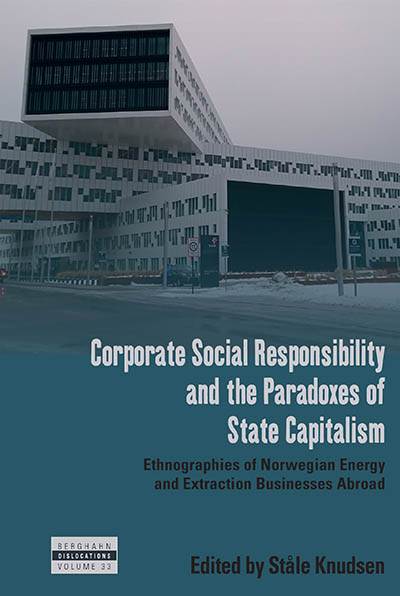
Ståle Knudsen is a Professor in the Department of Social Anthropology at the University of Bergen, Norway. His research bridges environmental anthropology and political ecology, focusing on transnational corporations, corporate social responsibility (CSR), and environmental governance. Key areas include Norwegian energy corporations' CSR practices abroad, Turkish fisheries management, and global energy policies. He led the EU-funded KNOWSEAS (2009–2013) and ENERGETHICS (2015–2019) projects, examining CSR in state-owned energy sectors. Knudsen has authored Fishers and Scientists in Modern Turkey (2009) and co-edited Corporate Social Responsibility and the Paradoxes of State Capitalism (2023). His work critiques the intersection of financial logics and environmental accountability in global corporate operations. From 2014–2021, he served as Head of the Department of Social Anthropology at UiB. Research Interests: Corporate responsibility, energy governance, political ecology, environmental conflict, and transnational corporations. Key Projects: ENERGETHICS (CSR in energy companies), KNOWSEAS (European marine management), and ELMÉ (EU fisheries policies). Knudsen’s research combines long-term fieldwork in Turkey with interdisciplinary analysis of global energy systems and CSR paradoxes. He critiques the 'Nordic Model' as a CSR framework and explores tensions between corporate profit and sustainability goals in Norway’s state-owned enterprises.
Martin Seeleib-Kaiser is a Professor at the Institute of Political Science, Faculty of Economics and Social Sciences, Eberhard Karls University of Tübingen. He holds a venia legendi (habilitation) from Bremen University (2000) and has held academic positions at Oxford, Duke, and Bremen Universities. His research focuses on the politics of social policy, comparative social policy analysis, and the interplay between public-private social protection policies. His publications span topics such as globalization and welfare systems , EU citizenship and social rights , and dualization in welfare states . Recent works address pandemic-era welfare responses, stratified social rights, and occupational welfare trends in Europe. His team includes researchers like Cecilia Bruzelius, Jakub Sowula, and Mikko Kuisma, with affiliations to projects like the Journal of European Social Policy.