Nick Graham is a Professor in the School of Computing at Queen's University, Canada. He holds a PhD from TU Berlin and teaches courses like Game Architecture and Digital Game Development. His research focuses on next-generation digital games, particularly exergames (combining exercise with play) and educational games. He directs the EQUIS Lab, which develops accessible gaming solutions for populations like children with cerebral palsy and spinal cord injury patients. Graham previously served as VP Research & Development at Namzak Labs and has held academic roles at York University and Queen's University. Education: PhD (Dr.-Ing.) in Engineering - TU Berlin (1995) MSc in Computer Science - Queen's University (1988) BSc in Computer Science - University of Toronto (1985) Research Interests: Exergames promoting physical activity through gaming Accessibility in game design for persons with disabilities Game networking and distributed algorithms Augmented reality tools for education Lab & Collaborations: The EQUIS Lab develops projects such as the Liberi exergame and conversion tools for existing games like Skyrim into exergames. Techniques like 'Partial Automation' enable gameplay accessibility. Professional Roles: Director, EQUIS Lab Member, IFIP Working Group 2.7 on User Interface Engineering VP Research & Development, Namzak Labs (2000–present)
Prof Lee Kwan Min is a Professor and the inaugural Korea Foundation Professor in Contemporary Korean Society and New Media at Nanyang Technological University’s Wee Kim Wee School of Communication and Information (WKWSCI), where he directs the UX Lab. He holds a Ph.D. from Stanford University and has held leadership roles, including founding director of Interaction Science Research Center at Sungkyunkwan University and Vice President at Samsung Electronics, overseeing UX strategy and innovation. His research focuses on user experience (UX), human-machine interaction (HCI/HRI/HAI), digital culture, and Korean society’s technological evolution. He has secured over $12M in research grants and holds patents in display interfaces and gesture control. Notable awards include ICA Fellowship and USC Mellon Teaching Award. Education: Ph.D. (Stanford University), M.A./B.A. (implied from career timeline). Previous affiliations include Sungkyunkwan University (SKKU) and the University of Southern California (USC), where he was tenured at 40. His work bridges academia and industry, advising startups in fintech, smart mobility, and UX design. Research Interests: UX design and evaluation Social/psychological impacts of ICT Human-robot/vehicle interaction Smart cities and disruptive technologies Korean digital society studies Recent work trends emphasize conversational interfaces in vehicles, metaverse analysis, and Fintech agents. His articles explore topics like autonomous vehicle trust, cross-cultural gaming psychology, and VR advertising. Awards include ICA Fellow status and multiple top-paper recognitions. Grants and Patents: Over $12M funding from NSF, Samsung, and Korean/US governments. Patents span smart displays, gesture control, and multimedia systems. Advises global firms on UX strategies and innovation. Labs/Teams: Director of UX Lab at NTU, leading interdisciplinary research. Collaborates with MIT Cognet and editorial boards of top journals like Journal of Communication and Human Communication Research .
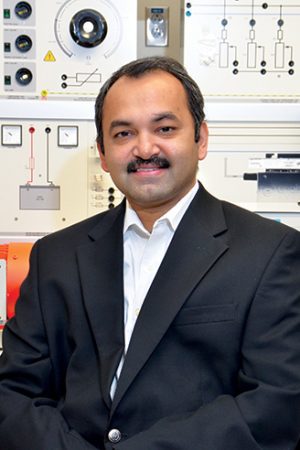
Dr. Madhav Manjrekar is an Associate Professor in the Department of Electrical and Computer Engineering at the University of North Carolina at Charlotte. He earned his Ph.D. from the University of Wisconsin–Madison in 1999. His research focuses on power electronics applications in utility systems, renewable energy interfaces, and cybersecurity of electricity infrastructure. Key areas include power quality improvement in microgrids, high-voltage direct current (HVDC) transmission, and advanced electrical machine design for electric vehicles and wind energy systems. His work emphasizes innovative solutions for energy storage integration, grid resiliency, and fault-tolerant power systems. Recent publications highlight advancements in DSTATCOM for microgrids, solid-state circuit breakers, and doubly salient electrical machines. He has contributed to projects like the US-Caribbean Super Grid and HVDC interconnectors for offshore renewable energy. Dr. Manjrekar’s research also addresses cybersecurity vulnerabilities in power infrastructure and explores next-gen semiconductor technologies like SiC MOSFETs. His interdisciplinary approach bridges power electronics, machine design, and grid stability, with applications in both academic and industry settings.
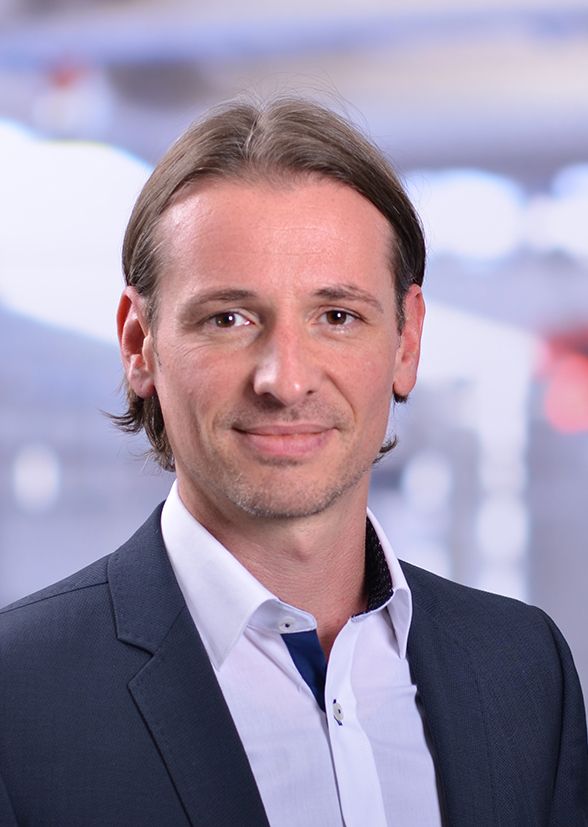
Dominik Schörkhuber is a PreDoc Researcher at the Vienna University of Technology (TU Wien) in the Computer Vision department. With a background in Informatics (BSc, Dipl.-Ing.), he focuses on computer vision applications for autonomous driving, robotics, and human-machine interaction. His work spans driver action recognition, pedestrian prediction, and adaptive lighting systems. Current projects: Empathic Vehicle (2024–2026), SyntheticCabin (2021–2025), SmartProtect (2020–2025) Research themes: Video transformers, synthetic data transfer learning, multi-task learning, and sensor-lighting integration Specializes in 3D sensing, nighttime driving analysis, and mobile video creation tools
Magnus Liebherr is a Professor at the University of Duisburg-Essen , focusing on Technology Acceptance , Artificial Intelligence , and Sustainable Transportation . His work bridges Business Administration with Human-Computer Interaction , exploring how users adapt to emerging technologies like autonomous vehicles and AI systems. Key research areas include: Acceptance of AI applications in mobility Business model development for climate-neutral transportation Cognitive and psychological factors in technology interaction Digital media effects on adolescent well-being Trust calibration in automated systems His recent publications examine Large Language Model dependency , gamified language learning , and mental workload metrics for autonomous vehicles. While no formal awards are listed, his interdisciplinary work spans psychology , engineering , and business strategy .
Jay Henderson is an Assistant Professor in the Department of Computer Science at Memorial University of Newfoundland, leading the Human-Computer Interaction (HCI) Lab. His research focuses on quantitative HCI, measuring human performance with emerging technologies such as mixed reality and generative AI. He holds a PhD from the University of Waterloo and has held roles including Postdoctoral Fellow at Carleton University and Senior Research Scientist at Huawei Technologies Canada. Education: PhD in Computer Science, University of Waterloo (2021) BSc Hons in Computer Science (minors in Mathematics and Psychology), Mount Allison University (2016) Research Interests: Henderson’s work bridges computer science with psychology and mathematics, emphasizing objective measurement of user interactions. Key areas include mixed reality productivity, generative AI interfaces, gesture-based input, and multimodal feedback systems. His quantitative approach ensures practical insights for technology design. Key Grants & Awards: NSERC Discovery Grant ($155,000 over 5 years) NSERC Discovery Launch Supplement ($12,500) David R. Cheriton Graduate Scholarship ($20,000 over 2 years) Teaching & Supervision: Teaches courses like COMP 4303 (AI for Games) and supervises multiple graduate and undergraduate researchers. Notable supervisees include Daniel Jo (MSc) and Arunav Saha (BSc Honours). Service Contributions: Served on ACM committees including Graphics Interface and CHI Late Breaking Work. Acted as Virtual Chair for ACM ASSETS 2024 and contributed to ACM’s name change policy as a transgender advocate.
Dr. phil. Stefan Ladwig is a researcher at the Institute for Automotive Engineering (Institut für Kraftfahrzeuge) at RWTH Aachen University, specializing in traffic psychology, user acceptance, and human-machine interaction for automated driving systems. His work addresses psychological and ergonomic aspects of emerging mobility technologies, including seating ergonomics, trust-building mechanisms, and communication strategies for autonomous delivery robots. Research Focus: Automated driving, interior design psychology, driver/passenger behavior, and safety requirements. Projects: Lead roles in UrbANT (autonomous delivery robot) and SteeringBow (dynamic driving experience). Collaborations: Affiliated with Aldenhoven Testing Center, Future Mobility Partnership e.V., and innocam.NRW. Ladwig’s recent publications examine rotated seating positions, visual dominance in speed adaptation, and trust-relevant driving scenarios, reflecting his interdisciplinary approach to optimizing human-vehicle interactions. His work spans ergonomics, energy management, and behavioral interventions to enhance safety and usability in next-generation mobility solutions.
Paul Taele is an Instructional Assistant Professor and Deputy Lab Director in the Sketch Recognition Lab at Texas A&M University's Department of Computer Science & Engineering. He holds a Ph.D. (2019), M.S. (2010), and dual B.S. degrees in Computer Science and Mathematics from the University of Texas at Austin (2006). His research focuses on sketch recognition, haptics, and intelligent interfaces for education and accessibility, with notable work in mid-air gesture recognition, educational sketching tools, and assistive technologies for disabilities. He has contributed to projects like Kanji Workbook , Hashigo , and HaptiMoto , and has published over 50 peer-reviewed articles across venues like CHI, IUI, and AAAI. Taele has received awards including the NSF Student Travel Grant (2014) and Ford Foundation Honorable Mention (2015). He teaches courses in capstone design, programming, and sketch recognition, and mentors students across all academic levels through strict eligibility criteria for research collaborations. Education : Ph.D. Computer Science, Texas A&M University (2019) M.S. Computer Science, Texas A&M University (2010) B.S. Computer Science & Mathematics, University of Texas at Austin (2006) Concentration in Mandarin Chinese, National Chengchi University (2007) Research Interests : Taele's work bridges HCI and AI to create accessible educational interfaces. His projects emphasize: Sketch Recognition : Developing algorithms for mid-air gestures, children's developmental assessments, and language learning Accessibility : Haptic systems for visually impaired learners and algebra education Educational Tech : Intelligent tutoring systems for music, math, and East Asian languages Awards & Grants : EAAI-20 Travel Grant (2020) Ford Foundation Dissertation Honorable Mention (2015) NSF East Asia-Pacific Summer Institutes (2013, 2012) Royce E. Wisenbaker Fellowship (2009) Lab & Teams : Director of the Sketch Recognition Lab (SRL) and collaborator with global institutions like Singapore Management University and National Taiwan University. Active in organizing workshops like SketchRec at IUI conferences.
Dr. phil. André Fiebig is a Permanent Research Associate and PostDoc at the Institute of Fluid Mechanics and Technical Acoustics (ISTA) within Faculty V - Transportation and Mechanical Systems at Technical University of Berlin. From January 2019 to December 2024, he served as a Visiting Professor responsible for the field of psychoacoustics, funded by the HEAD Genuit Foundation. Since January 2025, he has been leading the 'Psychoacoustics and Noise Effects' working group at the Department of Technical Acoustics. His research spans multiple areas within psychoacoustics and soundscape studies, including fundamentals and modeling of psychoacoustic sensation variables, binaural psychoacoustics, assessment of ambient noise and soundscapes, and psychoacoustic evaluation of sound insulation measures. His work also addresses cognitive stimulus integration of auditory sensations, auditory recreation, acoustic quality of stay, characterization of quiet areas, and measuring sound-induced emotions. Analysis of his recent publications reveals a strong focus on urban soundscapes, noise-conscious behavior in transportation, and the development of methodological frameworks for soundscape assessment. His work often integrates psychoacoustic principles with environmental considerations, particularly examining the relationship between sound environments and human health. Recent research shows increasing emphasis on cross-cultural studies of noise perception and the development of standardized assessment methodologies. Dr. Fiebig is involved in the EARS (Education and Applied Research on Soundscapes) initiative and has contributed to numerous collaborative research projects examining the intersection of urban planning, environmental acoustics, and human perception. His work frequently appears in major acoustics conferences and journals, demonstrating his active role in advancing the field of psychoacoustics and soundscape research. His laboratory work focuses on psychoacoustic testing methodologies, soundscape assessment techniques, and the development of evaluation instruments for noise protection measures. The 'Psychoacoustics and Noise Effects' working group under his leadership conducts research on both theoretical aspects of sound perception and practical applications for urban noise management.
Dorte Hammershøi is a Professor in the Department of Electronic Systems at The Technical Faculty of IT and Design, Aalborg University, Denmark. Her research focuses on acoustics, sound engineering, and hearing science with significant contributions to human hearing, ear canal acoustics, and audio technology applications. Her research interests include: Temporary Threshold Shift and frequency resolution in human hearing Ear canal acoustics and sound pressure level measurement Distortion Product Otoacoustic Emission (DPOAE) analysis Impulse response and acoustic impedance studies Hearing aid technology and rehabilitation methodologies Virtual reality audio interfaces and accessibility applications Professor Hammershøi's recent publications demonstrate a strong clinical-engineering interdisciplinary approach, bridging theoretical acoustics with practical hearing rehabilitation applications. Her work on hearing aid fitting methodologies, occupational noise exposure effects, and virtual reality audio interfaces shows consistent innovation in translating engineering principles to clinical practice. The research shows particular attention to individualized hearing solutions and accessibility technologies. Her scientific contributions have been recognized with: Dansk Lydpris 2020 (awarded November 17, 2021) Ambassadør for Aalborg (awarded September 15, 2004) Professor Hammershøi has supervised 5 PhD students and led numerous research projects including the ongoing "Audio Only VR for Blind Gamers" project (2024-2028) funded by the Independent Research Foundation of Denmark, and the completed "BEAR: Better Hearing Rehabilitation" project (2016-2022). Her research has attracted significant media attention with 110 press/media appearances discussing hearing damage prevention, tinnitus, and public health implications of noise exposure. She maintains active professional engagement through committee memberships (46 documented activities), international collaborations, and contributions to clinical practice guidelines. Her work continues to influence both academic research and practical applications in hearing science and audio engineering.
Ben Seiyon Lee is an Assistant Professor in the Department of Statistics at George Mason University's College of Science. His work bridges computational statistics, climate modeling, and environmental risk assessment. Education: PhD in Statistics, Pennsylvania State University (2020) Lee specializes in computational methods for high-dimensional spatiotemporal data and uncertainty quantification in climate models. His research explores climate change impacts on extreme hydrological events, wildfire emissions, and medical decision-making. Recent publications focus on Bayesian spatiotemporal frameworks for extreme precipitation analysis, zero-inflated spatial models, and multisector uncertainty quantification. His work addresses challenges in flood risk assessment, agricultural yield projections, and healthcare compliance metrics.
Lin Chen is the Chair Professor of Finance and Stelux Endowed Professor in Finance at the University of Hong Kong (HKU), serving as Associate Dean (Research and Knowledge Exchange) in the Faculty of Business and Economics. He holds a PhD from the University of Florida and has held academic leadership roles at HKU and Chinese University of Hong Kong (CUHK). His research focuses on financial technology, banking systems, corporate finance, and economic development, with notable contributions to understanding financial resilience during crises and institutional reforms. Educations: PhD/MBA in Finance from University of Florida, B.E. in Engineering from South China University of Technology Leadership roles: Associate Dean (HKU), Board Member of HKU-Standard Chartered FinTech Academy, Currency Board Committee member Research interests span financial innovation , banking competition , corporate governance , and ESG integration . Key projects include RGC Theme-based grants on FinTech stability/inclusion and HK's financial center development. His work is published in top journals like Journal of Financial Economics and Review of Financial Studies . He has advised major institutions including Hong Kong Monetary Authority, World Bank, and China Construction Bank. Awards include the Jensen Prize (2011), Nobel nomination (2016), and honorary professorships from Edinburgh and Berkeley. Grants coordination includes HK$24.4 million FinTech project (2020-2025) and leadership roles in research centers like HKU’s Financial Innovation & Development Centre. Active in editorial roles for Management Science and policy advisory groups. Media engagements include BBC, Bloomberg, and Harvard Law School forums. Current initiatives focus on Web3.0 development in HK and financial inclusion strategies.
Dr. Stella Boess is a Researcher at the Department of Industrial Design Engineering, Faculty of Industrial Design Engineering at Delft University of Technology. She focuses on interdisciplinary research bridging social sciences and engineering, particularly in sustainable renovation, accessibility, and health technology. Her work emphasizes user-centered design in residential environments, addressing challenges such as heat pump adoption and inclusivity for visually impaired individuals. She teaches courses like Inclusive Design and Prototyping for Interaction , and has collaborated on projects including the HiPP initiative for optimized patient experiences and the NWO usability project. She appeared in media such as NPO's Programme Reference Man in 2022. Her research interests include human-technology relations, sustainable building practices, and co-creation methodologies. She explores how design interventions impact occupant behavior and satisfaction, advocating for holistic approaches to integrate technology with human practices. Recent projects also address mobility design improvements for automotive interiors and inclusive medical solutions for the Global South. Research Projects: HiPP: Optimizing orthopedic patient care pathways NWO design for usability project REIL project: Enhancing rehabilitation interactions AAL project MyGuardian: Supporting aging populations Stella’s publications from 2022 to 2025 reflect a trend toward analyzing socio-technical dynamics in sustainable housing and mobility systems. She highlights the importance of stakeholder collaboration and participatory frameworks to ensure equitable outcomes. No scientific awards are listed, but her contributions to inclusive design and zero-energy renovation are notable.
Dr. Stewart Worrall is a Senior Research Fellow at the Australian Centre for Field Robotics (ACFR) within the University of Sydney. His research focuses on autonomous systems, robotics, and intelligent transportation systems, particularly in the areas of autonomous vehicle perception, human-robot interaction, and sensor fusion. He has contributed to numerous high-impact publications on topics such as edge case testing for autonomous vehicles, collaborative perception frameworks, and context-aware human-robot interaction design. His work integrates robotics hardware, computer vision, and machine learning to address challenges in autonomous driving, crowd dynamics, and urban mobility scenarios. Current research students under his supervision explore topics ranging from light field imaging for autonomous driving to human-machine interfaces for vehicles. Worrall has pioneered datasets like the University of Sydney Campus Dataset and the ACFR Five Roundabouts Dataset, which are critical for evaluating autonomous systems. His contributions span academic conferences (e.g., IEEE IV, ICRA) and journals, emphasizing both technical innovation and societal impacts of autonomous technologies. Key labs/teams: Core member of the ACFR, collaborating across disciplines including robotics, computer science, and urban design.
Marta Molinas is a Professor at the Department of Engineering Cybernetics within the Faculty of Information Technology and Electrical Engineering at the Norwegian University of Science and Technology (NTNU). Her research spans multiple interdisciplinary domains with a focus on EEG technology and brain-computer interfaces. She actively supervises numerous Master's projects and maintains extensive international collaborations with institutions including Kavli Institute for Systems Neuroscience, RIKEN Center for Brain Science, University of Tsukuba, Juntendo University, and several European universities. Professor Molinas' research interests center on developing innovative EEG technologies, particularly her FlexEEG concept for reduced-channel EEG systems with brain imaging capabilities. Her work integrates signal processing, artificial intelligence, and neuroscience to create practical applications in mental health, sleep research, neurorehabilitation, and human-computer interaction. She specializes in EEG source imaging, machine learning for brain signal analysis, and the development of brain-computer interfaces for various applications including locked-in syndrome communication, ADHD treatment, and driver monitoring systems. Her publication portfolio demonstrates strong trends in interdisciplinary research combining neuroscience with electrical engineering and artificial intelligence. The work shows particular emphasis on developing practical EEG-based systems that minimize invasiveness while maintaining analytical power, with applications spanning healthcare, rehabilitation, and human augmentation. Her research bridges theoretical signal processing with real-world implementations through numerous student projects and international collaborations. Professor Molinas actively supervises a large team of Master's and PhD students across multiple projects, with each project typically requiring two students working collaboratively. Her research is supported through numerous international collaborations with institutions in Japan, India, and Europe, indicating substantial research funding and project leadership. She has developed a pipeline of student projects that build upon previous work, creating a cumulative knowledge base within her research group. She leads the EEG ITK research team at NTNU, which focuses on developing the FlexEEG headset prototype featuring flexible, wireless, dry electrodes designed to move across the scalp. This team works at the intersection of neuroscience, electrical engineering, and computer science, developing applications for sleep research, mental health monitoring, neurorehabilitation, and brain-computer interfaces. The team collaborates extensively with international partners including the Kavli Institute for Systems Neuroscience, the International Institute of Integrative Sleep Medicine at University of Tsukuba, and several engineering departments across Europe and Asia.