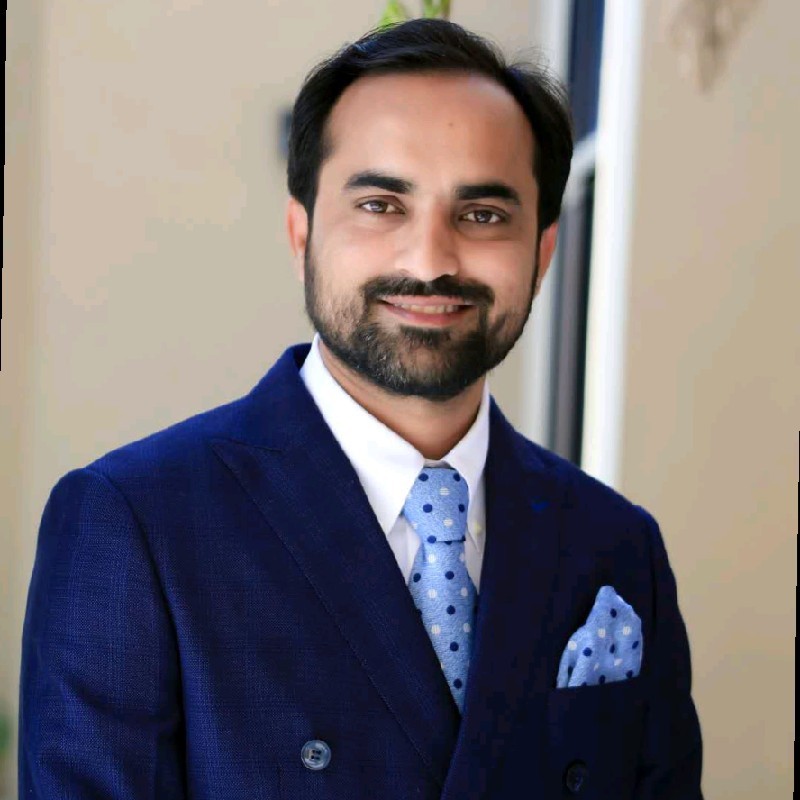
Darren Dahl is a Professor at the University of British Columbia (UBC) Sauder School of Business , holding the RBC Financial Group Professor of Entrepreneurship chair. His research focuses on new product development , creativity , consumer emotions , social influence , and social marketing . Education: BCom from the University of Alberta, PhD from UBC Leadership: Dean of the Sauder School of Business Research Trends: Recent work emphasizes innovation strategies , consumer identity dynamics , ethical marketing , and social impact . He explores how organizational structures influence perceptions, the role of identity in consumption, and the psychological drivers of prosocial behavior. Contact: Office HA 769, Tel: 604-822-8556, Email: darren.dahl@sauder.ubc.ca
Dr James Herbert-Read is an Associate Professor and Whitten Lecturer in Marine Biology at the Department of Zoology, University of Cambridge. He serves as Deputy Head of Department (Postgraduate Education) and leads the Marine Behavioural Ecology Group. His research focuses on understanding how animals, particularly marine organisms, collect and process information from their environments to make behavioral decisions, with emphasis on social interactions, adaptation mechanisms, and ecological constraints. His group employs theoretical frameworks, controlled experiments, and quantitative field studies to investigate behavioral diversity in marine species. Key themes include collective behavior, predator-prey dynamics, camouflage strategies, and the impacts of environmental stressors on animal decision-making. Recent publications highlight work on lionfish vocalization mechanisms, cuttlefish camouflage, citizen science applications in marine research, and behavioral responses to visual and acoustic noise. Scientific awards and affiliations include: Whitten Lecturer in Marine Biology Associate Professor, University of Cambridge He has supervised research projects on topics such as: Social attraction in invasive fish species Evolution of coordinated movement Neurophysiological basis for leadership in shoals Maternal effects on offspring exploration
Professor Sara Dolnicar is an ARC Australian Laureate Fellow at the School of Business, Faculty of Business, Economics and Law, University of Queensland. With degrees in psychology and business administration from Wirtschaftsuniversität Wien, she specializes in market segmentation, sustainable tourism, social marketing, and environmental behavior. Born in Slovenia, raised in Austria, now based in Australia Over 300 refereed publications and 16 ARC grants Recipient of TTRA Distinguished Researcher Award (2017) and Slovenian Ambassador of Science (2016) Her research improves market segmentation methodology, addresses environmental sustainability in tourism, and develops behavioral interventions for eco-friendly tourist practices. She pioneered perceptions-based market segmentation and introduced bi-clustering techniques for improved data analysis. Recent publications focus on towel reuse interventions, buffet waste reduction, and smart sensor systems for hotel sustainability. She supervises PhD students in environmental behavior, tourism carbon emissions, and IoT applications for sustainability. Current grants include 'Mechanisms of Behaviour Change Theory' (2025-2028) and 'Reducing plate waste in hotels' (2021-2025). Key research areas: Sustainable tourism, market segmentation, social marketing Supervised over 15 PhD students in environmental behavior and disability employment Collaborates with industry partners like Energy Queensland and disability organizations
Dr Louise Ashley is an Associate Professor and IHSS Fellow at Queen Mary University of London’s School of Business and Management. Her research focuses on equality, diversity, and inclusion within elite professions such as law, accountancy, and investment banking, with a particular emphasis on socio-economic diversity, gender, and ethnicity. She leads research projects funded by the UK government’s Social Mobility Commission and has advised third-sector organizations like UpReach and the Bridge Group. Her work examines barriers to social mobility and evaluates organizational diversity programs. Dr Ashley’s research includes comprehensive analyses of non-educational barriers to elite professions, socio-economic exclusion dynamics, and gender inequities in professional work environments. She has published in leading journals such as Human Relations and Work, Employment and Society , and her findings have been featured in mainstream media including BBC Radio 4, the New York Times, and The Guardian. Her research grants include a £158,579 AHRC award for interdisciplinary civic theatre research (2021–2022) and a £25,900 Social Mobility and Child Poverty Commission grant (2015). She supervises PhD students exploring topics like feminist identity in Chinese entrepreneurship. Dr Ashley holds roles on multiple advisory committees, including the City of London Corporation Social Mobility Taskforce and the JLL Foundation’s social equality initiatives.
Éric Bélanger is a Professor in the Department of Political Science at McGill University, specializing in Canadian and Quebec politics. His research focuses on electoral behavior, political parties, nationalism, and public opinion dynamics. He holds a PhD from the Université de Montréal and has published extensively on topics such as generational shifts in Quebec nationalism, party realignment, and municipal voting patterns. His work frequently employs quantitative methods, including advanced econometric modeling for election forecasting. Research interests include: Quebec and Canadian political systems Political party competition and realignment Nationalist movements and identity politics Economic voting and fiscal policy impacts Municipal elections and local governance Comparative studies of electoral systems His recent work highlights innovative approaches to forecasting elections in diverse contexts like France and Latin America, while maintaining a strong focus on Quebec-specific issues such as generational voting patterns and the evolving nationalist landscape. Bélanger’s research often bridges theoretical frameworks with empirical analysis, contributing to both Canadian and comparative political science literatures.
Dr. Shadi Hashem is a Research Fellow at the School of Geosciences, University of Aberdeen. His work bridges behavioural economics, agricultural systems, and sustainable food supply chains, with a focus on promoting environmentally and socially responsible production and consumption practices. His research interests lie at the intersection of Behavioural Economics , Sustainable Agriculture , and Entrepreneurship . He investigates consumer behaviour related to sustainable food choices, examines how supply chain collaboration can improve competitiveness—especially for small-scale and disadvantaged farmers—and explores digital innovations such as blockchain technology and knowledge exchange hubs to enhance transparency and sustainability in agri-food systems. Dr. Hashem is currently contributing to the VISIONARY project, a research initiative aimed at understanding the drivers and barriers to transitioning food systems toward sustainability. This work involves interdisciplinary analysis of policy, economic incentives, technological adoption, and social dynamics across global food supply networks. While no specific scientific awards have been listed, his involvement in high-impact sustainability research demonstrates recognition within the academic community. He has not advised any named students in the provided text, nor are specific grants mentioned, but his participation in large-scale collaborative projects suggests active engagement in funded research. He is part of a research team working on sustainable agri-food systems, likely embedded within a larger research group or center focused on environmental sustainability or food security at the University of Aberdeen. The VISIONARY project indicates collaboration with European partners and stakeholders across the agri-food sector.
Femke van Horen is a Full Professor of Consumer Behavior at the Marketing Department of the School of Business and Economics, Vrije Universiteit Amsterdam. She serves as Scientific Director of the VU Behavioural Lab and Associate Editor for the International Journal of Research in Marketing . Her research focuses on product imitation strategies, environmental uncertainty's impact on consumer decisions, and nudging for sustainability. She co-chaired the 2023 EACR Conference and was a visiting scholar at Stanford University. Education: PhD from Tilburg University (2013), followed by postdoctoral research at the University of Cologne's Social Cognition Lab. Joined VU Amsterdam in 2013. Research Interests: Product Imitation: Effectiveness of copycat strategies and brand evaluation dynamics. Environmental Uncertainty: Consumer decision-making during crises or elections. Sustainability Nudging: Behavioral methods to promote eco-friendly actions. Awards & Grants: AMA Research in Practice Award 2019 (for Out-of-Category Brand Imitation ). IJRM Outstanding Reviewer Award 2023. Grants from ACR/Sheth Foundation, University of Cologne, and others. Advising: Co-supervises two PhD students on sustainability and product imitation, and a postdoc on plant-based meat adoption. Labs & Teams: Leads the VU Behavioural Lab, focusing on interdisciplinary consumer research.
David Wainwright is a Senior Lecturer in the Department for Health at the University of Bath, where he convenes the cross-faculty Work, Health and Wellbeing Research Group and serves as Director of Studies for Professional Doctorate in Health programmes. University of Bath, Department for Health Former affiliations: University of Kent (School of Social Policy, Sociology and Social Research), University of Bristol (Social Medicine Department, MRC Collaboration) Research Focus : Intersections of work, health, and wellbeing, emphasizing: Medicalization of occupational stress Extended working life and pension policy Psycho-social drivers of illness behavior Management of medically unexplained illnesses Recent Projects include: Behavior change interventions for extended working life (DWP-funded) Sickness certification for chronic pain Community-based support for intellectual disabilities Health seeking behavior among homeless populations Collaborations span healthcare policy, chronic pain research, and interdisciplinary studies with institutions like Royal United Hospitals Bath NHS Trust and MRC Health Services Research Collaboration.
Ranjeeta Thomas is an Associate Professor of Health Economics at the Department of Health Policy, London School of Economics (LSE). She is Programme Director for the MSc in International Health Policy (Health Economics) and affiliates with LSE Health, the Behavioural Lab, and the Aging and Health Incentives Lab. Prior roles include Research Fellowships at Imperial College London and the University of Oxford. She holds a PhD in Economics from the University of York. Education: PhD in Economics (University of York) Affiliations: LSE Health, Behavioural Lab, Aging and Health Incentives Lab Grants/Awards: Co-investigator on grants from the National Institute of Mental Health (USA) and European & Developing Countries Clinical Trials Partnership. Her research focuses on applied health economics, including drivers of risky health behaviors, incentives for preventative healthcare, and long-term impacts of childhood interventions. She employs randomized field experiments and large-scale data analysis in low-resource settings. Recent work addresses HIV/AIDS prevention strategies, stigma reduction, and cost-effectiveness of health interventions in Sub-Saharan Africa. Labs/Teams: Active in interdisciplinary teams at LSE and collaborating institutions, focusing on global health challenges and behavioral interventions.
Kees van Veen is an Associate Professor at the University of Groningen, affiliated with the Faculty of Behavioural and Social Sciences and the Department of Sociology. His expertise spans Corporate Governance , Policy Evaluation , and Sustainable Food Systems , with significant contributions to International Business & Management and Social Psychology during the pandemic. Education : MSc in Sociology (cum laude) from the University of Groningen. Research Focus : Interdisciplinary work bridging organizational behavior, prosociality, and global health behaviors, leveraging machine learning for cross-national pandemic analysis. His recent publications analyze prosocial behavior , conspiracy beliefs , and lockdown psychology through multi-country longitudinal data, emphasizing UN Sustainable Development Goals . He supervises MSc theses in Business Administration and Sociology and collaborates on open datasets like PsyCorona .
René M.B.M. de Koster is a Full Professor of Logistics and Operations Management at the Rotterdam School of Management (RSM), Erasmus University, where he has been a faculty member since 1995. He holds a PhD from Eindhoven University of Technology (1988) and is a leading expert in warehousing, material handling, and sustainable logistics. PhD, Eindhoven University of Technology, 1988 Professor, RSM, Erasmus University, 1995–present Honorary Francqui Chair, Hasselt University, 2018 His research focuses on warehousing systems , robotics in logistics , container terminals , and behavioural operations . He integrates operations research with real-world logistics challenges, emphasizing sustainability and automation. His work contributes to UN Sustainable Development Goals related to responsible consumption and industry innovation. The most recent publications highlight a strong trend toward autonomous systems and AI-driven logistics , particularly in robotic fulfillment, dynamic routing, and human-robot collaboration. These works reflect interdisciplinary engagement with computer science, industrial engineering, and behavioural science. Notable scientific awards include: IISE Annual Conference Best Student Paper Award (2024) Transportation Science Paper of the Year (2023) EJOR Best Paper Award (2023) Best European Journal of Operational Research Review Paper (2022) Best Paper Finalist at major logistics conferences Professor de Koster has supervised over 30 students and is actively involved in editorial service for top journals such as Transportation Science , Production and Operations Management , and International Journal of Production Research . He is chairman of Stichting Logistica and founder of the Material Handling Forum, contributing significantly to both academic and industry advancement in logistics. He leads research in advanced logistics labs focusing on robotic sorting, mobile fulfillment, and sustainable supply chains, often in collaboration with European institutions and industry partners.
Dr Wasim Ahmad is a Lecturer in Marketing at the Department of Marketing, Lancaster University Management School (LUMS), having joined the institution in January 2024. His prior academic appointments include Monash University, Florida State University, Teesside University, and Fujian University of Technology, where he conducted research, taught undergraduate/postgraduate modules, and led curriculum development. Education: Ph.D. in Marketing, University of International Business and Economics PostDoc, Florida State University Research Interests: Dr Ahmad investigates consumer behaviour with emphasis on negative emotions (brand hate, betrayal) and extreme responses to brands across cultural contexts. His work spans sustainability-oriented innovation in B2B firms, eco-brand strategy, and cross-cultural CSR implementation—particularly during crises like the pandemic. He employs quantitative methodologies including experimental designs and meta-analysis, frequently examining digital marketing phenomena such as virtual influencers, travel apps, and dark patterns in online interfaces. Publication Trends: His 2023-2025 output reveals concentrated research on brand hate consequences in B2B relationships, sustainability innovation linked to triple-bottom-line performance, and cross-cultural digital behaviour (e.g., social media addiction, travel app usage). Key journals include Journal of Business Research , Industrial Marketing Management , and Annals of Tourism Research , demonstrating interdisciplinary reach across marketing, sustainability, and tourism. Scientific Awards: No specific awards, prizes, or fellowships mentioned in source materials Advising and Grants: Dr Ahmad actively supervises PhD candidates in green marketing topics (product sustainability, eco-brand orientation) using quantitative approaches. He teaches core modules including International Marketing (MKTG101), Strategic Marketing (MKTG301), and Marketing Research (MKTG212). No grant funding details were provided in the directory. Labs and Teams: No dedicated research labs or teams specified in current affiliation Collaborative work evident in B2B sustainability studies with international co-authors
Simran Kaur is a Senior Lecturer and Head of the Education Academy at Monash University Malaysia, School of Business, Department of Management. She holds a PhD in Management from the same institution and has a strong interdisciplinary background in psychology and business. Her academic leadership includes roles as Discipline Coordinator (2023–2024) and Change Champion for the Digital Learning Uplift Project. Her educational qualifications include: Bachelor of Psychological Science and Business (Hons.), Monash University Malaysia Doctor of Philosophy (PhD) in Management, Monash University Malaysia Postgraduate Certificate in Academic Practice (PGCAP), Lancaster University Simran Kaur’s research focuses on behavioural aspects in management and marketing, with key interests in consumer behaviour, brand management, decision-making, Islamic marketing, and higher education pedagogy. She integrates psychological insights into marketing theory, exploring how identity, religion, and digital media influence consumer choices. Her teaching philosophy emphasizes critical thinking, collaboration, and experiential learning, reflected in her training in LEGO® SERIOUS PLAY®. Her recent publications span topics such as sacred consumption, influencer marketing, country image during crises, and Halal consumer behaviour. These works reflect a strong trend in understanding cultural, emotional, and cognitive drivers of consumer decisions, particularly in Asian and Muslim-majority contexts. Her scientific awards highlight her excellence in teaching and academic development: Education Excellence Award (2023) Purple Letter for Teaching Excellence, S1 2024 Purple Letter for Teaching Excellence, S2 2022 Fellow of the Higher Education Academy (2021) She is actively involved in academic service, including peer review for Marketing Intelligence & Planning , supervision of non-HDR students, and organizing curriculum reviews and academic conferences. She serves as an invited speaker and contributes to digital pedagogy innovation. While no formal lab or research center is mentioned, her role as Change Champion and involvement in projects like the Digital Learning Uplift indicate leadership in educational transformation.
Niels Dingemanse is a tenured Professor of Behavioural Ecology at Ludwig Maximilians University (LMU) in Munich, Germany, and leads the Evolutionary Ecology of Variation research group at the Max Planck Institute for Ornithology. His academic journey includes roles as a Postdoctoral Research Fellow at the University of Groningen and the University of Wales, Bangor. He holds a PhD in natural sciences from Utrecht University (2003) and an M.Sc. in Ecology from the University of Groningen (1997). His research focuses on evolutionary and behavioural ecology, particularly the ecological and evolutionary significance of individual variation in behaviour, physiology, and life-history traits. Key themes include personality evolution, indirect genetic effects, and the integration of genomic approaches with ecological field studies. Dingemanse has contributed to projects like the Great Tit HapMap initiative, exploring genomic variation across continental scales. Publications emphasize interdisciplinary methods, combining field experiments with genomic and statistical tools. His work addresses topics such as mate choice evolution, the role of environmental fluctuations in shaping social plasticity, and the genetic basis of vocal rhythms in birds. Grants and fellowships include the Veni Innovational Research Incentives Scheme (Netherlands Organisation for Scientific Research) and ALW open competition grants. He has advised numerous postdoctoral researchers and leads collaborative projects across Europe.
Evita Papazikou serves as a Lecturer in Transport Engineering at the School of Engineering, University of the West of England (UWE Bristol), where she contributes to the Centre for Transport and Society and collaborates with the Bristol Robotics Laboratory's Connected & Autonomous Vehicles Centre. Her academic qualifications include: Civil Engineering (BEng and MEng) from Aristotle University of Thessaloniki MSc in Planning, Organisation, and Management of Transport Systems, Aristotle University of Thessaloniki PhD in Automated Systems and Driver Behaviour (Road Safety) from Loughborough University, sponsored by the Insurance Institute for Highway Safety with access to SHRP2 NDS data Dr. Papazikou's research focuses on road safety, connected and automated vehicles, driver behaviour analysis, and smart infrastructure. She investigates accident causation through statistical modeling, develops driver monitoring systems, and explores human factors in transportation. Her work integrates traffic simulation with mobility data fusion from vehicles, sensors, and infrastructure to enhance safety in future mobility systems, particularly in cooperative, connected, and automated environments. Her recent publications (2023-2025) reveal a concentrated research trajectory examining safety impacts of dedicated lanes for autonomous vehicles, parking policy implications in automated eras, and driver fatigue management. She consistently employs naturalistic driving data and traffic microsimulation to analyze driver-vehicle-environment interactions, with increasing emphasis on real-world intervention effectiveness and environmental sustainability in mobility systems. Scientific Awards: No specific awards were mentioned in the provided information. Dr. Papazikou has secured significant research funding through competitive programs including Horizon 2020, Innovate UK, and the Department for Transport. Her project portfolio demonstrates substantial industry collaboration, particularly with Ford, and includes: LEVITATE: Assessing societal impacts of Connected and Automated Vehicles SafetyCube: Developing an innovative road safety decision support tool i-DREAMS: Creating a smart driver and road environment assessment system DDRST: Building a data-driven road safety tool for hotspot identification TRIP: Developing a driver culpability assignment tool for road injury prevention She actively contributes to interdisciplinary research through her affiliations with the Centre for Transport and Society and the Bristol Robotics Laboratory's Connected & Autonomous Vehicles Centre, where she bridges engineering, human factors, and policy development for next-generation transportation systems.