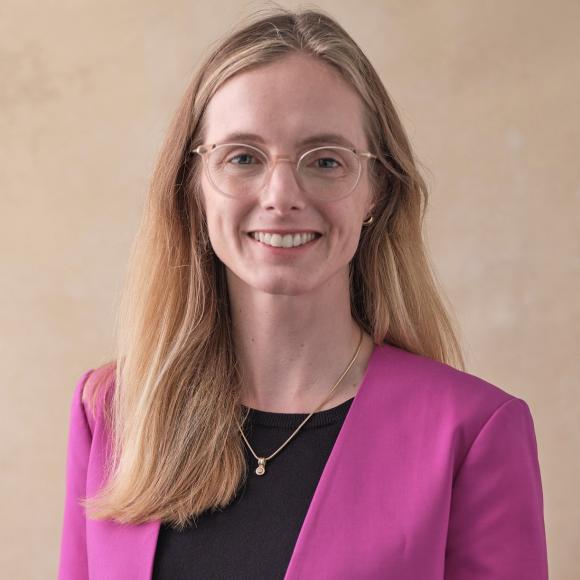
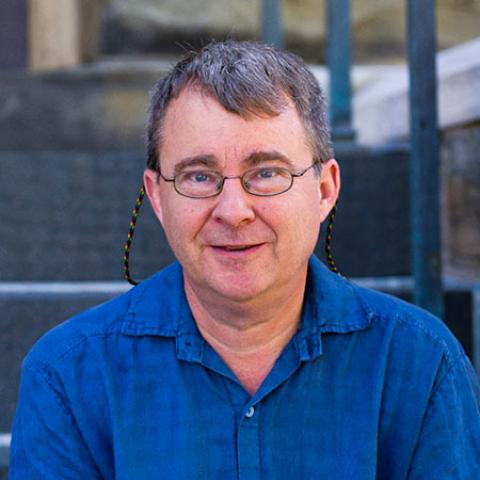
Carolin Pflueger is an Associate Professor at the Harris School of Public Policy , University of Chicago, and holds affiliations as a NBER Faculty Research Fellow and CEPR Research Affiliate . Her work bridges macroeconomics and finance, focusing on inflation dynamics, monetary policy impacts, and financial market risk perception. University: University of Chicago School: Harris School of Public Policy Affiliations: NBER, CEPR Role: Associate Professor Her research explores how inflation and monetary policy influence financial markets, including models connecting Treasury bond risk to stagflation drivers and analyzing economic agents' perceptions of policy uncertainty. Recent work leverages cross-sectional data of stock prices and economic forecasts to quantify macrofinancial linkages. Notable scientific recognitions include the Fama DFA Prize (2023), AQR Insight Award Finalist (2018), and the Arthur Warga Award (2014). She has received NSF Grant 2149193 for macrofinance research. Contact: cpflueger@uchicago.edu | GitHub Code Repositories
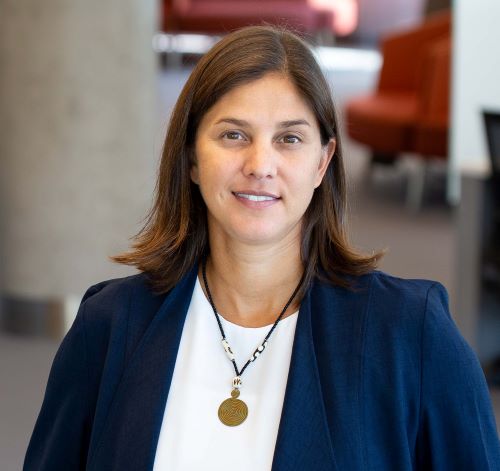
Claudia R. Binder is Full Professor at EPFL's School of Architecture, Civil and Environmental Engineering, leading the Laboratory for Human-Environment Relations in Urban Systems (HERUS) since 2016. Previously, she held professorships at the University of Munich (2011-2016), University of Graz (2009-2011), and University of Zurich (2006-2009). She served as Dean of EPFL's ENAC School from 2020-2023 and holds advisory roles with Swiss federal institutions including the Mercator Foundation since 2024. Her academic foundation includes a Biochemistry degree and PhD in Environmental Sciences from ETH Zurich, followed by postdoctoral research at the University of Maryland. This interdisciplinary background underpins her research approach spanning natural and social sciences. Professor Binder's work centers on urban sustainability transitions, examining urban metabolism dynamics through systems science frameworks. She investigates energy-food-transport interdependencies in cities using transdisciplinary methods that integrate material flow analysis, spatial modeling, and socio-technical assessments. Her research particularly emphasizes regulatory mechanisms and transformation drivers in human-environment systems, with case studies across Swiss and global urban contexts. Recent publications reveal evolving focus from foundational urban metabolism studies toward actionable transition strategies. Her 2024-2025 work increasingly addresses social tipping dynamics, circular decarbonization, and spatially explicit waste management, demonstrating methodological innovation through geo-referenced material flow analysis and participatory backcasting frameworks. Key thematic clusters include energy innovation diffusion, plastic waste governance, and demand-side flexibility in residential systems. She actively mentors 7 current PhD candidates while supervising 11 graduates since 2018, with research spanning urban metabolism modeling, sustainability assessment, and transition governance. Her leadership extends to Swiss National Science Foundation committees and National Research Program 71 on energy consumption management. At EPFL, she directs the HERUS laboratory which develops the Sustainability Solution Space methodology for urban assessment. The lab operates at the intersection of data science, environmental engineering, and social theory, maintaining strong field connections in Switzerland, Indonesia, and Germany for empirical validation of transition models.
Dr. IKM Mokhtarul Wadud is a Senior Lecturer in the Department of Economics at The University of Sydney, Australia. Previously, he held roles as Senior Lecturer at Deakin University, Lecturer at Monash University Malaysia, and Assistant Professor at the University of Rajshahi, Bangladesh. He earned his PhD in Economics from the University of Wollongong in 2001. His research focuses on productivity analysis, macroeconomic policy, energy economics, and applied econometric modeling. Notable contributions include co-authoring the Asia Pacific edition of Introductory Econometrics (Cengage Learning) and publishing in journals like Economic Modelling and Energy Policy . His recent work addresses financial sustainability strategies in higher education during the pandemic and the impact of economic policy uncertainty on property prices in Australia. Dr. Wadud has presented at international conferences and served as a reviewer for multiple journals. His research spans diverse regions, including Australia, Thailand, Malaysia, and Bangladesh, with analyses of oil price volatility, monetary policy effects, and industrial competitiveness.
Karoline Faust is an Associate Professor at KU Leuven, affiliated with the Laboratory of Molecular Bacteriology (Rega Institute) and the Faculty of Medicine . She contributes to the iSi Health and Leuven One Health institutes, and serves on senior academic councils. Her research spans microbial systems biology, focusing on community dynamics and network analysis. Education: PhD in bioinformatics (2010, KU Leuven) Affiliations: KU Leuven, ISME Journal editorial board, Belgian Society for Microbiology Her research investigates microbial community dynamics , systems biology approaches to microbiomes, and bioinformatics tool development . She specializes in modeling human gut microbiota , synthetic microbial communities , and environmental microbiomes (e.g., microplastic impacts on Daphnia microbiomes). Her work integrates metabolic modeling , network analysis , and experimental systems to understand microbial interactions. Recent publications highlight her contributions to microbial network inference , 16S rRNA sequencing protocols , microfluidics , and ecological modeling of microbiomes. She develops tools like manta , miaSim , and CoNet to analyze community structures. Teaching: Karoline co-teaches courses in microbiology, bioinformatics, and network analysis at KU Leuven, and has contributed to international workshops on microbial network inference. Scientific Engagement: She serves as Senior Editor at ISME Journal and Secretary of the Belgian Society for Microbiology .
Professor John W. Edmunds is a leading academic in Infectious Disease Modelling at the London School of Hygiene and Tropical Medicine (LSHTM). Holding a Professor position since 2013 and serving as Dean of the Faculty of Epidemiology and Population Health (2013-2019), he combines mathematical, statistical, and economic models to inform public health policy. His part-time role at the Health Protection Agency (HPA) since 2008 underscores his policy advisory contributions. PhD in Infectious Disease Modelling (Imperial College, 1994) MSc in Health Economics (University of York, 1995) BSc in Biology (Imperial College, 1989) His research focuses on understanding disease transmission and optimizing control strategies. He has pioneered methods integrating social contact surveys , participatory surveillance (e.g., Influenzanet), and economic analysis to evaluate vaccines and interventions. Recent work includes SARS-CoV-2 dynamics , Ebola spatial forecasting , and typhoid vaccine prioritization . His 15 most recent publications highlight social contact patterns (Reconnect, CoMix studies), vaccine impact (HPV, typhoid), and real-time outbreak analytics (Ebola, cholera). Key trends include digital epidemiology , behavioral surveillance , and cross-country modeling for global health. Knighthood (2024) for services to epidemiology Weldon Memorial Prize (2022) for biostatistics contributions FMedSci (2018) for medical science excellence OBE (2016) for public service As an educator, he teaches "Modelling and the Dynamics of Infectious Diseases" and co-organizes "Pandemics: Emergence, Spread and Response" . Current grants include National Institute for Health and Care Research projects on post-pandemic surveillance and Bill & Melinda Gates Foundation funding for polio eradication. He leads collaborations with the Centre for Mathematical Modelling of Infectious Diseases , Vaccine Centre , and Health in Humanitarian Crises Centre , while advising UK and WHO committees on zoonotic influenza , variants , and testing programs .
Dr. Manisha Kulkarni is a Professor at the School of Epidemiology and Public Health, University of Ottawa, where she holds the University Research Chair in Climate Change and Emerging Diseases. She is also the Director of the INSIGHT (Interdisciplinary Spatial Informatics for Global Health) research lab and serves as Scientific Director of the Canadian Lyme Disease Research Network (TickNet Canada). Her work spans global public health, with a focus on vector-borne and zoonotic diseases. PhD in Medical Entomology, McGill University (2006) BSc in Environmental Biology, McGill University (2001) Dr. Kulkarni's research centers on the socio-ecological determinants of infectious disease emergence, particularly malaria, Lyme disease, and West Nile virus. She applies population surveys, entomological field sampling, molecular diagnostics, and GIS to study spatio-temporal patterns and the impacts of climate change and landscape transformation on disease transmission. Her work emphasizes One Health approaches and capacity building in low-resource settings. Her recent research trends show a strong focus on geospatial modeling of vector-borne diseases, climate change adaptation, urban tick surveillance, and international collaborations in Tanzania, Benin, and Latin America. She leads interdisciplinary projects integrating drone mapping, citizen science (e.g., eTick.ca), and community participation to identify disease risk factors. Scientific awards and recognitions include: University Research Chair in Climate Change and Emerging Diseases Ontario Early Researcher Award Faculty of Medicine Award for Leadership in Global Health (2023) Researcher of the Year, Faculty of Medicine (2019) Member, College of New Scholars, Royal Society of Canada NSERC Discovery Grant and CIHR funding Dr. Kulkarni has successfully advised multiple PhD and Master’s students and leads major funded projects supported by CIHR, PHAC, CFI, IDRC, and NSERC. She has held leadership roles as Associate Dean of Global Health (2021–2024) and currently serves on the CIHR Institute of Infection and Immunity advisory board. Her lab, INSIGHT, fosters an interdisciplinary training environment combining field, lab, and analytical methods for global health research. Key research teams and collaborations include: INSIGHT Lab, University of Ottawa Pan-African Malaria Vector Research Consortium (PAMVERC) Canadian Lyme Disease Research Network (TickNet Canada) London School of Hygiene & Tropical Medicine (LSHTM) National Microbiology Lab, PHAC Centre de Recherche Entomologique de Cotonou (CREC), Benin
Thomas Chaney is a Professor of Economics at the University of Southern California (USC), holding the John Elliott Chair in Economics. He is affiliated with Sciences Po’s Department of Economics and leads the ERC Project HTMG. His research focuses on International Trade, Networks, and Finance, with notable contributions to historical trade dynamics and modern financial constraints. Chaney is a CEPR and CESifo Research Fellow, reflecting his academic standing. Research Interests: Chaney’s work bridges historical and contemporary economic phenomena, analyzing trade networks, collateral constraints in corporate finance, and the impact of migration on innovation and urban development. His research often employs innovative methodologies, such as combining archaeological data with economic models to study ancient trade systems. Articles Trends: Recent work examines Bronze Age trade networks, modern corporate investment dynamics, and the role of real estate collateral. His 2024 articles explore ancient trade’s end and contemporary empathy’s economic implications, showcasing interdisciplinary approaches. Earlier papers like Trade, Merchants, and the Lost Cities of the Bronze Age (2019) exemplify his historical focus. Grants & Awards: Chaney leads the ERC-funded HTMG project and holds prestigious fellowships. His work has been published in top journals and spans empirical trade analysis, financial economics, and historical methods. Labs/Teams: Active in USC’s Economics Department and collaborates with global institutions like Sciences Po and the Bank for International Settlements (BIS). His research group integrates economists, historians, and data scientists for interdisciplinary projects.
Nick Graham is a Professor in the School of Computing at Queen's University, Canada. He holds a PhD from TU Berlin and teaches courses like Game Architecture and Digital Game Development. His research focuses on next-generation digital games, particularly exergames (combining exercise with play) and educational games. He directs the EQUIS Lab, which develops accessible gaming solutions for populations like children with cerebral palsy and spinal cord injury patients. Graham previously served as VP Research & Development at Namzak Labs and has held academic roles at York University and Queen's University. Education: PhD (Dr.-Ing.) in Engineering - TU Berlin (1995) MSc in Computer Science - Queen's University (1988) BSc in Computer Science - University of Toronto (1985) Research Interests: Exergames promoting physical activity through gaming Accessibility in game design for persons with disabilities Game networking and distributed algorithms Augmented reality tools for education Lab & Collaborations: The EQUIS Lab develops projects such as the Liberi exergame and conversion tools for existing games like Skyrim into exergames. Techniques like 'Partial Automation' enable gameplay accessibility. Professional Roles: Director, EQUIS Lab Member, IFIP Working Group 2.7 on User Interface Engineering VP Research & Development, Namzak Labs (2000–present)
Leena Aarikka-Stenroos is a Professor at Tampere University, leading the Research Centre for Managing Circular Economy (ManCE). She holds a Doctor of Science degree in Economics and Business Administration from Turku School of Economics (2011). Her research focuses on circular economy innovation, business models, sustainability transitions, and value creation mechanisms. She has pioneered studies on catalysts for circular economy ecosystems, B2B customer referencing, and the role of digital technologies in enabling circular value chains. Academic Qualification: PhD in Economics and Business Administration (Turku School of Economics, 2011) Roles: Head of Research Centre for Managing Circular Economy, Tampere University Research Interests: Circular Economy, Sustainability, Business Models, Innovation Management, Value Creation Her work contributes to UN Sustainable Development Goals, particularly addressing climate action and responsible consumption. Key contributions include frameworks for circular business model innovation and stakeholder engagement strategies in sustainability transitions. She has received prestigious awards such as the Alex Gofman Award (2016) and multiple best paper recognitions. Her research spans industries like construction, textiles, and healthcare, emphasizing cross-sector collaboration. Recent articles explore emotional dynamics in innovation, ethical value co-creation, and AI-driven value creation in B2B contexts. She actively collaborates internationally, contributing to conferences and editorial boards. Her work bridges theoretical insights with practical business strategies for environmental sustainability.
Prof. Daniel Memmert is a Professor at the German Sport University Cologne, leading research in Sport Informatics and Sports Games within the Institute of Exercise Training and Sport Informatics. His work focuses on cognitive aspects of sports performance, decision-making, and data-driven analysis in football (soccer) and other sports. He has published extensively on topics like penalty kick strategies, home advantage dynamics, artificial intelligence applications in coaching, and route-setting in climbing. Memmert's research bridges sports science, computer science, and psychology, with over 550 publications and 41 projects to his name. He frequently engages with media, explaining complex sports phenomena to the public. Key Research Areas: Football analytics, cognitive psychology in sports, sports technology, decision-making under pressure Media Contributions: Over 50 media features discussing topics such as AI in coaching, referee bias, and athlete creativity Projects: Includes initiatives on sports data visualization, performance metrics, and prevention of sports betting addiction His work emphasizes translating academic findings into practical tools for athletes, coaches, and sports organizations, combining rigorous data analysis with real-world applications.
Masato Kato serves as Professor in the Department of Biochemistry at the University of Texas Southwestern Medical Center since 2020 and concurrently as Team Leader at Japan's National Institutes for Quantum and Radiological Science and Technology. His academic trajectory includes progressive appointments from Assistant Professor (2004-2014) to Associate Professor (2014-2020) at UT Southwestern, with prior postdoctoral training at Harvard Medical School and Nara Institute of Science and Technology. 2020-present: Professor, Department of Biochemistry, UT Southwestern 2020-present: Team Leader, National Institutes for Quantum and Radiological Science and Technology, Japan 2014-2020: Associate Professor, Department of Biochemistry, UT Southwestern 2010-2014: Assistant Professor, Department of Biochemistry and Internal Medicine, UT Southwestern 2004-2010: Assistant Professor, Department of Internal Medicine, UT Southwestern 1999-2004: Postdoctoral Fellow, Ellenberger Lab, Harvard Medical School 1998-1999: Postdoctoral Fellow, Hakoshima Lab, Nara Institute of Science and Technology Dr. Kato's research pioneers the biophysical characterization of protein phase separation, particularly focusing on low-complexity domains (LCDs) in neurodegenerative disease contexts. His work establishes fundamental mechanisms of biomolecular condensate formation, including hydrogel polymerization, liquid-solid transitions, and mutation-induced dysregulation in ALS/FTD. Key contributions demonstrate how C9orf72-encoded poly-dipeptides disrupt nucleocytoplasmic transport and how redox states regulate Ataxin-2 phase behavior, bridging structural biochemistry with pathological mechanisms. Analysis of his 22 publications reveals a cohesive research program centered on LCD-driven phase transitions. The most recent 15 articles (2012-2019) systematically investigate pathological aggregation in neurodegeneration, structural basis of condensate formation, and regulatory mechanisms like phosphorylation and oxidation. This body of work establishes LCDs as central players in both physiological RNA granule assembly and disease-associated solidification, with strong emphasis on C9orf72-related ALS/FTD mechanisms. Dr. Kato maintains active leadership within the McKnight Laboratory at UT Southwestern, where his team employs integrated approaches spanning structural biology, cell biology, and biophysics to dissect phase separation mechanisms. His collaborative network includes prominent neuroscience and biochemistry groups, with co-authorship on key studies in Cell, Science, and PNAS.
Jeff Schneider is a Research Professor at the Robotics Institute within the School of Computer Science at Carnegie Mellon University. His research focuses on active learning, data mining, reinforcement learning, optimization, and intelligent control , applied to industrial and commercial challenges. Current PhD Students : Anoushka Alavilli, Benjamin Freed, Tejus Gupta, Albert Xu, Brian Yang Current Masters Students : Wen-Tse Chen, Xintong Duan, Aman Mehra, Vedant Mundheda, Zhouchonghao Wu Past PhD Students : J. Andrew Bagnell, Viraj Mehta, Matthew Tesch Past Masters Students : Ravi Tej Akella, Swapnil Pande, Siddharth Venkatraman Schneider's research bridges machine learning and autonomous systems , particularly in reinforcement learning , multi-robot coordination , and self-driving car technology . His work emphasizes practical applications of learning algorithms in real-world scenarios. His recent publications highlight advancements in offline reinforcement learning , multi-agent policy coordination , and behavior planning for autonomous vehicles . These studies often integrate deep learning and probabilistic modeling to address complex control and decision-making problems. Labs: Auton Lab CMU Center for Autonomous Vehicle Research Consulting & Industry Impact: Schneider has consulted for organizations like Uber ATG, Psychogenics, and Schenley Park Research, applying machine learning to domains such as self-driving cars , nuclear fusion , marketing , and drug discovery .
Prof. Dr. Matthias A. Tietz is an Assistant Professor and leads the Competence Center for Entrepreneurship at the St.Gallen Institute of Management in Asia (SGI-HSG), part of the University of St.Gallen in Singapore. He holds affiliate positions at IE Business School (Madrid), INDEG ISCTE (Lisbon), and the Mediterranean School of Business (Tunis). His academic journey includes degrees from Ivey Business School (Ph.D. in Entrepreneurship), Universidad del Pacífico (Peru), and Nanyang Business School (MBA, Singapore). Research focuses on entrepreneurial decision making, corporate innovation in SMEs and MNCs, and business model copycats. He regularly presents at global conferences like the Babson College Entrepreneurship Research Conference and Academy of Management Annual Meetings. Prior to academia, he consulted for companies like DHL, Henkel, and Sulzer Engineering, focusing on HR and turnaround management. He teaches courses on business consulting, social entrepreneurship in Southeast Asia, and executive education programs globally. Awarded multiple Best Paper Awards (2012, 2014, 2020) and Best Lecturer Awards across IE University programs (2019-2020). Engaged in startups as an advisor and investor, emphasizing cultural diversity in entrepreneurial contexts. Active in pro bono projects, such as supporting rural entrepreneurs in Peru.
Christopher Robert Way is an Associate Professor of Government at Cornell University, affiliated with the College of Arts and Sciences. He is a core faculty member of the Institute for European Studies and part of the Reppy Institute for Peace and Conflict Studies, where he contributes to the Peace Studies Minor. His research focuses on comparative political economy, international relations, and nuclear proliferation, with a particular emphasis on the effectiveness of non-proliferation regimes and the political drivers of weapons development. Way's academic interests span international/comparative political economy, the political economy of OECD democracies, and the impact of electoral cycles on policy-making. His work integrates quantitative and qualitative methods to analyze topics such as the relationship between conventional arms transfers and nuclear proliferation, the role of political insecurity in financial market liberalization, and the effects of economic interdependence on military conflict. His recent research on paid sick leave policies and democracy’s role in capitalism reflects his broader engagement with public policy and institutional adaptation. Way has also contributed to debates on nuclear energy as an 'ambiguous technology' and the dynamics of the Nuclear Non-Proliferation Treaty.
Associate Professor Jiwon Kim is a leading researcher in Transport Engineering at the University of Queensland's School of Civil Engineering. She serves as Director of Higher Degree by Research and was a DECRA Fellow from 2019-2022. Holding degrees from Korea University and Northwestern University, she specializes in AI/ML applications for transportation systems. PhD, Northwestern University BS & MS, Korea University Her research focuses on Artificial Intelligence and Machine Learning applications in transportation, including: Deep learning for traffic management Reinforcement learning in mixed traffic environments Multi-agent systems for urban mobility optimization Spatiotemporal trajectory analysis Recent publications demonstrate expertise in: Eco-driving strategies Traffic incident prediction Queue length estimation Crash risk modeling Scientific recognition includes: ARC DECRA Fellowship (2019-2022) She supervises doctoral students in: Transportation data analytics Autonomous vehicle systems Intelligent traffic management Current projects explore real-time traffic monitoring, synthetic mobility data generation, and connected vehicle technologies.