Kate Dixon is an Instructor in the School of Business at Saint Martin's University and serves as Director of Credit Review at Heritage Bank. Her leadership roles span Enterprise Risk Management, compliance, and financial oversight. She has over fifteen years of experience in the Olympia/Lacey area, with expertise in credit risk assessment, loan portfolio management, and financial control systems. Professional background includes managing litigation and loan workouts in commercial banking, leading compliance examinations at the Washington State Department of Financial Institutions, and driving bank transformation initiatives. Her work emphasizes risk mitigation, regulatory compliance, and enhancing organizational financial processes. No academic articles or awards are explicitly mentioned in the provided text. Current roles focus on educational instruction and independent credit risk evaluation for Heritage Bank's Board committees.
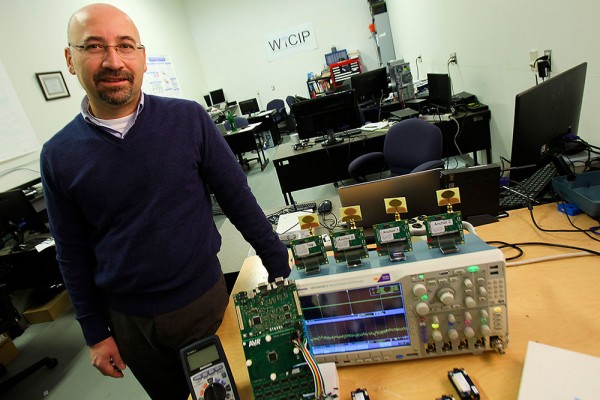
Professor Kemal Tepe is a faculty member in the Faculty of Engineering at the University of Windsor, specializing in wireless communication and information processing. His research focuses on vehicular networks, cognitive radio systems, and smart grid technologies. He leads the Wireless Communication and Information Processing Lab , where he develops solutions for autonomous driving systems, cybersecurity in vehicle-to-infrastructure communication, and spectrum sensing techniques. In 2016, he was awarded the Medal of Excellence by the Faculty of Engineering for his dedication and service. Tepe’s work bridges theoretical advancements and practical applications, addressing challenges in autonomous systems, machine learning for anomaly detection, and IoT security. His contributions include pioneering methods for detecting adversarial behavior in vehicular networks and improving spectrum utilization through probabilistic modeling. Collaborations with industry partners like Ford Motor Company and involvement in initiatives such as the Perspective Magazine automotive research highlight his industry-relevant research. His research interests span a wide range of domains including: Autonomous vehicle safety and communication protocols Cognitive radio networks and spectrum management Machine learning for network security and anomaly detection Wireless sensor networks and energy-efficient protocols Smart grid integration and communication architectures Tepe’s publications emphasize practical implementations, such as real-time routing protocols for wireless sensor networks and hardware designs for cognitive radio systems. His lab’s innovations have been showcased in industry-relevant platforms, demonstrating the real-world impact of his work.
Simone Ferlin is an Adjunct Senior Lecturer at Karlstad University and a Senior Performance Engineer. She holds a PhD in Computer Science from Simula Research Lab and Universitetet i Oslo (2017), focusing on robustness in multipath transport protocols like MPTCP. Her research spans network performance, security, and congestion control in mobile/5G networks and the Internet. She collaborates actively with academia and industry, co-supervising students in areas such as edge computing, container orchestration, and distributed systems. Affiliations: Department of Informatics, Karlstad University; Red Hat Research; Ericsson R&D. Education: PhD (2017), Simula/UiO; Master’s and Undergraduate studies emphasized networking and electronics. Her work includes projects like AIDA (AI-driven edge networking) and DRIVE (latency-sensitive mobile services). She has published over 50 papers on topics like QUIC, eBPF, and containerized microservices. Awards include the Best Paper at IEEE ICIN 2021 and ANRP 2025 Prize. Teaching responsibilities include Future Internet Design and Service Quality . Advising spans 15+ students across institutions like TU Berlin, KTH, and Unifesp. She chairs conferences (e.g., ACM SIGCOMM 2025) and serves on editorial boards (IEEE Communications Magazine). Key interests: network observability, low-latency protocols, and sustainability in networking.
Associate Professor Yun Lou is a Full-time Faculty member and Associate Dean (Research) at the School of Accountancy (SOA), Singapore Management University (SMU). She holds a PhD in Accounting from London Business School (2012). Her research focuses on debt contracting mechanisms and corporate disclosure strategies, with publications in top journals like Journal of Accounting Research and Management Science . She teaches courses on Accounting Thought, Governance, and Financial Statement Analysis. Education : PhD in Accounting, London Business School, 2012 Research Interests : Examines how corporate disclosure practices interact with debt contracts, exploring topics like litigation disclosures' impact on bond terms, accounting quality's role in debt markets, and governance mechanisms driving transparency. Her work bridges accounting information systems, executive compensation, and financial intermediation challenges. Awards : Tier 2 Academic Research Fund (AcRF), MOE Singapore SMU School of Accountancy Research Award (2018 and 2020) Grants & Advising : Guides PhD candidates in accounting research, including Cao Huijing (DBA) and Zhao Yuan (PhD). Her research is supported by Singapore's Ministry of Education funding. Labs/Teams : Contributes to SMU's strategic priorities in Digital Transformation and Sustainable Living through research on corporate governance frameworks and financial reporting innovations.
Dylan Schwilk is an Associate Professor in the Department of Biological Sciences at Texas Tech University, where he conducts research and mentors graduate students in plant and fire ecology. He is based in the College of Arts and Sciences and leads the Schwilk Lab, which investigates plant flammability, community assembly, and climate change impacts in fire-prone ecosystems. Education: B.A. in Biology and English & Comparative Literary Studies, Occidental College (1996) Ph.D. in Ecology and Evolution, Stanford University (2002) His research interests center on plant ecology and evolution, with a focus on how fire acts as a selective force shaping plant traits and community dynamics. He integrates field experiments, garden studies, comparative phylogenetic methods, and theoretical models to explore how plants influence fire behavior and how fire, in turn, drives evolutionary adaptations. Key areas include plant flammability, the interaction of drought and temperature on tree performance, and the ecological significance of fire-adapted traits in semi-arid systems. His work has implications for understanding vegetation shifts under climate change and improving fire management strategies. His recent publications reveal a strong focus on fire ecology, functional traits, and community assembly. Trends in his work include the use of trait-based approaches to predict fire behavior, the role of phylogenetic diversity in mediating ecosystem responses, and the evaluation of fuel reduction techniques. He has published in top journals such as Ecology Letters , Journal of Ecology , and Ecological Applications , demonstrating a consistent and impactful research trajectory. Scientific Awards: No awards listed in the provided text. Dylan Schwilk is actively advising graduate students, including Xiulin Gao, and is currently accepting new Master’s and Ph.D. students. He emphasizes the development of independent research projects aligned with students' professional goals and encourages applications for external funding such as the NSF Graduate Research Fellowship. His lab collaborates with researchers like Helen Poulos (Wesleyan University) on ecophysiological mechanisms controlling tree distributions. The Schwilk Lab utilizes field sites in regions such as the Sierra Nevada and northern Sierra Madre Oriental, conducting multi-species analyses of plant responses to environmental stressors.
Michel Coleman is a Professor of Epidemiology and Vital Statistics at the London School of Hygiene and Tropical Medicine (LSHTM), where he has led the Cancer Survival Group since 1995. His work focuses on cancer incidence, mortality, and survival disparities across socioeconomic, geographic, and ethnic groups , with applications to public health policy . He co-directs LSHTM's annual short course on "Cancer survival: principles, methods and applications" and supervises doctoral students. Academic Background : BA (Oxford, 1971), BM BCh (Oxford, 1975), MSc Epidemiology (LSHTM, 1981), MFCM (1985), FFPH (2006) Professional Roles : Honorary Consultant in Oncology (UCL Hospitals NHS), Visiting Professor (Newcastle University), Cybersecurity Forum member (LSHTM) His research drives the CONCORD program , a series of global cancer survival studies spanning 31 countries (CONCORD-1, 1999) to 71 countries (CONCORD-3, 2018) and 350+ registries in CONCORD-4 (2023–2025). This includes analyzing 90 million adult and 650,000 pediatric cancer cases to assess 30-year survival trends and pandemic impacts. Scientific recognition includes the Calum S. Muir Memorial Award (2018) for advancing cancer registry capacity and training. Current grants from St Jude Children’s Research Hospital , Cancer Research UK , and Institut National Du Cancer fund ongoing CONCORD-4 work. His team collaborates with 720 CONCORD Working Group members and 25 Lancet Global Commission colleagues.
Dr. Yang Xing is a Senior Lecturer in Applied Artificial Intelligence for Engineering at Cranfield University's Centre for Autonomous and Cyberphysical Systems, where he also directs the HUMAX Lab focused on human-centered autonomous vehicle validation. He holds a PhD from Cranfield University (2018) and an MSc with Distinction in Control Systems from the University of Sheffield (2014). Previously, he was a Research Associate at the University of Oxford (2020-2021) and Research Fellow at Nanyang Technological University (2019-2020). His research centers on human-autonomy collaboration frameworks with four key pillars: Cognitive autonomous systems using trustworthy AI Computer vision for human behavior/intention modeling Multimodal foundation models for autonomous driving Deep learning for sustainable transportation systems His recent publications (2022-2025) demonstrate strong trends in AI-driven transportation research : 40% focus on trajectory prediction and behavior modeling, 30% on computer vision applications, 20% on human-AI collaboration frameworks, and 10% on energy optimization. Key thematic evolutions include increased use of transformer architectures, graph neural networks for interaction modeling, and simulation-to-real transfer learning. Awards and Honors: IEEE Outstanding Associate Editor Award (TNNLS 2023-2024) Best Paper Award, China National Intelligence Technology Conference 2019 IEEE Outstanding Service Award, Smart World Congress 2023 Best Workshop Paper, IEEE IV 2018 He currently advises PhD student Isa Ismail and has secured funding from the Royal Society, EPSRC, DSTL, SAAB, QinetiQ, and Thales. As lab director of HUMAX, he leads projects on human-AI teaming for autonomous systems.
Kirsten Andrea Schnorr is a Researcher at the Paul Scherrer Institute (PSI) in Switzerland, working within the Center for Photon Science and Laboratory for Femtochemistry. She joined the SwissFEL team in 2018 to develop the Maloja endstation for atomic, molecular, and non-linear physics, leading its design, construction, and operational commissioning for cutting-edge XUV/X-ray experiments. Her educational background includes: PhD in Physics (2014), Ruprecht Karl University Heidelberg, completed at the Max Planck Institute for Nuclear Physics under PD Dr. Robert Moshammer; thesis focused on XUV pump-probe experiments of electron rearrangement and interatomic Coulombic decay in diatomic molecules. Schnorr's research centers on photo-induced ultrafast relaxation mechanisms in atoms, molecules, and nanoparticles using time-resolved techniques at Free-Electron Lasers and High Harmonic Generation sources. She pioneers multi-color pump-probe schemes with ultrashort X-ray pulses to steer non-local decay processes like Interatomic Coulombic Decay and Electron Mediated Decay, enabling real-time observation of electron dynamics and proton transfer in molecular systems. Her publication trends (2025-2020) reveal dual expertise in fundamental molecular dynamics and instrumental innovation. Key themes include proton transfer in water dimers (Science Advances 2023), Coulomb explosion in iodinated compounds (2025), and engineering breakthroughs like compact gas attenuators (2023) and polarization control systems (2024), frequently published in Physical Review Letters, Nature Communications, and Journal of Synchrotron Radiation. Scientific awards: Peter Paul Ewald Fellowship from the Volkswagen Foundation (2015), supporting her research on non-linear relaxation processes at UC Berkeley's Physical Chemistry Department under Prof. Stephen Leone. No formal advisees or student supervision are documented. The Volkswagen Foundation fellowship served as her primary grant, funding postdoctoral work on real-time relaxation studies; no additional grants are specified. Her instrumental leadership at SwissFEL suggests mentorship of junior scientists, though no individual students are named. Schnorr directs the Maloja instrument at SwissFEL while contributing to the ATHOS beamline development. She collaborates extensively with PSI's detector teams (e.g., JUNGFRAU advancements) and international groups like UC Berkeley's Physical Chemistry Department, driving initiatives in ultrafast beamline technology and molecular dynamics experiments.
Yanja Dajsuren is an Assistant Professor and Program Director of the PDEng Software Technology program at Eindhoven University of Technology's Department of Mathematics and Computer Science. Her work bridges academic research and industry applications in software engineering and mobility systems. Education: PhD in Computer Science (2015), TU/e PDEng in Software Technology (2005), TU/e MBA (2002), Maastricht School of Management Research Focus: Yanja specializes in software architecture for autonomous and cooperative driving systems, with a focus on model-driven development, functional safety, and system modularity. Her work contributes to Cooperative Intelligent Transport Systems (C-ITS) and aligns with UN Sustainable Development Goals related to smart cities and innovation. Projects: Current projects include i-CAVE (Project #6) and Horizon 2020 C-MobILE, addressing challenges in automotive software integration and cooperative driving systems. Past projects at Philips Research, NXP Semiconductors, and CWI demonstrate her long-term expertise in industrial software development. Academic Contributions: She co-founded the International Workshop on Automotive Software Architectures (WASA) and launched the Journal of Automotive Software Engineering (JASE). Her collaborations span academia and industry, including partnerships with ASML, Philips Hue, and international research teams.
Thorsten Jarz-Sand is a Professor at the Pädagogische Hochschule Steiermark (Styrian College of Teacher Education), specializing in Secondary Vocational Teacher Education. His work focuses on integrating advanced IT systems into educational environments, emphasizing practical technical guidance for schools and organizations. He holds a Magister degree and teaches courses on network infrastructure, system administration, and programming. His research interests include Windows operating systems, server management, and educational technology applications. Key areas of expertise include Active Directory, Hyper-V virtualization, network security, and programming languages like C# and VB.NET. Dr. Jarz-Sand has authored over a dozen technical manuals, including guides for Windows Server 2022, Windows 11, and foundational network technologies. His books emphasize hands-on learning through exercises and real-world case studies, making complex IT concepts accessible for educators and IT professionals. He maintains an active presence in academic and professional circles through his publications and contributions to didactic IT education. Contact him via email or visit his website for resources.
Prof. Igor Krčmar is a full professor at the Faculty of Electrical Engineering of the University of Banja Luka, specializing in Automation and Robotics . He holds a position in the Department of Automation and teaches courses at both undergraduate and graduate levels. His research focuses on control systems, neural networks, electrical drives, and adaptive control methodologies. He has authored several textbooks including Upravljanje u realnom vremenu (Real-Time Control) and Senzori i Aktuatori (Sensors and Actuators). His recent work emphasizes sensorless motor control, PI controller optimization for industrial systems, and machine learning applications in occupancy estimation. Over 25 years, he has published extensively in journals like IEEE Transactions on Industrial Electronics and conferences such as INFOTEH-JAHORINA and IcETRAN. His work bridges theoretical advancements with practical implementations in industrial automation and energy efficiency. Key contributions include: Development of discrete rotor flux estimators for high-speed drives Adaptive neural control algorithms for nonlinear systems Integration of fuzzy logic with hydrodynamic process control Optimization of PMSM drives for energy efficiency He collaborates internationally on EU-funded projects and serves on editorial boards of electrical engineering journals.
Professor Zuduo Zheng is a faculty member at the University of Queensland, holding the position of Professor & Deputy TMR TAP Chair in the School of Civil Engineering. His research focuses on traffic flow theory, modeling, simulation, and optimization, particularly in the context of connected and automated vehicles (CAVs), traffic safety, and sustainable infrastructure systems for smart cities and major events like the 2032 Olympic and Paralympic Games. He earned his Doctor of Philosophy from Arizona State University and has served as a DECRA Research Fellow. Currently, he is a member of the Australian Research Council's College of Experts and ranks among the Top 2% of Scientists in Logistics and Transportation (Scopus & Stanford University). His work has led to prestigious awards and editorial roles in journals like Transportation Research Part B and IEEE Transactions on Intelligent Transportation Systems . Research interests include traffic flow dynamics, emerging mobility technologies, strategic transport planning, advanced data analysis techniques, and meta-research methodologies. His lab, the Connected and Automated Vehicle Driving Simulation Lab, utilizes cutting-edge tools like VR simulators and SUMO integration to explore mixed traffic scenarios and safety challenges. Key grants include projects on eco-driving strategies for CAVs, real-time traffic signal systems, and infrastructure design for future mobility. He has supervised numerous PhD and Master’s students, contributing to studies on CAV integration, traffic simulation, and policy analysis. His publications address topics such as road user charging theories, reinforcement learning for eco-driving, and paratransit system improvements. The lab’s facilities, including a mixed reality mobility testbed, support research into transitioning to CAVs and enhancing urban resilience.
Daxin Tian is a prominent professor at Beihang University's School of Transportation Science and Engineering, specializing in intelligent transportation systems and vehicular networks. With over 170 publications spanning from 2006 to 2025, his research has significantly contributed to the advancement of connected and autonomous vehicle technologies. His work appears consistently in top-tier IEEE journals including IEEE Transactions on Intelligent Transportation Systems, IEEE Transactions on Intelligent Vehicles, and IEEE Internet of Things Journal, establishing him as a leading authority in the field. Professor Tian's research interests encompass several critical areas in modern transportation technology: Connected and Autonomous Vehicle Systems Vehicular Networking and Communication Protocols Vehicle Platooning and Cooperative Driving Algorithms Edge Computing Applications for Transportation Computer Vision for Autonomous Driving Perception Traffic Flow Optimization and Prediction Models Resource Allocation in Vehicular Networks His recent publications demonstrate an increasing sophistication in addressing complex multi-vehicle scenarios while maintaining practical considerations like communication reliability, energy efficiency, and safety constraints. The research trajectory shows a clear evolution from foundational networking and control problems toward more integrated AI-driven solutions that combine computer vision, natural language processing, and advanced control theory for next-generation transportation systems. Professor Tian maintains extensive international collaborations, particularly with researchers at Canadian institutions including Victor C. M. Leung's group, while leading a substantial research team at Beihang University. His work frequently bridges theoretical advances with practical transportation challenges, resulting in numerous high-impact publications that address real-world implementation barriers in intelligent transportation systems.
Julie Cool serves as Associate Professor and Associate Dean (pro tem) in the Department of Wood Science at the University of British Columbia's Faculty of Forestry, based at the Forest Sciences Centre in Vancouver, BC. Her research centers on wood machining and process optimization across primary and secondary wood manufacturing sectors, with core focus on wood-tool interaction dynamics. She develops scientific models to enhance surface quality, product durability, and waste reduction while linking forest management practices to end-user needs. This work drives sustainable resource transformation through market-pull operations and wood property-based innovations, directly supporting local economies and the bioeconomy. Dr. Cool leads multiple NSERC and industry-funded projects including modeling wood fracture mechanics in primary manufacturing, optimizing hem-fir transformation via x-ray CT imaging, and implementing big data analytics for veneer drying quality control. Her research bridges fundamental laboratory testing with industrial applications to foster innovation in wood processing technologies.
Lale Ergene is a Professor in the Department of Electrical Engineering at Istanbul Technical University (ITU), College of Engineering. Her research focuses on advanced electric machine design and control systems for industrial and automotive applications. She is actively involved in motor drive innovation, particularly in permanent magnet and reluctance motor technologies. Research Interests: Dr. Ergene specializes in electric machines, with emphasis on Permanent Magnet Synchronous Motors (PMSM), Interior Permanent Magnet (IPM) motors, and Permanent Magnet Assisted Synchronous Reluctance Motors (PMaSynRM). Her work spans sensorless control, field weakening techniques, finite element analysis, and motor optimization for electric vehicles and home appliances. She applies intelligent control methods such as neuro-fuzzy systems and real-time diagnostics. Recent Research Trends: Her recent publications (2023–2024) show a strong focus on improving motor efficiency and control robustness, especially in EV traction systems and white goods. Key themes include voltage distortion reduction, flux weakening enhancement, real-time parameter estimation using FFT, and lean sensorless control at zero/low speeds. Her work bridges theoretical modeling with industrial applications. Scientific Awards: Best Poster Paper AWARD (2016) Graduation Design and Project Competition 2nd Prize (2015) ITU 2014 Best Doctoral Thesis Award (2015) Advising and Grants: Dr. Ergene has supervised or is currently supervising 25 theses, indicating a strong mentoring role. She has led multiple funded projects, including TÜBİTAK and ITU BAP grants, focusing on FPGA-based neural network control, three-level inverter design, real-time model diagnostics, and sensorless control for washing machines and EVs. Her projects demonstrate sustained research funding and applied engineering impact. Labs and Research Teams: While specific lab names are not mentioned, her projects imply leadership in a motor control and electric machines research group at ITU, likely involving FPGA, real-time simulation, and embedded control systems. Her collaborations with researchers like A.F. Ergenc, M. Yilmaz, and A. Tap suggest an active, multidisciplinary team focused on next-generation motor drives.