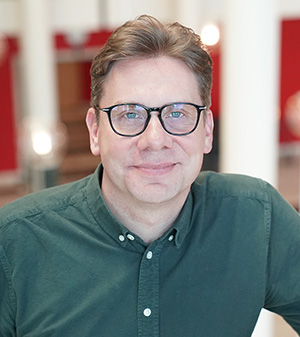
Jonas Bakken is a Professor of Norwegian Didactics at the Department of Teacher Education and School Research, University of Oslo. His work bridges rhetoric, children's literature, and sustainable development education through innovative didactic approaches. As academic director of the Associate Professorship Program, he shapes teacher education and curriculum design. Research Interests: Norwegian language arts, rhetoric integration in education, ecocriticism, multicultural narratives, and bilingual pedagogy. Projects: Evaluation of bilingual education (ETOS), Linking Instruction and Student Experiences (LISE), Scandinavian Narratives of Guilt and Privilege (Scanguilt), Minority Literary Voices in Scandinavia. Publications span textbook analysis, rhetorical strategies in Sámi literature, CLIL education equity, and oral creativity pedagogy. His recent works focus on task culture conflicts and curriculum renewal in Norwegian language arts.
María Durán Eusebio is a Lecturer in English at the Institute of Modern Languages, University of Alcalá. She teaches English language courses across various undergraduate programs including Education, Cybersecurity and AI, Criminology, and Law, as well as in the Master’s program for Secondary and Vocational Education. She currently serves as the Communication and Social Media Coordinator at the Institute of Modern Languages (ILM). Educational Background: Doctorate in Modern Languages: Research in Language, Literature, Culture, and Translation – Universidad de Alcalá (UAH) Master’s in Black British Writing – Goldsmiths, University of London Bachelor’s in English Studies – Universidad de Alcalá (UAH) Her research lies at the intersection of Anglo-Saxon literature, socio-political paradigms, and archival practices, with a strong emphasis on intercultural and transcultural perspectives. She specializes in Black British Writing, feminist activist literature, verbatim drama, queer identities in African-set narratives, and the representation of social exclusion and resilience in contemporary theatre. Her work critically engages with postcolonial identities, cultural assimilation, and the liminal experiences of Afro-descendant communities in Spain and the UK. María Durán Eusebio has actively contributed to national and international academic discourse through conference presentations on the Black British literary canon and Spanish literature by authors of African descent. Her scholarly output includes several publications analyzing identity, resistance, and marginalization in contemporary literary and dramatic works. Scientific Contributions and Recognition: Author of significant research articles on queer identities, feminist verbatim drama, and transcultural identity in literature. Active participant in academic conferences focusing on postcolonial and Afro-Hispanic literary studies. She advises on institutional communication strategies as Coordinator of Communication and Social Media at ILM, bridging academic research with public engagement. While no formal grants or student supervision are mentioned, her interdisciplinary research trajectory demonstrates a commitment to socially engaged literary scholarship. Laboratories, Teams, and Collaborative Work: She is actively involved in research and academic outreach within the Institute of Modern Languages, contributing to its communication strategy and promoting research in modern languages, particularly in underrepresented literary traditions.
Philip Uko Effiong is an Associate Professor of Theatre Studies and Integrative Humanities at Michigan State University, with over 25 years of college-level teaching experience. He joined MSU in Spring 2017 after teaching at institutions across Nigeria, Ghana, and the United States. PhD in Drama (University of Wisconsin-Madison) MA in Literature of the African Diaspora (University of Calabar) Bachelor’s in English (University of Calabar) His research focuses on interdisciplinary approaches to African and African diasporic performance, including: Performance as resistance in Caribbean communities (Jamaican Maroons, Garifuna) Influence of Greek tragedy on African drama Post-Biafran identity and historical narratives Fela Kuti’s music and political critique African diasporic communities in India and the Philippines His publications span African theatre, diasporic literature, and cultural resistance. Key themes include political power, postcolonial identity, and artistic activism. He also collaborates on documentaries exploring marginalized histories and has written a memoir on the Nigeria-Biafra War. Notable awards include: Tip of the Hat Award for Teaching Excellence (2016) Fulbright Scholar (1988-1994) Certificate of Recognition for Scholarly Activity (2012) He teaches courses such as Contemporary Theatre in Historical Context, African American Drama, and African & African Diaspora Literature, integrating drama, history, and interdisciplinary humanities.
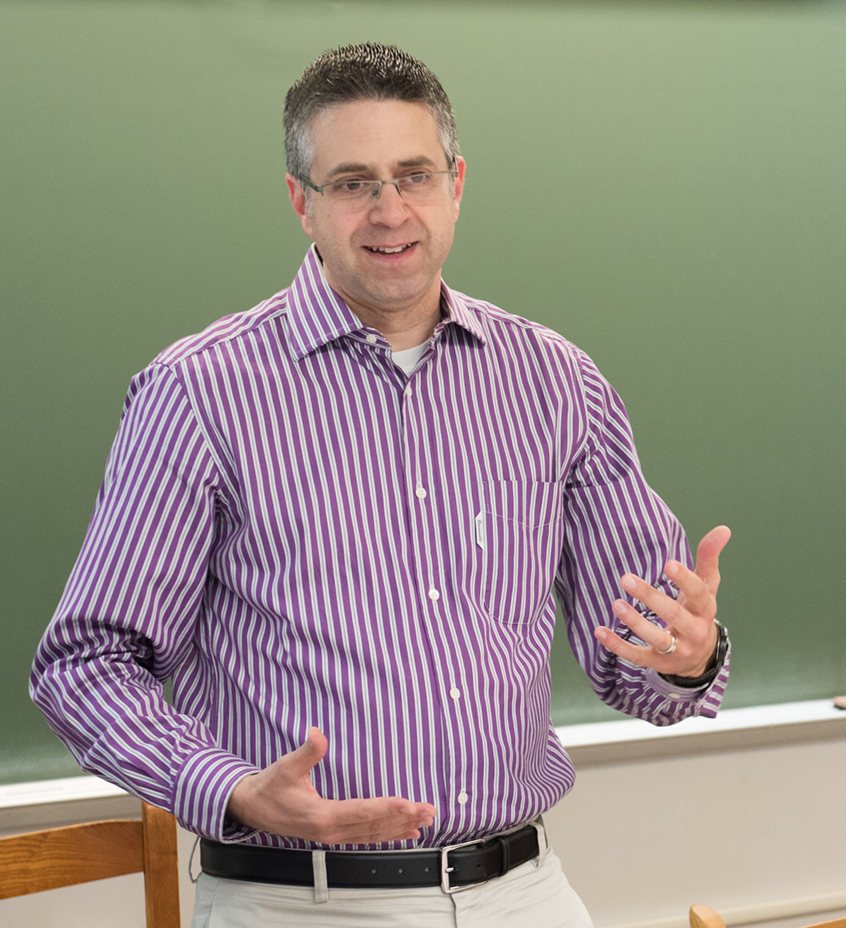
John B. Weinstein serves as Provost and Vice President and holds the rank of Associate Professor of Chinese and Asian Studies at Bard College at Simon’s Rock. He has a distinguished academic background with a PhD from Columbia University, an MA from Montclair State University, and a BA (summa cum laude, Phi Beta Kappa) from Harvard College. Dr. Weinstein’s research focuses on modern Chinese and Taiwanese theater, including Republican-era comic drama and contemporary Taiwanese plays. He has directed numerous Chinese-language productions and is a former president of the Association for Asian Performance (2006–2011). His scholarly contributions include edited volumes like Voices of Taiwanese Women and articles in Asian Theatre Journal and Modern Chinese Literature and Culture . He has been recognized with the Emily H. Fisher Faculty Fellowship (2009–2011) and the Dr. John A. Glover Award (2006). His teaching spans Chinese language, Asian studies, theater, women’s studies, and queer studies. He played a pivotal role in founding Bard High School Early College’s Chinese and theater programs and directed Simon’s Rock’s Writing and Thinking Program (2007–2011). His work bridges academic scholarship with practical theater production, emphasizing transnational performance studies and early college pedagogy innovations documented in Educating Outside the Lines (2013).
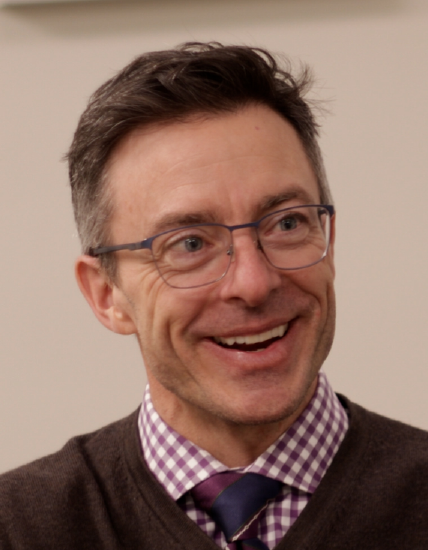
Robert N. Watson is a Distinguished Professor of English at the University of California, Los Angeles , affiliated with the Department of English within the College of Letters and Science . He has held significant leadership roles including Chair of the Department of English , Chair of the Faculty of the UCLA College of Letters and Science , and Associate Vice-Provost for Educational Innovation . Education : B.A., summa cum laude , Yale University (1975) Ph.D., Highest Honors , Stanford University (1979) Professor Watson’s research focuses on William Shakespeare and Ben Jonson , literature and the environment , cultural evolution , and the U.S. in the 1960s . His work in ecocriticism explores intersections between environmental ethics and early modern literature , while his interdisciplinary research on cultural memeplexes investigates self-replicating cultural systems that parasitize human cognition. His recent publications apply algorithmic analysis to Shakespearean texts, revealing computational patterns in Elizabethan dramatic structure . Scientific Awards : Guggenheim Fellowship NEH Senior Research Fellowship Thomas J. Wilson Prize (1984) Elizabeth Dietz Memorial Prize (2007) ASLE Prize for Ecocriticism (2005-07) UCLA Distinguished Teaching Prize (2001) Gold Shield Prize (2006-08) As a humanities educator , he has created interdisciplinary courses on the 1960s cultural era and served as Head Scholar at the Teaching Shakespeare Summer Institute . His editorial work includes New Mermaids Series editions of Jonson’s plays and the forthcoming Arden edition of Measure for Measure . With publications spanning Shakespearean fear of death to Japanese cinema analysis , he remains a prominent figure in humanistic responses to cultural crises .
John Slater is a Professor in the Department of Languages, Literatures and Cultures at Colorado State University, specializing in Early Modern Hispanic Literatures, History of Science, and History of Medicine. His research focuses on knowledge production in 17th-century Spain, particularly how literature disseminated ideas about health and healing. He examines print genres like sermons and drama as vehicles for scientific and medical discourse, highlighting conflicts between religious and medical practices. Slater joined CSU in 2020 after roles at UC Davis, University of Colorado, and Indiana University. He holds a PhD from Brandeis University and a BA from Earlham College. His research explores Jesuit and Franciscan healing practices, their impact on medical reforms, and intersections between literature and science. Awards include the 2023 Interdisciplinary Scholarship Award and 2025 Excellence in Teaching Award (CLA). Key publications analyze alchemy in sermons, venereal disease in Baroque Spain, and transatlantic medicinal plant trade. His edited works include studies on Cervantes and medical drama. Slater’s pedagogical contributions include annotated editions of works by Lope de Vega, Juana Inés de la Cruz, and María de Zayas. He has been honored for innovative mentorship models and career advising. His interdisciplinary approach bridges literary analysis with historical, scientific, and cultural studies, emphasizing early modern Spain’s intellectual networks and global exchanges.
Raphael Magarik is an Assistant Professor of English at the University of Illinois Chicago, affiliated with the College of Liberal Arts and Sciences. His research focuses on 16th- and 17th-century British literature, with special attention to secularization, biblical narrative theory, theatrical collaboration, and early modern women’s writing. He is the author of Fictions of God , a book project examining the invention of biblical narration and its influence on English poetry. His work has appeared in journals like PMLA , Milton Studies , and Reformation , as well as popular outlets such as The Atlantic and Jewish Currents . Magarik’s scholarship bridges literary criticism and religious studies, exploring how early modern concepts of narration and biblical interpretation shaped poetic innovation. His recent articles address topics ranging from Milton’s post-Auschwitz resonance to Spenser’s biblical allusions and the labor dynamics of Shakespearean performance. He holds a PhD in English and serves as a contributing writer for Jewish Currents . Education: Details available in his CV (Magarik-CV-2022.pdf). Grants and Awards: None explicitly listed in the text. Professional Roles: Member of the English Department at UIC; affiliated with literary and religious studies networks. His research trends emphasize interdisciplinary approaches to early modern literature, combining textual analysis with historical context to reveal how religious, social, and economic factors influenced literary forms. His publications consistently engage with questions of narratology, secularization, and collaborative creativity in pre-modern contexts.
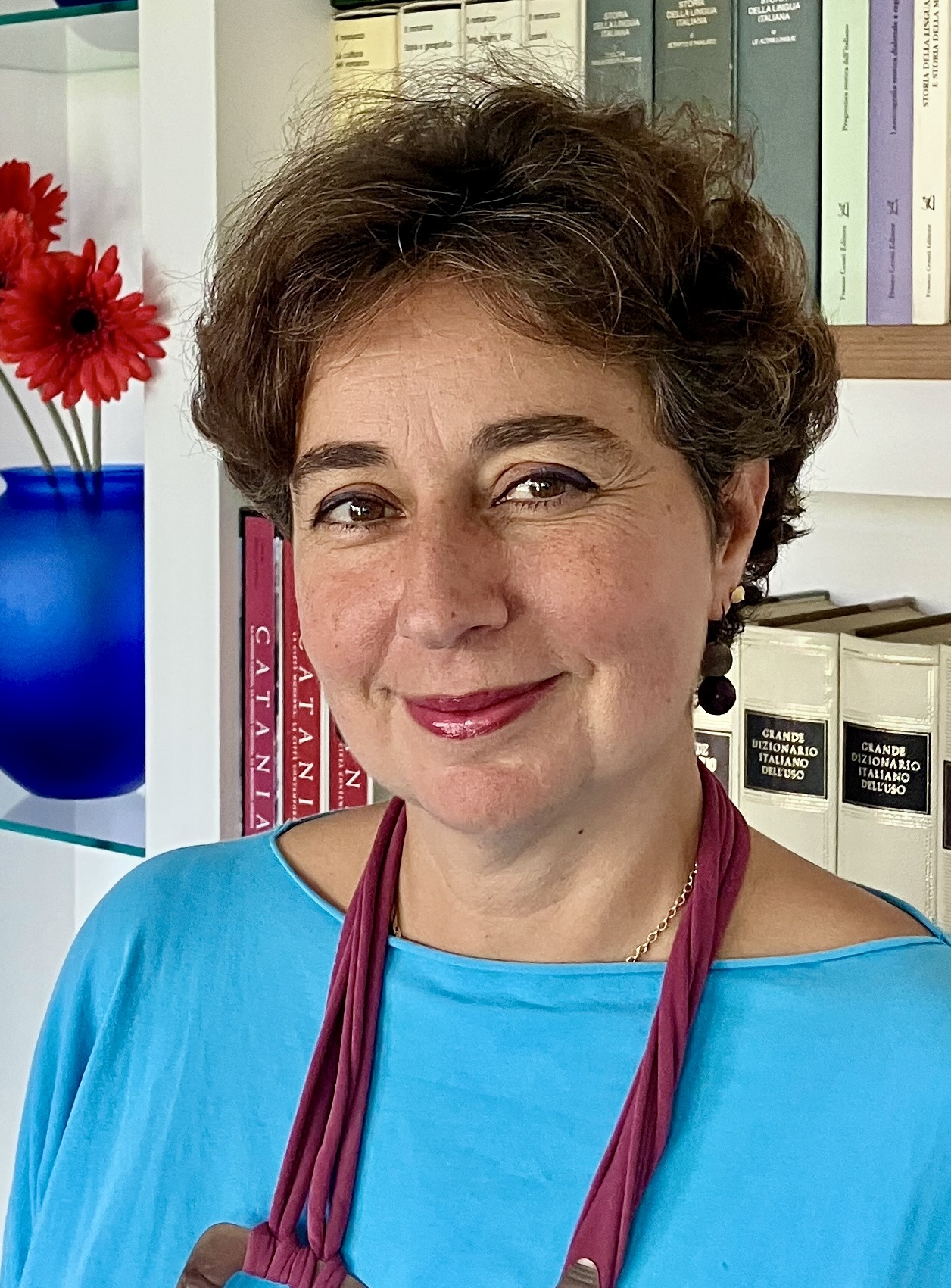
Daria Motta is an Associate Professor of Italian Linguistics at the Department of Humanities, University of Catania, with a strong affiliation to the Special Teaching Structure of Foreign Languages and Literatures in Ragusa. She holds a formal academic position in the scientific disciplinary sector L-FIL-LET/12 and is actively engaged in research, teaching, and academic service. Her work bridges philology, sociolinguistics, and language pedagogy, with a particular emphasis on Italian literary and linguistic history. Her research interests span Italian linguistics, historical and sociolinguistic analysis of spoken and written language, pragmatics in literature and media, dubbing studies, Italian as a second language (L2), and corpus-based philological research. She has extensively studied 19th- and 20th-century authors like Giovanni Verga and Vitaliano Brancati, focusing on the representation of spoken language in literary texts. Her work also explores language teaching methodologies, multilingualism in migrant literature, and the role of media in shaping linguistic norms. The trends in her recent publications reveal a consistent focus on linguistic variation, historical pragmatics, and the intersection of language with literature and media. She frequently analyzes how language functions in narrative, theatrical, and audiovisual contexts, particularly through the lens of realism and sociocultural change. Her scholarly output combines philological rigor with sociolinguistic insight, contributing to both literary studies and applied linguistics. Member of the editorial board of «Annali della Fondazione Verga» (since 2012) Member of the editorial board of «Bollettino - Centro di Studi Filologici e Linguistici Siciliani» (since 2012) Member of ASLI (Associazione per la Storia della Lingua Italiana) and ASLI-Scuola Anonymous reviewer for journals such as «Italiano linguaDue» and «L’italiano a scuola» Referee for doctoral projects at the University of Rome “Tor Vergata” Daria Motta has supervised numerous master’s theses and mentored students through formal tutoring programs. She has played key institutional roles, including serving as a delegate for continuing education and school relations, coordinator for LIS interpreting services, and contact person for placement activities. She has also been involved in research projects funded by the University of Catania and national PRIN grants, focusing on language teaching, historical corpora, and textual analysis. Her leadership in academic events and research groups underscores her active engagement in the scholarly community. She has contributed to various research groups, including the PIACERI and Prometeo projects at the University of Catania, and has led her own research initiatives on literary dialogue and 17th-century language invention. She has also participated in major national projects like the Corpus of Reference for a New Vocabulary of Modern and Contemporary Italian under the Accademia della Crusca.
Patricia Parker serves as the Margery Bailey Professor in the Department of English and Dramatic Literature at Stanford University, holding a permanent faculty position since 1988 after initial appointment as a Visiting Professor in 1986. Her academic journey spans global institutions including the University of Toronto (11 years), University of East Africa, UC Berkeley (as Visiting Professor), and Cornell University's School of Criticism and Theory. Her educational background features: Ph.D. in Comparative Literature, Yale University (1976) M.A. in English, University of Toronto (1968) B.A., University of Manitoba (1967) Professor Parker's research pioneers intersections of Shakespeare studies, early modern literature, feminism, and race theory, with particular focus on global receptions of Shakespeare and decolonial approaches to Renaissance texts. Her scholarship consistently bridges literary criticism, cultural studies, and postcolonial theory, examining marginalized perspectives through frameworks of rhetoric, gender, and property relations across historical contexts. Her publication trajectory reveals evolving critical engagement: early foundational work on poetic modes ( Inescapable Romance , 1979) expanded into theoretical explorations of gender and rhetoric ( Literary Fat Ladies , 1987), culminating in groundbreaking race studies ( Shakespeare from the Margins , 1996) and contemporary critical keyword analysis ( Shakespearean Intersections , 2018). Her edited collections consistently shape discourse around Shakespearean theory and early modern women's writing. Her scholarly distinction includes: Margery Bailey Professorship at Stanford University Gauss Seminar Lecturer at Princeton Shakespeare's Birthday Lecturer at Folger Shakespeare Library Northrop Frye Professor Lecturer at University of Toronto Paul Gottschalk Lecturer at Cornell University Professor Parker actively mentors graduate students through community performance programs and directed the major 2003-4 international conference 'Shakespeare in Asia,' demonstrating sustained grant acquisition for cross-cultural scholarly initiatives. She currently serves as General Editor for the Stanford Global Shakespeare Encyclopedia, a significant digital humanities project. Her ongoing work integrates classroom teaching with global community engagement through performance-based programs examining Shakespeare's transnational legacy.
Karen Ottewell is a Professor of Contrastive Rhetoric and Written Articulacy at the University of Cambridge , serving as Acting Director of The Language Centre and Director of Academic Development & Training for International Students (ADTIS). She is a Fellow & Tutor of Lucy Cavendish College and contributes to academic governance through roles like Senate House Syndicate and Prevent & Freedom of Speech committee memberships. Education: Ed.D. (2021) and PhD (2000) from the University of Cambridge, MPhil in European Literature (1995), and MA in German Language & Literature (1994) from the University of St. Andrews Her research focuses on cultural influences on writing , contrastive rhetoric , and academic literacy , particularly for second-language postgraduate writers. She has pioneered frameworks for transitional support in written articulacy and consults internationally on academic literacy assessment practices. Recent publications and presentations highlight her work on English language testing for higher education admissions, assessment design , and cross-cultural academic communication . She has served as an External Examiner at multiple universities and received the Pilkington Teaching Prize for excellence in education. Current projects include developing academic literacy workshops for L2/L1 postgraduates and international consultancy on language assessment reform. She chairs panels on stakeholder collaboration in language testing and advocates for improved academic literacy support systems.
Assoc. Prof. Arif Yilmaz (b. 1970, Manisa) is a Turkish academic, poet, and literary scholar affiliated with Usak University since 2012, where he serves as Chair of the Department of Turkish Language and Literature at the Faculty of Humanities and Social Sciences. He previously held academic positions at Gaziantep University (2008-2012), Celal Bayar University, and Ankara University. Doctorate (2004): Ankara University - New Turkish Literature Master's (1996): Gazi University - New Turkish Literature Bachelor's (1992): Van Yuzuncu Yil University - Turkish Language and Literature His scholarly focus lies in modern Turkish literature, philology, and literary criticism, particularly examining social realism, epic theater, and 20th-century Turkish poets like Sabahattin Kudret Aksal and Niyazi Yıldırım Gençosmanoğlu. He has published critical editions of Aksal's works and over 15 peer-reviewed articles. Scientific contributions include: 2019 Special Jury Prize for Aksal's critical editions Leadership in Turkish language education centers (GAÜN TÖMER) Academic service including Institute of Social Sciences deputy directorship As an educator, he has mentored 3 doctoral students and taught courses spanning New Turkish Literature , Literary Theory , and Poetic Analysis across multiple universities. His 2024 visiting scholar appointment at Samarkand State Institute of Foreign Languages underscores his international academic engagement.
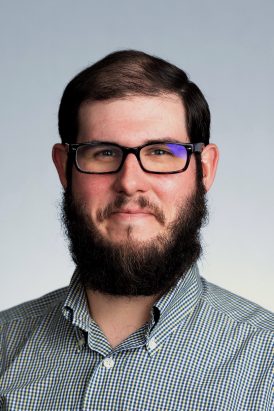
David Thomas Suell is a PhD Candidate in Political Science at the University of Michigan (defending January 2024) and a Lecturer in Political Science at Eastern Michigan University. He serves as Assistant Editor at Contemporary Political Theory and was awarded the prestigious Rackham Predoctoral Fellowship for 2022-2023. His educational background includes: BSc in Political Science and History from Belmont University (2013) MA in Social Science Research from University of Chicago (2014) Certificate in African Studies from University of Michigan (2019) Specializing in African political thought, anticolonialism, and philosophy of time, Suell investigates how African and diasporic thinkers theorize political community boundaries in response to (neo)colonialism, capitalism, and racialization. His dissertation examines temporal dimensions of African socialist movements through analysis of Maasai resistance, Soyinka's dramatic works, and writings by Nyerere, Cabral, Nkrumah, Fanon, and Awolowo. His scholarly contributions reveal patterns across disciplines including political theory, postcolonial studies, and critical examinations of time and temporality, with particular focus on how African socialist thinkers conceptualized freedom as resistance over time. His scientific recognition includes: Rackham Predoctoral Fellowship (2022-2023) As an educator, Suell has developed and taught numerous courses spanning Introduction to Political Theory, Black Political Thought, Colonialism and its Critics, American Political Theory, and specialized seminars on African political thought. His teaching emphasizes global perspectives and diverse traditions of political theory, connecting historical texts with contemporary political debates. His research projects include comparative studies of anticolonial resistance undertaken by African socialist versus indigenous Maasai land regimes in East Africa.
Professor Paul Peters is a distinguished academic in German Studies at McGill University since 2008. Previously, he held roles including Assistant Professor (1989) and Associate Professor (1996) at McGill, and taught at Freie Universität Berlin (1983–1985). His research focuses on Heinrich Heine, Kafka, Brecht, and Paul Celan, with recent projects exploring Kafka and colonialism supported by the German Academic Exchange Service and Humanities Research Council. Peters' work bridges literary analysis with cultural history, Frankfurt School theory, and musical studies. Education: BA (Hons.) in German from University of Manitoba (1976), Dr. Phil in Germanistics and Philosophy from Freie Universität Berlin (1988). Research interests span German Romanticism, Weimar culture, socialist literature (Volker Braun, Heiner Müller), and the cultural significance of Berlin and Vienna. His theoretical framework draws deeply from Walter Benjamin and Theodor Adorno, while maintaining critical independence. Peters has published extensively on Heine's anti-Semitism reception, Brecht's radio influences, and Celan's intertextuality. Grants: Supported by DAAD (German Academic Exchange Service) and Humanities Research Council for his Kafka project. No formal student advisees listed, though his mentorship is evident through collaborative research efforts. Future projects include a book on Kafka and colonialism, and continued exploration of Heine-Baudelaire parallels. His interdisciplinary approach connects literary studies with musicology, philosophy, and cultural studies.
Marco Uvietta is an Associate Professor of Musicology and History of Music at the Department of Literature and Philosophy, University of Trento. He holds a Laurea in Music Disciplines from the DAMS of Bologna (1991) and a PhD in History and Analysis of Musical Cultures from Sapienza University of Rome (1999). His academic career includes roles as a Researcher (2005–2016) and Associate Professor (2016–present) at the University of Trento. He teaches courses on Music History and Ethnomusicology and contributes to the PhD program in European Cultures. His research focuses on two main areas: 1) Musical Philology, particularly in 19th-century Italian opera (e.g., critical editions of Verdi’s Requiem and Bellini’s La straniera), and 2) Analysis of 20th-century musical language, with significant contributions on Luciano Berio’s style and compositional processes. He has authored numerous scholarly works, including books and articles on composers like Berio, Debussy, Stravinsky, and Martucci. Uvietta is actively involved in editorial projects, such as directing critical editions for Ricordi and contributing to the Rossini Critical Edition. He holds leadership roles in academic committees, including the editorial board of Il Saggiatore Musicale . His compositional works, influenced by his analytical research, have been performed by prestigious ensembles worldwide, including the Arditti Quartet and Monteverdi Cello Octet. Notable awards include recognition in composition competitions (e.g., Guido d’Arezzo International Competition), and his works span orchestral, choral, and chamber music. Uvietta’s interdisciplinary approach bridges historical musicology with contemporary compositional practice, reflecting his dual expertise as a scholar and composer.
Andreas Giger is the Louise & Kenneth L. Kinney Professor of Opera & Musicology at Louisiana State University (LSU), within the College of Music & Dramatic Arts. He holds a Licentiate in Musicology from the University of Zurich, a Piano Teaching Diploma from Winterthur Conservatory, and a PhD in Musicology from Indiana University. His research focuses on 19th-century Italian opera, particularly Giuseppe Verdi and the influence of French aesthetics, as well as Leonard Bernstein's work. Notable achievements include authoring Verismo (2004) and Verdi and the French Aesthetic (2008), the latter supported by a National Endowment for the Humanities (NEH) Fellowship. He has edited critical editions of Verdi’s operas ( I due Foscari , Cavalleria rusticana ) and co-edited Music in the Mirror (2002), which earned an ASCAP Deems-Taylor Award. He serves on editorial boards of Nineteenth-Century Music Review and co-edits Masterpieces of Italian Opera for Bärenreiter. Giger’s articles explore topics such as Verdi’s libretti, censorship of 19th-century operas, and the genesis of Leoncavallo’s Pagliacci . Recent projects include NEH-supported critical editions of Un ballo in maschera and Cavalleria rusticana . His work bridges historical musicology, textual analysis, and performance practice. Grants: Multiple NEH Fellowships and grants for critical editions. Awards: ASCAP Deems-Taylor Award (2002). He collaborates with institutions like Bärenreiter and the University of Chicago Press, advancing scholarly editions and operatic studies.