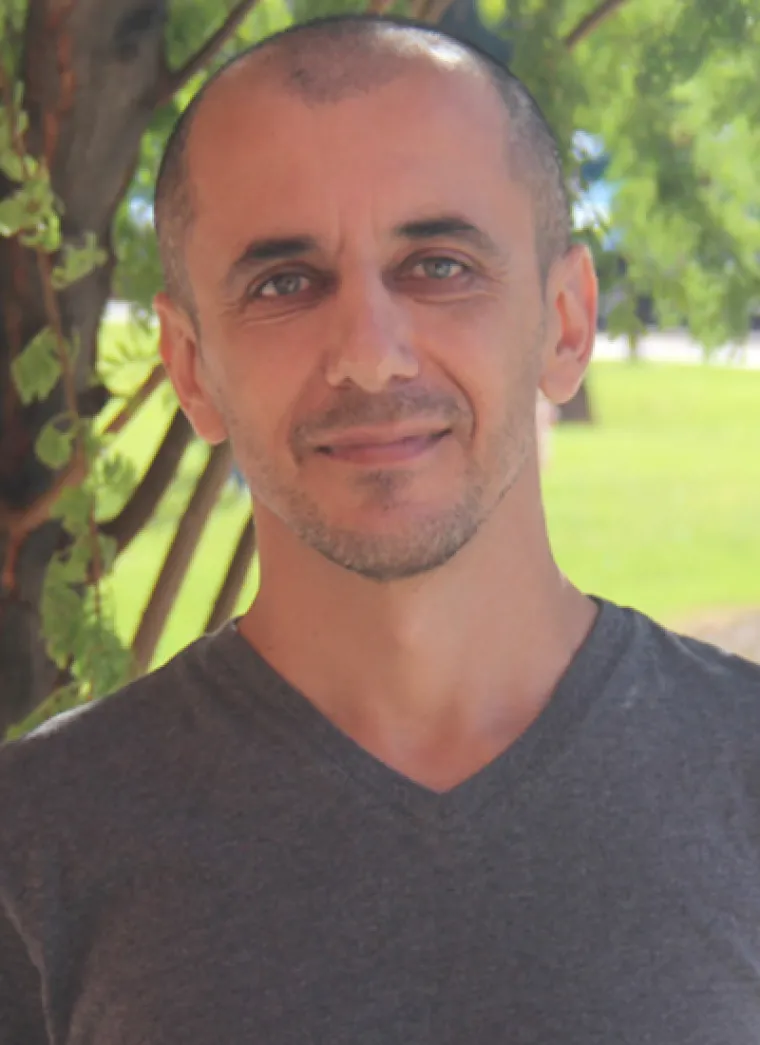
Mihai Surdeanu is an Associate Professor in the Department of Computer Science at the University of Arizona. His academic work focuses on advancing natural language processing and machine learning techniques, with a particular emphasis on large language models, information extraction, and model efficiency. He can be reached at msurdeanu@arizona.edu. Research Interests: Natural Language Processing Machine Learning Deep Learning Information Extraction Artificial Intelligence Scientific Trends: His recent work explores critical challenges in large language models, including data contamination detection, adversarial perturbation defense, quantization methods, and reasoning robustness. Publications highlight techniques like prompt chaining, layerwise optimization, and speculative generation to improve model performance and interpretability.
Tamer Inanc is a Professor in the Department of Electrical and Computer Engineering at the University of Louisville's J.B. Speed School of Engineering. He holds a B.S. from Dokuz Eylul University (1991), M.S. and Ph.D. from Pennsylvania State University (1996, 2002), followed by a postdoctoral scholarship at Caltech (2002–2004). His research focuses on control systems, model identification, autonomous robotics, and biomedical applications like personalized drug dosing and anemia management. Education: B.S., Electrical & Electronics Engineering, Dokuz Eylul University (1991) M.S., Electrical Engineering, Pennsylvania State University (1996) Ph.D., Electrical Engineering, Pennsylvania State University (2002) Research Interests: His work spans control systems, biomedical modeling (e.g., warfarin and anemia management), autonomous robotics, and deep learning regularization in neural networks. He emphasizes personalized modeling using limited clinical data and robust system identification techniques. Key Contributions: Developed adaptive modeling frameworks for precise drug dosing in clinical settings. Advanced techniques to reduce redundancy in deep neural networks for better generalization. Contributed to trajectory optimization for unmanned vehicles and medical imaging analysis. Awards: President's Distinguished Teaching Professor Award (2022) Speed School Excellence in Teaching Award (2021) Delphi Center Innovations in Technology Award (2008) Kentuckiana Metroversity Instructional Development Award (2006) Labs/Teams: His research involves collaborations in healthcare technology, robotics, and control systems, with projects funded by academic and industry partnerships.
Professor Dr. Osman Hasan is a faculty member at the School of Electrical Engineering & Computer Science (SEECS) , National University of Sciences & Technology (NUST) , Islamabad, where he currently serves as Pro-Rector (Academics). His research primarily lies in formal methods, hardware verification, reliability analysis, and embedded systems, with applications in smart grids, robotics, and cybersecurity. His research interests include: Formal Methods and Theorem Proving Hardware and Software Verification Reliability and Safety Analysis of Critical Systems Smart Grids and Power Systems Approximate Computing and Energy-Efficient Design Robotics and Biomedical Systems His recent publications show a strong trend toward formal verification of hardware and cyber-physical systems, integration of machine learning with formal methods, and applications in power systems and robotics. He frequently employs higher-order logic theorem proving (e.g., HOL, ACL2) and model checking to ensure correctness and reliability. He has been actively involved in numerous international conferences such as FMCAD, FSEN, CICM, and ICTAC, serving on program committees and organizing workshops. His leadership as Pro-Rector highlights his commitment to enhancing academic quality and research excellence at NUST. He has supervised numerous students who have co-authored papers with him, indicating an active research group. His work bridges theoretical formal methods with practical engineering applications, particularly in safety-critical domains.
Satnam Singh is a Professor at Newcastle University's School of Electrical and Electronic Engineering, UK. With a research career spanning over three decades from 1989 to present, Singh has established himself as a leading expert in hardware design, FPGA programming, and parallel computing systems. His research interests focus on hardware-software co-design , reconfigurable computing , and functional programming applications for hardware design. Singh has pioneered work in using functional languages like Haskell for hardware description and verification, particularly through his contributions to the Lava hardware description language. His work bridges theoretical computer science with practical hardware implementation challenges. Analysis of his publication history reveals a clear evolution from early work on formal verification and FPGA design in the 1990s, through substantial contributions to parallel programming models in the 2000s, to more recent applications of machine learning techniques in diverse domains including cheminformatics and sensory systems. His 2022-2025 publications demonstrate continued innovation in specialized processor programming, AI applications for olfactory systems, and health hazard classification using deep learning. Singh has maintained extensive collaborations throughout his career, notably with Krishna R. Pattipati (15 joint publications), Anuradha Kodali (8 publications), and David J. Greaves (5 publications), reflecting his ability to bridge theoretical computer science with practical engineering applications. His work spans multiple prestigious venues including FPGA, FCCM, ICFP, and IEEE Transactions on Systems, Man, and Cybernetics, demonstrating both theoretical depth and practical impact across computer architecture, programming languages, and applied machine learning domains.
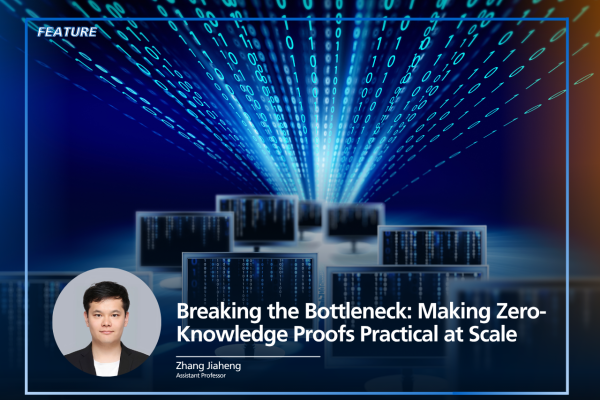
ZHANG Jiaheng is an Assistant Professor in the Department of Computer Science at the National University of Singapore (NUS), School of Computing. His work bridges cryptography, artificial intelligence, and system security, with a focus on scalable and privacy-preserving technologies. He teaches CS3235 – Computer Security and leads research in zero-knowledge proofs, LLM safety, and trustworthy AI. Research Interests: His research spans Cryptography , Security , Machine Learning & AI , Privacy , and Algorithms & Theory . He specializes in making zero-knowledge proofs practical at scale and securing large language models against jailbreaking, backdoors, and privacy leaks. His recent projects include zkGPT, BatchZK, and Guardreasoner, highlighting his dual focus on theoretical foundations and real-world applications. The recent publications show a strong trend toward scalable zero-knowledge systems and AI security , particularly in verifying and protecting LLMs. These works integrate cryptographic rigor with modern AI challenges, reflecting a cohesive research vision at the frontier of trustworthy computing. Scientific Contributions: Developed scalable collaborative zk-SNARKs for efficient proof generation. Pioneered techniques for secure LLM inference and jailbreak detection. Advanced GPU-accelerated and distributed zero-knowledge proof systems. Advising & Grants: While specific students and grants are not listed, his active publication record in top-tier venues suggests ongoing research supervision and external funding in cybersecurity and AI. He is likely involved in advising PhD and Master’s students in cryptography and AI security. Labs & Teams: He is part of the NUS School of Computing research ecosystem, potentially affiliated with cybersecurity or AI labs, contributing to Singapore’s leadership in privacy-preserving technologies.
Thirimadura Charith Yasendra Mendis serves as an Assistant Professor at the University of Illinois Urbana-Champaign with dual appointments in the Siebel School of Computing and Data Science and the Department of Electrical and Computer Engineering. He maintains a strong affiliation with the Coordinated Science Lab, where he conducts interdisciplinary research bridging computer architecture, compilers, and artificial intelligence systems. His research program centers on deep neural networks, compiler design, and program verification, with significant contributions to soundness verification of DNN certifiers, domain-specific language development for neural network certification, and hardware-aware compiler optimizations. His work in parallel computing and graph neural networks specifically targets efficiency bottlenecks in AI infrastructure through novel vectorization and level parallelism techniques. Recent 2025 publications reveal a cohesive research trajectory focused on enhancing AI system reliability through formal methods and compiler innovation. Key themes include automated verification frameworks for tensor operations, declarative approaches to neural network certification, and GPU-optimized code generation for sparse attention mechanisms in transformer architectures—collectively advancing trustworthy AI deployment. Dr. Mendis has earned two prestigious national awards: DARPA Young Faculty Award (2024) NSF CAREER Award (2024) These competitive grants fund his research program investigating foundational aspects of AI safety and compiler technology, likely supporting graduate student mentorship in systems and programming languages research. Within the Coordinated Science Lab ecosystem, Mendis collaborates with cross-disciplinary teams on projects spanning hardware acceleration, programming language design, and neural network verification—leveraging this environment to drive innovation in computing systems reliability and performance.
Dr. Ali Mohammadi is a Senior Lecturer in the Department of Electronic & Electrical Engineering within the Faculty of Engineering & Design at the University of Bath. He leads innovative research in Micro-electromechanical Systems (MEMS) and serves as an Associate Editor for IEEE Sensors. His work is supported by multiple EPSRC-funded research projects with strong industry collaboration, totaling over £1.5 million across five projects. Dr. Mohammadi is embedded within several key research units: Electronics Materials, Circuits & Systems Research Unit (EMaCS), The Foundry: Centre for Digital, Manufacturing & Design, Centre for Bioengineering & Biomedical Technologies (CBio), and the Bath Institute for the Augmented Human. Dr. Mohammadi's academic background includes postdoctoral research at the Department of Engineering Science, University of Oxford (2016-2017) and the Department of Electrical and Computer Systems Engineering, Monash University, Australia (2014-2016). This foundation has enabled his interdisciplinary approach to micro/nano-electromechanical systems and electronic circuit design. His research program addresses fundamental challenges in micro/nano-electromechanical transducers and electronic interface circuits, with specific innovations in on-chip atomic force microscopy, implantable energy harvesters, and high precision coupled resonator sensors. These contributions span multiple UN Sustainable Development Goals, particularly advancing clean energy technologies and healthcare solutions. Dr. Mohammadi's work uniquely bridges electrical engineering, mechanical systems, and materials science to develop next-generation sensing and energy harvesting technologies with real-world applications. Analysis of his 48 research outputs reveals a clear trajectory from fundamental MEMS device development toward integrated sensor systems with practical applications. His most recent publications (2023-2025) demonstrate increasing integration of machine learning with precision sensing technologies, particularly for manufacturing condition monitoring and biomedical applications. The research shows progression from individual components to complete systems, with growing emphasis on real-time data processing at the sensor edge and human-machine interfaces. Dr. Mohammadi's professional standing includes: Member of the Institute of Electrical and Electronics Engineers (IEEE) Associate Editor of IEEE Sensors Journal As a doctoral supervisor, Dr. Mohammadi actively mentors students in Microelectromechanical Systems and Electronic Integrated Circuits. His research portfolio includes two active EPSRC projects: 'Transforming the use of Ansys simulation software within engineering curricula' and 'SENSYCUT- Sensor Enabled Systems for Precision Cutting,' demonstrating strong industry-academic collaboration. These projects focus on practical engineering solutions for manufacturing optimization, condition monitoring, and human-computer interaction, with direct applications in industrial settings. Dr. Mohammadi's research ecosystem spans multiple interdisciplinary centers at Bath. Within EMaCS, he advances fundamental electronic materials and circuit design. Through The Foundry, he contributes to digital manufacturing innovation. His CBio affiliation enables medical applications of his sensor technologies, while the Bath Institute for the Augmented Human provides context for human-centered applications of his tactile display research. This multi-faceted institutional integration allows his work to progress from laboratory prototypes to real-world implementations across healthcare, manufacturing, and human augmentation domains.
Tobias Grosser is an Associate Professor in the Department of Computer Science and Technology at the University of Cambridge. His research focuses on rethinking performance programming by bridging the gap between developers and compilers. He holds a PhD from École Normale Supérieure Paris and has held positions including Reader at the University of Edinburgh and Ambizione Fellow at ETH Zurich. His research interests span compilers, programming language design, static/dynamic analysis, and the integration of machine learning into compiler development. He emphasizes making compilation more modular, automatic, and trustworthy, with applications in quantum computing, climate science, and open-source hardware. Key projects include xDSL (a Python-native compiler framework), LoopOpt, and the Open Earth Compiler for climate simulations. Recent publications highlight advancements in multi-level intermediate representations (IR), formal verification in MLIR, and performance optimization for GPUs and FPGAs. His work often addresses barriers between programmers and compilers, aiming for intuitive collaboration between developers and automated systems. Tobias mentors a dynamic team of PhD students, postdocs, and researchers, including notable contributors like Siddharth Bhat, Arjun Pitchanathan, and Mathieu Fehr. His lab focuses on compiler toolchains for domain-specific hardware accelerators, quantum computing ecosystems, and verified compilation techniques.
GANESH GOPALAKRISHNAN is a Professor of Computer Science at the University of Utah's School of Computing. His work focuses on formal verification of parallel/distributed systems, GPU programming, and numerical error analysis. He has contributed to tools like ISP for MPI verification, ARCHER for OpenMP race detection, and FLiT for floating-point consistency testing. His research spans theoretical foundations (e.g., concurrency models) and practical applications (e.g., GPU error analysis). Recent work includes advancing formal methods for mixed-precision computing and resilience in exascale systems. Notable projects include rigorous error estimation for floating-point operations and compiler-assisted verification techniques. Research Interests: Formal Verification of Parallel Systems | GPU & HPC Correctness | Floating-Point Numerical Analysis | Concurrency Bugs | Tools for Distributed Systems. Current work emphasizes hybrid approaches combining formal methods with dynamic analysis to address emerging challenges in heterogeneous computing architectures. Articles Trends: Recent publications (2020–2025) emphasize GPU verification (data races, error analysis), mixed-precision computing (matrix operations, tensor cores), and resilience in HPC systems. Tools like FPDetect and BinFPE highlight practical contributions to error detection in production runs. Workshops (DOE/NSF) indicate leadership in defining correctness strategies for exascale computing. Labs/Teams: Leads research groups focused on formal methods for parallel computing and numerical system reliability. Collaborations include Argonne National Lab, NVIDIA, and LLNL on verification tools and HPC correctness frameworks.
Dustin Richmond is an Assistant Professor in the Department of Computer Science and Engineering at the Baskin School of Engineering, University of California, Santa Cruz. His work focuses on secure, usable hardware systems with applications in FPGA acceleration, RISC-V architectures, and side-channel analysis. Email: drichmond@ucsc Office: Engineering 2, Room 221 Research Interests: Secure hardware systems FPGA-based computing Manycore processors High-level synthesis Side-channel vulnerabilities Notable Article Trends: Recent publications emphasize cloud FPGA security, manycore design optimization, and hardware security. Earlier works focus on RISC-V acceleration, OpenCL compiler enhancements, and heterogeneous computing systems. GitHub Contributions: Maintains open-source projects like RISC-V-On-PYNQ and PYNQ-HLS, addressing FPGA programming challenges and RISC-V integration. Active in resolving community issues related to toolchain compatibility and hardware-software interfaces.
Daisaku Yokoyama is an Assistant Professor at the Institute of Industrial Science, University of Tokyo, where he works in Department 3 of the Kitsuregawa-Toyoda Laboratory. His research focuses on parallel and distributed processing, combinatorial search, game tree search, and other search processes. He is also involved in the development of "Gekisashi," a computer shogi (Japanese chess) player. His academic background includes: March 1998: Graduated from the Department of Electronic and Information Engineering, Faculty of Engineering, The University of Tokyo March 2000: Completed Master's course in Information Engineering at the University of Tokyo 2002.3: Graduated from the Doctoral Program in Information Engineering, Graduate School of Engineering, The University of Tokyo September 2006: Obtained a PhD in Science from the Graduate School of Frontier Sciences, University of Tokyo Daisaku Yokoyama's research interests primarily center around parallel and distributed computing systems, with a particular focus on combinatorial search algorithms and game tree search techniques. His work bridges theoretical computer science with practical applications, especially in the domain of computer shogi where he has developed "Gekisashi." Beyond game AI, his research has expanded into big data analytics, particularly in transportation systems where he analyzes passenger flows in metro networks and driver behavior using vehicle recorder data. His work demonstrates a consistent thread of applying parallel processing techniques to solve computationally intensive problems across various domains. Yokoyama's publication record shows a clear evolution from foundational work in parallel combinatorial optimization (PopKern library) to more applied research in computer shogi and eventually to big data applications in transportation systems. His early work established frameworks for parallel search algorithms, while more recent publications demonstrate applications of these techniques to real-world problems involving massive datasets from metro systems and vehicle recorders. His research consistently emphasizes the importance of domain-specific knowledge in optimizing parallel algorithms. His notable scientific achievements include: DBSJ Best Paper Award 2014 for "Application and Evaluation of a Bayesian-Based Monte Carlo Tree Search Algorithm to Shogi" Game Programming Workshop Excellent Paper Award (awarded twice) Throughout his career, Yokoyama has been actively involved in academic service, serving on editorial boards, program committees, and as an organizer for numerous conferences and workshops related to programming, parallel computing, and game AI. His work on the Gekisashi shogi engine represents a long-term research project that has evolved from basic search algorithms to sophisticated AI systems, demonstrating both theoretical rigor and practical implementation skills. He is part of the Kitsuregawa-Toyoda Laboratory at the Institute of Industrial Science, University of Tokyo, which focuses on advanced computing systems, database technologies, and large-scale data processing. The laboratory provides a collaborative environment for research spanning theoretical computer science to real-world applications in transportation analytics and game AI.
Alessandro Savino is an Associate Professor at the Department of Control and Computer Engineering (DAUIN) of Politecnico di TORINO. He serves as an academic advisor for Bachelor’s and Master’s degree programs in Computer Engineering (Ingegneria Informatica) and contributes to PhD programs in Artificial Intelligence and Computer Engineering. Research Interests: Approximate computing, Cybersecurity (including automotive systems), Dependability, Parallel computing, Reliability analysis, and Neuromorphic architectures. Key Projects: Leads RESCHIP4EU (2024-2028), NEUROPULS (2023-2027), and commercial contracts focused on real-time OS validation and avionics design. Publications: Recent work spans hardware security (e.g., VeriSide for leakage assessment), spiking neural networks (SpikeExplorer, SpikingJET), and automotive cybersecurity (CARACAS, CAN-MM). Teaching: Instructs courses on Parallel and Distributed Computing, Hardware & Wireless Security, and System Programming across Politecnico di TORINO and Scuola IMT Alti Studi - LUCCA. Research Group: Leads the SMILIES group, focusing on resilient computer architectures and life sciences.
Andrew Lumsdaine is the Chief Scientist at the Northwest Institute for Advanced Computing , a dual appointee between the University of Washington and the Pacific Northwest National Laboratory (PNNL). He holds the title of Affiliate Professor in the Paul G. Allen School of Computer Science and Engineering at UW and serves as a Laboratory Fellow in PNNL's Applied Mathematics, Computing, and Data Division. His research spans foundational and applied aspects of High Performance Computing , focusing on scalable graph algorithms, computational photography, and runtime systems for distributed-memory architectures. Education : Not explicitly stated in the provided text. Lumsdaine's work addresses critical challenges in parallel and distributed computing , including synchronization avoidance, communication optimization, and domain-specific language design for graph analytics. He has led projects like GraphPack (NSF-sponsored) and contributed to DARPA's HIVE program through the HAGGLE software development kit. His publications highlight innovations in light field imaging , GPU programming models , and graph algorithm abstractions . Notable collaborations include the GraphBLAS standardization effort and development of tools for checkpoint/restart fault tolerance. His research has been presented at leading conferences like SC , IPDPS , and Eurographics . Lumsdaine actively seeks collaborators and advises students/postdocs through projects listed on his research page.
Ciarán Donegan is a Research Fellow in the Machine Learning group at the Technical University of Berlin and BIFOLD (Berlin Institute for the Foundations of Learning and Data), with a concurrent guest researcher position in the Ohler Lab at the Max Delbrück Center for Molecular Medicine. His primary research focuses on applying deep learning methodologies to elucidate gene regulation mechanisms within molecular biology. Education: M.A.I. in Electronic & Computer Engineering from Trinity College Dublin (2021) B.A.I. in Electronic & Computer Engineering from Trinity College Dublin (2020) His research program integrates Regulatory Genomics with cutting-edge machine learning techniques, emphasizing Explainable AI frameworks and Geometric Deep Learning architectures. This interdisciplinary approach targets complex biological systems, particularly in modeling transcriptional regulation and epigenetic modifications through neural network interpretability. Applications extend to disease mechanism analysis and therapeutic target identification in life sciences contexts. Publication trends reveal dual-domain expertise: the 2022 sports broadcasting paper demonstrates real-time computer vision capabilities for automated production systems, while the 2021 VPU-specific CNN research pioneers hardware-aware neural architecture search. These works collectively underscore a methodological thread in optimizing deep learning for constrained environments—whether computational (edge devices) or operational (live sports)—while maintaining biological research as his core focus area. No scientific awards were documented in the source materials. Advisory activities and grant funding details remain unspecified in available records. He operates within collaborative research ecosystems spanning TU Berlin's Machine Learning group, BIFOLD's interdisciplinary data science initiatives, and the Ohler Lab's genomic regulatory studies at the Max Delbrück Center, facilitating cross-institutional innovation in AI-driven life sciences.
Ernst Gunnar Gran is Associate Professor at the Department of Information Security and Communication Technology at the Norwegian University of Science and Technology (NTNU), where he heads the communication technology discipline. He also holds an adjunct research scientist position at Simula Research Laboratory, where he headed the Cloud department until December 2016. His research spans high performance computing (HPC), HPC interconnection networks, enterprise data centre networks, cloud computing, and data-intensive processing in multi-clouds. He serves as the Scientific Leader of Communication Technologies in the RCN-funded infrastructure project eX3 (Experimental Infrastructure for Exploration of Exascale Computing) and has significant experience with both RCN-funded and EU-funded research projects, including the H2020 project Melodic (Multi-cloud Execution-ware for Large-scale Optimised Data-Intensive Computing). Gran received his M.Sc. and Ph.D. degrees in computer science from the Department of Informatics, University of Oslo, in 2007 and 2014, respectively. Both theses focused on different aspects of resource management in high performance interconnection networks. He previously headed the RCN-funded project ERAC (Efficient and Robust Architecture for Big Data Clouds) and led the design, implementation, and deployment of the multi-homed IP-based research testbed NorNet Core. Gran also has several years of experience as a system administrator and scientific programmer. His research interests center on the intersection of high performance computing and networking, with particular focus on anomaly detection in time series data, HPC interconnection networks, network virtualization, and cloud computing infrastructure. His work demonstrates a consistent evolution from fundamental networking research to applied solutions for modern computing challenges, particularly in IoT security and smart home applications. His recent publications show a strong emphasis on developing lightweight, real-time anomaly detection systems using deep learning techniques. Analysis of his publication trends reveals a clear progression from traditional HPC networking research toward time series anomaly detection applications, particularly for IoT systems. His 15 most recent publications show dual focus areas: approximately 60% concentrate on anomaly detection methods for time series data (particularly for IoT applications), while the remaining 40% maintain his foundational work in HPC networking, virtualization, and cloud infrastructure. This evolution demonstrates his ability to adapt core networking expertise to emerging application domains while maintaining technical depth. While no specific scientific awards are mentioned in the provided text, Gran's leadership roles in significant research projects (eX3, Melodic, ERAC) indicate recognition of his research capabilities within the academic and research funding communities. His position as Scientific Leader of Communication Technologies in the RCN-funded eX3 project further demonstrates his standing in the Norwegian research community. Gran's teaching responsibilities include serving as course coordinator for DCSG1006 Data Communication and Networks, DCSG2001 Interconnected Networks and Network Security, and Networks: Administration, Programming and Security. His research leadership extends to significant grant-funded projects, including the RCN-funded eX3 infrastructure project and the EU H2020 Melodic project. His previous leadership of the ERAC project and the NorNet Core research testbed demonstrates sustained ability to secure and manage substantial research funding. His laboratory and team affiliations include the Department of Information Security and Communication Technology at NTNU, where he heads the communication technology discipline, and Simula Research Laboratory, where he maintains an adjunct position. The NorNet Core research testbed, which he led the development of, represents a significant infrastructure contribution to the networking research community. His current work with the eX3 project suggests ongoing involvement in experimental infrastructure for exascale computing exploration.