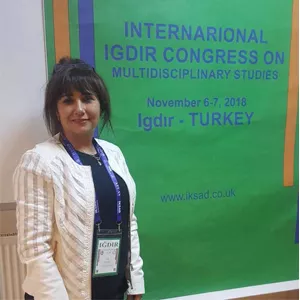
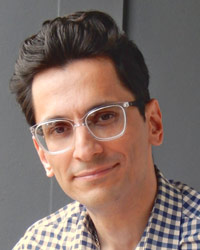
Professor Nesrin GÜLLÜDAĞ serves as a full Professor in the Department of New Turkish Language at Iğdır University's Faculty of Science and Letters, where she teaches advanced linguistics courses including General Linguistics, History of Turkish Language, and Kipchak Turkish. Her academic career spans over three decades with continuous research output and administrative leadership roles including Department Head (2017-2019) and Project Coordinator. Her educational foundation includes a Doctorate in Old Turkish Language from Firat University (2005; thesis: Kırımçak Turkish Grammar ), a Master's in New Turkish Language from Firat University (1998; thesis: Nogay Turkish Grammar ), and a Bachelor's in Turkish Language and Literature from Hacettepe University (1988). GÜLLÜDAĞ's research focuses on the structural and historical dimensions of Turkic languages, with particular expertise in: Specialized dialectology of Crimean Tatar, Nogay, and Baraba Tatar Historical lexicology and semantic evolution in Ottoman/Turkish Toponymic analysis of Anatolian regions Grammatical features of Turkic suffixes Language preservation policies for minority Turkic communities Cultural linguistics of traditional practices Her 23 publications (2007-2024) reveal consistent engagement with Turkic linguistic diversity, demonstrating methodological range from archival document analysis to contemporary language policy evaluation. Recent work combines historical linguistics with sociocultural contexts, particularly examining how linguistic features reflect nomadic traditions and cross-cultural contact in Eurasia. Professor GÜLLÜDAĞ has directed 26 Master's theses on diverse linguistic topics while leading major research initiatives including the Turkey Turkish Dialect Atlas Project and Crimean Tatar Language Grammar project. Her administrative contributions include coordinating the Mapping Intangible Cultural Heritage of Kars Province project and serving on university management boards.
Orhan Kılıç is a Professor of History at Fırat University, Elazığ, Turkey, where he has been employed since June 11, 1987. His research focuses on Ottoman administrative systems, regional history, and historical geography, with a particular emphasis on Eastern Anatolia and Balkan regions. Key areas of interest include provincial governance structures, economic practices, and ethnic dynamics in historical contexts. His work has been published in journals such as Cihannüma: Tarih ve Coğrafya Araştırmaları Dergisi , Osmanlı Tarihi Araştırma ve Uygulama Merkezi Dergisi OTAM , and Electronic Turkish Studies . Notable contributions include studies on Van Lake trade networks, Ottoman terminology in administrative regions, and the governance of provinces like Rumeli and Silistre. Dr. Kılıç’s publications frequently analyze archival documents to shed light on topics such as early modern Ottoman military logistics, feudal systems (e.g., malikane), and the social history of minority groups like Armenians in Van. His research bridges the gap between administrative practices, economic activities, and cultural dynamics within the Ottoman Empire. Despite his prolific output, no scientific awards or grants are explicitly mentioned in the provided materials. His academic contributions are primarily disseminated through peer-reviewed articles and conference presentations.
Professor Raminder Kaur is Professor of Anthropology and Cultural Studies at the School of Global Studies, University of Sussex. She serves as Co-Director of the Sussex Asia Centre and has held leadership roles including Director of Doctoral Studies and Director of Equality, Diversity and Inclusion at the School of Global Studies. She is a Fellow of both the RSA (Royal Society for Arts) and RAI (Royal Anthropological Institute), where she serves on the RAI Film Committee organizing international film festivals. Her academic training includes a BA (Combined Hons) in Social Anthropology and Art and Archaeology and PhD from SOAS, University of London. She has held Research Fellowships at Brunel University, University of East Anglia, University of Manchester, and University of Erfurt. Her research spans Cultural Studies, Sociology, Anthropology, and Communication and Media Studies with focus areas including migration, race/ethnicity/gender, arts and aesthetics, heritage, public culture, censorship, religion and politics, human rights, energy, renewables, and 'cultures of sustainability'. Professor Kaur's scholarly output demonstrates a strong integration of visual anthropology, ethnographic methods, and social justice concerns. Her recent work explores censorship in South Asia, identity formation, liminal spaces, religious festivals, and the relationship between tradition and transformation. She uniquely bridges academic scholarship with creative practice through theatre, film, and multimedia production. Her research has been recognized with significant awards: Eurocities Award for Cooperation in Gdansk (2007) for the MCAAH report 'Delivering Shared Heritage' Fellowship in the Royal Society for the encouragement of the Arts, Manufactures and Commerce Fellowship in the Royal Anthropological Institute Professor Kaur has successfully supervised numerous doctoral students working on South Asian studies, migration, and cultural studies topics. She currently leads the POWERE project (Participation of Women in Renewable Energy) funded by UKRI, Pilgrimonics funded by Leverhulme Trust, and CO-POWeR (Consortium on Practices of Wellbeing and Resilience in BAME Families and Communities) funded by UKRI. Her creative work through Sohaya Visions includes theatre productions like EXODUS: ASIA, AFRICA, EUROPE; breaDth; and films including DISHOOM INDIA and PEOPLEBOROUGH that explore themes of identity, migration, and social justice.
Rev. Dr. Wojciech Witkowski SDB is an Assistant Professor at the Department of Ecclesiastical Procedural Law, Faculty of Law, Canon Law and Administration, John Paul II Catholic University of Lublin. He earned his master's degree in theology under Rev. Prof. Marian Graczyk and a doctorate in canon law under Archbishop Andrzej Dzięga. His teaching includes Marriage Law, Ordinary Process, and Monastic Law at KUL and the Salesian Major Seminary in Kraków. Educated in theology and canon law Ordained priest in 2001 Teaching since 2006 Doctoral studies completed in 2012 His research focuses on ecclesiastical procedural law, particularly document verification, evidentiary value, and canonical processes. Publications include studies on medieval church documents, document management in diocesan/parish offices, and marriage nullity proceedings. He has presented at international conferences on canonical collaboration and human rights protection. His scientific work spans 2010–2017, emphasizing canonical documentation systems, historical evolution of ecclesiastical processes, and marriage preparation formalities. Publications appear in journals like Kościół i Prawo and the Polish-Italian series Człowiek - Rodzina – Prawo . He serves as an auditor at the Lublin Metropolitan Court since 2017 and taught at the Salesian Major Seminary in Łódź (2006–2008). His career combines academic work with practical roles in church administration and judicial processes.
L. Oostwegel is a Researcher at GFZ German Research Centre for Geosciences, working within the Seismic Hazard and Risk Dynamics department. The researcher specializes in earthquake exposure modeling, building stock characterization, and multi-hazard risk assessment using geospatial data and open-source information. Oostwegel's research focuses on seismic hazard and risk assessment, with particular emphasis on building exposure modeling using OpenStreetMap and remote sensing data. Key research areas include earthquake risk modeling, flood risk assessment, landslide risk management, and the development of tools for multi-hazard risk assessment. The researcher has made significant contributions to understanding building stock characteristics at various scales, from individual buildings to global assessments. Analysis of recent publications reveals a strong focus on utilizing volunteered geographic information and Earth observation datasets for risk assessment. Oostwegel has developed methods for assessing the completeness of OpenStreetMap building data globally and has created tools like 'risk-calculator' for multi-hazard risk assessments. The research shows an interdisciplinary approach combining geophysics, geospatial analysis, and disaster risk reduction. Top-down or bottom-up in earthquake exposure modeling (2025) Safe Haven – Landslides: A Serious Game for Enhancing Risk Awareness (2025) A model of European buildings (2024) From Shelters to Skyscrapers: Worldwide Building Exploration (2024) Seismic loss assessment sensitivity study (2023) Oostwegel has collaborated extensively with researchers including Evaz Zadeh, T., Schorlemmer, D., and others across multiple projects focused on natural disaster risk assessment. The research has practical applications in urban planning, disaster risk reduction, and climate adaptation strategies, particularly for coastal megacities and areas prone to seismic activity.
Luis Antonio Belanche Muñoz is a Professor at the Department of Computer Science , Faculty of Informatics of Barcelona (FIB) , Universitat Politècnica de Catalunya (UPC) . He is affiliated with research groups SOCO - Soft Computing and IDEAI-UPC - Intelligent Data Science and Artificial Intelligence Research Group . His career spans over 25 years, with 216 documented activities. His research focuses on Machine Learning , Kernel Methods , and Neural Networks . He has pioneered techniques in feature selection, similarity measures, and hybrid models connecting deep learning with kernel methods. His work applies to diverse domains including finance, microbiology, cancer diagnostics, and environmental engineering. Recent publications highlight trends in kernel matrix analysis using entropy, microbiome data integration , and drug resistance prediction in HIV. Earlier work includes knowledge-based systems for wastewater treatment diagnostics and educational technologies for MOOC environments. He has collaborated with 75+ researchers across UPC's research network, contributing to projects funded under Spain's State Research Plans and Catalonia's RIS3CAT strategy. His 2011 thesis on Feature selection in brain tumor MRS data demonstrates interdisciplinary applications.
Dr. Jonathan I. Maletic is a Professor in the Department of Computer Science at Kent State University , where he has been since 2001. He served as Interim Chair in 2010 and has a secondary role as Principal at srcML LLC , providing software solutions for code analysis. Education: Ph.D. in Computer Science from Wayne State University (1995) M.S. in Computer Science from Wayne State University (1989) B.S. in Computer Science from University of Michigan-Flint (1985) His research spans software evolution , program comprehension , software visualization , and eye tracking studies . He is a leading figure in the srcML and iTrace projects. Recent publications focus on quantum programming analysis , code naming semantics , and eye-tracking data correction . Notable trends include the integration of NLP in code analysis and quantum software engineering . Scientific Awards: Kent State President’s Faculty Excellence Award (2025) Most Influential Paper at SCAM (2021) Kent State Outstanding Research Award (2021) IEEE TCSE Distinguished Paper (2020) Mining Software Repositories Foundational Contribution (2020) Dr. Maletic has advised 40+ graduate students , including Ph.D. and M.S. candidates, with notable alumni in academia and industry. He has secured multiple NSF grants for projects like srcDiff.org (2023, $750K) and expanding srcML language support (2020, $652K). He leads the Software Development Laboratory (SDML) and iTrace teams, fostering collaborative research in code analysis and eye-tracking infrastructure.
Ylenia Caputo is an Adjunct Professor, Research Fellow, and Educational Tutor at the Department of the Arts of the University of Bologna. Her work focuses on the intersection of Celebrity Culture, Media Studies, and Fashion Analysis through an intergenerational lens. She holds a PhD in Science and Culture of Well-being and Lifestyles (2023) and a Master's in Cinema, Television, and Multimedia Production (2019) from the same institution. Education: PhD in Science and Culture of Well-being and Lifestyles (2023), University of Bologna; MA in Cinema, Television, and Multimedia Production (2019), University of Bologna (110/110 with honors). Current Roles: Contract Professor for Celebrity Cultures (2025-2026), Research Fellow for the PRIN PNRR 2022 CELEBR-AGE project (2024-2025), and Teaching Tutor for Performing Arts and Audiovisual Production Sciences (2024-2025). Research Focus: Analyzes Teen Celebrity in Italian media, Fashion-Media Interactions, and Aging Celebrity Narratives in sports and entertainment. Her work bridges Gender Representation, Transgenerational Imaginaries, and Digital Self-Promotion during crises. Article Trends: Recent publications explore Gymnast Aging Narratives, Italian Teen Celebrity in Global TV, and Fashion's Role in Cinematic Storytelling across 2020-2025. Editorial Roles: Journal Manager for ZoneModa Journal (Band A, ANVUR) since 2019, Editorial Assistant for Cinergie – Il cinema e le altre arti since 2021. Research Collaborations: Member of CFC International Research Center, GIRL'S EYE VIEW Network, and INC Italian Celebrity Research Network.
Jana Reidla is a Research Fellow in Ethnology at the Institute of Cultural Research, Faculty of Arts and Humanities, University of Tartu, where she has held academic positions since 2020. She completed her PhD in 2021 with a dissertation on curatorial roles in Baltic and Finnish national museums and holds a Master’s degree in Cultural Management. She is also the program director of the MA in Culture Management at the University of Tartu and has previously lectured on Estonian historical ornamentation and jewellery at the Viljandi Culture Academy. Her research focuses on cultural anthropology, ethnology, museum studies, and cultural heritage, particularly exploring curatorial practices, collecting policies, and cultural memory in Baltic and Estonian contexts. She investigates how museums navigate heritage, identity, and institutional roles, especially in post-Soviet and transnational frameworks. Her recent publications reveal a strong thematic focus on museum value systems, auxiliary collections, and the social relevance of curatorial work. She analyzes collecting practices in Estonian museums, the role of curators as mediators, and the representation of the Soviet period, contributing to broader discussions on heritage ethics and institutional pluralism. Voldemar Siimon Memorial Scholarship, University of Tartu (2018) Reidla has supervised no formal students listed in the data but has actively contributed to research projects such as Practices and Challenges of Mnemonic Pluralism in Baltic History Museums (PRG1097), funded by the Estonian Research Council. She also serves as editor-in-chief of Studia Vernacula and is a member of ICOM, the Société Internationale d'Ethnologie et Folklore, and the Society of Friends of the Estonian National Museum. Her creative work includes curating exhibitions such as For Sale. Not For Sale. Jewellery exhibition (2022) at Pärnu Museum and managing permanent exhibitions at the Museum of the Bank of Estonia.
Dr. Caroline H. Shiboski is a Professor in the Department of Stomatology at the University of California San Francisco (UCSF) School of Dentistry. She cares for adult and pediatric patients with oral mucosal diseases and other oral disorders, including inflammatory conditions (lichen planus, pemphigus, pemphigoid), infectious diseases (such as candidiasis and herpes virus infections), certain oral pain conditions (such as burning mouth syndrome), and the oral complications of graft-versus-host disease following stem cell transplants. She is also involved with the initial diagnosis of oral cancer and precancerous conditions, working closely with the head and neck surgery team for timely referral and treatment. Dr. Shiboski's educational background includes: Lycee Rabelais, Versailles Academy, France, BS, 1978, Biology, Math, Physics Universite R. Descartes, Paris V, France, DDS, 1984, General Dentistry University of California San Francisco, Certificate, 1991, Advanced General Dentistry University of California, Berkeley, MPH, 1992, Epidemiology University of California San Francisco, Certificate, 1993, Dental Public Health University of California San Francisco, Certificate, 1994, Dental Clinical Epidemiology University of California, Berkeley, PhD, 1997, Epidemiology University of California San Francisco, Certificate, 1998, Oral Medicine Dr. Shiboski's research primarily focuses on the oral manifestations of immune system dysfunction, oral cancer, and Sjögren's syndrome. Her work spans clinical investigations into oral mucosal diseases, epidemiological studies of oral conditions, and translational research connecting oral manifestations with systemic diseases. She has made significant contributions to understanding the oral complications of autoimmune disorders and has pioneered research on telemedicine applications in oral medicine, particularly during the COVID-19 pandemic. Analysis of Dr. Shiboski's recent publications (2021-2023) reveals a strong emphasis on Sjögren's syndrome research, with multiple studies examining genetic, epigenetic, and clinical aspects of this autoimmune disorder. Her work also demonstrates growing interest in telemedicine applications for oral disease management, reflecting adaptation to modern healthcare delivery challenges. Additionally, she continues to investigate oral cancer disparities and the intersection of oral health with systemic conditions. Dr. Shiboski has received numerous scientific awards throughout her career: Received High Honor for doctoral thesis titled "La prevention bucco-dentaire au Danemark" (1984) "Michele Bardet-Viatte Award" for best publication on Dental Health Promotion (1987) Dentist Scientist Award, Department of Stomatology, UCSF (2001) K23 award, Department of Stomatology, UCSF (2001) Diplomate of the American Academy of Oral Medicine (2001) Dean's Creativity fund Award (2003) Academic Senate New Investigator Award (2004) Teacher of the Year Award, Department of Stomatology, UCSF Dr. Shiboski has secured substantial research funding as Principal Investigator on multiple NIH grants, most notably serving as PI for the Sjögren's International Collaborative Clinical Alliance Next Generation Studies (SICCA-NextGen) from June 2020-May 2025 (NIH U01DE028891). Her extensive grant portfolio demonstrates consistent funding support for over 25 years, with projects spanning oral health outcomes in transplant recipients, HIV-positive women, and Sjögren's syndrome research. While specific students aren't listed in the provided information, her role as Teacher of the Year Award recipient and involvement in resident education through UCSF suggests active mentoring. Dr. Shiboski leads the Sjögren's International Collaborative Clinical Alliance (SICCA) research team, which has established a robust international network for studying Sjögren's syndrome. Her work with this consortium has generated significant insights into the genetic, clinical, and molecular aspects of this complex autoimmune disorder. The team has developed comprehensive clinical assessment protocols and biorepositories that have become valuable resources for the international research community studying autoimmune exocrinopathy.
Silvia Dal Negro is a Full Professor of Linguistics at the Free University of Bolzano's Faculty of Education . She earned her PhD in Linguistics from the University of Pavia and previously worked as a researcher at the University of Eastern Piedmont. Research Focus: Language education, contact linguistics, linguistic minorities in Alpine regions, spoken Italian, and grammar teaching. Academic Contributions: Key projects include KONTATTO (language contact in South Tyrol) and GRASS (grammar teaching research). Her work bridges theoretical and applied linguistics, emphasizing practical implications for teacher training and minority language preservation. She leads interdisciplinary initiatives like the DIALOG project, which explores spoken language variation. Article Trends: Recent publications analyze phonetic reduction in spoken Italian (e.g., cioè vs. cè ), language contact in Walser German, and metalinguistic awareness in education. These studies reveal her focus on pragmatic markers, syntactic variation, and sociolinguistic dynamics. Honors: President of the Italian Association of Applied Linguistics , advancing research and policy for minority languages. Labs & Teams: Collaborates with the DIALOG project team and contributes to the GISCEL network, fostering Italian language education reforms.
Prateek Jain is a Lecturer at the School of Information, San José State University, where he teaches courses in Big Data Analytics and Python programming. He holds a Ph.D. in Computer Science and Engineering from Wright State University and has over a decade of industrial experience in data science and artificial intelligence at leading institutions such as IBM T.J. Watson Research Center, Nuance Research Labs, and Liveperson. His research interests include Knowledge Graphs, Natural Language Processing, Machine Learning, and Big Data, with over 30 peer-reviewed publications and patents in these areas. His academic and professional background bridges advanced research and practical deployment of AI-driven systems. Ph.D. (Computer Science and Engineering), Wright State University (2007–2012) Ph.D. (Computer Science), University of Georgia (2006–2007, transferred) BS (Information and Communication Technology), Dhirubhai Ambani Institute of ICT (2002–2006) Prateek's research publications focus on the development and application of Knowledge Graphs, particularly in areas like NLP, enterprise search, healthcare, and financial services. His work emphasizes scalable, explainable, and practical AI solutions, with recurring themes in graph embeddings, semantic reasoning, and large-scale data integration. He has served as an Adjunct Instructor at Chabot College and Northwestern Polytechnic University, and currently contributes to academic instruction at SJSU while maintaining an active role in industry as Principal Data Scientist at Liveperson. His industrial roles have spanned: Principal Data Scientist, Knowledge Graphs – Liveperson Inc. (2021–Present) Engineering Manager, Machine Learning – AppZen Inc. (2018–2021) Principal Research Engineer – Nuance Inc. (2016–2018) VP/Data Scientist – BlackRock Inc. (2015–2016) Data Scientist – Ignition One (2015) Research Staff Member – IBM T.J. Watson Research Center (2012–2015) There are no listed scientific awards or advisees in the provided information.
Kayvan Kousha is a Senior Researcher at the University of Wolverhampton, leading the Statistical Cybermetrics and Research Evaluation Group within the Faculty of Arts, Business, and Social Sciences. With a PhD in Information Science and Scientometrics from the University of Tehran, his career spans academic appointments in both Iran and the UK. His research focuses on innovative methods for assessing research impact through digital sources, including: Developing AI-driven tools for evaluating REF impact case studies Analyzing grey literature and social media citations Studying peer review acceleration during global crises Creating semi-automatic URL classification systems for non-academic impact Key contributions include: 15+ recent publications on research evaluation Editorial roles at Scientometrics and Springer's AI for Scientometrics Being ranked among the top 2% of global scientists in information management Pioneering methods for assessing educational impact through online syllabi His work has significantly influenced how institutions measure research impact beyond traditional citations, incorporating digital footprints like Wikipedia, Goodreads, and YouTube.
Azim Ahmadzadeh serves as an Assistant Professor in the Department of Computer Science at the University of Missouri–St. Louis within the College of Arts and Sciences. Holding a Ph.D. in Computer Science from Georgia State University (2021), he maintains office hours in 329 ESH on Mondays and Wednesdays from 5:00-6:30 PM via Zoom or in person, with flexible scheduling options for students. Education: Ph.D. Computer Science, Georgia State University, 2021 Dr. Ahmadzadeh's research pioneers machine learning applications for space weather forecasting, specializing in solar flare prediction through innovative time series analysis and computer vision techniques. His work systematically addresses critical challenges including extreme class imbalance in solar datasets, temporal coherence requirements, and data scarcity through novel algorithmic developments. Key contributions include advanced similarity metrics for multivariate time series, synthetic data generation frameworks, and anomaly detection systems specifically designed for solar observations. His publication trajectory (2022-2025) reveals a strategic focus on operationalizing machine learning for heliophysics, with significant output in solar filament detection systems (Elements, MAGFILO), time series analysis innovations (Multiscale Dubuc, Ts-miou), and practical guides for scientific data annotation. This work bridges theoretical machine learning with real-world space weather forecasting needs, evidenced by roadmap documents for SEP monitoring and solar research cyberinfrastructure. Dr. Ahmadzadeh actively develops open resources for the solar physics community including manually annotated datasets, standardized annotation protocols, and ML-ready data pipelines. His research program demonstrates strong interdisciplinary collaboration potential with space agencies and observatories, particularly through contributions to white papers on solar research infrastructure and operational forecasting requirements.
Prof. Dr. Tülay ÖZER is a Professor at the Vocational School of Health Services, Medical Services and Techniques Department, Ahievran University, Turkey. She holds a PhD in Biology Education (1998) and has dedicated her career to hydrobiology and limnology, focusing on freshwater algae, their ecological roles, and biotechnological applications. BA (1987), Master's (1993), PhD (1998) from Gazi University Over 25 years of experience in algal ecology, biosorption, and FTIR spectroscopy Research Interests include: Lake and stream algal assemblages Heavy metal bioremediation via microalgae Molecular characterization using FTIR Cryopreservation of algal strains Development of algal culture collections Publication Trends show consistent work on freshwater algae, with emphasis on ecological monitoring, biosorption mechanisms (Cr(VI), Cu), FTIR applications, and seasonal dynamics. Her projects often integrate biodiversity assessments with environmental variables. Advising includes supervision of 4 Master's theses and collaboration with 81 researchers. She co-developed a comprehensive Türkiye Bitkileri Listesi Suyosunları (2019) and contributed to 17 funded projects.