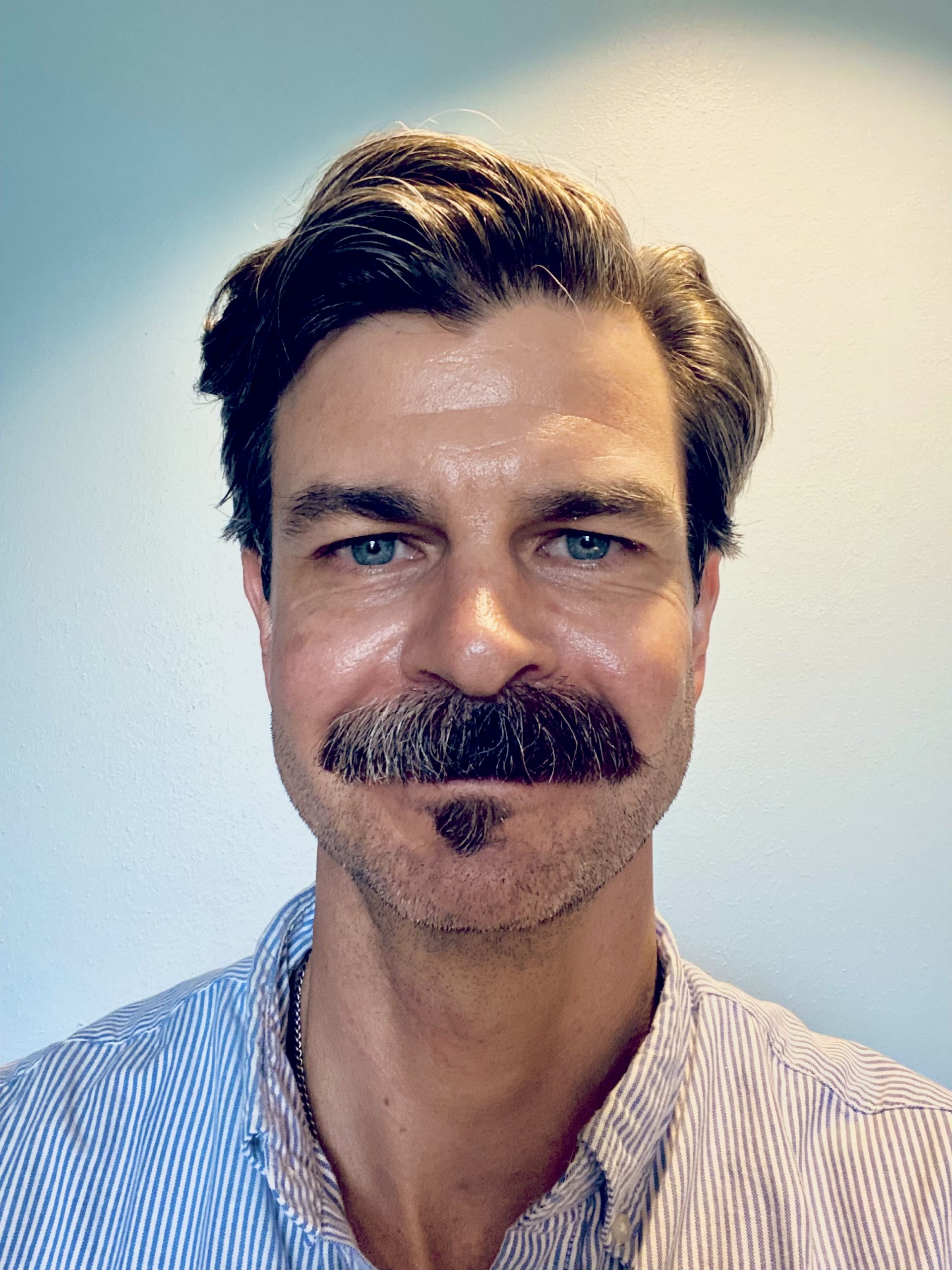
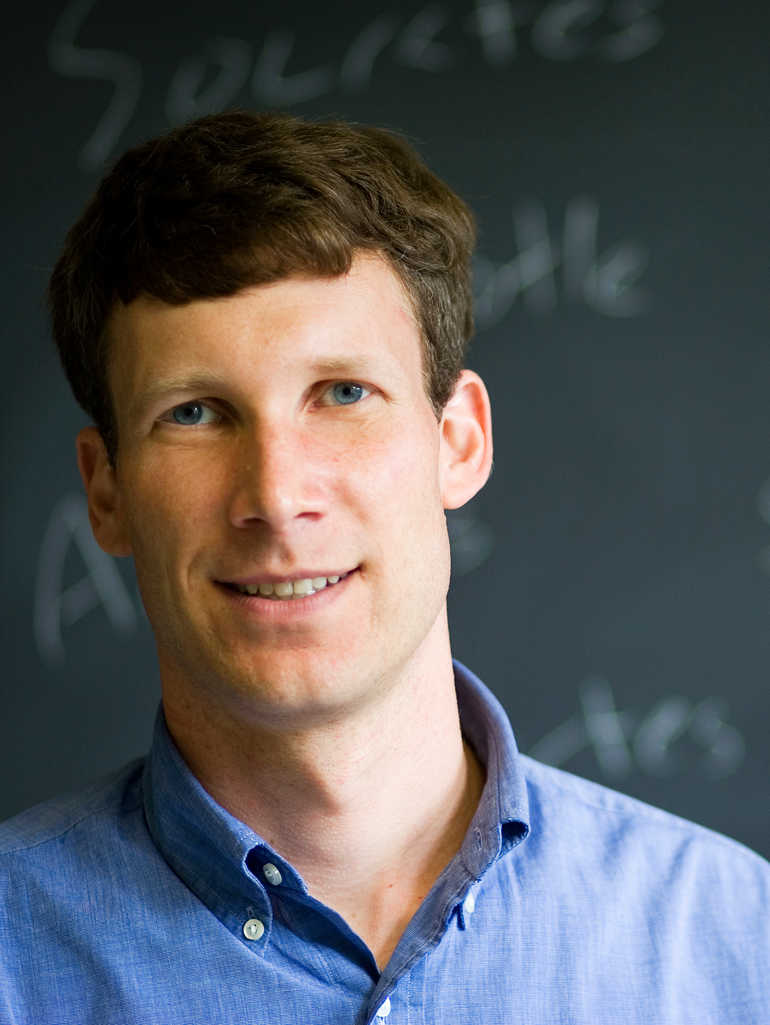
Pui Him Ip is Assistant Professor and Director of Tutorial Programmes at The Faraday Institute for Science and Religion, Affiliated Lecturer in the Faculty of Divinity, and Research Associate at St Edmund's College, University of Cambridge. His research examines early Christian thought with specializations in Origen of Alexandria, patristic philosophy, scriptural hermeneutics, and the intersection of natural philosophy with theology during Late Antiquity. He investigates how early Christians integrated physics (natural philosophy) with spiritual formation through exegetical traditions. Ip's scholarship reconstructs historical theological developments while engaging with contemporary theological debates. His work consistently bridges patristic theology with modern discussions in science and religion.
Alexander R. Pruss is a tenured Professor in the Department of Philosophy at Baylor University , within the College of Arts and Sciences . He holds a dual PhD in Philosophy (University of Pittsburgh, 2001) and Mathematics (University of British Columbia, 1996), and has held previous academic positions at Georgetown University. His work is deeply interdisciplinary, bridging metaphysics, philosophy of religion, formal epistemology, and ethics. Education: Ph.D. in Philosophy, University of Pittsburgh (2001) Ph.D. in Mathematics, University of British Columbia (1996) B.Sc. (Hon.) in Mathematics and Physics, University of Western Ontario (1991) Pruss’s research interests include metaphysics—particularly the Principle of Sufficient Reason , modality , and infinity —philosophy of religion, divine attributes , cosmological arguments , and sexual ethics . He is known for integrating rigorous formal methods with classical theistic metaphysics. His recent publications explore the intersection of probability theory, paradox, and theology, particularly in infinite domains. He has authored influential books such as The Principle of Sufficient Reason: A Reassessment (2006), Infinity, Causation and Paradox (2018), and One Body: An Essay in Christian Sexual Ethics (2012). The trends in his recent articles show a sustained focus on the philosophical implications of infinity, symmetry, and probability. He frequently investigates paradoxes in probability (e.g., infinite lotteries), challenges to modal realism, and the metaphysical coherence of divine attributes. His work combines analytic rigor with theological depth, often aiming to defend classical theism through logical and mathematical reasoning. Scientific awards and honors: Aquinas Medal, American Catholic Philosophical Association (2025) Wilde Lecturer, Oriel College, University of Oxford (2019) Outstanding Tenured Faculty Research Award, College of Arts and Sciences (2013) National Endowment for the Humanities Summer Stipend (2002) Social Sciences and Humanities Research Council of Canada Fellowship (1997–2000) Pruss has been actively involved in academic service, including serving on the Executive Council of the American Catholic Philosophical Association (2021–2024) and the Society of Christian Philosophers (2011–2013) . He has held editorial roles for journals such as American Philosophical Quarterly and Analysis and Existence . He has delivered numerous invited lectures globally, including at Oxford, Notre Dame, and MIT. There is no mention of formal PhD or Master’s students in the provided text, but he advises through graduate seminars and research supervision. He has not received specific grant mentions beyond fellowships and stipends. He is affiliated with research groups such as the Baylor Institute for Faith and Learning and the Thomistic Institute , and contributes to philosophy of science and theology dialogues. His work continues to shape contemporary debates in analytic philosophy of religion and metaphysics.
Martin Pickup serves as Associate Professor in Philosophy and Director of the Birmingham Centre for Philosophy of Religion at the University of Birmingham, having joined in 2021 after a decade of Oxford-based academic roles including the Turpin Junior Research Fellowship at Oriel College. His career spans teaching, research leadership, and international collaboration such as an Visiting Professorship at the University of Navarra. His educational foundation includes: DPhil in Philosophy (University of Oxford, 2012) BPhil in Philosophy (University of Oxford, 2009) MA in Philosophy (King’s College London, 2006) BA in Philosophy and Theology (University of Oxford, 2005) Pickup’s research integrates Philosophy of Religion, Metaphysics, and Early Modern Philosophy with distinctive methodology: he applies analytic metaphysics to test religious claims’ coherence without advocating theological positions, develops 'situationalism' to explain metaphysical indeterminacy in change and identity, and critically engages Leibniz’s framework for necessity/contingency. His work consistently bridges abstract theory and concrete religious practices, particularly focusing on Eucharistic metaphysics and petitionary prayer. Analysis of his 14 publications (2014-2025) reveals three evolving strands: early Leibniz scholarship (2014-2016), foundational situationalism papers resolving identity puzzles (2016), and mature work connecting indeterminacy frameworks to theology (2021-2025). Recent outputs demonstrate increasing synthesis between metaphysical tools and religious ritual analysis, exemplified by 2025 publications on Eucharistic presence and teleology. His professional recognition includes: Finalist in 'I’m a Researcher Get Me out of Here' (2017) Pickup actively supervises PhD candidates across his research domains and teaches from first-year 'Problems of Philosophy' to Masters-level 'Analytic Theology', though specific grants remain unmentioned in source materials. His leadership as Centre Director involves curating interdisciplinary dialogue through workshops and public engagements like the Institute of Art and Ideas fellowship (2016-17). As Director of the Birmingham Centre for Philosophy of Religion, he cultivates a collaborative hub for advancing philosophical theology through conferences, publications, and cross-departmental initiatives, positioning the Centre as a nexus for rigorous examination of religion’s conceptual foundations.
Dr. Mark K. Spencer is a Professor of Philosophy at the University of St. Thomas, where he contributes to the College of Arts and Sciences. His academic background includes a PhD in Philosophy from the University at Buffalo, an MA in Philosophy from Franciscan University of Steubenville, and a BA in Philosophy and Theology from the same institution. Spencer's research focuses on aesthetics, ancient and medieval philosophy, scholastic traditions, metaphysics, and philosophical theology. He has published extensively on topics such as divine simplicity, Thomistic metaphysics, and the interplay between beauty and theology. His work often bridges classical philosophical systems with contemporary theological discourse, emphasizing Catholic intellectual traditions. Awards include the ACPA Young Scholar Award (2014) for his paper on Thomistic hylomorphism. Spencer currently teaches courses on natural philosophy, metaphysics, and the philosophy of the human person. His educational journey includes advanced studies in philosophy and theology, with a strong emphasis on integrating medieval thought into modern philosophical frameworks. Spencer's research interests span from analyzing the metaphysical foundations of beauty to exploring the nature of the human soul and its relationship to divine causality. His publications frequently engage with thinkers like Aquinas, von Hildebrand, and contemporary philosophers, synthesizing their ideas into coherent theological and metaphysical frameworks. Spencer’s recent work includes exploring the implications of quantum randomness for classical theism and re-examining hylomorphic theories of death. He collaborates with scholars like Tim Pawl on topics such as Christologically inspired hylomorphism. His contributions to the field are marked by rigorous engagement with both historical and contemporary debates, particularly in the areas of personalism, scholastic metaphysics, and the philosophy of religion.
Daniel D. De Haan serves as the Frederick Copleston Senior Research Fellow and Lecturer in Philosophy and Theology in the Catholic Tradition at Campion Hall and Blackfriars, University of Oxford. He is also a Research Fellow in the Ian Ramsey Centre for Science and Religion within the Faculty of Theology and Religion. As principal investigator, he leads the "Conceptual Clarity Concerning Human Nature" project sponsored by the Templeton World Charity Foundation. Dr. De Haan received his doctorate in philosophy in 2015 from the Center for Thomistic Studies at the University of St Thomas, Houston, Texas, and the De Wulf-Mansion Centre for Ancient, Medieval and Renaissance Philosophy at the Catholic University of Leuven, Belgium. Prior to Oxford, he was a postdoctoral fellow on the neuroscience strand of the "Theology, Philosophy of Religion, and the Sciences" project at the University of Cambridge. His research focuses on philosophical anthropology, examining how moral psychology, phenomenology, neuroscience, and metaphysics inform our understanding of human persons. He investigates challenges neuroscience and evolution pose for hylomorphism, along with questions in philosophy of religion and medieval philosophy, particularly Thomas Aquinas and Avicenna. His work demonstrates a distinctive integration of Thomistic philosophy with contemporary cognitive science and neuroscience. Analysis of Dr. De Haan's publications reveals consistent engagement with Thomistic philosophical anthropology, exploring the relationship between intellectual operations and psychosomatic processes. His work spans medieval philosophy, metaphysics, philosophy of mind, and theology-science dialogue, with notable application of Thomistic concepts to contemporary philosophical challenges in cognitive science. Dr. De Haan has secured significant research funding as principal investigator for the Templeton World Charity Foundation project "Conceptual Clarity Concerning Human Nature." His scholarly activities include editorial work on collections related to medieval philosophy and active participation in interdisciplinary research bridging theology, philosophy, and cognitive science. At Oxford, Dr. De Haan is affiliated with both Campion Hall and Blackfriars, institutions with strong connections to Catholic intellectual tradition. His work with the Ian Ramsey Centre positions him at the intersection of theological inquiry and scientific investigation, contributing to dialogues about religion and scientific understanding.
Dylan Flint is a Senior Lecturer in the Department of Philosophy at The Ohio State University. His research focuses on Early Modern Philosophy, particularly the philosophy of Gottfried Wilhelm Leibniz, addressing topics such as God's nature, divine agency, modality, freedom, and the Problem of Evil. He is currently completing a dissertation on contingency in Leibniz's philosophical theology and has written on Leibniz's accounts of divine simplicity and human agency. Flint holds a B.A. in Philosophy from the University of Washington and an M.A. from Simon Fraser University. His teaching expertise spans Early Modern Philosophy, Ethics, Philosophy of Religion, Metaphysics, and Asian Philosophies. He emphasizes student engagement and clarity, fostering an inclusive classroom environment. His recent publications include a paper in History of Philosophy Quarterly defending Leibniz’s notion of divine contingency and a forthcoming article in Philosophy Compass on contingency in Leibniz’s theology. Flint actively presents at academic conferences and contributes to philosophical discourse through interviews and public engagement.
Eleonore Stump is the Robert J. Henle, S.J., Professor of Philosophy at Saint Louis University (since 1992). She holds honorary professorships at Wuhan University and Australian Catholic University. Her expertise spans medieval philosophy, metaphysics, and philosophy of religion, with notable works on Aquinas and the problem of evil. She has led major grants including a $3.3M Templeton Foundation grant (2013-2015) on intellectual humility. Awards include the ACP Aquinas Medal (2013) and the Robert Foster Cherry Award for Teaching (2004). Education: B.A. (Grinnell College, 1969), M.A. (Harvard, 1971), M.A. and Ph.D. (Cornell, 1975). Past institutions include Oberlin College, Virginia Tech, and Notre Dame. Research Interests: Medieval philosophy (especially Aquinas), metaphysics, philosophy of religion, biblical narratives, and theological ethics. Current projects include a book on atonement (Oxford Press). Awards & Grants: Senior Faculty Scholarly Works Award (SLU, 2019), Gifford Lectures (Aberdeen, 2003), Wilde Lectures (Oxford, 2006). Grants from Mellon, NEH, and others. President of Philosophers in Jesuit Education. Labs/Teams: Leads the Ignatian Scholars Corps program at SLU. Collaborates internationally on projects like the ‘Philosophy and Biblical Narrative’ initiative ( Issachar Fund Grant, 2018 ). Active in the Society of Christian Philosophers and American Philosophical Association.
Dr. Thomas Ward is an Associate Professor of Philosophy at Baylor University's College of Arts and Sciences. His research focuses on the history of philosophy, particularly medieval thinkers like John Duns Scotus and Thomas Aquinas. He holds a Ph.D. from UCLA, an M.Phil. from Oxford University, and a B.A. from Biola University. Ward's work bridges metaphysics, theology, and medieval philosophy, with notable publications including translations of Duns Scotus's 'Treatise on the First Principle' (2024) and books like 'Ordered by Love: An Introduction to John Duns Scotus' (2022). His research spans topics such as divine ideas, natural law, and medieval theories of form and hylomorphism. Recent articles (2020–2024) explore Scotus’s voluntarism, Ockham’s ethics, and Aquinas’s views on human nature. Ward’s scholarship engages deeply with late medieval scholasticism, emphasizing theological and metaphysical themes. His office is located in Morrison Hall 226, and he maintains an active academic website.
Jonatan Simons is a Researcher affiliated with the Institute of Religion and Critical Inquiry at Australian Catholic University. Their primary research focuses on early Christian theology, particularly the concept of divine simplicity in the works of Irenaeus of Lyons. This research culminated in a 2021 PhD Thesis published through the university's repository. Research Interests: Simons specializes in Patristic Theology, Early Christian Thought, and the philosophical underpinnings of early Christian doctrine. Their work bridges historical theology with contemporary theological debates, emphasizing the intellectual legacy of figures like Irenaeus. Publications: Simons' sole listed publication is their doctoral thesis, which analyzes Irenaeus' theological framework, particularly his approach to divine simplicity. This work contributes to understanding early Christian doctrinal developments and their philosophical foundations. Awards & Grants: No specific awards or grants are mentioned in the provided text. Further details on funding or recognition would require additional sources. Labs/Teams: Affiliation with the Institute of Religion and Critical Inquiry suggests participation in interdisciplinary theological and philosophical research groups within the university.
Jennifer Newsome Martin is an Associate Professor in the Department of Theology and Program of Liberal Studies at the University of Notre Dame, serving as Director of the de Nicola Center for Ethics and Culture. She holds a Ph.D. in Systematic Theology from Notre Dame, with research focused on Catholic and Eastern Orthodox theology, theological aesthetics, and the intersection of faith with literature and art. Her work bridges historical theology, continental philosophy, and contemporary cultural critique. Her notable achievements include the 2017 Manfred Lautenschlaeger Award for Theological Promise and the 2019 Frank O’Malley Teaching Award. She has authored acclaimed works like Hans Urs von Balthasar and the Critical Appropriation of Russian Religious Thought and co-edited volumes such as An Apocalypse of Love . Her research interests span 19th-20th century Catholic theology, French feminism, and the theological significance of art and literature. She serves on editorial boards for Communio , Theological Studies , and the University of Notre Dame Press , and actively contributes to ecumenical dialogue and Catholic intellectual life. Dr. Martin teaches courses on theology, ethics, and the liberal arts, advising numerous graduate and undergraduate students. Her recent articles explore topics like Bergson’s influence on ressourcement theology, the interplay of art and sacramentality, and Paul Claudel’s theological poetics.
MICHELLE PANCHUK is an Assistant Professor of Philosophy and Philosophy Program Coordinator at Murray State University. Her work centers on religious trauma, analytic theology, and gender justice in religious contexts. She explores intersections between metaphysics, ethics, and social epistemology, particularly focusing on marginalized voices and hermeneutical injustice in religious systems. Her research addresses topics such as divine simplicity, skeptical theism, and the ethical implications of religious institutions. Recent publications highlight responses to religious trauma through liturgical practices and philosophical frameworks that integrate embodied cognition. She advocates for inclusive theological methodologies that center marginalized perspectives. Key themes in her work include: Conceptual distortions in religious trauma narratives Gendered interpretations of divine attributes Epistemic justice in theological discourse Her scholarship bridges analytic philosophy with practical theology, offering critical analyses of scriptural hermeneutics and divine hiddenness. She also investigates societal threats to vulnerable communities through a philosophical lens.
W. Matthews Grant is a Professor of Philosophy at the University of St. Thomas in St. Paul, MN. He is affiliated with the Philosophy Department and teaches courses including Metaphysics. Contact: wmgrant@stthomas.edu. His research focuses on Philosophy of Religion and Medieval Philosophy, particularly Thomas Aquinas. Key areas include divine simplicity, divine knowledge, free will, and the causality of sin. He examines how Aquinas reconciles divine attributes with human freedom and contingency. Grant's publications (2001-2012) in journals like Faith and Philosophy and The Thomist consistently address theological metaphysics. His work traces themes of divine simplicity, middle knowledge, and the natural law tradition, demonstrating a sustained engagement with medieval philosophy's relevance to modern debates.
Khalil Andani is an Assistant Professor of Religion at Augustana College. He holds a PhD in Histories and Cultures of Muslim Societies from Harvard University (2020), where he was an SSHRC Doctoral Fellow (2014-2019). His research focuses on Islamic intellectual history, with specializations in Quranic studies, Ismaili philosophy, and Neoplatonic metaphysics. He earned a Master of Theological Studies from Harvard Divinity School, a Bachelor of Mathematics from the University of Waterloo (2008), and is also a Chartered Professional Accountant (CPA). His research explores themes such as apophatic theology in Ismaili thought, Quranic revelation theories, and the compatibility of Islamic metaphysics with scientific concepts like evolution. Recent publications include studies on divine simplicity, Ismaili theories of evil, and the role of prayer in Neoplatonic frameworks. He has contributed to journals like the Oxford Journal of Islamic Studies and Religion Compass . Dr. Andani’s scholarly awards include the prestigious SSHRC Doctoral Fellowship. His work bridges premodern Islamic philosophies with contemporary issues, offering innovative interpretations of Islamic theological concepts. He maintains active research agendas in Ismaili intellectual history and the intersection of religion with science and pluralism.
Dr. Daniel Pedersen is a Lecturer at the University of Aberdeen, affiliated with the School of Divinity, History, Philosophy & Art History. He holds a PhD from Princeton Theological Seminary (2016) and an MDiv (2011). His research focuses on theological and philosophical themes including the doctrine of God, sin and evil, metaethics, aesthetics, and theology-science intersections. He has written extensively on figures like Spinoza, Leibniz, Schleiermacher, and Tillich. Current research explores evolution, moral evil, and divine blame through a co-authored project analyzing divine responsibility in evolutionary contexts. Past work includes monographs on Schleiermacher’s theology and engagements with Reformed Scholastics and Aquinas. He supervises PhDs in Divinity and Philosophy, covering topics from early modern theology to contemporary analytic philosophy of religion. Pedersen is a Core Faculty Member at the Aberdeen Centre for Protestant Theology Research. His teaching spans theology, philosophy, and ethics, with prior roles at Princeton University and the University of Exeter. Though no explicit awards are listed, his publications reflect significant contributions to systematic theology and the history of ideas. His academic journey includes postdoctoral work at the University of Texas’ Institute for Historical Studies and teaching at Princeton Theological Seminary. Research supervision spans topics from Aquinas to German Idealists, emphasizing interdisciplinary approaches to theology and science.
Eleonore Stump is an Honorary Visiting Professor at the University of York's Department of Philosophy, alongside roles at Saint Louis University, Wuhan University, Australian Catholic University, and the Logos Institute, St Andrews. Her research spans philosophy of religion, metaphysics, and medieval philosophy, with notable works like *Wandering in Darkness* (2010) and *Atonement* (2018). She has delivered prestigious lecture series including the Gifford Lectures (Aberdeen, 2003) and Stanton Lectures (Cambridge, 2018). A past president of major philosophical associations, she is a member of the American Academy of Arts and Sciences. Her work bridges theological and philosophical inquiry, emphasizing narrative approaches to suffering, divine attributes, and ethical theory. Her research interests coalesce around theological metaphysics, particularly divine simplicity, free will, and atonement. She critiques traditional theodicies through narrative frameworks and explores virtue ethics rooted in Aquinas’s thought. Recent work engages contemporary debates on divine foreknowledge, moral responsibility, and the intersection of faith and epistemology. Key publications include monographs on Aquinas, edited volumes on medieval philosophy, and articles addressing atonement, evil, and metaphysical foundations. She has advised on numerous editorial projects and serves as a patron at Blackfriars, Oxford. Current initiatives focus on integrating philosophical theology with existential questions about human flourishing and divine interaction.