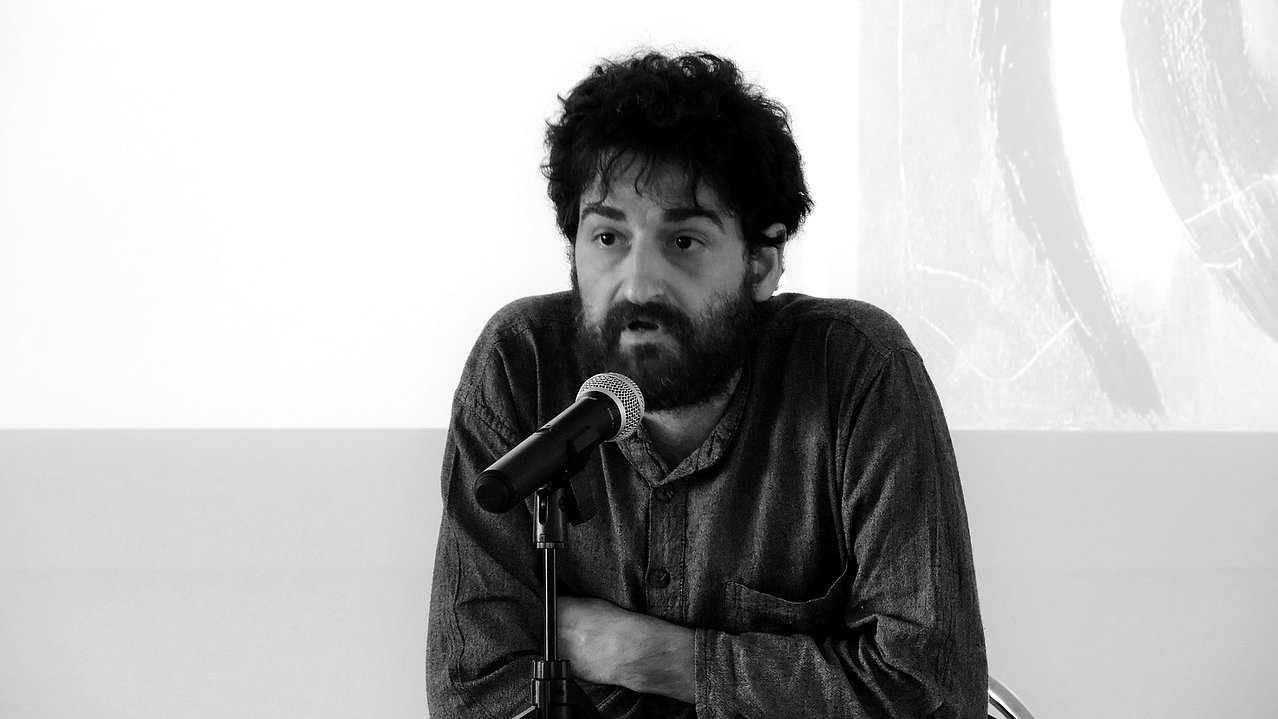
Ruggero Vimercati Sanseverino is a Full Professor of Hadith Studies and Prophetic Tradition at the Center for Islamic Theology, University of Tübingen. His research spans Hadith transmission in Sunni and Shiite traditions Prophetic worship and Islamic imitation piety Dynamics of tradition and renewal in Islam Islamic spirituality and religious practices His academic journey includes a PhD from Aix-Marseille University (2012) and a Master’s from IREMAM/CNRS (2007). He has led projects like The Presence of the Prophet (DFG-ANR) and contributed to interdisciplinary dialogues on multireligious societies. The 15 most recent articles reflect his expertise in Hadith methodology Sufi spiritual traditions Prophetic hermeneutics Comparative Islamic studies Key collaborative works address interfaith dynamics and Islamic responses to secularization. He supervises PhD candidates and contributes to editorial boards, including the Theologie, Bildung, Ethik und Recht des Islam series at Nomos Verlag. His work bridges classical Islamic scholarship with contemporary theological challenges.
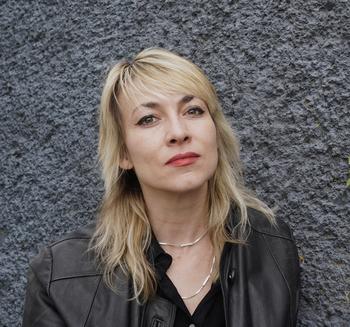
Mahmoud Abdallah is a Researcher at the Center for Islamic Theology , University of Tübingen, where he has worked since 2020. His career includes roles as Senior Scientist at the University of Innsbruck (2019–2020), Project Leader at ZITh (2016–2019), and Post-Doc researcher (2013–2018). He also held guest lectures at Marmara University (2017) and served as an Arabic Editor (2012–2013). Education : PhD in Comparative Linguistics (2012, Heinrich Heine University Düsseldorf), Master’s summa cum laude (2002, University of Minia), State Examination (1998, Al-Azhar University). Research Interests focus on Islamic Theology , Pastoral Care , Interreligious Dialogue , and Religious Institutions in Pluralistic Societies . He explores hermeneutics in Islamic counseling, Ḥisba in public order, and Umma dynamics in multicultural contexts. Recent Publications (2014–2022) analyze Qur’anic ambiguity , interfaith education , religious responses to crises (e.g., pandemic pastoral care), and Islamic social ethics . Key themes include Abrahamic unity , contextual theology , and religious hermeneutics . Scientific Awards : Master’s degree with summa cum laude distinction (University of Minia, 2002). Advising & Projects : Co-editor of Grundlagen muslimischer Seelsorge (2020) and Theologie des Zusammenlebens series (2017–2022). Led the 2016 project Scientific Education and Social Responsibility (Baden-Württemberg Ministry). Currently working on books about Prophetic Hermeneutics (2023) and Religious Transformations in Crisis (2022). Committee Memberships : Member of the German Islam Conference (since 2018), Scientific Advisory Boards at Zukunftsforum Islam e.V. (since 2017), and the DAVO (German Working Group on the Middle East, since 2009).
Leibniz Institute for Jewish History and CultureGermany
Dr. Enrico Lucca serves as a Research Fellow at the Dubnow Institute, where he has held the position of Research Associate since January 2018. He concurrently coordinates the Research Unit 'Knowledge', the Institute's Forum, and oversees peer reviewing for the Dubnow Institute Yearbook. His academic work centers on twentieth-century European-Jewish history and thought, with specialized focus on knowledge transfer between Europe and Israel/Palestine, intellectual history, and institutional history within Jewish contexts. Lucca completed his Master's degree in Philosophy at the University of Milan in 2007, followed by doctoral studies (2009-2012) at the same institution, culminating in a dissertation titled 'A Dialectic Vision of Jewish History. Gershom Scholem and the Legacy of Messianism.' His academic training includes post-graduate specialization in Cultural Studies at Scuola Alti Studi in Modena (2009) and visiting research periods at the University of Chicago Divinity School (2009-2010) and Hebrew University of Jerusalem (2011). His research traverses European-Jewish intellectual history, Jewish cultural studies, and philosophy of religion, with particular emphasis on messianic thought, Kabbalah studies, and Hebrew literature. Lucca's scholarship frequently examines biographical and institutional frameworks that shaped Jewish thought in the twentieth century, especially through figures like Gershom Scholem, Franz Rosenzweig, and Hugo Bergmann. His methodological approach integrates cultural history with philosophical analysis to explore knowledge transmission across geographical and temporal boundaries. Analysis of his 15 most recent publications reveals consistent engagement with Central European Jewish intellectual migration to Palestine/Israel, institutional history of the Hebrew University, and critical reinterpretations of Scholem's legacy. His work demonstrates interdisciplinary breadth across history, philosophy, and literary studies, with recurring themes of linguistic identity, cultural transfer, and the interplay between mysticism and modernity in Jewish thought. No scientific awards are documented in the provided materials. While no formal students are listed, Lucca has secured significant research funding including a Gerda Henkel Foundation fellowship (2016-2017) for 'German-Jewish Knowledge and Cultural Transfer 1918–1948' and currently serves as Principal Investigator for the German Research Foundation-funded International Research Training Group 'Belongings: Jewish Material Culture in Twentieth-Century Europe and Beyond' (since 2024). Lucca actively leads the Research Unit 'Knowledge' and co-directs the International Research Training Group 'Belongings'—a tripartite collaboration between the Dubnow Institute, Leipzig University, and Hebrew University of Jerusalem—focusing on material culture approaches to Jewish history through comparative, transnational frameworks.
Dr. Harry O. Maier is Professor of New Testament and Early Christian Studies at Vancouver School of Theology since 1994, with ongoing fellowships at the Max Weber Center for Advanced Cultural and Social Studies at the University of Erfurt since 2017. His academic career spans over 25 years with significant contributions to understanding early Christianity within the context of the Roman Empire. His educational background includes a D. Phil from Oxford University (1987), Master of Divinity from Lutheran Theological Seminary (1989), and B.A. from Pacific Lutheran University (1981). Maier's research focuses on the intersection of New Testament studies, early Christianity, and spatial theory within the Roman Empire. His work examines how early Christian communities navigated urban spaces, constructed religious identity, and engaged with imperial ideologies. He has pioneered approaches that analyze biblical texts through spatial theory, examining how geography, urban structures, and neighborhood dynamics shaped early Christian thought and practice. His research particularly emphasizes the Book of Revelation, the Shepherd of Hermas, and Pauline literature, with attention to how these texts engaged with Roman imperial culture. His scholarly contributions include significant publications such as New Testament Christianity in the Roman World (Oxford University Press, 2018) and Picturing Paul in Empire (Bloomsbury, 2013), which won recognition for their innovative approaches to understanding early Christian texts within their socio-spatial contexts. Canadian Christian Writers Association Award for Best Book in Philosophy and Christian Leadership (2003) for Apocalypse Recalled: The Book of Revelation after Christendom Canadian Corportation of Religion Award for Best Dissertation in Religion (1990) for The Social Setting of the Ministry as Reflected in the Writings of the Shepherd of Hermas, Clement and Ignatius Maier has organized numerous academic conferences including "The Shepherd of Hermas and Religious Experience" (2018), "Religion of Quarters" (2018), and "Locating Martyrs and Space/Time" (2017). He serves on editorial boards for several prestigious publications including as associate editor for the Bryn Mawr Classical Review since 2016 and co-editor of the Christian Religion and Public Life book series since 2020. His external reviewing work includes major academic presses such as Oxford University Press and Cambridge University Press. As founder and co-organizer of The Greater Vancouver Biblical Colloquium since 2008, Maier has fostered interdisciplinary dialogue among scholars of biblical studies and related fields. His academic leadership extends to professional societies including the Society of Biblical Literature and the North American Patristics Society.
Dr. Stephanie Roberta Graf is a Research Fellow at the Institute for Religious Studies (Department of History and Cultural Studies) at the Free University of Berlin since 2025. She previously worked as a Universitätsassistentin at the University of Innsbruck (2021-2025) and participated in the FWF-funded project 'Membership Metaphors as Doorkeepers'. Her research bridges philosophy, critical theory, and religious studies, with a focus on the Frankfurt School's theology and metaphorology. Diploma in International Development (University of Vienna & UNAM, 2005-2011) Master in Latin American Studies (UNAM, 2013-2015) Doctorate in Political and Moral Philosophy (UAM-I & Hebrew University, 2015-2019) Her research explores the theology and metaphysics of the Frankfurt School , German-Jewish thought, coloniality in diaspora religions, and political theology. She has published on topics ranging from Walter Benjamin's natural history concepts to critical analyses of capitalism as religion and heretical mysticism. Her recent work examines ecological crises, cultural appropriation, and interdisciplinary approaches to social critique. Selected publications reveal trends in Frankfurt School philosophy , Jewish mysticism , coloniality , and Benjaminian metaphorology , with subfields including divine violence, nonidentity theory, diaspora cultures, and interdisciplinary hermeneutics. She has presented at international conferences in Argentina, Chile, Peru, Austria, and Israel. She contributes to the academic community through her involvement in projects like the Metaphorology Lecture Series at the University of Innsbruck and the International Colloquium on Heretic Argumentation in Argentina. Her work intersects philosophy, religious studies, and socio-political critique.
Carmen Meinert holds the Chair for Central Asian Religions and serves as Deputy Director of the Center for Religious Studies (CERES) at Ruhr University Bochum. She is Principal Investigator of the ERC-funded BuddhistRoad project and coordinates the Climate and Culture publication series. Her academic foundation includes research and studies at universities in Bonn, Hamburg, Beijing, Chengdu, Vienna, and the Institute of Advanced Study in the Humanities, Essen. Research Focus: Meinert's scholarship centers on the transfer of Buddhism across Central Asia, with emphasis on Tantric rituals, manuscript traditions (Dunhuang/Kharakhoto), and religious syncretism. Key themes include: Medieval religious networks and sacred space formation Buddhist-Daoist/Tibetan-Chinese doctrinal exchanges Ritual adaptation and esoteric practices Buddhism's intersections with art, violence, and human rights Cultural dimensions of climate change Publications: Her extensive corpus examines Buddhist transmission along Silk Road networks, with recent works analyzing Tantric ritual texts, sacred geography under Tangut rule, and cross-cultural religious encounters. Publications demonstrate consistent focus on manuscript evidence and comparative frameworks. Awards & Fellowships: Käte Hamburger Kolleg Visiting Research Fellowship Research Leadership: Meinert directs multiple initiatives: ERC project BuddhistRoad (dynamics of religious transfer) CRC 1475 'Metaphors of Religion' Subproject A03 (ritual-textual networks) Climate and Culture publication series (6 volumes) She previously led projects on Dzogchen tradition development and rNying ma codification. Current work integrates Central Asian religious studies within global comparative frameworks.
Dr. Alexandra von Lieven is a Senior Lecturer in the Department of Egyptology at the Free University of Berlin , specializing in Ancient Egyptian mythology, religious studies, and cultural history. She held a fellowship at the Lichtenberg-Kolleg (University of Göttingen) from October 2010 to July 2011. Her research focuses on divine norm transgression in Egyptian myths, analyzing hierarchies, gender roles, and legal frameworks. She explores comparative phenomena in other ancient mythologies to distinguish Egyptian-specific traits from cultural universals. Education : Egyptology and Comparative Religious Studies, with additional studies in Ancient Near Eastern Archaeology, Classical Archaeology, and Indology at the University of Tübingen. Research Highlights : Compiling a comprehensive inventory of deities involved in norm transgression; identifying mythemes related to rape, hierarchies, and gender in the Osiris myth; comparative analysis with other ancient mythologies. Key Publications : Studies on celestial mythology, Thoth's role in cross-cultural traditions, Seth cult sites, divine manifestations in nature, and rituals for goddesses.
Professor Shervin Farridnejad is a faculty member at the Asia-Africa Institute of the University of Hamburg, where he holds the Professorship of Iranian Studies since September 2022. He also serves as the Head of the MA program 'Manuscript Cultures' at the Centre for the Study of Manuscript Cultures (CSMC) within the Cluster of Excellence 'Understanding Written Artefacts'. PhD in Ancient and Middle Iranian Philology and Zoroastrian Studies (2014) - Georg-August University Göttingen MA in Ancient Iranian Studies (2007-2009) - Georg-August University Göttingen MA in Fine Arts and Art History (2003-2006) - Tarbiat Modares University Tehran BA in Fine Arts (Painting) (1998-2002) - Tehran University His research focuses on Zoroastrianism , particularly examining its cultural and religious history from antiquity to the early Islamic period. He investigates the dynamics between Zoroastrians and non-Zoroastrians, Zoroastrian art and iconography, and manuscript cultures. His work also extends to Judeo-Persian literature , Ancient Iranian philology , and Persian calligraphy . Recent publications highlight ritual practices in Zoroastrianism, including sacrificial food traditions and gift-exchange theology. The 2024 article on canine roles in Zoroastrian meat ethics and 2023 works on Safavid manuscript iconography demonstrate his interdisciplinary approach combining textual analysis with visual culture studies. 2022-2024: Editorial board member for Sasanian Studies series 2020-2023: Book Review Editor of the journal Iranian Studies 2016-2022: Co-editor of Ancient Iran Series 2015-2024: Contributor to Bibliographia Iranica and DABIR journals As an active academic leader, he serves as Sustainability Officer of the Asia-Africa Institute, member of the CSMC Steering Committee, and deputy member of the Faculty Council of Humanities at University of Hamburg. His teaching spans from introductory courses on Iranian history to specialized seminars on Zoroastrian rituals and Persian manuscript cultures.
PD Dr. Jens Wolff is a German theologian and researcher at the Faculty of Theology, University of Rostock . His work bridges image theory , cultural hermeneutics , and negative theology , with a focus on Lutheran theology and its intersections with literature and art . Education : Studied at Eberhard-Karls-Universität Tübingen, Martin-Luther-Universität Halle/Wittenberg, Ludwig-Maximilians-Universität München. Academic Timeline : 1995–1998 Heidelberg Academy researcher, 1998–2002 assistant at Münster's Faculty, 2003 PhD, 2005 ordained pastor, 2009–2012 DFG project on Sigmund von Birken, 2012–2015 DFG project on Image Theory, 2015 habilitation. Wolff's research explores image and media theory through theological lenses, interrogating figurative knowledge , religious rhetoric , and intercultural hermeneutics . His work connects Baroque literature (e.g., Klopstock, Hamann) with contemporary philological and deconstructive methods , examining tensions between sacralization and secularization . His recent publications analyze the word of God as performative polysemy in Lutheran thought, death and utopia in Stefan Andres' work, and iconic anthropology in Reformation contexts. He co-edited the two-volume Bild und Tod (2016), a foundational text on image-death relations. Awards: Martin-Luther-Preis für den akademischen Nachwuchs (2005) for his dissertation on Metapher und Kreuz . Wolff's advising and collaborative work focus on interdisciplinary image studies , including DFG-funded projects and symposia like the Image and Sound conference (2014). He maintains links to institutions in Bratislava , Frankfurt , and Brazil .
Jonathan Miles Robker is a Lecturer (Privatdozent) at the University of Münster's Faculty of Protestant Theology. He holds a Habilitation in Old Testament (2018), Doctor of Theology (2011), Master of Theological Studies (2006), and dual Bachelor's degrees in History and Philosophy (2003). Since 2020, he serves as Editor for Biblical Studies and has held research positions at the university since 2013. His research focuses on textual criticism, ancient Near Eastern epigraphy, Deuteronomistic history, and literary analysis of biblical texts. Primary interests include the Book of Kings, history of Israel, and comparative ancient Near Eastern traditions. Robker's publications demonstrate consistent engagement with textual variants across ancient manuscripts, particularly examining the Deuteronomistic History through Septuagint and Masoretic textual traditions. His works frequently analyze political theology, prophetic literature, and the development of biblical canons.
Hermanni Friedrich is a Professor of Systematic Theology at the Eberhard Karls University of Tübingen , affiliated with the Evangelical Theological Faculty . He co-opts with the Faculty of Philosophy and History since 2007 and works on German Idealism, particularly Schelling and Hegel, blending theology and philosophy. Education : Double degree in Protestant theology and philosophy (Wuppertal, Tübingen, Munich, Bochum); Doctorate (1993, summa cum laude); Habilitation in Systematic Theology (2001). Research Interests include theodicy, the nature of evil, metaphysics, mind-body dualism, and religious pluralism. He explores intersections between theological doctrines and philosophical frameworks, especially in German Idealism. Publication Trends : His works focus on Schelling's philosophy, theodicy, and interdisciplinary dialogues between theology, ethics, and metaphysics. Topics range from divine attributes and freedom to the philosophical implications of religious truth claims. Projects & Collaborations : Leads the Interuniversity Research Association for Metaphysics and Philosophy of Religion , investigating Schelling's late philosophy and truth claims of world religions with colleagues like Friedrike Schick and Christian Steiner.
Prof. Dr. Karin Polit is a full professor and head of the Department of Social and Cultural Anthropology at the Asia-Orient-Institut, Faculty of Humanities, University of Tübingen. She has been in this position since April 2018 and is actively involved in research, teaching, and academic supervision. Her work is deeply rooted in ethnographic fieldwork in South Asia, particularly India. Education: B.A. in Anthropology, James Cook University, Australia (1998) Magister Artium in Anthropology (2001) Promotion (Ph.D.), University of Heidelberg (2006), topic: 'Ethnographic Reflections on Practices of Gender and Agency among Dalit Women in the Central Himalayas' Habilitation and Venia Legendi in Anthropology, University of Heidelberg (2015) Her research focuses on ritual, performance, gender, caste, medical anthropology, youth culture, and cultural heritage . She explores how global and local inequalities shape education, art, and resistance, with special attention to mental health, reproductive loss, and media in New Delhi and the Himalayas. Her interdisciplinary approach integrates ethnography, film, and sensory studies. The recent publications reflect a strong trend in ritual dynamics, embodiment, heritage politics, and youth agency in South Asia. Her work often examines how tradition and modernity intersect in religious festivals, political contexts, and personal identity. She frequently collaborates with scholars such as Prof. Gabriele Alex and Christiane Brosius. Scientific Awards and Recognitions: Venia Legendi Award, University of Heidelberg (2015) Margarete von Wrangell Fellow, South Asia Institute (2014–2018) Fellow, Jawaharlal Nehru Institute of Advanced Study, JNU, New Delhi (2012–2013) Baden-Württemberg Certificate for University Didactics (since 2012) Prof. Polit has supervised numerous Master’s and PhD students, including Pallabi Roy and Gaurav Lamichhane, and has led research projects funded by the DFG and international networks like AROGYAM. She has also contributed to academic service through editorial roles and guest professorships at institutions in Germany, India, and the Netherlands. Her audiovisual work, including ethnographic films, enhances public engagement with anthropological knowledge. She leads the department's research on South Asian societies and continues to expand collaborative networks across Europe and South Asia.
Christoph Hammann is a researcher at the Department of New Testament Studies within the Faculty of Protestant Theology at the University of Münster, working under Professor Eve-Marie Becker's chair since August 2022. He is currently completing his habilitation on "Authority, Power, and Rule in the Lukan Double Work: Exegetical Investigations of Luke's Ascending Christology Against the Background of Greek-Roman Biography, Historiography, and Epic" (2022-present). His research spans multiple interdisciplinary areas at the intersection of biblical studies, ancient philosophy, and cultural history. Hammann's primary interests include Pauline theology and epistolography, the Lukan works in Greco-Roman cultural context, the relationship between natural science and theology in early Christianity, philosophy of the Imperial Period and Late Antiquity, conceptions of history in the New Testament, and the beginnings of Christianity in Rome. His academic background combines classical philology (specializing in Greek studies) with Protestant theology, enabling unique cross-disciplinary approaches to biblical texts. Hammann's publication record reveals a consistent engagement with how early Christian texts interacted with and transformed contemporary Greco-Roman discourses on topics like purity, authority, and cosmology. His work often examines the philosophical and medical contexts of biblical concepts, particularly in relation to heart metaphors, sacrificial practices, and Christological development. DAAD Congress Travel Grant (2023) Publication subsidy for dissertation (2019) PhD Prize from Philipps-Universität Marburg (2019) Multiple international research grants from Evangelisches Studienwerk Villigst (2015-2018) Fondation Hardt research grant (2017) Hammann actively contributes to academic life through teaching undergraduate and graduate courses in New Testament exegesis (including Greek language instruction), organizing conferences such as the upcoming Colloquium Biblicum Lovaniense LXXIV on The Corinthian Letters (2025), and co-editing scholarly volumes like "Opfer in Antiochien" (2023). He serves on multiple academic committees and is a member of several scholarly societies including the Society of Biblical Literature (since 2025) and the Münster School of Ancient Cultures (since 2023). His research group within the Excellence Cluster "Religion and Politics" focuses on ancient cultural contexts of early Christianity, with particular attention to the intersections between biblical texts and Greco-Roman philosophical, medical, and political discourses. Hammann also leads student excursions to Rome to study early Christian sites and Pauline contexts.
Prof. Martin Klingbeil is a theologian and biblical scholar affiliated with the Theologische Hochschule Friedensau , where he serves as Professor für Altes Testament . His research focuses on the Old Testament , Hebrew Poetry , Biblical Archaeology , and Ancient Near Eastern Iconography , often bridging textual analysis with material evidence. Klingbeil holds a D.Litt. from Stellenbosch University and has contributed extensively to peer-reviewed journals and edited volumes. He is a co-editor of Khirbet Qeiyafa Excavation Reports and serves as Consulting Editor for Davar Logos . His work frequently examines the interplay between biblical texts and their archaeological contexts, particularly through sites like Khirbet Qeiyafa and Lachish . As an active member of academic societies such as the Society of Biblical Literature and American Schools of Oriental Research , Klingbeil has organized and presented at numerous international symposia. His editorial and fieldwork contributions underscore his dedication to interdisciplinary biblical studies.
Friederike Neumann is a Researcher at the Institute for Protestant Theology and Religious Education within Faculty IV - Humanities and Social Sciences at the University of Oldenburg. She has held a permanent position since 2022 and has been affiliated with the university since 2014. Academic Education : Diploma in Protestant Theology (University of Göttingen, 2009), Doctorate (Dr. theol., 2016), Habilitation (2025, Old Testament). Her research focuses on the theological and literary history of the Old Testament , with particular emphasis on the Pentateuch , Psalms , and Jeremiah . She specializes in redaction criticism, intertextuality, and the formation of biblical Israel's conceptual identity. Her publications and lectures (e.g., at SBL and IOSOT conferences) explore themes such as the final redaction of the Psalter , Jacob-Laban narratives , and violence in Exodus . Key trends include analyses of liturgical theology, post-exilic influences, and geopolitical contexts in the Ancient Near East. Scientific Awards : DAAD scholarship (2006–2007) DFG fellowship 'Images of Gods – Images of God – Worldviews' (2009–2014) She supervises bachelor's and master's theses in Old Testament studies and contributes to archaeological projects (e.g., Tel Azekah excavation, 2018). Her teaching covers exegetical methods , Pentateuch , Psalms , and identity in the Old Testament .