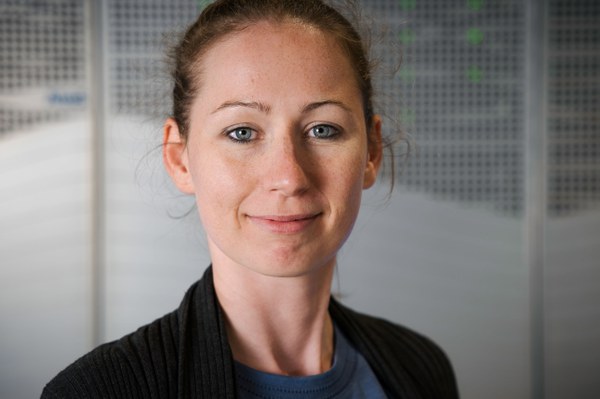
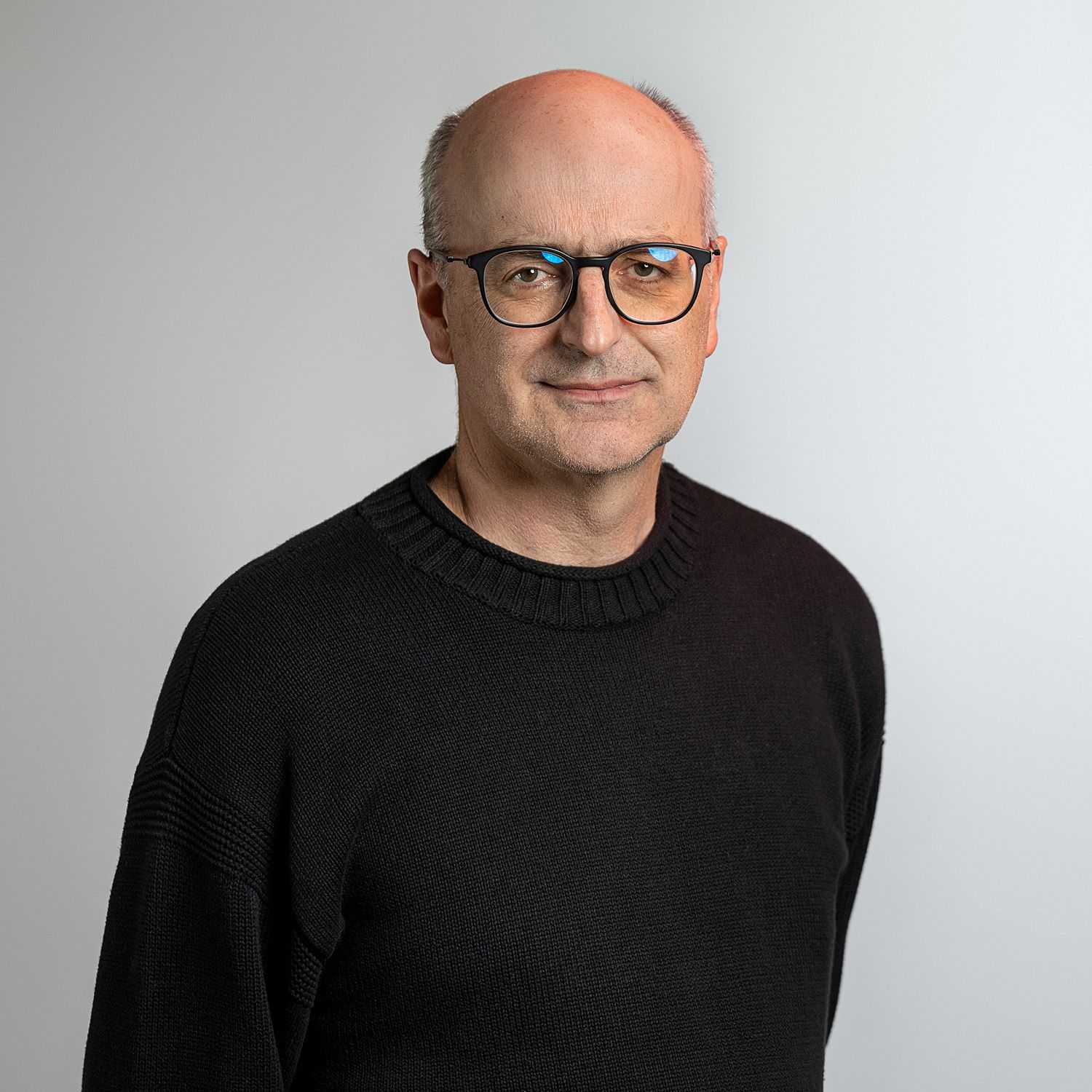
Ryan Schneider is an NSF Postdoctoral Fellow in the Department of Mathematics at the University of California, Berkeley. His research focuses on numerical analysis, randomized numerical linear algebra, and scientific computing, with applications to quantum mechanics and computational physics. Mentor: James Demmel (UC Berkeley) Former Advisor: Ioana Dumitriu (UC San Diego) Collaborator: Barry I. Schneider (NIST) Ryan's work centers on developing efficient numerical methods for solving differential equations, particularly the time-dependent Schrödinger equation. His research combines algorithm design with practical implementations in Fortran, emphasizing inverse-free and communication-efficient approaches. Recent publications highlight advancements in: Jacobi's method optimization for eigenvalue problems Structured divide-and-conquer algorithms Volterra integral equation solvers (ITVOLT) Deflating subspace computations Quantum system simulations Scientific awards include: NSF Postdoctoral Fellowship Measurement Science and Engineering Fellowship at NIST Contact: ryan.schneider@berkeley.edu | ryschnei@ucsd.edu
Dr. Carolin Penke is a researcher at the Jülich Supercomputing Centre (JSC) of Forschungszentrum Jülich GmbH . She leads projects in training large language models (LLMs) on high-performance computing (HPC) systems as part of the OpenGPT-X initiative and the Accelerating Devices Lab . Current focus: HPC-AI integration , memory-efficient LLM training , and accelerator evaluation Prior work: numerical linear algebra and mathematical algorithm development for quantum chemistry Her research spans computational mathematics, artificial intelligence, and high-performance computing. Key contributions include: Developing CARAML for AI workload evaluation Creating JUPITER benchmark suite for exascale systems Optimizing low-rank representations in deep learning Advancing pseudosymmetric matrix algorithms for physics simulations Designing GPU-accelerated numerical methods for eigenvalue problems Her work bridges mathematical rigor with practical AI/HPC applications, emphasizing scalability , energy efficiency , and European sovereignty in AI .
Robert E. Tarjan is the James S. McDonnell Distinguished University Professor of Computer Science at Princeton University, where he has been a faculty member since 1985. He maintains an active research program in theoretical computer science and algorithms despite being on leave status. His career spans multiple prestigious academic institutions and significant industry collaborations. His educational background includes: B.S. in Mathematics from Caltech (1969) M.S. in Computer Science from Stanford University (1971) Ph.D. in Computer Science from Stanford University (1972) Tarjan's research has fundamentally shaped theoretical computer science, particularly in graph algorithms and data structures. He pioneered the use of depth-first search techniques, developed amortized analysis for data structures, and created influential algorithms including union-find with path compression, splay trees, and Fibonacci heaps. His work bridges theoretical elegance with practical applications in network optimization and computational problems. The concepts he developed are now standard material in undergraduate algorithm courses worldwide. Tarjan has received numerous prestigious honors: ACM Turing Award (1986) for fundamental achievements in algorithms and data structures First recipient of the Rolf Nevanlinna Prize (1983) Membership in the National Academy of Sciences (1987), National Academy of Engineering (1988), and American Philosophical Society (1990) SIAM Fellow (2009), ACM Fellow (1994), and American Academy of Arts & Sciences Fellow (1985) Caltech Distinguished Alumni Award (2010) and Blaise Pascal Medal (2004) As an advisor, Tarjan has mentored notable computer scientists including Danny Sleator, Neal Sarnak, and Haim Kaplan. His industry collaborations have been extensive, with significant roles at AT&T Bell Laboratories (1980-1989), NEC Research Institute (1989-1997), InterTrust Technologies (1997-2001), Compaq/HP Research Labs (2002-2003), and Microsoft. These partnerships have translated theoretical advances into practical applications while securing research funding for his academic work. In March 2025, Tarjan was recognized with a lifetime achievement award from the International Congress of Basic Science for his outstanding contributions to theoretical computer science. Tarjan's research laboratory has been a hub for theoretical computer science innovation, with particular focus on combinatorial algorithms. His approach emphasizes elegance and efficiency, seeking what he describes as algorithms from 'The Book' that records God's most elegant mathematical proofs and algorithms. His dynamic research group has consistently produced groundbreaking work that bridges theoretical insights with practical computational problems.
Vasyl Tereshchenko is a Professor and Head of the Mathematical Informatics Department at Taras Shevchenko National University of Kyiv, Ukraine. His work spans computational geometry, computer vision, and algorithmic design, with a focus on applications in rehabilitation systems and real-time visualization. PhD (1993) and Doctor of Sciences (2000) in Physics and Mathematics from Taras Shevchenko National University of Kyiv Research interests include: Computational geometry for 3D surface modeling and mesh deformation Real-time eye-gaze tracking and handwriting recognition systems Augmented reality applications for robotics and navigation Algorithmic frameworks for common algorithmic space in visualization Recent publications emphasize geometric algorithms, machine learning coreset discovery, and 3D reconstruction techniques. His research group at the Samsung Advanced Information Technologies Research Joint Lab develops tools for: Medical rehabilitation systems Traffic accident warning technologies Mobile device computer vision Labs and teams under his leadership focus on cross-disciplinary challenges in: Medical technology integration Human-computer interaction Geometric modeling for engineering applications
Andrew Cropper is a Research Fellow in the Department of Computer Science at the University of Oxford. His research focuses on the intersection of logic and machine learning, particularly inductive logic programming (ILP) and program synthesis. He leads the Logic and Learning research group and the 'The Automatic Computer Scientist' project, which explores automated program generation and symbolic learning methods. His work emphasizes developing efficient algorithms for learning logical programs and improving the scalability of inductive logic programming. Recent publications highlight advancements in combining small logical rules into larger structures, discovering higher-order abstractions in logic programs, and applying symbolic metaprogramming to enhance learning efficiency. His research also addresses challenges in handling noisy data and integrating numerical reasoning into relational program synthesis. Collaborations with cognitive scientists explore parallels between human rule-learning processes and machine learning algorithms. Cropper has advised students including Rolf Morel (past researcher) and collaborates with researchers like Céline Hocquette and Matti Järvisalo. His contributions span over 30 peer-reviewed articles in top conferences (IJCAI, AAAI) and journals (Nature Communications, Machine Learning). He maintains active roles in the ILP community, co-authoring comprehensive reviews of the field's 30-year evolution and advancing its applications in program induction and general game playing. Research highlights include developing the Metagol system for ILP, pioneering predicate invention techniques, and introducing constraint-driven methods to improve program synthesis efficiency. His work bridges symbolic AI with modern machine learning, aiming to create interpretable and generalizable algorithms for complex problem-solving.
Prof. José Carlos Cabaleiro Domínguez is a Full Professor at the Department of Electronics and Computing, University of Santiago de Compostela. He holds a BS (1989) and PhD (1994) in Physics from the same university. His academic journey includes roles as an associate professor at the University of A Coruña (1990–1994) and associate professor at US圣地亚哥 de Compostela until 2022. He is affiliated with the Center for Research in Intelligent Technologies (CiTIUS) and leads the ARQCOMP research group in Computer Architecture. His research focuses on high-performance computing, parallel systems architecture, LiDAR data processing, and cloud computing. Notable contributions include optimizing parallel algorithms for sparse matrices, developing frameworks like BigOPERA for big data, and advancing LiDAR-based applications in infrastructure mapping and autonomous systems. He has led over 20 national/international projects, including HiPerHC2DA (2023–2026) and TLIX2 (2017–2018). Prof. Cabaleiro’s work spans 150+ peer-reviewed publications, with recent emphases on digital forensics (e.g., Android private browsing analysis), graph-based LiDAR segmentation, and energy-efficient thread migration strategies for NUMA systems. His research integrates hardware performance analysis, parallel algorithm design, and real-world applications in geomatics, bioinformatics, and cybersecurity.
Zhenjiang Hu is a Chair Professor at Peking University, China, and previously held professorships at the National Institute of Informatics, University of Tokyo, and SOKENDAI. He specializes in bidirectional transformation, functional programming, and software engineering. His research focuses on foundational theories and applications in programming languages, including parallelization and formal methods. Education: BSc, Shanghai Jiao Tong University (1988) MSc, Shanghai Jiao Tong University (1991) PhD, University of Tokyo (1996) Research Interests: Development of bidirectional languages and frameworks Optimization of functional programs Automated parallelization techniques Formal verification of transformations Awards: Yangtze River Scholar (2015) ACM Distinguished Scientist (2016) Basic Research Achievement Award (2015) Multiple Best Paper Awards including Takahashi Awards (1997, 2008) Grants & Leadership: PI of 14 national grants totaling over 250 million Yen Founder and Chair of NII Shonan Meetings (2010-2018) Leadership roles in ICFP, MODELS, APLAS, and other top conferences Labs/Teams: Active in the NII Shonan Meetings, fostering collaborative research in informatics and software engineering.
Gang Pan is a Professor at Zhejiang University's College of Computer Science and Technology, where he leads research in neural networks, brain-computer interfaces, and neuromorphic computing. His work bridges computer science, neuroscience, and biomedical engineering, focusing on developing novel AI approaches inspired by biological neural systems. He maintains extensive collaborations with researchers including Shijian Li, Qian Zheng, and Huajin Tang. Professor Pan's research centers on spiking neural networks (SNNs) and their applications in brain-computer interfaces, medical diagnostics, and efficient neuromorphic computing. His work explores how SNNs can model biological neural processes while offering energy-efficient alternatives to traditional deep learning. Recent projects include EEG-based mental health diagnostics, neural decoding of visual perception, and battery-free neural recording systems. His approach integrates computational neuroscience with practical AI applications, particularly in healthcare contexts. Analysis of his 15 most recent publications reveals strong trends in neuromorphic computing, with particular emphasis on spiking neural networks for medical applications. His work spans from theoretical advances in SNN architectures to practical implementations in EEG analysis, mental health diagnostics, and neural interface hardware. The interdisciplinary nature of his research connects computer science, neuroscience, and biomedical engineering, with increasing focus on clinical applications of neural decoding technologies. Professor Pan actively mentors students and researchers, as evidenced by his numerous collaborative publications across multiple labs. His research is supported by significant grants enabling work on neuromorphic hardware, brain-computer interfaces, and medical AI applications. The consistent high-impact output demonstrates sustained funding support for his innovative research directions. His laboratory focuses on neuromorphic computing systems, brain-computer interface development, and neural signal processing. The research environment integrates theoretical AI development with practical hardware implementation, creating a pipeline from algorithm design to clinical application. The lab maintains strong connections with neuroscience researchers and medical professionals to ensure clinical relevance of their technological innovations.
Riccardo Spezialetti is a researcher at the University of Bologna's Department of Computer Science and Engineering, specializing in advanced 3D vision and deep learning. He earned his PhD in 2020 with a thesis titled 'Learning to understand the world in 3D,' focusing on geometric deep learning and 3D object representation. His work bridges computer vision, machine learning, and neural representations, with notable contributions to unsupervised domain adaptation, LiDAR processing, and neural field-based 3D reconstruction. Key research interests include equivariant descriptors, implicit neural representations, and self-supervised learning for 3D data. He collaborates frequently with Samuele Salti and Luigi Di Stefano, co-authoring over 25 publications in top venues like CVPR, ICCV, and IEEE PAMI. His research has practical applications in autonomous systems, robotics, and photorealistic 3D reconstruction.
Gjoreski Hristijan is an Assistant Professor at the Faculty of Electrical Engineering and Information Technologies (Ss. Cyril and Methodius University in Skopje), with expertise in Artificial Intelligence and Machine Learning. He leads research in healthcare technology, focusing on developing intelligent systems using wearable sensors for activity recognition, fall detection, stress monitoring, and elderly care applications. His work bridges theoretical machine learning with practical healthcare solutions. PhD (2015): Jožef Stefan International Postgraduate School, Slovenia MSc (2011): Jožef Stefan International Postgraduate School, Slovenia BSc (2010): Ss. Cyril and Methodius University, Faculty of Electrical Engineering and Information Technologies, Skopje Research interests include: Machine learning for healthcare Wearable sensor systems Activity recognition algorithms Federated learning for privacy-aware applications Smart glasses integration for health monitoring His awards highlight impactful contributions, including first-place wins in international competitions like ChallengeUP (2019) and EvAAL (2013), and the prestigious Best Young Scientist Award (2017) from the President of Macedonia. Recent work focuses on OCOsense smart glasses for facial expression monitoring and real-time health diagnostics. He actively collaborates with institutions like the University of Sussex (UK) and Jožef Stefan Institute (Slovenia), advancing interdisciplinary research in AI and healthcare.
Paweł Malczyk is an Associate Professor and Head of the Department of Theory of Machines and Robots at the Faculty of Power and Aeronautical Engineering, Warsaw University of Technology. He holds a D.Sc. (habilitation), Ph.D., and M.Eng. His research focuses on multibody systems, optimal control, data-driven modeling, and high-performance computing. He leads the division and oversees research in kinematics, dynamics, and control of complex systems. Key research interests include multibody dynamics simulation, optimal control methods, parallel computing, and applications of machine learning in system modeling. His work emphasizes algorithm development for efficient dynamics simulations and real-time control. Selected articles span topics like neural-network-based inverse dynamics, divide-and-conquer algorithms, and FPGA acceleration. His contributions address both theoretical advancements and practical implementations in robotics and mechanical systems. Malczyk teaches courses on automation, control systems, and multibody dynamics. His lab focuses on computational mechanics and real-time systems, with ongoing projects in parallel algorithms and data-driven control strategies.
Marcin Pękal is an Adjunct Assistant Professor at the Warsaw University of Technology’s Faculty of Power and Aeronautical Engineering, where he is affiliated with the Department of Theory of Machines and Robots. His research focuses on robotics and multibody systems, with an emphasis on reaction uniqueness analysis, constraint-based methods, and dynamics modeling. He holds a Ph.D. in engineering and is involved in teaching courses such as Robotics Basics , Dynamics of Multibody Systems II , and Dynamic Metrology . His work explores advanced methodologies for analyzing overconstrained and overactuated systems, including divide-and-conquer approaches and constraint-matrix-based techniques. Key areas of investigation include the application of the Moore-Penrose inverse in modeling mechanisms and the study of kinetostatic principles in robotics. His research outputs span journals like Multibody System Dynamics and Mechanism and Machine Theory , reflecting a strong focus on theoretical and applied mechanics. Pękal’s articles highlight contributions to multibody dynamics, particularly in handling nonholonomic constraints and redundancy in robotic systems. He is actively engaged in academic activities, including presentations at IEEE conferences and contributions to edited volumes on vibration and control systems. His teaching responsibilities align closely with his research interests, emphasizing practical applications of robotics and automation.
Wojciech Szpankowski is the Saul Rosen Distinguished Professor of Computer Science at Purdue University. He holds concurrent positions as a Guest Professor at ETH Zurich and a Professor at Jagiellonian University, Krakow. His research focuses on analysis of algorithms, information theory, analytic combinatorics, and random structures. He has directed major initiatives like the NSF Science & Technology Center on Science of Information (CSoI), a $50M 10-year project. Szpankowski is a Fellow of the IEEE and has received prestigious awards including the Flajolet Prize (2020) and Humboldt Research Award (2010). He has held visiting roles at institutions worldwide, including Stanford University and the Newton Institute, Cambridge. His academic journey includes tenure as Full Professor at Purdue (since 1992), Assistant Professorships at McGill University (1984–1992) and Technical University of Gdańsk (1980–1984). His scholarly contributions span monographs like "Average Case Analysis of Algorithms on Sequences" (2001) and "Analytic Pattern Matching" (2015), with a forthcoming work on Analytic Information Theory (2022). He actively contributes to scientific boards, including HIIT Helsinki and NeuroMat Brazil. Szpankowski’s publications emphasize interdisciplinary research at the intersection of computer science, mathematics, and biology. His work on privacy-preserving data analysis, dynamic network inference, and protein superfamily evolution showcases his broad impact. Keynote talks at major conferences (e.g., SODA 2019, AofA 2016) reflect his leadership in theoretical computer science. His grants and recognitions underscore institutional trust: the NSF Science & Technology Center (2010) and Arden L. Bement Jr. Award (2015) highlight his pioneering role in redefining information science. Collaborations span academia and industry, with affiliations at Hewlett-Packard and INRIA.
Professor Eduardo De Souza Neto is Chair of Civil Engineering at Swansea University's School of Aerospace, Civil, Electrical and Mechanical Engineering. His office is located in the Engineering Central Building at Bay Campus. He is available for postgraduate supervision and maintains an active research profile in computational mechanics. Research Focus: Professor De Souza Neto specializes in multi-scale modeling of solids using computational homogenization methods. His work investigates complex material behaviors across physical scales, with applications including: Constitutive modeling of biological tissues (e.g., human arteries) Polycrystalline metal behavior prediction Heat conduction problems Microstructural optimization via topological derivatives Computational efficiency enhancements for multi-scale frameworks Current research explores sensitivity of macroscopic material properties to microstructural changes and fracture modeling in heterogeneous materials. Publication Trends: His recent articles (2016-2025) demonstrate strong focus on multi-scale computational frameworks, particularly: Development of virtual power methods for homogenization Advanced fracture and damage modeling techniques Computational efficiency in material failure analysis Applications in biomechanics, composites, and geomechanics Teaching & Supervision: He teaches undergraduate and postgraduate modules including Finite Elements for Civil Engineers (EG-3067/EG-M92), Construction Methods in Infrastructure Works (EG-M345), and Construction Methods in Building Works (EG-M347). He currently supervises PhD students in computational mechanics topics including boundary element methods, machine learning-aided material modeling, and computer vision-based microstructure reconstruction.
Matthew Eichhorn is a Lecturer in the Department of Computer Science at Cornell University, specializing in teaching large undergraduate courses on discrete mathematics and programming. He holds a PhD in Applied Mathematics from Cornell University and a BS in Computer Science and Mathematics from the University at Buffalo. His research focuses on developing algorithms for societal decision-making, including online team formation, fair resource allocation, and causal inference in networks. He emphasizes leveraging combinatorial structures to design efficient algorithms and estimators. His work spans theoretical foundations and practical applications in public health, education, and social networks. Recent publications explore causal inference under interference, allocation algorithms with complex constraints, and efficient representations for linear transforms. He actively contributes to academic initiatives like the Active Learning Initiative and Engineering Academic Excellence Workshops. Eichhorn has taught multiple courses including CS 2110 (Object-Oriented Programming), CS 2800 (Discrete Structures), and engineering operations research. He has also served as a teaching assistant across computer science, mathematics, and engineering disciplines.