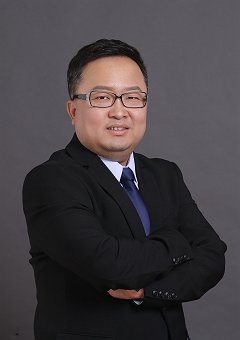
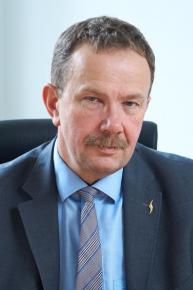
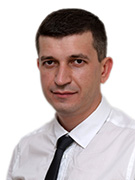
Michael Fisher is an Assistant Professor at the University of Waterloo, affiliated with the Faculty of Engineering. His research focuses on nonlinear systems theory, control systems design, and vulnerability assessment in power systems. He explores topics such as system-level synthesis, stability analysis under perturbations, and optimization techniques for distributed control. His work bridges applied mathematics and engineering applications, with a particular emphasis on resilience and safety margins in complex systems. Key research areas include trajectory sensitivity analysis, region of attraction boundary stability, and sparsity-promoting control design. He has contributed to advancements in H2/H∞ control, adaptive divide-and-conquer strategies for virtual power plants, and geometric programming approaches for natural gas networks. His publications often intersect nonlinear dynamics, optimization, and practical engineering challenges. Fisher’s recent studies emphasize parameterized system analysis, Hausdorff continuity in region of attraction boundaries, and approximation methods in Hardy spaces. His work addresses both theoretical control system advancements and real-world applications in power grids and distributed energy systems.
Craig Myles serves as a Research Fellow in the School of Computer Science at the University of St Andrews, UK. His work focuses on applying advanced deep learning techniques to medical imaging challenges, particularly in cancer detection systems. His research spans foundation models , self-supervised learning , and residual neural networks applied to oncology imaging. Key contributions include developing novel approaches for colorectal cancer biomarker detection in small datasets and optimizing mammography classification accuracies through divide-and-conquer methodologies. His fingerprint reveals strong specialization in Deep Learning Method , Classification Accuracy , and Foundation Model applications within medical computer vision. Analysis of his recent publications shows a consistent trajectory toward solving data scarcity problems in medical AI through innovative architectural adaptations of foundation models. His work bridges computer science theory with critical clinical applications in cancer diagnostics. Notable datasets he contributed to include SurGen (1020 H&E-stained Whole Slide Images) and Patch-level UNI feature embeddings for colorectal cancer analysis, demonstrating significant infrastructure contributions to the field. He actively participates in major conferences including Medical Image Understanding and Analysis (MIUA 2024) and Scottish Informatics and Computer Science Alliance events, while also engaging in public outreach through Doors Open events at the School of Computer Science.
Minge Xie is a Distinguished Professor and Director of the Office of Statistical Consulting at Rutgers, The State University of New Jersey . His research focuses on foundational aspects of statistical inference, data science, and interdisciplinary applications. He serves as a leader in the field of statistics, contributing to methodologies in meta-analysis, reproducibility, and computational inference. Education : Ph.D. from the University of Illinois at Urbana-Champaign Xie’s research spans statistical theory, computational methods, and practical applications in data science. He has pioneered approaches in confidence distributions , fusion learning , and high-dimensional modeling , with notable work on zero-inflated data, conformal prediction, and reproducibility frameworks. His recent publications emphasize the integration of Bayesian, frequentist, and fiducial paradigms, advancements in meta-analysis for rare events, and scalable methods for big data analysis. Xie’s work bridges theoretical rigor with real-world applications, including microbiome studies, nuclear detection, and maritime threat modeling. Scientific Awards : ASA Fellow IMS Fellow ISI Fellow Xie actively contributes to statistical education and interdisciplinary collaboration, leading the Office of Statistical Consulting at Rutgers. His methodological innovations continue to influence fields requiring robust and interpretable statistical inference.
Dr. Guoqiang Li is an Associate Professor in the School of Computer Science at Shanghai Jiao Tong University, where he conducts research at the intersection of formal methods, programming languages, and security. His academic journey includes prior positions as Assistant Professor (2009-2013) and subsequent promotion to Associate Professor (2014-present) at the same institution. He has held international appointments including a postdoctoral fellowship at Nagoya University (2008-2009), an academic visit at the University of Oxford (2015-2016), and a Guest Associate Professorship at Kyushu University's Research and Development Center for Smart Mobility (2016-2020). Dr. Li earned his B.S. from Taiyuan University of Technology (2001), M.S. from Shanghai Jiao Tong University (2005), and Ph.D. from Japan Advanced Institute of Science and Technology (2008). His educational background reflects a strong foundation in both Chinese and Japanese academic traditions. His research focuses on formal verification, programming language theory, zero-knowledge proofs, knowledge reasoning, and intelligent system verification and security. Over the past decade, his work has evolved from traditional formal methods applied to timed automata and process calculi to contemporary topics including neural network verification, zero-knowledge proof systems, and the application of large language models to program analysis. His publication record demonstrates a clear progression toward addressing verification challenges in increasingly complex modern systems. Dr. Li's recent publications reveal a strategic research trajectory: early work centered on timed automata and formal verification of concurrent systems, while current research addresses the verification of AI systems, zero-knowledge cryptographic protocols, and LLM-enhanced program analysis. This evolution reflects his commitment to applying rigorous formal methods to emerging computational challenges. Distinguished Paper Award at ICSE 2020 for 'Unblind Your Apps: Predicting Natural-Language Labels for Mobile GUI Components by Deep Learning' Consistent publication in top-tier venues including ASE, ICSE, FSE, and OOPSLA Recognition through multiple National Natural Science Foundation of China (NSFC) grants as Principal Investigator Dr. Li actively contributes to the academic community as a Senior Member of the China Computer Federation, Deputy Director of Theoretical Computer Science for the Shanghai Computer Society, and committee member for multiple technical organizations. He serves as Organization Chair for SEKM'20-22 and FMAC'17, Publicity Chair for TASE'21-23, and has participated in program committees for numerous international conferences. His teaching portfolio includes undergraduate and graduate courses in algorithm design, mathematical foundations, and scientific writing, demonstrating his commitment to both theoretical computer science education and practical application.
Roman Vitenberg is a Professor at the Department of Informatics, University of Oslo. His research focuses on distributed systems, blockchain, privacy, and middleware. He leads the Blockchain Lab, which runs Norway's production node in the EBSI network. Key contributions include work on fault-tolerant overlays, privacy-preserving frameworks for genomic data, and blockchain applications in healthcare. He teaches courses on distributed systems and blockchain technologies. Education: Ph.D. from Technion (Israel Institute of Technology), M.Sc. from Hebrew University of Jerusalem. Previous roles include postdoc at UC Santa Barbara and researcher at IBM. Research Interests: Distributed algorithms, blockchain systems, cloud/fog computing, dependability, and privacy-preserving techniques. Awards: Best Demo Award at ACM DEBS 2014, Best Paper Award at ACM DEBS 2016, Most Influential Paper Award (2007 paper recognized in 2017). Grants & Projects: PriTEM (privacy-preserving energy management), Conserns, Credence, and EBSI-NE (operating Norway's EBSI node). Advising: Supervised over 10 PhD and master students, including notable alumni at Spotify and Max-Planck Institute. Publications: Over 100 peer-reviewed articles in top venues like IEEE Transactions, ACM conferences, and blockchain-focused journals.
Dr. Asra Aslam is an incoming Assistant Professor of Data Science and AI at the University of Sheffield, UK, and currently serves as a Research Fellow at the University of Leeds, a Principal Investigator at the Alan Turing Institute, and a Visiting Researcher at Newcastle University. Her interdisciplinary work bridges artificial intelligence, computer vision, and healthcare data science. Ph.D. in Computer Vision and Machine Learning, University of Galway, Ireland (2021) M.Tech and B.Tech in Computer Science and Engineering, Aligarh Muslim University, India Former Assistant Professor at AMU, India Machine Learning Research Scientist at mindtrace.ai, Manchester, UK Her research focuses on Computer Vision , Deep Learning , Graph Neural Networks , and Health Data Sciences , with applications in multimorbidity, medical imaging, and smart cities. She develops AI tools for clinical decision support, including the DynAIRx project for medicines optimization in patients with multiple long-term conditions. Dr. Aslam's recent publications highlight trends in automated clinical codelist development , temporal graph neural networks for patient clustering , GAN-based medical data augmentation , and efficient fire detection models . Her work is published in top venues including CVPR, IEEE Access, Springer, and Elsevier journals. Women of the Future Award (Highly Commended), 2023 Education/Academic Leader of the Year, 2024 Rising Star of the Year, Women in Tech Excellence Awards, 2024 Hildegard Franke Early Career Award, 2024 Global Talent Award (Exceptional) by UKRI, 2023 IEEE/CVF, ICML, AISTATS Travel Awards She leads and co-leads major research grants including the NIHR Team Science Grant (£2.8M) , Alan Turing DSG (£80K) , and Horizon One: Global Academy Crucible . She supervises PhD and Master's students and mentors early-career researchers. Dr. Aslam is a strong advocate for diversity, serving as General Chair of Women in Computer Vision (WiCV) , AI Lead for Women in AI UK , and Early Career Researcher Representative across multiple institutions. She is actively involved in organizing workshops at CVPR, NeurIPS, and AIM-RSF, and serves on editorial boards of Discover Data (Springer Nature) and MDPI Journal of Imaging .
Prof. Janusz Frączek is a faculty member at Warsaw University of Technology, holding the academic rank of Professor. His research focuses on computational mechanics, kinematics and dynamics of multibody systems, robotics, and biomechanics. University: Warsaw University of Technology Academic Rank: Professor Contact: janusz.fraczek@pw.edu.pl | New Aviation Building, room 322 Research Interests: Computer methods in mechanics Kinematics and dynamics of multibody systems Robotics Biomechanics Teaching Activities: Dynamics of Multibody Systems Surveying and experimental techniques Theory of Machines and Mechanisms I Article Trends: The 15 most recent publications emphasize computational mechanics, robotics, Hamiltonian frameworks, and optimization. Topics include redundant constraints, parallel computing, nonholonomic systems, and augmented Lagrangian methods.
Kristina Wicke is an Assistant Professor in Mathematical Sciences at the New Jersey Institute of Technology (NJIT). Her research focuses on phylogenetics, biodiversity conservation, and mathematical biology, with particular emphasis on phylogenetic networks and evolutionary analysis. She collaborates on projects funded by the Royal Society Te Apārangi, including the 2023 grant investigating 'The tree complexity of reticulate evolution.' Dr. Wicke's work bridges combinatorial mathematics and biology, addressing challenges in phylogenetic tree balance, network optimization, and biodiversity indices. Key contributions include analyses of Fair Proportion Index robustness, cophenetic indices for network balance, and algorithmic approaches to phylogenetic network reconstruction (e.g., NANUQ+). Her research output includes 29 peer-reviewed articles across 2017–2025. Notable projects involve quantifying tree balance, bounding parsimony scores, and exploring network topology's implications for evolutionary models. She co-led a federal grant examining reticulate evolution's tree complexity and contributes to interdisciplinary initiatives merging computational methods with ecological conservation.
Cesare Tinelli is the F. Wendell Miller Professor of Computer Science at the University of Iowa within the College of Liberal Arts and Sciences. He is a co-director of the Computational Logic Center and leads the development of critical tools like the CVC4 and cvc5 SMT solvers, as well as the Kind model checker. His academic credentials include: Ph.D. in Computer Science (1999), University of Illinois at Urbana-Champaign M.S. in Computer Science (1995), University of Illinois at Urbana-Champaign Laurea in Scienze dell'Informazione (1990), University of Bari Research Interests : Tinelli specializes in Automated Reasoning , particularly Satisfiability Modulo Theories (SMT) , Model Checking , Software Verification , and Formal Methods . His recent work explores Inductive Reasoning in SMT , Proof-Certificate Generation , and Logical Frameworks for Proof Systems . His methodologies bridge theoretical advancements with practical implementations, impacting both academia and industry. Scientific Contributions : Tinelli's research drives innovation in SMT solving, model checking, and automated theorem proving. His 15 most recent publications span topics from stateful protocol testing ( Saecred ) to proof certification ( IsaRare ) and generalized optimization ( Generalized OMT ). Awards and Recognition : NSF CAREER Award (2003) Haifa Verification Conference Award (2010) CAV Award (2021) Advising and Collaborations : His former students and postdocs hold positions at leading institutions like NASA, Intel, MIT, and EPFL. He collaborates with organizations such as Amazon, Facebook, General Electric, and Microsoft.
Ka Yaw Teo is an Assistant Professor in Computer Science and Software Engineering at California Polytechnic State University. With interdisciplinary training in biology, engineering, and computer science, his research develops geometric algorithms for facility location, robot motion planning, and biomedical applications. He holds a Ph.D. in Computer Science from the University of Texas at Dallas. Research pillars include: Geometric Optimization : Designing efficient algorithms for median line segmentation and facility location problems. Robotic Motion : Computing feasible trajectories for articulated probes in 2D/3D spaces. Biomedical Applications : Correlating imaging data with histopathology in oncology (osteosarcoma). Recent publications (2013–2023) demonstrate cross-disciplinary impact, spanning theoretical computational geometry, robotics, and biomaterial science. Algorithms address high-dimensional data approximation, motion planning with clearance constraints, and optimization in weighted subdivisions. Collaborations include biomedical engineers on tissue property analysis and cancer diagnostics.
Emily Hector is an Assistant Professor in the Department of Statistics at North Carolina State University. She holds a Ph.D. in Biostatistics from the University of Michigan (2020) and serves as an Associate Editor for Reproducibility at the Journal of the American Statistical Association . Her research focuses on distributed inference, data integration of correlated and high-dimensional datasets, and leveraging computational advancements for divide-and-conquer methods. Applications include spatial extremes, metabolomics, neuroimaging of autism, and wearable devices. Key areas of expertise include estimating equations, generalized method of moments, and parallel computing. Methodological innovations address challenges in big spatial data modeling and high-dimensional phenotypes. Her work bridges statistical theory with practical computational solutions for large-scale biomedical data. Hector has been honored with the Dr. Dennis Boos Citizenship Award (2023-2024). Her publications span topics such as neuroconnectivity analysis, genetic regulation of metabolism, and climate model bias correction. She actively collaborates with interdisciplinary teams and contributes to open-source software for statistical analysis.
Yu-Fang Chen is a research professor at Academia Sinica, Taiwan, active across premier programming-languages venues such as PLDI, POPL, OOPSLA, SAS, APLAS and VMCAI. His work sits at the intersection of program verification , automata theory and constraint solving , with recent emphasis on quantum-circuit verification and string-number constraint solving . Research interests revolve around rigorous methods to ensure software reliability: developing novel automata models (level-synchronized tree automata, position-constrained string automata), building practical solvers that blend length, substring and numeric constraints, and extending automated reasoning to the quantum domain. His papers consistently introduce new decision procedures, learning algorithms and tool-chains that improve the scalability of static analysis and formal verification. Between 2017 and 2025 he (co-)authored more than a dozen peer-reviewed papers and served on over thirty program committees, including steering and organization chair roles for VMCAI 2026 and SAS 2023 . No doctoral students or funded-grant details are disclosed in the supplied sources.
Oren Weimann is a Professor in the Department of Computer Science at the University of Haifa, Faculty of Natural Sciences. His research lies at the intersection of theoretical computer science, algorithm design, and data structures, with a strong focus on planar graphs, combinatorial pattern matching, and fine-grained complexity. He has published extensively in top-tier venues such as STOC, SODA, ICALP, PODC, and ESA. Education: Ph.D., Massachusetts Institute of Technology (MIT), 2005–2009. Advisor: Erik Demaine. Dissertation: "Accelerating Dynamic Programming" Postdoc, Weizmann Institute of Science, 2009–2011. Host: David Peleg M.Sc., University of Haifa, 2004–2005. Advisor: Gad Landau. Dissertation: "Using PQ trees for Comparative Genomics" B.A., Technion – Israel Institute of Technology, 1999–2002 Oren Weimann's research centers on the design and analysis of efficient algorithms, particularly for planar and structured graphs. His work explores fundamental problems such as shortest paths, distance oracles, fault tolerance, edit distance, and pattern matching. He investigates both upper and lower bounds, often pushing the limits of what is computationally feasible under fine-grained complexity assumptions. His contributions include optimal labeling schemes, compressed data structures, and breakthroughs in dynamic and distributed graph algorithms. His recent publications reveal a consistent trend in developing highly efficient algorithms for planar graphs, with a focus on distance computation, fault tolerance, and compression. Keywords across these works include planar graphs, dynamic programming, string matching, and conditional lower bounds, reflecting a deep integration of algorithmic techniques and complexity theory. He frequently collaborates with leading researchers such as Shay Mozes, Paweł Gawrychowski, and Philip Bille. Scientific Awards: Best Paper Award, CPM 2007 Best Paper Award, ICALP 2020 (mentioned in context of work) Oren Weimann has advised numerous PhD and Master’s students, including Yaseen Abd-Elhaleem, Nathan Wallheimer, Aviv Bar-natan, and Shon Feller, whose dissertations have led to publications in major conferences. He has also mentored several postdoctoral researchers such as Shay Golan, Itai Boneh, and Panagiotis Charalampopoulos. His work has been supported by competitive research grants, though specific grant titles are not listed in the text. He has served on the program committees of key conferences including SODA, ICALP, CPM, ESA, and SPIRE, demonstrating active leadership in the theoretical computer science community. He is associated with a vibrant research group focused on algorithms and data structures, likely involving collaboration with students and postdocs on projects related to graph algorithms, string processing, and complexity. While no formal lab name is mentioned, his collaborative output suggests a strong, productive research team at the University of Haifa.
Michal Outrata is an Assistant Professor in the Department of Numerical Mathematics at Charles University's Faculty of Mathematics and Physics in Prague, Czech Republic. He began his position in fall 2024 after completing a postdoctoral fellowship at Virginia Tech with Prof. Eric de Sturler and earning his PhD under Prof. Martin Gander at the University of Geneva, where his thesis was awarded the Henri Fehr Prize in 2023. His academic journey started with undergraduate studies in Prague under Prof. Zdeněk Strakoš (bachelor) and Prof. Miroslav Tůma (master). Dr. Outrata's research focuses on understanding why certain numerical methods work for specific problem classes, with emphasis on numerical linear algebra , Krylov subspace methods , and domain decomposition techniques . His work bridges theoretical analysis with practical algorithm development, particularly in preconditioning strategies for iterative solvers. Current projects include the Primus Research Programme (2025-2028) titled 'Divide, Conquer and Optimize: Domain Decomposition Methods in Scientific Computing' which explores hierarchical matrix formats and mixed precision computations for optimizing domain decomposition methods. His publication record demonstrates consistent contributions to top journals including SIAM Journal on Scientific Computing and Linear Algebra with Applications. His research shows progression from foundational work on GMRES convergence to sophisticated analyses of block Runge-Kutta preconditioners and optimized Schwarz methods with data-sparse transmission conditions. His recent work increasingly integrates hierarchical matrix formats and explores mixed precision computing approaches. Swiss Government Excellence Scholarship (3-year award) Henri Fehr Prize for best PhD thesis in mathematics (2023) Primus Research Programme grant (2025-2028) Dr. Outrata actively mentors students and postdocs, currently supervising Marouan Handa and Lenka Ptáčková (PostDocs) along with undergraduate researchers. He teaches courses including Numerical Analysis and Introduction to Numerical Mathematics at Charles University. His collaborative network spans international institutions including University of Geneva, Virginia Tech, and various European research centers. He is also involved in organizing major conferences including DD29 and GAMM95.
Darius Bufnea is an Associate Professor at the Department of Computer Science, Faculty of Mathematics and Computer Science, Babeş-Bolyai University in Cluj-Napoca, Romania. His academic address is at No. 1 Mihail Kogalniceanu Street, RO-400084 Cluj-Napoca. He teaches various courses including Web Programming, Security Protocols in Communications, Web Security and Internet, Web Traffic Control, and Operating Systems for Parallel and Distributed Architectures. Dr. Bufnea's research spans multiple domains within computer science, with a strong focus on parallel and distributed computing systems. His work explores innovative frameworks like PowerList-based programming models and their implementation in Java. He has made significant contributions to web security research, particularly in detecting and measuring scraper sites and clickbait content. His research bridges theoretical computer science with practical applications in web technologies and parallel programming paradigms. His publication record shows a consistent trajectory of research in parallel computing frameworks, with recent work expanding into web security and content analysis. The trend indicates a progression from foundational parallel programming models toward applied research in web technologies, security, and educational approaches for teaching complex computing concepts. His work on measuring "scrappiness level" of websites represents an innovative approach to quantifying web spam and content duplication issues. Dr. Bufnea actively engages with students through undergraduate and dissertation thesis supervision, with specific research topics available through university channels. His teaching philosophy emphasizes hands-on learning, as evidenced by detailed laboratory assignments covering web technologies from HTML/CSS to advanced JavaScript and server-side programming.