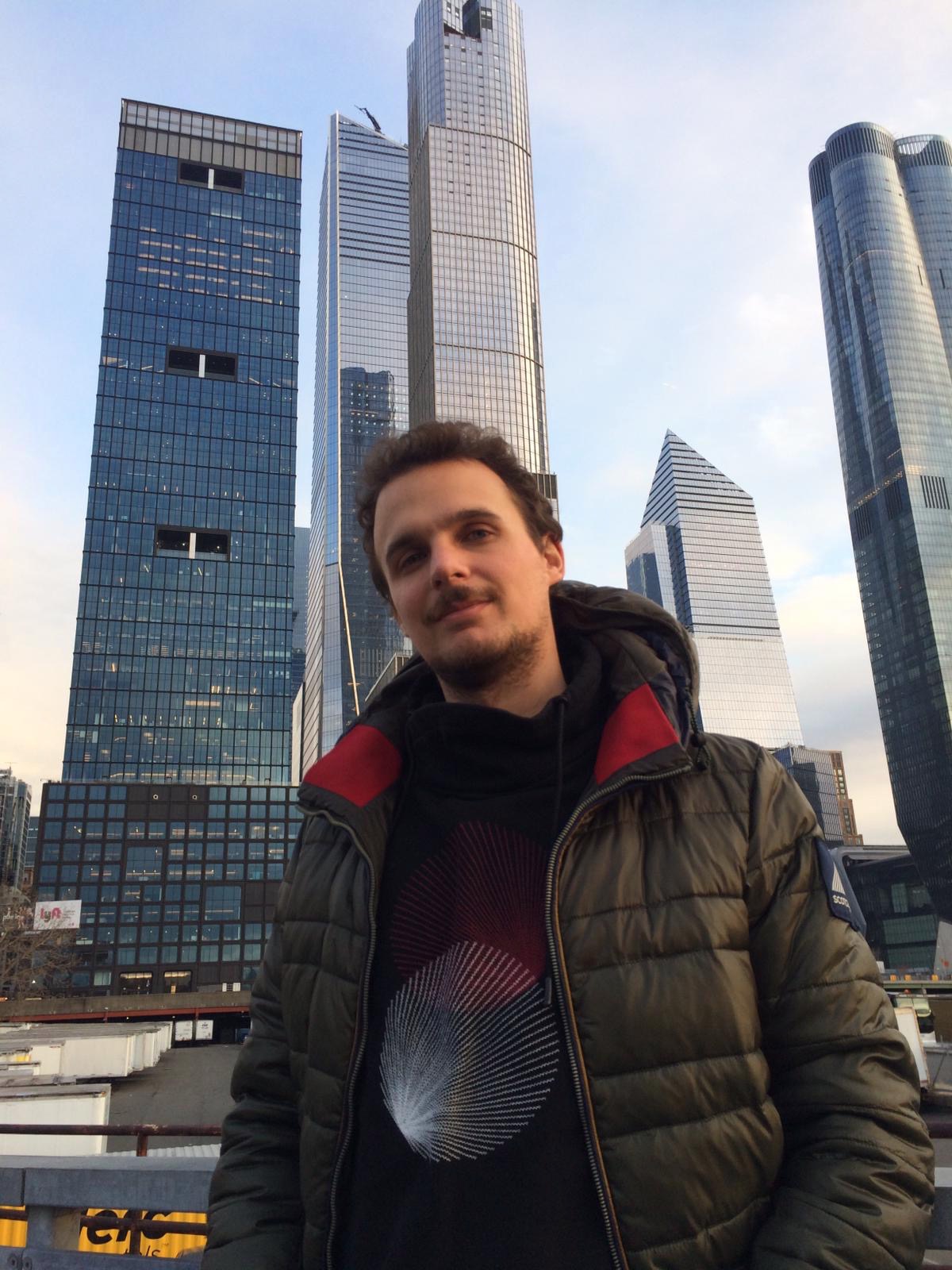
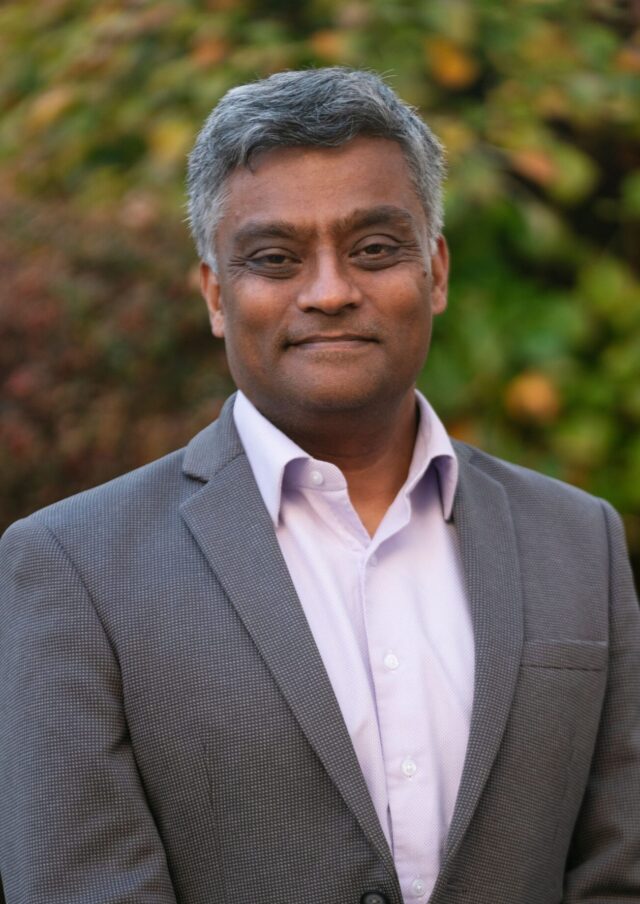
Sebastian Denzler is a researcher at the Department of Data Science (DDS) at Friedrich-Alexander-Universität Erlangen-Nürnberg (FAU). He is affiliated with the Professorship of Optimization under Uncertainty & Data Analysis, focusing on advanced computational methods for handling uncertainty in optimization problems and data analysis. His work bridges theoretical research with practical applications in diverse fields.
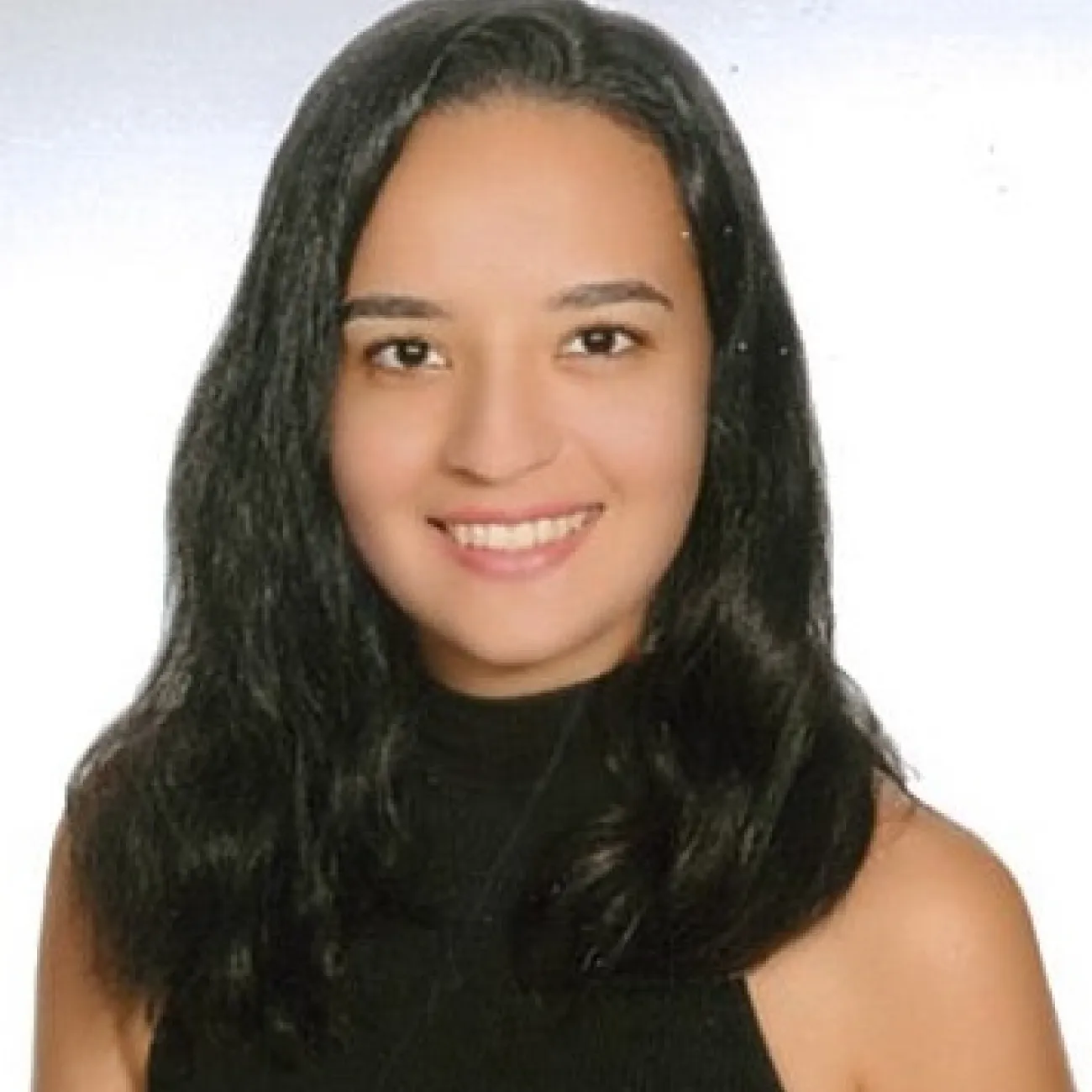
Miss Gulfem Er is a Researcher at the School of Mathematical Sciences , University of Southampton. Her work focuses on mathematical analysis and optimization of energy systems under uncertainty, aiming to address challenges posed by renewable energy intermittency and market fluctuations. Research interests include: Distributionally Robust Optimization Energy Systems Optimization Stochastic Programming Uncertainty Modelling She collaborates with energy sector stakeholders and develops algorithms for sustainable energy solutions. Her prior academic and professional experience includes: Postgraduate researcher in Stochastic Optimization (2023–present) Research assistant (2019–2023) at Bahcesehir University’s Industrial Engineering department Teaching involvement spans Statistics for Engineers, Work Study and Ergonomics, Operations Research, and Production Planning and Control. She holds a bachelor's and master's degree in Industrial Engineering from Bahcesehir University.
Mikhail V. Solodov is a prominent researcher at IMPA (Institute for Pure and Applied Mathematics) in Rio de Janeiro, Brazil, with significant contributions to optimization theory, algorithms, and applications. His work spans theoretical foundations and practical implementations across various domains including energy systems and mathematical programming. Research Interests: Newton and Newton-related algorithms for optimization and variational problems under weaker-than-standard assumptions Augmented Lagrangian and related techniques Nonsmooth optimization, particularly bundle methods Generalized Nash Equilibrium Problems and applications to Energy Models Optimization problems with degenerate constraints and complementarity constraints Perturbation and error-stability analysis of computational algorithms Recent Publication Trends: His recent work demonstrates continued theoretical innovation in optimization methods while increasingly focusing on energy applications. His publications show strong collaboration patterns, particularly with Alexey Izmailov and Claudia Sagastizábal, covering topics from fundamental algorithm development to practical energy market modeling. Editorial Service: SIAM Journal on Optimization (2009-2024) Mathematical Programming, Series A (since 2005) Optimization Methods and Software (since 2002)
Aakil Caunhye serves as a Senior Lecturer in Business Analytics and Programme Director for the MSc Management program at the University of Edinburgh's Business School, Department of Management Science and Business Economics. Previously holding positions as Lecturer (2018-2023) and School Senior Tutor (2021-2024), he has established himself as a leading researcher in optimization methodologies with applications in humanitarian logistics and critical infrastructure resilience. His research interests span robust optimization, stochastic programming, cutting plane algorithms, and decision rules, with application areas including humanitarian logistics, engineering systems design, critical infrastructure resilience, power grid expansion planning, and route restoration. His recent work explores contextual optimization as a bridge between predictive and prescriptive analytics. His publication portfolio demonstrates a strong focus on humanitarian applications of optimization techniques, with recent articles examining equitable disaster response planning, pandemic control strategies, and emergency supply pre-positioning. These works consistently apply advanced mathematical programming techniques to real-world problems with significant societal impact. IISE Transactions Design & Manufacturing best application paper (2019) IISE Transactions journal article featured in ISE Magazine (2017) Outstanding reviewer award for OR Spectrum (2025) Standard Chartered Bank Book Prize (2009) Caunhye has secured significant research funding including a S$249,974.58 grant from Singapore's National Research Foundation for improving Mass Rapid Transit Network resilience, collaborating with institutions including MIT and UC Berkeley. He currently leads multiple research projects including Techo-Economic Modeling of Power Systems and Convex analysis for Effectiveness-Equity Measures. His teaching responsibilities include Principles of Data Analytics, Data Mining, and Prescriptive Analytics with Stochastic Programming.
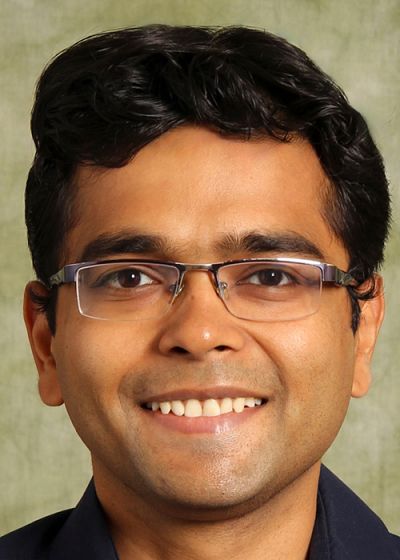
Ankit Bansal is an Assistant Professor in the School of Systems Science and Industrial Engineering at the State University of New York, Binghamton. He holds a Ph.D. in Industrial Engineering from North Carolina State University (2019), an M.S. in Industrial Engineering (2017), and a B.Tech in Production & Industrial Engineering from Delhi Technological University (2014). His postdoctoral research at the University of Minnesota's Institute for Mathematics and its Applications focused on healthcare delivery optimization in collaboration with the Mayo Clinic. Ph.D., Industrial Engineering, North Carolina State University (2019) M.S., Industrial Engineering, North Carolina State University (2017) B.Tech, Production & Industrial Engineering, Delhi Technological University (2014) Bansal's research interests include integer programming, bilevel optimization, robust optimization, and large-scale optimization, with applications in healthcare scheduling and production systems. His work addresses complex resource allocation challenges in surgical operations, anesthesia management, and semiconductor manufacturing. His recent publications emphasize optimization techniques for healthcare delivery, such as robust surgery scheduling and CRNA staffing, alongside manufacturing coordination during product transitions. These contributions advance operational efficiency in both clinical and industrial settings. No scientific awards are explicitly listed in the provided materials. His collaborations include the Mayo Clinic's Kern Center for the Science of Healthcare Delivery and the Institute for Mathematics and its Applications. No specific grants or advising records are detailed, though he invites students to join his research group via email.
Ilija Bogunovic is an Assistant Professor in the Department of Electronic and Electrical Engineering at University College London (UCL). His research focuses on robust AI, algorithmic decision-making, and reinforcement learning, with applications to large language models, safe RL, and human-AI interaction. He leads a team of PhD students and collaborates with institutions like UKAEA and Google DeepMind. His work has been recognized through the Google Research Scholar Program Award and EPSRC New Investigator Award for robust decision-making and RL. Research interests include non-stationary preference optimization, adversarial robustness in decision transformers, and group-robust preference alignment. He advises over a dozen PhD students and actively contributes to conferences like NeurIPS, ICML, and AISTATS. His methods address challenges in distribution shifts, class imbalance, and safe multi-agent systems. Key achievements include developing algorithms like REDUCR for robust data downsampling and AE-LSVI for active reinforcement learning. He organizes reading groups on adaptive experimental design and co-organized NeurIPS workshops on drug discovery and AI alignment.
Professor Jianzhong Wu holds the position of Professor of Multi-Vector Energy Systems and serves as Head of the School of Engineering at Cardiff University. He is also Co-Editor-in-Chief of Applied Energy and leads key initiatives such as the UK Energy Research Centre and the EPSRC Supergen Energy Networks Impact Hub. His expertise spans Smart Grids, Multi-Vector Energy Systems, and Peer-to-Peer energy trading, with over 300 peer-reviewed publications and 15 Clarivate Highly Cited Papers. He has authored influential books like Smart Grid: Technology and Applications and contributes to global energy policy through roles in UK and Welsh government advisory groups. As a Fellow of IEEE, the Energy Institute, and the Learned Society of Wales, his work focuses on advancing sustainable energy technologies and achieving Net Zero goals. Education: BSc (Hons), MSc, PhD Roles: Head of School, Co-Director of UK Energy Research Centre, Member of Royal Society Working Group on Thermal Energy Efficiency Key Projects: Hi-ACT Hub, Hydrogen Integration Research, UNiLAB on Energy Network Synergies Research Interests: Multi-vector energy systems integration, flexibility provision in grids, and decarbonization strategies. His work emphasizes practical applications of AI, digital twins, and blockchain in energy systems. Recent projects include optimizing energy storage in distribution networks and analyzing hydrogen integration. Grants and Funding: Over 70 projects funded by the EU, UK research councils, and industry partners. Active in policy advising, including contributions to the UK Government Taxonomy Energy Working Group and House of Commons Science Committee inquiries on hydrogen.
Vineet Goyal is a Professor in the Department of Industrial Engineering and Operations Research at Columbia University's School of Engineering and Applied Science. His research focuses on Machine Learning & Analytics Optimization , with applications to energy markets, revenue management, and healthcare systems. Education: Bachelor's in Computer Science (IIT Delhi, 2003) Ph.D. in Algorithms, Combinatorics and Optimization (Carnegie Mellon, 2008) Postdoctoral research at MIT's Operations Research Center (2008-2010) Professor Goyal develops data-driven algorithms for large-scale dynamic optimization problems, particularly addressing robustness in uncertain environments. His work bridges theoretical advances in optimization with practical implementations in: Energy market resource allocation Revenue management systems Healthcare decision support Recent publications show a strong focus on multi-armed bandits , assortment optimization , and proactive medical interventions , with methodologies spanning from robust optimization to online learning. His research has been supported by: NSF CAREER Award (2014) Google Faculty Research Award (2013) NSF grants for dynamic optimization Professor Goyal also contributes to fundamental algorithmic research with theoretical advances in: LP-based approximation techniques Adjustable robust optimization Stochastic reward modeling Value iteration acceleration methods
Wolfram Wiesemann is Professor of Analytics & Operations and Head of the Analytics, Marketing & Operations Department at Imperial College Business School. His research focuses on decision-making under uncertainty with applications in supply chain management, healthcare, and energy. Research Focus: Development of tractable approximation schemes for decision-making under uncertainty with rigorous error bounds. Applications span operations management, energy systems, and financial engineering. Teaching: BA1803 (Optimisation and Decision Models) and BA1806 (Introduction to Machine Learning) for MSc programs. Received Imperial College Business School Dean's Teaching Awards and nominations for Student Academic Choice Awards. Editorial Roles: Editor-in-Chief of Operations Research Letters and department co-editor for Management Science. Previously served on editorial boards of multiple leading journals. Research Impact: COVID-19 research on hospital care prioritization featured in Financial Times, Daily Mail, and France24.
Thomas Magnanti is an Institute Professor at the Massachusetts Institute of Technology (MIT), affiliated with the Operations Research Center. His research focuses on optimization, scheduling algorithms, network design, and mathematical programming. He has contributed extensively to the fields of operations research, discrete optimization, and algorithm development, with notable work on network flows, combinatorial optimization, and stochastic modeling. His research bridges theoretical foundations with practical applications in transportation systems, telecommunication networks, and educational methodologies. Magnanti's work emphasizes solving complex systems through rigorous mathematical frameworks and algorithmic innovations. His research interests span a wide range of topics, including scheduling heterogeneous jobs, network routing optimization, maintenance scheduling for modular systems, and stochastic user equilibrium models. He has also explored interdisciplinary applications, such as optimizing student allocation in capstone projects and improving active learning strategies in calculus education. Magnanti’s contributions to the field are reflected in foundational textbooks like Network Flows: Theory, Algorithms, and Applications , which remains a key resource in operations research. Throughout his career, Magnanti has addressed challenges in both theoretical and applied domains, such as designing robust algorithms for telecommunication networks and developing methodologies to handle uncertainty in transportation systems. His work consistently highlights the interplay between computational efficiency and real-world problem-solving.
Jelena Diakonikolas is an Assistant Professor in the Department of Computer Sciences at the University of Wisconsin–Madison, within the School of Computer, Data & Information Sciences. Her research focuses on large-scale optimization with applications to machine learning and networked systems. She explores algorithm design, convergence analysis, and robust learning techniques, with contributions to optimization theory and practical implementations in wireless networks and distributed systems. Her work spans theoretical advancements, such as analyzing convergence properties of incremental methods and variance-reduced algorithms, alongside applied research in robust learning, adversarial noise mitigation, and resource allocation in wireless networks. Notable areas include fixed-point equations, primal-dual methods, and block-coordinate optimization techniques. She has authored numerous papers on topics like stochastic gradient descent, variational inequalities, and distributionally robust optimization. Dr. Diakonikolas' research also intersects with wireless communication systems, including full-duplex networking and integrated circuit design. Her contributions address challenges in full-duplex systems, such as interference cancellation and resource allocation. She has explored fairness and delay in heterogeneous networks, as well as energy harvesting in wireless networks.
Baisravan HomChaudhuri is an Assistant Professor in the Department of Mechanical, Materials, and Aerospace Engineering at the Illinois Institute of Technology (Illinois Tech), part of the Armour College of Engineering. His expertise lies in control systems and optimization, with a focus on model predictive control, connected vehicle systems, and motion planning. Education: Ph.D. Mechanical Engineering, University of Cincinnati, 2013 M.S. Mechanical Engineering, University of Cincinnati, 2010 B.E. Electrical Engineering, Jadavpur University, 2007 Research interests emphasize optimal control strategies for autonomous systems, energy-efficient vehicle control, and stochastic reachability analysis. His work integrates machine learning, distributed optimization, and real-time control for applications in robotics, transportation, and smart grids. Recent studies include eco-driving for hybrid vehicles, collision avoidance under uncertainty, and cooperative control of multi-agent systems. His publications highlight advancements in connected vehicle networks, robust MPC frameworks, and safety-critical motion planning. Notable contributions include fuel-efficient control algorithms for urban traffic and distributed optimization methods for resource allocation in cyber-physical systems. Scientific Awards: MMAE Excellence in Teaching Award (2022) Best Student Paper Award at International Conference on Hybrid Systems (2017) His research is supported by grants focused on hybrid systems, smart transportation, and stochastic control. He advises students in applied control systems and collaborates with industry on connected vehicle technologies. Office: Rettaliata Engineering Center 247.
Marcello Carioni is an Assistant Professor in Mathematics at the University of Twente, affiliated with the Mathematics of Imaging & AI (MIA) group and the SACS group within the Faculty of Electrical Engineering, Mathematics and Computer Science. His research focuses on optimal transport theory, inverse problems, calculus of variations, and their applications in machine learning and imaging. He holds a PhD in Mathematics from the Max-Planck Institute for the Mathematics in the Sciences (Leipzig), preceded by a M.S. and B.S. in Mathematics from the University of Parma. Education: B.S. (2009, University of Parma), M.S. (2012, University of Parma), PhD (2017, Max-Planck Institute) Research interests include: Dynamic optimal transport and preferential path analysis Sparsity in variational regularization Applications to medical imaging and neural networks Generalized conditional gradient methods Recent work emphasizes sparsity optimization for dynamic inverse problems, Lipschitz spaces in neural networks, and end-to-end reconstruction techniques. His 2025 preprints explore Wasserstein curves and distributionally robust optimization. He has advised PhD students including Christian Amend (2024) and Floor van Maarschalkerwaart (2024).
Garud N. Iyengar is the Avanessians Director of Columbia University's Data Science Institute (DSI) and a Professor of Industrial Engineering and Operations Research at The Fu Foundation School of Engineering and Applied Science. He leads over 400 affiliated faculty in DSI's research and education initiatives and co-leads Columbia's Artificial Intelligence Initiative. His research focuses on control systems, machine learning, and optimization, with applications in power systems, supply chains, causal inference, and cellular processes. He holds two patents and has authored over 90 publications. Education: BTech in Electrical Engineering from IIT (1993), PhD in Electrical Engineering from Stanford (1998). Leadership roles include Senior Vice Dean for Research at Columbia Engineering (2021-2024), department chair (2013-2019), and DSI Associate Director for Research (2017-2019). His work has been funded by NSF, ONR, and DOE. Research interests span optimization theory, machine learning applications, and interdisciplinary systems analysis. Notable projects include game-theoretic logistics modeling, blockchain in supply chains, and cellular information processing. Awards include INFORMS Fellow (2018) and Amazon Scholar (2019-2024). Grants and advising: Extensive funding history across energy systems, AI, and operations research. Active in mentoring and shaping DSI's postdoctoral and seed funding programs. Collaborates on technologies like SmartGraph AI databases and interpretable decision systems. Labs/Teams: Core contributor to DSI's interdisciplinary research ecosystem, leading teams in AI, optimization, and data-driven decision making. Involved in multi-disciplinary initiatives bridging engineering, computer science, and life sciences.
Dr. Xin Ma is an Associate Professor of Operations and Supply Chain Management at Monash University's Department of Management. He previously held a Lecturer position at the University of Exeter (2017–2018). He obtained his PhD in Operations Management from The Hong Kong Polytechnic University in 2017. His research focuses on platform operations, behavioral operations, data-driven prescriptive models, and sustainable operations, with notable contributions to journals like Manufacturing & Service Operations Management and European Journal of Operational Research . He has received prestigious awards including the 2021 Dean's Award for Early Career Research and the 2018 Decision Sciences Journal's Most Significant Contribution Award. Dr. Ma leads collaborative research projects such as 'Optimising Australia’s Electricity System: The Role of Blockchain Technology' (2024–2025) and 'Building Cyber Resilience in Fiji' (2025–2026). He serves as Department Editor for IEEE Transactions on Engineering Management and editorial roles for multiple journals. His work addresses UN Sustainable Development Goals related to sustainable cities and communities, climate action, and responsible consumption. Major grants include CRC-P industry grants and leadership in Algorand Centre of Excellence projects. He advises PhD students in operations research, management science, and industrial engineering, emphasizing technical rigor and real-world impact.