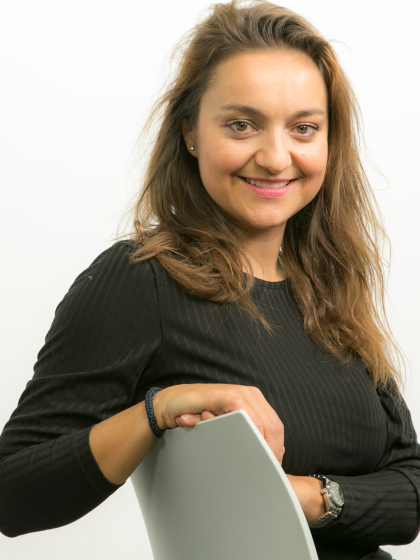
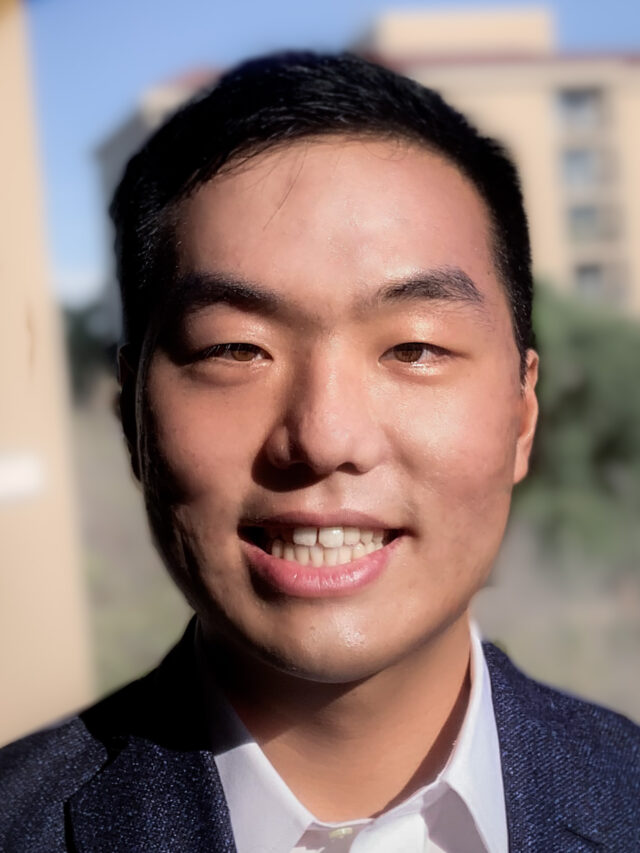
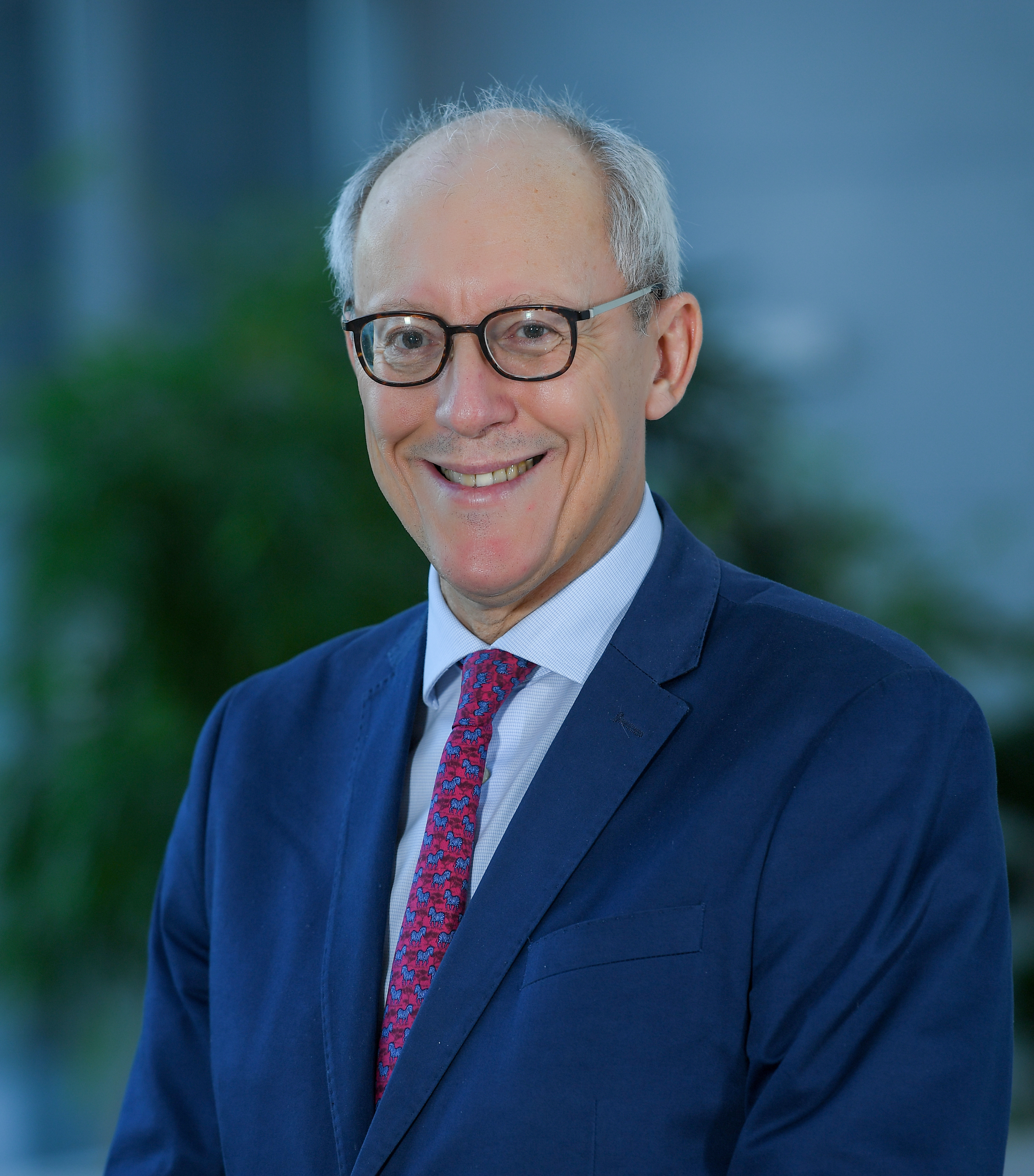
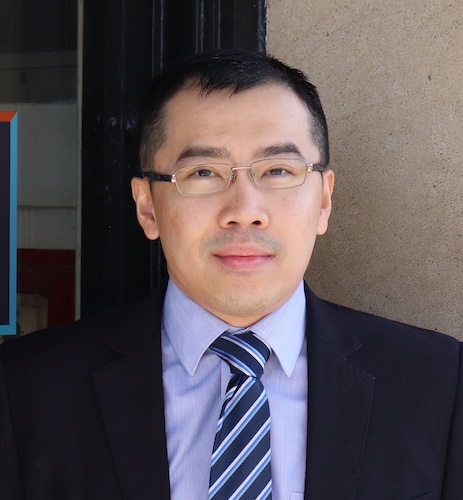
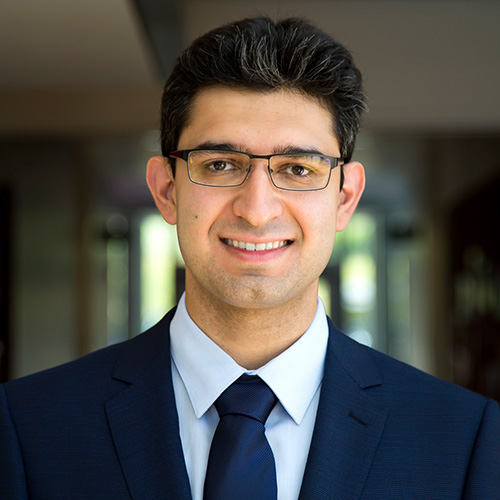
Prof. Evrim Ursavas is a Professor of Energy Logistics at the University of Groningen's Faculty of Economics and Business. Her expertise spans Energy Logistics, Hydrogen Economy, and Sustainable Energy Systems. She holds degrees in Industrial Engineering, Computer Engineering, Business Administration, and a PhD in Operations Management and Technology. Research focuses on optimizing energy transition challenges through projects such as HyUSe (Hydrogen tech development), HEAVENN (Hydrogen Valley in Northern Netherlands), and TRIĒRĒS (Greece's hydrogen ecosystem). Her work integrates renewable energy sources, logistics, and stochastic modeling to enhance supply chain resilience and grid efficiency. Notable projects include a €90M EU-funded HEAVENN initiative (2020–2026) and the €16M HyUSe project (2024–2030). She leads the Energy Transition and Climate Change Theme at the University of Groningen and advises on strategic energy consultancy. Publications emphasize sustainable delivery networks, stochastic optimization in energy systems, and hydrogen logistics. Funded research includes a Dutch project on renewable energy grid expansion and an Interreg project on LNG infrastructure development.
Sara Shashaani is an Assistant Professor in the Edward P. Fitts Department of Industrial and Systems Engineering at North Carolina State University (NC State), part of the College of Engineering. She holds affiliate roles as Bowman Faculty Scholar, Goodnight Early Career Innovator, and affiliated faculty at the Center for Additive Manufacturing and Logistics (CAMAL). Her work focuses on integrating stochastic optimization and Monte Carlo methods with data science to address societal challenges like energy resilience and healthcare analytics. Education: Ph.D. in Industrial Engineering, Purdue University (2016) MS in Industrial and Systems Engineering & Operations Research, Virginia Tech (2014) MS in Industrial Engineering, Purdue University (2011) Bachelor degrees in Applied Computing (Southern Cross University, 2009) and Industrial Engineering (Iran University of Science and Technology, 2008) Research Interests: Her work spans stochastic optimization , Monte Carlo simulation , and data-driven decision making , with applications to energy systems, healthcare, and manufacturing. Recent projects include calibrating digital twins for industrial systems, predicting healthcare outcomes using robust feature selection, and developing efficient stochastic optimization algorithms. Grants & Awards: 2024-2028 NSF Grant: Collaborative Research on Stochastic Simulation Optimization 2024 Goodnight Early Career Innovator Award 2023 IISE Teaching Award AAUW Research Publication Grant (2022) Advisees & Service: Supervises PhD students in simulation optimization and data science. Serves as Associate Editor for Journal of Simulation and organized workshops at Winter Simulation Conference. Notable contributions include the SimOpt open-source testbed for simulation optimization. Labs & Teams: Leads the Shashaani Research Group , collaborating with NC State’s CAMAL and Department of Statistics. Active in interdisciplinary initiatives like energy resilience and quantum computing applications.
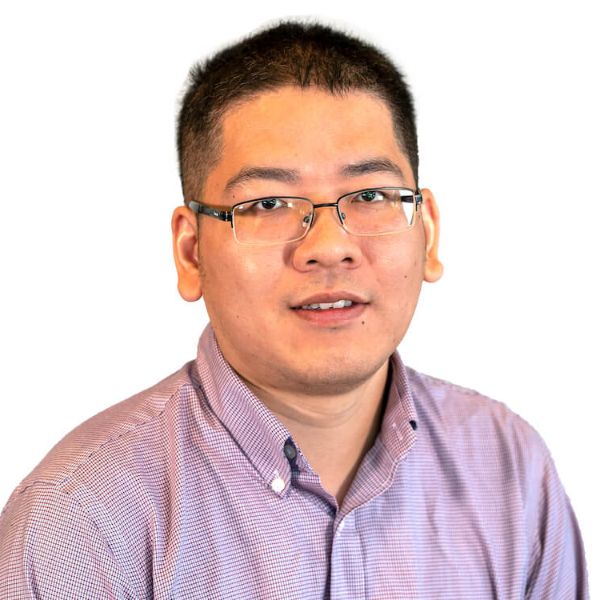
Wenyuan Tang is an Associate Professor in the Department of Electrical and Computer Engineering at North Carolina State University. His research focuses on electricity markets, data analytics, machine learning, and optimization for power systems. He holds a Ph.D. in Electrical Engineering from the University of Southern California and completed postdoctoral work at UC Berkeley and Stanford. Education: B.Eng. in Electrical Engineering, Tsinghua University (2008) M.S. Electrical Engineering & M.A. Applied Mathematics, University of Southern California (2010-2014) Ph.D. Electrical Engineering, University of Southern California (2015) Research interests include power systems resilience, renewable energy integration, and microgrid management. Recent work emphasizes probabilistic forecasting, battery storage optimization, and multi-energy system coordination. He has received the NSF CAREER Award (2022), R. Ray Bennett Faculty Fellow Award (2021), and Goodnight Early Career Innovators Award (2023). Awards: NSF CAREER Award (2022) R. Ray Bennett Faculty Fellow Award (2021) Goodnight Early Career Innovators Award (2023) His work includes leadership in IEEE editorial roles and collaborations on projects like the DOE Solar Forecasting Prize. Research emphasizes bridging optimization theory with practical grid operations, focusing on resilience, efficiency, and sustainability.
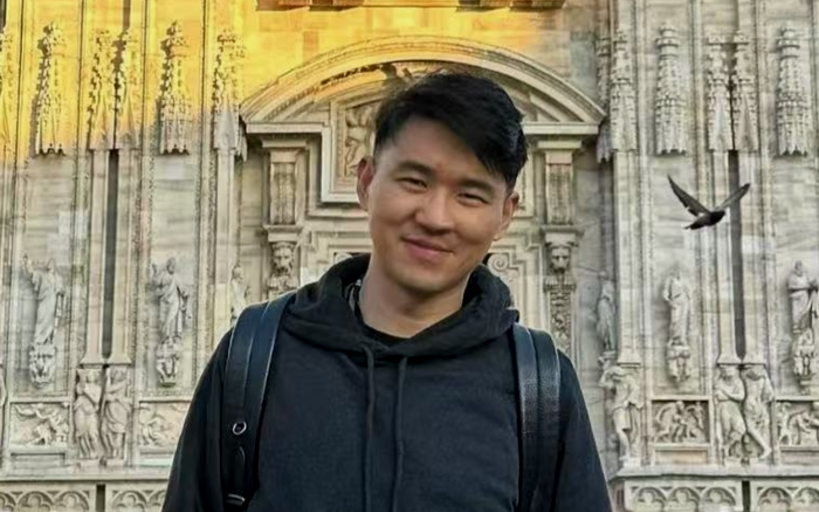
Zhengmao Li is an Assistant Professor at Aalto University's Department of Electrical Engineering and Automation. He holds a Ph.D. in Electrical Engineering from Nanyang Technological University (NTU), Singapore, and has served as a Research Fellow at Stevens Institute of Technology (2019-2021) and NTU/Singapore ETH Center (2021-2023). His research focuses on multi-energy system planning and operation, particularly in integrated power, thermal, and gas networks for microgrids, seaports, and smart buildings. Key areas include resilience enhancement via demand response, robust optimization under uncertainties, and advanced algorithms like deep reinforcement learning. Education: B.E. (Information Engineering), M.E. (Electrical Engineering) from Shandong University, China; Ph.D. (Electrical Engineering) from NTU, Singapore. Research emphasizes handling uncertainties in renewable energy, developing resilient energy systems, and applying optimization techniques such as distributionally robust stochastic methods. His work bridges theoretical advancements with practical applications in smart grids, maritime energy systems, and low-carbon industrial operations. Over 50+ peer-reviewed articles highlight his contributions to energy system resilience, multi-agent coordination, and sustainable energy technologies.
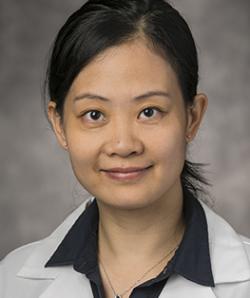
Min Cui, MD, PhD, is an Assistant Professor in the Department of Pathology at Case Western Reserve University School of Medicine. Their primary role is as a GI/liver/pancreas pathologist with expertise in neoplastic and non-neoplastic entities of the gastrointestinal, liver, and pancreatic systems. Dr. Cui holds memberships in USCAP and CAP professional organizations. Education & Training: Medical School: Nanjing University AP/CP Residency: University Hospitals Cleveland Medical Center GI/Liver Pathology Fellowship: The Mount Sinai Hospital, NYC Research Focus: Dr. Cui's work centers on diagnostic challenges in gastrointestinal pathology, including molecular profiling of tumors (e.g., SMARCA4 mutations), infectious disease complications (e.g., Histoplasmosis), and systemic effects of SARS-CoV-2 on GI systems. Their recent studies explore vascular complications in COVID-19 patients and recurrence patterns in colorectal carcinoma. Presentations: CAPA 2023 Diagnostic Course, Denver, CO Dr. Cui's research output spans 7+ peer-reviewed publications between 2019-2024, with notable contributions to understanding diagnostic pitfalls in esophageal carcinomas and applying optimization methods to medical diagnosis systems.
Hongseok Namkoong is an Assistant Professor in the Decision, Risk, and Operations division at Columbia Business School, Columbia University. He is affiliated with the Data Science Institute (DSI) and focuses on Financial and Business Analytics. He holds a Ph.D. from Stanford University and previously worked as a research scientist at Facebook Core Data Science. His research integrates machine learning , operations research , and statistics to develop reliable methods for decision-making under uncertainty. Key areas include distributionally robust optimization, adaptive experimentation, AI fairness in compositional systems, and stability analysis under distribution shifts. His work emphasizes both theoretical rigor and practical implementations (e.g., DRO Python library, QGym simulation tool). Recent publications (2024-2025) demonstrate a focus on: (1) Robust ML methods for distribution shifts, (2) Efficiency in data labeling and experimentation, (3) Fairness frameworks for AI systems, and (4) Applications in healthcare, queuing networks, and personalized LLMs. Over 60% of his latest articles address robustness/adaptation challenges. Awards: Best Paper Award at NeurIPS Runner-up Best Paper Award at ICML INFORMS Applied Probability Society Best Student Paper No specific grants, labs, or supervised students are mentioned in the provided text.
Samuel A. Burer is the Tippie-Rollins Professor and Departmental Executive Officer in Business Analytics at the University of Iowa's Tippie College of Business. He earned his Ph.D. in Algorithms, Combinatorics, and Optimization from Georgia Institute of Technology and a B.S. in Mathematics from the University of Georgia. Research Interests: Optimization, operations research, management sciences, discrete and continuous optimization, decision making under uncertainty. Editorial Roles: Area Editor for Operations Research (2020-2026), Associate Editor for SIAM Journal on Optimization, Mathematical Programming, and others. Teaching: Teaches across all business education levels and received multiple teaching awards, including the University of Iowa President & Provost Award for Teaching Excellence. Scientific Awards: INFORMS Computing Paper Prize (2020) SIAM Optimization Test of Time Award (2023) President & Provost Award for Teaching Excellence (2022) Collegiate Teaching Award (2020) Optimization Prize for Young Researchers (2002) Grants: Principal Investigator for NSF CAREER grant (2006-2012) and collaborative NSF grants (2002-2005) focused on nonconvex quadratic and conic optimization theory. Projects: Developed optimization algorithms for Trader Joe's warehouse location analysis, college football rankings, and created software tools like QuadProgBB and OPTDNN for solving semidefinite programs.
Dr. Giorgio Consigli is an Associate Professor in the Department of Mathematics at Khalifa University. Born in Rome in 1959, he has a multidisciplinary background bridging economics, finance, and mathematics. Previously, he held academic positions at the University of Bergamo and spent a decade in the finance sector, including roles at UniCredit and Allianz. Bachelor in Economics (La Sapienza, Rome, 1982/3) Diploma in Banking and Finance (La Sapienza, 1990) PhD in Mathematics (University of Essex, 1995) His research focuses on stochastic modeling, optimization methods, and machine learning in finance. Key areas include dynamic portfolio management, pension fund optimization, ESG investment integration, and risk control under uncertainty. He has led projects funded by Allianz, the University For Innovation Foundation, and collaborated with institutions like GeorgiaTech and Jiaotong University. Recent publications emphasize machine learning, stochastic dominance, and multi-period portfolio optimization. He is a Fellow of the Institute of Mathematics and Applications (UK) and actively participates in European working groups on financial modeling and stochastic optimization. Fellow of the Institute of Mathematics and Applications (FIMA, UK) Member of Bachelier Finance Society Coordinator of international research collaborations Dr. Consigli has advised MSc students in Financial Mathematics and Mathematics at Khalifa University, contributing to their academic growth through research projects and industry-aligned mentorship.
Fei Miao is the Pratt & Whitney Associate Professor at the School of Computing, University of Connecticut, with a courtesy appointment in the Department of Electrical & Computer Engineering. She serves as Director of the Miao Embodied AI Lab and is affiliated with the Institute for Advanced Systems Engineering. Prior to joining UConn in August 2017 as an Assistant Professor, she was a postdoctoral researcher at the GRASP Lab and PRECISE Lab at the University of Pennsylvania. Dr. Miao received her Ph.D. in Electrical and Systems Engineering from the University of Pennsylvania in 2016, where she was awarded the "Charles Hallac and Sarah Keil Wolf Award for Best Doctoral Dissertation." She also earned a dual Master's degree in Statistics from the Wharton School. Her undergraduate education was completed at Shanghai Jiao Tong University in 2010, with a major in Automation and a minor in Finance. Dr. Miao's research focuses on developing the foundations for the science of Embodied AI, with emphasis on assuring safety, efficiency, robustness, and security of cyber-physical systems through the integration of learning, optimization, and control. Her technical interests span multi-agent reinforcement learning, robust optimization, uncertainty quantification, control theory, and game theory. These methodologies are applied to connected and autonomous vehicles (CAVs), intelligent transportation systems, transportation decarbonization, smart cities, and power networks. Her research portfolio includes robust reinforcement learning and control, uncertainty quantification for collaborative perception, game theoretical analysis for information sharing benefits in CAVs, data-driven robust optimization for mobile cyber-physical systems, conflict resolution in smart cities, and resilient control of cyber-physical systems under attacks. Her work combines theoretical analysis with experimental validation using urban transportation data, simulators, and small-scale autonomous vehicles. Dr. Miao has received significant recognition for her work, including: NSF CAREER Award (2021) for "Distributionally Robust Learning, Control, and Benefits Analysis of Information Sharing for Connected and Autonomous Vehicles" Pratt & Whitney endowed Associate Professorship (2023) Best Paper Award at ICCPS'21 for "DeResolver: A Decentralized Negotiation and Conflict Resolution Framework for Smart City Services" NSF grants as PI for projects including "SCC-IRG Track 1: Socially Informed Services Conflict Governance" ($2.3M) and "CPS: Small: COLLAB: Improving Efficiency of Electric Vehicle Fleets" ($198,698) Dr. Miao actively mentors graduate students and seeks self-motivated PhD candidates interested in reinforcement learning, robust optimization, machine learning, control theory, game theory, and cyber-physical systems. Her research has been supported by multiple NSF grants, including a CAREER award totaling $509,573 and a collaborative grant of $2.3 million as PI of UConn's portion. She has been actively engaged in the academic community, presenting her work at institutions including CMU, Microsoft Research, Northeastern, Caltech, UCLA, USC, UCSD, Facebook FAIR, Lawrence Berkeley National Lab, UC Berkeley, Nvidia, Stanford, Princeton University, Columbia University, Waymo, and New York University. Her laboratory, the Miao Embodied AI Lab, focuses on experimental validation of theoretical frameworks using real urban transportation data, simulators, and small-scale autonomous vehicle testbeds to advance the field of embodied artificial intelligence for cyber-physical systems.
Pascal Quach is a researcher specializing in robust optimization and resilience engineering, with a focus on energy systems and critical infrastructure. His work intersects operations research, stochastic optimization, and climate adaptation. Research Focus : Distributionally robust optimization, microgrid design, infrastructure resilience Methodologies : Benders decomposition, column-and-constraint decomposition, reinforcement learning Recent trends in his publications highlight applications of advanced optimization techniques to enhance climate resilience in infrastructure networks and improve energy system reliability under uncertainty. He actively explores causal representation learning in human motion modeling, demonstrating interdisciplinary interests. He is affiliated with the Industrial Engineering Laboratory, where he collaborates with Yiping Fang and Anne Barros on projects addressing supply-demand uncertainty, distributed energy resources, and network scalability challenges.
Grani Adiwena Hanasusanto is an Associate Professor in the Department of Industrial & Enterprise Systems Engineering at the University of Illinois Urbana-Champaign. His research focuses on robust optimization , stochastic programming , and fair machine learning , addressing decision-making under uncertainty in domains like transportation, healthcare, and energy systems. Recent work includes Finite-sample guarantees for robust system identification Scalable algorithms for neural network verification Fairness-aware policies for infectious disease mitigation NSF-funded projects on distributionally robust quadratic optimization for power systems Scientific contributions and recognition include Editorial board member of Operations Research Honoree on the List of Teachers Ranked as Excellent INFORMS Diversity, Equity, and Inclusion Ambassador His teaching portfolio includes courses on Optimization of Large Systems and Optimization Under Uncertainty at UIUC, previously taught at UT Austin. Advisees include PhD candidates exploring robust solution schemes for sequential decision-making, queue management, and classification problems.
Anqi Liu (Angie) is an Assistant Professor in the Department of Computer Science at the Whiting School of Engineering, Johns Hopkins University. She is affiliated with the Data Science and AI Institute, Mathematical Institute for Data Science (MINDS), and Institute for Assured Autonomy (IAA). Her research focuses on developing principled machine learning algorithms for reliable, trustworthy, and human-compatible AI systems in high-stakes applications. PhD in Computer Science from University of Illinois Chicago Postdoctoral Research at Caltech's Department of Computing and Mathematical Sciences Her work emphasizes robustness to changing data environments, uncertainty quantification, and human-AI interaction. Key methodologies include distributionally robust learning, active learning, safe exploration, fair machine learning, and conformal prediction. Applications span healthcare (NIA/NIH-funded), robotics, and computational social science. Amazon Research Award Johns Hopkins + Amazon Initiative for AI Faculty Research Johns Hopkins Discovery Award Institute for Assured Autonomy Challenge Grant She advises PhD candidates in AI safety and fairness, with students co-advised by faculty in Human-Robot Interaction and Computational Linguistics. Collaborations include Center for Language and Speech Processing (CLSP) and Laboratory for Computational Sensing and Robotics (LCSR).
Pooyan Kazemian serves as Assistant Professor of Innovation, Technology and Operations at UC San Diego's Rady School of Management since 2025, following faculty appointments at Case Western Reserve University (2020-2025) and Harvard Medical School (2017-2020). His research bridges artificial intelligence, machine learning, and healthcare operations to address critical challenges in medical decision-making and health policy. Education Ph.D. in Industrial and Operations Engineering, University of Michigan (2016) Research Focus Dr. Kazemian develops novel AI applications for healthcare management, specializing in deep learning for operational improvements, personalized disease treatment strategies, and cryptographic verification of medical AI systems. His methodological expertise spans machine learning, optimization modeling, causal inference, and zero-knowledge cryptography, applied to healthcare operations, medical diagnostics, and public health policy. Recent work demonstrates significant impact through publications in Management Science , Production and Operations Management , and high-impact medical journals. Publication Trends His publication record reveals increasing focus on AI-driven healthcare solutions since 2019, with recent work emphasizing pandemic response modeling (2021-2024), chronic disease management (2019, 2023), and theoretical advances in medical decision-making (2025). The research portfolio demonstrates consistent collaboration with medical institutions and interdisciplinary teams addressing real-world healthcare challenges through operations research lenses. Professional Recognition Research featured in major media outlets including NPR, The New York Times, and Science Codex, highlighting real-world impact of his healthcare operations research.
Yifan Hu is an Assistant Professor in the Department of Statistics at Rutgers University (New Brunswick, NJ). His research focuses on optimal decision-making under uncertainty, with expertise spanning optimization, statistics, and operations research. He works on problems arising from reinforcement learning, large language models, causal inference, and operations management. Dr. Hu received his PhD in Operations Research from the University of Illinois at Urbana-Champaign in 2022, advised by Prof. Xin Chen and Prof. Niao He. Prior to his PhD, he earned a Bachelor of Mathematics from Nankai University. He also completed postdoctoral work with Prof. Daniel Kuhn from EPFL and Prof. Andreas Krause from ETH Zurich. Dr. Hu's research centers on developing optimization methods to solve complex problems with provable guarantees. His work addresses challenges such as nonconvexity, noisy observations due to distribution shifts, interactions between multiple decision makers, and limited data samples. He has developed approaches for structured nonconvex optimization problems that can be solved efficiently to global optimality, despite their apparent computational intractability. His research spans several key areas including global optimality in structured nonconvex optimization, large-scale causal inference, contextual bilevel optimization, and robust reinforcement learning with large language models. Dr. Hu has published numerous papers in top-tier venues including NeurIPS, ICML, ICLR, AISTATS, and journals like SIAM Journal on Optimization and Operations Research. His recent work shows a strong trend toward integrating optimization theory with practical applications in machine learning, causal inference, and decision-making systems. He has made significant contributions to understanding the landscape of nonconvex optimization problems, developing efficient algorithms for causal discovery, and creating robust frameworks for reinforcement learning and language model alignment. Dr. Hu serves as an area chair for ICLR and as a reviewer for numerous statistics, optimization, and operations research journals (e.g., JASA, JMLR, OR, MS, MSOM, MP, SIAM OPT, Math OR) as well as machine learning conference proceedings (e.g., NeurIPS, ICML, ICLR, AISTATS, COLT). He is actively seeking motivated PhD students and research interns with backgrounds in mathematics, statistics, operations research, or computer science. Outside of academia, Dr. Hu enjoys skiing, swimming, hiking, and playing tennis.
Martina Maggio is a Professor at the Department of Computer Science , Saarland University (since March 2020) and holds a 20% position at the Department of Automatic Control , Lund University (since 2023). Her research bridges control theory with software engineering to address predictability in computing systems. PhD : Politecnico di Milano (completed with work on control-theoretical tools for computing systems) Visiting Graduate Student : MIT CSAIL (collaborated on Self-Aware Computing project) Her research focuses on: Control theory for resource allocation in cloud infrastructures and embedded systems Formal verification of event-triggered systems and deadline misses Robustness of cyber-physical systems under computational faults Automated methodologies for runtime adaptation in software Timing requirements in big data applications Security vulnerabilities in control systems Key article trends include: control-theoretic approaches to computing systems, stochastic modeling of deadline misses, formal verification of timing constraints, and security-aware control algorithms . Scientific recognition: Co-authored paper selected as Most Influential Paper at SEAMS 2025 Best Paper Award at ECRTS 2021 ACM SIGSOFT Distinguished Paper Award (FSE 2020) Outstanding Reviewer (ICPE 2020) Mentorship includes supervising PhD candidates (e.g., Clara Rubeck, Robert Pietsch) and serving as an academic advisor for industry collaborations (e.g., with Bosch Corporate Research). She also contributes to open-source tool development (WeaklyHard.jl) and has held leadership roles like Program Co-Chair for ICCPS 2020.