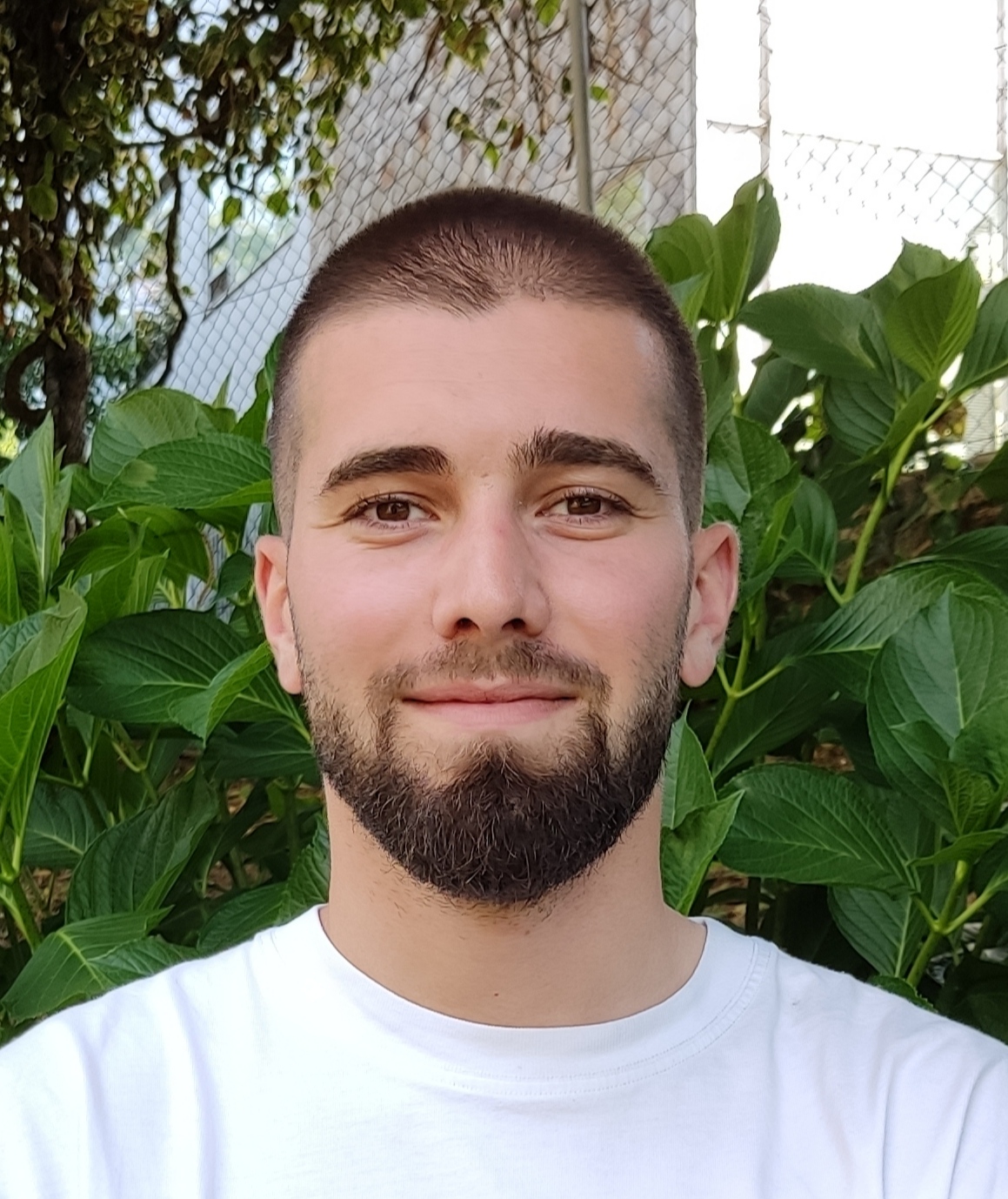
Cristian Bermudez Serna is a researcher at the Chair of Communication Networks (Prof. Kellerer) at the Technical University of Munich (TUM). He holds an M.Sc. in Electrical Engineering from TUM and a Bachelor's in Telecommunications Engineering from Universidad de Antioquia, Colombia. His research focuses on mechanisms for efficient network reconfigurations in mobility scenarios, with emphasis on Software Defined Networking (SDN), programmable data planes, and machine learning applications in networking. Education: Bachelor's in Telecommunications Engineering, Universidad de Antioquia (2016) M.Sc. in Electrical Engineering, Technical University of Munich (2021) Research Interests: Optical access networks planning and robustness Future railway communication systems Survivable multi-domain network routing Post-quantum cryptography in optical networks Publications span topics like infrastructure cost savings in rural PONs, survivable routing mechanisms, and SDN control plane optimization. His work integrates algorithmic approaches with real-world network challenges in telecommunications and transportation systems.
Kofidis Eleftherios is an Associate Professor at the Department of Statistics and Insurance Science, University of Piraeus, Greece. He holds a Ph.D. in Computer Engineering and Informatics from the University of Patras (1996) and a Dipl. Ing. from the same institution (1990). His research focuses on signal processing, machine learning, digital communications, and biomedical applications, with a particular emphasis on tensor decompositions, filter bank multicarrier (FBMC) systems, and MIMO communication. He has contributed to over 70 peer-reviewed publications, including books and technical reports. Teaching responsibilities include courses such as Numerical Analysis, Operations Research, and Topics in Data Science. His research interests span signal processing for communication systems, tensor-based algorithms for multidimensional data analysis, and applications in biomedical signal processing. He has collaborated extensively on projects such as the European FP7-ICT EMPhAtiC initiative, focusing on MIMO channel estimation and distributed systems. Key research trends in his publications include: (1) tensor decomposition techniques for channel estimation and data fusion, (2) development of semi-blind receivers for MIMO systems, (3) analysis of filter bank-based multicarrier modulation for 5G/6G applications, and (4) biomedical signal processing using higher-order tensor methods. His recent work addresses challenges in RIS-enabled wireless systems and federated learning frameworks. Education: Ph.D., Computer Engineering and Informatics, University of Patras, 1996 Dipl. Ing., Computer Engineering and Informatics, University of Patras, 1990 Key Research Grants/Projects: European FP7-ICT Project EMPhAtiC (MIMO channel estimation and distributed systems) National and EU-funded initiatives on tensor-based signal processing Awards: None explicitly listed in the provided texts. Labs/Teams: Active in University of Piraeus's research groups on statistical signal processing and communications. His work bridges theoretical advancements in tensor methods with practical applications in wireless communications and biomedical engineering, emphasizing solutions for next-generation communication systems and multidisciplinary data fusion challenges.
Metafas Dimitrios is a Lecturer in the Department of Electrical and Electronic Engineering at the University of West Attica, School of Engineering. His office is located in Building Z, Room ZB201. He holds a Doctoral Degree from the University of Patras (1993) and an Electrical Engineering Diploma (1987). His research focuses on Real-Time Software, System-On-a-Chip design, DSP architectures, and applications of AI/Machine Learning in games and education. Teaches courses such as Introduction to Programming, Algorithms and Data Structures, and UML-based system design methodologies. Active in interdisciplinary research, including educational technology and embedded systems. Recent work emphasizes AI-driven educational tools and reinforcement learning applications in gaming. Earlier contributions span wireless communication systems, VLSI design, and hardware-software co-development.
Amor Nafkha is a Researcher at the Rennes Institute of Electronics and Telecommunications (IETR), specializing in Physical layer security, Hardware Security, and Reconfigurable Computing. His work focuses on advancing Cognitive Radio, Software Defined Radio (SDR), and 5G/6G technologies. He has contributed to pioneering research in spectrum sensing, hardware vulnerability analysis, and reconfigurable systems. His research interests include developing robust security mechanisms against side-channel attacks, optimizing SDR architectures for energy efficiency, and applying machine learning techniques to device activity detection in massive MTC networks. Key projects include the ANR-POSEIDON initiative and the WONG5 document on 5G integration for machine-type communication. Notable contributions include multi-screaming-channel attacks leveraging frequency diversity and hybrid spectrum sensing frameworks validated on USRP platforms. His work bridges theoretical signal processing with practical hardware implementations, emphasizing real-world deployment challenges.
Christian Fikar is a Professor of Food Supply Chain Management at the Faculty of Life Sciences: Food, Nutrition and Health at the University of Bayreuth, based at the Kulmbach campus. His research focuses on business management issues in food value chains, particularly time-critical logistics processes and computer-based decision support systems. Professor Fikar studied Supply Chain Management at the Vienna University of Economics and Business, completed his doctorate and habilitation at the University of Natural Resources and Life Sciences in Vienna, and has held academic positions at both institutions before joining the University of Bayreuth. He has extensive international experience from research periods in the USA, Taiwan, Spain, and Finland. His methodological expertise spans Operations Research, Operations Management, and Business Analytics , with applications focused on increasing the resilience, sustainability, and efficiency of food value chains. Professor Fikar's research particularly examines logistics decisions in the food mail order industry and short food supply chains (regional supply networks) in Upper Franconia. His work enables more efficient processes that can contribute to reducing food waste while maintaining high-quality food delivery systems. Key research areas include perishable food distribution, digital logistics platforms, and crowd logistics for local food systems. Analysis of his recent publications reveals a strong focus on computational approaches to food supply chain challenges, integrating simulation and optimization techniques to address problems in perishable food distribution, crowd logistics, and regional food systems. His work shows increasing attention to digital transformation in food supply chains, quality preservation in logistics, and sustainable delivery models. Professor Fikar has advised doctoral students including Florian Cramer, whose 2025 dissertation focused on retail access models. His research has been supported by various projects examining sustainable food distribution systems, e-grocery operations, and resilience in short food supply chains. He actively contributes to the sustainable development of regional food networks in Upper Franconia through both research and teaching initiatives at the University of Bayreuth.
Yannic Maus is a Professor at the Faculty of Computer Science and Biomedical Engineering at Graz University of Technology (TU Graz), Austria, where he heads the Institute of Algorithms and Theory (founded in 2025). He is also a co-leader of one of the five Fields of Expertise (FoE) at TU Graz, specifically in Information, Communication & Computation. Dr. Maus received his PhD from the Algorithms and Complexity group at the University of Freiburg (Germany) under the supervision of Fabian Kuhn. Prior to joining TU Graz, he was a postdoctoral researcher at the Technion in Israel in the group of Keren Censor-Hillel. His research focuses on theoretical computer science and algorithm design, particularly problems arising in distributed computing. He is fascinated by clean mathematical questions and the techniques involved in solving them, especially when these questions are motivated by real-world systems. His specific interests include distributed graph algorithms, efficient algorithms, data structures, complexity theory, and geometric algorithms. Dr. Maus's work bridges theoretical foundations with practical applications in large-scale networked systems. Analysis of his recent publications reveals a strong emphasis on distributed algorithms for graph problems, with significant contributions to graph coloring, symmetry breaking, and vertex cover problems across various computational models. His research demonstrates increasing focus on massively parallel computation (MPC) models alongside traditional distributed computing frameworks, addressing challenges related to bandwidth limitations, memory constraints, and adaptive algorithms. The interdisciplinary nature of his work connects theoretical computer science with practical system constraints. GI Dissertationspreis 2018 Wolfgang-Gentner-Nachwuchsförderpreis 2019 2020 Principles of Distributed Computing Doctoral Dissertation Award Best Paper Award at PODC 2016 Best Paper Award at SIROCCO 2016 Best Paper Award at DISC 2017 Dr. Maus actively mentors students at all levels, offering bachelor's and master's theses as well as PhD positions in his research group. His research is supported by multiple competitive grants including FWF grants P36280-N (2023-2027), DOC 183 (2024-2028) and I6915 (2024-2028), and FFG grant No. 59263962. His group maintains strong international collaborations with research teams across Germany, Finland, Iceland, and Israel, facilitating knowledge exchange and joint research initiatives. The group provides fully funded PhD positions with excellent working conditions, including competitive salaries and travel support. The Institute of Algorithms and Theory, under Dr. Maus's leadership, is part of TU Graz's rapidly growing Faculty of Computer Science and Biomedical Engineering. The research group maintains an inclusive environment that actively encourages women to apply and supports work-life balance for all members. Located in Graz, Austria's second-largest city, the institute benefits from the city's high quality of life, cultural vibrancy, and proximity to both the Alps and Mediterranean regions, providing an excellent environment for academic work and personal life.
Dr. Ir. Christos Strydis is an Associate Professor jointly affiliated with the Erasmus Medical Center (Neuroscience department) and Delft University of Technology (Quantum & Computer Engineering department). He is also the founder and head of the Neurocomputing Laboratory and a senior member of the IEEE . His roles span academic research, engineering leadership at Neurasmus BV , and teaching at both institutions. BSc, MSc, and PhD in Computer Engineering from the Technical University of Crete and Delft University of Technology 2011–present: Post-Doctoral Researcher, Chief Engineer, and faculty member at Erasmus Medical Center 2016–present: Assistant and Associate Professor at Erasmus Medical Center Dr. Strydis’s research lies at the intersection of neuroscience and computer engineering , focusing on high-performance computing (HPC) , low-power embedded systems , and functional ultrasound (fUS) imaging . His work bridges hardware acceleration, reconfigurable computing, and brain simulations to advance neural implants and neuroimaging technologies. His recent publications highlight innovations in exascale FPGA architectures for brain simulations, AI chip performance analysis , real-time spike detection algorithms , and secure health data integration via cloud HPC. Themes span from hardware security to cerebellar signal processing, emphasizing scalability and energy efficiency. At Erasmus and Delft, he supervises PhD, MSc, and BSc students , teaches bachelor- and master-level courses , and leads grants funded by the ICT Delft Research Centre , Google Inc. , and national/EU projects. His lab, the Neurocomputing Laboratory , focuses on translating computational neuroscience into clinical applications.
Professor Andrei Savkine is a distinguished academic at the University of New South Wales, serving as Professor and Head of Systems & Control within the School of Electrical Engineering and Telecommunications. With a PhD and MS from Leningrad State University, he has established himself as a leading researcher in robotics, control systems, and wireless networks. University: University of New South Wales School: School of Electrical Engineering and Telecommunications Department: Systems & Control Position: Professor and Head of Systems & Control Email: a.savkin@unsw.edu.au Professor Savkine's research spans robotics, control theory, and wireless communications with particular emphasis on UAV navigation, autonomous systems, and power grid applications. His work bridges theoretical control systems with practical implementations in surveillance, disaster response, and energy management. Recent publications demonstrate cutting-edge research in Reconfigurable Intelligent Surfaces (RIS), multi-robot coordination, and secure communications. Analysis of his publication record from 2023-2025 reveals a strong focus on UAV applications across diverse terrains and scenarios, with increasing integration of machine learning techniques. His work shows consistent innovation in trajectory optimization, sensor networks, and communications infrastructure, with particular attention to real-world constraints like uneven terrain and security concerns. Professor Savkine has authored numerous influential books including 'Autonomous Navigation and Deployment of UAVs for Communication, Surveillance and Delivery' (2022) and 'Wireless Communication Networks Supported by Autonomous UAVs and Mobile Ground Robots' (2022), establishing foundational frameworks for modern drone applications. His research program demonstrates significant interdisciplinary collaboration, particularly with researchers in power systems and computer science, addressing critical challenges in infrastructure resilience, emergency response, and next-generation wireless networks.
Jonathon Hare is a Professor in the School of Electronics & Computer Science at the University of Southampton. He holds a BEng degree in Aerospace Engineering and PhD in Computer Science, both from the University of Southampton. His research is centered around representation learning with the goal of developing techniques that allow machines to understand and utilize data to fulfill human information needs. His research spans three main areas: Novel representation techniques including differentiable neural architectures for counting and working with unordered sets; Understanding representations through biological inspiration, exploring how neural architectures relate to biological systems; and Applications of representation in geospatial intelligence and document analysis. He has made a strong commitment to open science, with many projects having open-source implementations, including the OpenIMAJ software that won the prestigious 2011 ACM Multimedia Open Source Software Competition. His recent publications (2024-2025) show a strong focus on hardware-efficient neural networks, representation learning, and explainable AI. His work addresses critical challenges in neural network memory configuration, FPGA acceleration, and stable algorithm learning using mathematical constraints. His research shows growing emphasis on practical implementation challenges and the intersection of theoretical neural network concepts with real-world hardware constraints. Vice Chancellors Teaching Award (2015) Faculty award for innovative teaching (2013-14) 2011 ACM Multimedia Open Source Software Competition winner Shortlisted for Blackboard and VLE Awards (2016, 2017, 2020) Fellow of the Higher Education Academy (FHEA) Senior Member of IEEE (SMIEEE) As Doctoral Programme Director, Professor Hare supervises over 150 PhD students across multiple disciplines including Computer Science, Geography, Engineering, and the MINDS interdisciplinary program. He leads undergraduate Computer Vision and postgraduate Differentiable Programming/Deep Learning modules, and has been instrumental in developing new machine learning curriculum including modules on Deep Learning, Natural Language Processing, and Machine Learning Technologies. His teaching excellence has been widely recognized through multiple awards and nominations. He also serves on the editorial board of IET Image Processing journal since 2020. Professor Hare is actively involved in several research groups including Vision, Learning and Control; International Centre for Ecohydraulics Research; Centre for Machine Intelligence; and Southampton Marine and Maritime Institute. His current projects include SemanticNews, JASH – AYURDA (Fish for Life), International Centre for Spatial Computational Learning, and various marine and geospatial research initiatives.
Mohammad Alian is an Assistant Professor at the School of Electrical and Computer Engineering, Cornell University. He earned his Ph.D. (2020) and MS (2015) from UIUC and UW-Madison, respectively. His research focuses on redefining data-delivery hierarchies in data centers through computer architecture and systems research. Current Projects: Near-Memory Acceleration, Accelerator Fusion, Micro-Service Co-Design, Compound AI Systems, Memory Specialization, Gem5 Simulation Tools. Recent Awards: MICRO Hall of Fame (2025), NSF CAREER (2022), Miller Faculty Scholar (2023), Open Innovation Contest placements. His research spans Computer Architecture , Memory Systems , and Networked Computation , emphasizing algorithm-hardware co-design for distributed and heterogeneous computing. Recent work includes accelerating large-context LLMs (LongSight), optimizing gem5 simulation (Userspace Networking), and designing cross-accelerator chains (Data Motion Acceleration). ARG (Alian Research Group) collaborates with industry leaders like NVIDIA, Samsung, and SRC/DARPA JUMP 2.0 ACE Center. He serves on PC/Organizing Committees for top conferences (MICRO, ISCA, HPCA) and teaches Data Center Architecture (ECE 6960) and Digital Logic (ECE 2300) . Scientific Awards Inducted into MICRO Hall of Fame (2025) NSF CAREER Award (2022) IEEE Micro Top Picks Honorable Mention (2017) Best Paper Nominee - HPCA 2017, MICRO 2018 Open Innovation Contest: 2nd Place (2022), Finalist (2021) As Principal Investigator, he leads NSF-funded projects (CCRI, AI-Assisted Scaffolding) and co-leads the $31.5M SRC/DARPA JUMP 2.0 ACE Center . His lab develops open-source tools like dist-gem5 and DPDK on gem5, with industry support from NVIDIA (equipment donation) and Samsung.
Jari Böling is a University researcher at Åbo Akademi University, affiliated with the Faculty of Natural Sciences and Engineering in the Department of Process and Systems Engineering. His research focuses on developing technologies for a sustainable future, particularly in marine engineering and control systems with strong connections to UN Sustainable Development Goals. Böling's research expertise spans multiple engineering domains with specialized focus areas including: Distributed control and fault-tolerant control systems Marine energy systems and cruise ship optimization Process engineering applications for sustainability Machine learning integration in industrial control systems Complex system optimization techniques Analysis of Böling's publication trends reveals a strategic evolution from theoretical control systems toward applied sustainable technologies. His recent work demonstrates increasing integration of data analytics and machine learning with traditional control engineering to address environmental challenges in marine transportation. The research shows a clear progression toward practical implementations that reduce energy consumption and emissions in cruise ship operations and other marine applications. Böling actively supervises students, having guided 12 bachelor's theses in energy technology in 2020. His research portfolio includes significant projects funded by Business Finland: DAZE: Data Analytics for Zero Emission Marine (2023-2026) as Co-Principal Investigator INDECS: Integration of design and operation of cruise ship energy systems (2023-2025) as Responsible researcher CASEMATE: Computationally aided systems engineering for marine technology (2022-2025) as Principal researcher CPT: CLEAN PROPULSION TECHNOLOGIES (2021-2023) as Co-Investigator Energy technology development project in Vaasa (2011-2017) as Co-Investigator
Narayan B. Mandayam is a Professor and Director of the Wireless Information Network Laboratory (WINLAB) at Rutgers University's Department of Electrical and Computer Engineering. He previously served as Chair of the department from 2016 to 2022. His research focuses on smart city resilience, IoT security, energy-efficient systems, and game-theoretic models for cyber-physical systems. Located in the Computing Research & Education Building (CoRE), he leads interdisciplinary projects addressing societal challenges in communication networks and infrastructure security. Education : B.Tech. (Hons) Electrical Engineering, Indian Institute of Technology, Kharagpur (1989) M.S. and Ph.D. Electrical Engineering, Rice University, Houston TX (1991–1994) Research Interests include: Prospect Theory applications in cloud security and smart grids Noncontiguous spectrum access and software-defined networks Modeling social knowledge creation on the internet Visual MIMO networks and metamaterial-based security His work bridges economics, machine learning, and wireless systems, with recent emphasis on 6G and IoT resilience. Key Awards : 2015 IEEE Communications Society Advances in Communications Award 2014 IEEE Donald G. Fink Award 2009 IEEE Fred W. Ellersick Prize 2018 Indian Institute of Technology Distinguished Alumnus Award His research outputs span 5G/6G innovations, security protocols using metamaterials, and game-theoretic models for adversarial scenarios. Current trends include leveraging AI for network optimization and mitigating radio interference impacts on weather forecasting. Lab & Leadership : As WINLAB Director, he oversees cutting-edge projects in wireless systems, collaborating with industry and government entities. His teams develop solutions for smart grid resilience, autonomous vehicle security, and federated learning incentivization.
S. M. Riazul Islam is a Senior Lecturer in Computing Science at the School of Natural and Computing Sciences, University of Aberdeen, UK. He holds a PhD in Information Engineering and has held prior academic and research positions at the University of Huddersfield, Sejong University, Inha University, Samsung R&D Institute, and the University of Dhaka. He is a Senior Member of IEEE and a Fellow of the Higher Education Academy (FHEA). His research spans Applied AI, Medical Diagnosis, Digital Health, Inclusive AI, and the Internet of Things. PhD in Information Engineering BSc with Gold Medal, University of Dhaka His research interests center on the application of artificial intelligence in healthcare and digital systems. He explores medical diagnosis using AI models such as CNNs and extreme learning machines for diseases like malaria, lung cancer, and diabetic retinopathy. He also investigates inclusive AI and IoT security, with a strong focus on practical implementations in smart healthcare and autonomous systems. His work integrates deep learning, signal processing, and secure communication protocols to enhance system reliability and performance. His recent publications demonstrate a strong trend in AI-driven healthcare diagnostics, IoT security, and next-generation wireless communications. Articles focus on blockchain security, interpretable AI for disease diagnosis, lightweight neural networks, and secure V2D communications. His work bridges theoretical innovation with real-world applications in medicine, agriculture, and smart cities. Top Scientist: World's Top 2% Scientists Distinguished Professor Award, Sejong University (2020) Best Paper Award, IEEE CCWC 2019 Dean's Award, Inha University (2012) Gold Medal, University of Dhaka (2003) Dr. Islam has served as a plenary speaker, guest editor for special issues in journals like MDPI Electronics, and holds editorial roles in Nature Scientific Reports and Alexandria Engineering Journal. He has received no explicit mention of research grants, but his extensive publication record and leadership in special issues indicate significant research activity. He has mentored students and collaborated widely across institutions in the UK, South Korea, and Bangladesh. He leads research in IoT security and AI for healthcare, contributing to journals, conferences, and books. He is actively involved in professional communities, serving as Chair of IEEE VTS UK & Ireland Section, TPC member for IEEE GLOBECOM, and reviewer for top journals including IEEE JSAC, IEEE Access, and IET Communications. His research group focuses on intelligent IoT systems, secure communications, and AI applications in digital health.
Álvaro Michelena Grandío is a researcher in the Department of Industrial Engineering at the University of A Coruña, specifically based at the Ferrol Engineering Polytechnic University College. His academic work focuses on automated systems engineering, with teaching responsibilities in control engineering, power electronics, data analysis, and smart monitoring systems across various degree and master's programs. Master in Industrial Engineering Automation and Industrial Electronics Engineering Master's Degree in Textile Technology and Sustainable Fashion Master's Degree in Energy Efficiency and Sustainability Master's Degree in Industrial Computing and Robotics His research interests lie at the intersection of intelligent systems, control engineering, and sustainable industrial technologies. He actively contributes to the development of IoT-based monitoring systems, embedded control solutions, and AI-driven energy applications. His work emphasizes practical, low-cost implementations for education and industry. The analysis of his recent publications reveals a strong focus on intelligent control, data analysis, and renewable energy systems. He frequently applies machine learning and neurocomputing techniques to industrial and environmental problems, including energy efficiency, sensor networks, and smart grids. His work bridges theoretical AI with real-world engineering applications. Álvaro Michelena is actively involved in research projects funded by the European Union, Telefónica, Navantia, and regional agencies. He supervises numerous final degree projects and master's theses, mentoring students in areas such as IoT, embedded systems, and intelligent control. He is a member of the 'Ciencia y Técnica Cibernética' (SUXI) research group and affiliated with the CITIC research center. He has contributed to multiple research projects in collaboration with institutions across Spain and Portugal. His work appears in high-impact journals like Neurocomputing , Applied Intelligence , and Sensors . He regularly presents at international conferences in Salamanca, Guimarães, and Bilbao, often in collaboration with multidisciplinary teams.
Jesper Ødum Nielsen is an Associate Professor at the Department of Electronic Systems, Aalborg University. His primary affiliations include the Technical Faculty of IT and Design. He focuses on experimental investigations of wireless radio systems, particularly mobile radio channel properties influenced by user interactions. His work spans MIMO channel sounding, millimeter-wave 5G measurements, and OTA testing for LTE terminals. Key research areas include propagation channel modeling, antenna design, and reconfigurable intelligent surfaces for 6G networks. Collaborative projects include RISE-6G (2021-2023) and VIRTUOSO (2014-2018), emphasizing practical system development and channel modeling advancements. His publications from 2024 demonstrate ongoing work in RIS applications and indoor propagation analysis. No formal student advisees or awards are listed in the provided data. His lab activities involve anechoic chambers and large-scale antenna array setups for field measurements. Current projects continue exploring 6G environments and sustainable wireless systems.