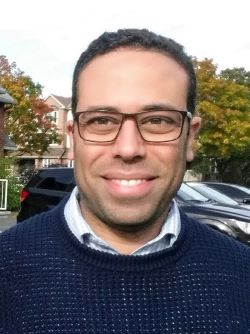
Prof. Dr. Tobias Gemmeke is a University Professor at RWTH Aachen University's Faculty of Electrical Engineering and Information Technology, leading the Chair of Integrated Digital Systems and Circuit Design. His work focuses on neuromorphic computing, hardware accelerators, and energy-efficient electronics. He has pioneered advancements in FPGA-based computational neuroscience simulators, neuromorphic processor architectures, and sensor integration for industrial and medical applications. Research interests include time-domain computing, ReRAM reliability, and co-optimization of neural networks with hardware. Notable contributions include the neuroAIx framework for accelerated neuroscience simulations and energy-efficient ASIC designs for post-quantum cryptography. He actively explores memristive devices and domain generalization techniques for edge computing. Recent publications highlight innovations in spiking neural networks, sensor systems for plain bearings, and time-domain compute-in-memory engines. His work bridges theoretical neuroscience with practical hardware implementations, emphasizing scalability and real-time performance.
Zhibo Pang is an Adjunct Professor at KTH Royal Institute of Technology's Department of Intelligent Systems (EECS) and Senior Principal Scientist at ABB Corporate Research Sweden. His work focuses on digital transformation in industry and healthcare, spanning robotics, AI, control systems, and wireless communication. He leads projects in embodied intelligence, Industry 4.0, and Healthcare 4.0, with 23 granted patents and over 120 journal papers. Education: PhD in Electronic and Computer Systems (KTH, 2013), MBA in Innovation & Growth (University of Turku, 2012). Key Roles: IEEE Technical Committee Chair, Editor of 6 IEEE journals, ABB Inventor of the Year (2016, 2018, 2021). Research Interests: Robotics safety, wireless automation, federated learning, digital twins, and IoT security. Recent Projects: Cloud-fog automation frameworks, robot skin systems for healthcare, and latency-aware industrial control. His work bridges academia and industry through cross-functional collaborations.
Ahmad Al-Dabbagh is an Assistant Professor in Manufacturing Engineering and holds a Principal's Research Chair in Control Systems (Tier 2) with the School of Engineering at The University of British Columbia. As a Senior Member of IEEE and ISA, he contributes significantly to the field of resilient automation and control systems through research, teaching, and professional service. His academic journey includes postdoctoral fellowships at Imperial College London, the University of Toronto, and the University of Alberta, where he also earned his PhD in Electrical and Computer Engineering. Dr. Al-Dabbagh's research focuses on designing resilient automation and control systems by addressing critical challenges in fault diagnosis, cyber security, and alarm management. His work spans theoretical foundations and practical applications in industrial control systems, with particular emphasis on detection and isolation of faults and cyber attacks, control reconfiguration, event-triggered control, remote state estimation, and alarm systems design. His research interests also extend to causality analysis, prediction methods, and root cause analysis for industrial processes. His extensive publication record demonstrates consistent contributions to control systems security and reliability, with recent work focusing on sophisticated methods for detecting false data injection attacks, analyzing alarm correlations using advanced machine learning techniques, and developing recommender systems for human operators in industrial environments. The trajectory of his research shows an evolution from foundational control theory toward increasingly complex applications in cyber-physical security and human-system interaction in industrial settings. NSERC Postdoctoral Fellowship NSERC Alexander Graham Bell Canada Graduate Scholarship (CGS – D3) Queen Elizabeth II Graduate Scholarship Governor General's Academic Medal (Gold) As a graduate student supervisor, Dr. Al-Dabbagh mentors the next generation of control systems engineers while maintaining an active research program. He serves as an Associate Editor on the IEEE Control Systems Society Conference Editorial Board and is a licensed Professional Engineer in British Columbia and Ontario. His teaching portfolio includes courses such as System Identification, Digital Enterprise, Systems and Control, and Internet of Things, reflecting the breadth of his expertise. Dr. Al-Dabbagh leads the Okanagan Laboratory for Control Systems Research, where his team develops innovative approaches to enhance the security and reliability of industrial automation systems. The laboratory serves as a hub for interdisciplinary research that bridges theoretical control engineering with practical industrial applications, particularly in the energy, manufacturing, and process industries.
Michael Ferdman is an Associate Professor in the Department of Computer Science at Stony Brook University, where he leads research in computer architecture and systems. His office is located in Room 343 at Stony Brook, NY 11794-2424, and he can be contacted via phone (631-632-8449) or email. Ferdman directs the Computer Architecture and Systems Laboratory (compas.cs.stonybrook.edu), focusing on next-generation server infrastructure. Ferdman's research spans the entire computing stack with emphasis on: FPGA integration for server environments (Intel HARP, Microsoft Catapult) Machine learning accelerators for convolutional neural networks Server systems optimization in the post-Moore era Network processing and software-defined networking Programming models for emerging memory technologies (HBM, 3D XPoint) Reconfigurable hardware and high-level synthesis His work addresses both performance and security challenges in modern computing infrastructure. Analysis of his 15 most recent publications (2022-2025) reveals consistent focus on: Hardware acceleration techniques (FPGAs, specialized processors) Memory hierarchy optimization and cache management Security vulnerabilities in web applications and systems Post-Moore computing architectures Parallel processing and distributed systems His research shows strong emphasis on practical implementations bridging hardware and software layers. Awards recognizing his contributions include: Graduate Teaching Award (2014) Best Paper Award at ASPLOS XVII Best Paper Finalist at HPCA XVII Three IEEE Micro Top Picks selections (2009, 2012) He teaches advanced courses including CSE 502, CSE 602, and CSE 506 at Stony Brook University.
Mohsen Lesani is an Associate Professor in the Computer Science and Engineering Department at the University of California, Santa Cruz's Baskin School of Engineering. His research focuses on reliability and security of software systems, particularly concurrent and distributed systems, with recent emphasis on secure replicated systems and distributed machine learning. Dr. Lesani received his PhD from UCLA, MS in artificial intelligence from Sharif University of Technology, and BS in software engineering from University of Tehran. He was previously a postdoc at MIT. His educational background provides a strong foundation for his interdisciplinary research spanning programming languages, distributed systems, and security. His research interests center on creating reliable and secure distributed systems. Current projects include resilient and secure distributed systems, heterogeneous and reconfigurable secure distributed systems, automatic analysis and synthesis of replicated objects, verification of distributed systems, data analytics, secure exchange across blockchains, machine learning for performance models, domain-specific languages and type systems, and automatic fence insertion for concurrent systems. His work bridges theoretical foundations with practical implementations to address real-world challenges in distributed computing. Lesani's research has been recognized with several prestigious awards including the NSF CAREER award in 2020 and DARPA YFA award in 2022. His work has also received the SIGPLAN Research Highlight in 2019, a distinguished paper award at OOPSLA 2018, and a best paper award at ISSRE 2015. These accolades reflect the impact and quality of his contributions to the field. He actively mentors PhD students in the Safe and Secure Software (S3) lab, including Xiao Li, Eric Chan, Javad Saber-Latibari, and Tejas Mane. His research has been supported by multiple NSF grants, demonstrating sustained funding for his innovative work. Lesani serves on program committees for major conferences including POPL, PLDI, OOPSLA, and DISC, contributing to the academic community. Lesani leads the Safe and Secure Software (S3) lab at UC Santa Cruz, where his team works on cutting-edge research in distributed systems, programming languages, and security. The lab fosters a collaborative environment where theoretical insights are translated into practical systems that address real-world challenges in reliability and security of distributed applications.
Xingwang Li is an active researcher affiliated with the School of Physics and Electronic Information Engineering at Henan Polytechnic University in Jiaozuo, China. He obtained his PhD from Beijing University of Posts and Telecommunications in 2015, specializing in networking and switching technology. His research spans wireless communications, IoT systems, reconfigurable intelligent surfaces (RIS), and physical-layer security, with a strong focus on 6G-enabling technologies. Dr. Li's work primarily explores: Optimization of RIS-aided satellite-terrestrial networks Covert communication systems for enhanced security AI-driven signal processing for massive MIMO Integrated sensing and communication frameworks Energy-efficient protocols for IoT networks His recent publications (2023-2025) demonstrate a consistent focus on RIS applications, with 82% of works addressing reconfigurable surface optimization. Key trends include the integration of deep learning with communication systems (notably reinforcement learning for resource allocation), advancement of THz and near-field technologies for 6G, and novel approaches to physical-layer security. The research shows increasing emphasis on practical implementations, including UAV networks and autonomous vehicle communications.
Prof. Dr.-Ing. Eric Sax is a Professor of Electronic Systems Engineering and Management at the Karlsruhe Institute of Technology (KIT), serving as Dean of the Department of Electrical Engineering and Information Technology (ETIT). He leads the Institut für Technik der Informationsverarbeitung (ITIV) and directs the Forschungszentrum Informatik ESS division . As Program Director of the Electronic Systems Engineering & Management (ESEM) master's program at the HECTOR School, he focuses on integrating academic and professional education. His research spans automotive systems engineering , self-learning functions , cybersecurity , and data-driven validation . Key themes include over-the-air updates, scenario-based testing, and the synergy between machine learning and automotive systems. His work addresses challenges in autonomous driving validation, software-defined mobility, and cyber-physical system security. Prof. Sax's contributions include frameworks for automotive software partitioning, cloud-enabled vehicle architectures, and methodologies for quantifying data quality impacts on perception systems. He actively collaborates with industry partners to bridge academic research with industrial application. His recent projects include OptiCAM (cloud/edge function offloading), Drive4C (autonomous driving benchmarking), and UNCOVER (data-driven security monitoring). He holds leadership roles in both KIT and the HECTOR School's technology business programs.
Dr. Prasanth Venugopal is an Associate Professor specializing in Power Electronics with a focus on advanced energy transfer systems and battery technology. His research spans wireless power transfer, electric vehicle charging, and electrochemical impedance spectroscopy for battery diagnostics. Primary research areas: Wireless Power Transfer (100%), Harmonics (88%), Inductive Power Transfer (87%), Battery Engineering (48%) Recent publications demonstrate expertise in transformerless converter designs, multi-level architectures, and AI-driven battery capacity estimation. He has pioneered meander coil topologies for harmonic mitigation and developed computation-light models for battery aging analysis. His work includes collaborations on Li-ion battery degradation, onboard chargers for electric vehicles, and hybrid power systems for electric aircraft. Despite significant output in IEEE Transactions, no explicit awards or student mentoring data appears in the provided texts.
Raouf Boutaba is a Professor at the University of Waterloo , serving as Director of the David R. Cheriton School of Computer Science since July 2020. He holds prestigious fellowships including FRSC , FIEEE , FIEC , and FCAE . 2024: Inaugural Rogers Chair in Network Automation 2024: Ontario Research Fund–Research Excellence (ORF–RE) $2M grant for next-gen mobile networks 2021: University Professor title, University of Waterloo Research Interests span network automation, resource management in wired/wireless networks, network function virtualization (NFV), software-defined networking (SDN), cloud computing, blockchain, future Internet architecture, and cybersecurity. His work focuses on zero-touch networks, 5G/B5G slicing, and AI-driven orchestration. Scientific Contributions include 15+ recent publications on topics like reinforcement learning for RAN slicing, encrypted traffic classification, quantum network optimization, and self-driving infrastructure. His projects 5G LEAP and 5G ELITE explore network isolation and Open RAN principles. 2024: IFIP/IEEE CNOM Test of Time Paper Award 2024: Graduate Supervision Excellence Award 2021: Kenneth C. Sevcik Outstanding Student Paper Award (advisor) Teaching includes co-developing the NSERC CREATE Network Softwarization program, offering courses like Network Softwarization: Principles and Foundations (Winter 2024) and Technologies and Enablers since 2018. He emphasizes hands-on training in SDN, NFV, Open RAN, and 5G. Students and Collaborations : Supervised PhD students such as Shihabur R. Chowdhury (2021), Nashid Shahriar (2020), and undergrad Leni Aniva (2022 Gov. Gen. Silver Medal ). His team includes researchers working on 5G, blockchain, and AI-driven network management. Professional Leadership : Organized Rogers TEP Workshops (2024-2025), delivered keynotes at IEEE Globecom, ColCom, and BalkanCom, and served on expert panels for AI orchestration and 5G cybersecurity at major symposia.
Dr. Krishnendu Guha is an Assistant Professor and CONNECT Funded Investigator at the School of Computer Science and Information Technology, University College Cork. His research bridges embedded systems, cybersecurity, and quantum-safe hardware design with AI and bio-inspired strategies. PhD: University of Calcutta (Department of Science and Technology, Government of India) Postdoctoral: University of Florida Past Roles: Research Fellow at Intel India, Visiting Scientist at Indian Statistical Institute, Temporary Assistant Professor at NIT Jamshedpur His research focuses on embedded systems security , real-time security mechanisms , and quantum-safe hardware . He integrates AI (e.g., neural networks) and bio-inspired strategies (e.g., gecko crypsis behavior) into security frameworks for FPGAs and edge platforms. Recent publications highlight trends in blockchain for supply chains , quantum machine learning , secure FPGA architectures , and distributed AI systems . His work addresses energy efficiency, fault detection, and decentralized security in hardware. As a CONNECT Centre member, Dr. Guha contributes to advanced research in reconfigurable systems and cybersecurity. Grants and collaborations span quantum-safe design, cloud FPGA security, and hardware trojan mitigation.
Professor Barry Porter is a faculty member at Lancaster University in the School of Computing and Communications . His research focuses on emergent software platforms that address software complexity through component models , meta-software platforms , and machine learning . Key areas include distributed systems, cloud integration with sensor nodes, green computing, and real-time visualization. Research Interests : Runtime adaptation in complex systems Self-assembling software architectures Machine learning for code optimization Distributed emergent systems at scale Green computing for multi-core environments Edge-cloud continuum integration Recent Publication Trends : His 2025 work explores genetic improvement for software using speciation algorithms , program geometry projection , and multi-agent decision frameworks . Earlier studies (2022-2024) investigate edge-cloud systems , neural transfer learning , and ecosystem curation in emergent software. Supervision & Projects : He supervises PhD student Ben Craine and leads projects like B-EGI (Bio-Enhanced Genetic Improvement) and BBC Prosperity Partnership for media delivery. Collaborations span environmental IoT, multi-agent learning, and fog computing. Labs & Groups : Affiliated with the Lancaster Intelligent, Robotic and Autonomous Systems Centre , Centre of Excellence in Environmental Data Science , and the Distributed Systems group.
Melissa C. Smith is a Professor of Electrical and Computer Engineering and Associate Dean for Graduate Studies at Clemson University. She holds a Ph.D. from the University of Tennessee and degrees from Florida State University. Her research focuses on machine learning, reconfigurable computing, and high-performance systems, with applications in embedded systems and interdisciplinary scientific advancements. Before joining Clemson in 2006, she was a research associate at Oak Ridge National Laboratory (ORNL), contributing to projects like the Spallation Neutron Source and PHENIX experiments. Education: Ph.D., Electrical and Computer Engineering, University of Tennessee M.S., Electrical Engineering, Florida State University B.S., Electrical Engineering, Florida State University Research Interests: Machine Learning and AI High-Performance and Reconfigurable Computing System Performance Modeling Embedded Systems Articles Summary: Her recent work spans machine learning applications, GPU/FPGA architectures, speech enhancement, and medical systems. Key themes include optimizing heterogeneous computing for real-time and scientific workloads, and advancing interdisciplinary solutions through architecture-application co-design. Lab & Collaborations: Leads the Future Computing Technologies Lab and collaborates with ORNL and national labs on projects like GEMmaker and HPC-enabled medical systems.
Ebrahim Bedeer Mohamed is an Assistant Professor in the Department of Electrical and Computer Engineering at the University of Saskatchewan. He joined in July 2019, following roles as an Assistant Professor (Lecturer) at Ulster University, UK, and postdoctoral fellowships at Carleton University and the University of British Columbia. He holds a Ph.D. (Distinction) from Memorial University of Newfoundland (2014), with expertise in signal processing and wireless communications. His research focuses on optimizing communication systems through advanced signal processing techniques, including faster-than-Nyquist signaling, IoT network design, AI integration, and energy-efficient protocols. Key areas include next-generation communication networks, non-orthogonal modulation, and MIMO systems. Notable contributions include work on channel estimation for FTN signaling, RIS-aided wireless systems, and LR-FHSS protocols in IoT. His publications span spectral efficiency, interference minimization, and energy management in 5G/6G contexts. He actively seeks Ph.D. students with strong backgrounds in signal processing fundamentals. Awards and grants are not explicitly listed in the provided texts. His work emphasizes practical applications, such as UAV trajectory optimization for IoT data collection and energy-efficient caching strategies in dynamic networks.
Yuanbo Xiangli is a postdoctoral researcher at Cornell University , advised by Prof. Noah Snavely. Previously, he obtained his Ph.D. from the Multimedia Lab in the Department of Information Engineering at the Chinese University of Hong Kong (CUHK) , supervised by Prof. Dahua Lin. His research focuses on 3D computer vision and deep generative modeling for urban scene reconstruction. 3D scene reconstruction from sparse images Neural rendering and Gaussian splatting Deep generative modeling for urban environments Multi-source geospatial data processing City-scale modeling and synthetic datasets His recent work includes advanced NeRF extensions (BungeeNeRF, GridNeRF), Gaussian splatting enhancements (GSDF, Scaffold-GS), and urban scene datasets (MatrixCity, OmniCity). A pioneer in combining classical vision techniques with modern deep learning approaches. ICLR 2020 Spotlight Award Collaborates with leading researchers in photorealistic rendering, including Noah Snavely and Dahua Lin. Develops systems enabling efficient 3D reconstruction from diverse data sources like satellite imagery and street-level panoramas.
Vinod M. Vokkarane is a Professor in the Department of Electrical and Computer Engineering at the University of Massachusetts Lowell, where he serves as Director of the Center for Smart Cyber-Physical Systems (SCyPS) and Director of Advanced Computer Network Labs. Previously, he was an Associate Professor at University of Massachusetts Dartmouth from 2004 to 2013 and a Visiting Scientist at MIT's Research Laboratory of Electronics from 2011 to 2014. His extensive research portfolio spans multiple domains of advanced networking and cyber-physical systems. Dr. Vokkarane earned his educational foundation with a B.S. from University of Mysore, India (1999), followed by an M.S. (2001) and Ph.D. (2004) in Computer Science from the University of Texas at Dallas. His dissertation focused on optical burst-switched networks, establishing the foundation for his future research trajectory. His research interests center on Cyber-Physical Systems, Network Optimization, Reliability, Smart Grids, and Cyber-Security, with particular expertise in the design, analysis, and modeling of architectures, protocols, and algorithms for ultra-high speed networks including Optical networks, Grid/Cloud networks, and Big-data networks. His work bridges theoretical foundations with practical implementations, often addressing critical challenges in network reliability, security, and efficiency. His research has received significant recognition through numerous best paper awards and substantial external funding. Analysis of his recent publications reveals a clear evolution toward increasingly sophisticated integration of cyber-physical systems with power infrastructure, particularly in the areas of grid resilience and observability. His work has expanded from fundamental optical networking research to address critical infrastructure challenges, with a growing emphasis on machine learning applications for network optimization and power system monitoring. The recent focus on PMU networks, disaster resilience, and cyber restoration demonstrates his strategic pivot toward addressing national security and critical infrastructure protection challenges. UMass Dartmouth Scholar of the Year Award (2011) UMass Dartmouth Chancellor's Innovation in Teaching Award (2010-11) University of Texas at Dallas Computer Science Dissertation of the Year Award (2003-04) Multiple Best Paper Awards including IEEE GLOBECOM 2005, IEEE ANTS 2010, ONDM 2015, ONDM 2016, and IEEE ANTS 2016 Texas Telecommunications Engineering Consortium Fellowship (2002-03) Dr. Vokkarane has successfully mentored numerous graduate students who have contributed significantly to his research projects, with several going on to successful careers in academia and industry. His research has been consistently supported by major funding agencies including NSF, DOE, and USMC, with recent projects totaling over $5 million in funding. Current projects include Unified Post-Disaster Restoration Planning for Cyber-Physical Power Distribution Systems (ONR, $550K), CyberCARE: Northeast University Cybersecurity Center (DOE, $3.5M), and Flexible Spectrum Allocation in Next-Generation Optical Networks (NSF, $350K). He leads the Center for Smart Cyber-Physical Systems (SCyPS) and Advanced Computer Network Labs at UMass Lowell, where his research teams work on cutting-edge problems in network architecture, cyber-physical security, and infrastructure resilience. His labs collaborate extensively with national laboratories and industry partners to translate theoretical advances into practical solutions for real-world infrastructure challenges.