Gene Tsudik is the Peter & Lois Griffin Professor at the University of California, Irvine (UCI), affiliated with the School of Information and Computer Sciences. His research focuses on cryptography, computer security, privacy, and applied cryptographic protocols. He has authored over 300 publications in top-tier venues, addressing challenges in secure communication, key management, privacy-preserving technologies, and network security. Key research areas include group key agreement, secure data possession, privacy-preserving protocols, and mobile agent systems. His work has influenced foundational aspects of computational grid security, cloud storage integrity, and post-quantum cryptography. Collaborations include prominent institutions like KAIST, University of Surrey, and NYIT. His publications span topics from theoretical cryptographic proofs to practical system implementations, reflecting a balance between academic rigor and real-world applicability.
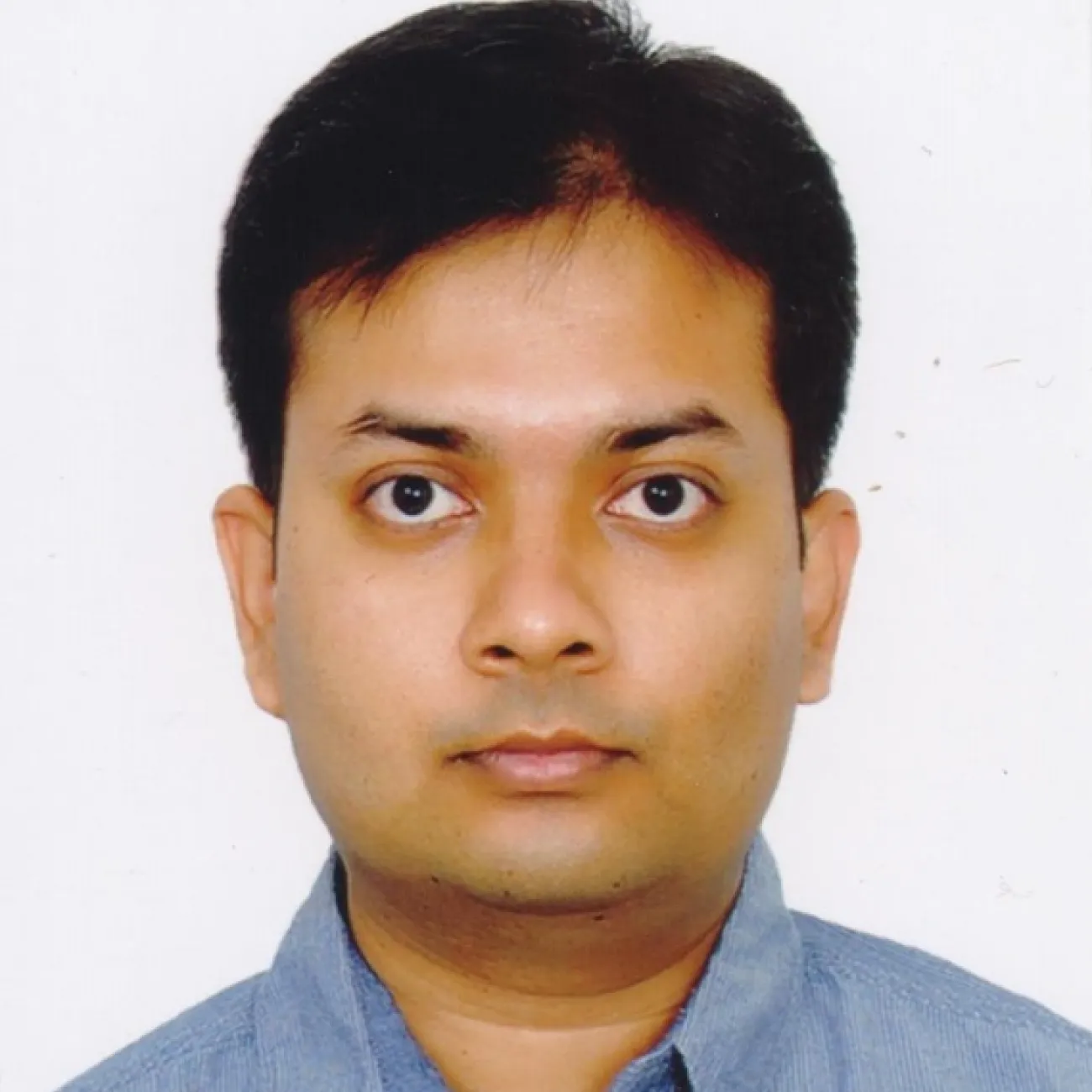
Dr. Abhinav Kumar Singh is a Lecturer of Power Systems at the University of Southampton's School of Electronics and Computer Science since 2019. Previously, he held academic roles at the University of Lincoln (2017–2019) and Imperial College London (2015–2017 as Research Associate). His research focuses on real-time estimation and control of power systems, particularly addressing challenges posed by renewable energy integration. Key areas include power system dynamics, decentralized estimation/control methodologies, and modeling of renewable generation systems. Education: B.Tech from Indian Institute of Technology (IIT) New Delhi (2010), PhD in Electrical Engineering from Imperial College London (2015). He leads the 68-bus benchmark system development for IEEE PES and serves as editor for IEEE Transactions on Power Systems and Journal of Modern Power Systems and Clean Energy . Research Projects: PI of National Grid’s £480K 'Economic Ageing of Transformers' (2019–2021), Co-I on UK-China EPSRC-NSFC £780K 'Resilient Operation of Sustainable Energy Systems' (2020–2023). Teaching: Modules include Power System Dynamics, Power Electronics for DC Transmission, and Mathematics for Electrical Engineering. Awards: EPSRC Doctoral Prize (2015), IEEE PES Recognition Awards (2016, 2022), and The President’s Award for Outstanding Research Team (2016). Labs/Teams: Member of the Electrical Power Engineering group and Tony Davies High Voltage Laboratory. Active in IEEE PES Task Forces on Dynamic Estimation and Standard Test Cases.
Sancho Salcedo Sanz is a Full Professor at the Universidad de Alcalá, affiliated with the Signal Theory and Communications Department and the GHEODE Research Group. His work focuses on applying machine learning and optimization techniques to energy systems, climate science, and environmental modeling. He holds PhDs from Universidad Complutense de Madrid (2019) and Universidad Carlos III de Madrid (2002). Key research interests include deep learning for energy price prediction, spatio-temporal climate analysis, and hybrid models for renewable energy forecasting. His GHEODE group develops optimization algorithms for network design and distributed systems. Recent publications highlight advancements in extreme weather prediction, smart grid optimization, and explainable AI for environmental monitoring. He has pioneered methodologies like Autoencoder-based flow analogues for heatwave reconstruction and multi-method ensembles for energy demand modeling. Labs/Teams: Leader of the GHEODE Group, specializing in modern heuristics and network design. Collaborates extensively on interdisciplinary projects combining AI with environmental and engineering applications.
David Palma is an Associate Professor at the Department of Information Security and Communication Technology , Faculty of Information Technology and Electrical Engineering , Norwegian University of Science and Technology (NTNU). His research focuses on next-generation networking paradigms, including intent-based networking , knowledge-driven management , and IoT device automation . Key research interests include: Human-centric Internet of Things (IoT) Ontology-based network management Cloud/Edge/Fog computing for IoT Arctic and satellite communication 5G integration in smart grids His recent publications (2024-2019) highlight trends in knowledge graphs for network compliance, XR applications in critical sectors, UAV-based emergency networks , and 5G-enabled smart grid protection . Articles also explore Arctic connectivity via satellite swarms and energy-efficient IoT management.
Dr. Cannon Dirk is a researcher affiliated with the University of Reading, as evidenced by his publications in the university's institutional repository, CentAUR. His work lies at the intersection of atmospheric science and renewable energy systems, with a focus on wind power forecasting and meteorological modeling. His research interests span Atmospheric Science , Renewable Energy , Wind Power Forecasting , Orographic Precipitation , Climate Modeling , and Energy Meteorology . These are reflected in his publications, which combine meteorological dynamics with practical energy system challenges. The recent articles show a strong trend toward probabilistic forecasting of wind power generation, quantification of extreme events using long-term reanalysis data, and the interaction between atmospheric processes and renewable energy infrastructure. His work often involves modeling frameworks applied to Great Britain's energy landscape. Dr. Cannon has collaborated with prominent researchers such as David Brayshaw, Joanne Methven, and Suzanne Gray, indicating integration within a well-established meteorological and energy research group at Reading. There are no listed scientific awards or honors in the provided data. Dr. Cannon has contributed to both journal articles and technical reports, including a MATLAB-based wind power model. While no formal advising or grant information is available, his repeated work on energy-meteorology integration suggests involvement in research projects related to sustainable energy systems. No lab or team name is explicitly mentioned, but his research aligns with atmospheric and renewable energy modeling groups, possibly within the Department of Meteorology at the University of Reading.
William Holderbaum is a Professor at the Department of Electrical Engineering, School of Engineering, University of Reading. His research spans control systems, energy management, functional electrical stimulation, robotics, and wireless power transfer, with over 95 publications since 2002. Research Interests: His work integrates theoretical control theory with practical applications in renewable energy, biomedical engineering, and smart systems. He has made significant contributions to microgrid protection, energy storage control, optimal power management for electric cranes, and FES for paraplegia rehabilitation. His recent work explores soft robotics using electroactive polymers and intelligent sensing for environmental and health monitoring. Publication Trends: His recent articles (2021–2025) reflect a multidisciplinary focus, combining engineering, materials science, and healthcare. Key themes include sustainable energy systems, intelligent control, wearable sensors, and novel computing paradigms using smart materials. Scientific Awards: No awards mentioned in the provided text. Advising and Grants: He has collaborated extensively with researchers such as F. Alasali, T. Yunusov, M. Alkowatly, and V. Becerra, suggesting a strong mentoring role. His work on energy storage, smart grids, and FES implies involvement in funded research projects, though specific grants are not listed. Labs and Teams: He is part of research teams focused on control systems and energy at the University of Reading, collaborating with the group led by B. Potter and V. Becerra. His work with biomedical applications suggests ties to interdisciplinary health-tech initiatives.
Jean-Yves Le Boudec is a Professor at École Polytechnique Fédérale de Lausanne (EPFL), affiliated with the School of Computer and Communication Sciences and the Institute of Electrical Engineering. He has been a key figure in advancing the theory and application of network calculus and deterministic networking, contributing significantly to standards such as IEEE Time-Sensitive Networking (TSN) and IETF DetNet. His research focuses on network calculus , time-sensitive and deterministic networking , traffic regulation , worst-case delay analysis , and cyber-physical systems , with cross-cutting applications in smart grids , real-time communication , and network security . He has co-authored foundational texts on network calculus and developed theoretical frameworks for traffic regulators, service curves, and delay bounds in complex networked systems. The recent publications highlight a strong trend in analyzing and improving performance guarantees in deterministic networks, including scheduling mechanisms like Deficit Round-Robin and Cyclic Queuing and Forwarding, traffic shaping via interleaved regulators, and security against time-synchronization attacks in power systems. The work spans theoretical modeling using stochastic and min-plus/max-plus algebra, practical algorithm design, and application to critical infrastructure. IEEE Fellow Le Boudec has advised numerous researchers and PhD students, including Ehsan Mohammadpour, Ludovic Thomas, and Seyed Mohammadhossein Tabatabaee. His collaborative projects often involve grants related to European and Swiss research initiatives in networking and smart grid technologies. He leads a research group focused on networked systems at EPFL, contributing to both theoretical advances and real-world implementations in industrial and energy-critical networks. His lab work centers on modeling and verification of time-sensitive network behaviors, integrating formal methods with practical experimentation. The team investigates regulators, shapers, and synchronization mechanisms, aiming to ensure robustness, predictability, and security in next-generation communication infrastructures. Future work continues to explore the interplay between communication, control, and energy systems in highly reliable environments.
Salman Zubair Toor is a researcher at Uppsala University, Sweden, specializing in distributed computing, federated learning, and cloud/edge infrastructure optimization. His work spans resource scheduling, data streaming, and secure anomaly detection.
Justin Solomon is an Associate Professor in the Department of Electrical Engineering & Computer Science at Massachusetts Institute of Technology, where he serves as Principal Investigator of the Geometric Data Processing Group. He maintains dual affiliations with the Computer Science and Artificial Intelligence Laboratory (CSAIL) and the MIT Center for Computational Science and Engineering (CCSE), reflecting his interdisciplinary research bridging theoretical mathematics with practical applications in graphics and machine learning. His research interests center around geometric data processing, computational geometry, and optimal transport theory, with significant contributions to computer graphics, machine learning, and computer vision. Solomon's work spans fundamental mathematical theory to practical implementations, particularly in shape analysis, 3D reconstruction, and geometric deep learning. His research demonstrates consistent innovation in developing algorithms that bridge discrete and continuous geometry with applications in graphics, vision, and AI. The publication trends reveal Solomon's evolving research trajectory from foundational work in geometry processing toward increasing integration with modern machine learning techniques. His recent work shows strong emphasis on diffusion models, geometric deep learning, and applications of optimal transport in AI, with significant contributions to SIGGRAPH, NeurIPS, and ICML proceedings. The research demonstrates both mathematical rigor and practical impact, with applications spanning character animation, 3D reconstruction, and generative AI. Amazon Research Award (2017) for Large-Scale Geometrically-Structured Sampling Amazon Research Award (2023) for Lightweight Algorithms for Generative AI Ben Wegbreit Prize for Best Undergraduate Honors Thesis Firestone Medal for Excellence in Undergraduate Research Boothe Prize for Excellence in Writing 2nd place, SGP best paper awards (2010) Solomon has secured substantial research funding through awards like the Amazon Research Awards and maintains active collaborations across academia and industry. His group has produced numerous influential publications with students and collaborators, contributing significantly to both theoretical foundations and practical implementations in geometric data analysis. His textbook "Numerical Algorithms" demonstrates his commitment to education alongside research. As Principal Investigator of the Geometric Data Processing Group, Solomon leads a research team focused on developing mathematical foundations for analyzing and processing geometric data. The group maintains strong connections with both theoretical mathematics and practical applications, working at the intersection of computer graphics, machine learning, and computational geometry. Their work has significant implications for fields ranging from computer animation to medical imaging and scientific computing.
Vahe Caliskan is a Clinical Professor in the Department of Electrical and Computer Engineering at the University of Illinois at Chicago (UIC), affiliated with the College of Engineering. His office is located at 1009 SEO Building, 851 S. Morgan St, Chicago, and he can be contacted at 312.996.6013 or vahe@uic.edu. Education: Sc.D. in Electrical Engineering and Computer Science, Massachusetts Institute of Technology (2000) M.S. in Electrical Engineering and Computer Science, University of Illinois at Chicago (1993) B.S. in Electrical Engineering and Computer Science, University of Illinois at Chicago (1990) Research Focus: Dr. Caliskan specializes in power electronics, analog circuit design, automotive electronics, and computer-aided modeling/simulation. His work bridges theoretical analysis and practical applications, particularly in automotive power systems and advanced converter topologies. Publication Trends: His scholarly output (1991-2005) demonstrates consistent focus on power conversion technologies, automotive electrical systems, and control methodologies. Key themes include three-phase rectifiers, switched-mode power supplies, resonant converters, and innovative automotive alternator designs, often emphasizing modeling precision and efficiency optimization. Awards and Honors: Faculty Advising Award, UIC College of Engineering (2017) Faculty Teaching Award, UIC College of Engineering (2016) EEWeb Featured Engineer Spotlight Interview (2015) Silver Circle Award for Excellence in Teaching, UIC (2012) Professional Engagement: Dr. Caliskan maintains an active conference presence, presenting at IEEE events on automotive power systems and converter technologies. His collaborations include researchers from MIT and industry partners in power electronics.
Feije de Zwart is a dedicated researcher at Wageningen University & Research, focusing on Horticulture Technology. With a robust presence in horticultural engineering, de Zwart contributes extensively to the fields of energy efficiency, greenhouse climate control, and sustainable crop production. Active in Artificial Intelligence and Horticulture research domains Current projects emphasize water resource management and hydrogen energy integration in greenhouses De Zwart's research spans Arid Zones , Crop Production , and Irrigation , with a strong emphasis on data-driven approaches and technological innovation in controlled-environment agriculture. Recent publications analyze energy-saving screen materials , dynamic climate control , and autonomous greenhouse systems , reflecting a trend toward AI integration and microclimate optimization.
Fabio Favoino is an Associate Professor at the Department of Energy (DENERG) at the Polytechnic of Turin, Italy, and a member of the FULL Interdepartmental Center - Future Urban Legacy Lab. His academic career focuses on building physics and energy systems, with particular expertise in building envelope technologies, energy efficiency, and sustainable building design. Research Interests Professor Favoino's research spans multiple areas of building science and technology, with a strong emphasis on energy performance and sustainable design. His primary research interests include building energy performance and nearly zero-energy buildings, advanced building envelope systems and facade technologies, building insulation materials and responsive building elements, smart glazing and electrochromic window systems, double-skin facades with integrated thermal storage, building simulation and performance assessment methodologies, integration of renewable energy systems in buildings, and thermal comfort and indoor environmental quality. Publication Trends Professor Favoino's recent publications demonstrate a clear focus on advanced building envelope technologies, particularly responsive and adaptive systems. His work increasingly integrates multi-domain analysis, combining thermal, acoustic, and daylight performance assessment. There is a strong emphasis on experimental validation of novel technologies like electrochromic windows, double-skin facades with phase change materials, and smart ventilation systems. His research also shows growing interest in living lab methodologies, sensor networks for building performance monitoring, and the integration of IoT infrastructure for building management systems. Professional Recognition Editorial Board Member for Building and Environment (2022-present) Editorial Board Member for Glass Structures & Engineering (2018-present) Effective Member of the Italian Thermotechnical Association (2018-present) Effective Member of CIBSE, United Kingdom (2016-present) Founding Partner of IBPSA Italy (2012-present) Effective Member of REHVA, European (2011-present) Effective Member of AICARR, Italy (2011-present) Research Leadership Professor Favoino actively supervises PhD students working on cutting-edge building technologies and leads several significant research projects including MIRABLE (2023-2025) on measurement infrastructure for healthy and zero-energy buildings, and the PRIN-funded iclimabuilt project (2021-2025) on functional and advanced insulating materials for climate adaptive building envelopes. He has also led commercial research projects on high-performance glazing systems and participated in the Cost Action TU1403 - Adaptive Facade Network (2014-2018) as coordinator. Research Infrastructure Professor Favoino's work with the FULL Interdepartmental Center - Future Urban Legacy Lab and involvement with the HIEQLab facility provide platforms for interdisciplinary research on sustainable urban development, building technologies, and human-centered environmental quality assessment.
Paolo Marocco is a Fixed-term Assistant Professor at the Department of Energy (DENERG) of Politecnico di Torino, Italy. His work focuses on hydrogen-based mobility solutions, renewable energy systems, and techno-economic/environmental sustainability analysis. He serves on teaching committees for Electrical and Energy Engineering, Mechanical Engineering, and Aerospace Engineering programs. Academic Role: Assistant Professor (Fixed-term) Department: Department of Energy (DENERG) Teaching: Hydrogen Laboratory, Electrical Energy Storage Systems, Applied Thermodynamics Research spans four key areas: Hydrogen Infrastructure : Green hydrogen production for ammonia synthesis, aircraft propulsion, and rail transport decarbonization. Projects include SOFFHICE (SOFC hybridization in maritime engines) and PNRR initiatives for industrial decarbonization. Energy Storage Systems : Hydrogen-battery hybrid storage, virtual thermal inertia storage, and optimal dispatch models for wind-electrolysis systems. Industrial Decarbonization : Semiconductor manufacturing, steel industry high-temperature heat substitution, and biogas carbon recovery. Policy Integration : Bridging technical research with European green policy targets through Italian energy modeling. He supervises 7 PhD students across Energetics, Mechanical Engineering, and Energy/Nuclear Engineering programs. Current projects include SOFFHICE (2023-2026) and PNRR-funded industrial furnace decarbonization (2023). Recent publications analyze hydrogen train feasibility, aviation fuel cells, and storage system optimization.
Professor Zhe Chen is a distinguished academic at Aalborg University's Faculty of Engineering and Science, where he leads research in Electric Power Systems and Microgrids within the Intelligent Energy Systems and Flexible Markets department. With an extensive publication record spanning over two decades and more than 1,200 publications, he has established himself as a leading expert in power engineering and renewable energy systems. Professor Chen's research focuses on Wind Turbine Engineering, Power Engineering, Control Strategy, Wind Power Engineering, Energy Engineering, and Reinforcement Learning. His work bridges theoretical advancements with practical applications in smart grid technology and microgrid systems. His research interests center around developing innovative solutions for renewable energy integration, power system stability, and efficient energy management. His recent publications demonstrate a strong trend toward integrating artificial intelligence with traditional power engineering, particularly in applying deep reinforcement learning to power system control, state estimation with noisy data, and optimization of power electronic converters. His work shows increasing focus on carbon emissions optimization, thermal management in power electronics, and the application of advanced neural network architectures to energy systems. MPCE 2023 Best Paper Award for research on reinforcement learning applications in electric vehicles MPCE 2022 Best Paper Award for distribution network optimization MPCE 2021 Best Paper Award for reinforcement learning in energy systems WATAB Best Paper Award 2005 for offshore wind farm research IEEE Fellow recognition for contributions to power electronics and renewable energy systems Professor Chen has supervised 27 PhD students throughout his career, demonstrating his commitment to academic mentorship. His current research is supported by significant grants including the Erasmus+ funded S3SF project (Smart Energy Solutions for a Sustainable Future) and multiple projects focused on machine learning-based stability analysis for multi-energy systems. His collaborative work spans numerous international partnerships, with recent projects involving researchers from China, Europe, and other global institutions. Professor Chen leads a research team focused on intelligent energy systems, working on advanced control strategies for microgrids, power quality analysis, and the integration of renewable energy sources into existing power infrastructure. His team is particularly known for innovative approaches to wind power integration and DC microgrid technologies.
Vladimír Siládi, PhD, serves as Assistant Professor and Head of the Department of Computer Science at Matej Bel University in Banská Bystrica, Slovakia, where he has held academic positions since 1995. His current roles include Project Coordinator for the Virtual University initiative and Registration Authority for SlovakGrid, with prior experience as a part-time Assistant Professor at Slovak University of Technology. Educational Background: PhD in Computer Science, Slovak University of Technology in Bratislava (1997-2007) Master's in Theology, Comenius University in Bratislava (2003-2008) Master's in Secondary Education and Teaching (cum laude) and PaedDr. (EdD), Matej Bel University (1988-1993, 2005) High School Diploma, GMN Banská Štiavnica (1984-1988) His research centers on Grid Computing architectures , parallel processing techniques , and security frameworks for distributed systems . Specialized expertise includes GPU-accelerated algorithms for NP-hard problems, trust models in ad hoc grid environments, and cloud-based educational platforms. His interdisciplinary work bridges computer science with environmental modeling and psychological applications through virtual reality systems. Publication analysis reveals a consistent focus on computational optimization across 12 major works (2006-2014), with recent contributions emphasizing trust intersection models for decentralized grids (2012-2013) and cloud-based educational infrastructure (2013). Earlier works established foundations in GPU-accelerated network topology optimization and genetic algorithms for irregular systems (2006-2010). Scientific Awards: No awards documented in source materials Project leadership includes the Virtual University of Matej Bel University (ITMS 26110230077) coordinating 85 team members across 280 courses, plus TEMPUS-FLACE distance learning development (1998-2000). His registration authority role for SlovakGrid since 2009 supports national research infrastructure. Departmental leadership involves managing the Computer Science team while teaching core courses in algorithms, grid technologies, and GPU programming, maintaining consultation hours for student engagement.