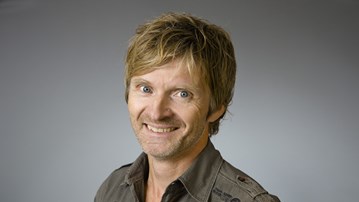
Ahmad Al-Shishtawy is a Lecturer at the Software Engineering and Computer Systems department within the School of Electrical and Computer Engineering (EECS) at KTH Royal Institute of Technology in Stockholm, Sweden. His contact details include phone number +46 8 790 42 42 and device address at Kistagangen 16. Teaching Roles: Data Mining (FID3016) - Teacher, Assistant Distributed Systems, Basic Course (ID2201) - Examiner, Teacher Programming of Parallel Systems (ID1217) - Examiner, Course Manager, Teacher, Assistant Scalable Machine Learning and Deep Learning (ID2223) - Assistant His research and teaching interests span software engineering, distributed systems, machine learning, data mining, and parallel programming.
Erik Elmroth is a Professor at the Department of Computing Science, Umeå University. He leads research in distributed systems, cloud/edge computing, and autonomous resource management, directing a 30+ member research group. His leadership includes transformative roles as department head (2009-2021) and Deputy Director at High Performance Computing Center North (HPC2N). Elmroth serves on executive committees for the SEK 6.2B Wallenberg AI program (WASP) and SEK 390M eSSENCE initiative, and leads multiple Kempe Foundation projects. Research interests center on: Autonomous control of cloud/edge infrastructures Software-defined systems and federated clouds AI-driven resource optimization High-performance computing architectures Robust machine learning for distributed environments His publications emphasize adaptive cloud systems, anomaly detection, and federated learning, with consistent focus on scalability and resilience in edge/cloud deployments. Awards and honors: Member of Royal Swedish Academy of Engineering Sciences (IVA) Nordea Scientific Prize (2011) SIAM Linear Algebra Prize (2000) National HPC Lecturer appointment He has supervised 40+ PhD students and secured major grants including the Swedish Research Council's second-largest award for the Cloud Control project. Elmroth founded the Control Workshops series and co-founded Elastisys AB, a cloud security firm with 50+ employees recognized as Umeå's Spin-off Company of the Year.
Anders Västberg is a Lecturer at KTH Royal Institute of Technology within the Department of Communication Systems. His work spans teaching and examination roles across various courses in computer science, electrical engineering, and information and communication technology (ICT) innovation, including Wireless Communication Systems , Mobile Networks , and Programming of Parallel Systems . Teaches courses like Internet of Things and Introduction to Computer Security . Examiner for advanced-level degree projects in embedded systems and communication systems. Focuses on wireless networking, heterogeneous networks, and energy-efficient network design. His research interests include energy efficiency in telecommunications , green radio systems , and network optimization . Recent work explores power consumption in backhaul systems , heterogeneous network deployment , and signal propagation in ionospheric channels . Articles highlight trends in green networking , starting with 2016 studies on cell DTX and heterogeneous networks , followed by 2013 work on backhaul optimization and wideband efficiency . Earlier papers (1997–2008) focus on ionospheric signal distortion and HF channel analysis .
Håkan Grahn is a Professor of Computer Engineering at the Department of Computer Science, School of Computing, Blekinge Institute of Technology (BTH) in Sweden. He has been a faculty member since 1996, becoming a full professor in 2007. His academic leadership includes serving as Head of Department (1999-2002) and Dean of Research (2011-2013) at BTH. He leads multiple significant research projects including GPAI (General Purpose AI Computing) and Green Clouds, with funding from ELLIIT, the Knowledge Foundation, and Vinnova. His educational background includes: M.Sc. in Computer Science and Engineering (1990) from Lund University Ph.D. in Computer Engineering (1995) from Lund University Håkan's research spans several interconnected domains in computer science and engineering, with a strong emphasis on practical applications. His work in computer architecture focuses on optimizing system performance through innovative cache coherence protocols and memory management techniques. In the realm of parallel computing , he investigates multicore systems, GPU computing, and thread-level speculation to enhance computational efficiency. His research in AI and machine learning addresses energy efficiency, data stream mining, and practical applications in areas like district heating systems and airborne networks. The integration of image processing with machine learning forms another significant strand of his work, particularly in historical document analysis and medical imaging applications. These research areas converge in his leadership of major initiatives like BigData@BTH and GPAI, where he bridges theoretical advances with real-world implementation challenges. Analysis of Håkan's recent publications reveals a clear trajectory toward increasingly applied research with strong industry connections. While maintaining foundational work in computer architecture, his output increasingly focuses on practical AI applications, energy efficiency in computing, and domain-specific implementations in sectors like telecommunications, energy systems, and defense. The interdisciplinary nature of his work is evident in collaborations spanning computer science, engineering, and domain-specific applications, with a growing emphasis on sustainability and resource optimization in computing systems. Håkan has successfully supervised numerous doctoral students, with ten graduates and six current Ph.D. candidates. His research has been supported by substantial funding from: The Knowledge Foundation (BigData@BTH, HINTS, Green Clouds) ELLIIT (GPAI project) Vinnova (FANET-MCA, Directed COM & EW) Industry partners including Ericsson, Saab, Telenor, and Fortnox He is actively involved in multiple research groups including DISL (Distributed and Intelligent Systems Lab), CCS-Lab (Communication and Computer Systems Research Lab), and previously PAARTS (Parallel Architectures and Applications for Real-Time Systems). His leadership extends to organizing academic events like the Nordic workshop on Multi-Core Computing and the Swedish Artificial Intelligence Society workshop.