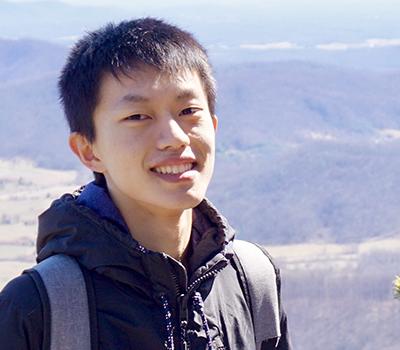
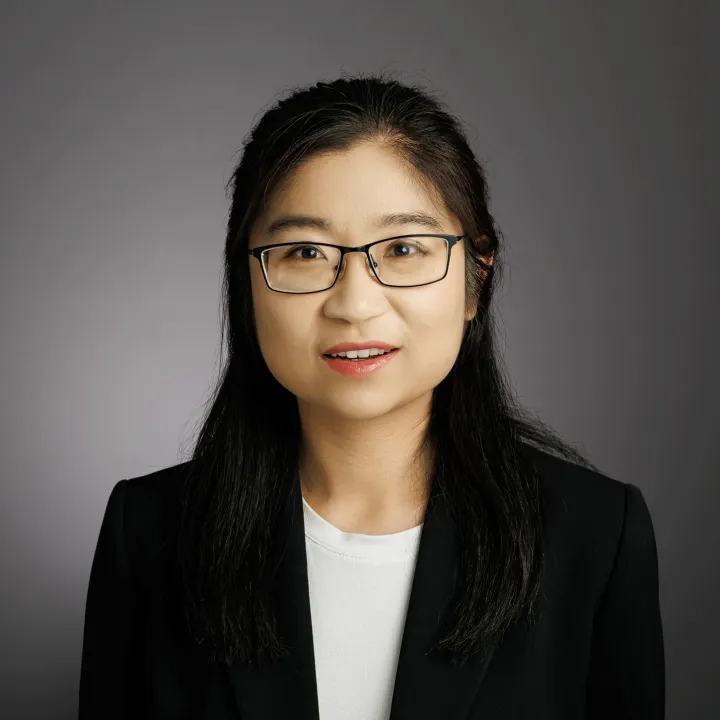
Huazheng Wang is an Assistant Professor in the School of Electrical Engineering and Computer Science at Oregon State University. His research focuses on reinforcement learning, information retrieval, and trustworthy AI. He received his Ph.D. from the University of Virginia (2021) and B.E. from the University of Science and Technology of China (2015). He holds awards including the 2025 EECS Fabulous Teacher Recognition and SIGIR 2019 Best Paper Award. His work addresses challenges in robust reinforcement learning, adversarial attacks on bandit systems, and applications in scientific discovery. Education: Ph.D., Computer Science, University of Virginia (2021) B.E., Computer Science and Technology, University of Science and Technology of China (2015) Research interests emphasize developing efficient algorithms for reinforcement learning, multi-armed bandits, and their applications in recommendation systems, protein optimization, and security. Notable contributions include provably efficient risk-aware reinforcement learning frameworks and adversarial attack analysis on bandit systems. Recent work includes NSF-funded research on neural bandits (IIS-2403401) and publications in top venues like ICML, NeurIPS, and AAAI. His lab explores embodied LLM agents for team cooperation and federated collaborative online monitoring frameworks.
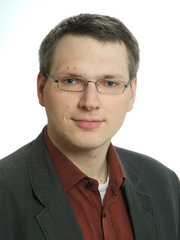
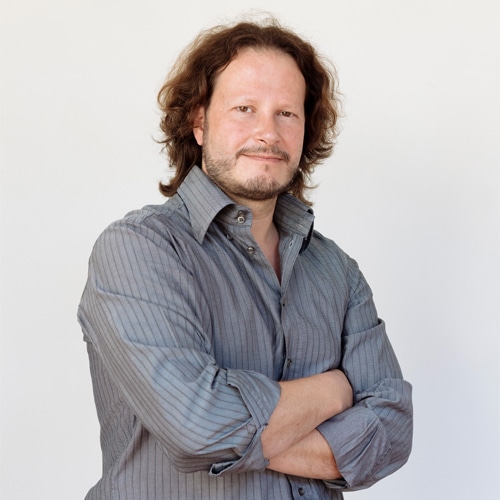
Björn Brandenburg is a researcher at the Max Planck Institute for Software Systems (MPI-SWS) in Kaiserslautern, Germany. His work focuses on real-time systems, scheduling algorithms, and operating system design, with a particular emphasis on predictable resource allocation and performance guarantees in multiprocessor and cyber-physical environments. His research interests include real-time response-time analysis (e.g., PROSA ), locking protocols for multiprocessor systems, side-channel mitigation in cloud environments, and the verification of real-time scheduling policies. He has contributed to foundational studies on deadline failure probabilities, self-suspending tasks, and predictable real-time Linux implementations. Scientific awards include recognition for outstanding papers on TimerShield (2017) Offline Equivalence (2017) . His work intersects with practical systems like LITMUSRT and ROS 2, aiming to bridge theoretical guarantees with real-world applications in safety-critical and distributed real-time systems.
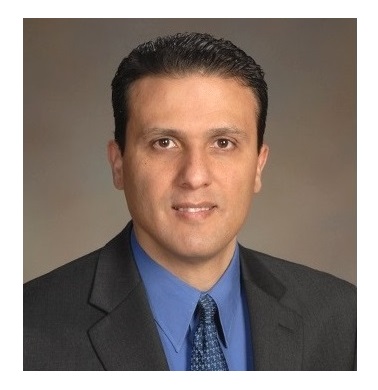
Haryadi S. Gunawi is a Professor in the Department of Computer Science at the University of Chicago where he leads the UCARE research group (UChicago systems research on Availability, Reliability, and Efficiency). His work focuses on improving the dependability of storage and cloud computing systems, with a particular emphasis on addressing performance stability, reliability, and scalability challenges in modern computing environments. Dr. Gunawi received his Ph.D. in Computer Science from the University of Wisconsin, Madison in 2009. Following his doctoral studies, he was a postdoctoral fellow at the University of California, Berkeley from 2010 to 2012 before joining the University of Chicago faculty. His research focuses on three main areas: (1) performance stability, where he builds storage and distributed systems robust to latency tails and "limping" hardware; (2) reliability and scalability, where he addresses concurrency and scalability bugs in cloud-scale distributed systems; and (3) the intersection of machine learning and systems, exploring how machine learning techniques can solve operating and storage system problems. His work often combines theoretical insights with practical system implementations that address real-world challenges in cloud and storage infrastructure. Dr. Gunawi's publication record shows a consistent focus on storage and cloud system reliability, with recent work increasingly incorporating machine learning techniques to address traditional systems challenges. His research spans the full stack from hardware interfaces to distributed system design, with a strong emphasis on practical solutions that can be deployed in production environments. His work often involves close collaboration with industry partners to ensure real-world relevance and impact. Dr. Gunawi has received numerous prestigious awards including the NSF CAREER award, NSF Computing Innovation Fellowship, Google Faculty Research Award, multiple NetApp Faculty Fellowships, and an Honorable Mention for the 2009 ACM Doctoral Dissertation Award. He has also received the Provost's Global Faculty Award and Facebook Faculty Research Award, highlighting the broad recognition of his contributions to the field. As an advisor, Dr. Gunawi has mentored several PhD students including Ruidan Li, Ray Andrew, Rani Ayu Putri, and William Nixon. His research has been supported by major grants from NSF, Google, Facebook, and NetApp, enabling his team to pursue ambitious research projects at the intersection of systems, storage, and machine learning. Dr. Gunawi leads the UCARE research group at UChicago, which focuses on improving the dependability of storage and cloud-scale distributed systems. He is also involved with the Chameleon cloud research infrastructure project and the broader Systems Group at UChicago, contributing to a vibrant research community focused on systems, programming languages, and software engineering.
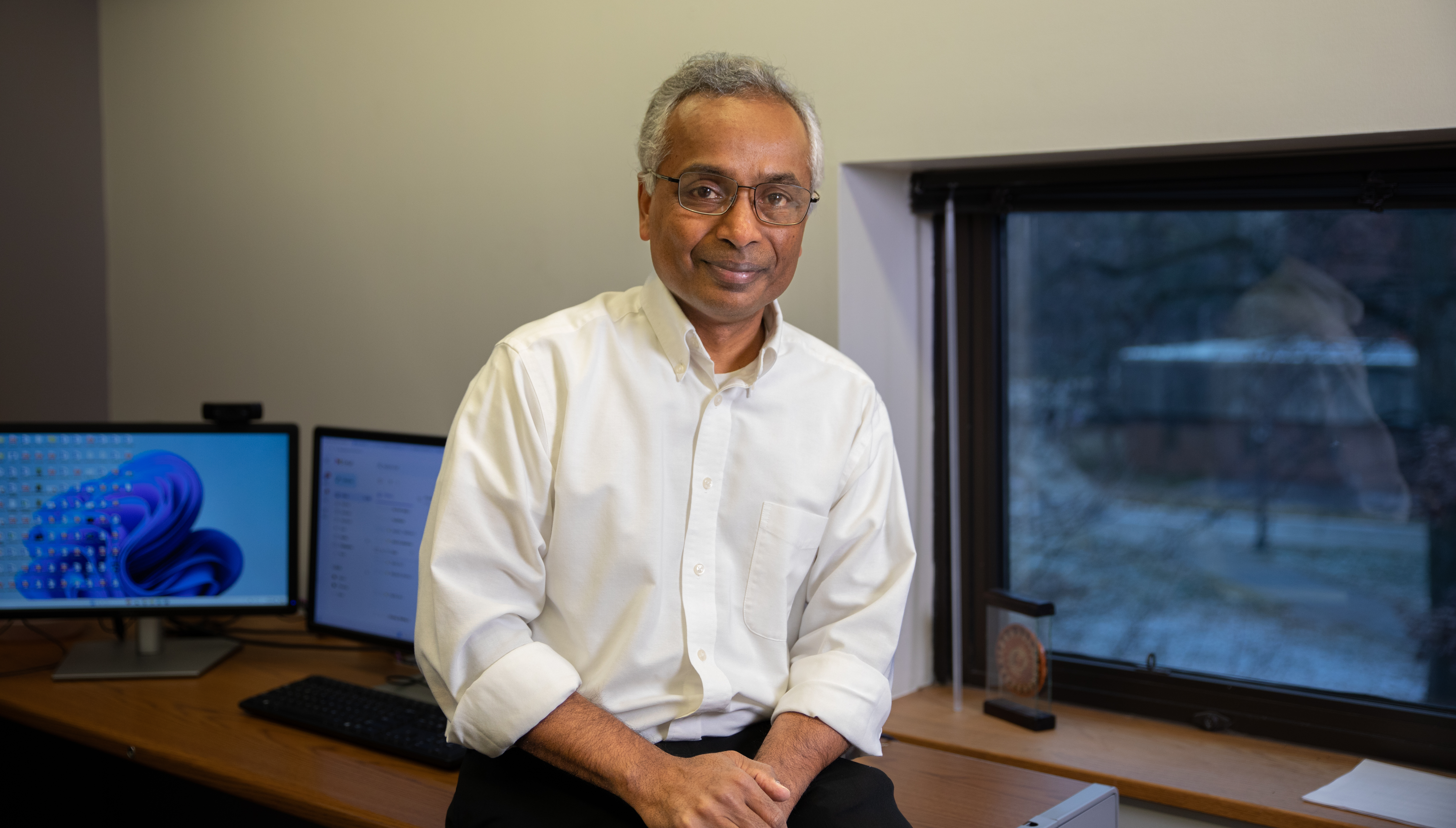
Mithuna S. Thottethodi is a Professor and Interim Associate Head of Teaching and Learning at the Elmore Family School of Electrical and Computer Engineering at Purdue University. He holds a B.Tech. from the Indian Institute of Technology, Kharagpur (1996), and a Ph.D. in Computer Science from Duke University (2002). His research focuses on computer architecture, interconnection networks, distributed systems, and security, with notable work on sparse tensor accelerators and processing-near-memory architectures. His work has been funded by the NSF, AT&T, and SK Hynix. Research interests include security, interconnection networks in multicores, storage performance optimization, and memory hierarchies. Notable contributions span hardware accelerators for machine learning, secure speculative execution, and datacenter network congestion control. He has advised over 20 graduate students, many of whom have joined top tech firms like Google, Microsoft, and Intel. Awards: NSF CAREER Award (2007) Wilfred Hesselberth Teaching Excellence Award (2021) Multiple Eta Kappa Nu Outstanding Professor Awards Teaching includes undergraduate courses like EE 437 (Computer Design) and graduate courses such as ECE 666 (Advanced Computer Architecture). He also advises VIP and EPICS student teams.
Ananth Grama is the Samuel D. Conte Distinguished Professor of Computer Science and Associate Director of the Center for Science of Information at Purdue University. He holds a faculty position in the Department of Computer Science, College of Science. His research focuses on parallel computing, distributed systems, machine learning, and their applications in complex systems such as materials modeling and clinical analytics. He teaches advanced courses like CS525 (Parallel Computing) and CS314 (Numerical Methods). Research interests span parallel algorithms, fault-tolerant learning, quantum machine learning, and data-driven healthcare analytics. Recent work addresses fundamental limits of generative models, online learning under noisy conditions, and clinical outcome predictions. His projects include DOE-funded research on critical element recovery and NIH grants for hearing assessment technologies. Notable contributions include over 50 peer-reviewed publications since 2022, with recent papers appearing at ICLR, NeurIPS, and ICML. Current postdocs include Changlong Wu (collaborating with Wojciech Szpankowski) and Luopin Wang (with Nadia Atallah). He advises seven graduate students and oversees multidisciplinary research teams.
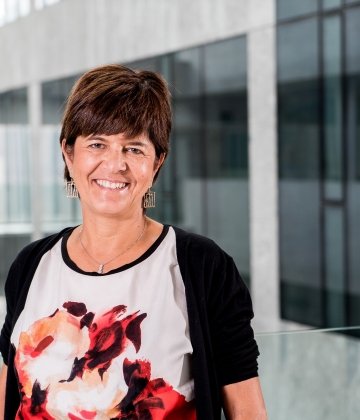
Dr. Sonia Petrone is a Full Professor of Statistics at Bocconi University's Department of Decision Sciences. She earned her PhD in Statistics from Bocconi University and has held academic positions at the University of Pavia and University of Insubria before joining Bocconi. Her extensive international experience includes research visits across North America, Latin America, Europe, India, and Russia. Her research specializes in Bayesian statistics, with contributions to foundational theory, predictive modeling, Bayesian nonparametrics, and stochastic processes. She currently directs the Bocconi Summer School in Advanced Statistics and Probability and previously led the PhD program in Statistics (2011-2018). Her research portfolio demonstrates consistent focus on Bayesian nonparametric methods, predictive modeling, and applications to complex data structures. Recent work explores urn processes, time series analysis, and network modeling using innovative Bayesian approaches. Awards & Honors: IMS Medallion Lecture Award (2018) ISBA Foundational Lecture Award (2016) Fellow of International Society for Bayesian Analysis Fellow of Institute of Mathematical Statistics Fellow of European Laboratory for Intelligent Systems Fellow of Bocconi Institute of Data Science She has held editorial leadership positions as Editor of Statistical Science (2020-2022) and Bayesian Analysis (2010-2014), and served as President of the International Society for Bayesian Analysis (2014).
Ivan Flechais is an Associate Professor in Software Engineering at the Department of Computer Science, University of Oxford. His work focuses on the intersection of security engineering and human factors, developing approaches that balance technical security requirements with usability considerations in real-world contexts. Dr. Flechais earned his BSc and PhD in Computer Science from University College London. He holds dual French-British nationality and was educated in France until university level. His academic journey reflects an international perspective that informs his research on security systems across different cultural contexts. Flechais's research centers on developing methods for creating secure systems that account for real-world usability constraints. His work addresses the complex challenge where security competes with other system requirements like functionality, usability, and efficiency. He is particularly known for developing the AEGIS design methodology, which provides a cost-effective approach to security design that incorporates usability considerations. His current research explores socio-organizational factors in secure systems design, with recent work focusing on smart home security and privacy, remote work security challenges, and the intersection of security culture with technical implementation. His publication record shows a strong trajectory in usable security research, with recent work (2020-2024) increasingly focused on smart home environments, privacy in domestic settings, and the security challenges of remote work. His research demonstrates consistent attention to the human element in security systems, examining how users interact with security mechanisms in real-world contexts across different cultural settings and technological domains. Smart home security and privacy challenges User experience of security mechanisms Socio-organizational aspects of security implementation Cross-cultural security and privacy considerations Security for distributed and remote work environments Dr. Flechais has supervised numerous PhD and Master's students, including Sarah Alromaih, Varad Vishwarupe, George Chalhoub, and Martin J. Kraemer, among others. His supervision work often focuses on the practical application of security principles in emerging technologies, with students frequently examining security challenges in smart homes, IoT devices, and remote work contexts. His research has been supported through various projects including webinos and Sponstaneous Security, which address security challenges in distributed mobile applications and ad-hoc network environments.
Professor Grahame Holmes is an Honorary Professor in the School of Engineering at RMIT University, Australia. His expertise spans electrical energy conversion, smart energy systems, renewable energy integration, power electronics, and grid infrastructure. He focuses on advancing technologies for sustainable energy storage, grid stability, and high-efficiency power conversion. Research Interests : Electrical and Electronic Engineering, Communications Technologies, Power Electronics, Renewable Energy Systems, and Grid Integration Solutions. His work emphasizes practical applications such as hydrogen energy storage systems, grid-interactive inverters, and modular multilevel converters. Recent Contributions : Prof. Holmes has published extensively on topics like advanced PWM techniques, resonant current controllers, and DC transformer designs. His research bridges theoretical advancements with real-world implementations, addressing challenges in smart grid stability and high-frequency power conversion. Advising & Grants : Supervised projects include 'Hydrogen Energy Storage System for Nanogrid' (2015) and 'Synchronised Control of Grid-Interactive Inverters' (2015). While specific grant details are not listed, his work aligns with major themes in sustainable energy research. Labs & Collaborations : Engages in collaborative research through RMIT's facilities, focusing on hardware-software co-simulation frameworks and FPGA-based real-time systems.
Kyle C. Hale is an Associate Professor at Oregon State University's School of Electrical Engineering and Computer Science (College of Engineering). He holds a Ph.D. and M.S. from Northwestern University (2016, 2013) and a B.S. in Computer Science from UT Austin (2010). Prior to joining Oregon State in 2024, he served as an Associate Professor at Illinois Tech in Chicago. His research spans operating systems, high-performance computing (HPC), virtualization, computer architecture, and system security. Current work focuses on specialized system software stacks for emerging computing paradigms like memory disaggregation and parallelism optimization. He leads the HExSA Lab and collaborates with the HiPCastor group. Scientific Awards: NSF CAREER Award (2023-2028) Illinois Tech College of Computing Excellence in Research (2023) Illinois Tech College of Computing Excellence in Teaching (2021) Illinois Tech Department of Computer Science Teacher of the Year (2020) EuroSys '22 Best Artifact Award Recent Research Trends: His publications emphasize compiler techniques for memory-disaggregated systems, optimizing parallel runtimes through hardware-software integration, virtualization at fine granularities, and accelerating machine learning workloads via system-level innovations. Keywords include HPC, virtualization, parallelism, and secure execution contexts. Teaching: Courses taught include Computer Architecture (CS/ECE 472), System Security (CSP 544), Operating Systems (CS 450), and advanced topics in serverless/edge computing. He actively recruits PhD students to the HExSA Lab.
Quanquan Liu is an Assistant Professor of Computer Science at Yale University. His research focuses on algorithms for large data, dynamic and distributed graph algorithms, parallel computing, differential privacy, and Byzantine-resilient systems. He holds a PhD in Computer Science from MIT's Theory Group and has held postdoctoral positions at Northwestern University and MIT. Education: PhD in Computer Science, MIT (Advisors: Erik Demaine and Julian Shun) MEng in Computer Science, MIT B.S. in Computer Science and Math, MIT (Advisor: David Karger) Research Interests: Theory and practice of algorithms for large-scale data, dynamic/distributed graph algorithms, parallel and high-performance computing, differential privacy, and Byzantine-resilient algorithms. Recent Highlights: His work includes practical differentially private graph algorithms, efficient parallel algorithms for graph problems, and fair course allocation mechanisms. Notably, he received the Best Paper Award at SPAA 2022 for parallel dynamic graph algorithms. Service: PC member for PPoPP, ESA, SPAA, and ALENEX Coach for USA Computing Olympiad (USACO) and Northwestern's ICPC team Current Group: Advising PhD students Felix Zhou and Pranay Mundra, and Master's student Jinghua Sun.
Diego Garlaschelli is Professor of Theoretical Physics at the IMT School for Advanced Studies in Lucca, Italy, and at the Lorentz Institute for Theoretical Physics, University of Leiden, the Netherlands. He leads the NETWORKS research unit at IMT and the Econophysics and Network Theory group at Leiden. He is also an external faculty member at the Complexity Science Hub in Vienna and an associate member of the Enrico Fermi Research Center in Rome. His affiliations reflect a strong international and interdisciplinary research profile in network science and statistical physics. He holds a master's degree in theoretical physics from the University of Rome III (2001) and a PhD in Physics from the University of Siena (2005). His postdoctoral experience includes positions at the Australian National University, the University of Siena, the University of Oxford, and the Sant’Anna School of Advanced Studies in Pisa. Garlaschelli’s research spans network theory, statistical physics, econophysics, financial complexity, ecological networks, and social dynamics. He applies maximum entropy models, information theory, and random graph frameworks to understand complex real-world systems. His teaching includes courses in Network Theory, Econophysics, and Complex Systems at both PhD and MSc levels. The 15 most recent publications highlight a consistent focus on network reconstruction, ensemble inequivalence, renormalization, and applications to financial and socio-economic systems. Key themes include statistical inference in networks, resilience, and multi-scale modeling, with publications in top journals such as Nature Reviews Physics , Physics Reports , Science , and Physical Review Letters . His scientific awards include the Best Paper Award at the 6th International Workshop on Self-Organizing Systems (2012) and the Jan Kijne Prize (2013) as supervisor. He has secured multiple grants from NWO, the European Union, and the Royal Society, and has supervised over 40 students at PhD, master’s, and bachelor’s levels. He also mentors postdocs and visiting scientists. Garlaschelli leads and organizes major international workshops and schools in network science and complex systems. He serves on scientific committees and is an active referee for journals like Nature and Physical Review Letters , as well as funding agencies including the ERC and NWO.
Professor Cedo Maksimovic is a leading academic in the Department of Civil and Environmental Engineering at Imperial College London, Faculty of Engineering. He is a Principal Research Fellow and heads the Urban Water Research Group (UWRG), with affiliations to the Environmental and Water Resource Engineering group, Grantham Institute, Space Lab, and Urban Systems Lab. His research focuses on urban water systems , including storm drainage, urban flooding, water supply, and the interaction between urban infrastructure and the environment. He has pioneered work in applied fluid mechanics , smart water infrastructure , and flood risk management , with innovations such as the AOFD method for urban surface flood modelling and intelligent sensor networks recognized by the ICE Telford Gold Medal. His recent research, as reflected in publications, spans urban pluvial flooding , leakage detection , integrated urban water management , and blue-green infrastructure . These works emphasize computational modelling, real-time monitoring, and climate resilience in urban environments. UNESCO/IAHR Lecturer of the Year 2001 ICE Telford Gold Medal (WINES project team) Prof. Maksimovic has led major projects funded by EPSRC, EU (Climate-KIC, Interreg), UNESCO, and ERANET_CRUE. He advises postgraduate students and has created international educational initiatives like the EDUCATE programme. He also serves as Editor-in-Chief of the Urban Water Book Series and co-founded the Urban Water journal. He leads the UNESCO-endorsed IRTCUD/CUW network with centres in Banjaluka, Belgrade, Cairo, Kuala Lumpur, London, Porto Alegre, Tehran, and Trondheim, promoting global collaboration in urban water research and education.
Brandon Lucia is a Professor in the Department of Electrical and Computer Engineering at Carnegie Mellon University's College of Engineering. He holds the Kavčić-Moura Professorship and leads the Abstract research group. As CEO and co-founder of Efficient Computer Corp., he bridges academic research with commercial applications in energy-efficient computing. Dr. Lucia received his Ph.D. in Computer Science and Engineering from the University of Washington in 2013, following an MS from the same institution in 2010 and a BS in Computer Science from Tufts University in 2007. His research focuses on the intersection of computer architecture, computer systems, and programming languages, particularly in energy-constrained environments. His primary research interests include intermittent computing, energy harvesting computers, orbital edge computing, and parallel computing systems. Lucia's work addresses fundamental challenges in creating programmable, reliable computing devices that operate without batteries by harvesting energy from their environments, with applications in sensing, medical implants, and space systems. He also investigates software systems and architectures for making parallel computing correct, reliable, and efficient in the post-Moore's Law era. Lucia's publication record shows a clear trajectory toward orbital edge computing and nanosatellite systems, with recent work focusing on computational constellations, visual navigation for satellites, and energy-efficient processing in space. His research spans both theoretical foundations of intermittent computing and practical implementations in hardware and software. 2021 Sloan Research Fellowship 2018 NSF CAREER Award 2018 ASPLOS Best Paper Award IEEE MICRO Top Picks in Computer Architecture (2009, 2010, 2016) 2015 OOPSLA Best Paper Award 2019 IEEE TCCA Young Computer Architect Award 2022 Engineering Faculty Award As an advisor, Lucia has mentored numerous graduate students including Brad Denby, Zhuo Cheng, and Kyle McCleary, many of whom have become co-authors on his significant publications. His lab developed the world's first batteryless PocketQube nanosatellite (Tartan-Artibeus-1), which was deployed to low-Earth orbit aboard the SpaceX Transporter-3 Rocket. Lucia's research has received funding from sources including NSF, DARPA, Google, and VMware, supporting both fundamental research and practical implementations of energy-harvesting computing systems.
Sotirios Liaskos is an Associate Professor in the School of Information Technology at the Faculty of Science, York University. He is a leading researcher in requirements engineering and conceptual modeling, with a focus on goal models, empirical evaluation, and model-driven engineering. Research Interests: Requirements Engineering Goal and Conceptual Modeling Empirical Software Engineering Model-Driven Design and Automation Uncertainty and Decision-Theoretic Reasoning in Models Applications in Blockchain and Reinforcement Learning His recent work emphasizes the empirical validation of modeling constructs, the integration of decision theory into goal models, and the automated generation of secure workflows and AI training environments. He has led and co-authored numerous experimental studies on model comprehensibility and semantic quality. Publication Trends: His publications consistently appear in top venues like ER, RE, and iStar. The last five years show a strong trend toward empirical evaluation of modeling languages, decision-theoretic goal models, and applications of goal modeling in emerging domains such as blockchain and reinforcement learning simulation design. Scientific Contributions: Developed frameworks for empirical evaluation of modeling language ontologies (Peira framework). Advanced decision-theoretic approaches to goal modeling under uncertainty. Pioneered model-driven methods for generating blockchain simulators and reinforcement learning environments. Conducted foundational empirical studies on the comprehensibility of contribution links and visualization alternatives in goal models. Advising and Collaboration: He has advised several researchers including Ibrahim Jaouhar, Wisal Tambosi, Mehrnaz Zhian, and Saba Zarbaf. He maintains a highly collaborative research profile with frequent co-authorship with John Mylopoulos, Shakil M. Khan, and other international researchers. He has served as a co-editor for multiple iStar workshop proceedings, indicating leadership in the goal-oriented requirements engineering community. Labs and Teams: While no specific lab name is mentioned, his work is closely associated with research groups focused on requirements engineering and conceptual modeling, likely within York University’s software engineering research cluster. His collaborations span institutions in Canada, Europe, and beyond.
Dr. Wahab Hamou-Lhadj is a Professor and Chair at the Department of Electrical and Computer Engineering , Concordia University, and an Affiliate Researcher at NASA JPL, Caltech . He leads research in Artificial Intelligence for IT Operations (AIOps) , Software Observability , and Model-Driven Engineering , focusing on improving the reliability of digital systems in AI-driven environments.