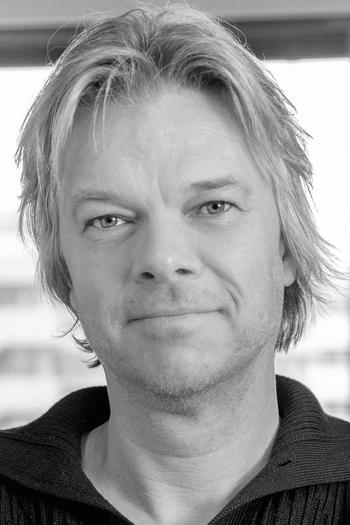
Gerhard WelleinView profile
Professor
Gerhard Wellein is a Professor for High Performance Computing at the Department of Computer Science of Friedrich-Alexander-Universität Erlangen-Nürnberg (FAU). He is the head of NHR@FAU (Erlangen National Center for High Performance Computing) and a member of the board of directors of the German NHR-Alliance. Since 2024, he has also served as a Visiting Professor for HPC at the Delft Institute of Applied Mathematics, Delft University of Technology. He holds a PhD in theoretical physics from the University of Bayreuth and has over two decades of experience in HPC education and research. Research Interests: His research focuses on performance modeling and engineering, architecture-specific code optimization, novel parallelization techniques, and the development of hardware-efficient building blocks for sparse linear algebra and stencil solvers. His work bridges computer science, applied mathematics, and computational physics, aiming to maximize efficiency on current and future HPC architectures, including exascale systems. Publication Trends: His recent publications emphasize analytical performance modeling (e.g., Roofline, oscillator models), energy efficiency, GPU optimization, and scalable linear algebra. They reflect a strong focus on both theoretical modeling and practical implementation, with applications in CFD, quantum physics, and molecular dynamics. Scientific Awards: 2011 Informatics Europe Curriculum Best Practices Award (shared with Jan Treibig and Georg Hager) for outstanding teaching contributions in HPC. Grants and Advising: He has led numerous third-party funded projects from the EU, BMBF, and DFG, including EoCoE-III, ESSEX, EXASTEEL, and ProPE. These projects focus on exascale software, performance engineering, fault tolerance, and multiscale simulation. He has mentored multiple researchers and students, contributing to the development of tools such as LIKWID, ClusterCockpit, and GEOPM. Labs and Teams: He leads the HPC research group at FAU and is deeply involved in national and international HPC initiatives. His team collaborates extensively on open-source HPC software and performance tools, fostering a strong community-driven approach to performance engineering.