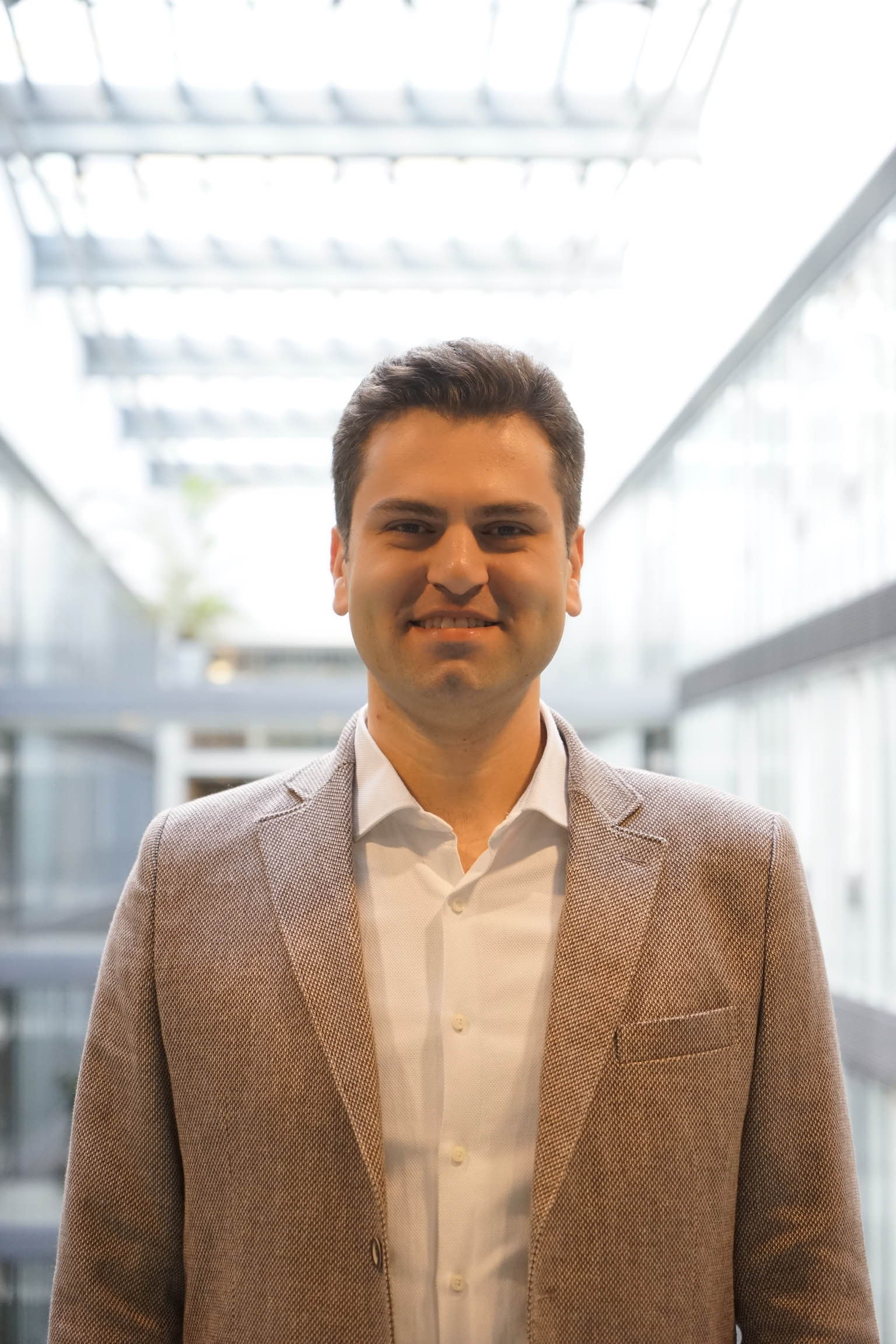
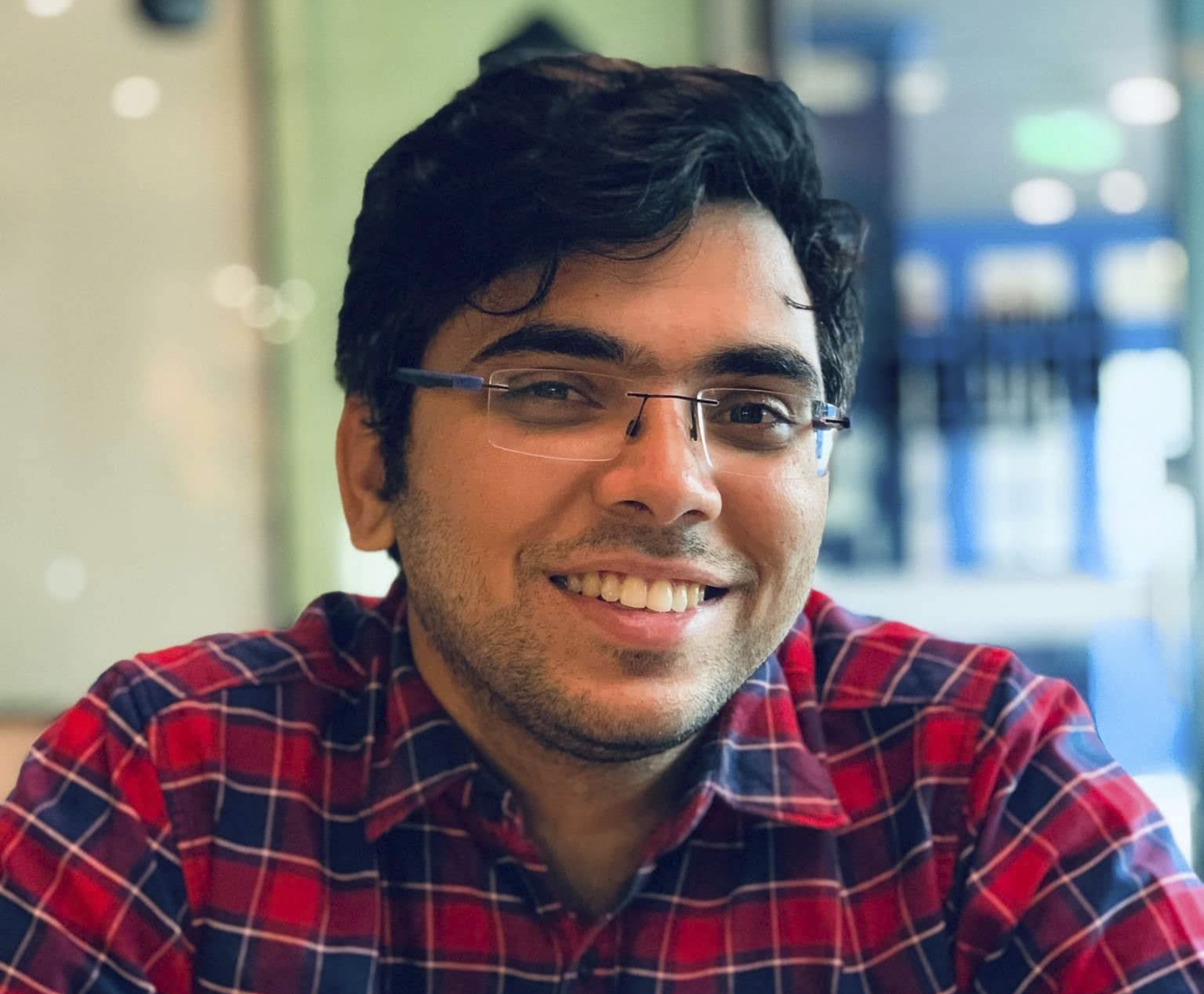
Amin Timany is an Associate Professor in the Department of Computer Science at Aarhus University, Denmark, where he conducts research in programming languages, type theory, and formal verification. He is a member of the Logic and Semantics Group and actively contributes to the development of logical relations, separation logic, and proof assistants such as Coq and Iris. He holds a PhD in Computer Science from KU Leuven (2018) and was previously a postdoctoral fellow with FWO at KU Leuven. His research focuses on mechanized semantics, program equivalence, concurrency, and distributed systems verification. He is particularly known for solving the long-standing problem of proving encapsulation in the ST monad using logical relations. His recent publications span top-tier venues including POPL, ICFP, PLDI, and CPP, with key contributions in guarded interaction trees, higher-order separation logic (e.g., Trillium), and modular verification of CRDTs and virtual machines. His work emphasizes formalization and mechanization in Coq, often within the Iris framework. He has served on numerous program committees and has chaired conferences such as CPP and sessions at CoqPL. Notably, his paper 'Modular Denotational Semantics for Effects with Guarded Interaction Trees' received a Distinguished Paper Award at POPL 2024. PhD, KU Leuven, 2018 MSc, TU Dresden, 2013 He teaches courses such as Compilation, Program Logics, and Advanced Topics in Programming Language Theory. He collaborates extensively with researchers like Lars Birkedal, Robbert Krebbers, and Derek Dreyer, and mentors students in formal methods and PL theory.
Mitra Nasri is an Assistant Professor at the Eindhoven University of Technology, affiliated with the College of Engineering's Department of Electrical Engineering. She contributes to the High Tech Systems Center and EAISI Foundational, focusing on interconnected resource-aware intelligent systems. Research Focus: Real-Time Systems, Scheduling Algorithms, Embedded Systems, Fault-Tolerant Computing, and Cyber-Physical Systems. Key Contributions: Development of scheduling frameworks for multi-rate task chains, response-time analysis techniques, and containerization strategies for real-time distributed applications. Her recent work includes advancements in weakly-hard timing constraints, parallel global scheduling, and cloud integration for embedded systems. She actively collaborates on projects like SAM-FMS and COMP4DRONES. Scientific Awards: Best Paper Award - RTAS 2022 Best Paper Award - RTNS 2016 Outstanding Paper Awards at RTAS 2017, 2022 and RTSS 2020 She teaches courses in Real-Time Systems, Operating Systems, and Automotive Software, and participates in organizing conferences like Embedded Systems Week and CompSys.
Dr. Sina Rafati Niya serves as a Senior Researcher at the Blockchain and Distributed Ledger Technologies (BDLT) group, University of Zurich (UZH), where he specializes in blockchain data governance and analytics for PoS-based systems including Cardano, Tezos, Casper, and Polkadot since 2022. His research spans decentralized applications in DeFi, supply chain tracking, identity management, and IoT domains, building on continuous work since 2017. He completed his Ph.D. at UZH in 2021 with the dissertation "Efficient Designs for Practical Blockchain-IoT Integration," establishing foundational work for his current research trajectory. Rafati Niya's research centers on Blockchain Data Engineering and Analysis, with specific expertise in transaction untangling (Cardano shared send transactions), address clustering heuristics, privacy-preserving micro-payment systems for resource-constrained IoT devices, and GDPR-compliant blockchain adaptations. His methodology emphasizes practical implementation challenges in scalability and real-world deployment across financial, supply chain, and industrial IoT contexts. Publication analysis reveals concentrated advancements in Cardano analytics (60% of recent work), including novel transaction analysis frameworks and network structure investigations in Polkadot, alongside persistent exploration of blockchain-IoT integration patterns. This body of work demonstrates evolving sophistication from protocol design (2017-2020) toward advanced analytics and privacy solutions (2021-2025). No scientific awards were documented in the source material. While specific advisees and grants remain unlisted, his extensive co-authorship pattern (27+ publications 2017-2025) indicates active mentorship within the BDLT group and collaboration with researchers including C. J. Tessone, Burkhard Stiller, and M. Chegenizadeh. Current projects focus on offline micro-payment verification and Cardano transaction analytics. As a core contributor to UZH's BDLT research group, he drives initiatives in blockchain analytics infrastructure and practical protocol development, maintaining strong industry-academia connections through publications in IEEE ICBC, Springer, and Elsevier venues.
Patanjali Sristi is an Assistant Professor at Augusta University's School of Computer and Cyber Sciences, specifically within the Department of Cybersecurity Engineering. Located at 100 Grace Hopper Lane in Augusta, Georgia, Dr. Sristi joined the university in January 2025 after previously working as a Postdoctoral Researcher at the University of Florida with Dr. Swarup Bhunia. Their academic journey began with a B.Tech in Electrical and Electronics Engineering from Pondicherry University in 2011, followed by both MS and Ph.D. in Computer Engineering from the Indian Institute of Technology (IIT Madras). Dr. Sristi's educational background demonstrates a strong foundation in electrical engineering and computer science, with advanced specialization in hardware security. Their Ph.D. research at IIT Madras was supervised by Dr. Kamakoti Veezhinathan, focusing on critical aspects of hardware security that would form the basis of their future research career. Dr. Sristi's research program centers on addressing one fundamental question: "How can we design, measure and build efficient and affordable security assurances for a given hardware design in the context of an untrusted supply chain while respecting the design constraints at each level of abstraction?" This research vision spans three interconnected domains: AI for System Design: Developing data models and AI techniques for next-generation hardware systems AI for Hardware Security: Creating AI models for vulnerability detection, countermeasure evaluation, and mitigation of supply chain threats Cybersecurity for AI: Establishing metrics and algorithms for secure development, deployment, and operation of AI systems Dr. Sristi's scholarly output reveals a consistent focus on hardware security challenges within the modern distributed electronics supply chain. Their work demonstrates a progression from foundational research on hardware trojans and side-channel attacks toward comprehensive frameworks addressing the emerging "zero trust" paradigm in hardware security. A notable trend is the integration of AI/ML techniques with traditional hardware security approaches, reflecting the evolving nature of security threats and countermeasures. Their publications span prestigious venues including IEEE Transactions on VLSI Systems, IEEE Transactions on Computers, and various IEEE conferences, indicating strong recognition within the hardware security community. While specific awards aren't detailed in the available information, Dr. Sristi's research impact is evident through multiple US patents (including US Patent 11,899,827 and US Patent App. 17/392,376) and invitations to deliver talks at prominent organizations including Sony Finishing School, Northrop Grumman, and IEEE events. Their work on Netflix Privacy Analysis was featured in Wired, demonstrating real-world relevance and impact. Dr. Sristi actively engages with students through courses including CSCI 8940 (Dissertation Research), CSCI 8720 (Problems in Computer & Cyber), and CSCI 7900 (Research Colloquium). Their research program appears well-supported through collaborations with major institutions and industry partners, as evidenced by workshops conducted for the Indian Army in conjunction with Pravartak and IIT Madras. These partnerships suggest substantial research funding and collaborative opportunities that enhance the educational experience for students. Though specific lab information isn't provided in the available text, Dr. Sristi's research scope suggests involvement with hardware security laboratories equipped for VLSI design, testing, and security evaluation. Their work on IoT security, hardware trojans, and supply chain security would require facilities for physical device testing, side-channel analysis, and hardware emulation. The focus on "zero trust" implementation for hardware security indicates a research environment that bridges theoretical security models with practical implementation challenges.
Anrin Chakraborti is an Assistant Professor in the Department of Computer Science at the University of Illinois at Chicago, affiliated with the College of Engineering. His work bridges cryptography, systems, and theory to build privacy-preserving technologies for real-world challenges. Ph.D. in Computer Science from Stony Brook University (2020) Postdoctoral Researcher at Duke University B.Tech in Computer Science from Jadavpur University, India Chakraborti’s research focuses on three core areas: Secure Cloud Computing: Developing cryptographic mechanisms to protect data confidentiality and integrity in cloud environments against side-channels and malicious providers. Privacy in Collaborative Systems: Designing tools for private information sharing in cyber-physical systems and collaborative learning pipelines, including autonomous vehicle communication. Deniable Communication & Storage: Creating storage and messaging systems resistant to coercion, backdoors, and key compromise through plausibly deniable encryption. His publications demonstrate a consistent focus on privacy-enhancing technologies, oblivious protocols, and secure storage solutions. Notable contributions include Wink (deniable secure messaging), INVISILINE (plausibly-deniable storage), and ORAM-based protocols for cloud data privacy. He teaches graduate courses like CS 588 (Security & Privacy in Networked Systems) and CS 594 (Applied Cryptography), emphasizing hands-on implementation of secure systems.
Michael Raskin is a Lecturer (maître de conferences) at LaBRI, University of Bordeaux, where he conducts research in theoretical computer science with a focus on distributed systems and formal methods. His work bridges theoretical foundations with practical implementations, particularly in population protocols, temporal graphs, and Petri nets. His research interests span Theoretical Computer Science , Distributed Systems , Algorithms , and Formal Methods , with specific expertise in population protocols, temporal graph analysis, vector addition systems, and verification techniques for parameterized systems. His publications demonstrate a consistent focus on computational complexity, state complexity, and threshold phenomena in distributed models. Recent publication trends show a strong emphasis on temporal graph theory (with multiple papers on random temporal graphs and giant components), population protocol analysis (including modular protocols and leaderless rendez-vous systems), and verification techniques for parameterized systems. His work often combines mathematical rigor with practical implementation insights. Raskin has developed significant software projects including: Agnostic Lizard - A portable code walker for Common Lisp QueryFS - A filesystem defined through compiled queries His technical contributions span both theoretical advances and practical systems implementation, with a recurring theme of applying programming language techniques to systems problems. His work on Common Lisp tools demonstrates a commitment to practical language implementation alongside theoretical research.
Dr. Neil Thurman is a Professor at Ludwig Maximilian University of Munich and a Senior Honorary Research Fellow at City, University of London. His career spans over two decades in digital journalism, focusing on news production and consumption in the internet era. He has held leadership roles in academic programs like the Erasmus Mundus Master's in Journalism and directed research initiatives on media automation, personalization, and audience behavior. Neil's research explores the impact of AI and social media on journalism, with a focus on automated newsgathering, content personalization, and audience analytics. His work has been honored with four 'Best Paper' awards at the International Symposium on Online Journalism (2006–2009). He has published extensively on live blogging, computational journalism, and ethical challenges in digital media. His recent publications highlight trends in news automation and AI ethics audience perception of algorithmic content streaming platform influence on media choices cross-border media consumption regulatory challenges in digital spaces journalistic principles in multiplatform environments Scientific Awards : Top Paper, International Symposium on Online Journalism (2006–2009) Staff Research Prize, City University London (2007) Award for Distinguished Contributions to Teaching and Learning (2001) Silver Apple Award (1995) As an external examiner and academic leader, Neil has shaped journalism education globally. He mentors PhD candidates and collaborates with institutions like Google, Reuters Institute, and the BBC. His work bridges theory and practice, influencing both scholarly and industry standards.
Walter Prochaska is an Associate Professor affiliated with the Austrian Archaeological Institute at the Austrian Academy of Sciences. His research focuses on archaeometric analysis of white marble provenance in Roman contexts, utilizing geochemical and petrographic methods. Key projects include marble sourcing in Roman Thrace, Corinth, and Ephesos, with significant contributions to establishing provenance databases. Position: Associate Professor Institution: Austrian Academy of Sciences Institute: Austrian Archaeological Institute His work intersects Archaeometry and Material Science , examining marble trade networks across the Roman Empire . Recent publications highlight interdisciplinary approaches combining geoarchaeology with database development to trace marble origins. Scientific awards and honors are not explicitly mentioned in the available data. His expertise in marble provenance analysis has been applied to sites in Bulgaria, Turkey, Greece, and North Africa, revealing patterns of material circulation and workshop dynamics.
Eric Leclercq is a researcher at the University of Burgundy, affiliated with the LE2I Lab in Dijon, France. His work spans database systems, social network analysis, and biomedical data integration. He has contributed extensively to polystore systems, tensor decompositions, and category theory applications in data modeling. Fields of Interest : Database Systems, Data Mining, Social Network Analysis, Big Data Analytics, Semantic Web Leclercq's recent research focuses on formal frameworks for data lakes using category theory, multi-level tensor decomposition for social network stratification, and schema migration in multi-model systems. He has published in venues like CAiSE, IDEAS, and RCIS. His collaborations include Annabelle Gillet, Marinette Savonnet, and Nadine Cullot. Notable works include Lambda+ architecture for data processing, polarization analysis in social networks, and tools for tweet collection and biomedical data integration.
Carsten Schürmann is a Professor of Theoretical Computer Science at IT University of Copenhagen, where he serves as Center Manager for the Center for Information Security and Trust. His research spans information security, cryptographic voting protocols, identity management, and digital democracy, with significant contributions to security ceremonies and formal verification of protocols. Professor, Department of Computer Science Center Manager, Center for Information Security and Trust Principal Investigator for multiple DIREC projects through 2025 Active researcher with 64 publications and 20 projects listed His research focuses on the intersection of theoretical computer science and practical security challenges, particularly in voting systems and security ceremonies. Schürmann has developed formal methods for analyzing security protocols, with emphasis on human factors in security implementations and cryptographic voting systems. His work bridges logical frameworks with real-world security applications, addressing both technical and socio-technical aspects of security. Analysis of his recent publications reveals a strong emphasis on voting security, with multiple papers on risk-limiting audits, receipt-free voting, and election integrity. His work increasingly incorporates formal logical frameworks to verify security properties, while also addressing human factors in security ceremonies. The research spans theoretical foundations in linear logic to practical applications in election systems. As Principal Investigator, Schürmann leads several major projects funded by the Innovation Fund Denmark, including DIREC initiatives focused on Capacity Building, PhD School, Voting, and Entrepreneurship (2020-2025). He has also established working groups in Adversarial AI and Machine Learning. Organized workshops on Code Scanning (2014) and Verifying Security Protocols in Tamarin (2016) Active media commentator on security issues with 311 media appearances through 2025 Principal Investigator for 7 ongoing and 13 completed research projects Schürmann directs the Center for Information Security and Trust, which serves as a hub for interdisciplinary security research connecting theoretical computer science with practical security applications. His center focuses particularly on voting systems security and security ceremonies, bringing together researchers from multiple disciplines to address complex security challenges.
Dr James Cranch is a Teaching Fellow in the School of Mathematical and Physical Sciences at the University of Sheffield, holding critical roles as Chair of Schools Liaison, Disability Liaison Officer, Outreach Officer, and Tutor for Men Students. Based in G39c, Hicks Building, he actively contributes to academic administration and student support services. His research centers on homotopy theory and category theory, with significant interdisciplinary extensions into theoretical computer science. Key focus areas include concurrency theory, monoidal category applications, and homotopy type theory, demonstrating consistent exploration of algebraic structures in computational contexts since 2010. Recent publications (2020-2024) reveal a concentrated effort on convolution frameworks for concurrency, interacting monoidal systems in computing, and cohomological studies of partition algebras. These works, published in venues like Mathematical Structures in Computer Science, highlight his bridging of abstract mathematics with practical computing challenges through collaborations with Struth, Doherty, and others.
James R. Wilcox is an Assistant Professor of Computer Science at the University of Washington , where he teaches courses like Introduction to Programming , Foundations of Computing , and Operating Systems . His research focuses on programming languages , formal methods , and distributed systems verification . PhD, University of Washington BS, Williams College (2013) Wilcox's research bridges software engineering and formal verification , with applications to distributed systems, concurrent programming, and tools like mypyvy for verification. He has published extensively in top venues such as POPL , PLDI , and CAV , emphasizing compositional techniques and proof assistants like Coq. He has received two Distinguished Paper Awards (PLDI 2015, PLDI 2020) and contributes to frameworks like Verdi for verifying distributed systems. Outside academia, he is a baritone in Seattle's choral ensembles and an avid long-distance cyclist.
Amir Kafshdar Goharshady is an Associate Professor of Computer Science at the University of Oxford and a Tutorial Fellow at St Catherine's College. His research focuses on theoretical computer science, including formal program verification, parametrised algorithms, compiler optimisation, and blockchain technology. He leads the ALPACAS research group, which explores algorithms, logic, program analysis, cryptocurrencies, and smart contracts. Education: PhD in Theoretical Computer Science from IST Austria (supervised by Prof. Krishnendu Chatterjee), MSc in Computer Science (Systems) from Georgia Tech, and undergraduate studies in Maths and Computing at the Universities of London and Yazd. Prior to Oxford, he was an Assistant Professor at HKUST and maintains a visiting role at IIT Bombay. Research Interests: Formal methods for program verification Algorithmic efficiency in compiler optimisation Decentralized systems and blockchain applications Game-theoretic approaches to secure protocols Advising and Grants: Supervises over 20 PhD and Master’s students, with a rigorous selection process emphasizing problem-solving skills. Leads an international research group with multiple grants and collaborations. Former roles include organizing high school Olympiads and founding the Sundar STEM School in Pakistan. Labs/Teams: ALPACAS group, known for its work on smart contract optimization, blockchain security, and parametrised algorithm design. Regularly hosts visiting researchers such as Petr Novotný and Thomas Henzinger.
Jun Yan is a Professor at the University of Wollongong's School of Computing and Information Technology within the Faculty of Engineering and Information Sciences. His roles include academic leadership and research supervision, with active involvement in committees like the Student Academic Experience Sub-Committee and Quality Assurance Review Group. Current research focuses on service-oriented computing, workflow technology, adaptive process management, and AI-driven systems. His work intersects with IoT, UAV systems, federated learning, and multi-agent reinforcement learning. Research interests span service-oriented software engineering, decentralized workflow management, and cybersecurity challenges in autonomous systems. Notable projects include an ARC-funded initiative on robust defenses against adversarial ML for UAV systems (2025–2027). He supervises Masters/PhD projects on topics like diffusion model-based MRI, graph prompt learning, and industrial defect detection. His publications from 2023–2025 emphasize scalable multi-agent systems, federated learning with non-IID data, and UAV applications in intelligent transportation. Key areas of contribution include trust models for e-commerce, privacy-preserving cloud computing, and fault-tolerant service architectures.
Florentin Rochet is an Assistant Professor at the University of Namur's Faculty of Computer Science. His research focuses on anonymous communication , network security , and encrypted transport protocols , with a particular emphasis on improving privacy-enhancing technologies and protocol design. He holds a PhD in Applied Cryptography and has contributed to projects like TCPLS (TCP/TLS integration) and CLAPS (Tor path selection). Key academic milestones include joining UNamur in 2022 as an Assistant Professor, completing a postdoc at the University of Edinburgh (2021), and serving on program committees for Usenix Security, ACM CCS, and PoPETs. He has received the Usenix Security Noteworthy Reviewer Award (2023) and the 2020 Alan Berman Research Publication Award. His research spans flexible anonymous networks , secure transport protocols , and authentication technologies , with notable work on improving Tor's resilience against attacks through location-aware path selection and enhancing TLS/TCP integration for modern networks. He also leads a research group exploring eBPF security and WebAssembly runtime protections. Teaching responsibilities include computer security and privacy courses, with a 6-year teaching assistant position involving bachelor's/master's instruction and PhD supervision. His lab focuses on applied cybersecurity, network protocol innovation, and privacy-preserving systems design.