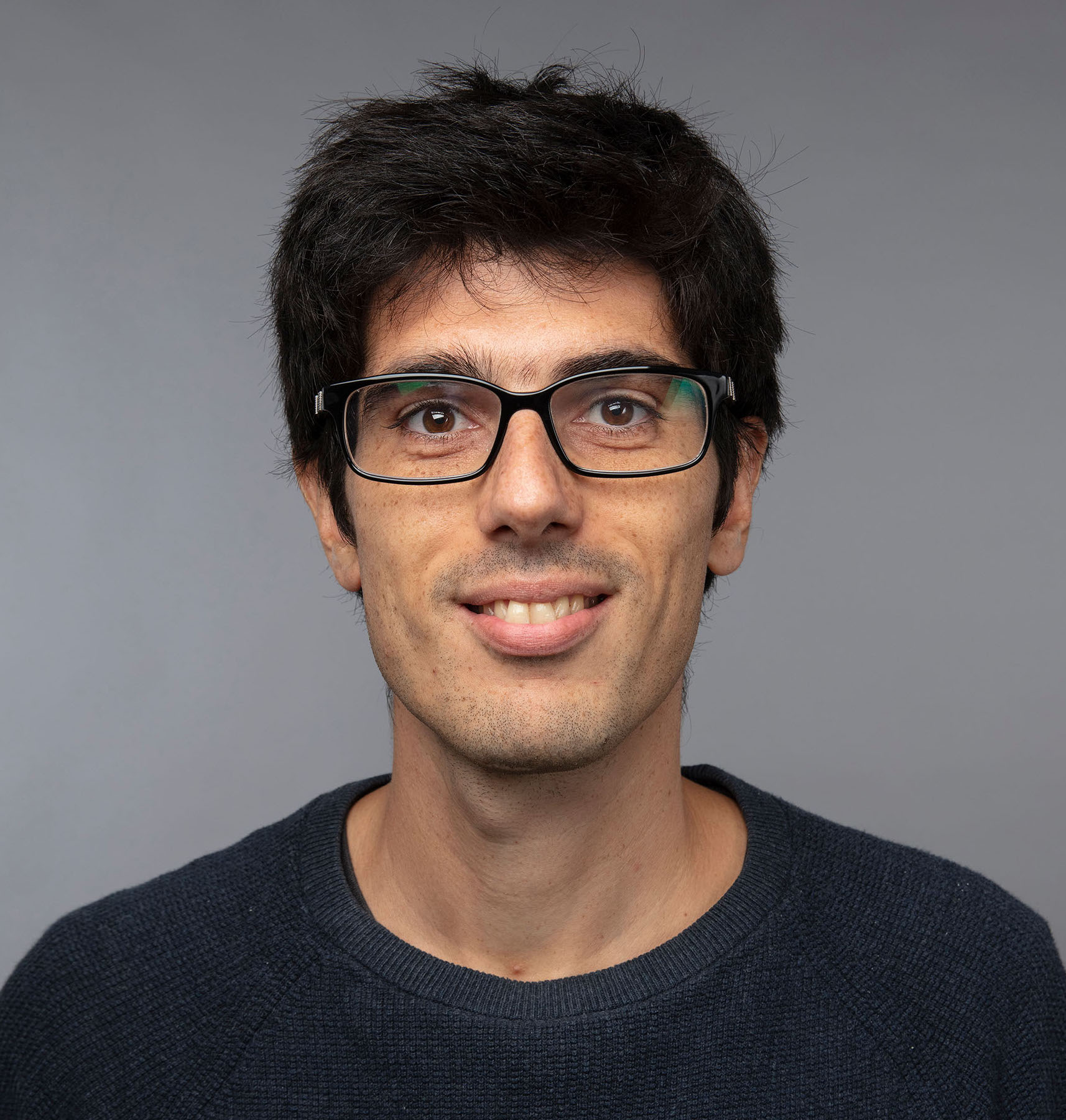
Dr. Ebru Harmandar is an Associate Professor at the Department of Civil Engineering, Faculty of Engineering, Muğla Sıtkı Koçman University. She holds a Doctorate in Earthquake Engineering from Boğaziçi University (2009) and has contributed extensively to earthquake hazard assessment, structural response analysis, and ground motion modeling. Her research focuses on seismic resilience, spatial coherency of ground motions, and infrastructure risk mitigation. Key research areas: Earthquake Engineering, Seismic Hazard Analysis, Structural Engineering Major projects: EMME ground-motion logic tree, Istanbul Rapid Response Network Notable students: Soukaina Mellouk (2021), Hüssam-Almukdad (2022) Her recent work includes improving seismic resilience indices for school buildings (2024) and analyzing multi-point earthquake effects on bridges. She has served as an academic editor for journals like Soil Dynamics and Earthquake Engineering and received the 2016 Yollar Türk Milli Komitesi award.
Prof. Dr. Hartmut Heinrich is a Professor of Business Informatics at Brandenburg University of Technology's Department of Economics, where he has served since 1995 and as Dean of the Faculty of Business and Economics from 2002-2013. His career bridges academic research and industrial application in enterprise systems. His educational background includes: Diplom-Informatiker (Computer Science) from Technische Universität Berlin Dr.-Ing. (Doctor of Engineering) from Technische Universität Berlin Heinrich's research centers on ERP systems implementation , particularly SAP solutions , with significant contributions to mobile business processes , security management , and ICT adoption in SMEs . His work uniquely connects vocational education transitions with corporate workforce development, emphasizing practical applicability through industry partnerships. Current projects focus on real-time in-memory computing and cloud-based enterprise architectures. Analysis of his 15 most recent publications reveals evolving research trajectories from foundational ERP system comparisons (2000) toward cutting-edge in-memory computing (2012), consistently addressing industry pain points in system integration, mobile accessibility, and security. His editorial work on SAP ecosystems demonstrates sustained leadership in enterprise software evolution. His scientific recognition includes: Technologie-Transfer-Preis des Landes Brandenburg (2nd Prize, 2004) for mobile SAP R/3 integration with ZF Brandenburg Heinrich has supervised 62+ Master's theses (1998-2013) through partnerships with SAP, Volkswagen, and ZF Getriebe, focusing on practical ERP implementations. His grant portfolio includes BMBF-funded ANKOM (2012-2015) on vocational-to-academic transitions and Land Brandenburg's Innopunkt project (2009-2012). Industry collaborations span commsult AG (co-founded 2000), webXells GmbH, and the Berlin-Brandenburg SAP Forum (active since 2001). His innovation ecosystem includes the KomSiB Security Research Center (2008-2011) and leadership in the IHK Potsdam Innovation Expert Team since 2008, driving technology transfer between academia and regional industry.
Prof. Dr. Daniela Beisser is a Professor at the Department of Engineering and Natural Sciences (FB 8) of the Westphalian University of Applied Sciences in Recklinghausen, Germany. Her research focuses on bioinformatics and biostatistical methods for high-throughput 'omics data, applied to biomedicine and freshwater ecology. She previously held academic roles at the University of Duisburg-Essen (2017–2023) and University Hospital Essen. 2004–2008: B.Sc. in Molecular Biology with Bioinformatics focus, FH Gelsenkirchen 2006–2008: M.Sc. in Molecular Biology with Bioinformatics focus, FH Gelsenkirchen 2008–2011: Ph.D. in Bioinformatics, University of Würzburg Her research integrates computational approaches with experimental data to study molecular responses to environmental stressors in freshwater organisms, genome analyses in human and protists, and proteomic studies in plants. She also investigates eco-evolutionary theories in microorganisms and links biodiversity to ecosystem functions. Recent publications highlight her work on amplicon sequencing (Natrix2 pipeline), metatranscriptomic analysis of microbial communities, and machine learning frameworks for environmental data. She contributes to software tools like TaxMapper and BioNet for reproducible workflows. Best Poster Award, German Conference on Bioinformatics (2013) Travel scholarships: DAAD, DAAD PROMOS, German Symposium on Systems Biology E-fellows.net scholarship (2006–2008) She has supervised numerous PhD, Master’s, and Bachelor’s students on topics such as protist community dynamics , fungal degradation processes , and stressor recovery mechanisms . Her lab collaborates on the CRC 1439 'RESIST' project and develops tools for environmental DNA analysis.
Angela Demke Brown is a Full Professor in the Department of Computer Science at the University of Toronto. She is cross-appointed to the Faculty of Applied Science and Engineering. Her research focuses on the intersection of programming languages and operating systems, leveraging high-level analysis to enhance low-level systems software performance and reliability. Education : B.Sc., York University M.Sc., University of Toronto Ph.D., Carnegie Mellon University (2005), supervised by Todd Mowry Her research spans critical areas including file system reliability, dynamic binary instrumentation for Linux, spatial database performance, and compiler optimization techniques. She has spearheaded projects like compiler-based memory management, I/O prefetching strategies, and non-volatile memory file systems such as NOVA-Fortis. Her work also extends to distributed systems and non-volatile memory management. Scientific Awards and Recognitions : Carnegie Mellon Doctoral Dissertation Award (PhD thesis) IBM Faculty Fellowship (2004-2007) IBM Centre for Advanced Studies Team of the Year (2005) NetApp Faculty Fellowship Microsoft Research Visiting Researcher (2015-16) Teaching Award, Computer Science Students Union (2008) Active member of ACM, IEEE, and USENIX Professor Demke Brown has supervised numerous graduate students across PhD, Master’s, and undergraduate levels, often in collaboration with Prof. Ashvin Goel. Her professional service includes roles on program committees for conferences like USENIX ATC, ASPLOS, and NSERC scholarship evaluations.
Prof. Vana Kalogeraki is a Faculty Member at the Department of Informatics , Athens University of Economics and Business (AUEB) , and serves as the Dean of the School of Information Sciences and Technology and Director of the Computer Systems and Communications Laboratory . She has held academic positions at the University of California, Riverside and was a Research Scientist at Hewlett-Packard Labs . PhD: University of California, Santa Barbara M.S. & B.S.: University of Crete, Greece Her research focuses on Distributed and Real-Time Systems , Big Data Systems , Cloud Computing , Human-Centered Systems , and Crowdsourcing . She has published over 200 papers at top journals (IEEE TPDS, ACM TOS, etc.) and conferences (RTSS, DSN, ICDCS, VLDB, MDM), including co-authoring the OMG CORBA Dynamic Scheduling Standard . Her 2023-2025 publications address AI pipelines in serverless environments, edge computing for trauma detection via eye-tracking, and fairness in resource scheduling. She has received prestigious awards including an ERC Starting Grant , Best Paper Awards (DEBS 2017, IPDPS 2009), a Best Poster Award (EuroSys 2024), and multiple UC Research Awards . Her research is funded by the European Union (ARISTEIA, THALIS), NSF, and industry partners like SUN and Nokia. Advising Legacy : Supervised 10 PhD graduates (now at Google, Amazon, IBM, Apple) and over 60 MS/PhD committees Labs & Teams : Leads the Computer Systems and Communications Laboratory at AUEB, focusing on mobile human-centered systems and urban data analytics
Dariusz Król is a Professor at the Department of Applied Computer Science, Faculty of Computer Science and Telecommunications at Wrocław University of Science and Technology. He serves as Vice-dean for general matters and Head of the Knowledge Engineering Lab. With a strong background in technical and engineering sciences, his academic career spans over two decades of teaching and research in computer science and telecommunications. Professor Król's educational background, though not explicitly detailed in the provided texts, is evidenced by his habilitation (dr hab. inż.) and professorship at one of Poland's leading technical universities. His extensive experience is reflected in his long-standing teaching career and research leadership. Professor Król's research interests focus on knowledge engineering, multi-agent systems, data quality, and intelligent production. His scholarly output shows a progression from foundational work in multi-agent systems to contemporary applications of deep learning in industrial contexts. Recent publications demonstrate increasing emphasis on practical applications of data quality assessment in production environments, with strong connections to Industry 4.0 and intelligent manufacturing concepts. His work consistently bridges theoretical foundations with real-world industrial applications where data quality and intelligent systems play crucial roles. His scholarly impact is evidenced by his edited books ranking among Springer's top downloaded publications, with two titles placing in the top 25% most downloaded books in 2018. His editorial leadership extends to serving as editor for Computational Intelligence (Wiley-Blackwell) since 2008 and International Journal of Distributed Systems and Technologies since 2010. Book 'Advanced Topics in Intelligent Information and Database Systems' among top 25% most downloaded Springer books in 2018 (31,481 downloads) Book 'Recent Developments in Intelligent Information and Database Systems' among top 25% most downloaded Springer books in 2018 (24,896 downloads) Book 'Propagation Phenomena in Real World Networks' among top 50% most downloaded Springer books in 2015-2016 Professor Król has supervised over 50 Master's and Engineering theses across diverse topics in computer science. He teaches courses ranging from foundational programming to advanced topics in knowledge engineering, maintaining an active teaching schedule for over 18 academic years. He leads the KNJavaTech scientific circle, which has provided research opportunities for students since 2005. His international collaborations include invited seminars at prestigious institutions worldwide, demonstrating global recognition of his expertise in knowledge engineering and intelligent systems.
Mostafa BAMHA is an Associate Professor (Maître de Conférences) at the University of Orleans, affiliated with the LIFO Laboratory (Laboratoire d'Informatique Fondamentale d'Orléans). He leads research in parallel and distributed computing, focusing on MapReduce optimization , data skew handling , and scalable graph processing . Member of the PRV team (Parallelism, Virtual Reality, System Verification) Active in projects: HPIAF (High Performance computing for AI in Finance) INEx (Cloud Computing experiments) Girafon (Graph & BigData processing) Research Trends His publications from 2018–2024 show focus on: MapReduce optimizations for join operations and LSH similarity joins Graph processing challenges in Pregel with high-degree vertices Skew-insensitive algorithms across distributed architectures Academic Contributions Co-author in 15+ peer-reviewed publications (2000–2024) including International Journal of Parallel Programming , DEXA , and HLPP conferences. Key collaborators: Sébastien Rivault , Mohamad Al Hajj Hassan , Sophie Robert .
Thomas Kudraß serves as Professor for Database Systems at the Faculty of Computer Science, Mathematics and Natural Sciences (IMN) at Leipzig University of Applied Sciences (HTWK Leipzig). With over 25 years of academic and industry experience, he teaches courses including Database Basics, Database Application Programming, Data Warehousing, and Big Data Technologies. His leadership roles include Internship Coordinator for Computer Science since 2001, Member of the Academic Senate since 2011, and Contact person for the IMN faculty alumni association since 2005. Dr. Kudraß earned his Dipl.-Ing. in Computer Science from Technical University of Dresden (1985-1990) and completed his doctorate at Darmstadt University of Technology (1992-1997), where his dissertation received the prestigious Jos Schepens Memorial Award. Prior to academia, he worked as an Information Systems Architect at UBS AG Zurich and Database Specialist at Swiss Bank Corporation Basel. His research spans database technologies with focus on heterogeneous database integration, data quality, data privacy, and modern database concepts. Recent work explores cloud-native billing applications for 5G, NoSQL databases, and privacy-preserving record linkage techniques. His publication record shows continuous evolution from traditional database systems to contemporary challenges in big data and distributed systems. Jos Schepens Memorial Award for doctoral dissertation (1997) Active participation in German Informatics Society (GI) specialist groups Organizer of multiple database-related workshops and conferences Professor Kudraß has significantly contributed to academic governance as E-Learning Officer (2000-02), Faculty Council member (2009-12), and liaison lecturer for the German Society for Computer Science (2001-14). He has coordinated numerous student projects and served on program committees for major conferences including INFORMATIK 2017 and BTW series.
Manuel Schechtl is an Assistant Professor of Public Policy at the University of North Carolina at Chapel Hill , with affiliations at the Carolina Population Center and Yale's Center for Empirical Research on Stratification and Inequality. As a sociologist, his work bridges tax policy, social policy, and economic inequality, focusing on how fiscal institutions shape wealth distribution and mobility. PhD, Humboldt University Berlin (2022) Postdoc, Stone Center on Socio-Economic Inequality (CUNY, 2022–2024) Research Focus: • Wealth inequality dynamics and intergenerational mobility • Inheritance/gift taxation as mobility determinant • Gender disparities in asset transfers • Municipal policy impacts on racial inequality • Comparative fiscal impoverishment analysis Recent Article Trends: His 15 most recent publications (2021–2025) span wealth inequality, gendered tax effects, place-based policy impacts, and democratic backsliding. Key themes include taxation's role in inequality reproduction, spatial mobility patterns, and policy feedback mechanisms. Scientific Recognition: University of Michigan Stone Center Visiting Fellowship (2025–2026) Collaborative projects with leading inequality centers Contributions: Co-developed wealth-transfer gender gap analysis, advanced fiscal federalism frameworks, and led place-based mortality studies. Currently exploring municipal police impacts on racial mobility gaps and GEOWEALTH-US data applications.
Dimitrios Tsoumakos serves as an Associate Professor of Big Data Management Systems at the School of Electrical and Computer Engineering of the National Technical University of Athens (NTUA) where he also directs DBLab, the Knowledge and Database Systems Laboratory. His academic career spans over two decades with significant contributions to large-scale data management and distributed systems. Diploma in Electrical and Computer Engineering from NTUA (1999) M.Sc. in Computer Sciences from University of Maryland (2002) Ph.D. in Computer Sciences from University of Maryland (2006) Professor Tsoumakos' research focuses on the intersection of big data management, cloud computing, and distributed systems. His work addresses fundamental challenges in large-scale data processing, including wavelet synopses for data summarization, vector embedding frameworks for analytics operators, multi-engine analytics systems, and cloud application deployment with failure recovery mechanisms. His research consistently bridges theoretical algorithms with practical implementations for real-world data challenges. His publication record demonstrates consistent innovation from early work on P2P data management systems through to current research on vector embeddings and deep reinforcement learning for cloud autoscaling. Recent work shows a clear progression toward content-based analytics, multi-dataset integration, and intelligent resource management in heterogeneous environments. Best Paper Runner Up Award at SSDBM 2019 Best Paper Award at CCGrid 2013 Professor Tsoumakos has secured substantial research funding through multiple European projects including RELAX (2023-2027), HiDALGO2 (2023-2026), DAPHNE (2021-2024), and previous initiatives like HiDALGO, TraMOOC, ASAP, CELAR, ARCOMEM, and GREDIA. These projects reflect his leadership in big data analytics, cloud computing, and distributed systems research. As director of DBLab, Professor Tsoumakos oversees research on the Knowledge and Database Systems Laboratory, which has produced significant work on analytics operators, multi-engine resource scheduling (IReS platform), cloud elasticity (TIRAMOLA), and RDF data management (H2RDF+). The lab maintains strong industry connections and has developed multiple open-source tools for big data analytics.
Dr. Ji Sun Shin is a Professor in the Department of Computer and Information Security at Sejong University, where she has been faculty since 2012. Her research bridges theoretical cryptography with practical security applications across multiple domains including IoT, smart devices, and critical infrastructure systems. Education: Ph.D. in Computer Science, University of Maryland at College Park (2009) B.S. in Computer Engineering, Seoul National University (2001) Professor Shin's research focuses on applied cryptography and network security with particular expertise in authentication systems. Her work spans password-based key exchanges , keystroke dynamics authentication , privacy-preserving protocols , and IoT security . She has made significant contributions to provably secure cryptographic protocols including HB/HB+ protocols, forward-secure identity-based signatures, and functional signatures. Her research addresses both theoretical foundations and real-world implementation challenges in cryptographic systems. Analysis of her recent publications reveals a strong trend toward privacy-preserving techniques in distributed systems, with significant work in federated learning security, blockchain applications for IoT, and efficient cryptographic implementations. Her research demonstrates consistent evolution from theoretical cryptography toward practical security solutions for emerging technologies like smart grids, drone systems, and smartphone authentication. Research Leadership: Principal Investigator of the Information Security Lab at Sejong University Active research collaboration across multiple domains including smart cities, healthcare systems, and critical infrastructure security Extensive patent portfolio with numerous domestic and international patents related to location verification, blockchain security, and authentication systems Professor Shin's laboratory focuses on practical security implementations with research areas spanning smartphone security, short-range communication protocols, IoT authentication mechanisms, and smart car security systems. Her team develops fundamental security technologies that address both theoretical security guarantees and real-world usability constraints.
Dr. Muhammad El-Hindi is a Postdoctoral Researcher at the Chair of Decentralized Information Systems and Data Management at the Technical University of Munich . He joined the chair in August 2025 and focuses on cloud-native data systems, distributed systems, and formal verification of distributed protocols. His work emphasizes designing high-performance, cost-efficient services like write-ahead logging and distributed page servers, aiming to enhance reliability and security in large-scale systems. Research Interests: Cloud-native data systems, secure cloud databases, distributed systems, formal verification of protocols Teaching: Cloud Information Systems, Data Structure Engineering, Blockchain Technologies, Federated Learning, Distributed Graph Processing Email: muhammad.el-hindi@tum.de His recent publications explore kernel-bypass optimization, AWS Nitro Enclaves, Intel SGX hardware, and blockchain-based shared databases. While no scientific awards are explicitly mentioned in the available data, his work contributes to advancing secure and efficient data management in cloud environments.
Andreas Pavlogiannis is an Associate Professor in the Department of Computer Science at Aarhus University. His research focuses on formal methods , algorithmic verification , automata theory , concurrency , static and dynamic program analysis , network diffusion , evolutionary graph theory , and evolutionary game theory . Teaching courses: Programming Languages (Bachelor) , Algorithmic Model Checking (Master) , and Program Analysis (Master) Service: Program committee member for POPL, ESOP, AAAI, IJCAI, CONCUR, OOPSLA, and organizer of CONFEST'25 His research has been supported by the Austrian Science Fund (FWF), VILLUM Foundation, Stibo Foundation, and Danish Council for Independent Research (DFF). He is actively recruiting PhD and PostDoc researchers. Recent publications span quantum computing , concurrent systems , evolutionary dynamics , and network science , with particular emphasis on symbolic algorithms , dynamic analysis , and graph-based models .
Ildikó Horn is a Professor at the Eötvös Loránd University , where she serves as Director of the Institute of Historical Studies and works in the Department of Medieval and Early Modern History of Hungary . Her research focuses on Early Modern History , Renaissance Humanism , and the political elites of Transylvania , with particular emphasis on interdisciplinary networks and cultural exchange in divided Hungary (1541–1699). Her recent publications analyze the princely council under Gábor Bethlen , the construction of Transylvanian court culture , and the role of marriage alliances in elite power consolidation . She has contributed to comparative studies on European principalities and diplomatic information flow in the early modern period. Her work often intersects with digital humanities through the creation of databases on aristocratic networks . As an active participant in the academic community, she has published extensively in venues like the Hungarian Historical Review and Transylvanian Review , and her research has been cited in studies examining state formation , legal elites , and multi-ethnic societies in Central and Eastern Europe.
Michael D. Bond is a Professor in the Department of Computer Science & Engineering at Ohio State University's College of Engineering. He leads the Programming Languages and Software Systems (PLaSS) Research Group, which focuses on designing program analyses and software and hardware systems that enhance computing reliability, scalability, and security. His academic service includes general chair for PLDI 2027, program committee membership for multiple top conferences, and committee roles in SIGPLAN Research Highlights (2024-2027). Professor Bond's research spans programming languages, systems, and security, with particular expertise in memory management, concurrency, hardware transactional memory, information flow control, and predictive race detection. His work bridges theoretical foundations with practical implementations, as evidenced by numerous open-source projects accompanying his publications. The PLaSS group has made significant contributions to understanding and improving memory models, developing efficient garbage collection techniques for modern architectures, and creating novel approaches to secure programming in languages like Rust. Analysis of his recent publications reveals a clear trajectory toward addressing security and reliability challenges in modern computing systems, particularly through language-based approaches. His work increasingly focuses on Rust programming language security mechanisms, memory disaggregation for datacenters, and advanced techniques for detecting and preventing concurrency bugs. The research demonstrates strong continuity in exploring memory models and concurrency while adapting to emerging hardware trends and security challenges. Outstanding Teaching Award, Department of Computer Science and Engineering, Ohio State University (2018) Lumley Research Award, College of Engineering, Ohio State University (2016) OOPSLA 2015 Distinguished Paper and Artifact Awards NSF CAREER Award ACM SIGPLAN Outstanding Doctoral Dissertation Award Intel PhD Fellowship Professor Bond actively mentors several PhD students including Chujun Geng, Vincent Beardsley, Chris Xiong, Victor Chen, and Noah Charlton, with external co-advisee Zixian Cai at Australian National University. His research is currently supported by multiple NSF grants including SaTC-2348754 (2024-2027), CyberCorps-2336531 (2024-2029), and CSR-2106117 (2021-2025), reflecting sustained funding for his work in information flow control, security, and systems research. The PLaSS Research Group maintains a strong presence in both academic and industrial communities, with graduated PhD students securing positions at major technology companies like Google, Amazon Web Services, and Huawei, as well as academic positions at institutions like UIUC and IIT Kanpur. The group's work combines theoretical rigor with practical implementation, consistently producing open-source artifacts that enable reproducibility and further research in the systems and programming languages community.