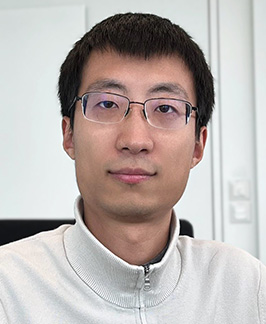
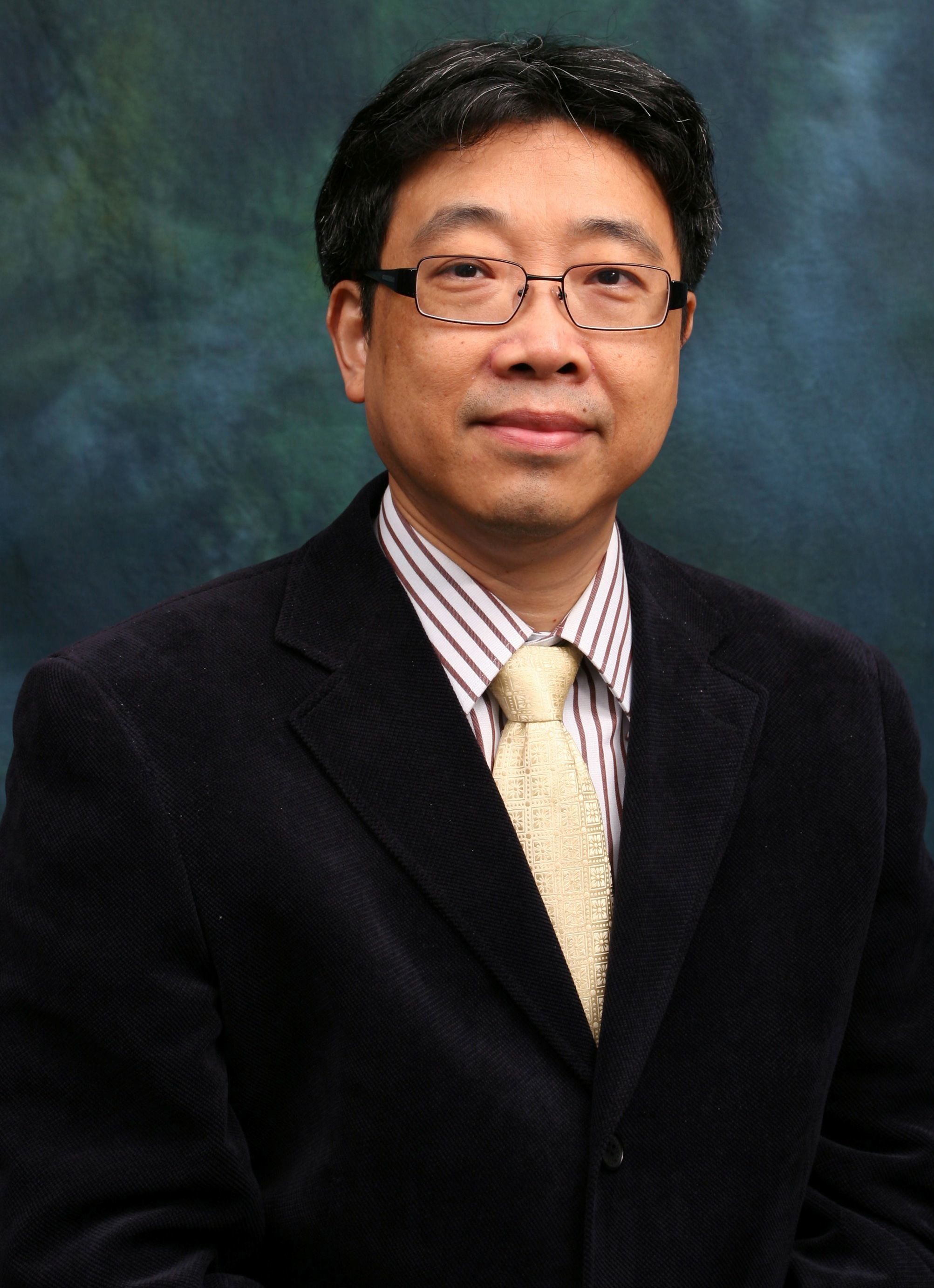
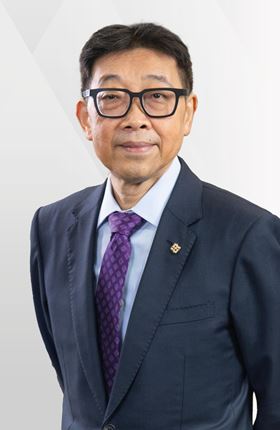
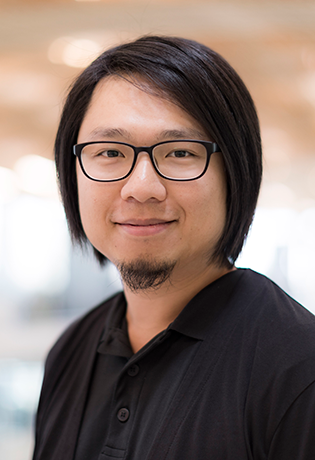
Dr. Weiming Feng is an incoming Assistant Professor at the School of Computing and Data Science of The University of Hong Kong. His research focuses on Theoretical Computer Science, particularly sampling and approximate counting algorithms, with applications in Statistics and Learning Theory. Prior to joining HKU, he held postdoctoral positions at The University of Edinburgh, UC Berkeley, and ETH Zürich. Education: PhD in Computer Science from Nanjing University (2021). Research interests include Discrete Probability, Markov Chain Monte Carlo (MCMC), and algorithmic developments for high-dimensional distributions. His work bridges theoretical foundations and practical applications, addressing challenges in computational efficiency and probabilistic modeling. Notable contributions include advancements in deterministic approximation of statistical distances, MCMC derandomization, and fast sampling techniques for combinatorial problems. His publications span top venues like SODA, FOCS, and STOC, reflecting contributions to algorithm design and computational theory. Lab and Team: While specific lab affiliations are not mentioned, his research is embedded within the broader computational and data science initiatives at HKU's School of Computing and Data Science.
Hubert Tsz-Hong Chan is an Associate Professor in the Department of Computer Science, School of Computing and Data Science at The University of Hong Kong. He earned his PhD in 2007 from Carnegie Mellon University under the supervision of Anupam Gupta, followed by post-doctoral research at the Max-Planck-Institut für Informatik (2007-2009). Education PhD in Computer Science, Carnegie Mellon University, 2007 Research Interests Dr Chan's research lies at the intersection of algorithms , combinatorial optimisation , discrete metric spaces , and security & privacy . A recurring theme is the design of provably efficient approximation algorithms for geometric and graph-theoretic problems under realistic or adversarial settings. Representative contributions include polynomial-time approximation schemes (PTAS) for TSP and Steiner Forest in doubling metrics, spectral analysis of hypergraph Laplacians, and foundational work on differential obliviousness and oblivious RAM. Publications & Trends With more than 80 peer-reviewed papers in premier venues such as JACM , SIAM Journal on Computing , Algorithmica , FOCS , SODA , EUROCRYPT , ASIACRYPT , CCS , and WWW , his recent output (2018-2021) demonstrates a shift toward privacy-preserving algorithms, differential obliviousness, and socially-aware optimisation models, often combining rigorous theory with practical datasets like Netflix and Twitter. Scientific Awards IPDPS 2019 Best Paper Award WWW 2018 Honorable Mention Students & Mentoring Dr Chan has successfully graduated 17 PhD and MPhil students and currently mentors 7 PhD candidates and 1 MPhil student. His graduates have secured academic and industry positions worldwide, and their theses frequently build on his funded projects. Research Funding & Labs Since 2012 he has been Principal Investigator on 12 competitive grants from the Hong Kong Research Grants Council (RGC), totalling more than HK$8 million, spanning topics from privacy-preserving aggregation to Byzantine-resilient federated learning. While no dedicated laboratory name is advertised, his group operates within the Security & Privacy and Algorithms Labs in the Department of Computer Science.
Prof. Cai Zhenguang is a Professor in the Department of Linguistics and Modern Languages at The Chinese University of Hong Kong (CUHK), where he leads the Language Processing Lab affiliated with the Brain and Mind Institute. His research integrates behavioral, neuroscientific, and computational approaches to investigate language processing mechanisms. His educational background includes a PhD in Psychology from the University of Edinburgh. Prior to joining CUHK, he served as a lecturer at the University of East Anglia and held an ESRC Future Research Leader fellowship at University College London. Prof. Cai's research centers on psycholinguistics and cognitive neuroscience of language, with specific focus on language comprehension, production, and learning mechanisms. His lab investigates how interlocutors influence language processing, Chinese handwriting literacy including character amnesia, and whether large language models exhibit human-like language behaviors. Additional interests include psychophysics of magnitude perception where physical dimensions interact statistically. Recent publications (2024-2025) reveal strong trends in neural correlates of speaker-contextualized comprehension, computational modeling of language adaptation, and AI-human language comparisons - particularly in Chinese language phenomena. Key methodological approaches combine ERP/fNIRS neuroimaging with Bayesian modeling and deep learning techniques. Scientific recognition includes: ESRC Future Research Leader fellowship He has successfully advised multiple PhD students including Zebo Xu, Hanlin Wu, and Xufeng Duan, along with MA students like Tianyi and Yufeng Wu. His research is supported by significant grants: two General Research Fund projects as Principal Investigator (on character amnesia and interlocutor modeling), an Academic Equipment Grant for TMS-EEG systems, and a teaching grant for virtual behavioral research methodologies. The Language Processing Lab maintains active collaborations across disciplines, having organized major conferences including AMLaP Asia and CogSci Hong Kong Meetup, while recruiting researchers with expertise in fMRI, Bayesian modeling, and machine learning for ongoing projects.
Jiannong Cao is the Otto Poon Charitable Foundation Professor in Data Science and Chair Professor of Distributed and Mobile Computing at the Department of Computing, The Hong Kong Polytechnic University (PolyU). He currently serves as Dean of the Graduate School and directs multiple research entities including the Research Institute for Artificial Intelligence of Things (RIAIoT), Internet and Mobile Computing Lab (IMCL), and PolyU's University Research Facility in Big Data Analytics (UBDA). Previously, he was the Head of the Department of Computing from 2011 to 2017. Education : BSc from Nanjing University, MSc and PhD from Washington State University Prof. Cao's research focuses on distributed systems , blockchain , wireless sensing , big data analytics , machine learning , mobile cloud , and edge computing . His work includes over 800 publications, 34 patents, and leadership in 130+ research projects with HK$187 million in grants. Recent research trends highlight his contributions to blockchain interoperability , edge AI optimization , secure GPU execution , federated learning frameworks , and IoT-based control systems . These align with his expertise in distributed computing, blockchain, and data-driven intelligent systems. Scientific Awards : PolyU President Award for Excellent Performance/Achievement in Research Ministry of Education Higher Education Outstanding Scientific Research Output Awards – Natural Science (Second Class) China Computer Federation (CCF) Overseas Outstanding Contribution Award IEEE TCCLD Research Innovation Award Silver Medal at Geneva International Exhibition of Inventions Best Paper Awards across multiple IEEE conferences (2011-2021) Prof. Cao has secured over HK$187 million in grants from agencies like NSFC, MOST, RGC, ITC, and industry partners (Alibaba, IBM, Nokia). He has delivered 50+ keynote/invited talks and serves on editorial boards of top journals including IEEE TC, IEEE TPDS, and ACM ToSN. He leads research labs such as RIAIoT and IMCL, focusing on artificial intelligence of things, blockchain integration, and edge computing systems. Current projects include collaborative edge computing, Web3 policies, and secure autonomous cooperation in edge nodes.
Professor Cao Jiannong is a distinguished academic at The Hong Kong Polytechnic University, holding titles including Otto Poon Charitable Foundation Professor in Data Science and Chair Professor of Distributed and Mobile Computing. He serves as Acting Vice President (Education), Dean of Graduate School, Director of the Research Institute for Artificial Intelligence of Things (AIoT), and Director of the University Research Facility in Big Data Analytics. Research Interests: High-performance distributed computing Mobile distributed computing Wireless sensor networks Big data analytics Blockchain systems AIoT and edge computing Artificial intelligence applications Scientific Contributions: Over 600 publications in leading journals and conferences 16 patents HK$101 million in competitive research grants as Principal Investigator World’s top 2% most cited scientist (2021-2023) by Stanford University Professional Recognition: Member of Academia Europaea Fellow of the Hong Kong Academy of Engineering Sciences Fellow of IEEE Fellow of China Computer Federation (CCF) Distinguished member of ACM Over 50 keynote/invited speeches at major conferences Leadership Roles: Chair of IEEE Computer Society Technical Committee on Distributed Computing (2012-2014) Entrepreneurship Advisor of HK A.I. Lab Member of Hong Kong Innovation and Technology Fund Assessment Panel Member of RGC Engineering Panel
Pok Yin Victor Leung is an Assistant Professor at the School of Creative Media, where he teaches interactive machines, computational design, and digital fabrication. His work bridges art, technology, and architecture through robotic systems and creative automation. Doctor of Science (ETH Zurich) Master of Science in Architectural Studies (MIT) Bachelor of Arts in Architectural Studies (University of Hong Kong) His research focuses on robotic fabrication, computational design, and custom machine development. Key themes include enhancing human potential through automation, non-repetitive robotic assembly, and timber construction automation. Victor has taught at ETH Zurich, MIT, University of Hong Kong, and Singapore University of Technology and Design. He emphasizes hands-on, curiosity-driven learning. Projects include the 5-axis custom hotwire foam cutter (using Makeblock components), the HyparHut Pavilion (distributed robotic screwdriver assembly), and a CoreXY vertical drawing robot for glass canvases. Scientific awards: Best Paper Award at CAADRIA 2021
Yifan Chen is an Assistant Professor in the Department of Computer Science and affiliate faculty in the Department of Mathematics at Hong Kong Baptist University's Faculty of Science. He joined HKBU in Fall 2023 after completing his PhD in Statistics from the University of Illinois Urbana-Champaign in 2023 under the guidance of Prof. Yun Yang. His educational background includes: B.S. in Statistics from Fudan University (2018), advised by Prof. Juan Shen and Prof. Chenghong Zhang Ph.D. in Statistics from University of Illinois Urbana-Champaign (2023), advised by Prof. Yun Yang Dr. Chen's research focuses on developing efficient algorithms for machine learning, with particular emphasis on non-parametric models and neural networks featuring intensive matrix operations. His work bridges statistical theory with practical computational challenges in modern machine learning systems, especially those involving Transformers (language models) and Graph Neural Networks (GNNs). He approaches machine learning from both theoretical and applied perspectives, seeking to understand statistical structures while addressing real-world computational constraints. His publication record shows consistent output in top-tier venues including ICML, NeurIPS, KDD, and EMNLP, with recent work spanning graph coarsening, optimal transport, efficient language model fine-tuning, and causal inference. His research demonstrates strong mathematical foundations combined with practical applications in AI systems. Among his notable achievements: NSFC Young Scientists Fund (2025) GDSTC General Program funding (2024) RGC Early Career Scheme proposal grant (2024) ICML 2023 Grant Award ($1,500) Dr. Chen actively mentors students through his research group, supervising PhD students and visiting research assistants. He has successfully guided students who have gone on to PhD programs at institutions including Institute of Science Tokyo, HKU, Fudan, and NUS. His teaching includes COMP 7070 Advanced Topics in Artificial Intelligence and Machine Learning, which covers core machine learning concepts for AI application research, and COMP 2027 Applied Linear Algebra for Computing. His research group focuses on efficient machine learning algorithms, with current projects spanning graph neural networks, optimal transport, language model efficiency, and causal inference. He collaborates with researchers from institutions including UIUC, Fudan University, and industry labs like Amazon Alexa AI.
Daniel W. C. HO is a Chair Professor of Applied Mathematics and Associate Dean (Undergraduate Education) at the College of Science, City University of Hong Kong. He has been with City University of Hong Kong since 1989, having previously served as a Research Fellow at the University of Strathclyde, Glasgow, UK from 1985 to 1988. Prof. Ho received first class honours in BSc, MSc, and PhD degrees in mathematics from the University of Salford, Greater Manchester, UK in 1980, 1982, and 1986, respectively. His academic journey began with foundational work in control theory and has evolved into a distinguished career spanning over three decades. Prof. Ho's research interests span multiple domains in control theory and systems engineering. His primary focus areas include Control Theory , Estimation and filtering theory , Complex dynamical distributed networks , Multi-agent networks , Nonlinear singular systems , and Stochastic systems . His work bridges theoretical advances with practical applications, particularly in networked control systems, cybersecurity for cyber-physical systems, and distributed optimization. Prof. Ho has made significant contributions to the understanding of synchronization phenomena in complex networks, resilient control under cyber attacks, and quantized control systems with communication constraints. His research has evolved from classical control theory to address contemporary challenges in networked and distributed systems, reflecting the changing landscape of control engineering. Prof. Ho's publication record shows a strong emphasis on secure control systems under cyber attacks, distributed optimization with communication constraints, event-triggered control schemes, quantized control systems, and synchronization of complex networks. His work demonstrates a consistent progression from theoretical foundations to addressing practical implementation challenges in cyber-physical systems, with increasing focus on security aspects in recent years. Prof. Ho has received numerous prestigious awards and honors throughout his career. He was named a Fellow of the Institute of Electrical and Electronics Engineers (IEEE) in 2017 and elevated to IEEE Life Fellow status in 2024. He was awarded the Chang Jiang Chair Professorship by the Ministry of Education, China in 2012. Prof. Ho has been recognized as a Highly Cited Researcher for eleven consecutive years from 2014 to 2024, and is among the Top 2% of most highly cited scientists globally from 2020 to 2024. He received the Best Paper Award from The 8th Asian Control Conference in 2011 and the Teaching Excellence Award from City University of Hong Kong in 2020 for his innovative teaching approaches. Prof. Ho has held significant editorial responsibilities, serving as Subject Editor of the Journal of Franklin Institute, Co-Editor in Chief of Franklin Open, Associate Editor of IEEE Transactions on Neural Networks and Learning Systems, Asian Journal of Control, and Action Editor of Neural Networks. He has also served on the editorial boards of several other prestigious journals, contributing to the advancement of his field through scholarly communication. His leadership extends beyond research and teaching as Associate Dean (Undergraduate Education) of the College of Science at City University of Hong Kong, where he plays a key role in shaping the educational experience for science students.