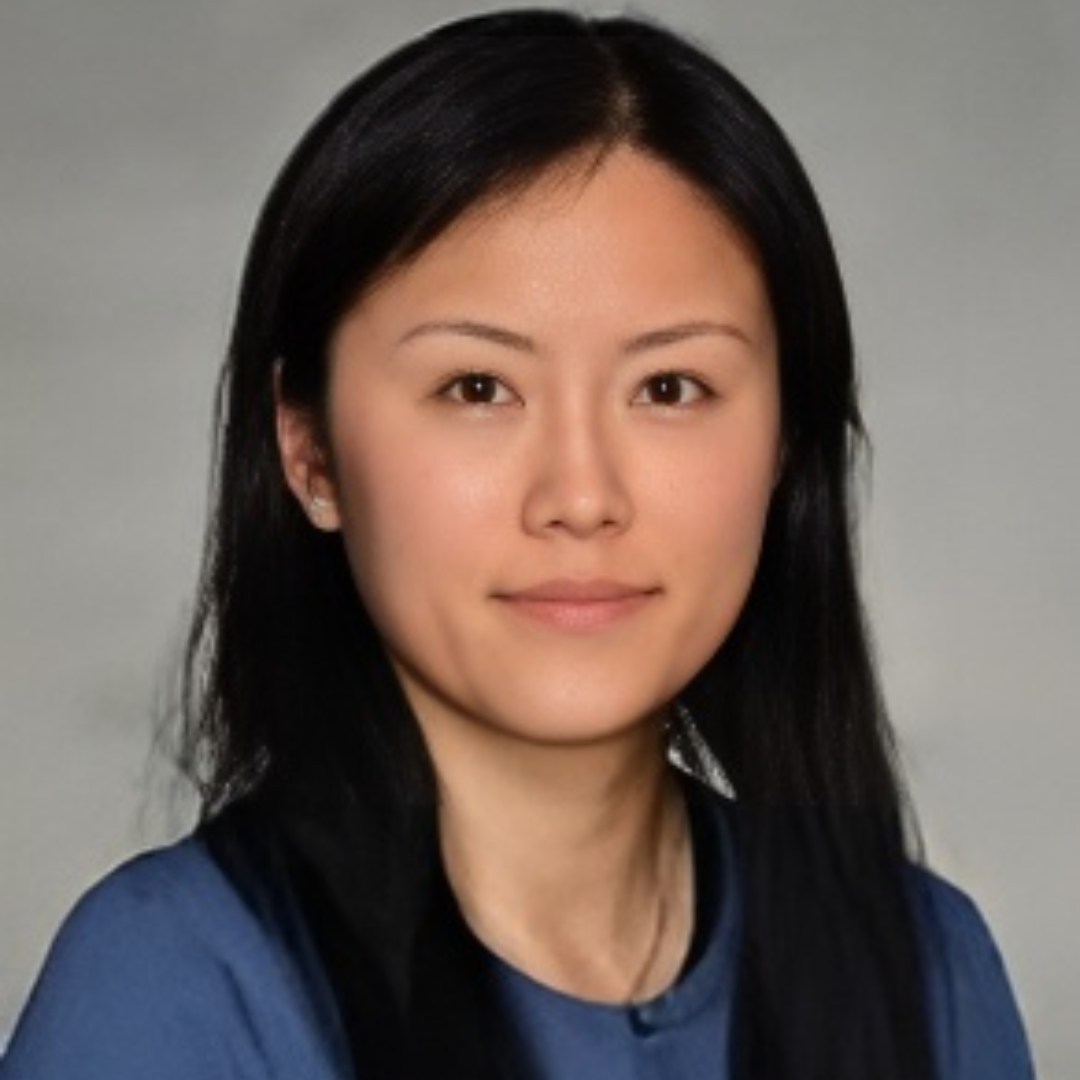
Dr. Ying Zhu is an Associate Professor in the Department of Information Technology at Ontario Tech University, cross-appointed with the Faculty of Engineering and Applied Science. She holds a PhD in Computer Engineering from the University of Toronto, with earlier degrees in Computer Science from both the University of Toronto and Dalhousie University. Education: PhD in Computer Engineering (University of Toronto), MSc in Computer Science (University of Toronto), BSc in Computer Science and Mathematics (Dalhousie University) Her research focuses on distributed systems, peer-to-peer networks, and mobile device applications. She develops algorithms and protocols for optimizing network performance and enhancing user experience in heterogeneous environments. Her work bridges computer engineering principles with practical applications in mobile and wireless systems. Recent publications emphasize optimization in supply chain resilience, electric vehicle infrastructure planning, and risk-averse decision-making under uncertainty. These studies highlight her interdisciplinary approach to solving complex technical and operational challenges. Dr. Zhu collaborates with industry partners to translate theoretical insights into actionable solutions for real-world systems.
Dr. Min Dong is a Professor in the Department of Electrical, Computer and Software Engineering at Ontario Tech University, within the Faculty of Engineering and Applied Science. He holds a PhD from Cornell University (2004) and a BEng from Tsinghua University (1998). His research focuses on statistical signal processing, communication systems, and optimization in cyber-physical systems. He has held roles such as Interim Associate Dean (2017-2017) and is a Status-Only Professor at the University of Toronto (2019-present). Previously, he worked at Qualcomm (2004-2008). Education: PhD in Electrical and Computer Engineering (Cornell University, 2004); BEng in Automation/Electrical Engineering (Tsinghua University, 1998). Research interests include federated learning, MIMO systems, network virtualization, and coded caching. He has contributed to over-the-air aggregation techniques, beamforming optimization, and resource allocation in wireless networks. His work emphasizes energy efficiency and real-time performance in distributed systems. Key awards include the NSERC Discovery Accelerator Supplement (2019), Ontario Early Researcher Award (2012), and multiple IEEE best paper awards. He has served as an editor for IEEE Transactions on Wireless Communications and Signal Processing Society committees. His professional activities include roles as editor and committee member for IEEE journals. Grants and advising focus on edge computing, distributed optimization, and wireless communication advancements. Labs/teams: His research group likely focuses on cyber-physical systems and wireless communication innovations, though specific lab names are not explicitly mentioned in the text.
Sarath Chandar Anbil Parthipan is an Associate Professor at Polytechnique Montréal and leads the Chandar Research Lab (CRL) . He holds the Canada Research Chair Tier 2 in Lifelong Machine Learning and the CIFAR Chair in Artificial Intelligence . As a core faculty member at Mila - the Quebec AI Institute , he also serves as an adjunct professor at the University of Montreal and IIT Madras . PhD in Computer Science (University of Montreal, 2015) MS by Research in Computer Science (IIT Madras, 2015) B.Eng in Computer Science (Anna University, 2009) His research focuses on lifelong/continual learning , deep learning , reinforcement learning , and natural language processing . He created the Conference on Lifelong Learning Agents (CoLLAs) in 2022 and serves as its organizer. Recent works explore molecular design with BindGPT , multi-agent RL coordination, and model interpretability. Scientific recognition includes: Canada Research Chair Tier 2 CIFAR Chair in AI He supervises students in topics spanning AI for science , medical image segmentation , and reset-free reinforcement learning . The CRL Annual Symposium 2023 featured collaborations with institutions like Princeton University and IBM.
Dr. Alison Sills is a Professor in the Department of Physics & Astronomy at McMaster University, where she has been a faculty member since 2001 and Chair since 2012. Her research focuses on stellar collisions, binary interactions, and the formation of blue stragglers in dense stellar clusters. She earned her BSc from the University of Western Ontario and PhD from Yale University, followed by postdoctoral positions at Ohio State and Leicester. Affiliations : McMaster University (Faculty since 2001, Full Professor since 2012) Canadian Astronomical Society Canadian Institute for Theoretical Astrophysics International Astronomical Union Dr. Sills specializes in Stellar Astrophysics and Computational Astrophysics , analyzing how stars evolve through collisions and binary interactions in dense clusters. Her work combines Galactic Dynamics and Star Clusters to understand formation mechanisms and chemical enrichment processes. Her recent publications (2023-2025) examine Star Cluster Formation in gas-rich environments, Binary Star Systems as enrichment sources, and Dark Matter Halo constraints using globular clusters. She employs N-body Simulations , Hydrodynamic Modeling , and Radiation Hydrodynamics to study these phenomena. Dr. Sills has supervised over 50 students and postdoctoral fellows, managed $2M+ in research grants, and reviewed applications for international agencies. She actively participates in outreach programs to promote astronomy and support underrepresented groups in STEM.
Paul McNicholas is a Professor in the Department of Mathematics and Statistics at McMaster University, where he holds a Tier 1 Canada Research Chair in Computational Statistics. He serves as Editor-in-Chief of the Journal of Classification and has directed the MacData Institute (2017-2022). His academic leadership extends to his role as Associate Chair of Statistics (2021-2023) and his extensive supervision of graduate students across multiple cohorts. Dr. McNicholas earned his academic credentials from Trinity College Dublin, including a Sc.D. in Statistics, Ph.D. in Statistics, M.Sc. in High Performance Computing, and B.A./M.A. in Mathematics. His educational background reflects the interdisciplinary nature of modern computational statistics, combining deep mathematical knowledge with advanced computational skills essential for contemporary data science. His research focuses on computational statistics, particularly mixture model-based clustering and classification. Current research includes work on non-Gaussian mixtures, matrix variate distributions, and real problems in big data analytics. McNicholas has made significant contributions to developing statistical methods for higher-order data, mixed-type data, and multivariate longitudinal data, with special applications in autism and aging research. His methodological innovations have enabled more sophisticated analysis of complex datasets across various domains, particularly in health sciences. Analysis of his recent publications reveals a strong focus on advancing mixture model methodology for increasingly complex data structures. His work spans theoretical developments in distribution theory, computational algorithms for model fitting, and practical applications in health sciences. A notable trend is the extension of traditional statistical methods to handle high-dimensional, non-Gaussian, and structured data while maintaining computational efficiency, with increasing attention to applications in autism spectrum disorder and aging research. Dr. McNicholas has received numerous prestigious awards recognizing his contributions to statistics: Dorothy Killam Fellowship (2023) John L. Synge Award, Royal Society of Canada (2021) Steacie Prize for the Natural Sciences (2020) E.W.R Steacie Memorial Fellowship (2019) College Member, Royal Society of Canada (2017) University Scholar (2017) Tier 1 Canada Research Chair (2015) Dr. McNicholas actively mentors the next generation of statisticians, currently supervising eight Ph.D. students, a Master's student, and an undergraduate researcher. His research group has secured significant funding through various grants and fellowships, enabling cutting-edge research in computational statistics. He has also contributed to the field through software development, with R packages like 'mixture', 'pgmm', 'CDGHMM', 'longclust', and 'vscc' that implement his methodological innovations and make advanced statistical techniques accessible to practitioners. His research group operates within the broader context of the MacData Institute at McMaster University, which he directed from 2017-2022. The group fosters interdisciplinary collaboration, particularly in applications related to health sciences, including autism spectrum disorder research and aging studies. McNicholas has built a vibrant research community that bridges theoretical statistics with practical applications through regular seminars, workshops, and collaborative projects with researchers across multiple disciplines, with particular emphasis on methodological innovations that address real-world challenges in health analytics.
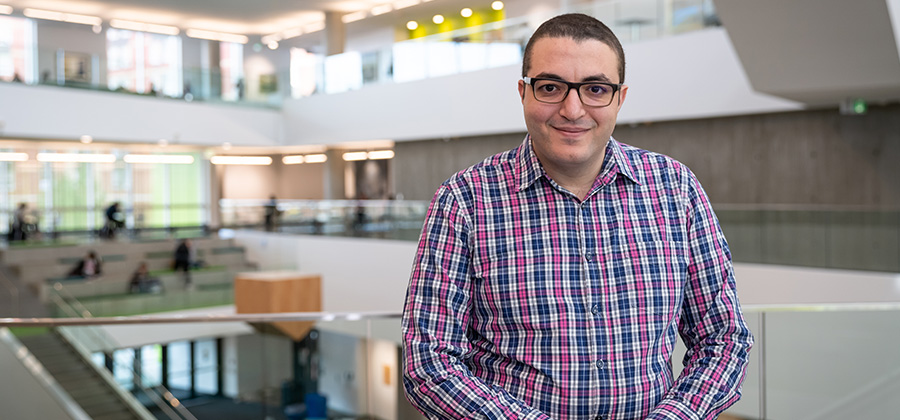
Dr. Mohammed Elmorsy is an Associate Professor in the Department of Computer Science at MacEwan University. He holds a PhD from the University of Alberta (2017) and degrees from Zagazig University, Egypt. His expertise spans wireless sensor networks, network security, IoT, and algorithm design for combinatorial network problems. He teaches courses such as Wireless Networks and Embedded Systems (CMPT 464) and Introduction to Computing I (CMPT 101). Dr. Elmorsy's research focuses on enhancing wireless sensor network reliability through efficient routing protocols, security mechanisms, and resource allocation methodologies that ensure quality of information (QoI) and quality of service (QoS). He has published extensively in top venues like IEEE International Conference on Communications and IEEE Conference on Local Computer Networks. His awards include the Queen Elizabeth II Graduate Scholarship (2016), Mary Louise Imrie Award (2015), and multiple teaching and research accolades from the University of Alberta. He is an active member of the IEEE Computer Society and available to supervise senior student research projects. Key research trends in his articles include energy harvesting optimization, flow reliability analysis in dynamic networks, probabilistic models for network connectivity, and machine learning applications in sports analytics and autonomous systems.
Khaled Arfa is a Lecturer in the Department of Electrical Engineering at Polytechnique Montréal. His work focuses on integrating high voltage engineering with food processing technologies, particularly through pulsed electric field applications. Education: Ing. (Algiers), Ph.D. (Moscow) Contact: (514) 340-4711 Ext. 4866, Room M-5420, khaled.arfa@polymtl.ca Research interests center on non-thermal preservation methods for tropical liquid foods, combining electrical engineering principles with industrial processing challenges. His publications highlight innovative hardware experimentation laboratories and electromagnetic field modeling. Key article trends include: 1) Development of multifunctional educational labs (2013); 2) Pulsed electric field generator design for food sterilization (2010); 3) Modeling techniques for optimizing tropical food processing (2010). Collaborations with researchers like G. Roy, G.-É. April, and F. Sirois demonstrate interdisciplinary engagement across engineering domains.
Alan Wagner is an Associate Professor in the Department of Computer Science at the University of British Columbia (UBC), where he has held tenure since 1987. He is a member of the Institute for Computational Intelligence and Cognitive Systems (ICICS). With over 35 years of experience, his research focuses on parallel and distributed computing, high-performance computing (HPC), and message-passing systems (particularly MPI). His work emphasizes latency reduction, scalability, and middleware development using protocols like SCTP and TCP. Education: Ph.D. in Computer Science, University of Toronto (1987) M.Sc. in Computer Science, University of Alberta (1983) B.Sc. (Honors) in Mathematics, Dalhousie University (1977) Research interests include parallel algorithms, distributed systems, and applications in computational finance and data analytics. He has contributed to open-source projects like FG-MPI (a fine-grain MPI implementation) and SCTP-based MPI middleware, enhancing MPI's performance on commodity networks. His work has been supported by grants such as the NSERC I2I Grant (2008) and CFI Leaders Opportunity Fund (2009). He has advised over 20 M.Sc. students and 2 Ph.D. students. His teaching includes courses on parallel algorithms (CPSC 521) and computer networking (CPSC 317). He currently chairs UBC's Computer Science Graduate Admissions Committee.
Kenny Chiu is a Ph.D. Statistics candidate and Sessional Lecturer at the University of British Columbia's Department of Statistics within the Faculty of Science. Supervised by Benjamin Bloem-Reddy, he teaches undergraduate statistics courses including STAT 306: Finding Relationships in Data and serves as a TA Trainer for new teaching assistants. Ph.D. Statistics (2021-Present) M.Sc. Statistics (2019-2021) B.Sc. Combined Honours in Computer Science and Statistics (2013-2018) His research focuses on symmetry applications in statistical inference and computation, developing methods for identifying distributional symmetries from data with applications spanning statistics, machine learning, and scientific discovery. He actively contributes to Flexible Learning initiatives developing statistics educational resources and facilitates Instructional Skills Workshops for graduate students through UBC's Centre for Teaching, Learning and Technology. His publication portfolio demonstrates expertise in symmetry-based hypothesis testing, particularly with applications to particle physics as evidenced by his NeurIPS 2023 workshop paper. His work combines theoretical statistical innovation with practical computational implementations, reflected in his publicly available GitHub repositories containing Julia code for symmetry testing frameworks. As an educator, Chiu has extensive teaching experience across multiple statistics courses including STAT 305, STAT 404, and SCIE 300, demonstrating commitment to both undergraduate instruction and graduate teaching development through his TA training role since 2021.
Dr. Shervin Shirmohammadi is a Professor at the University of Ottawa’s School of Electrical Engineering and Computer Science, specializing in multimedia systems and networks. He leads the Distributed and Collaborative Virtual Environment Research Laboratory, focusing on video systems, gaming systems, and healthcare engineering applications. His research has secured over $13M in funding, resulting in 300+ publications, 65+ trained researchers, 20 patents, and numerous awards including IEEE Fellow status. Education: Ph.D. in Electrical Engineering from the University of Ottawa. Professional credentials include P.Eng. (Ontario) and ACM Lifetime Membership. Research Interests: Multimedia Systems and Networks Networked Gaming and Video Systems Healthcare Engineering via Multimedia Machine Learning Applications Sensor Networks and IoT Funding and Impact: Over $13M in grants from public/private sectors, leading to technology transfers and patents. Serves as Editor-in-Chief of IEEE Transactions on Instrumentation and Measurement, and on editorial boards of ACM and IEEE journals. Awards: IEEE Fellow (202?), University of Ottawa Gold Medal, Professional Engineer licensure. Lab and Teams: Directs the Distributed & Collaborative Virtual Environment Lab, collaborating on projects like GAViST5G datasets, mmWave-based activity recognition, and AI-driven network management systems.
Professor Tet Him Yeap serves as an Associate Professor and Associate Director of the System Science Program within the School of Electrical Engineering and Computer Science at the University of Ottawa. With a tenure dating back to October 1989, he maintains an active research profile from his office in STE 5025. His academic contributions are anchored in electrical engineering and computer science, particularly in advancing communication systems and neural network applications for real-world problems. Professor Yeap's research program is centered on three interconnected pillars: Internet of Things (IoT) for smart infrastructure, neural network architectures, and VLSI design. Within IoT, he explores applications in smart farming—such as precision agriculture and environmental monitoring—and predictive maintenance for transportation systems. His neural network work emphasizes Restricted Hopfield Networks, focusing on adversarial robustness and associative memory capabilities. Additionally, he investigates VLSI implementations for communication systems, including visible light communication (VLC) under challenging ambient light conditions, and wireline/wireless access technologies. Analysis of Professor Yeap's 15 most recent publications (2023-2025) reveals a strategic shift toward interdisciplinary applications of machine learning in agriculture and robust communication systems. Approximately half of these works address smart farming challenges, leveraging UAV imagery, federated learning, and neural networks to predict crop yields and nitrous oxide emissions. The remainder concentrates on enhancing neural network robustness (particularly Restricted Hopfield Networks) and optimizing visible light communication for outdoor use. This dual focus underscores his commitment to both theoretical advances in AI and practical solutions for sustainability. Professor Yeap mentors graduate students in his research areas, with Kalonji H Kalala currently under his supervision. While specific grant awards are not detailed in the provided materials, his extensive publication record in high-impact areas suggests active involvement in funded projects, likely including collaborations with agricultural technology initiatives and engineering research consortia focused on IoT and communication systems.
Philip Fong is an Associate Professor in the Department of Computer Science at the University of Calgary. He previously held a Tier-2 Canada Research Chair in Software Security (2009–2019) and served as faculty at the University of Regina (2003–2008). He holds a B.Math and M.Math from the University of Waterloo and a Ph.D. from Simon Fraser University. His research focuses on access control mechanisms, IoT security, privacy in social computing systems, and language-based security. He has contributed to frameworks addressing policy negotiation, inference attack mitigation, and privacy-preserving systems. Notable work includes developing the Papilio tool for Android permission visualization and formalizing purpose-based privacy policies. His scientific achievements include the Tier-2 Canada Research Chair. His research spans interdisciplinary areas such as geo-social computing, federated systems protection, and hybrid logic-based policy enforcement. He has also explored security in open-source medical records systems and design patterns for multi-stakeholder platforms. Collaborations involve secure collaboration models and policy analysis techniques. His work bridges theoretical foundations (e.g., policy satisfiability) with practical tools (e.g., visualization systems for access control).
Dr. Kelsey Lucas is an Assistant Professor in the Department of Biological Sciences at the University of Calgary's Faculty of Science. Her research program in ecological biomechanics investigates how fish swimming mechanics influence behavior, energetics, and habitat selection. She examines how body morphology and movement dynamics determine swimming performance across species and environments. Her work integrates biomechanical measurements with ecological context to understand habitat occupancy patterns in freshwater systems. This research provides biomimetic insights for underwater vehicle design while assessing environmental impacts on fish populations. Dr. Lucas teaches courses including Vertebrate Zoology, Animal Physiology, and Comparative Vertebrate Anatomy. Her lab website provides additional information about ongoing research projects and publications.
Bing Si is a Professor in the Department of Soil Science at the University of Saskatchewan's College of Agriculture and Bioresources. His research focuses on soil water dynamics, thermal regimes, and hydrophobicity across pedon, hillslope, and landscape scales, with applications in ecosystem reclamation and sustainable agriculture. He holds a Ph.D. from the University of Guelph, an M.Sc. and B.Sc. from institutions in China. Research interests include understanding mechanisms governing soil water storage, particularly in semi-arid and boreal environments, as well as optimizing soil management for reclamation of mining waste and improving water use efficiency. His work addresses challenges in hydrocarbon-affected soils and layered soil systems. Publications emphasize advanced methodologies in soil physics, such as wavelet analysis of spatial patterns, heat pulse probe improvements, and isotope-based water sourcing models. Key themes include deep soil water availability, groundwater recharge in loess regions, and the impact of afforestation on hydrological cycles. Teaching includes undergraduate courses in Soil Science and Environmental Science, and graduate courses in Soil Physics and Environmental Sustainability.
Christian LÉGER is a Professor in the Department of Mathematics and Statistics at the University of Montreal , affiliated with the Faculty of Arts and Science . He holds a Ph.D. from Stanford University (1988). His research focuses on advancing statistical methodologies, particularly in resampling techniques like the bootstrap, adaptive estimation, and model selection, with applications in diverse fields such as biomedical research and industrial reliability. Research Interests: LÉGER’s work emphasizes leveraging computational power to enhance statistical methods. Key areas include bootstrap methodology for variance estimation, confidence interval construction, and parameter tuning (e.g., bandwidth selection in kernel density estimation). Recent projects explore inference in post-variable-selection regression models and the validity of bootstrap for estimators with non-standard convergence rates (e.g., least median of squares). Recognition: He received the Prix d'excellence en enseignement in 2000 from the Faculty of Arts and Sciences for outstanding teaching in the sciences. Advising & Collaboration: He has supervised multiple graduate students, including two industrial fellowships through the CRSNG program. His applied work includes consulting projects, with one leading to a master’s thesis. He collaborates on interdisciplinary topics such as age replacement policies in reliability engineering and statistical methods in medical imaging. Publications: Over 15 peer-reviewed articles since 1987 reflect his contributions to bootstrap theory, nonparametric methods, and statistical applications in fields ranging from biostatistics to operations research.